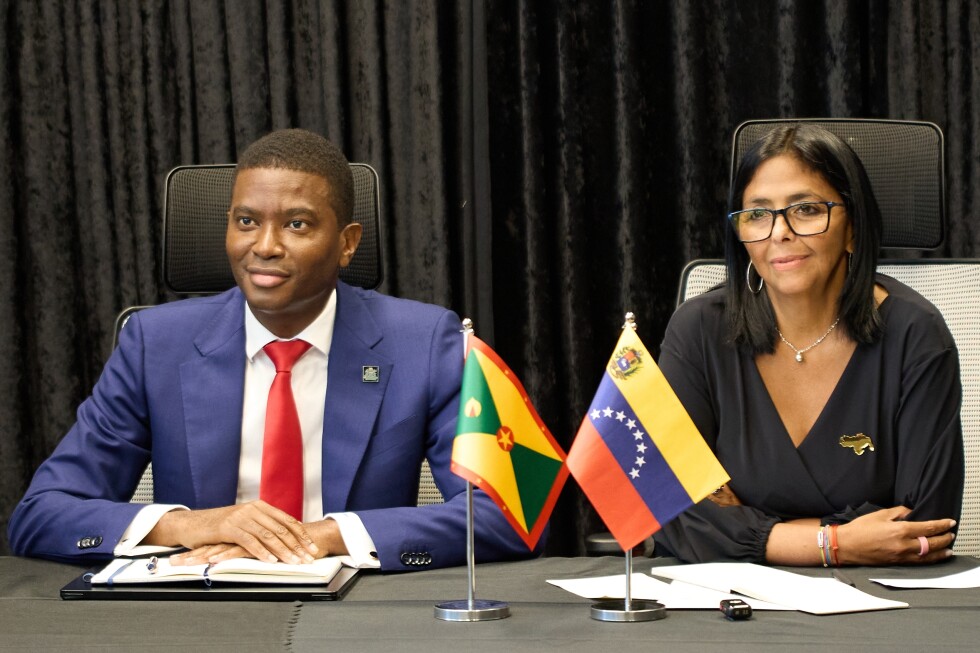
GEORGETOWN, Guyana – A long-simmering centuries-old territorial dispute between Caribbean neighbor Guyana and Venezuela has reignited into a new diplomatic clash, after Guyana’s president issued a formal complaint to regional leaders over a provocative symbolic gesture by Venezuela’s acting president. The controversy centers on a lapel pin worn by Delcy Rodríguez, Venezuela’s interim head of state, during her recent official visits to Caribbean nations: the pin is shaped explicitly to match the borders of Guyana’s resource-rich Essequibo region, a territory that makes up two-thirds of Guyana’s total land area and has been claimed by Venezuela for more than a century. The gesture comes amid already heightened tensions following the U.S. capture of former Venezuelan president Nicolás Maduro in a surprise overnight raid on his Caracas residence in early January, after which Rodríguez stepped into the acting presidency. In the weeks since that political shift, the pin has become an increasingly common public symbol among senior Venezuelan government figures, ruling party lawmakers, state media anchors and other ruling bloc representatives. Guyana President Irfaan Ali delivered his formal complaint in an official note addressed to Terrance Drew, Prime Minister of St. Kitts and Nevis and current chairman of the Caribbean Community (Caricom), the regional trade and coordination bloc that hosts Rodríguez’s recent travels. Ali confirmed that Rodríguez wore the disputed pin during her official stop in Barbados on Monday, marking the second confirmed instance of her displaying the symbol on an overseas trip – the first came during an official visit to Grenada earlier in April, on her first international tour since assuming the acting presidency. In the note, Ali emphasized that the pin serves as an open, public assertion of Venezuela’s invalid territorial claim to sovereign Guyanese land. Beyond the symbolic provocation, Ali outlined a key concern: that when Rodríguez wears the pin during official visits hosted by other Caribbean nations, the gesture could be misread by third parties as quiet acceptance or even endorsement of Venezuela’s claim by the host government. Ali stressed that Caricom has long stood on clear principles in backing Guyana’s sovereignty over the Essequibo region, and that this commitment needs to be reflected not just in official statements, but also in how member states conduct official diplomatic engagements with Venezuelan representatives. The roots of the dispute stretch back to an 1899 international boundary commission, which set the current border between the two territories when Guyana was still a British colony. Venezuela has long argued that the commission’s ruling was obtained through improper means and stripped the country of the Essequibo territory. The competing claims are currently being adjudicated at the International Court of Justice (ICJ) based in The Hague, Netherlands. Ali reminded Caricom member states that the bloc has previously issued unequivocal public support for Guyana’s sovereign claim to the region at major summit meetings. He pushed for clear action, arguing that Venezuelan representatives should not be permitted to display territorial claim symbols such as the Essequibo-shaped pin or altered maps that include the region as Venezuelan territory, as such gestures threaten to undermine the ongoing legal process at the ICJ. Ali has previously publicly pushed back against other Venezuelan moves to assert the claim, including the inclusion of Essequibo on official Venezuelan government maps, which he has called a calculated, intentional provocation that Guyana rejects entirely. Tensions have escalated dramatically in recent years as major offshore oil reserves were discovered in the Essequibo region, which is licensed for exploration and production by Guyana to international energy firms including U.S. operators. On multiple occasions, Venezuela has deployed military gunboats to the offshore oil blocks, issuing demands that all production activity cease – demands that operating rigs have declined to obey to date. As of Tuesday, no response to Guyana’s complaint had been issued by Venezuelan government officials, who could not be immediately reached for comment by reporters.
标签: South America
南美洲
-
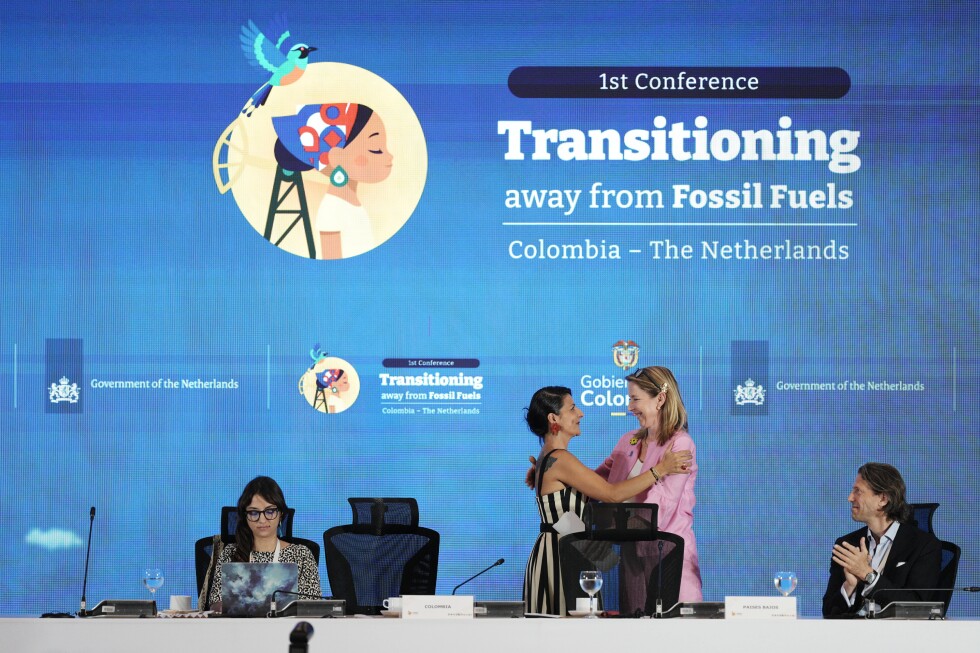
High-level talks begin on moving away from fossil fuels at Colombia conference
High-level international negotiations focused on accelerating the global transition away from coal, oil, and gas officially launched Tuesday in Santa Marta, the Caribbean coastal hub of Colombia, bringing together more than 50 nations to push for bolder climate action after decades of stalled progress in formal global climate talks. This two-day ministerial and senior official segment forms the political core of the inaugural *First Conference on Transitioning Away from Fossil Fuels*, a landmark gathering convened outside the framework of United Nations climate negotiations to directly address the leading drivers of anthropogenic global warming that formal processes have long failed to tackle head-on.
Co-hosted by Colombia and the Netherlands, the conference opens with a clear, unifying core message from participating policymakers. Stientje van Veldhoven, Dutch minister for climate policy and green growth, emphasized that a full phase-out of fossil fuels is an unavoidable imperative, noting it delivers dual benefits beyond climate stability: strengthened national energy independence and enhanced energy security for all nations.
The summit itself emerged from growing frustration among climate-focused governments and grassroots advocacy groups, who argue that 30 years of U.N.-led climate negotiations have avoided direct, binding action to curb fossil fuel production. While recent formal U.N. talks have formally acknowledged the need for a global transition away from fossil fuels, deep divides persist between nations over implementation frameworks and, critically, how to fund the shift for lower-income and developing economies. That divide is on clear display even within host nation Colombia.
Security measures were tightened at the oceanfront Santa Marta hotel hosting the conference, in advance of an address scheduled Tuesday afternoon from Colombian President Gustavo Petro. The leftist Colombian leader has positioned his country as a global leading voice for fossil fuel phase-out, and has followed through on a campaign pledge to halt new oil and gas exploration in Colombia, despite the fact that the Andean nation remains heavily reliant on oil and coal exports to drive its national economy. With a national election just one month away, Petro is balancing his ambitious global climate leadership with domestic political tensions, visible on the streets outside the conference venue: members of a local mining union gathered to protest both Petro and the summit, holding signs reading “I arrive at the conference by plane to criticize the oil industry” and “More oil, less Petro”, chanting demands to protect existing fossil fuel jobs.
Even amid domestic friction, Colombian officials framed the gathering as a defining moment for cross-border climate solidarity. Colombian Environment Minister Irene Vélez Torres opened the conference by urging participants to turn climate ambition into collective action, calling the summit a potential turning point in global history. “Let this conference be the moment when ambition becomes solidarity and when cooperation becomes the path toward a future beyond fossil fuels,” she said Tuesday morning.
Grassroots and youth activists at the opening plenary echoed that urgency, while pushing for a just transition that centers frontline communities disproportionately harmed by fossil fuel extraction and climate change. Yuvelis Morales Blanco, a 25-year-old climate activist from Puerto Wilches, Colombia, called on governments to move past vague pledges and adopt direct, concrete policy action to phase out fossil fuels and protect intact ecosystems. “We are called to make real the world we have imagined,” she said. “We demand energy justice, climate justice and justice for youth and children.”
Debates through the opening day of the conference have zeroed in on the biggest practical barrier to a global transition: affordable financing, particularly for developing nations that face steep borrowing costs and limited access to affordable capital to scale renewable energy infrastructure. Van Veldhoven emphasized that unlocking low-cost financing is non-negotiable for a global, equitable transition, noting that many low- and middle-income nations face crippling debt burdens and limited fiscal space to invest in clean energy. Participants have also debated the effectiveness of policy tools including carbon markets and fossil fuel subsidy phase-outs, alongside discussions to ensure the transition does not replicate historical patterns of extractive resource development that have harmed Indigenous and local communities.
Unlike formal U.N. climate talks, the Santa Marta conference will not produce binding international agreements. Instead, organizers designed the summit to build grassroots and political momentum for faster action, and to coordinate a bloc of nations willing to accelerate phase-out outside the slow formal U.N. process. The gathering is also seen as a critical steppingstone ahead of upcoming global climate negotiations, where fossil fuel phase-out timelines and transition finance will remain core sticking points for global negotiators.
In a pre-conference announcement Monday, small island developing nation Tuvalu — one of the countries most vulnerable to sea-level rise driven by climate change — revealed it will host the second iteration of the fossil fuel transition conference. Scientists and U.N. climate experts project the low-lying South Pacific nation could be completely submerged by rising ocean waters by 2100 if global emissions continue on their current trajectory, making the fight to phase out fossil fuels an existential priority for the Tuvaluan people.
-
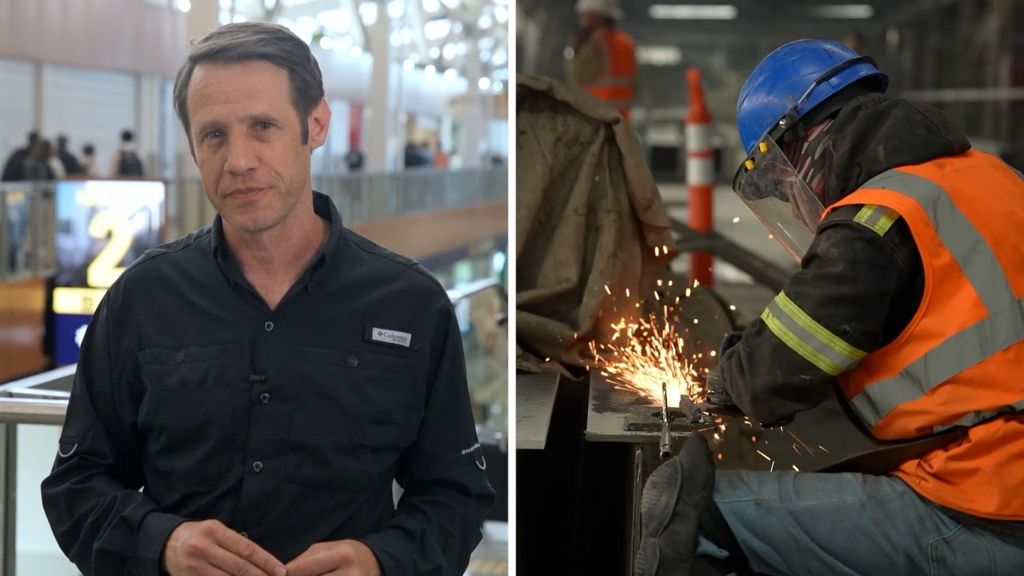
Will Mexico City’s airport be ready for the World Cup?
As the countdown to the 2026 FIFA World Cup continues, all eyes are turning to host cities across North America to see if critical infrastructure projects will be finished on time. One of the most high-stakes projects currently underway is the major renovation initiative at Mexico City’s Benito Juárez International Airport, a key gateway that will handle millions of visiting fans, players, and media personnel when the tournament kicks off in less than three years.
The British Broadcasting Corporation has launched a detailed examination of this ongoing upgrade work, which centers on expanding the airport’s overall passenger capacity to accommodate the unprecedented surge in air travel expected during the global sporting event. Benito Juárez already serves as Mexico’s busiest air hub, handling tens of millions of passengers annually, even before accounting for the extra traffic the 2026 World Cup will bring. The renovations are designed to upgrade terminal facilities, streamline processing lines, and boost the airport’s maximum throughput to prevent widespread travel disruptions that could overshadow the tournament.
The question on many industry analysts and soccer fans’ minds remains whether construction crews can meet the tight deadline set before the first match of the 2026 World Cup. Infrastructure delays have plagued major global events in the past, making this ongoing project a critical test of Mexico’s ability to deliver on its tournament commitments. The BBC’s in-depth review comes amid growing public interest in the progress of all host nation infrastructure, as stakeholders work to ensure the 2026 World Cup – the first co-hosted by three North American nations, and the largest edition in tournament history – runs smoothly from start to finish.
-
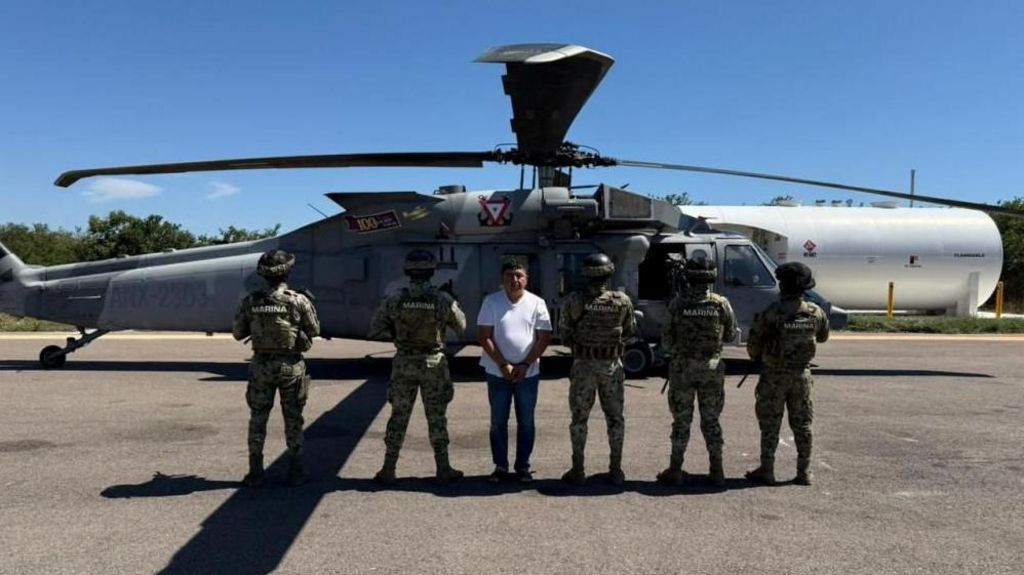
Mexican cartel leader found hiding in a ditch
In a high-stakes, large-scale security operation that marks one of the most significant victories against Mexican organized crime in recent months, Mexican security forces have apprehended a senior leadership figure of the Jalisco New Generation Cartel (CJNG), one of the world’s most powerful and violent transnational criminal networks.
The target, 45-year-old Audias Flores Silva—known widely by his cartel alias “El Jardinero” or “The Gardener”—was tracked down and captured without resistance on Monday in the western Mexican state of Nayarit. After roughly 500 security personnel closed in on his hiding location, Flores was found concealing himself in a large cement drainage ditch, his legs visible protruding from the pipe as armed officers moved in. Footage released by the Mexican Navy shows military helicopters hovering over a remote cabin in the area prior to the arrest, confirming the coordinated nature of the raid. Following his capture, Flores was immediately airlifted via helicopter to a maximum-security detention facility for holding.
Senior Mexican officials have confirmed that Flores served as the closest right-hand associate to Nemesio “El Mencho” Oseguera, the former founder and leader of CJNG who was Mexico’s most-wanted criminal. El Mencho died two months ago from injuries sustained during a clash with military forces deployed to arrest him, and Flores was widely named among the top candidates expected to take control of the entire cartel in the wake of El Mencho’s death. Unlike his former boss, who died in a gunfight with security forces, Flores surrendered without any resistance when officers closed in on his hiding spot.
Mexico’s Security Secretary Omar García Harfuch publicly announced the successful operation via social media, where he commended the personnel of the Mexican Navy for their work. “I recognize the bravery, discipline and dedication of the women and men of the Mexican Navy who carried out this key operation against organized crime,” Harfuch wrote.
The arrest carries major cross-border significance, as the United States had long targeted Flores for his role in the cartel’s drug trafficking operations. The U.S. State Department had offered a $5 million reward for information leading to Flores’ capture, and U.S. Ambassador to Mexico Ronald Johnson praised the operation in a post on X, calling the arrest “an important step” in disrupting transnational criminal activity. “Actions like this strengthen security on both sides of our border and help dismantle criminal networks that threaten communities in both our countries,” Johnson wrote.
For Mexican President Claudia Sheinbaum, the successful capture represents a major policy win, as her administration has faced growing pressure from U.S. President Donald Trump to step up efforts to combat cartels smuggling illicit drugs from Mexico into the United States. In a precautionary move to prevent widespread violence following the high-profile arrest, Sheinbaum’s security cabinet deployed additional security personnel to Nayarit and surrounding regions, a response shaped by the wave of coordinated unrest that swept through eight Mexican states after El Mencho’s death in February.
Initial reports confirm that scattered retaliatory attacks have already occurred, with cartel affiliates setting fire to six vehicles and six local businesses in response to Flores’ arrest. However, Nayarit’s governor Miguel Ángel Navarro Quintero told reporters Tuesday that the security deployment has kept the situation under control, confirming no major roadblocks have been established by cartel members and that overall public order remains calm across the state.
-
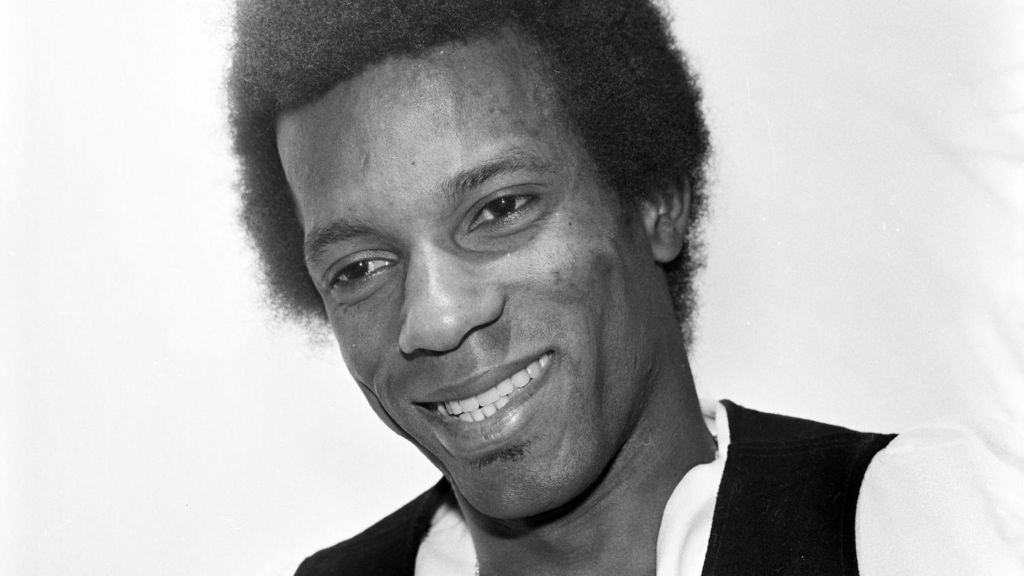
Hot Chocolate founder and You Sexy Thing co-writer Tony Wilson dies
The global music community is mourning the loss of Tony Wilson, the bassist, core songwriter and co-founding member of pioneering British soul band Hot Chocolate, who passed away at 89 at his home in Trinidad.
Wilson’s family confirmed the news of his death on social media over the weekend, sharing heartfelt tributes and memories of the legendary musician. “Dad left us today. He left a lot of music behind… forever and ever,” his daughter wrote on Facebook, adding that Wilson had faced his final days with calm faith, surrounded by his loved ones. His son Danny Wilson opened up about the late musician’s relentless drive to bring his work to audiences, recalling recently discovered 1970s diaries that laid bare the grueling work and repeated setbacks Wilson endured amid the cutthroat 1970s music industry. “It wasn’t until my mum dug out some old diaries of his from 1970 and ’71 that I realised just how hard he had to work to achieve this dream,” Danny said. “Trust me, it is truly staggering. The knock backs, the interviews, the touring, the radio shows, the meticulous documenting of record sales. All the pressures of what was a cut throat music industry in the 70s. It’s all in those diaries.”
Born in Trinidad, Wilson cut his teeth performing with a string of regional groups including The Flames, The Souvenirs, and The Corduroys before teaming up with friend Errol Brown to found Hot Chocolate in the late 1960s. The band’s first big break came in 1969, when they sent a reggae reimagining of John Lennon’s “Give Peace a Chance” directly to the Beatle himself. As Brown recalled in a 2009 BBC Breakfast interview: “Amazingly, a week later I got a call to say John Lennon approved it and wanted to sign the band to the Apple record label. And that’s how we began.”
The group soon built a working relationship with iconic hitmaker Mickie Most, and honed their craft penning tracks for other prominent acts including Mary Hopkin, Julie Felix and Herman’s Hermits before stepping into the spotlight as headliners. Their genre-blending sound, which wove together soul, rock, reggae and disco influences, resonated with audiences around the world, turning them into one of the most consistent hitmaking acts of the 1970s.
Wilson co-wrote many of the band’s most enduring hits alongside frontman Brown, including the chart-topping classics “Emma” and “You Sexy Thing” that cemented Hot Chocolate’s place in pop history. The band made history as the first majority-Black British group to score major mainstream chart success in the United States, where “Emma” became their first breakthrough top 10 hit in 1975. The following year, “You Sexy Thing” became the band’s career-defining hit, reaching platinum status in the UK and spending multiple weeks in the US top 10; the track even returned to the charts more than two decades later after being featured in the hit 1997 comedy film *The Full Monty*. Across 15 consecutive years starting in 1970, Hot Chocolate landed at least one hit single on the UK charts every year – a record-breaking milestone that made them the first act ever to achieve this feat in British chart history, and earned the band multiple platinum certifications in their home country.
Shortly after the band’s commercial peak in the mid-1970s, Wilson departed Hot Chocolate to revive his solo career, which had first begun with a string of singles released via Decca Records in the 1960s. While his two full-length solo albums – 1976’s *I Like Your Style* and 1979’s *Catch One* – failed to make a major commercial splash, Wilson earned posthumous acclaim for his 1983 experimental track “Hangin’ Out In Space”, which is now recognized as a pioneering precursor to the 1980s electro-soul movement. After releasing a career-spanning compilation, *Sweet ‘N’ Soulful – The Tony Wilson Story*, in 1988, Wilson stepped back from releasing new music, though he remained a beloved figure among fans, who followed updates shared by his family on social media in recent years, including celebrations of his 88th birthday in 2024. In 2022, one of Wilson’s beloved bass guitars even got a star turn on the popular BBC series *The Repair Shop*, where it was restored for the musician.
After Brown’s death in 2015, Wilson shared a public tribute to his former bandmate on his Facebook page, writing: “Rest in peace Errol Brown. Heartfelt condolences to your family, friends, and all fans.” Brown had previously reflected on his partnership with Wilson in a 1998 interview with *The Independent*, saying that while the two had lost touch in later years, he would always be grateful for Wilson’s early role in launching his career: “However, I will always be grateful to him for planting the seed and helping me find myself.”
In the days following the Wilson family’s announcement of his death, Wilson’s public Facebook page was flooded with tributes from fans, fellow musicians and admirers across the globe. No cause of death has been publicly disclosed at this time.
-
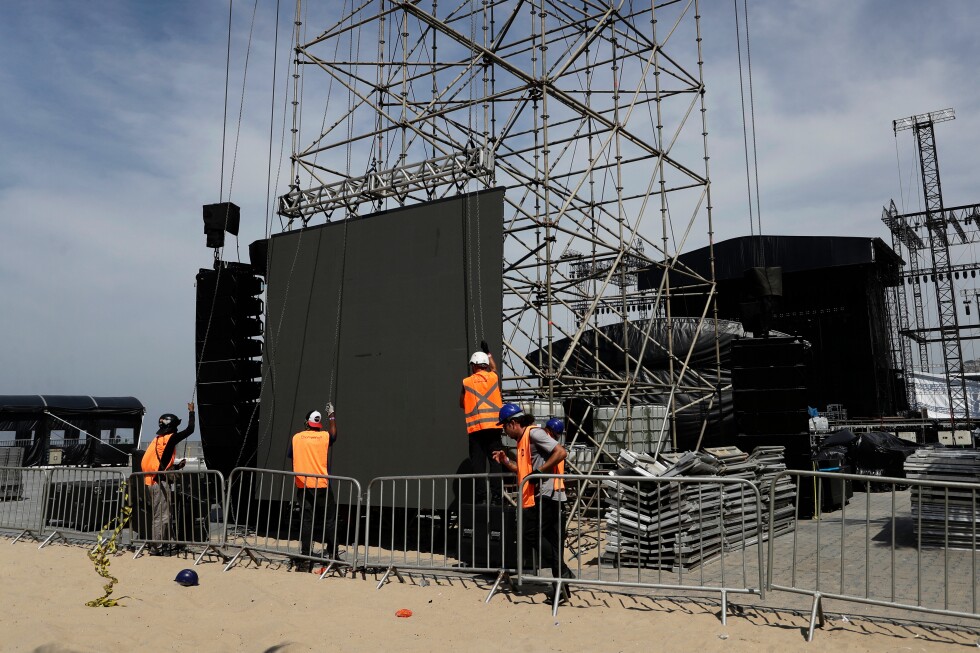
Construction of the stage for Shakira’s concert in Brazil resumes after worker’s death
RIO DE JANEIRO — Construction work on the concert stage for global pop icon Shakira’s upcoming performance at Rio de Janeiro’s iconic Copacabana Beach has restarted, just one day after a fatal on-site accident forced a temporary halt to preparations. The 28-year-old victim, locksmith Gabriel de Jesus Firmino, was killed Sunday when he was crushed between two moving stage elevators after the equipment was mistakenly activated by another construction worker, law enforcement officials confirmed.
Local lead investigator Ângelo Lenges confirmed that the Brazilian construction company contracted to build the open-air stage is now the subject of an official probe, with investigators focusing on allegations that the firm failed to meet mandatory Brazilian workplace safety standards. As of Tuesday, the boundary-breaking Colombian superstar, who is wrapping her first global tour in six years, has not issued any public statement regarding the tragedy.
Shakira’s free concert, scheduled for next Saturday evening on Copacabana’s world-famous shoreline, is expected to draw a massive crowd, following in the footsteps of Lady Gaga’s 2023 free performance that brought more than 2 million fans to the beach in what became the largest show of her career. This stop will cap off the singer’s first world tour since 2018, a run that has broken multiple attendance records across the globe.
Public reaction to the accident among Rio residents and beach visitors has been marked by grief for the victim combined with broad support for keeping the concert on its original calendar. Walking along the beach near the construction zone Monday morning, 41-year-old local singer Anita Costa shared a common sentiment. “It is a sad thing that this happened,” she told reporters. “But the concert should go on.”
Concert organizers have released an official statement extending their condolences and solidarity to the construction firm, its on-site staff, and the family of Firmino, who lost his life in the lead-up to the event. The Associated Press continues to cover developments across Latin America and the Caribbean, with full coverage available on its dedicated regional hub.
-
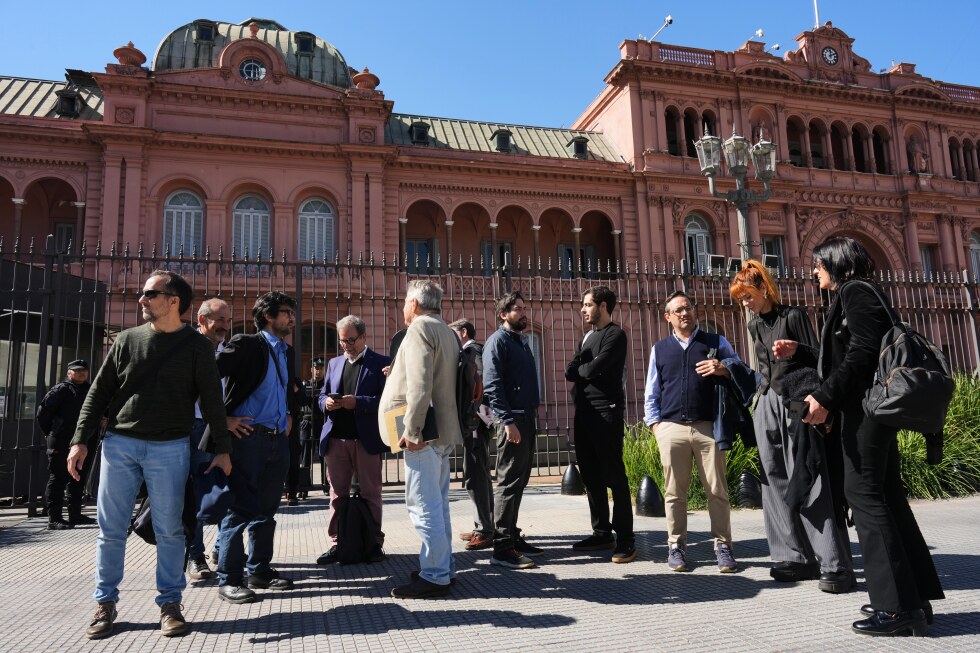
Argentina’s leader bars journalists from government HQ, raising concerns about press freedom
BUENOS AIRES, Argentina — In a move that has sent shockwaves through Argentina’s democratic landscape, President Javier Milei has barred the entire corps of accredited reporters from entering the Casa Rosada, the country’s iconic presidential headquarters, capping off a months-long pattern of aggressive hostility toward independent journalism that mirrors the anti-media rhetoric of his ideological ally, former U.S. President Donald Trump.
The unprecedented ban, implemented last week, followed a dispute over unauthorized footage filmed inside the presidential complex by reporters from Argentina’s Todo Noticias network. According to presidential spokesperson Javier Lanari, the move was implemented as a “preventative measure” after the outlet aired footage captured with hidden smart glasses, which the government frames as illegal espionage. But the network’s journalists push back against this characterization, noting they notified administration press officials of their filming plans in advance, and the footage only captured publicly accessible areas of the building that have been featured on national television before.
Rather than limiting criticism of his administration, the ban has sparked unified condemnation from across Argentina’s political spectrum, press freedom organizations, and watchdog groups. For a nation that has celebrated a vibrant, independent press since the end of its military dictatorship in 1983, observers say the full exclusion of the press from the presidential seat marks the most severe attack on press freedom in four decades.
“It’s the culmination of the government’s contempt for journalism and its value in a democracy,” explained Fernando Stanich, president of the Argentine Journalism Forum, a leading professional press association.
Cristina Zahar, Latin America coordinator for the New York-based Committee to Protect Journalists, framed the administration’s actions as a clear sign of authoritarian drift, even as Argentina remains formally democratic. “An autocrat who tries to curtail press freedoms, who tries to prevent journalists from reporting and keeping society informed about public interest matters,” Zahar said.
Milei, a radical libertarian outsider who rose to the presidency in 2023 on a platform of slashing government spending and upending Argentina’s established political order, has never moderated his provocative, anti-establishment rhetoric since taking office. An avid daily user of the social platform X, the president has leaned increasingly heavily into anti-media attacks in recent months. An analysis of Milei’s X feed conducted by leading Argentine daily *La Nación* between April 2 and 5 found that Milei published 86 original posts taunting and insulting journalists over just four days, and reshared an additional 874 similar attacks. Many of these posts repeated his signature slogan, “We don’t hate journalists enough,” repeated his false claim that 95% of Argentine journalists are active criminals, and included crude sexual innuendo or targeted insults directed at individual reporters critical of his administration.
Hours after the press ban was implemented, Milei published an angry all-caps post attacking reporters as “disgusting scum,” adding “how about you try stopping the lies? Oh I forgot, you lot are corrupt junkies hooked on advertising bucks and bribes.” He also shared an AI-generated deepfake image that depicted a prominent Argentine television reporter wearing an orange prison jumpsuit, a clear threat of political prosecution against critical journalists.
Long before the full ban on press access, Milei had restructured how his administration communicates with the public, sidelining traditional journalistic institutions in favor of unmediated social media outreach, a strategy also honed by Trump. Milei has never held a formal presidential press conference in his tenure, rarely grants interviews to established national outlets, and instead pushes his messaging through viral slogans and AI-generated memes. He frequently appears on right-wing influencer radio programs, and has hired prominent social media provocateurs for senior administration roles, a move that has emboldened his base to adopt stigmatizing, hostile language toward working journalists.
Following Trump’s playbook of using legal action to harass critical outlets, Milei has filed defamation lawsuits against at least eight independent journalists over the past 12 months, and encouraged his political allies to do the same. Alejandro Alfie, a media reporter for Argentina’s largest newspaper *Clarin* who has investigated networks of anonymous pro-Milei troll accounts, currently faces four defamation lawsuits from Milei’s close allies that seek millions of pesos in damages. Alfie says he has faced ongoing threats of violence, doxxing, and harassment from Milei’s supporters, demonstrating that the president’s rhetoric carries tangible, dangerous real-world consequences.
“People say, ‘Oh, it’s not real. It’s just social media.’ But when you have someone telling you on Instagram every day that they will kill your children, it is something else entirely,” Alfie said.
Milei has also taken systemic steps to weaken press access beyond personal attacks and lawsuits. In 2024, he shut down Telam, Argentina’s long-running state news agency, which he accused of operating as a propaganda outlet for left-wing opposition parties — a move echoing Trump’s push to cut federal funding for U.S. public media outlets PBS and NPR over claims of biased coverage. Telam has since been restructured into a state-run advertising agency. Milei also signed changes to Argentina’s open records law that drastically reduced the volume of government information available to the public and reporters.
Many correspondents who were barred from the Casa Rosada last week say the full ban did not come as a surprise. Over the past year, the administration has incrementally restricted press movement inside the building, closing off entire wings to reporters and capping attendance at official press briefings. Earlier this month, six accredited outlets were already barred from both the Casa Rosada and Argentina’s lower congressional chamber over unsubstantiated claims that their reporters were involved in Kremlin-backed disinformation, claims the outlets have emphatically denied.
The Todo Noticias smart glasses incident, observers say, was merely a convenient pretext to extend existing restrictions to the entire press corps. “It was the perfect excuse to extend the punishment to the entire press corps,” said Jaime Rosemberg, a political correspondent for *La Nación* who was among the 60 blocked reporters.
The backlash to the ban has been swift: an opposition lawmaker has already filed a lawsuit against the administration over the order, and a cross-party group of a dozen legislators has called for an urgent meeting with senior government officials to address what they call an “institutional undermining of freedom of expression.”
The anti-press campaign comes as Milei faces growing political and economic headwinds: recent polling from AtlasIntel shows the president’s public approval rating has fallen to the lowest point of his presidency. His signature campaign promise to eliminate Argentina’s decades-long chronic inflation has stalled, unemployment has risen, and the national economy has contracted. Adding to his troubles, close ally and chief of staff Manuel Adorni is currently under investigation for misuse of public funds, a corruption scandal that echoes the elite misconduct Milei campaigned against.
Many political analysts and journalists draw a direct line between the administration’s mounting challenges and its escalating attacks on the media, which have long served as a convenient scapegoat for unpopular outcomes. “It’s a very bad moment for the president,” Rosemberg said. “And often the easiest thing to do in that moment, what you have closest at hand, is to blame the press for everything.”
-
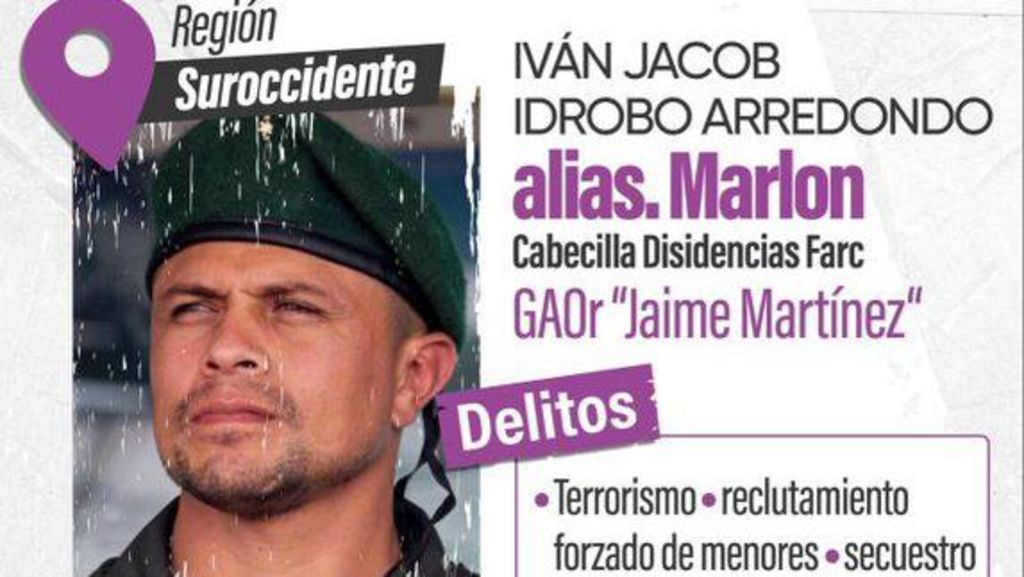
Colombia offers record $1.4m-reward for rebel it blames for deadly bomb attack
A wave of brutal coordinated attacks that left 20 civilians dead in southwestern Colombia has triggered a massive manhunt, with national authorities offering the largest reward in the country’s history for information leading to the capture of the suspected mastermind. Colombian Defence Minister Pedro Sánchez announced the 5 billion peso ($1.4 million) bounty for Iván Jacob Idrobo Arredondo, the dissident rebel commander more widely known by his alias “Marlon”.
Sánchez has formally accused Marlon of ordering Saturday’s deadliest attack—a roadside bomb detonation on the Pan-American Highway linking the cities of Cali and Popayán—along with a string of other violent incidents over the same weekend across Cauca and Valle del Cauca provinces. To date, government officials have not released public evidence or additional operational details supporting the accusation. Local authorities confirmed that the highway blast, which tore a massive crater in the road and destroyed multiple passenger buses and civilian vehicles, killed 15 women and five men, marking one of the deadliest attacks on innocent civilians in recent Colombian history.
The targeted attack comes just over one month before Colombia’s national presidential election scheduled for May 31, injecting new volatility into an already tense political campaign. Marlon is a senior commander in an armed faction led by Iván Mordisco, the country’s most-wanted dissident rebel leader. Mordisco was originally a member of the Revolutionary Armed Forces of Colombia (Farc), but split from the group shortly before it signed a landmark 2016 peace deal with the Colombian government. Today, Mordisco’s faction is widely recognized as Colombia’s most powerful dissident rebel organization, with documented involvement in illegal mining, extortion, and large-scale drug trafficking operations across the country’s southwestern regions.
Cauca Governor Octavio Guzmán called Saturday’s highway bombing “the most brutal and ruthless attack against the civilian population in decades”, echoing widespread public outrage over the violence. Colombian President Gustavo Petro, whose current term ends in August this year, labeled those responsible for the attacks “terrorists, fascists and drug traffickers” and immediately deployed additional military troops to the unrest-plagued region to step up security operations.
Per Colombia’s constitution, Petro is barred from running for a second consecutive term, and he has thrown his support behind left-wing candidate Iván Cepeda in the upcoming election. Cepeda has campaigned on a platform of renewing negotiation efforts with rebel dissident groups, and recent opinion polling shows him holding a slim lead over a field of right-wing opposition candidates who have advocated for a far harder military-first approach to counter insurgency. If no candidate wins an outright majority in the May 31 vote, a run-off election will be held on June 21 to determine the country’s next president.
-

Making history and facing Neymar – Lingard on life in Brazil
Veteran English forward Jesse Lingard is making history as the first English player to compete in Brazil’s top-tier football league, and he is opening up about his new chapter with Corinthians, his reflections on former club Manchester United, and his outlook ahead of the 2026 World Cup.
The 33-year-old, who joined Corinthians after a spell at FC Seoul following his exit from Manchester United in 2022, has already notched his first goal for the Brazilian club in the Copa do Brasil, just weeks after his arrival. When the transfer was first announced, it raised eyebrows across Brazilian football — local pundit Mauro Cezar Pereira even labeled the move a “strange signing”. But Lingard has quickly settled into his new surroundings, saying the challenge of playing for a massive club in one of the world’s most competitive leagues drew him to the opportunity.
“I had other offers on the table, but I came here to push myself,” Lingard told BBC Sport in his first major interview since relocating to Sao Paulo. “This is still high-level football, and I know I can perform at this standard. My goal here is simple: I’ve come to lift a trophy.”
Lingard credits former Manchester United teammate Memphis Depay for convincing him to make the move to Corinthians, with the Dutch winger helping him navigate the early days of adapting to life in Brazil. The Englishman made his debut for the club earlier this month at Rio de Janeiro’s iconic Maracana Stadium, facing off against Fluminense. After months of limited game time and periods of solo training, Lingard described stepping out onto the famous pitch as an “amazing” experience.
Turbulence hit the club just a week after his debut, however: manager Dorival Junior was sacked following an eight-match winless streak that left Corinthians lingering in the relegation zone. Since former Brazil interim manager Fernando Diniz took charge, the club has notched back-to-back wins in Copa Libertadores matches, turning early momentum around.
One of the most striking adjustments for Lingard has been the raw intensity of Corinthians’ global fanbase, with supporters regularly turning up at the club’s training ground to interact with players. “I’ve never experienced anything like this before,” he said. “Fans coming into the training ground to talk to us, you can feel just how passionate they are about the club. That passion pushes us harder to get results on matchday, even when it means extra scrutiny when we don’t perform.”
Language has been another key challenge for Lingard. Unlike his time at FC Seoul, where he relied on a full-time translator, the forward is adjusting to life in Brazil without dedicated translation support. While a handful of his teammates speak basic English to help him communicate, he says he is determined to learn Portuguese — a goal he finds more attainable than mastering Korean. He has already picked up basic phrases, including how to greet people and order coffee.
Lingard, who spent 20 years at boyhood club Manchester United before leaving in 2022, continues to follow the club’s fortunes closely, describing his two decades at Old Trafford as an “amazing chapter” of his career. After departing United, he briefly played for Nottingham Forest before moving to FC Seoul, a move that surprised many but one Lingard says he needed to reset his focus on football.
Manchester United has endured a turbulent 2025-26 season, but has seen a dramatic upturn in form since Michael Carrick — another former Red Devils teammate of Lingard’s — took over as interim manager in January. The club is now on track to secure a return to the UEFA Champions League, and Lingard has thrown his full weight behind Carrick getting the job on a permanent basis.
“United have come on leaps and bounds under Michael, and he absolutely deserves to keep the role long-term,” Lingard said. “I know him from our time playing together at the club. He has Manchester United DNA running through him, he knows every part of this club, and the squad is thriving under his direction. Constant managerial turnover brings challenges with new ideas and new personnel, but right now United are definitely on the right track with Michael in charge.”
Lingard remains in close contact with current United captain Bruno Fernandes, who is having a career-best season in the Premier League, notching 18 assists with five matches remaining — just two short of the league’s all-time single-season assist record. When former teammate Paul Pogba recently claimed Fernandes would be a serious Ballon d’Or contender if he played for a club like Manchester City, Lingard says Fernandes deserves a spot in the running regardless of his club.
“100% he should be up there,” Lingard said. “His performances this season for United have been extraordinary. He has to be considered among the best players in the race for the award.”
Asked about his favorite Brazilian footballers, Lingard named global superstars Neymar and 2005 Ballon d’Or winner Ronaldinho. He says he occasionally stays in touch with Neymar, who currently plays for Santos, and he is excited by the prospect of facing the world-class forward if the two clubs meet later in the season. “It’s always a great test to play against the best players in the world,” he said.
Lingard previously went viral for teasing former United teammate Marcus Rashford over a viral moment where Rashford was spotted only talking about the weather with Neymar in a match tunnel. When asked what he would say in the same situation, he laughed: “There would be too many memes about it anyway, to be honest. I might actually mention the Brazilian weather — it is always sunny here!”
Looking ahead to the 2026 FIFA World Cup this summer hosted in North America, Lingard named Brazil, England and France as the tournament’s top contenders, and he is backing his home nation England to go all the way and lift the trophy. “We’ve always had a very strong chance in big tournaments, and we always perform well when it matters,” he said. “I believe in the lads, I know how good they are, so there’s no reason we can’t win it this time around.”
Lingard is currently signed to Corinthians on a short-term contract running through the end of 2025.
-
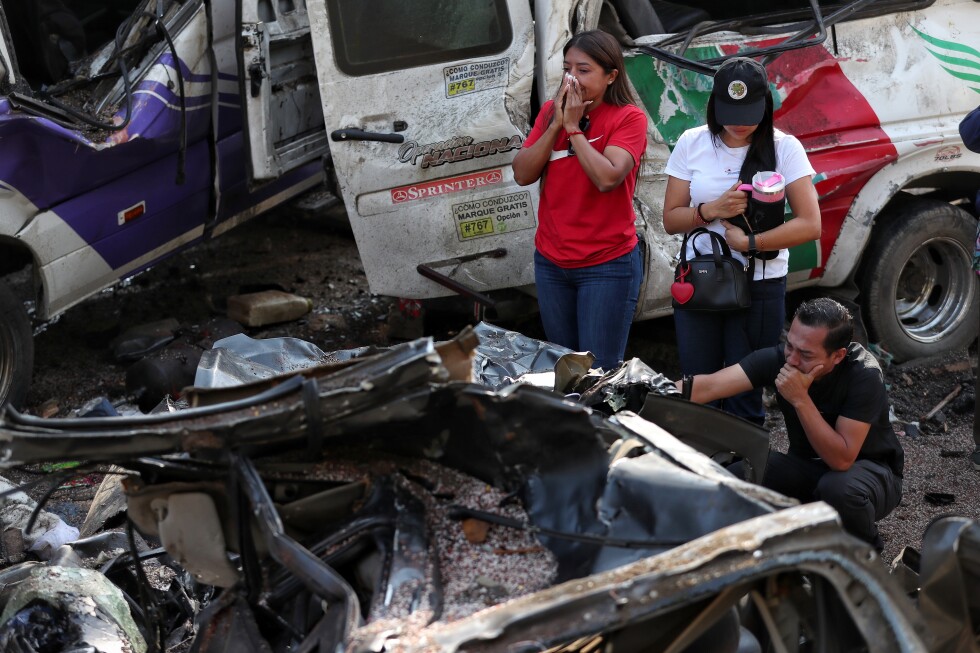
Death toll from bus bombing in southwest Colombia rises to 20 during a wave of violence
On a quiet Saturday along Colombia’s critical Pan-American Highway, a hidden explosive device ripped through a civilian passenger bus traveling through the municipality of Cajibio, leaving a trail of death and devastation that has shaken the South American nation. Regional authorities confirmed Sunday that the death toll from the attack has climbed to 20, with 15 women and five men counted among the fatal victims.
Octavio Guzmán, governor of the hard-hit Cauca department, shared updated details on the social platform X, noting that 36 additional people were wounded in the blast. Three of those injured remain in intensive care, while five child victims are expected to make a full recovery, according to Guzmán’s update. Forensic teams have launched a full identification effort to confirm the identities of all those killed: Colombia’s Institute of Legal Medicine has deployed a multi-disciplinary team of specialists, including forensic dentists, anthropologists, and medical examiners, to process remains and notify next of kin.
This deadly bombing is not an isolated incident. Over the past 72 hours alone, more than two dozen violent attacks have been recorded across southwestern Colombia, a long-troubled region marked by power struggles between illegal armed factions. These groups have long fought to control lucrative coca growing territories and strategic river and coastal smuggling routes that feed multi-billion dollar drug trafficking networks supplying Central American and European illicit drug markets.
Top Colombian military leaders have labeled the attack a clear act of terrorism. Gen. Hugo López, commander of Colombia’s national Armed Forces, pinned responsibility for the bombing on two dissident factions originating from the now-disbanded Revolutionary Armed Forces of Colombia (FARC): the network of Iván Mordisco, one of the country’s most-wanted fugitive leaders, and the Jaime Martínez faction, both of which maintain a heavy armed presence in Cauca.
International bodies have joined in condemning the violence against civilian communities. The United Nations High Commissioner for Human Rights issued a formal statement rejecting the attacks, calling on Colombian law enforcement and judicial authorities to launch a full, transparent investigation into the incident and ensure accountability and justice for all those affected. In response to the tragedy, Governor Guzmán announced a three-day period of national mourning across Cauca on Sunday to honor the lives lost in the attack.