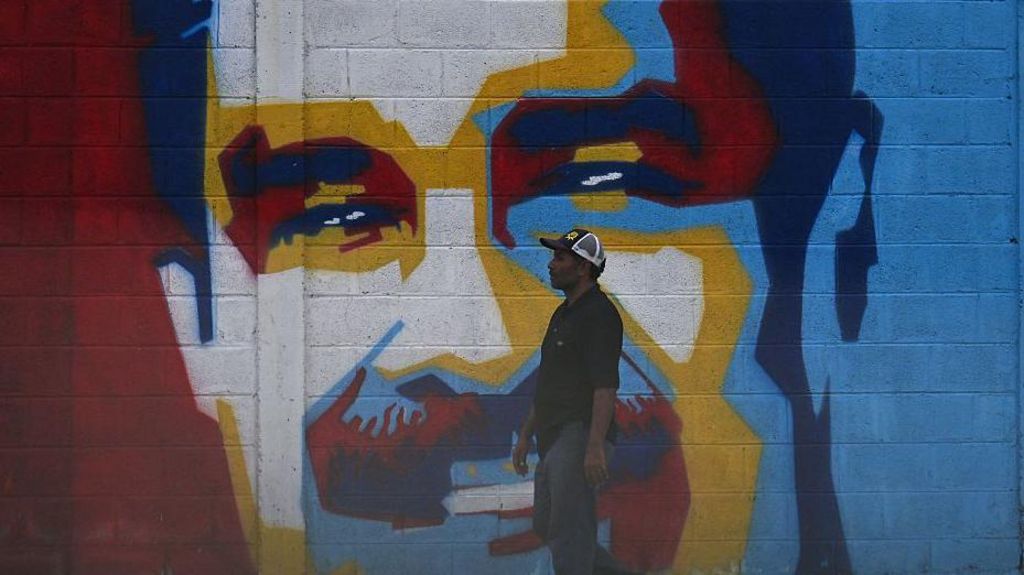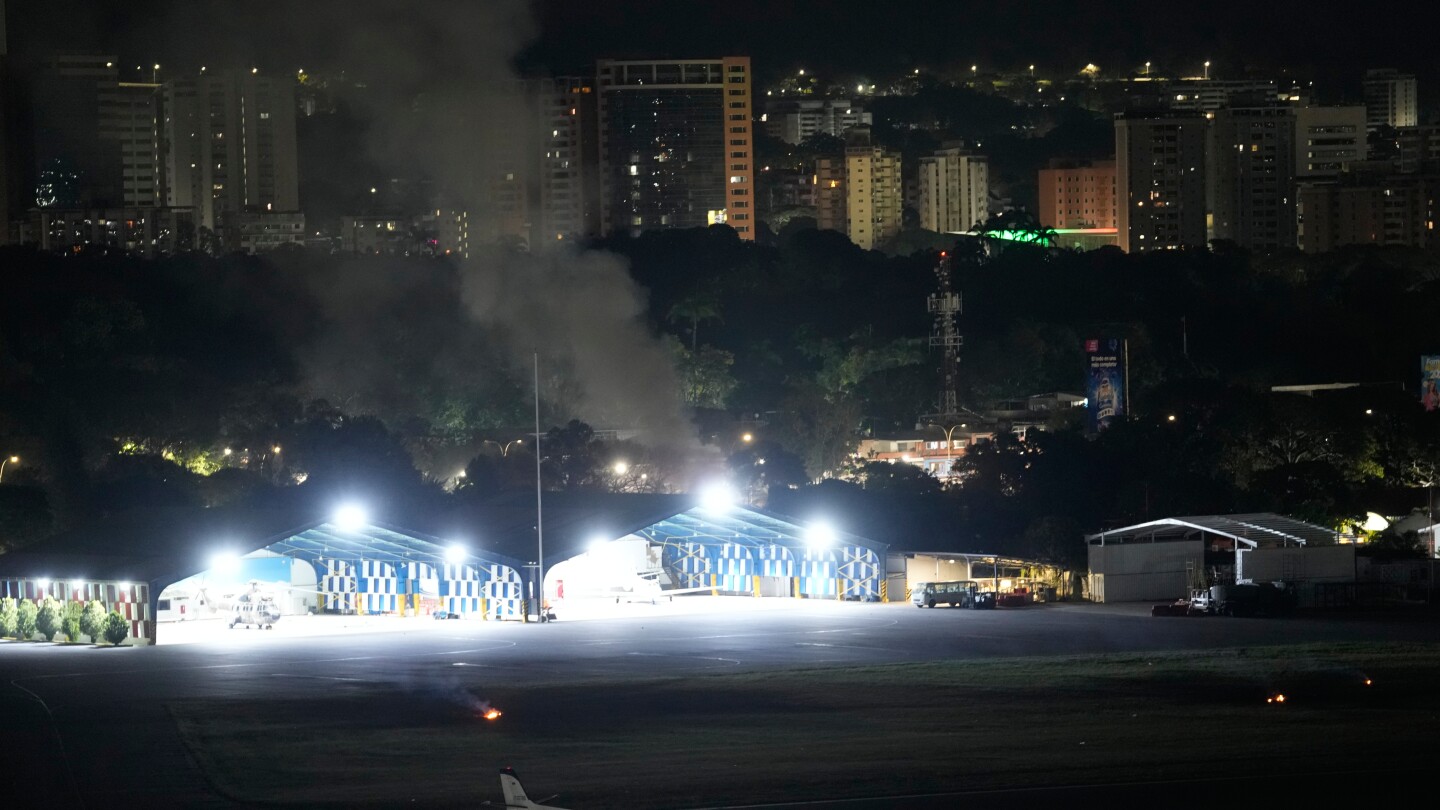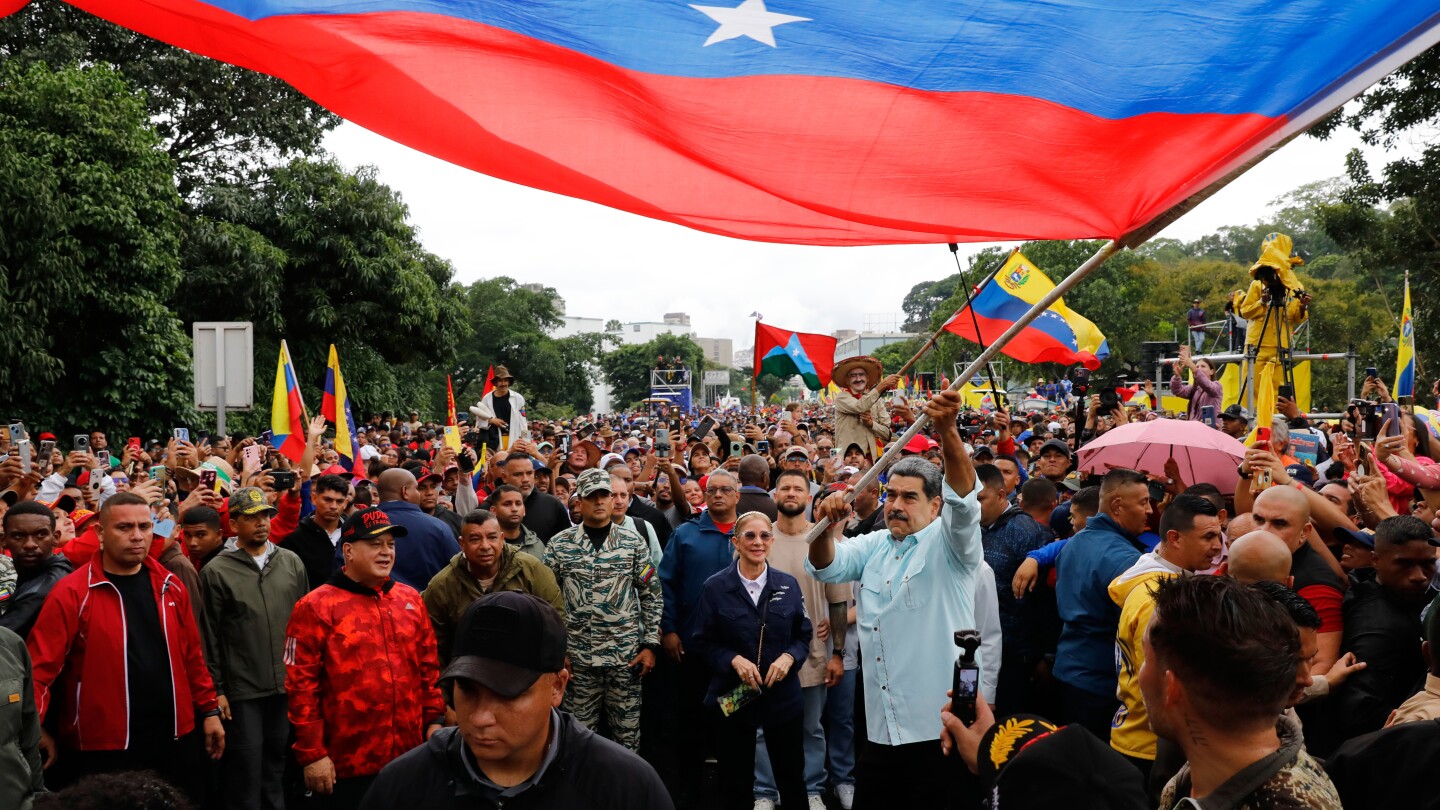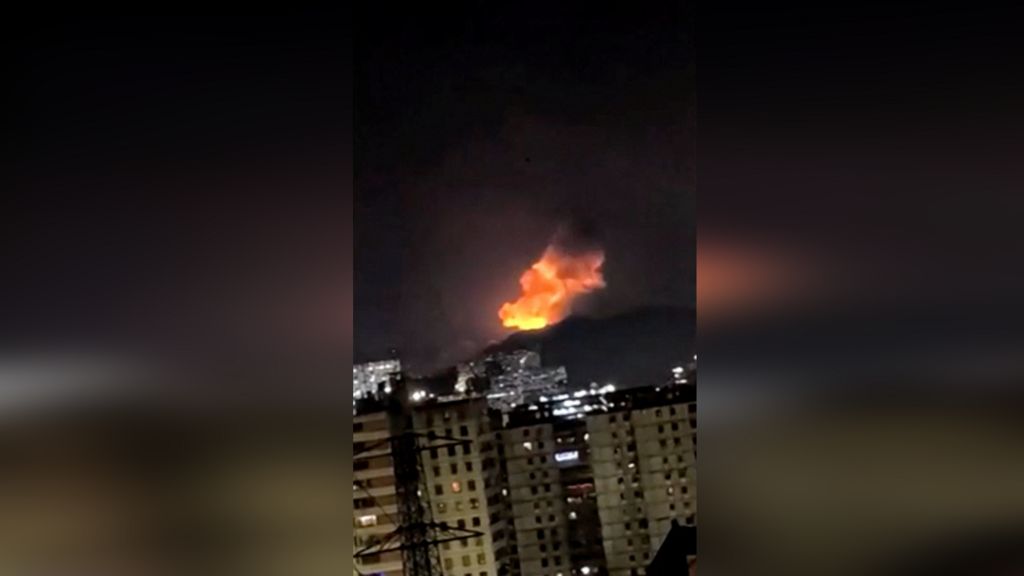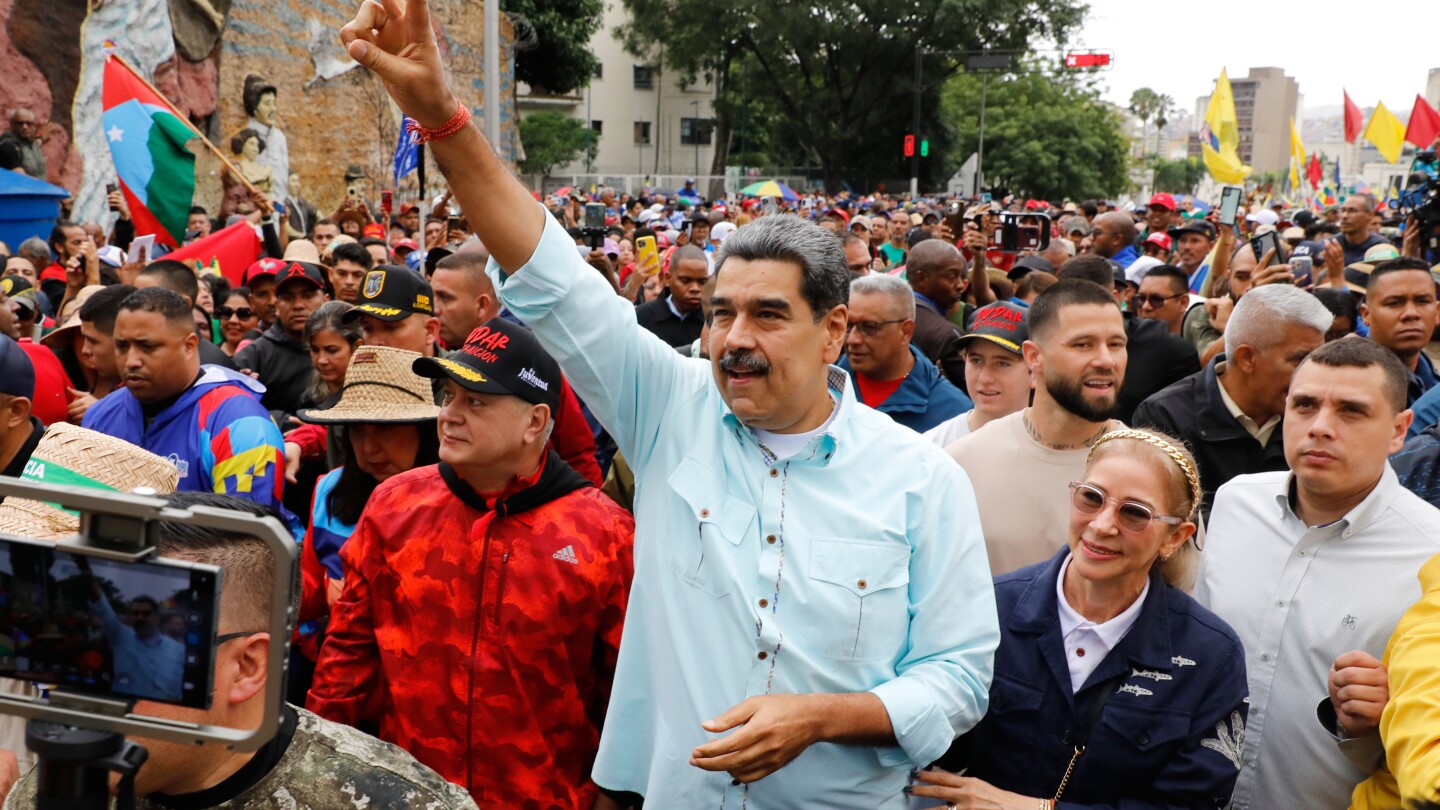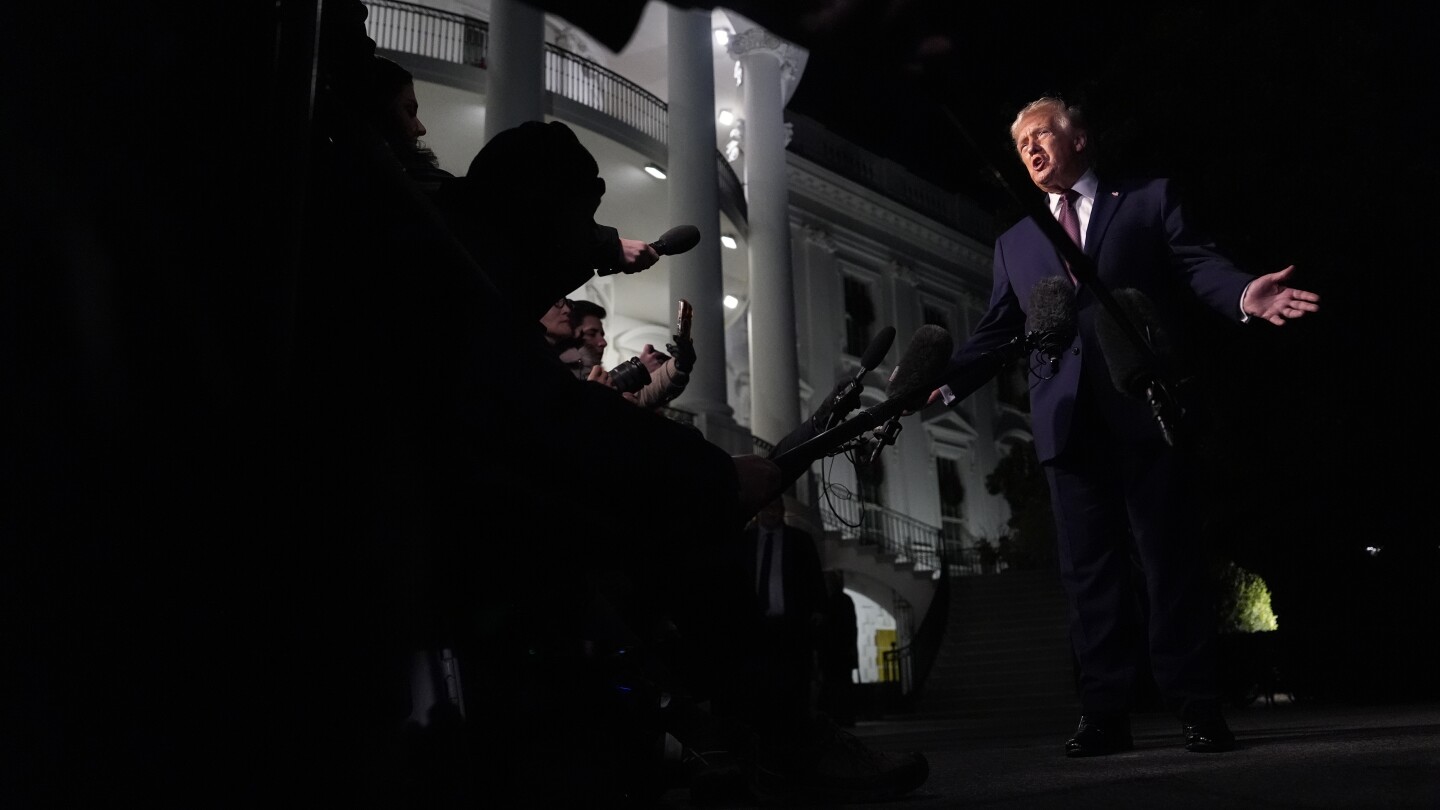
Venezuelan President Nicolás Maduro has expressed willingness to engage in direct talks with the Trump administration as US pressure intensifies. This comes in response to US President Donald Trump’s refusal to rule out deploying ground forces to Venezuela. The Trump administration has accused Maduro, whose 2024 re-election was widely criticized as fraudulent, of leading a drug cartel. Maduro denies these allegations, countering that the US aims to provoke a war to seize Venezuela’s oil reserves. Since Trump’s second inauguration in January, the US has ramped up its efforts against Maduro, doubling the reward for his capture to $50 million and launching ‘Operation Southern Spear,’ a counternarcotics mission targeting suspected drug-trafficking vessels. Over 80 people have died in US strikes on these vessels, primarily in the Caribbean. US Secretary of War Pete Hegseth claims the operation aims to eliminate ‘narcoterrorists’ from the Western Hemisphere, though legal experts question its legality due to a lack of evidence. The deployment of the USS Gerald Ford, the US Navy’s largest aircraft carrier, has fueled speculation that the US seeks to oust Maduro. Trump’s ambiguous statements have added to the uncertainty. While he initially downplayed the possibility of war, he later refused to rule out ground troops in Venezuela. The US State Department has also announced plans to designate the alleged Maduro-led Cartel de los Soles as a Foreign Terrorist Organization (FTO), effective November 24. Analysts interpret this delay, coupled with Trump’s openness to talks, as an ultimatum for Maduro to negotiate or face harsher measures. Meanwhile, Venezuelan opposition leader María Corina Machado has called for the military to defect, labeling Maduro’s government as a ‘criminal structure’ and advocating for accountability for human rights abuses. Maduro, addressing the US public directly in English, has reiterated his commitment to dialogue and peace.
标签: South America
南美洲
-

Brazil creates new Indigenous territories after COP30 protests
In a landmark decision during the COP30 climate summit in Belém, Brazil, the government has officially designated 10 new Indigenous territories. This move, formalized through a presidential decree, aims to protect the culture and environment of these areas under Brazilian law, though enforcement remains inconsistent. The announcement follows President Luiz Inácio Lula da Silva’s previous recognition of 11 Indigenous territories last year, marking a significant shift from the policies of his far-right predecessor, Jair Bolsonaro, who promoted mining on Indigenous lands. The newly protected regions span hundreds of thousands of hectares and are home to thousands of Indigenous people from various communities, including the Mura, Tupinambá de Olivença, and Guarani-Kaiowá. One of the areas overlaps with 78% of the Amazon National Park, a critical component of the global climate system. The decision aligns with Indigenous Peoples’ Day at COP30 and responds to protests demanding immediate demarcation of Indigenous lands. Demonstrators, some from Indigenous groups, carried signs reading ‘our forests are not for sale’ and clashed with security earlier in the week. Studies suggest that expanding Indigenous territories could prevent up to 20% of deforestation and reduce carbon emissions by 26% by 2030. Currently, Indigenous lands cover 117.4 million hectares, roughly the size of Colombia. The Amazon rainforest, already under threat from deforestation, plays a vital role in carbon sequestration. The COP30 summit aims to address global climate challenges, with countries striving to limit temperature rises to 1.5°C above pre-industrial levels to avoid severe consequences like extreme heat and food insecurity.
-

Chile’s most polarized presidential race in decades boosts the right and divides immigrants
Chileans are poised to make a pivotal decision in their nation’s democratic history as they prepare to vote in a presidential runoff next month. The election pits hard-right candidate José Antonio Kast against communist Jeannette Jara, presenting a stark ideological divide. Neither candidate secured the required 50% in the initial vote, but Kast enters the second round with momentum after right-wing parties garnered an unprecedented 70% of the vote. Kast, an ultraconservative lawyer, has campaigned on promises to deport undocumented immigrants and restore order, while Jara represents a leftist vision focused on social welfare and progressive policies. The election has particularly high stakes for Chile’s 1.5 million immigrants, including hundreds of thousands of Venezuelans who fled their homeland’s socialist regime. Many immigrants, ineligible to vote, face the prospect of deportation under Kast’s proposed policies. The runoff also reflects broader regional trends, as Latin America shifts toward right-wing leadership amid rising concerns over crime and economic instability. Kast’s admiration for authoritarian figures like Donald Trump and Nayib Bukele has drawn both support and criticism, while Jara’s communist ties evoke fears of Chile’s autocratic past. The outcome of this election will shape Chile’s future, determining whether it leans toward conservative law-and-order policies or progressive social reforms.
-

Trump floats possible talks with Venezuela but leaves military action on the table
In a press briefing on Monday, President Donald Trump maintained ambiguity regarding potential military intervention in Venezuela, even as he hinted at the possibility of diplomatic engagement with Venezuelan leader Nicolás Maduro. Maduro has accused the U.S. of orchestrating a military buildup and targeting alleged drug-trafficking vessels near Venezuela as part of a broader strategy to oust him from power. Trump, while expressing openness to dialogue, emphasized that military action remains a viable option. ‘I don’t rule out that. I don’t rule out anything,’ he stated, sidestepping questions about whether Maduro could influence the U.S. to de-escalate its military posture. Trump further criticized Maduro, alleging that he has caused significant harm to the U.S. through drug trafficking and migration. ‘He’s done tremendous damage to our country,’ Trump remarked. ‘He has not been good to the United States, so we’ll see what happens.’ The Trump administration has intensified pressure on Maduro’s government in recent days, with plans to designate a cartel allegedly led by Maduro and other Venezuelan officials as a terrorist organization. The arrival of the USS Gerald R. Ford and accompanying warships in the Caribbean coincided with U.S. military strikes on suspected drug-trafficking vessels. While the administration frames these actions as counterdrug operations, analysts and Venezuelan opposition figures view them as escalating pressure tactics. Geoff Ramsey, a Venezuela policy expert at the Atlantic Council, noted that the Trump administration’s approach reflects a desire to negotiate from a position of strength. ‘They really want to negotiate from a place of strength,’ Ramsey said. ‘Either [Maduro] engages in credible talks about a transition, or the U.S. will have no choice but to escalate.’ Maduro has previously engaged in negotiations with the U.S. and Venezuelan opposition, resulting in agreements aimed at ensuring free and fair elections. However, Maduro’s alleged manipulation of these agreements has fueled skepticism. In Caracas, reactions to the prospect of renewed dialogue were mixed, with some expressing hope for a peaceful resolution and others questioning the government’s commitment to honoring agreements. ‘If [the dialogue] actually happens, I hope the government will actually follow through this time,’ said shopkeeper Gustavo García. Stay-at-home mother Mery Martínez added, ‘Talking is always better. Anything that helps prevent a tragedy is good.’
-

Pochettino faces off against mentor Bielsa when US meets Uruguay in friendly
In a highly anticipated pre-World Cup friendly, the United States will face Uruguay on Tuesday night, pitting Mauricio Pochettino against his mentor, Marcelo Bielsa. Pochettino, who took over as the U.S. head coach last year, expressed profound admiration for Bielsa, the Uruguayan coach who discovered him as a 13-year-old. ‘My respect for him is immense,’ Pochettino stated. ‘He was pivotal in my career as a player and inspired me to become a coach. Tomorrow will be both a joy and a challenge, as his teams are always formidable.’ The two first crossed paths at Newell’s Old Boys in Argentina, where Pochettino played under Bielsa from 1990 to 1992. Since then, Bielsa has managed national teams like Argentina and Chile, as well as several clubs, while Pochettino has led top-tier teams such as Tottenham, Paris Saint-Germain, and Chelsea. The U.S. team, ranked 16th globally, enters the match fresh off a 2-1 victory over Paraguay, while 15th-ranked Uruguay drew 0-0 against Mexico. Pochettino plans to rotate his lineup due to the short recovery time and weather changes. The U.S. remains unbeaten in their last four friendlies against World Cup-bound teams. Pochettino, who assumed leadership after a disappointing Copa America exit, emphasized the importance of building a cohesive team strategy. ‘You don’t change the captain mid-storm,’ he remarked. ‘You need time to establish your approach.’ Following this match, the U.S. will play two more friendlies in March before finalizing their World Cup roster. In other news, the U.S. Soccer Federation announced Dan Helfrich, former Deloitte Consulting CEO, as its new chief operating officer, effective January 1.
-

Chile’s hard-right holds the upper hand as presidential election goes to a tense runoff
Chile is set for a highly contentious presidential runoff on December 14, pitting José Antonio Kast, a hard-right former lawmaker and admirer of Donald Trump, against Jeannette Jara, a member of the Communist Party representing the incumbent left-wing government. Kast, an ultraconservative lawyer opposed to abortion and same-sex marriage, emerged as a surprise front-runner after securing nearly 24% of the vote in the first round. His campaign, focused on cracking down on crime, building a border wall, and deporting undocumented migrants, resonated with voters concerned about organized crime, illegal immigration, and unemployment. Jara, a former labor minister, narrowly led with 27% of the vote, campaigning on expanding Chile’s social safety net and tackling money laundering and drug trafficking. The runoff reflects a broader regional shift in Latin America, where economic discontent and anti-incumbent sentiment have fueled the rise of right-wing leaders. Kast’s potential victory could reshape Chile’s political landscape, with right-wing parties poised to dominate Congress, marking a significant departure from the left-leaning policies of recent years.
-

UN climate talks shift into higher gear with government ministers and presidency’s new document
BELEM, Brazil — As the United Nations climate talks, COP30, enter their second and final week, the focus shifts from professional negotiators to high-ranking government ministers who are now tasked with making critical political decisions. The conference, held on the edge of the Brazilian Amazon, resumed after a rest day with foreign and other ministers arriving to address key issues. These officials will wield significantly more authority and flexibility than the negotiators who have been handling the discussions thus far.
David Waskow, director of the international climate initiative at the World Resources Institute, emphasized the shift, stating, ‘It brings a whole different dimension to the table.’ The pressure intensified late Sunday when the Brazilian presidency of the talks released a five-page summary outlining strategies to address contentious issues. These include urging nations to enhance their emissions-cutting plans, resolving trade disputes related to climate, and securing financial aid for poorer nations.
The summary presented a range of options for negotiators to consider or modify, even on topics not originally part of the agenda. Among the proposals is the creation of detailed ‘road maps’ to translate ambitious goals into actionable steps. This approach has already been employed to solidify last year’s $300 billion annual target for wealthy nations to provide climate financial aid to developing countries.
Small island nations, particularly vulnerable to rising sea levels, have called for the talks to address the inadequacy of current emissions-cutting plans. So far, 116 nations have submitted plans that collectively fall short of the reductions needed to limit global warming to 1.5 degrees Celsius, as outlined in the 2015 Paris Agreement. This issue may be combined with calls for a fossil fuel phase-out plan, a contentious topic that gained momentum after Brazilian President Luiz Inácio Lula da Silva recently advocated for a new road map.
Andreas Sieber, associate policy director at the advocacy group 350.org, remarked, ‘The fight is on. The presidency text outlines of a high-ambition COP30 outcome are finally visible: a pathway to close the decarbonization gap, anchored in a fossil-fuel phase-out road map and a credible climate-finance package.’
The Associated Press’ climate and environmental coverage is supported by multiple private foundations, though the AP retains full editorial control. This story was produced as part of the 2025 Climate Change Media Partnership, a journalism fellowship organized by Internews’ Earth Journalism Network and the Stanley Center for Peace and Security.
-

Ecuador votes against allowing foreign military bases in country
In a decisive referendum, Ecuadorian voters have rejected the proposal to allow foreign military bases on their soil, thwarting both President Daniel Noboa’s agenda and US ambitions to expand its military presence in the Eastern Pacific. The vote, held on Sunday, marks a significant setback for Noboa, who had championed constitutional changes to overturn a 2008 legislative ban on foreign military installations. He argued that such bases would bolster efforts to combat organized crime and curb the nation’s escalating violence, which has transformed Ecuador into a global hub for drug trafficking. Despite his efforts, the electorate delivered a resounding ‘no,’ reflecting widespread skepticism about foreign military involvement. The referendum also saw voters reject other proposals, including ending public funding for political parties, reducing the size of Congress, and establishing a constitutional assembly to rewrite the nation’s charter. Noboa, who has pursued a hardline military approach to crime, including deploying armed soldiers on the streets, expressed respect for the outcome but faces mounting criticism over his authoritarian tactics. The US, which had hoped to reestablish a military base in Ecuador after being forced to close its previous site in 2009, now finds its regional strategy in question. The referendum coincides with a significant US military deployment to the Caribbean, including the world’s largest warship and bomber planes, raising speculation about potential strikes on land targets in Venezuela. Critics argue that the US’s actions in the region, including recent strikes on alleged drug-trafficking vessels, may violate international law. Meanwhile, Ecuador’s struggle against powerful drug cartels continues, as evidenced by the recent capture of Wilmer ‘Pipo’ Chavarria, a leader of the notorious Los Lobos gang, in a joint operation with Spanish police. The referendum outcome underscores the complexities of balancing security, sovereignty, and international relations in a region grappling with violence and geopolitical tensions.
-

US to designate Venezuela’s Cartel de los Soles as terrorists
The United States has announced its intention to designate Cartel de los Soles, a group allegedly led by Venezuelan President Nicolás Maduro, as a Foreign Terrorist Organization (FTO). The decision, revealed by US Secretary of State Marco Rubio on Sunday, will take effect from November 24. This designation effectively labels Maduro as a terrorist, a claim he vehemently denies. The move is part of the Trump administration’s broader strategy to combat drug trafficking and exert pressure on Maduro, amid ongoing speculation about potential US military intervention in Venezuela. The FTO designation empowers the US government to aggressively target the group and its associates, making it illegal to provide them with support. While the US Treasury Department has previously imposed sanctions on Cartel de los Soles, the new classification escalates the response, unlocking more robust enforcement mechanisms. The US alleges that the group, which includes members of Maduro’s inner circle and the military, is involved in drug trafficking and illegal mining. However, no public evidence has been presented to substantiate Maduro’s direct involvement in these activities. The Trump administration’s characterization of Maduro as a drug trafficker is widely viewed as a potential justification for targeting him or his associates in a military campaign. Tensions have escalated since October, when Maduro accused the US of ‘fabricating a new war’ following the deployment of the USS Gerald Ford to the Caribbean. President Trump has hinted at potential discussions with Maduro but has yet to provide details. The US has also criticized Venezuela for its alleged failure to address cartel activity, which Trump claims contributes to the fentanyl crisis in the US, despite evidence pointing to Mexico and Asia as primary sources. Since September, the US has conducted airstrikes on suspected drug-trafficking vessels off the coasts of Venezuela and Colombia, resulting in at least 83 deaths. This marks the largest US military deployment to the Caribbean in decades.
-

Brazil’s Amazon rainforest at risk as key protection under threat
The Amazon rainforest, often referred to as the ‘lungs of the Earth,’ is at risk of a renewed wave of deforestation as efforts intensify to overturn a long-standing ban that has protected it. Known as the Amazon Soy Moratorium, this agreement prohibits the sale of soya grown on land cleared after 2008 and has been hailed as a global environmental success story. However, powerful farming interests in Brazil, supported by a faction of politicians, are pushing to lift these restrictions, particularly as the COP30 UN climate conference progresses. Critics argue that the ban unfairly favors a small group of companies, creating a ‘cartel’ in the soya trade. Environmental groups, however, warn that revoking the moratorium would be catastrophic, potentially leading to widespread land grabbing and further deforestation. Scientists have already cautioned that the Amazon is nearing a ‘tipping point,’ where the rainforest could irreversibly transform into a savannah, releasing vast amounts of carbon and disrupting global weather patterns. Brazil, the world’s largest producer of soya beans, plays a pivotal role in this debate. Much of the soya imported into the UK, a key component of animal feed, originates from the Brazilian Amazon. Major UK food companies, including Tesco, Sainsbury’s, and McDonald’s, have joined the UK Soy Manifesto, advocating for the continuation of the moratorium to ensure deforestation-free supply chains. Public opinion in the UK also strongly supports protecting the Amazon, with 70% of respondents in a recent World Wildlife Fund survey backing government action to eliminate illegal deforestation from supply chains. Despite this, Brazilian opponents of the moratorium argue that it stifles economic growth and have called for the Supreme Court to investigate whether the agreement constitutes anti-competitive behavior. The debate has even divided the Brazilian government, with the Justice Ministry questioning the ban while the Ministry of the Environment and the Federal Public Prosecutors Office defend it. The moratorium, initially signed nearly two decades ago by farmers, environmental organizations, and global food companies, has significantly reduced deforestation rates in the past. However, the pressure to lift the ban comes as Brazil prepares to open a major new railway that could further incentivize land clearing. Scientists monitoring the Amazon warn that deforestation is already reshaping the rainforest, with potentially devastating consequences for global climate stability and biodiversity.