标签: South America

南美洲

  • Trump calls Colombia’s Petro an ‘illegal drug dealer’ and announces an end to US aid to the country

    Trump calls Colombia’s Petro an ‘illegal drug dealer’ and announces an end to US aid to the country

    In a sharp escalation of tensions between the United States and Colombia, former President Donald Trump announced on Sunday his intention to slash U.S. funding to the South American nation, accusing Colombian President Gustavo Petro of failing to curb drug production. Trump, in a post on his Truth Social platform, labeled Petro as “an illegal drug dealer” and criticized him as “low rated and very unpopular.” He warned that if Petro does not act to shut down drug operations, the U.S. would intervene, albeit in a manner that “won’t be done nicely.” Trump also misspelled Colombia as “Columbia” in his initial post, which he later corrected. Colombia’s Defense Minister Pedro Sánchez defended the country’s efforts, stating that Colombia has “used all its capabilities” and sacrificed lives in the fight against drug trafficking. Trump’s remarks come amid growing friction between the two nations, with the U.S. recently conducting military strikes targeting alleged drug traffickers in Colombian waters. Earlier, Petro accused the U.S. of assassination following a strike that killed a Colombian fisherman, Alejandro Carranza, whom Petro claimed had no ties to drug trafficking. The U.S. has repatriated survivors of recent strikes, including an Ecuadorian man, Andrés Fernando Tufiño Chila, who was found to be in good health. Meanwhile, Colombia remains the world’s largest exporter of cocaine, with coca cultivation reaching record levels last year, according to the United Nations.

  • Aerial circus in Brazil spotlights a path to healing for female victims of gender-based violence

    Aerial circus in Brazil spotlights a path to healing for female victims of gender-based violence

    In a powerful display of art and activism, performers in Niteroi, Brazil, took to the skies above a bustling beach to address the pervasive issue of violence against women. The aerial circus show, titled ‘Alone we are petals, together we are roses,’ debuted on Saturday with Rio de Janeiro’s iconic Christ the Redeemer statue and Sugarloaf Mountain as its backdrop. The performance, featuring six women and two men, began with a woman in a pink bodysuit strutting confidently on stilts, only to be knocked down by male artists. However, the narrative shifted as she reclaimed her strength through physical exploration and solidarity with other women, culminating in her triumphant return on even higher stilts. Rosa Caitanya Hamilton Azevedo, a 31-year-old artist and survivor of gender-based violence, played the lead role, emphasizing the resilience and empowerment that emerge from such struggles. Juliana Berti Abduch, the creator of the Suspended Circus Acrobatics project, initiated this endeavor in 2020 to combat domestic violence. The latest performance, while not a direct continuation of their 2023 show, continues to spotlight the multifaceted nature of violence against women. Berti Abduch noted that participation in the project offers healing for survivors, helping them overcome trauma and regain confidence. The performance drew approximately 100 spectators, many of whom were captivated by the striking visuals of aerial hoops, trapezes, and silks. Audience member Fabiane Curione de Medeiros described the show as impactful, stressing the importance of unity in exposing and combating violence. Alarming statistics, including the fact that a woman is raped every six minutes in Brazil, were broadcast during the performance, underscoring the urgency of the issue. Despite the heavy subject matter, the artists aimed to inspire hope and empowerment through their art, envisioning a future where women’s rights are upheld and violence is eradicated.

  • Bolivia heads to the polls in a tight runoff as voters seek a president to lift them from crisis

    Bolivia heads to the polls in a tight runoff as voters seek a president to lift them from crisis

    Bolivia is set to hold a crucial runoff presidential election on Sunday, with voters poised to choose between two conservative candidates who promise to steer the country away from nearly two decades of socialist rule under the Movement Toward Socialism (MAS) party. The election comes at a time when Bolivia is grappling with a severe economic crisis marked by a U.S. dollar shortage, skyrocketing inflation, and fuel shortages. The value of the boliviano has plummeted on the black market, and year-on-year inflation has surged to 23%, the highest since 1991. Both candidates, right-wing former President Jorge ‘Tuto’ Quiroga and centrist senator Rodrigo Paz, have positioned themselves as agents of change, vowing to dismantle the populist policies that have dominated Bolivia since Evo Morales, the country’s first Indigenous president, took office in 2006. Quiroga advocates for immediate economic reforms, including a rescue package from the International Monetary Fund (IMF) and drastic cuts in state spending. Paz, on the other hand, favors a more gradual approach, promising to phase out fuel subsidies while maintaining social protections for the poor. The election is compulsory, with approximately 7.9 million Bolivians eligible to vote. The outcome will not only determine Bolivia’s economic future but also signal a significant geopolitical shift, potentially moving the country closer to the United States and away from its current allies, China and Russia.

  • US to repatriate survivors of strike on ‘drug-carrying submarine’, Trump says

    US to repatriate survivors of strike on ‘drug-carrying submarine’, Trump says

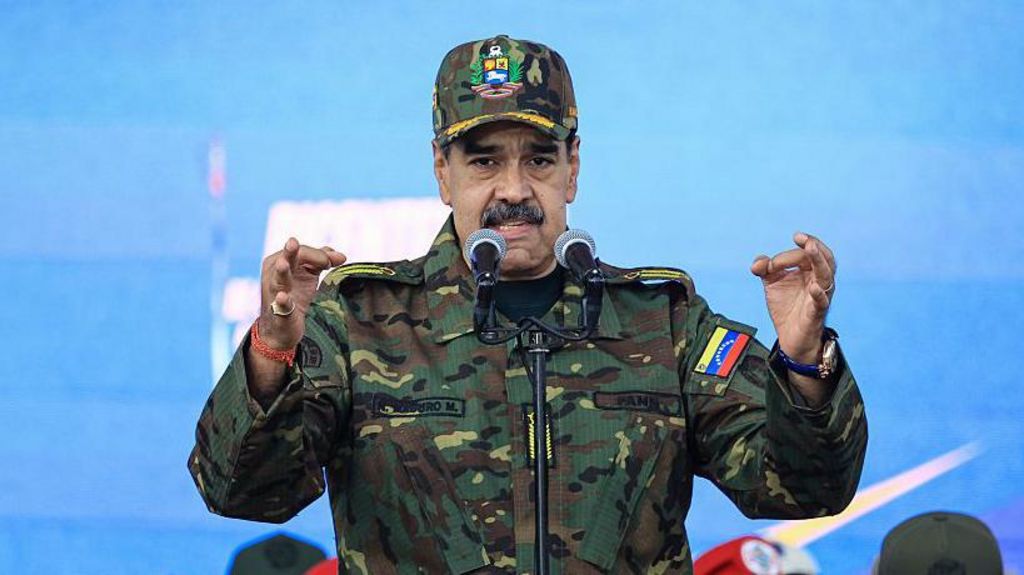
    In a recent escalation of its anti-narcotics operations, the United States has conducted a targeted strike on a suspected drug-smuggling submarine in the Caribbean Sea, resulting in two fatalities and two survivors. President Donald Trump announced via social media that the vessel, allegedly laden with Fentanyl and other illegal narcotics, was intercepted on a known drug-trafficking route. The two survivors, identified as nationals of Ecuador and Colombia, were rescued by a US military helicopter and subsequently transferred to a US warship. They will be repatriated to their home countries for detention and prosecution. This marks the sixth such strike in recent weeks, with at least 27 individuals killed in prior operations off the coast of Venezuela. Trump defended the attacks as necessary to curb the flow of drugs from Latin America into the US, though his administration has yet to provide detailed evidence regarding the vessels or their occupants. UN-appointed human rights experts have criticized the strikes as ‘extrajudicial executions,’ while Venezuelan President Nicolás Maduro accused Trump of attempting to turn Venezuela into ‘an American colony.’ The incident underscores the ongoing tensions between the US and Venezuela, with Trump authorizing covert CIA operations in the region and considering further military actions. Narco-submarines, often homemade and difficult to detect, have become a favored method for drug traffickers, posing significant challenges for coastal nations.

  • US will send survivors of strike on suspected drug vessel back to Ecuador and Colombia, Trump says

    US will send survivors of strike on suspected drug vessel back to Ecuador and Colombia, Trump says

    WASHINGTON (AP) — President Donald Trump announced on Saturday that the two survivors of a U.S. military strike on a suspected drug-carrying submarine in the Caribbean will be repatriated to their home countries, Ecuador and Colombia. The operation, which took place on Thursday, marked at least the sixth such strike since early September. Trump emphasized the significance of the mission in a social media post, stating, ‘It was my great honor to destroy a very large DRUG-CARRYING SUBMARINE that was navigating towards the United States on a well-known narcotrafficking transit route.’ He added that U.S. intelligence confirmed the vessel was laden with Fentanyl and other illegal narcotics. The strike resulted in the deaths of two individuals onboard, one more than previously reported, while the survivors are being sent back to their respective countries for detention and prosecution. This move sidesteps potential legal complications regarding the survivors’ status within the U.S. justice system. With this latest action, U.S. military operations in the region have now claimed at least 29 lives. Trump has justified these strikes by framing the U.S. as being in an ‘armed conflict’ with drug cartels, invoking the same legal authority used by the George W. Bush administration in its post-9/11 war on terrorism. This approach treats suspected traffickers as enemy combatants in a conventional war.

  • How two British women rowed from Peru to Australia

    How two British women rowed from Peru to Australia

    In an extraordinary feat of endurance and determination, British adventurers Jess Rowe and Miriam Payne successfully rowed from Peru to Australia, completing the six-month journey entirely unsupported. The duo shared their remarkable story with the BBC, detailing how they sustained themselves by catching fish and cultivating their own vegetables during the arduous expedition. Their journey, which spanned thousands of miles across the Pacific Ocean, stands as a testament to human resilience and the spirit of adventure. Rowe and Payne’s accomplishment not only highlights their physical and mental fortitude but also underscores the importance of self-reliance and innovation in extreme conditions. This remarkable achievement has captured global attention, inspiring countless individuals to push the boundaries of what is possible.

  • US has seized survivors after strike on suspected drug-carrying vessel in Caribbean, AP sources say

    US has seized survivors after strike on suspected drug-carrying vessel in Caribbean, AP sources say

    In a significant escalation of its anti-narcotics operations, the United States military launched a strike on a suspected drug-carrying submarine in the Caribbean, marking the first instance of survivors being captured since President Donald Trump initiated these aggressive measures last month. The strike, confirmed by Trump during a meeting with Ukrainian President Volodymyr Zelenskyy at the White House, targeted a vessel allegedly designed for transporting large quantities of drugs. Secretary of State Rubio acknowledged the presence of survivors but deferred detailed comments pending further investigation. This operation brings the death toll from the Trump administration’s military actions in the region to at least 28. The survivors, now in U.S. custody aboard a Navy vessel, face an uncertain legal future, with questions arising about their status as prisoners of war or criminal defendants. The administration has justified these strikes under the legal authority used in the post-9/11 war on terror, though some legal experts have raised concerns about the legality and international implications of such actions. The strikes have also sparked bipartisan unease in Congress, with lawmakers demanding more transparency and oversight. Meanwhile, reports suggest Venezuelan President Nicolás Maduro has attempted to negotiate with the U.S. by offering stakes in Venezuela’s oil and mineral wealth, though these overtures have been rejected by the White House.

  • El Salvador’s president seeks help in caring for country’s thousands of stray dogs and cats

    El Salvador’s president seeks help in caring for country’s thousands of stray dogs and cats

    In a bold move to address El Salvador’s stray animal crisis, President Nayib Bukele has launched a new initiative aimed at transforming the plight of thousands of homeless cats and dogs. Known for his decisive actions against gang violence, Bukele is now turning his attention to a softer yet persistent issue plaguing the nation. On October 8, he took to social media platform X to call for expert partnerships, emphasizing the need for a humane and sustainable solution that could serve as a model for Latin America.

    San Salvador, like many cities across the region, struggles with a visible overpopulation of stray animals. These animals often roam the streets, scavenging for food and water, while many suffer from malnutrition, illness, or injuries. Bukele’s administration has already made strides in animal welfare, including the establishment of the region’s first public veterinary hospital, Chivo Pets Hospital, which offers services for a nominal fee of 25 cents or its equivalent in Bitcoin. Additionally, in 2021, animal abuse was criminalized, with offenders facing prison sentences of two to four years and fines.

    However, the scale of the problem remains daunting. Rafaela Pérez of the Good Fortune Rescue shelter in Zacamil highlighted the urgent need for action, noting that the number of abandoned animals far exceeds what is reported on social media. Patricia Madrid of Fundación Gratitud, an organization dedicated to spaying, neutering, and caring for strays, echoed this sentiment, expressing hope for collaboration with the government to amplify their efforts.

    Bukele’s call for assistance has garnered international attention, with Thailand-based social media influencer Niall Harbison offering his support. Harbison, who is on a mission to save stray dogs globally, expressed enthusiasm for partnering with El Salvador to create a replicable model for public-private collaboration in animal welfare.

    While the funding for this ambitious project remains unclear, Bukele has previously leveraged unconventional resources, such as Bitcoin earnings, to finance public initiatives. As El Salvador faces mounting debt and economic challenges, the success of this endeavor will depend on strategic partnerships and innovative solutions.

  • After years of socialist rule, Bolivia’s presidential runoff tests how far and fast it veers right

    After years of socialist rule, Bolivia’s presidential runoff tests how far and fast it veers right

    Bolivia, after nearly two decades of dominance by the Movement Toward Socialism (MAS) party, is witnessing a significant political shift to the right. This change comes in the wake of a severe economic crisis, marked by a collapsing currency, fuel shortages, and widespread public discontent. The recent presidential runoff, held on Sunday, features two conservative, business-friendly candidates, signaling a stark departure from the leftist policies of former President Evo Morales. The MAS party, which has ruled since 2005, suffered a dramatic decline in support in the August 17 elections, barely retaining its legal status as Bolivians expressed a strong desire for change. The incoming president faces the immediate challenge of stabilizing the economy by attracting foreign investment, addressing fuel shortages, and implementing fiscal reforms. Jorge ‘Tuto’ Quiroga, a right-wing former president, advocates for an IMF bailout and stringent fiscal adjustments. His rival, centrist senator Rodrigo Paz, proposes legalizing the black market, phasing out subsidies, and encouraging Bolivians to repatriate their dollars. Amid the worst economic crisis in four decades, many voters remain skeptical about the candidates’ ability to deliver meaningful change. The election outcome will determine the pace and extent of Bolivia’s political and economic transformation, with significant implications for its international relations, particularly with the U.S., China, and Russia.

  • After winning Trump’s $20 billion, President Milei must win votes as Argentine industry reels

    After winning Trump’s $20 billion, President Milei must win votes as Argentine industry reels

    The once-bustling textile mill of the Galfione Group in southern Buenos Aires now stands eerily quiet. Luciano Galfione, the owner, walks through the factory, reminiscing about the days when 200 employees operated state-of-the-art machinery to produce fabrics for Argentina’s middle class. Today, only a handful of workers remain, spooling yarn and dyeing cloth. The factory’s operations have been slashed by 80%, and half the staff has been laid off or suspended. Galfione is now dipping into his personal savings to keep the 78-year-old family business afloat. This grim scenario is emblematic of Argentina’s broader economic crisis, exacerbated by President Javier Milei’s austerity measures and free-market reforms. Since Milei took office nearly two years ago, over 17,600 businesses, including 1,800 manufacturers and 380 textile companies, have shut down, according to Fundación Pro Tejer, a nonprofit representing textile manufacturers. The crisis has been fueled by falling domestic orders, surging competition from cheap imports, and reduced consumer spending due to higher unemployment and lower wages. As Argentina approaches midterm elections on October 26, widely seen as a referendum on Milei’s policies, the textile industry’s collapse highlights the broader challenges facing the nation. The economy has stagnated, manufacturing has been gutted, and consumer confidence has plummeted. Milei’s initial success in curbing inflation has been overshadowed by rising unemployment, stagnant wages, and increased costs for essentials like transportation and healthcare. The president’s reliance on high interest rates and central bank interventions to stabilize the peso has further eroded the competitiveness of Argentine industries. Meanwhile, the removal of trade barriers has flooded the market with cheaper foreign products, leaving local manufacturers struggling to compete. As Milei seeks financial support from the U.S., many Argentines remain skeptical about the potential benefits of foreign aid, emphasizing the need for domestic economic revival. The crisis has left thousands of workers unemployed, with families struggling to make ends meet. The future of Argentina’s economy remains uncertain, as the government grapples with the dual challenges of stabilizing inflation and fostering growth.