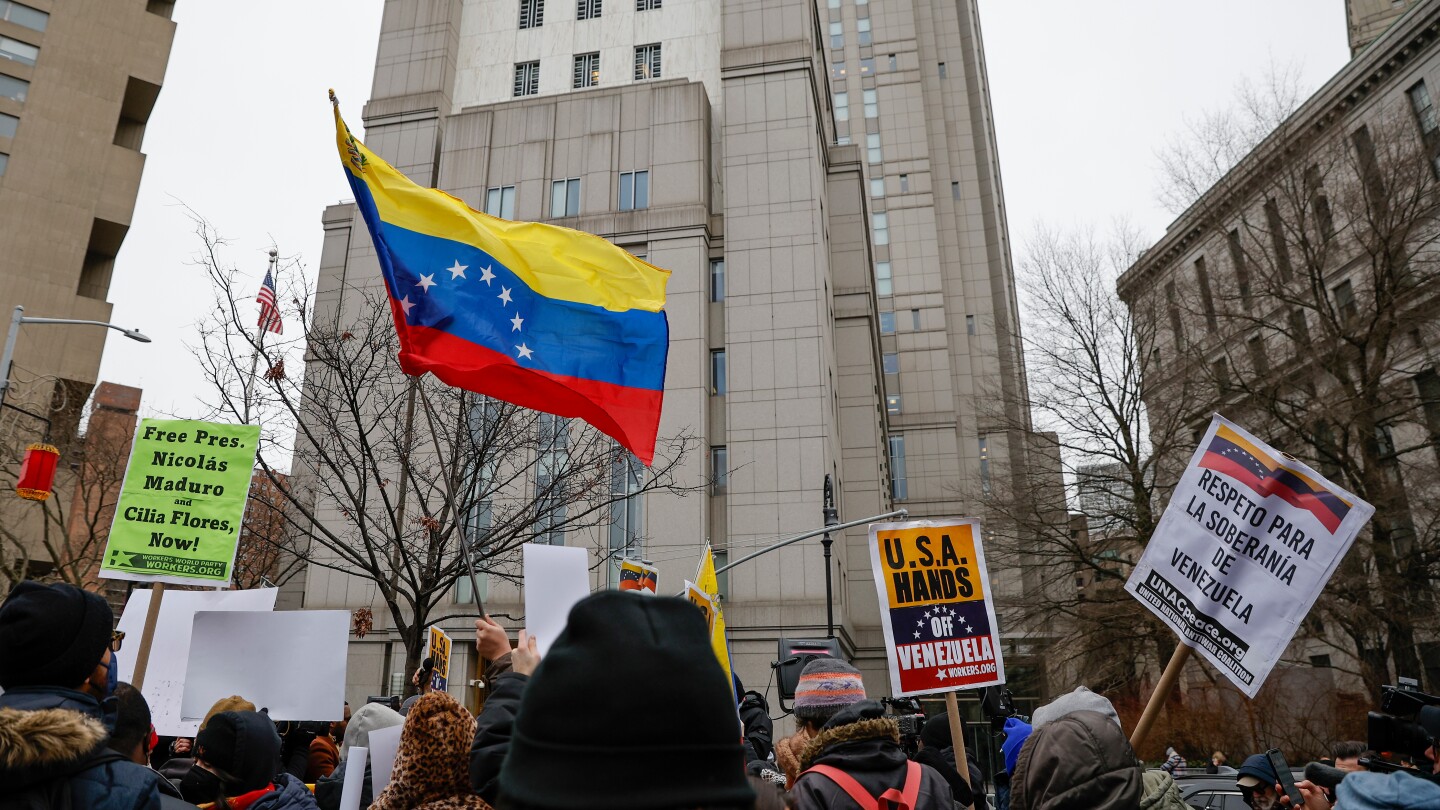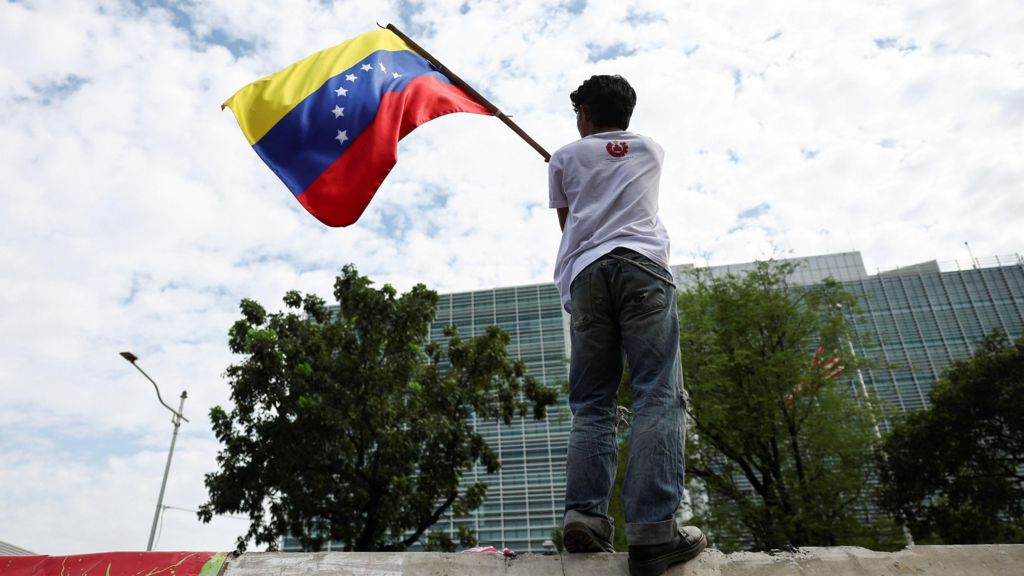
In a significant escalation of military presence, the U.S. deployed a pair of supersonic B-1 Lancer bombers to the Venezuelan coast on Thursday, marking the second such exercise in just over a week. This maneuver, part of a broader training simulation designed to mimic an attack, has fueled widespread speculation about the Trump administration’s intentions toward Venezuelan President Nicolás Maduro. Maduro, who faces U.S. charges of narcoterrorism, has been under increasing scrutiny as the U.S. military bolsters its forces in the Caribbean Sea and surrounding waters. Since early September, the U.S. has conducted lethal strikes on vessels allegedly involved in drug trafficking off Venezuela’s coast, further intensifying tensions. Flight tracking data revealed that the B-1 bombers, capable of carrying more bombs than any other U.S. aircraft, departed from Dyess Air Force Base in Texas and traversed the Caribbean. A U.S. official, speaking anonymously, confirmed the training exercise. The recent deployment follows a similar mission involving B-52 Stratofortress bombers and F-35B stealth fighter jets last week. President Trump dismissed claims that the flights were intended to increase military pressure on Venezuela, stating, ‘It’s false, but we’re not happy with Venezuela for a lot of reasons. Drugs being one of them.’ The U.S. military presence in the region now includes eight warships, P-8 patrol aircraft, MQ-9 drones, and an F-35 squadron, with a submarine also operating in South American waters. Defense Secretary Pete Hegseth likened the administration’s anti-drug campaign to the post-9/11 war on terrorism, vowing to dismantle drug networks with the same intensity. The latest strikes, which expanded operations to the eastern Pacific, have resulted in at least 37 fatalities. Trump has also hinted at extending these operations to land-based targets, emphasizing readiness to ‘hit them very hard.’
标签: South America
南美洲
-

Why some Brazilians have stopped drinking alcohol
Brazil is witnessing a concerning rise in methanol poisoning incidents, particularly in São Paulo, which has resulted in multiple fatalities. This alarming trend has prompted a significant number of Brazilians to reconsider their alcohol consumption habits. Methanol, a toxic substance often found in counterfeit or illegally produced alcoholic beverages, has been identified as the primary cause of these poisoning cases. Authorities have intensified efforts to crack down on the production and distribution of illicit alcohol, but the damage has already taken a toll on public health. The situation has also sparked widespread awareness campaigns urging citizens to avoid unregulated alcohol products. This health crisis underscores the importance of stringent regulatory measures and public vigilance in combating the dangers of counterfeit alcohol.
-

What’s at stake as Trump boat strikes strain US-Colombia alliance
The longstanding alliance between the United States and Colombia, once a cornerstone of Washington’s Latin American strategy, is now teetering on the brink of collapse. Since President Donald Trump returned to the White House in January, tensions between him and Colombian President Gustavo Petro have escalated, culminating in a dramatic suspension of US aid to Colombia. This move came after Trump accused Petro of encouraging drug production, while Petro countered by alleging US military strikes violated Colombian sovereignty and resulted in civilian deaths. The rift between the two leaders, who hail from opposite ends of the political spectrum, has exposed deep fissures in a partnership that has endured for decades. The US-Colombia alliance, forged in the early 2000s under the ‘Plan Colombia’ initiative, aimed to combat drug trafficking and strengthen Colombian security forces. While the program achieved some successes, including weakening the FARC guerrilla group, it has faced criticism for failing to address the root causes of drug production. Cocaine production in Colombia has reached record highs, and the US military’s recent campaign in the Caribbean has highlighted the persistence of the drug trade. The suspension of aid, which exceeded $400 million in 2024, threatens to undermine Colombia’s security efforts and embolden organized crime groups. Analysts warn that the breakdown of this alliance could have far-reaching consequences for both nations, as they remain deeply interdependent in their fight against narcotics. The situation is further complicated by Petro’s domestic challenges, including rising violence from armed groups, and Trump’s controversial drug enforcement policies, which have drawn criticism for their legality and effectiveness. As the two leaders continue to clash, the future of US-Colombia relations hangs in the balance.
-

Carrascal’s late goal lifts Flamengo over Racing Club in Copa Libertadores semifinals
In a tightly contested match at Maracanã Stadium, Flamengo secured a narrow 1-0 victory over Argentina’s Racing Club in the first leg of the Copa Libertadores semifinal series. Colombian midfielder Jorge Carrascal emerged as the hero, netting the decisive goal in the 88th minute. The three-time Libertadores champions are now one step closer to reclaiming the title they last won in 2022 and continuing Brazil’s dominance in the tournament, with seven of the past eight titles going to Brazilian clubs. The second leg is set to take place next Wednesday in Buenos Aires, with the final scheduled for November 29 at Estadio Monumental in Lima, Peru. Racing Club, making their first semifinal appearance since 1997, are striving to end a 56-year drought and claim their first Copa Libertadores title since 1967. Meanwhile, in the other semifinal, Ecuador’s LDU will face Palmeiras on Thursday. LDU, having already eliminated two Brazilian clubs in the knockout stages, are aiming to reach the final for the first time since 2008. Palmeiras, a three-time champion, advanced after defeating Argentina’s River Plate in the quarterfinals.
-

Military and police patrol streets of Peru’s capital as state of emergency begins
LIMA, Peru — In a bold move to combat escalating crime, Peru’s newly inaugurated President José Jerí declared a state of emergency, effective Wednesday. The decree, which suspends several constitutional rights including freedom of assembly and protest, also imposes restrictions on everyday activities such as motorcycle travel and prison visits. Additionally, it permits power cuts in prison cells, except for essential lighting. This decision comes in the wake of violent protests demanding Jerí’s resignation, which resulted in one fatality and severe injuries to another civilian. Jerí assumed office on October 10 after lawmakers ousted his predecessor, Dina Boluarte, citing her failure to address the country’s crime surge. However, many Peruvians remain skeptical of the measure, recalling the ineffectiveness of similar emergency declarations under Boluarte’s administration. Manuel Timoteo, a resident of northern Lima, expressed his doubts, stating, “The soldiers go out for a few days, stand with their rifles on a corner, leave and everything remains the same.” Crime statistics reveal a troubling trend, with homicides increasing from 676 cases in 2017 to 2,082 in 2024, and extortion complaints skyrocketing from 2,305 in 2020 to 21,746 last year. Most victims are from the working class, highlighting the pervasive impact of crime on everyday life in Peru.
-

Ecuador’s Indigenous alliance ends highway-blocking protests after military threat
QUITO, Ecuador — The Confederation of Indigenous Nationalities of Ecuador (CONAIE) announced on Wednesday the cessation of nationwide protests that had paralyzed parts of the country for over a month. The decision came after President Daniel Noboa threatened to deploy the military to dismantle road blockades that had severely disrupted transportation and economic activities. The protests were initially sparked by the government’s decision to eliminate a diesel subsidy, which caused fuel prices to surge from $1.80 to $2.80 per gallon. Diesel is crucial for agricultural machinery, trucking, and public transportation, particularly affecting Ecuador’s most vulnerable populations. Marlon Vargas, CONAIE’s president, described the decision to end the demonstrations as “difficult” but necessary to safeguard the lives of Indigenous communities. In a social media statement, Vargas criticized the government for lacking dialogue and sensitivity in implementing policies that disproportionately impact the poor. Meanwhile, General Henry Delgado of the Joint Chiefs of Staff emphasized the military’s readiness to clear blockades in Imbabura province, the epicenter of the disruptions. Delgado condemned the protests, stating that a minority should not impose its will on the nation’s 18 million citizens. Despite the end of the strike, Vargas vowed that Indigenous groups would continue to resist policies they deem unjust.
-

US strikes eighth alleged drug-carrying boat, this time in the Pacific Ocean
The U.S. military has intensified its crackdown on drug trafficking with its eighth strike targeting an alleged drug-carrying vessel in the eastern Pacific Ocean, resulting in two fatalities, Defense Secretary Pete Hegseth announced on Wednesday. This marks a significant expansion of the Trump administration’s campaign against South American drug cartels, shifting focus from the Caribbean to Colombia, a major cocaine producer. Hegseth emphasized the administration’s resolve, drawing parallels between the war on drug cartels and the post-9/11 war on terrorism. “Just as Al Qaeda waged war on our homeland, these cartels are waging war on our border and our people,” he stated, vowing no refuge or forgiveness for the cartels. The strike brings the total death toll from these operations to at least 34 since last month. The Trump administration has justified these actions by classifying drug cartels as unlawful combatants, invoking the same legal authority used in the war on terrorism. Despite the aggressive measures, the administration has refrained from prosecuting occupants of the targeted vessels, instead repatriating survivors to their home countries. The U.S. military has also bolstered its presence in the Caribbean and off Venezuela’s coast, fueling speculation about potential moves against Venezuelan President Nicolás Maduro, who faces narcoterrorism charges in the U.S. While fentanyl from Mexico remains the primary driver of U.S. overdose deaths, Colombia’s cocaine, smuggled largely through the eastern Pacific, remains a critical focus of the administration’s efforts.
-

Brazil publishes Bolsonaro’s conviction for coup attempt, starting the appeals clock
In a landmark decision, Brazil’s Supreme Court has officially published its ruling convicting former President Jair Bolsonaro of orchestrating a coup attempt, marking a pivotal moment in the nation’s political landscape. The verdict, initially delivered in September, found Bolsonaro guilty of attempting to overthrow democracy, sentencing him to 27 years and three months in prison. Since August, the far-right leader has been under house arrest, awaiting the formalization of the judgment, which now opens a window for potential appeals. Bolsonaro’s legal team has announced plans to challenge the conviction before the full bench of 11 Supreme Court justices, though legal experts remain skeptical about the likelihood of success. The case stems from allegations that Bolsonaro, after losing the 2022 presidential election to Luiz Inácio Lula da Silva, conspired to violently dismantle democratic institutions, including plotting to assassinate Lula. Additional charges included participation in an armed criminal organization and attempts to abolish the rule of law. The trial has drawn international attention, with former U.S. President Donald Trump criticizing the proceedings as a “witch hunt” and imposing a 50% tariff on Brazilian imports, further straining bilateral relations. While ties between the U.S. and Brazil have since improved, the case remains a contentious issue. Bolsonaro’s co-conspirators, all former officials, have also been sentenced for their roles in the failed coup. Despite the severity of the charges, legal analysts suggest Bolsonaro may avoid imprisonment due to ongoing health issues stemming from a 2018 assassination attempt. The case is expected to conclude by year-end, with sentences enforced even if Bolsonaro remains under house arrest.
-

US ranchers oppose Trump’s plan to import more Argentine beef and experts doubt it will lower prices
President Donald Trump’s proposal to lower record-high beef prices by increasing imports from Argentina has sparked significant opposition from U.S. ranchers and skepticism from agricultural economists. The plan, intended to make beef more affordable for American consumers, is being criticized by key industry groups, including the National Cattlemen’s Beef Association and the Ranchers-Cattlemen Action Legal Fund United Stockgrowers of America, who argue it could harm domestic producers. Despite Trump’s ‘America First’ rhetoric, critics liken the move to past free trade policies that prioritized cheap global goods over domestic interests. Agricultural experts also question the plan’s effectiveness, noting that Argentine beef accounts for only 2% of U.S. imports, and doubling this figure would have minimal impact on prices. Meanwhile, U.S. beef prices remain high due to strong demand, a shrinking cattle herd, and reduced imports from Brazil and Mexico. Ranchers, who are finally experiencing profitable years after enduring droughts and low prices, fear the policy could destabilize the market and discourage investment in herd expansion. While Argentine producers welcome the opportunity to increase exports, economists warn that excessive exports could drive up domestic prices in Argentina. The administration has promised further details on the plan, emphasizing its commitment to supporting ranchers and reducing consumer costs, but many remain skeptical of its long-term viability.
-

Netflix blames tax dispute in Brazil for rare quarterly earnings letdown
Netflix’s latest quarterly earnings fell short of Wall Street expectations, marking the end of a six-quarter streak of surpassing analyst projections. The streaming giant attributed the $619 million earnings shortfall to an unforeseen tax dispute in Brazil. Despite the setback, Netflix highlighted its robust lineup of original TV series and films, which sustained audience engagement and drove a combination of subscription fees and ad revenue, matching analysts’ revenue forecasts of $11.5 billion. However, investors remained unconvinced, as Netflix’s shares dropped approximately 6% in extended trading.