Jamaica is on high alert as Hurricane Melissa, now classified as a Category 5 storm, threatens to unleash devastating winds and catastrophic flooding across the Caribbean nation. The US National Hurricane Center (NHC) upgraded Melissa to its maximum strength early Monday, warning of its potential to become the most powerful hurricane ever to hit Jamaica. The storm has already claimed four lives on the island of Hispaniola and is expected to bring life-threatening conditions to Jamaica in the coming hours. As of 09:00 GMT, Melissa was located approximately 130 miles south-southwest of Kingston, with maximum sustained winds of 160 mph, and could intensify further in the next 12 to 24 hours. Forecasters predict the storm’s core will move near or over Jamaica by Tuesday night, with potential impacts extending to southeastern Cuba and the Bahamas later in the week. The slow-moving nature of the storm raises concerns about prolonged rainfall, with up to 40 inches expected in parts of Jamaica over the next four days. Jamaican Prime Minister Andrew Holness has ordered immediate evacuations in vulnerable areas, while the government has opened all 881 shelters across the island. Residents in low-lying and flood-prone regions have been urged to seek safety. The storm has already caused significant damage in Hispaniola, with three deaths in Haiti and one in the Dominican Republic, where a 79-year-old man was swept away by floodwaters in Santo Domingo. A 13-year-old boy is also missing after being dragged by strong currents while swimming. Authorities continue to rescue individuals trapped by rising floodwaters as the region braces for Melissa’s full impact.
标签: South America
南美洲
-

Argentina’s Milei wins big in midterms with ‘chainsaw’ austerity
Argentina’s President Javier Milei has achieved a decisive victory in the country’s midterm elections, solidifying his political influence and paving the way for his ambitious economic reforms. His party, La Libertad Avanza, garnered nearly 41% of the vote, securing 13 of 24 Senate seats and 64 of the 127 contested lower-house seats. This triumph significantly enhances Milei’s ability to advance his agenda of drastic state spending cuts and deregulation, which have defined his presidency since taking office in 2023. The election results mark a critical test of Milei’s popularity, as his administration has implemented sweeping austerity measures, including budget reductions in education, pensions, health, and infrastructure, alongside mass layoffs in the public sector. Supporters, including former U.S. President Donald Trump, credit Milei with curbing inflation, reducing deficits, and restoring investor confidence. However, critics argue that these policies have led to job losses, declining manufacturing, deteriorating public services, and an impending recession. The U.S. has offered Argentina a $40 billion lifeline, contingent on Milei maintaining political momentum, a move that has sparked accusations of foreign interference. Despite the mixed public sentiment, Milei’s victory reflects a rejection of the Peronist model he blames for decades of economic mismanagement. The financial markets are expected to rally, signaling continued support for Milei’s economic experiment. With a strengthened mandate, Milei now has the political capital to implement more radical changes ahead of the 2027 presidential election, where he may seek re-election. The key question remains whether ordinary Argentines will begin to feel the benefits of his reforms or if the ongoing economic pain will test their patience.
-

‘No doubt’ Trump wants to topple our government, Venezuelan official tells BBC
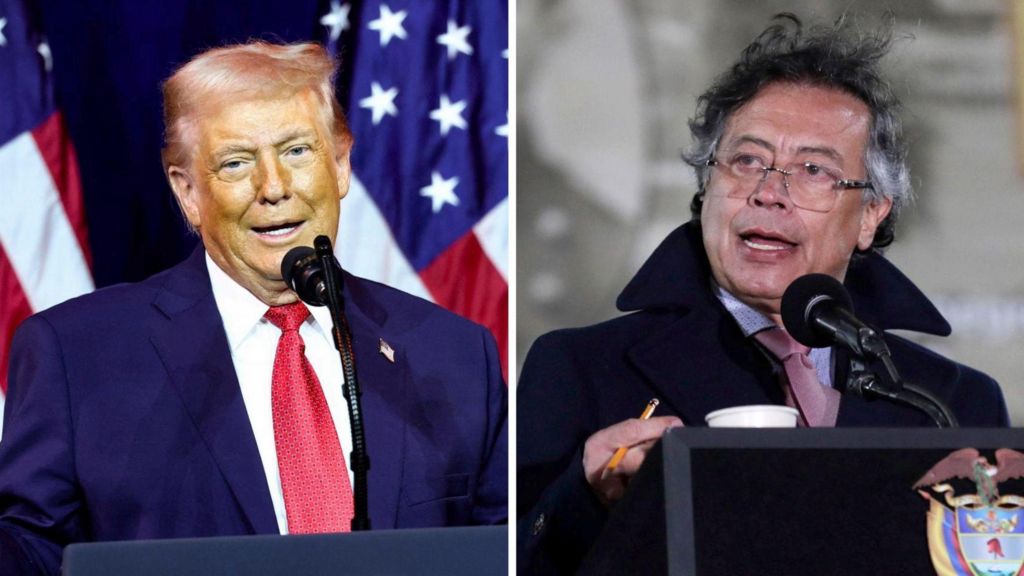
Venezuela’s Attorney General, Tarek William Saab, has asserted that there is “no doubt” U.S. President Donald Trump is orchestrating efforts to overthrow the Venezuelan government. In an interview with the BBC, Saab, a staunch ally of President Nicolás Maduro, accused Trump of seeking to transform Venezuela into a “colony” of the United States. This accusation follows Trump’s allegations that Maduro leads a drug-trafficking organization, a claim Maduro vehemently denies. Venezuelan officials fear that the recent U.S. military buildup in the Caribbean is aimed at ousting Maduro, a long-standing critic of Trump. The U.S. has already conducted strikes on alleged drug boats off South America, resulting in at least 43 fatalities, with Trump hinting at potential land operations. Saab, while acknowledging the possibility of a land invasion, stated that Venezuela is prepared and remains open to dialogue with the U.S., despite condemning its “illegitimate” anti-drug trafficking efforts. The U.S. and several other nations do not recognize Maduro as Venezuela’s legitimate leader, citing the widely criticized 2024 election as neither free nor fair. Opposition reports indicated a landslide victory for their candidate. Saab further accused the U.S. of aiming to seize Venezuela’s vast natural resources, including gold, oil, and copper. Meanwhile, U.S. lawmakers from both parties have questioned the legality of Trump’s strikes and his authority to order them. Republican Senator Lindsey Graham suggested that land strikes are a “real possibility” and that Trump plans to brief Congress on future military operations. Over the past two months, the U.S. has significantly increased its military presence in the Caribbean, deploying warships, fighter jets, marines, and drones under the guise of combating drug trafficking and “narco-terrorists.” Analysts interpret this as part of a broader campaign to pressure Maduro’s removal. Maduro has accused the U.S. of “fabricating war,” particularly after the deployment of the USS Gerald R Ford, the world’s largest warship, to the region. The recent arrival of the guided-missile destroyer USS Gravely in Trinidad and Tobago has further escalated tensions, with Venezuela condemning it as a “military provocation” coordinated with the CIA. Venezuela also claims to have captured a mercenary group linked to U.S. intelligence and alleges a “false flag attack” is being planned in the waters between Venezuela and Trinidad and Tobago. Maduro has previously accused the U.S. of similar covert operations, including a plot to plant explosives in the U.S. embassy in Caracas earlier this month.
-

What to know about uncontacted Indigenous peoples and efforts to protect them
In the remote corners of the Amazon rainforest and the dense jungles of Indonesia, uncontacted Indigenous communities are facing an existential crisis. A recent report by Survival International, a London-based Indigenous rights organization, reveals that at least 196 uncontacted groups across 10 countries are under severe threat from logging, mining, agribusiness, and drug trafficking. The report, released on Sunday, estimates that 65% of these groups are endangered by logging, 40% by mining, and 20% by agribusiness. Fiona Watson, Survival’s research and advocacy director, describes these threats as “silent genocides,” unfolding far from public scrutiny or effective state protection. Uncontacted peoples, often misunderstood as “lost tribes,” are contemporary societies that deliberately avoid contact with outsiders due to historical violence, slavery, and disease. They thrive in their environments, maintaining ancient traditions and languages, and play a crucial role in preserving forests essential to combating climate change. However, their isolation makes them vulnerable to diseases like the flu, which can decimate entire communities. The report highlights the urgent need for stronger legal protections, no-contact policies, and global awareness to safeguard these communities. Governments and corporations must halt extractive activities in Indigenous territories, while consumers must ensure their purchases do not fund destruction. International treaties like the ILO’s Convention 169 and the U.N. Declaration on the Rights of Indigenous Peoples affirm their right to self-determination, but enforcement remains inconsistent. Survival International’s report calls for immediate action to prevent the extinction of these unique cultures, emphasizing that their survival is intertwined with the planet’s future.
-

US warship docks in Trinidad and Tobago, puts more pressure on Venezuela
In a strategic move that underscores escalating tensions in the Caribbean, the USS Gravely, a guided missile destroyer, arrived in Port-of-Spain, Trinidad and Tobago, on Sunday. This deployment aligns with the Trump administration’s intensified military pressure on Venezuela and its President, Nicolás Maduro. The USS Gravely’s presence complements the USS Gerald R. Ford aircraft carrier, which is also positioning closer to Venezuelan waters. Maduro has condemned these maneuvers, accusing the U.S. of orchestrating a ‘new eternal war’ against his nation. U.S. President Donald Trump has further heightened tensions by alleging, without evidence, that Maduro leads the organized crime group Tren de Aragua. The warship will remain in Trinidad until Thursday, facilitating joint training exercises between the U.S. and Trinidad and Tobago. These exercises aim to address shared threats such as transnational crime and enhance regional security. However, the deployment has sparked controversy locally. David Abdulah, leader of the Movement for Social Justice, criticized the decision, labeling the warship’s presence an ‘abomination’ given the proximity to Venezuela and the looming threat of conflict. Meanwhile, Trinidad and Tobago’s Prime Minister, Kamla Persad-Bissessar, has voiced support for the U.S. military presence, citing regional security concerns. The visit follows a recent U.S. Embassy warning to Americans in Trinidad and Tobago to avoid government facilities due to reported threats. Despite calls for dialogue from regional trade bloc Caricom, Persad-Bissessar has emphasized that the Caribbean is not a ‘zone of peace,’ pointing to high rates of violent crime.
-

Hurricane Melissa strengthens as it barrels towards Jamaica
Hurricane Melissa, now a formidable Category 5 storm, is barreling towards Jamaica, posing severe threats of life-endangering flash floods and landslides. With winds reaching up to 120 mph (195 km/h) as of 06:00 GMT, the storm is currently veering northwest in the Caribbean and is anticipated to make landfall by Tuesday, according to the US National Hurricane Center (NHC). The NHC has issued urgent warnings of potential power outages, infrastructure damage, and sea level surges up to 13 feet (4 meters) above ground, accompanied by torrential rainfall of up to 30 inches (76 cm). Residents are being urged to seek immediate shelter and complete emergency preparations without delay. Although Melissa is expected to weaken to a Category 4 hurricane before reaching Jamaica, the NHC emphasized that the impact will remain catastrophic, with little practical difference in severity. The storm has already wreaked havoc in Haiti and the Dominican Republic, claiming two lives in Haiti due to landslides. Jamaican Prime Minister Andrew Holness has called for calm and preparedness, advising residents to secure their homes with sandbags and wooden boards and stock up on essentials. Similar warnings are in effect for parts of Haiti, the Dominican Republic, and eastern Cuba, where Melissa is projected to bring equally devastating conditions by midweek. The hurricane is forecasted to pass over Cuba by Wednesday, weakening to a Category 3 storm before moving through the Antillas Mayores and into the Atlantic. Scientists have noted that while it is challenging to attribute individual weather events to climate change, warmer oceans are contributing to more frequent and severe hurricanes. This year’s Atlantic hurricane season, which typically concludes in November, has already seen 13 hurricanes, with the US National Oceanic and Atmospheric Administration predicting above-normal activity due to warmer seas and stronger monsoon activity around West Africa.
-

Argentina votes in midterm elections set to test President Milei’s mandate and US support
In the upscale Puerto Madero district of Buenos Aires, luxury car dealerships are thriving, and bankers are optimistic. This surge in economic activity follows President Javier Milei’s decision to lift import restrictions and end the ban on online dollar sales. Meanwhile, across the polluted Riachuelo River in Isla Maciel, Veronica Leguizamon struggles to feed her four daughters, relying on a local soup kitchen after Milei’s cuts to public subsidies and price controls on essential goods. ‘Before, we could choose what to cook,’ she lamented. ‘Now we depend on others to know if we’ll eat or not.’ This stark contrast highlights the deepening divide in Argentina as voters prepare for Sunday’s nationwide congressional midterms, a pivotal test for Milei’s libertarian government. While some praise his efforts to attract foreign investment and stabilize the economy, others suffer from the harsh realities of austerity. The election outcome could determine the future of Milei’s economic reforms and the Trump administration’s $40 billion financial rescue plan for Argentina. As the nation stands at a crossroads, the question remains: will Milei’s policies unite or further fracture a deeply polarized electorate?
-

‘Brothers in the forest’ – the fight to protect an isolated Amazon tribe
Deep within the Peruvian Amazon, the Mashco Piro, one of the world’s largest uncontacted indigenous groups, face an existential threat. For over a century, this nomadic tribe has chosen isolation, relying on the rainforest for sustenance and survival. However, encroaching logging, mining, and external diseases are pushing them to the brink. Tomas Anez Dos Santos, a resident of the small village of Nueva Oceania, recounts his harrowing encounter with the Mashco Piro, who have increasingly ventured closer to human settlements due to deforestation. ‘Let them live as they live,’ he urges, echoing the sentiment of many villagers who feel both fear and respect for their forest-dwelling neighbors. A recent report by Survival International highlights the plight of 196 uncontacted groups globally, warning that half could vanish within a decade without stronger protections. The Peruvian government’s non-contact policy, aimed at safeguarding these vulnerable communities, is under strain as illegal activities and infrastructure projects threaten their habitat. In areas like the Manu River, where the Mashco Piro interact with a government-run control post, efforts to provide food and maintain distance have reduced conflict. Yet, the tribe’s desire to remain isolated is clear. As the world encroaches, the Mashco Piro’s struggle to preserve their way of life underscores the urgent need for conservation and respect for indigenous rights.
-

Brazil beats women’s European champions England 2-1 in a friendly
In a gripping encounter at Manchester, Brazil triumphed 2-1 over England in a women’s football friendly on Saturday. This marked England’s first match since their triumphant retention of the Women’s European Championship. Despite being reduced to 10 players early in the game, Brazil showcased resilience and tactical prowess to secure the win. Bia Zaneratto and Dudinha struck early goals, putting Brazil in a commanding position. The turning point came in the 21st minute when Brazil’s captain, Angelina, was sent off, offering England a glimmer of hope. Georgia Stanway capitalized on a second-half penalty, but it wasn’t enough to overturn the deficit. England’s spirited response saw Alex Greenwood and Stanway hitting the woodwork, but Brazil’s defense held firm. The match began with a celebratory atmosphere as England paraded their Euro 2025 trophy to a crowd of over 37,000. England will next face Australia on Tuesday, aiming to bounce back from this narrow defeat.
-

Grandmothers in Colombia get the quinceañera they never had
In a heartwarming celebration of resilience and joy, 72-year-old Rosalba Casas and 28 other women finally experienced their long-awaited quinceañeras in Bogotá, Colombia. Organized by the Sueños Hechos (Dreams Come True) Foundation, the event brought together women aged 60 to 85 who had missed this cherished Latin American tradition due to childhood hardships. For many, it was their first time wearing formal gowns, professional makeup, or riding in a limousine. The festivities included a red carpet entrance, a waltz, and emotional moments as the women danced with family members and police officers. The foundation, founded by retired police officer Freddy Alfonso Páez, initially focused on underprivileged girls but expanded to older women to honor those who never had the chance to celebrate their 15th birthdays. The event, supported by sponsors and local police, highlighted the deep inequalities in Colombia, where 31% of the population lives in poverty. Despite health challenges, the women embraced the celebration with laughter and gratitude, making it a day to remember.