标签: South America

南美洲

  • Jamaicans wake to devastation as hurricane causes floods, power cuts and splits city in two

    Jamaicans wake to devastation as hurricane causes floods, power cuts and splits city in two

    Jamaica is grappling with unprecedented devastation in the wake of Hurricane Melissa, the most powerful storm to hit the island in modern history. With sustained winds reaching 298 km/h (185 mph), the Category 5 hurricane left a trail of destruction, submerging vast areas, destroying homes, and crippling infrastructure. Approximately three-quarters of the island is without power, and western regions are inundated with floodwaters. Prime Minister Andrew Holness declared Jamaica a ‘disaster area,’ emphasizing the widespread damage to hospitals, schools, and businesses. Although no fatalities have been confirmed, officials fear significant loss of life. Rescue operations are underway, but communication breakdowns and hazardous conditions are hampering efforts. The storm’s rapid intensification, fueled by abnormally warm Caribbean waters, underscores the growing impact of climate change. As Jamaica begins to assess the full extent of the damage, the nation faces a long and arduous recovery process.

  • Floods hit Jamaica as Hurricane Melissa leaves trail of destruction

    Floods hit Jamaica as Hurricane Melissa leaves trail of destruction

    Jamaica is reeling from unprecedented devastation as Hurricane Melissa, the most powerful storm to strike the Caribbean nation in recorded history, has left a trail of destruction in its wake. The hurricane’s ferocious winds and torrential rains have triggered widespread flooding, submerging communities, displacing thousands, and crippling infrastructure. Emergency response teams are working tirelessly to rescue stranded residents and provide essential aid, while the government has declared a state of emergency to mobilize resources. The storm’s impact has been particularly severe in coastal regions, where rising waters have inundated homes and businesses. Meteorologists warn that the aftermath of Hurricane Melissa could have long-term repercussions for Jamaica’s economy and environment, as the nation faces the daunting task of rebuilding and recovery. This catastrophic event underscores the growing threat of extreme weather phenomena linked to climate change, prompting calls for enhanced disaster preparedness and resilience measures in vulnerable regions.

  • At least 64 killed in Rio’s largest police raid on gangs

    At least 64 killed in Rio’s largest police raid on gangs

    A massive police operation targeting the notorious Red Command gang in Rio de Janeiro’s northern suburbs has resulted in at least 64 fatalities, marking the deadliest raid in the Brazilian state’s history. The operation, codenamed ‘Containment,’ took place in the Alemão and Penha districts, where fierce clashes erupted as approximately 2,500 security personnel moved in on Tuesday morning. The Red Command retaliated with gunfire, burning barricades, and deploying drone-dropped bombs, according to officials. Among the dead were four police officers, while over 80 individuals were arrested. State Governor Cláudio Castro confirmed that at least 50 of the deceased were identified by police as suspected criminals. The operation also left dozens injured, including civilians caught in the crossfire. The UN Human Rights Office expressed horror at the violence, calling for prompt and effective investigations. The targeted area, a cluster of favelas near Rio’s airport, is considered the stronghold of one of Brazil’s most powerful organized crime groups. Locals have described the aftermath as resembling a ‘war zone,’ with roads remaining closed throughout the region. Authorities seized more than 200kg of drugs and dozens of firearms during the raid, which followed a year-long investigation. The Red Command has been expanding its influence across Rio, intensifying drug trafficking and control over hillside favelas. This operation is part of a broader trend of large-scale police actions in Brazil ahead of major international events, such as the upcoming COP30 climate summit in November.

  • Relatives of Colombian humanitarian worker jailed in Venezuela call for his release

    Relatives of Colombian humanitarian worker jailed in Venezuela call for his release

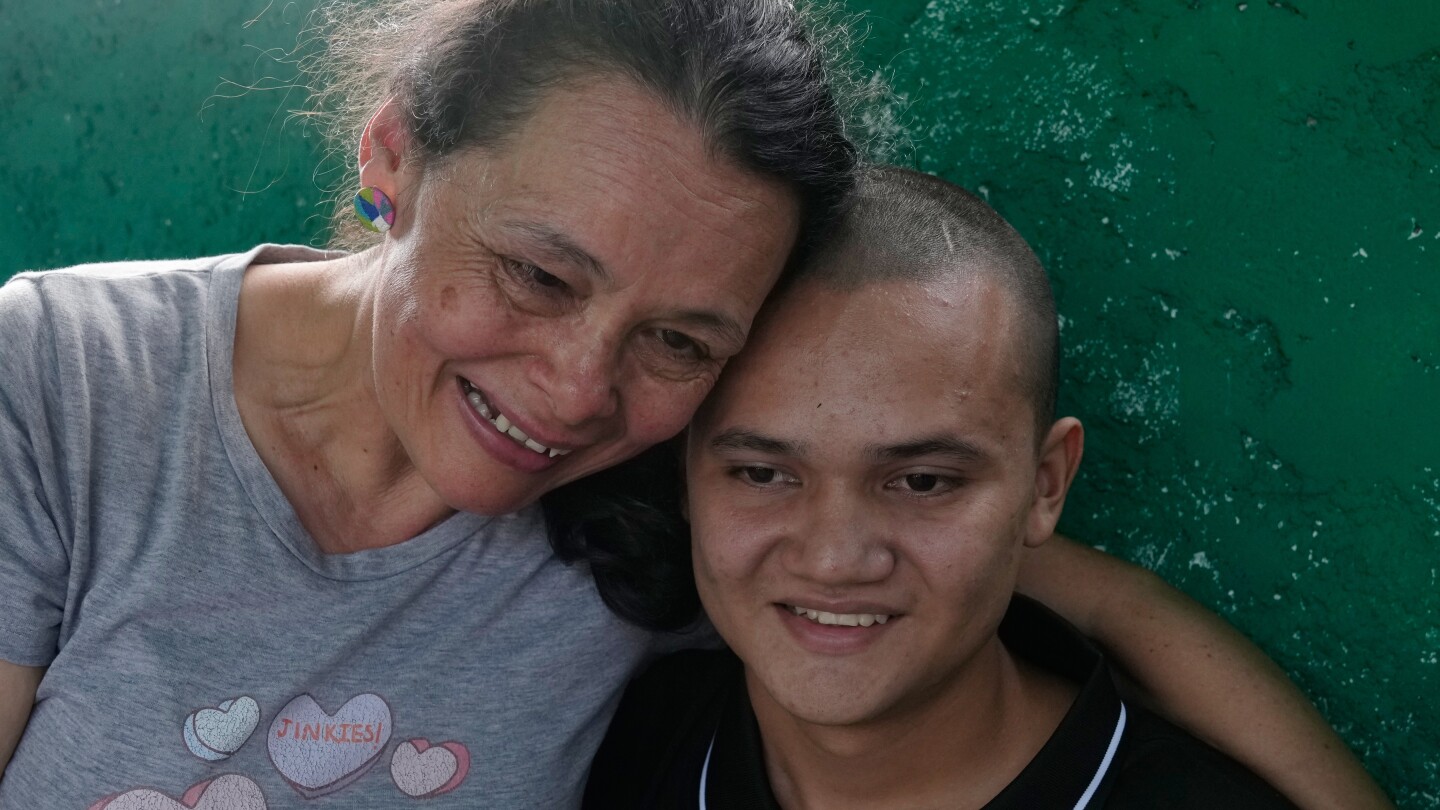
    In a heart-wrenching turn of events, Diana Tique’s hopes of reuniting with her brother, Manuel Tique, a 33-year-old humanitarian worker detained in Venezuela, were dashed last week. Despite rumors that Venezuela’s government would release several Colombians held without trial, Manuel was not among the 18 individuals freed on Friday. “It was devastating,” Diana lamented in Bogota, Colombia, where she has only been allowed two brief phone calls with her brother since his detention in September 2023.

    Human rights organizations, including New York-based Human Rights Watch (HRW), have raised alarms over Venezuela’s alleged use of foreign nationals as political bargaining chips. According to HRW, approximately 80 foreign citizens from countries such as Spain, France, Colombia, and the Czech Republic are being held without trial. Many of these individuals, including Manuel Tique, were detained while entering Venezuela as tourists and are now held in Rodeo One prison, where conditions are described as “tantamount to torture.”

    Manuel, who worked for the Danish Refugee Council, was detained in Apure, Venezuela, while en route to conduct a workshop for local aid groups. Venezuelan Interior Minister Diosdado Cabello later accused him of recruiting mercenaries to overthrow President Nicolas Maduro, a claim vehemently denied by his family. “My brother is not a terrorist,” Diana asserted, emphasizing his lack of prior international travel.

    The situation underscores Venezuela’s strained relations with countries that have refused to recognize Maduro’s controversial reelection in 2023. Colombia, despite strengthening diplomatic ties with Venezuela, has not acknowledged the election results and continues to advocate for the release of its citizens. In July 2023, the U.S. secured the release of 10 American citizens through a prisoner swap, highlighting the international dimensions of this issue.

    As Diana Tique struggles to find legal representation for her brother, fears grow that Manuel could face a lengthy prison sentence unless a bilateral agreement is reached. The Venezuelan human rights group Penal Forum reports that 20 Colombians remain detained without trial, further complicating diplomatic efforts.

  • Strongest storm in Jamaica’s modern history causing havoc

    Strongest storm in Jamaica’s modern history causing havoc

    Hurricane Melissa, now a Category 4 storm with wind speeds reaching 150 mph (240 km/h), has unleashed unprecedented devastation across Jamaica, marking the strongest hurricane in the nation’s modern history. The US National Hurricane Center has warned of ‘catastrophic winds, flash flooding, and storm surges,’ while Jamaica’s Meteorological Service predicts conditions will ‘significantly worsen.’ Nearly a third of the country is already without power, and images of uprooted trees and shattered homes are emerging as the storm continues its destructive path. Anne-Claire Fontan, a tropical cyclone specialist at the World Meteorological Organization, described the situation as ‘catastrophic,’ with storm surges expected to reach up to four meters. ‘For Jamaica, it will be the storm of the century for sure,’ she stated. Hospitals have lost roofs, and residents are braving the tempest to rescue others. Some areas are forecast to receive up to 30 inches (76 cm) of rain, exacerbating flash flooding. With 70% of Jamaica’s 2.8 million population living within 5 km of the sea, the risk of displacement and danger is immense. Health officials have also warned that rising water levels could displace crocodiles into residential areas, urging residents to avoid floodwaters. The slow-moving hurricane is now heading toward Santiago de Cuba, where Cuban authorities have evacuated 500,000 people from vulnerable zones. Cuban President Miguel Diaz-Canel expressed grave concerns about the storm’s potential destruction. Earlier, Jamaica reported three fatalities due to storm-related incidents, including fallen trees.

  • Democrats force a Senate vote to block Trump’s tariffs on Brazil

    Democrats force a Senate vote to block Trump’s tariffs on Brazil

    The U.S. Senate convened on Tuesday evening to vote on legislation aimed at nullifying President Donald Trump’s tariffs on Brazil, targeting key imports such as oil, coffee, and orange juice. The resolution, introduced by Democratic Senator Tim Kaine of Virginia, seeks to terminate the national emergencies declared by Trump to justify these tariffs. Kaine also plans to introduce similar resolutions addressing tariffs on Canada and other nations later this week. Despite the effort, the legislation faces significant hurdles. The Republican-controlled House has implemented rules that could block the resolution from reaching a vote, and Trump is expected to veto it if it passes Congress. Nevertheless, Kaine emphasized that the vote serves as a symbolic pushback against Trump’s trade policies, forcing a Senate discussion on the economic repercussions of tariffs. ‘This is about how much we will let a president get away with,’ Kaine stated, questioning whether his colleagues would challenge Trump’s authority. Trump imposed 50% tariffs on Brazil, citing the country’s policies and the criminal prosecution of former President Jair Bolsonaro. Last year, the U.S. recorded a $6.8 billion trade surplus with Brazil, according to the Census Bureau. Senate Democratic leader Chuck Schumer criticized the tariffs, stating that everyday Americans are paying the price for Trump’s ‘reckless’ trade policies. Republicans, too, have expressed growing discomfort with Trump’s aggressive trade stance, particularly amid economic uncertainty. The Congressional Budget Office recently warned that Trump’s tariff policies could exacerbate joblessness, inflation, and slow economic growth. In April, four Republicans joined Democrats to block tariffs on Canada, though the bill never advanced in the House. Kaine invoked a decades-old law to force the vote, allowing Congress to challenge a president’s emergency powers. Vice President JD Vance urged Republicans to support Trump’s trade negotiations, arguing that tariffs provide leverage for American workers and farmers. Meanwhile, the Supreme Court is set to review a case challenging Trump’s tariff authority, with lower courts already deeming many of his tariffs illegal. Some Republicans, like Senator Kevin Cramer, are awaiting the court’s decision before taking a stance. Others, including Senator Mitch McConnell and Senator Rand Paul, have openly criticized Trump’s use of emergency powers to justify tariffs, calling it an abuse of authority. Kaine also plans to introduce a resolution limiting Trump’s ability to conduct military strikes in Venezuela, aiming to pressure Republicans on contentious issues.

  • Strong winds and flying debris as Hurricane Melissa makes landfall

    Strong winds and flying debris as Hurricane Melissa makes landfall

    Hurricane Melissa has made landfall in Jamaica, unleashing powerful winds and dangerous storm surges. The hurricane is expected to bring waves reaching up to 13 feet (3.9 meters) above ground level, posing significant threats to coastal areas. The National Hurricane Center has warned of widespread destruction caused by flying debris and severe flooding. Emergency services are on high alert, urging residents to seek shelter and avoid unnecessary travel. This marks one of the most intense storms to hit the region this year, with experts emphasizing the importance of preparedness in the face of such extreme weather events. The impact of Hurricane Melissa is likely to disrupt daily life, damage infrastructure, and affect local economies for weeks to come.

  • Huge Brazilian raid on Rio gang leaves at least 64 people dead and 81 under arrest

    Huge Brazilian raid on Rio gang leaves at least 64 people dead and 81 under arrest

    In a sweeping operation targeting the notorious Red Command drug-trafficking gang, approximately 2,500 Brazilian police and military personnel descended upon the impoverished favelas of Complexo de Alemao and Penha in Rio de Janeiro on Tuesday. The raid, described as one of the most violent in Brazil’s recent history, resulted in the deaths of at least 60 suspects and four police officers, with 81 arrests made. Authorities seized 93 rifles and over half a ton of drugs during the operation, which involved helicopters and armored vehicles. Rio’s state Governor Claudio Castro hailed the raid as the largest of its kind in the city’s history, asserting that those killed had resisted police action. However, the operation drew sharp criticism from human rights organizations, with the United Nations expressing horror and calling for thorough investigations into the deaths. César Muñoz of Human Rights Watch labeled the events a “huge tragedy” and urged the public prosecutor’s office to investigate each death. Social media footage depicted scenes of chaos, with fire and smoke rising from the favelas as gunfire echoed. The raid disrupted daily life, forcing the closure of 46 schools and prompting the Federal University of Rio de Janeiro to cancel night classes. In response, suspected gang members blocked roads and commandeered at least 70 buses, causing significant damage. The operation followed a year-long investigation into the Red Command, which has expanded its control over Rio’s favelas in recent years. While Governor Castro criticized the federal government for insufficient support in combating crime, Gleisi Hoffmann, a representative of President Luiz Inácio Lula da Silva’s administration, highlighted recent federal efforts against organized crime, including a crackdown on money laundering. Sociologist Luis Flavio Sapori criticized the operation’s lack of strategic depth, arguing that such raids fail to target the masterminds of criminal organizations and instead result in the deaths of replaceable underlings. The Marielle Franco Institute, a nonprofit advocating for favela residents’ rights, condemned the operation as a “policy of extermination” that endangers the lives of Black and poor communities.

  • How do hurricanes form and are they getting stronger?

    How do hurricanes form and are they getting stronger?

    Hurricane Melissa, one of the most powerful Atlantic storms in history, has unleashed catastrophic conditions across Jamaica, prompting urgent warnings from the US National Hurricane Center. While climate change is not directly increasing the frequency of hurricanes, typhoons, and cyclones globally, it is amplifying their intensity. Warmer oceans and a heated atmosphere, both driven by climate change, are fueling higher wind speeds, heavier rainfall, and heightened risks of coastal flooding. This phenomenon is transforming already dangerous storms into even more destructive forces. Tropical cyclones, including hurricanes, are characterized by extreme wind speeds, torrential rains, and storm surges, which often result in widespread devastation. Although the global frequency of these storms has not risen over the past century, a growing proportion are reaching the most severe categories, with wind speeds exceeding 111 mph (178 km/h). The IPCC highlights ‘medium confidence’ in the increased average and peak rainfall rates linked to these storms, as well as a rise in ‘rapid intensification events,’ where wind speeds escalate dramatically. Additionally, tropical cyclones are moving slower across the Earth’s surface, prolonging rainfall and exacerbating flooding. For instance, Hurricane Harvey in 2017 stalled over Houston, dumping 100 cm of rain in just three days. Rising sea levels, driven by melting glaciers and thermal expansion of seawater, are further compounding the risks of coastal flooding. The IPCC concludes with ‘high confidence’ that human activities have contributed to increased precipitation in tropical cyclones and ‘medium confidence’ in their role in intensifying these storms. As global temperatures continue to climb, the proportion of category four and five hurricanes is expected to rise, underscoring the urgent need for climate action.

  • ‘We’re absolutely terrified’: Millions brace for Melissa’s impact in Jamaica

    ‘We’re absolutely terrified’: Millions brace for Melissa’s impact in Jamaica

    Jamaica is on high alert as Hurricane Melissa, the strongest storm of the year, approaches its shores. With winds so fierce they can knock people off their feet, residents and tourists alike are bracing for what experts predict will be catastrophic and life-threatening conditions. The National Hurricane Center has issued dire warnings of torrential rainfall, deadly flash flooding, and landslides. Already, the storm has claimed lives in the Caribbean, including three in Jamaica and four in Haiti and the Dominican Republic. Mandatory evacuation orders have been issued for at least seven high-risk areas in the southeast, where critical infrastructure, including the international airport and power plants, is located. Power outages have left over 200,000 people without electricity, and thousands have sought refuge in government shelters. However, many are reluctant to leave their homes, opting instead to fortify them with plywood, sandbags, and tied-down shutters. Supermarkets are empty, and essentials like bread are scarce. Tourists, too, are feeling the strain, with airports closed and flights canceled, leaving many stranded. Rebecca Chapman, visiting for her 25th wedding anniversary, described the eerie quiet and the ominous roar from the sea. Tim Hookway, a British national in Montego Bay, noted the muted atmosphere, while Alex Baskeyfield, from West Yorkshire, recounted the extreme preparations at his hotel, where everything from ceiling fans to televisions has been removed. The Foreign Office has advised Britons in Jamaica to heed local authority advice, particularly regarding evacuation orders. As Hurricane Melissa makes its slow approach, the sense of impending doom is palpable, with everyone hoping for the best but preparing for the worst.