标签: Oceania

大洋洲

  • ‘Brutal’: Alex de Minaur reveals why he chose to withdraw from Australia’s Davis Cup campaign

    ‘Brutal’: Alex de Minaur reveals why he chose to withdraw from Australia’s Davis Cup campaign

    Australian tennis star Alex de Minaur has described his withdrawal from next month’s Davis Cup tie in Ecuador as a ‘brutal decision,’ revealing he made the difficult choice to prioritize his long-term physical condition over national team duties. The announcement comes as the 26-year-old prepares to reach a career-high world No. 5 ranking next Monday.

    De Minaur, who has battled persistent hip issues throughout his career, consulted extensively with team captain Lleyton Hewitt before determining that competing on clay in Quito’s high-altitude conditions posed unacceptable risks to his health. The Australian squad will instead be led by James Duckworth, with support from Aleksandar Vukic, Rinky Hijikata, Jordan Thompson, and Thanasi Kokkinakis.

    ‘Davis Cup has been my priority for basically my whole career,’ de Minaur stated following his United Cup victory alongside Storm Hunter in Sydney. ‘To me, there’s no greater goal than to be able to lift the trophy one day with Lleyton, with the team, for Australia again.’

    Hewitt fully endorsed the decision, emphasizing the need to protect de Minaur from reinjury after the player previously competed while hurt for nine months. ‘Considering the time of the year, where it is, the conditions, the surface, so many variables,’ Hewitt explained, ‘we’ve come up with a plan that we think is best for him moving forward.’

    Australia must defeat Ecuador to advance to a second-round matchup against either Norway or Great Britain, with winners qualifying for the final eight in Bologna later this year. De Minaur confirmed he would definitely be available for subsequent rounds should Australia progress.

    The news comes amid positive form for de Minaur, who delivered a straight-sets victory over Jakub Mensik at the United Cup on Tuesday night, signaling strong preparation for the upcoming Australian Open.

  • Teen killed in anti-conscription protest in Jerusalem

    Teen killed in anti-conscription protest in Jerusalem

    A fatal incident during mass demonstrations against mandatory military service for ultra-Orthodox Jews has resulted in one death and multiple injuries in Jerusalem. Emergency services confirmed an 18-year-old male was pronounced dead at the scene after being struck by a bus during Tuesday’s protests against proposed conscription legislation.

    The tragic event occurred as thousands of Haredi Jewish demonstrators gathered to oppose ending their longstanding exemption from military service. According to Magen David Adom emergency responders, the bus initially injured three pedestrians before continuing and striking the teenager, who became trapped beneath the vehicle.

    Police reports indicate the protest turned violent when a segment of demonstrators began disrupting public order through traffic blockades, property damage, and assaults on law enforcement and journalists. Authorities stated the bus driver was arrested but claimed he had been assaulted by protesters prior to the incident. Israeli security sources have explicitly ruled out terrorism as a motive.

    The demonstrations reflect deepening societal tensions as Israel faces military manpower shortages following two years of multi-front conflicts. Prime Minister Benjamin Netanyahu navigates competing pressures between opposition demands for expanded conscription and ultra-Orthodox coalition partners who traditionally oppose drafting religious students.

    This longstanding exemption, established since Israel’s founding in 1948, allows yeshiva students dedicated to Jewish textual study to avoid mandatory service. However, the policy faces increasing scrutiny amid ongoing military mobilizations, despite the fragile Gaza truce.

    The political stakes are substantial for Netanyahu’s government, as ultra-Orthodox parties constitute 14% of Israel’s Jewish population and are essential to maintaining his right-wing coalition’s parliamentary majority. The government’s stability has already been tested by previous conscription legislation, with the United Torah Judaism party exiting the coalition and reducing its seats to 60 out of 120.

    This incident marks the second protest-related death in recent months, following a teenage suicide during similar demonstrations in October.

  • “Far left” extremism must be included in Bondi inquiry’s terms of reference: Ley

    “Far left” extremism must be included in Bondi inquiry’s terms of reference: Ley

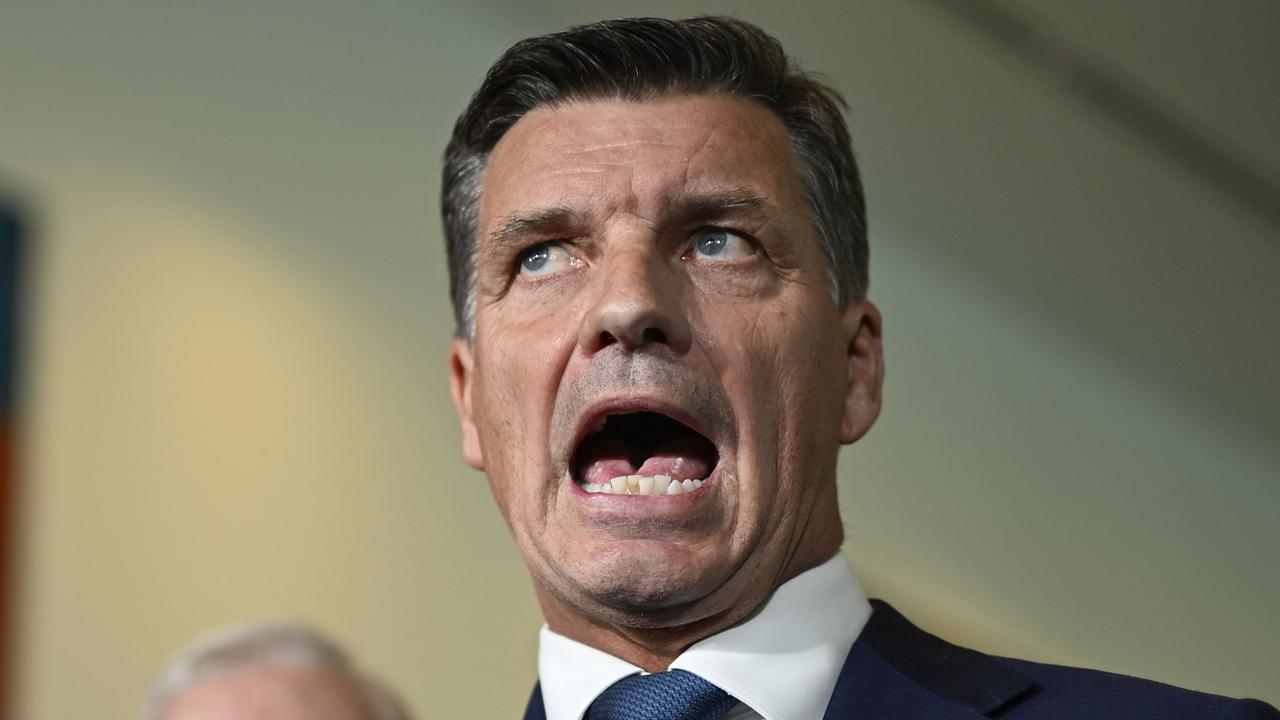
    Australia’s political leadership is confronting escalating demands for a comprehensive national investigation into extremist ideologies following the Bondi terrorist attack. Opposition Leader Sussan Ley has positioned her party to condition bipartisan support on the inclusion of three specific ideological threats: radical Islamic extremism, neo-Nazi extremism, and far-left extremism.

    During a press conference in Sydney, Ms. Ley articulated the Coalition’s firm stance that any prospective royal commission must explicitly reference all three movements. She emphasized that ‘anti-Semitism cannot be re-scoped or redefined,’ criticizing the Albanese government for what she characterized as insufficient attention to radical Islamic extremism in their post-attack response. Despite this criticism, she reaffirmed the opposition’s willingness to collaborate on establishing terms of reference, identifying these three components as the essential foundation for negotiations.

    The political pressure intensified significantly as over thirty former senior defense, security, and intelligence officials released an open letter urging immediate governmental action. The signatories, including former Australian Security Intelligence Service chief Paul Symon and former AFP commissioner Michael Keelty, asserted that anti-Semitism has ‘already exposed Australia to foreign interference from hostile states and extremist groups.’ They advocated for a federal royal commission capable of examining government decision-making processes, institutional frameworks, and national security responses following both the October 2023 Hamas attacks and the recent elevation of Australia’s terrorism threat level in August 2024.

    Independent MP Allegra Spender, representing the Bondi-containing electorate of Wentworth, simultaneously encouraged Prime Minister Anthony Albanese to reconsider his opposition to a national inquiry. She framed potential reconsideration not as leadership weakness but as democratic responsiveness, stating that leaders who ‘change their minds based on community feedback demonstrate openness to listening.’ Ms. Spender additionally proposed creating a ministerial portfolio dedicated to social cohesion to address anti-Semitism, Islamophobia, and other identity-based hatreds.

    Prime Minister Albanese, while maintaining his primary focus on the ongoing Richardson review of security agencies and planned hate speech legislation, notably softened previous absolute rejection of a broader inquiry. He stated his administration was ‘examining everything that is required’ to rebuild national unity, envisioning an Australia where citizens can practice their faith without fear of targeted violence or vilification.

  • Western allies agree Ukraine guarantees after Paris ‘progress’

    Western allies agree Ukraine guarantees after Paris ‘progress’

    In a significant diplomatic breakthrough, Western nations have established a framework for Ukraine’s future security during a major Paris summit. Representatives from 35 countries, including 27 heads of state or government, convened for what became the largest gathering of the Coalition of the Willing to date.

    The resulting agreement establishes multilayered security assurances that would activate following a ceasefire in the Russia-Ukraine conflict. Central to these guarantees is a US-led monitoring mechanism with European participation designed to oversee any future truce. Additionally, France and Britain have committed to deploying troops on Ukrainian territory post-ceasefire through a signed declaration of intent with Ukrainian leadership.

    The Paris meeting also yielded plans for a permanent coordination cell involving the United States, Ukraine, and coalition partners to be established in the French capital. While the final communiqué omitted earlier draft language about direct US support for European forces in case of renewed Russian aggression, participants emphasized substantial progress in creating durable security structures.

    French President Emmanuel Macron characterized the agreements as “robust security guarantees for a solid and lasting peace,” noting an “operational convergence” among allies. He revealed that France could potentially deploy “several thousand” troops to Ukraine after hostilities cease.

    The negotiations occurred against a complex geopolitical backdrop, including recent US actions in Venezuela and controversial statements about Greenland that had created transatlantic tensions. Despite these challenges, US envoy Steve Witkoff reported “a lot of progress” in ensuring Ukraine’s long-term security, noting that territorial compromises would represent the most “critical issue” in future negotiations.

    Ukrainian President Volodymyr Zelensky expressed satisfaction with the concrete outcomes, particularly highlighting the joint coalition declaration and trilateral agreement with France and Britain. He concurred that territorial questions remain the primary unresolved matter, referencing Russian demands regarding the Donbas region.

    British Prime Minister Keir Starmer outlined post-ceasefire plans including military hubs across Ukraine and protected facilities for weapons storage. He cautioned that peace would require compromises from Russian leadership, noting that recent Russian actions have only “hardened our resolve.”

    The security architecture acknowledges political realities, with German Chancellor Friedrich Merz suggesting German forces could participate in ceasefire monitoring from neighboring countries rather than Ukrainian territory. All participants acknowledged that imperfect compromises would be necessary, with Merz noting “we will not achieve textbook diplomatic solutions.”

  • US forces killed 55 Venezuelan, Cuban military personnel in Maduro raid: tolls

    US forces killed 55 Venezuelan, Cuban military personnel in Maduro raid: tolls

    Newly released casualty figures reveal that 55 Venezuelan and Cuban military personnel lost their lives during a decisive US military operation that resulted in the capture of former Venezuelan leader Nicolas Maduro. Venezuelan authorities confirmed 23 service member fatalities, while Cuba reported 32 deaths among its armed forces and security personnel stationed in Caracas, marking the first official acknowledgment of losses from Saturday’s operation.

    The multi-phase assault commenced with precision airstrikes targeting military installations, culminating in a helicopter-borne special forces raid that extracted Maduro and his wife, Cilia Flores, from a secure compound. The captured leader subsequently appeared in a New York courtroom, pleading not guilty to comprehensive drug trafficking charges. Mexican President Claudia Sheinbaum has since called for assurances of a fair judicial process for the deposed leader.

    In the aftermath, Delcy Rodriguez, Maduro’s former deputy, assumed the role of interim president amid complex geopolitical pressures. US President Donald Trump expressed conditional willingness to collaborate, contingent upon Rodriguez granting American corporations access to Venezuela’s substantial oil reserves. This demand places the new leadership in a precarious position, requiring careful navigation between Washington’s expectations and maintaining support from Maduro’s influential political base.

    The transitional government faces immediate challenges, evidenced by the brief detention of 16 journalists covering Rodriguez’s parliamentary inauguration—a move signaling the persistent influence of hardline elements within the security apparatus. Opposition leader Maria Corina Machado launched scathing criticism against the interim administration, labeling Rodriguez as fundamentally untrustworthy and highlighting her historical ties to nations including Russia and China.

    Trump maintained strategic ambiguity, simultaneously endorsing Rodriguez while issuing stark warnings should she deviate from US objectives. Meanwhile, political analysts suggest the interim administration may pursue confidence-building measures, including potential releases of political prisoners and diplomatic re-engagement, as Venezuela prepares for constitutionally mandated elections within the coming month.

  • Iran security forces use tear gas in Tehran bazaar as toll rises

    Iran security forces use tear gas in Tehran bazaar as toll rises

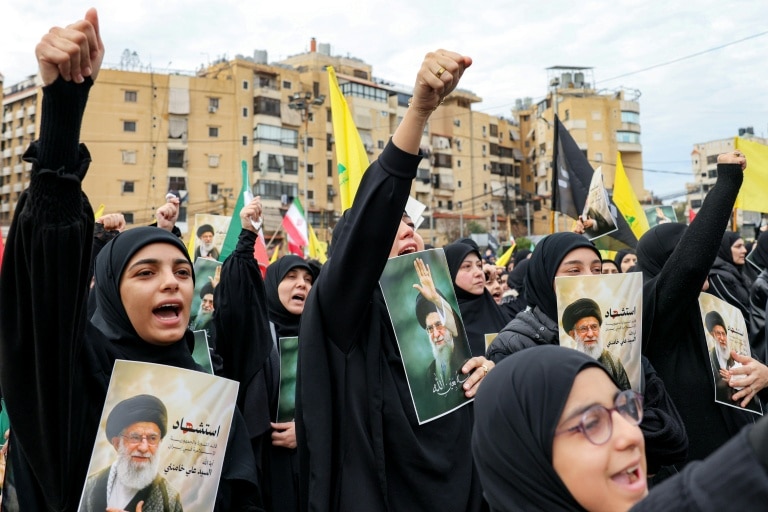
    Iranian security forces escalated their response to nationwide economic protests on Tuesday, deploying tear gas to disperse demonstrators at Tehran’s historic Grand Bazaar. The confrontation marks a significant intensification of the government’s crackdown on the most substantial wave of civil unrest to challenge the Islamic Republic since the 2022-2023 demonstrations.

    The protests, initially triggered by a severe currency devaluation and soaring living costs, have now resulted in significant casualties. According to Norway-based NGO Iran Human Rights (IHR), security forces have killed at least 27 protesters during ten days of demonstrations that began in late December. The victims include five minors under age 18, highlighting the violent nature of the state response.

    The movement originated on December 28th when merchants at Tehran’s economic hub initiated a shutdown protest against the Iranian rial’s collapse. The demonstrations have since spread to western regions with significant Kurdish and Lor minority populations. While not yet reaching the scale of previous nationwide uprisings, the protests represent a mounting challenge for Supreme Leader Ayatollah Ali Khamenei’s government amid persistent economic crisis and recent regional conflicts.

    Verified social media footage obtained by AFP shows protesters chanting anti-government slogans including ‘Pahlavi will return’ and ‘Seyyed Ali will be overthrown’—direct references to the ousted monarchy and current leadership. Additional footage from human rights organizations captures crowds shouting ‘freedom’ and ‘shameless’ before security forces respond with tear gas canisters that send protesters fleeing through narrow alleyways.

    Despite government announcements of modest economic relief payments, judiciary officials have warned there will be ‘no leniency’ for those deemed ‘rioters.’ Official Iranian media acknowledges at least 12 fatalities since protests began, including security personnel, but contradicts the higher casualty figures reported by independent organizations.

    IHR reports over 1,000 arrests nationwide, with particularly severe crackdowns in western provinces. In one incident in Ilam province’s Malekshahi district, security forces allegedly killed six protesters on Saturday. Amnesty International has condemned subsequent raids on hospitals to detain injured demonstrators as evidence of the regime’s extreme measures to suppress dissent.

    The economic grievances fueling the protests continue unabated. The Iranian rial hit a new record low of approximately 1.47 million to the US dollar on black markets, further eroding purchasing power and exacerbating the economic desperation driving citizens into the streets.

  • US Capitol riot anniversary exposes a country still divided

    US Capitol riot anniversary exposes a country still divided

    Five years after a violent mob stormed the U.S. Capitol, Washington remains a city—and a nation—profoundly divided over the meaning and legacy of January 6, 2021. The anniversary has become a focal point for competing commemorations that reflect the irreconcilable accounts of an event that continues to reshape the American political landscape.

    On one side, House Democrats convened an unofficial hearing inside the Capitol, featuring testimonies from law enforcement officers, former lawmakers, and civilians who endured the attack firsthand. Their mission, as stated by many involved in the original congressional investigation, is not to relitigate the past but to prevent its erasure—particularly in the wake of former President Donald Trump’s pardons for nearly all defendants charged in connection with the assault.

    A new Democratic report underscores concerns over dozens of pardoned rioters who were later charged with new crimes, warning that such clemency risks normalizing political violence.

    Conversely, Trump supporters, including figures associated with the far-right Proud Boys, staged a march retracing the route taken by the rioters in 2021. Organized by the group’s former leader, Enrique Tarrio—who received a pardon from Trump after being sentenced to 22 years for seditious conspiracy—the event was promoted as a memorial for those who died, including pro-Trump rioter Ashli Babbitt, and a protest against what organizers describe as excessive police force and politically motivated prosecutions.

    The starkly contrasting events mirror a broader political schism. Democrats assert that Trump incited the attack in a deliberate attempt to overturn a free and fair election. Republicans largely reject this narrative, instead emphasizing security failures and criticizing the Justice Department’s handling of subsequent investigations.

    House Speaker Mike Johnson, a staunch Trump ally, has yet to install a congressionally mandated plaque honoring Capitol Police officers, while Republican investigator Barry Loudermilk argues the anniversary has been exploited to advance a political narrative against Trump and his supporters.

    The unresolved legal and historical questions linger. Although former special counsel Jack Smith concluded the attack would not have occurred without Trump’s actions, the federal case was abandoned following Trump’s reelection, in accordance with Justice Department policy barring prosecution of a sitting president. Trump was impeached by the Democratic-controlled House but acquitted by the Republican-led Senate, leaving the nation’s divisions as raw as ever.

  • Somalia calls Israeli FM visit to Somaliland an ‘incursion’

    Somalia calls Israeli FM visit to Somaliland an ‘incursion’

    Somalia has vehemently denounced Israeli Foreign Minister Gideon Saar’s official visit to the breakaway region of Somaliland, characterizing the diplomatic mission as an “unauthorized incursion” into its sovereign territory. The high-profile arrival on Tuesday marks the first ministerial-level engagement since Israel extended formal recognition to Somaliland last month—a landmark decision for the self-declared republic that separated from Somalia in 1991.

    Despite maintaining its own government, currency, and military forces, Somaliland has struggled to achieve broad international acknowledgment due to concerns about encouraging separatist movements across Africa. The region’s strategic positioning along the critical shipping lanes of the Gulf of Aden has attracted foreign interest, with Israel potentially gaining improved access to the Red Sea and enhanced capabilities against Houthi rebels in Yemen.

    During joint press conferences, Israeli officials described the recognition as “the moral thing to do,” while Somaliland President Abdirahman Abdullahi Mohamed praised the move as “courageous” and anticipated significant economic and development opportunities. However, Somalia’s foreign ministry asserted its right to pursue “all appropriate diplomatic and legal measures” to protect its territorial integrity, receiving support from the African Union Peace and Security Council which strongly condemned Israel’s recognition and demanded its immediate revocation.

    The diplomatic development has drawn mixed international reactions, with the United States supporting Israel’s position while Egypt, Turkey, the Gulf Cooperation Council, and the Organisation of Islamic Cooperation expressed criticism. The European Union emphasized the importance of respecting Somalia’s sovereignty. Adding to regional tensions, the Islamist militant group Al-Shabaab has threatened to combat any Israeli military presence in Somaliland, potentially escalating security challenges in the volatile Horn of Africa region.

    Historical context reveals that Somaliland briefly existed as an independent state in June 1960 after gaining independence from Britain before voluntarily uniting with Italian-administered Somalia. Somaliland leadership contends this union was never properly ratified and became invalid following Somalia’s governmental collapse in 1991.

  • Six dead in weather accidents as cold snap grips Europe

    Six dead in weather accidents as cold snap grips Europe

    A severe Arctic blast has enveloped Europe, triggering a cascade of fatal accidents and widespread transportation paralysis. The continent’s most intense cold spell this winter has resulted in six weather-related fatalities and created unprecedented travel disruption across multiple nations.

    France has borne the heaviest human toll, reporting five deaths linked to hazardous conditions. Authorities confirmed three individuals perished on icy roads in the southwest due to black ice accidents. Separately, a taxi driver died after skidding into the Marne River near Paris, while another motorist lost their life in a collision with a freight vehicle east of the capital.

    Transportation infrastructure faced severe strain as Paris’s Charles de Gaulle Airport prepared to cancel 40% of flights and Orly Airport 25% to facilitate runway clearing operations. Amsterdam’s Schiphol Airport experienced its second consecutive day of cancellations with over 400 flights grounded, creating massive passenger queues. The Dutch national railway system remained suspended until mid-morning, operating at reduced capacity thereafter.

    The Balkans confronted dual challenges of heavy snowfall and flooding. Sarajevo recorded 40 centimeters (16 inches) of snow accumulation, leading to one fatality when a snow-laden tree collapsed onto a woman. Widespread power outages affected dozens of Serbian villages, while Bosnia experienced river overflows and Albania conducted evacuations from flooded homes.

    Meteorological agencies reported extreme temperatures, with England’s Norfolk region recording -12.5°C and the Netherlands experiencing widespread sub -10°C conditions. Britain’s Met Office confirmed this represented the winter’s coldest night, with nearly the entire UK under weather alerts. Scotland faced particularly severe conditions with over 300 school closures and major rail disruptions.

    Transport Minister Fiona Hyslop urged Scots to avoid travel unless absolutely necessary, emphasizing the continued risks from additional expected snowfall. Despite challenges, airports in Liverpool and Aberdeen resumed operations after Monday’s closures.

    In Hungary, officials warned of deteriorating conditions with northeastern roads and railways becoming impassable. Construction and Transport Minister Janos Lazar advised citizens to venture out only for essential purposes as fresh snowfall continued.

    Urban centers faced unique challenges, with Parisian pedestrians navigating treacherously icy sidewalks. Tour guide Valeria Pitchouguina described the surreal beauty of snow-covered Paris while noting the practical difficulties of navigating Montmartre’s iconic steps under icy conditions, comparing the ascent to ‘climbing Mont Blanc.’

  • US would lead Ukraine ceasefire monitoring, back multinational force: draft statement

    US would lead Ukraine ceasefire monitoring, back multinational force: draft statement

    A draft statement circulating ahead of Tuesday’s Paris summit reveals a comprehensive security framework being developed by Ukraine’s international allies. According to documents obtained by AFP, the United States would assume leadership of a ceasefire monitoring and verification mechanism with European participation should a peace agreement be reached in the Russia-Ukraine conflict.

    The proposed security architecture includes a European-led multinational force that would deploy following any ceasefire arrangement. Washington has committed to supporting this force with intelligence, logistical capabilities, and military assistance in the event of renewed Russian aggression. The statement emphasizes “binding commitments” from participating nations to ensure Ukraine’s security against future attacks.

    President Emmanuel Macron is hosting the Coalition of the Willing meeting, which brings together European leaders, Ukrainian President Volodymyr Zelensky, and American representatives. The summit focuses specifically on establishing concrete security guarantees that would deter further Russian aggression during any ceasefire period.

    The proposed monitoring system would provide comprehensive oversight capabilities across air, sea, and land domains while facilitating the regeneration of Ukraine’s armed forces. European nations would lead the multinational force component, with American participation concentrated in intelligence sharing, logistical support, and contingency response capabilities.

    The security commitments outlined in the draft extend beyond military measures to include diplomatic initiatives and additional sanctions against Russia. This multilateral approach represents the most detailed framework proposed to date for ensuring Ukraine’s security in any potential post-ceasefire environment.