标签: Oceania

大洋洲

  • China launches crewed space flight as part of Moon ambitions

    China launches crewed space flight as part of Moon ambitions

    China has successfully launched the Shenzhou-23 crewed spacecraft, marking another major milestone in its ambitious plan to land humans on the lunar surface by 2030, with the craft completing a smooth docking with the country’s Tiangong Space Station just hours after liftoff, according to official Chinese state media. This mission carries historic significance, as it includes the first ever astronaut from Hong Kong to travel to space, opening a new chapter in the region’s participation in China’s growing space exploration program.

    The Long March 2-F carrier rocket lifted off on schedule at 11:08 pm Beijing Time Sunday (1508 GMT) from the Jiuquan Satellite Launch Center located in China’s arid northwestern Gobi Desert. Footage broadcast by China’s state-run CCTV captured the powerful launch, with the rocket ascending through the night sky, engulfed in bright orange flames and thick plumes of smoke. Roughly 10 minutes after liftoff, the Shenzhou-23 spacecraft successfully separated from the rocket and entered its planned orbit, the China Manned Space Agency (CMSA) confirmed in a social media statement shortly after launch. “All three astronauts are in good physical condition, and the launch mission has been declared a complete success,” the agency added.

    Approximately 3.5 hours after entering orbit, the spacecraft completed an automated docking with the Tiangong Space Station, China’s permanent outpost in low-Earth orbit, state news agency Xinhua reported, citing CMSA updates. The three-member crew is led by 43-year-old Li Jiaying, a former Hong Kong police officer who makes history as the first Hong Kong-born astronaut to reach space. She is joined by two other crewmates: 39-year-old space engineer Zhu Yangzhu, and 39-year-old Zhang Zhiyuan, a former Chinese Air Force pilot who is making his first trip to space.

    In pre-launch ceremonies held at the launch center, crowds of attendees waved national flags and cheered as the three crew members saluted from the stage, accompanied by a ceremonial performance from a military band. Once settled aboard Tiangong, the crew will conduct a wide range of scientific experiments across multiple disciplines, including life sciences, materials science, fluid physics, and biomedical research.

    The centerpiece of the mission is a groundbreaking 12-month orbital stay for one crew member, a first for China’s manned space program that will generate critical data to support the country’s 2030 lunar landing goal. This long-duration mission is designed to study the physiological and psychological impacts of extended exposure to microgravity, a key area of research for any crewed deep space exploration effort, including future missions to Mars. CMSA has stated that the specific crew member selected for the full-year stay will be announced at a later date, based on the progress of the mission in its early phases.

    Richard de Grijs, an astrophysicist and professor at Australia’s Macquarie University, outlined the unique challenges that this mission will address. Extended stays in space carry well-documented health risks for humans, including bone density loss, muscle atrophy, increased radiation exposure, sleep disruption, and cumulative mental and physical fatigue, he explained. Beyond human health, the mission will also test the reliability of critical life support systems, including closed-loop water and air recycling technologies, as well as protocols for managing potential medical emergencies thousands of kilometers from Earth.

    De Grijs noted that the year-long mission represents a steady, deliberate step forward for China’s space program, building operational experience for long-term sustained occupation of the Tiangong Space Station and laying critical groundwork for future lunar and deep space exploration. “A 12-month orbital stay pushes both the program’s hardware and the astronauts themselves into a new operational domain, compared to the shorter six-month missions that have been standard for Shenzhou in earlier phases of the program,” he told Agence France-Presse. Prior to this mission, all crews rotating through Tiangong have served six-month tours of duty before being relieved by replacement crews.

    Shenzhou-23 is a core part of China’s timeline to put astronauts on the Moon before 2030, a goal that puts Beijing in a friendly global space race with the United States, which is pursuing its own return to the Moon through the NASA-led Artemis program. China is already moving forward with testing the next-generation hardware needed for lunar missions, with an uncrewed orbital test flight of the new Mengzhou spacecraft planned for 2026. The Mengzhou craft will replace the current Shenzhou fleet, and is designed specifically to carry Chinese astronauts to the Moon. Beijing also aims to complete the first phase of its International Lunar Research Station, a permanent manned outpost on the lunar surface, by 2035.

    Looking beyond its national program, China has plans to expand international collaboration in low-Earth orbit, with the first foreign astronaut – a Pakistani crew member – set to visit Tiangong by the end of 2024.

    Over the past three decades, China has rapidly expanded its space exploration program, investing tens of billions of dollars into the sector to close the gap with long-established space powers including the United States, Russia, and Europe. The country has already notched multiple historic space firsts: in 2019, it became the first nation in the world to land a robotic probe, Chang’e-4, on the far side of the Moon, a feat no other space program had achieved. In 2021, China successfully landed a robotic rover on the surface of Mars, cementing its status as a major player in deep space exploration.

    China’s development of an independent space station grew out of a political restriction: since 2011, the country has been excluded from participating in the U.S.-led International Space Station, after U.S. legislation banned NASA from any formal collaboration with Beijing. That restriction pushed China to pursue an entirely domestic space station program, which it completed with the construction of Tiangong in 2022.

  • Deadly Israeli strikes pound south, east Lebanon

    Deadly Israeli strikes pound south, east Lebanon

    Fresh waves of deadly Israeli airstrikes have hammered swathes of southern and eastern Lebanon on Sunday, shattering the relative calm of a weeks-old ceasefire and pushing already soaring casualty numbers higher even as Hezbollah’s leader voiced cautious optimism that a forthcoming US-Iran agreement could end the broader regional conflict engulfing the country.

    Lebanon’s Ministry of Public Health announced Sunday that the cumulative death toll from hostilities in the country since March 2 has climbed to 3,123. According to official updates, two people – including a paramedic with the Hezbollah-affiliated Islamic Health Committee – lost their lives in Sunday’s raids. The ministry also confirmed that a single Israeli strike on the southern Lebanese village of Sir al-Gharbiyeh a day earlier killed 11 people, among them six women and one young child, an incident officials have decried as a deliberate massacre.

    The ongoing military operations mark a clear continuation of Israeli hostilities despite a ceasefire that first took effect across Lebanon on April 17 and was recently extended for an additional several weeks. Israeli military officials maintain that all strikes target legitimate Hezbollah positions aligned against the country. The Iran-backed armed group, for its part, has not ceased its own cross-border and frontline attacks: it claimed more than 20 separate assaults against invading Israeli troops in southern Lebanon and other targets inside Israeli territory on Sunday alone, ranging from rocket barrages and drone attacks to artillery shelling.

    While Tehran has signaled that any framework for a de-escalation understanding with Washington to end the broader regional war would explicitly include Lebanon, Israeli Prime Minister Benjamin Netanyahu said Sunday that US President Donald Trump had reaffirmed unwavering support for Israel’s inherent right “to defend itself against threats on all fronts, including in Lebanon.” In an official statement, Israeli military Chief of Staff Lieutenant General Eyal Zamir emphasized that “we continue to strike Hezbollah across all dimensions… the security of civilians and the safety of our forces remain paramount.”

    Lebanon’s official National News Agency documented Israeli airstrikes hitting more than 30 separate locations across southern and eastern Lebanon on Sunday, with multiple strikes resulting in casualties. Agence France-Presse correspondents on the ground reported large plumes of black smoke rising from impacted areas across the region. The Israeli military has issued mandatory evacuation orders for more than a dozen villages in southern Lebanon and the eastern Bekaa Valley, a move that has displaced hundreds of additional civilian residents.

    Lebanon’s civil defense agency confirmed that its regional headquarters in the key southern city of Nabatieh was completely destroyed in an overnight Israeli strike. An AFP photographer witnessed civil defense teams sifting through rubble to recover usable equipment, and as of Sunday afternoon, the Israeli military had not responded to repeated requests for comment from AFP’s Jerusalem bureau on the attack on the facility.

    Speaking amid the renewed violence, Hezbollah Secretary General Naim Qassem expressed hope that a prospective agreement between the United States and Iran would be finalized “God willing” and that Lebanon and Hezbollah would be included in any full cessation of hostilities. However, Qassem doubled down on the group’s longstanding rejection of direct bilateral negotiations between the Lebanese government and Israel, a landmark process that launched recently under US mediation. The talks are scheduled to hold their fourth round in early June, with a preparatory meeting between military delegations set to take place at the Pentagon on May 29.

    “Abandon the direct negotiations… Don’t be with them and stab us in the back,” Qassem warned Lebanese authorities. He also ruled out any discussion of Hezbollah disarmament, stating bluntly that “disarmament is annihilation and we cannot accept it.” Adding that “we and our people face an existential threat,” Qassem stressed that “we will not bow, even if the whole world turns against us.”

    In response to Qassem’s remarks, US Secretary of State Marco Rubio accused Hezbollah of actively seeking to drag Lebanon “back into chaos.” The current cycle of regional violence was triggered in early March, when Hezbollah opened fire on Israel with a massive rocket barrage in retaliation for the US-Israeli airstrike that killed Iran’s supreme leader.

    Under the terms of the ceasefire published by the White House, Israel retains the right to carry out military operations against what it defines as “planned, imminent or ongoing attacks” originating from Lebanese territory. Israeli forces that have invaded southern Lebanon also continue to operate within an Israeli-declared “yellow line” that extends roughly 10 kilometers, or six miles, deep into Lebanese territory along the border.

  • Djokovic fights through tough Roland Garros opener, Zverev strolls

    Djokovic fights through tough Roland Garros opener, Zverev strolls

    The 2026 Roland Garros kicked off its main draw on Sunday with a dramatic opening night headlined by 39-year-old Novak Djokovic, who fought through a massive test to keep his historic chase of a 25th Grand Slam title alive, while Alexander Zverev cruised to a comfortable straight-set win amid a rash of early upsets for seeded and former champions.

    Djokovic entered this year’s Paris tournament with a golden opportunity to etch his name deeper into tennis history: a fourth Coupe des Mousquetaires title would cement him as the outright leader for the most major men’s singles titles in the sport, and top-ranked two-time defending champion Carlos Alcaraz’s injury withdrawal cleared a major path to the crown. It had been two and a half years since the Serb lifted his last Grand Slam trophy at the 2023 US Open, and a shoulder injury had sidelined him for almost the entire 2026 clay court swing heading into Paris, making his opening match even more high-stakes.

    Facing 2.01-meter French big server Giovanni Mpetshi Perricard in the night session on Court Philippe Chatrier, Djokovic found his historic dream on the brink of an early end. Buoyed by a raucous home crowd, Mpetshi Perricard took the opening set 7-5, and his precise, blistering serve left Djokovic with almost no return opportunities in the early going. But drawing on decades of Grand Slam experience, Djokovic dug in, eventually broke through the Frenchman’s serve resistance, and rallied to seal a 5-7, 7-5, 6-1, 6-4 victory after just under three hours on court. The win marked Djokovic’s first clay court victory of 2026 and stretched his record to 82 career Grand Slam main draw appearances.

    “It was very challenging, obviously mentally,” Djokovic told reporters after the match. “First set, zero chance on him serving. It’s one of the most tremendous serves in terms of precision and speed that I have ever faced in my career. Obviously, the crowd gets into it and you feel the pressure even more. All in all, it was a good match to be part of. Three hours, just what the doctor ordered at age 39.” Djokovic will advance to face another French player, Valentin Royer, in the second round, after Royer defeated Bolivian qualifier Hugo Dellien.

    Earlier in the day, played out under scorching 30-plus degree Celsius heat, German second seed Alexander Zverev earned a far more straightforward opening win, beating France’s Benjamin Bonzi 6-3, 6-4, 6-2. The only small hiccup in Zverev’s polished performance came when he dropped a break of serve in the second set, but he quickly reclaimed control to close out the straight-sets win. “It was always nice to start with a straight-sets win,” Zverev said, with the high temperatures making the shorter match a welcome result. He will next face Czech player Tomas Machac, who defeated Belgium’s Zizou Bergs in straight sets to advance.

    Other early winners on opening day included Russia’s Karen Khachanov, 26th seed Jakub Mensik of the Czech Republic, 19-year-old Brazilian prospect Joao Fonseca, 11th seed Belinda Bencic of Switzerland, and Russian eighth seed teen Mirra Andreeva, all of whom claimed straight-set opening round wins.

    The day was not short of upsets, however. American seventh seed Taylor Fritz was ousted in four sets by unseeded compatriot Nishesh Basavareddy, ranked 148th in the world, marking another early Roland Garros exit for the top seed. 2021 French Open champion Barbora Krejcikova was also eliminated, falling to American 26th seed Hailey Baptiste in three sets. Former Grand Slam champions Emma Raducanu and Sofia Kenin also bowed out in the opening round.

    In the day’s most poignant story, Ukrainian 15th seed Marta Kostyuk extended her clay court winning streak to 12 matches with a comfortable 6-2, 6-3 win over Oksana Selekhmeteva, but revealed after the match that her parents’ home in Kyiv had narrowly escaped destruction that morning, when a Russian missile landed just 100 meters from the property during a large-scale bombardment of the Ukrainian capital. “This morning, 100 metres from my parents’ house, a missile fell,” Kostyuk said. “All my thoughts and all my heart was to the people of Ukraine today. My biggest example are Ukrainian people today.”

  • AFL 2026: West Coast young gun Josh Lindsay sees sharp improvement in emerging Eagles

    AFL 2026: West Coast young gun Josh Lindsay sees sharp improvement in emerging Eagles

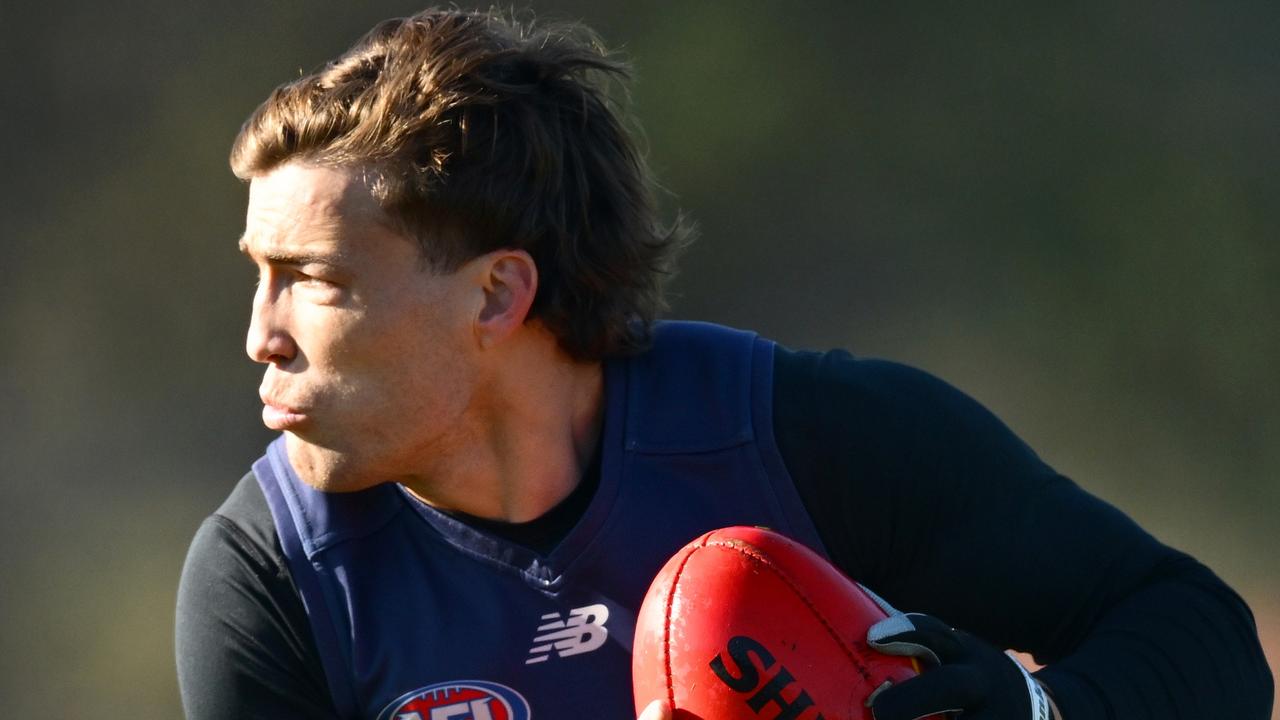
    In a tense Australian Football League clash at the packed Melbourne Cricket Ground on Saturday, West Coast Eagles’ young breakout defender Josh Lindsay has framed a narrow 10-point loss to Collingwood as a critical stepping stone for his young team’s long-term development, arguing that every hard-fought outing is building the foundation for future success.

    The match marked a major milestone for Collingwood veteran Scott Pendlebury, and the Magpies looked set to deliver a blowout celebration early in the third quarter when they stretched their lead out to 29 points, seemingly on track to secure a comfortable win. But West Coast refused to fold, mounting a steady comeback that pulled the Eagles within three points late in the fourth quarter thanks to a major score from Jobe Shanahan. Collingwood’s Dan McStay and Nick Daicos ultimately slammed the door on the comeback, kicking late decisive goals to secure the 10-point win and preserve Pendlebury’s milestone celebration.

    Despite leaving the MCG without four points, Lindsay, who earned an AFL Rising Star nomination earlier this season, said the four-quarter competitive showing proved how far the rebuilding Eagles have come week-to-week. “We’re probably a bit stiff not to get the result there, but I think our footy is building every week. We’re only getting better from here,” the 10-game veteran explained. “I think it’s just getting more games and experience. The more footy you play, you learn. If you can continue on playing footy, I’ve played 10 games so far and I’ve learned so much. Playing footy together is how I think we’re going to really build.”

    The left-footed half-back has quickly emerged as one of West Coast’s most reliable ball handlers and elite kickers in his short senior career, a skill he attributes to a mix of natural instinct and intentional off-hours practice. “I think some of it comes natural but I work super hard on it,” Lindsay said. “Whether that’s before or after training, the more reps I can do the better I am going to get. I definitely say it’s hard work.”

    While speculation could eventually see the young talent pushed further up the ground into the midfield, Lindsay said he is perfectly content honing his craft in his current half-back role alongside experienced leaders Liam Duggan and Liam Baker for now. “I love my role across half back, the boys give me such good confidence,” he said. “Whether down the track I do venture into the midfield, time will tell, but I am loving down back at the moment.”

  • Surf photographer attacked in water by ‘shark or sea lion’

    Surf photographer attacked in water by ‘shark or sea lion’

    The final day of the World Surf League (WSL) New Zealand Pro competition faced an unexpected and frightening suspension on Monday, after a marine animal attacked a photographer working in the waters off Raglan, on New Zealand’s North Island. Organizers have yet to confirm whether the aggressor was a shark or a sea lion, but the incident sent shockwaves through the event and forced an immediate pause to the men’s semi-final round. At the time of the attack, elite Brazilian surfers Yago Dora and Italo Ferreira were mid-competition, and both competitors witnessed the sudden incident unfold. WSL officials immediately activated a “code red” emergency protocol, halting all on-water activity while rapid-response medical teams rushed to the scene to assist the injured photographer. The victim has been identified as Ed Sloane, an Australian water photographer who has become a familiar figure on the WSL circuit. Renato Hickel, WSL Vice President of Tours and Competition, confirmed in an interview during the league’s live broadcast that Sloane suffered small puncture wounds from the attack, and was immediately transported to a local hospital via ambulance for further treatment. “We activate code red whenever there is a marine life attack on a competitor or event staff, and this time it was our beloved water photographer,” Hickel told broadcast viewers. “Thank God he is in good spirits, he is doing as well as can be expected after what happened.” Hickel added that while investigators have not formally confirmed the animal’s identity, the on-scene treating doctor leaned toward the conclusion that the attack came from a sea lion rather than a shark. He also noted that the two competing surfers, who saw the splash and the attack unfold from the water, were left deeply shaken by the incident, which reinforced organizers’ decision to pause the event immediately. After the attack, Sloane released a brief statement through WSL to share his condition and thank response teams for their quick action. “I am doing okay, I’ve had bites to my left foot and am getting medical attention,” Sloane said. “I love this place and can’t wait to watch an epic Finals Day. Cheering for everyone for a great finish to the event.” After a several-hour pause to assess safety and deploy additional protective measures, WSL organizers resumed the competition. New safety protocols added for the remainder of the event include extra jet skis positioned for rapid response, and a dedicated drone spotter to continuously monitor the water for any potential marine threats. As of the conclusion of the event’s restart, the exact species of the attacking creature remains unconfirmed. The WSL holds its annual competitive season between April and December each year, traveling to iconic surf destinations across the globe to crown its annual champions.

  • Virgin Australia unveils Toy Story 5 themed aircraft ahead of Disney Pixar film release

    Virgin Australia unveils Toy Story 5 themed aircraft ahead of Disney Pixar film release

    Australian airline Virgin Australia has launched its first co-branded aircraft livery in nearly a decade, teaming up with Disney and Pixar to roll out a one-of-a-kind Toy Story 5 themed Boeing 737-800 that will traverse the country’s domestic network ahead of the animated sequel’s theatrical premiere on June 18. The airline officially revealed the custom-painted plane on Monday, which features beloved franchise characters Woody, Jessie and Buzz Lightyear across its entire exterior, kicking off a months-long cross-platform marketing campaign that brings the Toy Story magic to every step of the passenger travel journey.

    This large-scale collaboration marks a celebratory milestone for the Toy Story franchise, which first captured audiences’ hearts more than 30 years ago. The custom aircraft is projected to be seen by hundreds of thousands of travelers, including international visitors exploring Australia, turning the plane itself into a flying billboard for the upcoming film. Beyond the eye-catching exterior livery, the partnership includes a full slate of themed activations rolling out across airport terminals, Virgin Australia lounges, and onboard domestic flights through mid-July.

    Starting June 1, young passengers traveling with the airline will receive complimentary Toy Story 5-branded giveaways, including custom coloring activity packs. The airline’s inflight entertainment system will also add the entire existing Toy Story film collection to its library, alongside more than 60 other popular Disney movies for travelers to enjoy during their journey. Between June 15 and July 19, domestic passengers will be able to participate in a branded inflight game, with one grand prize winner receiving a Pixar-themed trip to Tokyo for up to four people.

    One of the most charming additions to the campaign is Virgin Australia’s new “Toy Tickets” initiative, which lets children request personalized, official-looking boarding passes for the teddy bears and soft toys that accompany them on their trips. The concept for this unique offering was inspired by a real customer incident: a young child who accidentally left their beloved teddy bear on a Virgin Australia flight, and was reunited with the toy after the airline helped track it down.

    Exclusive perks are also being offered to top loyalty program members: selected Velocity Frequent Flyer Platinum Plus members across Australia will receive access to special private screenings of Toy Story 5 ahead of its wide release.

    Libby Minogue, Virgin Australia’s chief marketing and customer operations officer, explained that the partnership was designed to weave the beloved film franchise into the entire travel experience, creating memorable moments for guests of all ages. “Toy Story has always been about more than just characters, it’s the nostalgia and joy it holds for so many people,” Minogue said. “Through our partnership with The Walt Disney Company Australia, we’re bringing the magic into the travel experience, creating moments of surprise and delight for our guests in a way that is distinctly Virgin Australia.”

    Minogue added that the collaboration aligns with the airline’s ongoing goal of reimagining air travel for modern passengers, while delivering enhanced value to its loyalty program members: “We are always looking for new ways to bring wonderful to flying and this partnership with Disney is the start of something magical and allows us to reimagine the travel experience in new and engaging ways, while delivering greater value for our Velocity Frequent Flyer members.”

    Kylie Watson-Wheeler, senior vice-president and managing director of The Walt Disney Company Australia and New Zealand, echoed that excitement, noting that the collaboration lets fans of all generations celebrate the launch of the new sequel. “We’re thrilled to see Disney and Pixar’s Toy Story 5 take flight with Virgin Australia in this special celebration of the film,” Watson-Wheeler said. “Our iconic Toy Story characters and story have a special place in the hearts of generations. We can’t wait to see all the magical ways this collaboration brings joy to Virgin Australia customers.”

  • Senegal parliament speaker steps down in political crisis

    Senegal parliament speaker steps down in political crisis

    A fresh escalation of Senegal’s simmering political crisis unfolded Sunday, when National Assembly Speaker El Malick Ndiaye announced his resignation just 48 hours after his close political ally, former Prime Minister Ousmane Sonko, was removed from office by President Bassirou Diomaye Faye. The unexpected departure opens a direct path for the ousted premier to seek the speaker’s position, a move that would put Sonko at the head of the legislature and escalate his power struggle with President Faye.

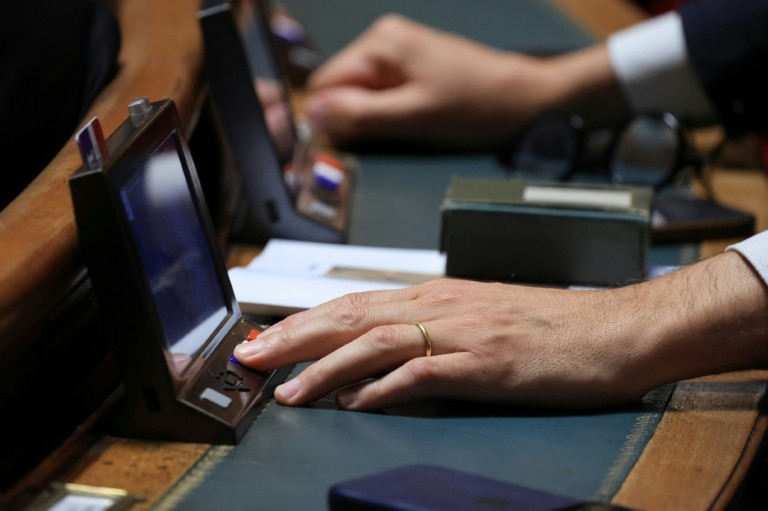
    An official government notice released late Sunday confirmed that all members of parliament have been called to an extraordinary plenary session scheduled for Tuesday morning. The session’s agenda includes two critical votes: first, to restore Sonko’s parliamentary membership, and second, to elect a new speaker to fill Ndiaye’s vacant post.

    The ongoing rupture between Faye and Sonko has thrown the West African nation, which is already grappling with a crippling national debt crisis, into unprecedented political uncertainty. The split comes just months after the pair led their shared Patriotic African Party for the People (Pastef) to a landslide victory in the 2024 general elections, running on a populist platform promising sweeping anti-corruption reforms and a break from the politics of the previous administration.

    Faye’s ascension to the presidency was entirely reliant on Sonko’s political clout. Sonko, a fiery populist who built a massive, passionate following among Senegal’s disillusioned young population, was widely expected to win the March 2024 presidential vote before he was barred from running over a controversial defamation conviction. He threw his full support behind Faye, his former protégé, clearing the way for Faye’s election victory.

    For months, simmering tensions between the two former allies boiled beneath the surface, until they spilled into public view and collapsed their governing alliance. Sonko launched repeated public criticisms of Faye, accusing him of failing to show leadership when Sonko faced pushback from political opponents. He also lambasted the slow pace of corruption investigations into senior officials from former president Macky Sall’s administration, a key campaign promise Pastef made to voters. The pair also clashed over fundamental policy approaches to managing Senegal’s crippling sovereign debt, deepening their rift. On Friday, Faye formally removed Sonko from his post as prime minister.

    Within hours of Sonko’s dismissal, hundreds of his loyal supporters gathered outside his Dakar residence to demonstrate their backing. Sonko remains the undisputed, popular leader of Pastef, which holds a commanding majority in the National Assembly – a fact that leaves Faye’s ability to govern in serious question.

    “Cohabitation between President Faye and the Pastef majority in parliament is going to be extremely complicated,” explained Babacar Ndiaye, research director at West African think tank WATHI. Ndiaye noted that Faye is required to nominate a new prime minister to replace Sonko, and that nominee must receive parliamentary approval within three months of their appointment. “If deputies choose to introduce a motion of no confidence against the new government, they have the numbers to pass it,” he added.

    Complicating the political landscape further, President Faye cannot dissolve the National Assembly until November 2026, two full years after the last parliamentary election. A recent electoral reform passed by parliament several weeks ago also overturned Sonko’s ineligibility for public office, meaning he is now legally allowed to run for president. This sets the stage for a potential head-to-head matchup between the two former allies in the next presidential election, if the rift is not resolved before then.

  • Spurs win to relegate West Ham as Guardiola, Salah say Premier League farewells

    Spurs win to relegate West Ham as Guardiola, Salah say Premier League farewells

    The final matchday of the English Premier League season delivered a rollercoaster of emotion on Sunday, as Tottenham Hotspur secured their top-flight survival at West Ham United’s expense, while two of the league’s most iconic figures said tearful goodbyes and Arsenal celebrated their long-awaited title win.

    Tottenham entered their final home fixture against Everton knowing even a single point would likely be enough to stay up, holding a two-point advantage over West Ham and a far superior goal difference that would swing survival in their favour if results finished level. It took until the stroke of halftime for the pressure that had built across the entire season for the north London side to break, when Joao Palhinha put Spurs ahead. The Portuguese midfielder’s initial header cannoned off the goalpost, but he reacted quickest to poke the rebound into the net, and was immediately swarmed by jubilant teammates.

    A few miles across east London, West Ham delivered a dominant 3-0 victory over Leeds United at the London Stadium, with goals from Valentin Castellano, Jarrod Bowen and Callum Wilson. But the three points proved too little, too late: Tottenham held on to their 1-0 lead, sending West Ham down to the Championship for next season alongside already-relegated Burnley and Wolves. The Hammers, who have been a Premier League mainstay since earning promotion in 2012, will now plying their trade in England’s second tier.

    “This day for us is much more than winning a game,” match-winner Palhinha told BBC Sport after the full-time whistle. “A lot of people depend their lives on this club. It was a tough season but I think this season can help for the future. We can take a lot from it even if we didn’t reach the level Tottenham should.” Tottenham, ranked the ninth-richest football club in the world, have enjoyed a late-season upturn in form under interim manager Roberto De Zerbi, who joined the club in late March as their third head coach of a turbulent campaign. For West Ham manager Nuno Espirito Santo, the disappointment was unavoidable after his side did everything they could to claw out survival. “We knew it was going to be difficult, it was not in our hands,” he told Sky Sports. “We did our part and we hoped for the best — it didn’t happen. We have to pass the sad moment that we are living.”

    The day was as much about emotional farewells as it was about league outcomes, as Manchester City manager Pep Guardiola took charge of his final match at the Etihad Stadium after 10 seasons of unprecedented success. The Catalan coach confirmed last Friday he would leave the club at the end of the season, bringing to an end a decade that delivered six Premier League titles, a Champions League trophy and a host of other domestic and European honours. Before kickoff, City fans unfurled a massive banner over the stands bearing Guardiola’s portrait, with the words “Game Changer” and “History Maker” emblazoned across it. The match ended in a 2-1 win for visitors Aston Villa, the newly crowned Europa League champions, who secured fourth place in the table and a spot in next season’s Champions League with two goals from Ollie Watkins after Antoine Semenyo put City ahead. Addressing the crowd after the final whistle, an emotional Guardiola said: “In the next years, if you see me in the streets in the United States or Europe or somewhere and you are a Man City fan, come to me and hug me. I will need it.”

    Guardiola was not the only Liverpool legend saying goodbye. Mohamed Salah and Andy Robertson played their final match for the Reds, who finished fifth in the table after a 1-1 draw with Brentford, enough to secure the final Champions League spot for next season. Before kickoff, Liverpool’s coaching staff and squad formed a guard of honour for the pair, who were later embraced by club icons Kenny Dalglish and Ian Rush. “I think I cried more than in my whole life,” Salah told Sky Sports. “I’m not really an emotional guy. We lived our youth here, sharing everything from the beginning to the end. We put this club back where it belongs.”

    For Arsenal, the final day was all celebration, as the Gunners lifted the Premier League trophy in front of travelling fans at Selhurst Park after a 2-1 win over Crystal Palace. It is Arsenal’s first Premier League title since 2004, ending a 20-year wait for the top-flight crown after three consecutive second-place finishes. Manager Mikel Arteta admitted he had doubted whether the club would break their drought during those near-misses. “That was beautiful,” he said. “Look at the joy of all of the people, they have been waiting for this for so long. We have had difficult moments along the way but it is all worth it when you see that kind of reaction.”

    Elsewhere, newly appointed Chelsea manager Xabi Alonso will have no European football to contend with next season after the Blues, playing with 10 men for much of the match, fell to a 2-1 away defeat to Sunderland. The win lifted Sunderland into next season’s Europa League alongside Bournemouth, while Brighton & Hove Albion will compete in the Conference League.

  • Dread and denial at heart of deadly DR Congo Ebola outbreak

    Dread and denial at heart of deadly DR Congo Ebola outbreak

    Deep in the mineral-rich hills of Ituri province in eastern Democratic Republic of the Congo, the town of Mongbwalu sits at the epicenter of a devastating Ebola outbreak that has already crossed international borders and triggered a global public health emergency. For many residents here, fear of the deadly virus is tangled up in decades of deep-seated distrust of the distant, corruption-plagued central government in Kinshasa, leaving communities split between open denial of the disease’s existence and angry criticism of an inadequate official response.

    Unlike many of her neighbors, 26-year-old Laureine Sakiya does not doubt Ebola is real—she has watched the virus kill people living near her home. Located just 100 kilometers from the Ugandan border and 200 kilometers from the unstable South Sudanese frontier, Mongbwalu is a bustling transit hub for gold miners, itinerant street vendors, and motorbike travelers navigating the region’s rutted, muddy roads, making disease surveillance and containment far more challenging.

    Within weeks of the first recorded case, the outbreak has spread to multiple neighboring provinces and reached Ugandan territory, prompting the World Health Organization to declare the epidemic a Public Health Emergency of International Concern. Official data counts 322 suspected infections in Mongbwalu alone, with 86 confirmed deaths, and a national toll of more than 200 fatalities across the DRC’s 17th recorded Ebola outbreak. A critical gap in response remains: there are currently no approved vaccines or targeted treatments for the Bundibugyo strain of Ebola driving this current epidemic, leaving medics scrambling to contain transmission with limited tools.

    At Mongbwalu’s modest local hospital, tucked into a hillside surrounded by tall grass and trees, healthcare workers in full head-to-toe hazard suits, goggles and face masks scrub down floors and walls with chlorine solution, the only standard decontamination measure available. Even basic infection control infrastructure is lacking: workers rely on plastic buckets for handwashing, a stark indicator of how under-resourced the response remains. Medical humanitarian organization Doctors Without Borders (MSF) has stepped in to provide isolation tents for suspected cases, alongside local aid groups operating on the ground.

    “This epidemic is out of the ordinary,” explained Florent Uzzeni, MSF’s coordinator based in the regional capital of Bunia. Uzzeni warned that official caseload and death tolls are almost certainly significant undercounts, as testing capacity across the outbreak zone remains extremely limited.

    Previous Ebola outbreaks in the DRC’s remote regions have been fueled by community resistance, and this event is no exception. Many locals reject the existence of Ebola entirely, with some framing the outbreak as a “mystical malady” rooted in local spiritual beliefs. Early on, the spread was worsened by a misinformation chain that became known locally as the “coffin affair.”

    The first suspected case emerged in Bunia, Ituri’s provincial capital. After the patient died, his family transported his body 80 kilometers back to Mongbwalu for burial. The region’s notoriously rough, potholed roads damaged the casket during the trip, exposing the Ebola-contaminated corpse to the people transporting it. Initial tests conducted at a provincial laboratory failed to confirm Ebola as the cause of death, allowing the virus to spread silently through the community while panic grew unchecked. It was only when samples were flown 1,800 kilometers to the national biomedical research laboratory in Kinshasa that the outbreak was officially confirmed—by which point transmission was already widespread.

    Even traditional leaders and faith healers, who hold enormous sway in remote communities like Mongbwalu, have grown alarmed by the level of denial. “I worry about those who say that this disease is invented,” said Adam Hussein, 35, a representative for local traditional faith healers, who has urged all residents to follow public health precautions to slow transmission.

    As the outbreak continues to expand across borders, public health officials warn that deep community distrust and systemic gaps in the government’s response capacity could turn this into one of the worst Ebola outbreaks in recorded history.

  • Trump tempers expectations of a Middle East deal with Iran

    Trump tempers expectations of a Middle East deal with Iran

    Hours after top U.S. diplomat Marco Rubio suggested a historic deal between the United States and Iran to de-escalate regional conflict could be reached as soon as Sunday, President Donald Trump has cooled widespread optimism, saying he has instructed his negotiation team to avoid rushing a final agreement. “Time is on our side,” Trump wrote in a social media post, adding that the current U.S. naval blockade of Iranian ports would remain fully in place until any accord is fully finalized, certified, and signed by all parties. This tempered announcement came just days after Trump himself indicated the bulk of the agreement had already been negotiated, with only final touches left to resolve between Washington, Tehran, and other participating mediator nations.

    A fragile bilateral ceasefire between the United States and Iran has been in effect since April 8, as international mediators work to lock in a permanent negotiated settlement. Despite the ceasefire, tensions remain high: Iran has implemented new shipping controls in the Gulf region, while the U.S. has maintained its strict port blockade of Iranian territory. Speaking to reporters during an official visit to India on Sunday, Rubio struck an optimistic note, saying “I do think perhaps there is the possibility that in the next few hours the world will get some good news.” He added that any final agreement would launch a process that fulfills the Trump administration’s core goal: eliminating the global threat posed by an Iranian nuclear weapon.

    Israeli leadership has echoed the U.S. commitment to full nuclear dismantlement. Prime Minister Benjamin Netanyahu confirmed Sunday that he and Trump have aligned on non-negotiable terms for any final deal: it must completely eliminate the Iranian nuclear threat. A senior anonymous Israeli official told Agence France-Presse that Trump has made clear he will not back down from his longstanding demand that Iran fully dismantle its nuclear program and remove all enriched uranium from its territory, and no agreement will be signed without meeting these conditions.

    European leaders, who have pushed for a reopening of the Strait of Hormuz to lower volatile global energy prices, were quick to welcome early signs of progress Sunday. European Commission President Ursula von der Leyen publicly praised “progress towards an agreement,” while British Prime Minister Keir Starmer pledged to work closely with international partners to “seize this moment” for peace.

    Iranian officials have confirmed that a draft agreement exists, but clarified a key sticking point has been pushed back: negotiations over the U.S. demand to end all Iranian uranium enrichment will be deferred for 60 days after the initial ceasefire deal takes effect. Iranian President Masoud Pezeshkian told state television that Tehran remains “prepared to assure the world that we are not seeking nuclear weapons,” though it remains unclear whether this assurance will be codified in the final text of the agreement.

    According to Iran’s semi-official Fars News Agency, the draft text includes major reciprocal concessions from Washington: the U.S. has agreed to release a portion of billions of dollars in Iranian funds frozen abroad under international sanctions, and end its naval blockade of commercial ships traveling to and from Iranian ports. In exchange, the draft outlines that shipping traffic through the strategic Strait of Hormuz will return to pre-conflict levels under Iranian management, and sanctions on Iranian oil, gas, petrochemicals, and related products will be temporarily lifted during the extended negotiation period to allow Iran to sell its exports freely on global markets.

    Prominent Iranian-American academic Vali Nasr has offered a cautious take on the current draft, noting that the terms on the table appear to favor Iran, but that excessive U.S. concessions have sparked deep suspicion among Tehran’s leadership. “The deal in play looks like a win for Iran. But Tehran is not convinced that it is not a dress rehearsal for war now or in 30 days,” Nasr wrote on social media. He added, “In fact, the more generous the terms for Iran the more the suspicion that the US is not serious about peace and wants to distract Iran ahead of another attack. Iran will be focused on evidence of US military backdown.”

    On Saturday, a broad coalition of regional leaders joined a call with Trump to discuss the ongoing negotiation efforts, including the heads of state of Saudi Arabia, the United Arab Emirates, Qatar, Egypt, Jordan, and Bahrain, plus senior representatives from Turkey and Pakistan. Pakistan, which mediated the landmark first face-to-face talks between U.S. and Iranian delegations in April, is already positioning to host the next round of negotiations “very soon,” according to Pakistani Prime Minister Shehbaz Sharif. Sharif added that Pakistan’s Army Chief Asim Munir, who just completed a two-day visit to Tehran last week, participated in Saturday’s call, which provided a “useful opportunity… to move the ongoing peace efforts forward to bring lasting peace in the region.”

    Even as diplomacy moves forward, hardline Iranian military leadership has struck a defiant posture. In a rare public appearance at Tehran’s Grand Mosalla mosque covered by state media, Ali Abdollahi, head of Iran’s central military command, reaffirmed that the country’s armed forces remain on high alert. “We are on a war footing and all our armed forces are fully ready, with all their resources and equipment, to confront any enemy,” he said. The warning comes as simultaneous Israeli strikes targeting southern Lebanon sent smoke billowing over the village of al-Mahmoudiye on May 23, underscoring the persistent volatility across the Middle East even as major power talks progress.