标签: Oceania

大洋洲

  • Underground party scene: Israelis celebrate Purim in air raid shelters

    Underground party scene: Israelis celebrate Purim in air raid shelters

    Amidst the wail of air raid sirens signaling incoming Iranian missiles, an extraordinary scene unfolded deep beneath Tel Aviv’s streets on Monday evening. As the Jewish holiday of Purim commenced, hundreds of young Israelis descended four floors underground into a converted parking garage shelter, defying both the military ban on public gatherings and the ongoing regional tensions through determined celebration.

    The coastal city’s residents, who had been forced to seek protection just as the festive period began, transformed a mall’s basement parking facility into an impromptu celebration space. Participants arrived in full Purim costume—a traditional aspect of the holiday that commemorates the Jewish people’s deliverance from Persian persecution centuries ago. The gathering featured an eclectic mix of characters, from cowboys and Peter Pan to a Pikachu and a flight attendant whose sign read “Tel Aviv-Tehran, status: boarding.”

    At the heart of the celebration stood a rabbi reciting the Megillah, the biblical passage from the Book of Esther traditionally read during Purim. Each mention of the story’s villain, Haman, prompted the customary booing and noise-making from attendees, who then transitioned to drinking and dancing to pop music despite the highly unusual setting.

    The underground location, officially designated as a shelter during projectile attacks, had been emptied of vehicles and instead contained numerous tents where some residents had chosen to take up semi-permanent residence to avoid repeated nighttime dashes to safety during sirens.

    For 28-year-old Maxim Green, who learned about the gathering through his synagogue’s WhatsApp group, the parallel between the ancient Purim narrative and current events was striking. “It’s really crazy that it’s happening at this time, this war,” he observed. “Because it really does have some similarities with the Purim story. You have an evil regime who wants to topple the Jewish people.”

    The celebration represented a complex intersection of tradition, current events, and human resilience. While some rabbis opted for online Megillah readings to comply with military restrictions, others found ways to maintain both religious observance and community spirit in adapted formats.

    Anna Shilanski, 32, who had established a tea station for fellow shelter residents, expressed appreciation for the gathering despite initial surprise at the crowd size. “I’m really happy that people have a place to do this,” she remarked, noting that feeding people during stressful times comes naturally to many.

    The event demonstrated the community’s adaptation to ongoing security challenges, with attendees like 26-year-old tech worker Ethan Cohen participating after spending part of his day volunteering to clean debris from missile impact sites. For older residents like 70-year-old Anat Shamir, sleeping on the opposite side of the parking lot, the discomfort was a necessary price for security, expressing confidence in Israel’s leadership and military response capabilities.

    As the evening progressed, some revelers eventually sought fresh air above ground, emerging from the basement shelter into Tel Aviv’s quiet streets, carrying with them the dual reality of celebration and conflict that has come to characterize daily life during this period.
  • ‘Thank you, madam president’: Melania Trump leads UN Security Council as Iran war rages

    ‘Thank you, madam president’: Melania Trump leads UN Security Council as Iran war rages

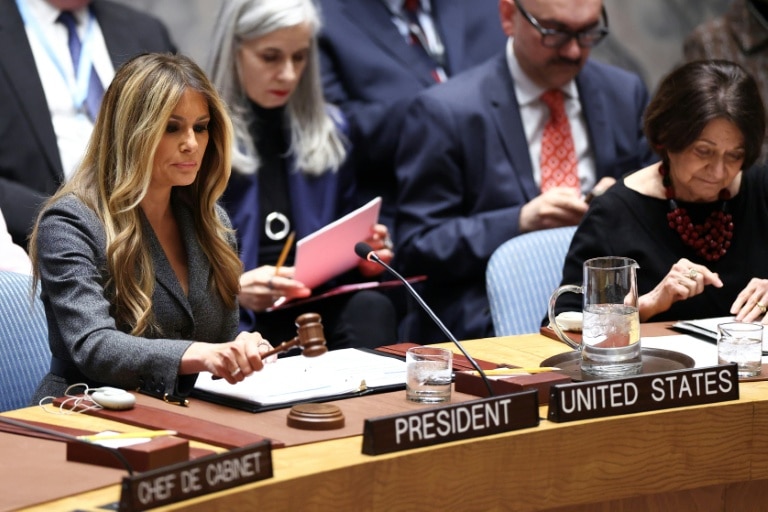
    In an unprecedented diplomatic moment, First Lady Melania Trump assumed the gavel to chair a United Nations Security Council session on Monday, marking the United States’ assumption of the body’s rotating monthly presidency. The high-level meeting focused on protecting children in conflict zones, convening as military operations continued between US-Israeli forces and Iranian-backed groups across the Middle East.

    Representatives from all Security Council member nations, including geopolitical rivals China and Russia, assembled for the ceremonial transition of leadership. Mrs. Trump commenced proceedings with a strike of the presidential gavel, acknowledging Britain’s preceding leadership before addressing the chamber.

    ‘To the families who have lost their heroes who sacrifice their lives for freedom, their bravery and dedication will always be remembered,’ stated the First Lady during her remarks. She further articulated that ‘enduring peace will be achieved when knowledge and understanding are fully valued within all our societies,’ emphasizing that educated societies demonstrate greater tendencies toward peaceful coexistence.

    The diplomatic gathering occurred amidst pointed criticism from Iranian Ambassador Amir Saeid Iravani, who characterized the meeting as ‘deeply shameful and hypocritical’ given concurrent military operations. Mrs. Trump responded by affirming that ‘the US stands with all of the children throughout the world,’ expressing hope for future peace without directly addressing regional hostilities.

    Despite underlying tensions, council members extended courteous receptions to the First Lady. Greek Ambassador Aglaia Balta addressed her as ‘madam president,’ while France’s representative drew favorable comparisons to historic first lady and humanitarian Eleanor Roosevelt. Even Russian diplomats participated in diplomatic pleasantries, avoiding mention of Iran during their remarks.

    UN spokesperson Stephane Dujarric confirmed the historic nature of the event, noting this marked the first instance of a presidential spouse presiding over Security Council proceedings. The appearance built upon Mrs. Trump’s previous diplomatic engagements, particularly her advocacy for Ukrainian children displaced during conflict with Russia, which received recognition from UN Under-Secretary-General Rosemary DiCarlo.

    The council session unfolded against deteriorating financial relations between the United States and United Nations. The Trump administration has repeatedly criticized the organization’s effectiveness while withholding significant portions of assessed contributions. Recent months have seen Washington withdraw support from major UN agencies including the World Health Organization while establishing alternative diplomatic frameworks like the ‘Board of Peace’ initiative.

    Although the United States recently allocated $160 million toward the UN’s regular budget after a payment hiatus, outstanding arrears exceeding $4 billion for regular and peacekeeping operations continue to threaten the organization’s financial stability, according to warnings from Secretary-General Antonio Guterres.

  • Flowers, music, and soldiers at funeral of drug lord

    Flowers, music, and soldiers at funeral of drug lord

    Under unprecedented security measures, the notorious Mexican drug lord Nemesio Oseguera Cervantes, known as ‘El Mencho,’ was laid to rest Monday in a modest grave despite his former status as one of the world’s most wanted criminals. The leader of the powerful Jalisco New Generation Cartel (CJNG), who was fatally wounded during a military raid on February 22nd, received a burial that blended traditional Mexican funeral customs with intense security protocols.

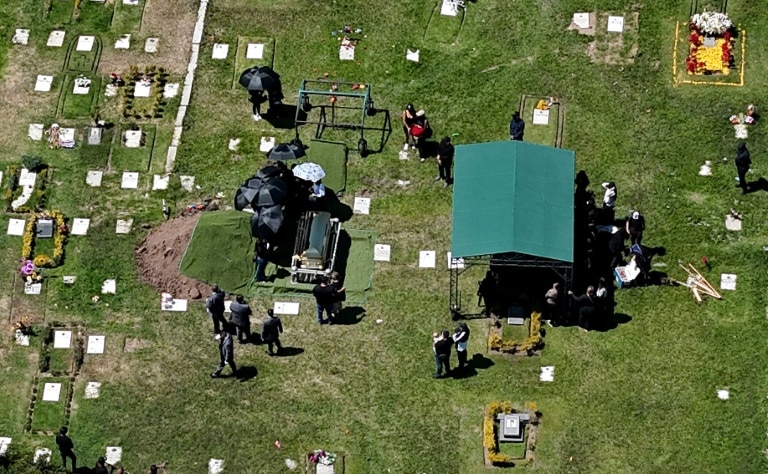
    The funeral procession, observed by AFP through multiple layers of federal security forces, featured a gold-colored coffin presumably containing Oseguera’s remains. In a striking contrast to the opulent mausoleums typically associated with cartel leaders, Oseguera was interred in a plain plot at a cemetery adjacent to a military installation outside Guadalajara—a location strategically chosen for its security advantages.

    The ceremony unfolded with surreal elements: five trucks overflowing with elaborate floral arrangements, including one designed with angel wings crafted from red roses and another shaped like a rooster honoring Oseguera’s known passion for cockfighting. Most tributes arrived anonymously, reflecting the clandestine nature of the cartel’s operations.

    Security forces maintained a relentless vigil since authorities transferred Oseguera’s body to his family on Saturday. Dozens of soldiers, national guardsmen, and police officers established concentric security perimeters around the funeral home and cemetery, interrogating all approaching vehicles and individuals while permitting the floral tributes to continue uninterrupted.

    The burial ceremony included traditional ‘narcocorridos’—folk songs glorifying drug traffickers—performed by a band awaiting mourners at a chapel service. Following an hour-long ceremony, the procession moved to the gravesite accompanied by lyrics stating: ‘Now that I’m dead I’m going to go away, no more than a handful of dirt.’

    The event occurred against the backdrop of recent cartel violence that erupted following Oseguera’s death. Retaliation attacks across 20 Mexican states resulted in 70 fatalities, with cartel gunmen blocking highways, burning businesses, and engaging security forces. The burial location, approximately five kilometers from a stadium scheduled to host World Cup matches this summer, adds another layer of security concern for upcoming international events.

  • US Congress to debate Trump’s war powers

    US Congress to debate Trump’s war powers

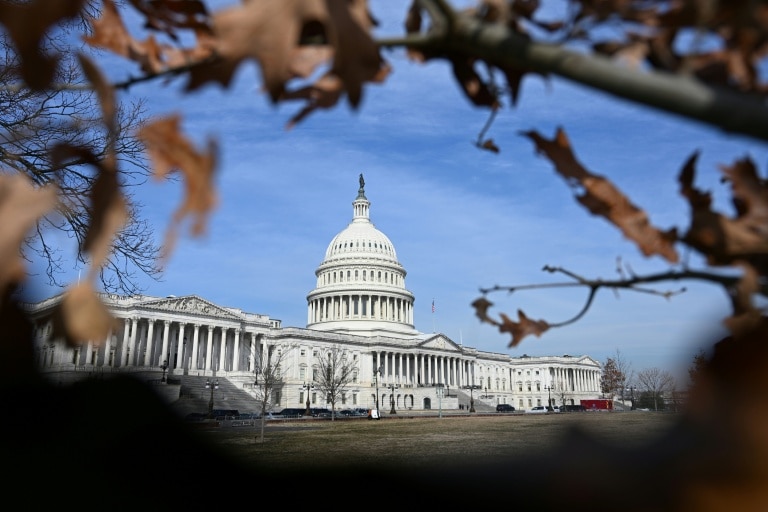
    A pivotal constitutional confrontation is unfolding in Washington as Congress prepares to vote on measures challenging President Donald Trump’s military actions against Iran. The legislative body, which possesses exclusive war-declaring authority under the U.S. Constitution, is moving to reassert its institutional power following what critics describe as Trump’s dramatic expansion of executive authority since his 2025 return to the White House.

    Senator Tim Kaine has emerged as a leading voice of opposition, characterizing the conflict as “an unnecessary, idiotic, and illegal war against Iran” in social media statements following the initiation of hostilities during the overnight period from Friday to Saturday. In late January, anticipating potential escalation, Kaine introduced legislation mandating congressional authorization for any military engagement with Iran. He has now urgently called for Congress to reconvene from recess to address his resolution, with a vote anticipated this week.

    The administration defended its actions through high-level briefings, with Secretary of State Marco Rubio and Pentagon chief Pete Hegseth meeting with congressional officials on Monday. However, Senator Mark Warner, the Democratic chair of the Senate Intelligence Committee, expressed serious reservations after the briefing, noting: “There was no imminent threat to the United States of America by the Iranians. There was a threat to Israel. If we equate a threat to Israel as the equivalent of an imminent threat to the United States, then we are in uncharted territory.”

    The legal foundation of the conflict hinges on the 1973 War Powers Act, which permits limited presidential military intervention in response to emergency situations involving attacks on U.S. interests. Notably, Hegseth himself referred to the situation as “war” rather than limited intervention during Monday’s press conference, while Trump asserted in his late-night video announcement that Iran posed an “imminent” threat—a claim that Atlantic Council analyst Daniel Shapiro criticized as inadequately explained.

    The administration provided formal notification to eight congressional leaders just before hostilities commenced, triggering the 60-day clock under the War Powers Act. Beyond this period, Trump would require explicit congressional authorization to continue military operations. In a rare display of bipartisan cooperation, Republican Congressman Thomas Massie and Democratic colleague Ro Khanna are preparing legislation to force a congressional vote on the Iran conflict, potentially as early as this week.

    Despite these challenges, the Republican majority is expected to protect Trump’s position, and even if opposition measures pass, they would likely fail to overcome a presidential veto, which requires a two-thirds majority in both chambers to override.

  • Energy infrastructure emerges as war target, lifting prices

    Energy infrastructure emerges as war target, lifting prices

    Global energy markets experienced significant turbulence Monday as military escalation in the Middle East directly targeted critical energy infrastructure, triggering substantial price increases and supply disruptions. The conflict’s expansion into energy production facilities has created immediate impacts on worldwide energy flows and pricing structures.

    QatarEnergy, the state-controlled energy corporation, confirmed suspension of liquefied natural gas production following Iranian strikes targeting two major gas processing facilities. This development occurred alongside operational disruptions at Saudi Arabia’s massive Ras Tanura refinery, where drone attacks caused fires and partial shutdowns. Simultaneously, Abu Dhabi reported drone assaults on its energy terminal infrastructure.

    The supply disruptions produced immediate market reactions, with European natural gas prices closing 39% higher after briefly exceeding 50% gains during trading sessions. Brent crude futures surged beyond $82 per barrel during early trading, representing a 13% increase, before settling at $77.74 with a 7.3% daily gain. The US benchmark West Texas Intermediate concluded at $71.23 per barrel, marking a 6.3% increase.

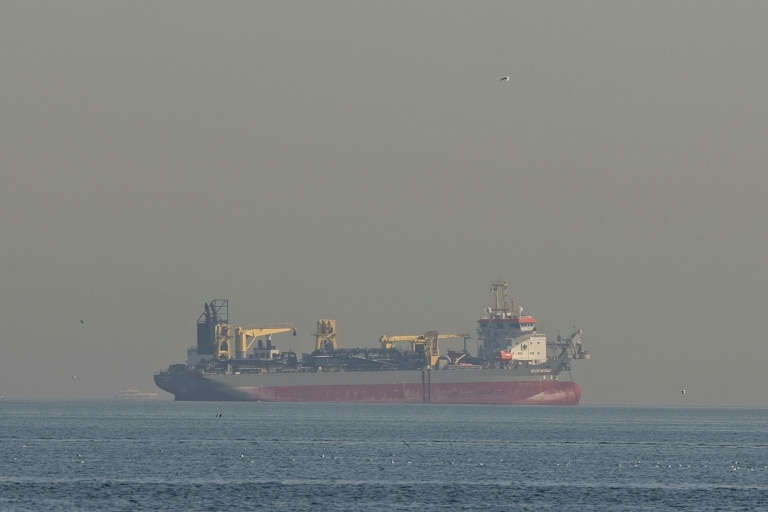
    Parallel to production facility attacks, the strategic Strait of Hormuz experienced a de facto closure as major shipping corporations including MSC, Maersk, CMA CGM, Hapag-Lloyd, and Cosco suspended transit operations. Although not officially closed, soaring insurance costs and security concerns have effectively halted maritime traffic through this critical waterway that typically handles approximately 20% of global oil and LNG supplies.

    Rystad Energy analysis indicates the maritime exodus prevents approximately 15 million barrels daily from reaching international markets. Senior Vice President Jorge Leon noted that whether through forced closure or risk avoidance, the impact on energy flows remains substantially identical. The situation has prompted discussions about potential strategic petroleum reserve releases if disruptions persist.

    Asian nations face particular vulnerability as primary recipients of approximately 80% of Hormuz-transited petroleum, according to International Energy Agency data. Europe likewise confronts significant energy security concerns as a major destination for Qatari LNG exports, with markets already strained following severe winter demand.

    Analysts from Eurasia Group projected potential Brent crude prices approaching $100 per barrel under worst-case scenarios involving permanent damage to Iranian export infrastructure and prolonged Hormuz disruptions. While current projections suggest a more probable $75-$85 range, market observers note that sustained elevated prices could influence broader economic and political dynamics, including potential impacts on US midterm elections.

    Financial markets demonstrated mixed reactions, with Wall Street closing unevenly as investors weighed conflict duration expectations. Oxford Economics anticipates Iran will struggle to maintain prolonged Strait disruptions, projecting oil prices peaking near $80 per barrel in second quarter before declining toward $60, contingent upon conflict resolution and regional stability restoration.

  • AFL 2026: Carlton will unveil new era against Sydney in Opening Round

    AFL 2026: Carlton will unveil new era against Sydney in Opening Round

    Carlton Blues head coach Michael Voss has officially announced the inclusion of two debutants, Jagga Smith and Harry Dean, for Thursday night’s highly anticipated AFL matchup against the Sydney Swans. The confirmation came during a press briefing where Voss expressed enthusiasm for the new talents joining the team’s lineup.

    Voss highlighted Smith’s exceptional pre-season performance, particularly his dominant display against Geelong, which solidified his selection. Meanwhile, Dean is poised to commence what the coach described as a “very long partnership” with key defender Jacob Weitering on Carlton’s defensive line.

    While Voss remained noncommittal regarding other potential starters including Wade Derksen, Will Hayward, Ben Ainsworth, and Ollie Florent, all participated in Tuesday’s training session. The coach’s comments suggested cautious optimism about Weitering’s availability despite the defender sustaining a fractured rib during last month’s State of Origin match.

    Voss indicated that Weitering’s final selection hinges on his performance during Tuesday’s critical contact session, though he noted “there’s nothing to suggest” the defender wouldn’t be fit to play against his former teammate Charlie Curnow.

    The Blues have demonstrated evolved ball movement strategies during pre-season, with Smith and rejuvenated midfielder Sam Walsh showing particular dynamism. Voss acknowledged that the season opener would likely feature a high-error first quarter as teams adjust to the pace, emphasizing the importance of settling into an effective rhythm.

    The coach concluded by outlining Carlton’s strategic approach: “Everyone has got to be good at one thing, so we hope we bring that to the table but also have enough in the other phases of the game where we can do some damage.”

  • Melbourne Airport worker Oscar Diaz Ysuiza accused of Nazi salute at Jewish teenagers

    Melbourne Airport worker Oscar Diaz Ysuiza accused of Nazi salute at Jewish teenagers

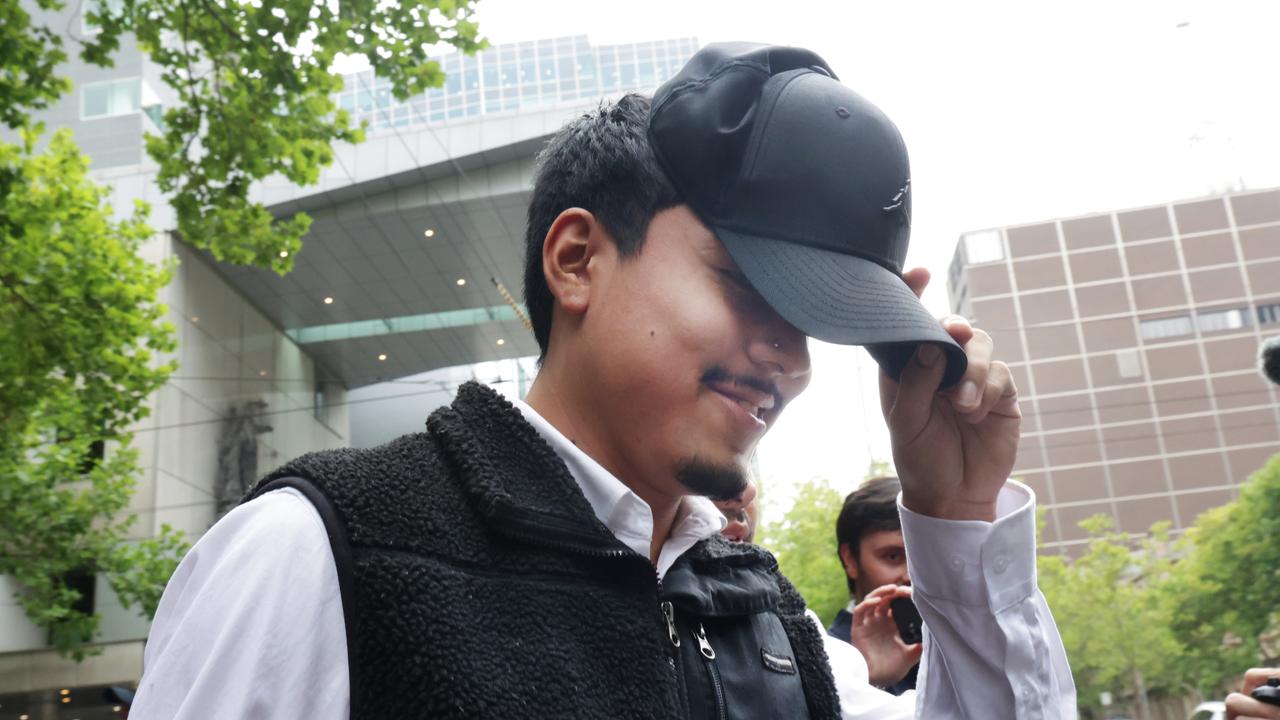
    A 23-year-old Melbourne Airport employee has appeared before the Melbourne Magistrates Court following allegations of performing a Nazi salute toward Jewish teenagers. Oscar Diaz Ysuiza from Greenvale faced charges of publicly displaying prohibited Nazi symbols during Tuesday’s administrative hearing, one month after the alleged incident occurred on February 2.

    According to Australian Federal Police documents, the accused allegedly directed the banned gesture at a group of Jewish school-aged children who were reportedly departing for a gap year program in Israel. The teenagers, aged between 17 and 18, were at the airport preparing for their international travel when the incident occurred.

    Investigators identified Mr. Ysuiza through witness interviews and comprehensive review of surveillance footage after he allegedly left the terminal shortly following the confrontation. The accused held an Aviation Security Identification Card at the time of the incident, though airport authorities have since revoked his security credentials.

    Melbourne Airport management emphasized their commitment to passenger safety in an official statement: ‘Everyone has the right to feel safe and welcome at Melbourne Airport, and offensive behavior will never be tolerated.’ The airport clarified that Mr. Ysuiza was employed by a third-party contractor rather than directly by the airport authority.

    Magistrate Brett Sonnet scheduled the case for further proceedings on May 26, granting police six weeks to prepare their evidentiary brief. The accused, who appeared with court support, declined to comment on the allegations when approached by media representatives outside the courthouse.

  • RBA governor Michelle Bullock defends interest rate hike as ‘least worst’ option

    RBA governor Michelle Bullock defends interest rate hike as ‘least worst’ option

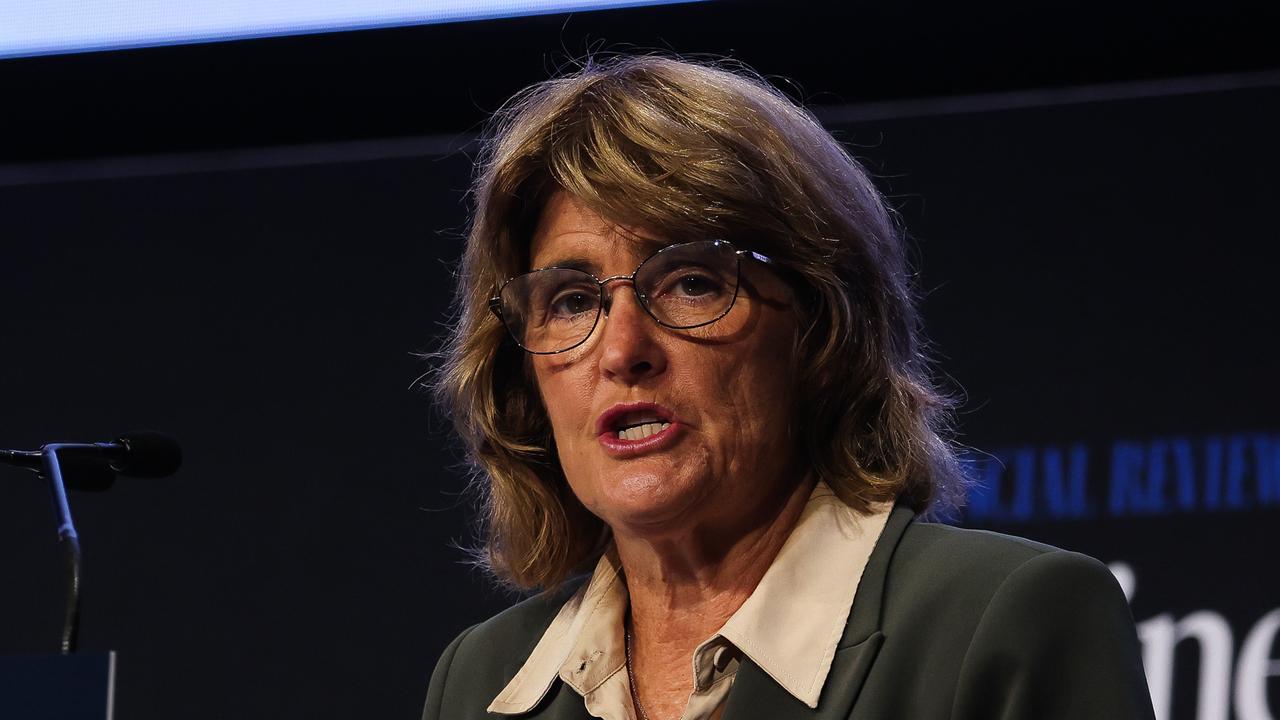
    Reserve Bank of Australia Governor Michele Bullock has articulated a staunch defense of the central bank’s recent interest rate increase while emphasizing the premature nature of assessing the Iran conflict’s potential economic ramifications. Speaking at the AFR Business Summit in Sydney, Bullock addressed the delicate balance confronting monetary policymakers amidst escalating geopolitical tensions.

    Bullock underscored the complex dynamics at play, noting that while supply-side disruptions from the Middle East conflict could exacerbate inflationary pressures, prolonged energy market volatility might simultaneously dampen global economic activity. “A supply shock could, for instance, amplify inflation pressures, and we remain highly vigilant regarding potential inflation expectations,” Bullock stated. “Conversely, sustained energy market disruptions could adversely affect global economic growth, potentially creating downward pressure on inflation. The ultimate outcome remains uncertain.”

    The geopolitical backdrop intensified over the weekend as coordinated US-Israeli operations targeted Iranian leadership, including Supreme Leader Ayatollah Ali Khamenei and numerous senior officials. This military escalation triggered immediate oil price volatility, with crude surging 15.13% to $US77.44 per barrel initially, followed by further increases to $US82.37 in subsequent trading.

    Regarding domestic monetary policy, Bullock explicitly dismissed assumptions that interest rates would remain unchanged following the March 16-17 meeting. She justified February’s 25 basis point hike to 3.85% – which reversed three 2025 rate cuts – as the “least worst option” for long-term household stability. Bullock warned that delaying action risked entrenching inflation above the RBA’s 2-3% target band, potentially necessitating more aggressive future tightening with severe labor market consequences.

    Current economic metrics reveal headline inflation at 3.8% annually to January, while the trimmed mean measure excluding volatile items stood at 3.4%. With unemployment at a tight 4.1%, Bullock emphasized the board would evaluate moves beyond quarterly cycles, stating: “I discourage expectations that we necessarily only move every quarter.”

    The Governor highlighted inflation’s corrosive impact on household welfare, noting it forces difficult choices regarding education expenditures and healthcare delays. She identified structural challenges including suppressed productivity growth and a revised assessment of the economy’s supply potential relative to underlying demand, concluding that inflationary pressures would persist until these imbalances resolve.

  • Liberal senator defends Coalition’s opposition to Pauline Hanson ‘Muslim’ censure

    Liberal senator defends Coalition’s opposition to Pauline Hanson ‘Muslim’ censure

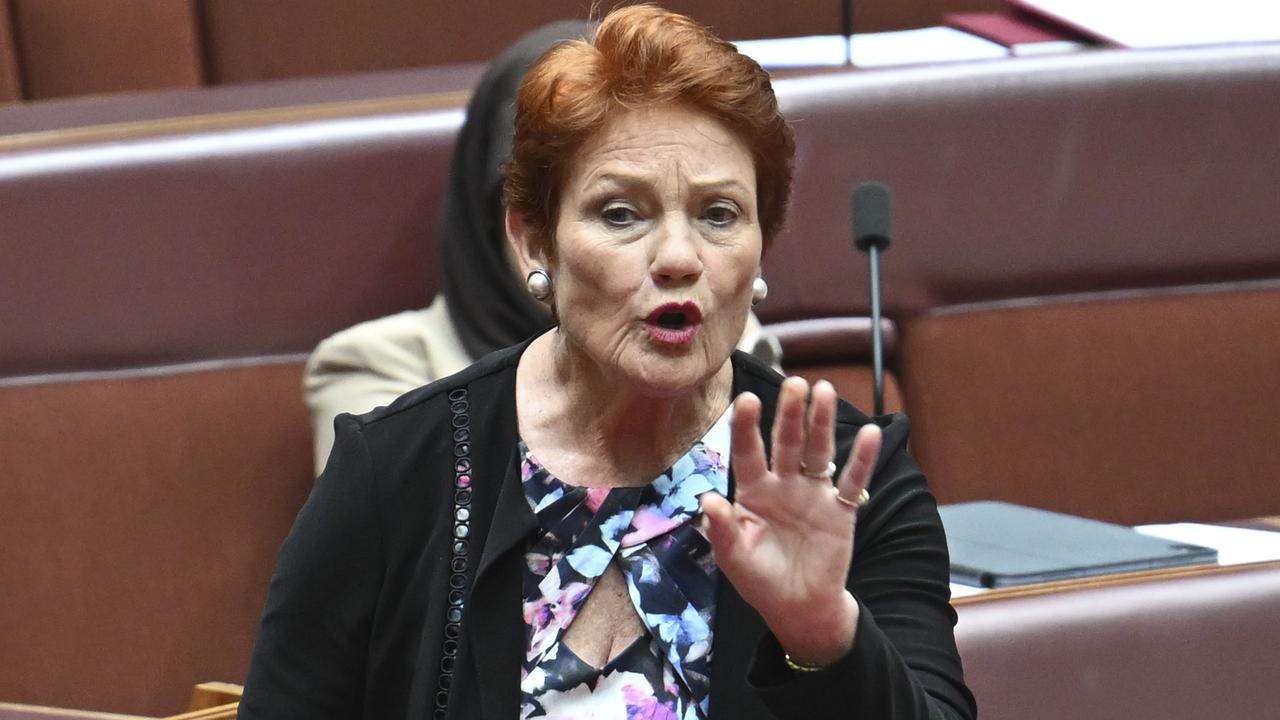
    A significant political division has emerged within Australia’s Senate regarding the appropriate response to controversial remarks about Muslim Australians made by One Nation leader Pauline Hanson. The parliamentary confrontation culminated in a successful censure motion against Senator Hanson, passed on Monday afternoon with support from Labor, the Greens, and two Liberal moderates, Senators Andrew McLachlan and Paul Scarr.

    The controversy originated from Hanson’s appearance on Sky News last month, where she questioned the existence of ‘good Muslims.’ This prompted Foreign Affairs Minister Penny Wong to deliver an impassioned speech defending Muslim Australians, particularly those serving in uniform, whom she described as patriotic citizens who love their country.

    Coalition senators, including Anne Ruston, Jacinta Nampijinpa-Price, and Michaelia Cash, opposed the censure motion, arguing that such measures should be reserved for the most severe misconduct rather than routine political disagreements. Defence spokesman James Paterson clarified that while Coalition senators condemned Hanson’s comments as ‘appalling and wrong,’ they believed censure should be limited to behavior within the Senate itself.

    The Coalition proposed an alternative amendment to condemn rather than censure Hanson, but this was rejected. Hanson herself dismissed the proceedings as a political stunt, storming out of the chamber before the vote while dramatically slapping her own wrist. She claimed her comments had been misquoted and suggested the motion was motivated by One Nation’s improving polling numbers.

    The incident has exposed tensions within the Coalition regarding potential future cooperation with One Nation, with Senator Wong criticizing those who would contemplate such partnerships. The debate highlighted broader concerns about religious vilification and the boundaries of political discourse in Australia’s multicultural society.

  • Rubio says Israel’s strike plan triggered US attack on Iran

    Rubio says Israel’s strike plan triggered US attack on Iran

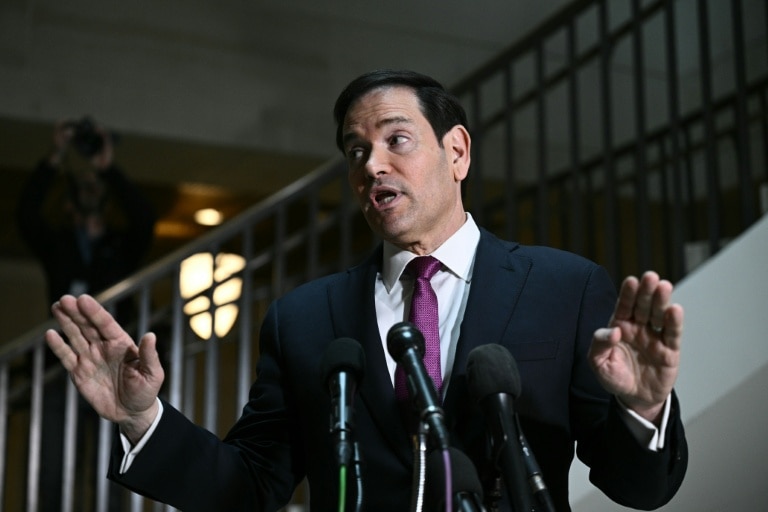
    Secretary of State Marco Rubio revealed on Monday that the United States launched its military operation against Iran after obtaining intelligence about Israel’s planned strike, fearing Tehran would retaliate against American forces stationed in the region.

    Rubio, addressing reporters prior to briefing congressional leaders, explained the administration’s calculus: ‘We had intelligence indicating an imminent Israeli operation. We anticipated this would trigger Iranian retaliation against our forces. By taking preemptive action before they launched their attacks, we prevented significantly higher casualties.’

    The Secretary detailed that Iranian leadership had instructed field commanders to automatically respond against U.S. forces following any attack. ‘Waiting for their strike first would have resulted in substantially greater losses. President Trump made the strategically sound decision to conduct coordinated operations with Israel,’ Rubio stated.

    When questioned about the constitutional requirement for imminent threat justification—a key threshold for military action without congressional approval—Rubio maintained: ‘The imminent threat was unequivocal. We knew that if Iran was attacked, which we expected, they would immediately target American personnel. We refused to passively absorb a potentially devastating blow.’

    The revelation sparked immediate political backlash. Representative Joaquin Castro, a Democratic lawmaker, criticized Israel’s role, stating on social media platform X: ‘Israel endangered American forces by insisting on attacking Iran. This is unacceptable behavior from both the President and a nation that claims alliance with the United States.’

    Defense Secretary Pete Hegseth had previously confirmed that Israel executed Saturday’s strike in Tehran that eliminated Iran’s Supreme Leader Ayatollah Ali Khamenei and other high-ranking officials, based on intelligence about their gathering.

    Rubio emphasized that regardless of the timing catalyst, the Trump administration believed military action against Iran was necessary. ‘This operation was ultimately unavoidable,’ he asserted, while clarifying that regime change wasn’t the primary objective. ‘While we hope the Iranian people can overthrow this government and establish a new future, our mission specifically targeted the destruction of their ballistic missile and naval capabilities.’