标签: Oceania

大洋洲

  • Iran vows fast trials over protests after Trump threat

    Iran vows fast trials over protests after Trump threat

    Iranian authorities have announced expedited judicial proceedings for individuals detained during nationwide protests, escalating tensions with the United States following President Trump’s threat of “very strong action” should executions proceed. The judiciary, led by Chief Gholamhossein Mohseni Ejei, has declared intentions to conduct public trials for those accused of severe offenses, including acts of terror and arson.

    Concurrently, Tehran hosted a state-sponsored funeral honoring over 100 security personnel labeled as “martyrs” in the unrest. The government has characterized the widespread demonstrations—initially driven by economic discontent—as “riots” and attributed “acts of terror” to participants.

    Rights organizations report a near-total internet blackout persisting for over 132 hours, which they allege obscures the actual death toll and scale of state violence. Verified footage emerging from Iran shows morgues in the capital’s outskirts lined with black body bags, while distraught families search for missing relatives.

    International response has intensified, with the U.S. State Department confirming via its Farsi-language social media that 26-year-old Erfan Soltani received a death sentence—potentially the first of many. Amnesty International and Iran Human Rights have issued urgent appeals to halt executions, with the latter documenting 734 confirmed fatalities, including nine minors, though actual numbers may reach thousands.

    Supreme Leader Ayatollah Ali Khamenei, who recently emerged from hiding following prior conflicts, faces one of the most significant challenges to the Islamic Republic since its inception. Despite analysts noting the regime’s resilient security apparatus, including the Revolutionary Guard Corps, the protest movement continues to test theocratic stability amid global scrutiny.

  • Thailand crane collapses onto train, killing 32

    Thailand crane collapses onto train, killing 32

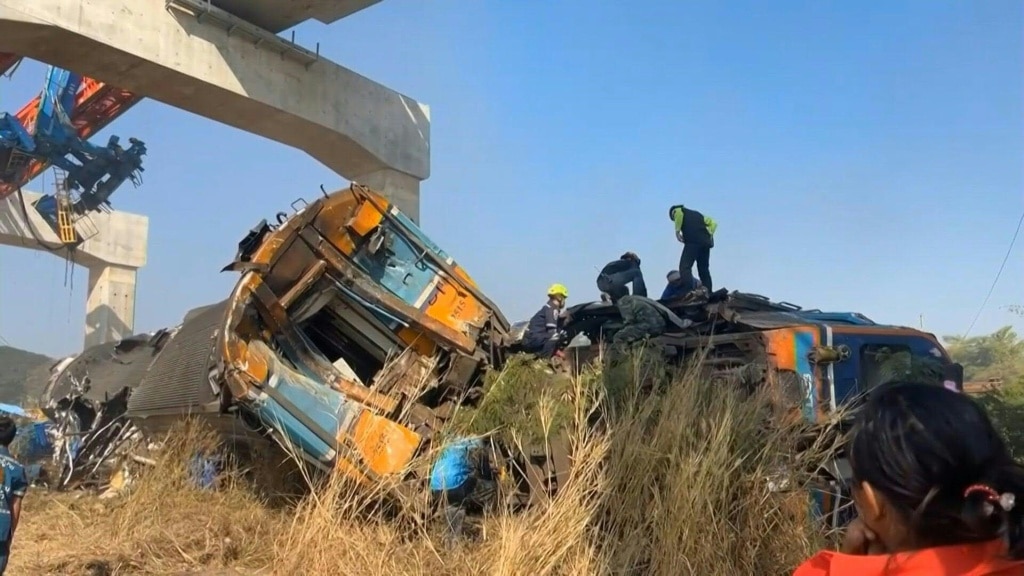
    A catastrophic construction accident has struck northeastern Thailand, claiming at least 32 lives after a massive crane collapsed onto an active passenger train. The incident occurred Wednesday in Nakhon Ratchasima province, approximately 250 kilometers northeast of Bangkok, when heavy equipment from the China-backed high-speed rail project crashed down on the moving train, causing immediate derailment and multiple carriages to catch fire.

    Eyewitness accounts describe hearing thunderous noises followed by explosions as the industrial crane’s metal framework sliced directly through the second passenger carriage. Verified footage from the scene showed the crane’s broken structure resting precariously on concrete pillars while smoke billowed from the wreckage below. Rescue operations continued into the night as emergency workers used additional cranes to search for survivors among the twisted metal.

    The construction site belongs to the $5 billion Sino-Thai high-speed rail initiative, part of China’s expansive Belt and Road infrastructure program intended to connect Bangkok with Kunming, China via Laos by 2028. Italian-Thai Development PLC, Thailand’s major construction contractor responsible for this project segment, has acknowledged the incident and pledged full responsibility for victim compensation and medical expenses.

    This tragedy marks the latest in a series of fatal accidents involving Italian-Thai Development projects. Engineering consultant Theerachote Rujiviphat, an adviser on the rail project, confirmed the company held sole responsibility for the crane operation and noted similar previous incidents under their management.

    Thai Prime Minister Anutin Charnvirakul has called for immediate investigation and accountability, suggesting legal reforms to blacklist construction firms with repeated safety violations. The disaster has raised serious questions about safety protocols in Thailand’s infrastructure expansion, particularly regarding the aging railway network that spans approximately 5,000 kilometers throughout the country.

    China’s Foreign Ministry expressed condolences and emphasized Beijing’s commitment to project safety, while transport authorities confirmed 195 passengers were aboard the train traveling from Bangkok to Ubon Ratchathani province when the collision occurred.

  • Luxury retailer Saks Global files for bankruptcy

    Luxury retailer Saks Global files for bankruptcy

    In a seismic shift for the high-end retail sector, Saks Global—the powerhouse parent company of iconic department stores Saks Fifth Avenue, Neiman Marcus, and Bergdorf Goodman—has formally commenced Chapter 11 bankruptcy proceedings. The filing was submitted to the U.S. Bankruptcy Court for the Southern District of Texas on Wednesday, marking a critical juncture for the struggling luxury conglomerate.

    The company cited an unsustainable debt burden as the primary catalyst for this decision, specifically pointing to a recent default on a $100 million interest payment connected to its monumental $2.7 billion acquisition of Neiman Marcus earlier this year. Court filings reveal the company estimates its assets and liabilities each fall within the staggering range of $1 billion to $10 billion.

    In a strategic move to navigate its restructuring, Saks Global has secured a substantial $1.75 billion debtor-in-possession (DIP) financing package. This capital infusion is designed to ensure operational continuity throughout the bankruptcy process. The company has explicitly assured that all its retail locations will remain open, customer programs and gift cards will be honored, vendor payments will proceed, and employee payroll and benefits will continue uninterrupted.

    Concurrent with the filing, a significant leadership overhaul was announced. Geoffroy van Raemdonck, the former head of Neiman Marcus Group, has been appointed Chief Executive Officer with immediate effect, succeeding Richard Baker. In an official statement, van Raemdonck framed the bankruptcy as a ‘defining moment’ for the company, stating it presents a ‘meaningful opportunity to strengthen the foundation of our business and position it for the future.’ He further indicated that the group will be conducting a thorough evaluation of its ‘operational footprint’ to strategically invest in areas with the ‘greatest long-term potential,’ signaling potential store optimizations or closures ahead.

  • Ofner loses in Melbourne after celebrating early

    Ofner loses in Melbourne after celebrating early

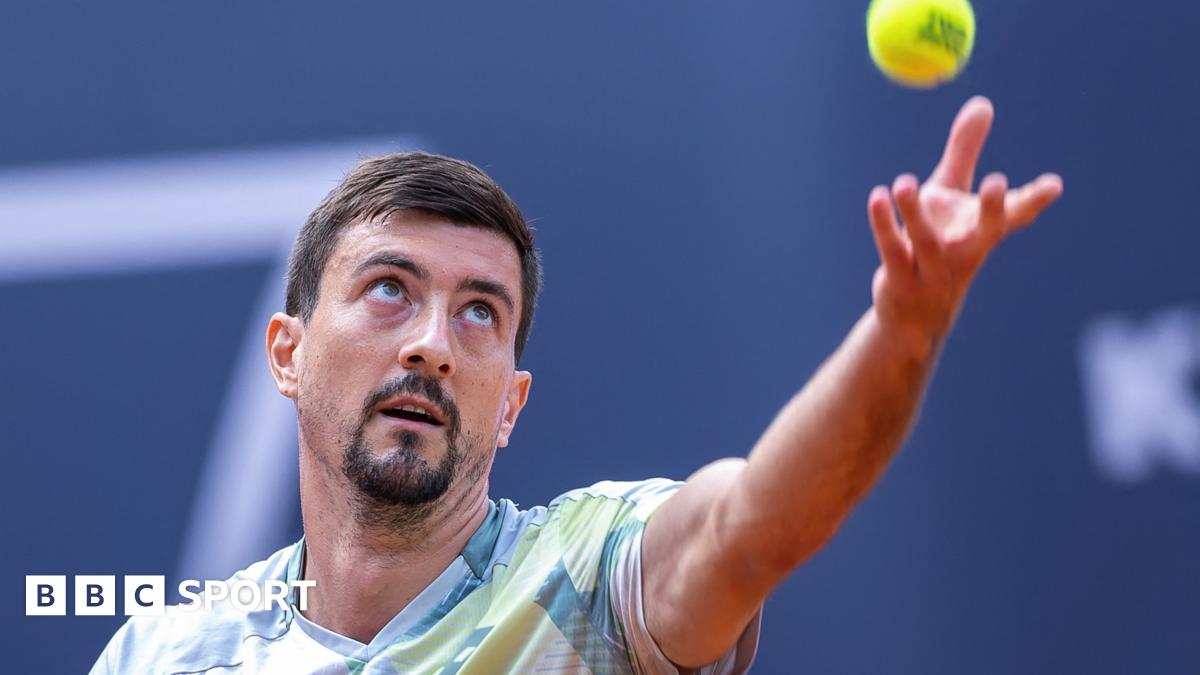
    In a stunning turn of events at Melbourne Park, Austrian tennis professional Sebastian Ofner suffered a dramatic collapse during Australian Open qualifying after mistakenly celebrating victory three points too early. The world witnessed one of the most bizarre mental lapses in recent tennis history during Thursday’s qualifying match against American Nishesh Basavareddy.

    Ofner, whose career highlight remains a fourth-round appearance at Roland Garros in 2023, believed he had secured victory at 7-1 in the decisive third-set tiebreak. The Austrian raised his arms triumphantly and gestured toward his head before approaching the net for the traditional handshake. However, the crucial detail he overlooked was that final-set tiebreaks at the Australian Open are played to 10 points, not 7.

    The reality of his error only dawned when the chair umpire intervened. Seizing the opportunity, the 20-year-old Basavareddy mounted an extraordinary comeback, winning eight of the subsequent nine points to claim an improbable 4-6, 6-4, 7-6 (13-11) victory and advance to the final qualifying round.

    Basavareddy described the moment: ‘In a super tie-break, you always maintain belief. I detected some tension in his approach, though the aged balls made every exchange particularly challenging.’ The American punctuated his comeback with a dramatic ‘choking’ gesture before unleashing a victorious roar.

    The California native will now face Britain’s George Loffhagen, who advanced after eighth-seeded Yoshihito Nishioka retired with injury while trailing 6-3, 3-1.

    In other qualifying action, British player Arthur Fery delivered an impressive 6-4, 6-2 victory over former world No. 17 Bernard Tomic, earning a matchup against Croatia’s Dino Prizmic. However, Harriet Dart’s campaign ended with a three-set defeat to Thailand’s Lanlana Tararudee.

    The main draw begins Sunday, January 18th, featuring British stars including Cameron Norrie, Emma Raducanu, and Katie Boulter. Norrie recently suffered disappointment at the Auckland Classic, squandering a match point against France’s Giovanni Mpetshi Perricard.

  • Energy giants lift ASX for third day, offsetting big four bank losses

    Energy giants lift ASX for third day, offsetting big four bank losses

    Australia’s sharemarket has demonstrated remarkable resilience by securing its third consecutive daily advance, overcoming significant banking sector weakness through substantial gains in energy commodities driven by escalating Middle Eastern geopolitical tensions.

    The benchmark S&P/ASX 200 index climbed 12.10 points (0.14%) to settle at 8820.60, while the broader All Ordinaries index gained 13.30 points (0.15%) to close at 9151.80. The Australian dollar simultaneously strengthened against the US currency, appreciating 0.21% to reach 66.97 US cents.

    Market performance revealed significant sector divergence, with eight of eleven industry sectors finishing positively. Energy equities emerged as the standout performers, surging 2.40% as West Texas Intermediate crude oil reached a ten-week peak amid supply disruption concerns. Major energy producers Woodside Energy (+2.62% to $23.92), Santos (+2.77% to $6.31), and Beach Energy (+5.24% to $1.205) all recorded substantial gains.

    IG market analyst Tony Sycamore attributed the oil price surge to anti-government protests in Iran that threatened approximately 3.3 million barrels of daily production. ‘The violent government response, with reports of thousands killed or arrested, has prompted US President Donald Trump to issue threats of military action and implement 25% tariffs on nations conducting business with Iran,’ Sycamore noted. Additional supply concerns emerged after suspected Ukrainian drones struck four Greek-managed oil tankers in the Black Sea on Tuesday.

    The materials sector provided additional support following G7 discussions addressing supply chain vulnerabilities for critical minerals. Mineral Resources advanced 1.39% to $61.34, Alpha HPA jumped 3.49% to $0.89, and Wildcat Resources climbed 4.71% to $0.445. Major iron ore producers BHP (+1.13%), Rio Tinto (+0.78%), and Fortescue (+0.35%) all closed higher despite precious metals including gold, aluminium, and copper retreating from record highs.

    These gains partially offset substantial banking sector weakness, with financial stocks declining 0.73% collectively. Commonwealth Bank led the downturn, falling 1.25% to $152.88, followed by National Australia Bank (-1.13% to $41.91), Westpac (-0.57% to $38.28), and ANZ (-0.27% to $36.38).

    Individual stock movements featured Neuren Pharmaceuticals soaring 6.06% to $20.47 after projecting potential 2028 sales of $US700 million for its Rett syndrome treatment DAYBUE. Endeavour Group rebounded 2.16% to $3.78 following profit guidance of $400-411 million for the December half. Conversely, Humm Group declined 0.68% to $0.74 as directors opposed a ‘reckless and flawed’ board restructuring proposal.

  • Man, 50, charged after allegedly performing Nazi salute before assaulting man in Epping road rage attack

    Man, 50, charged after allegedly performing Nazi salute before assaulting man in Epping road rage attack

    A disturbing incident of road rage escalated into a hate crime in a northwest Sydney suburb, resulting in criminal charges against a 50-year-old man. The alleged assault occurred on Carlingford Road in Epping during the early morning commute on Tuesday, approximately at 6 a.m., according to New South Wales Police reports.

    The confrontation began when the suspect, driving a black utility vehicle, abruptly stopped his car in front of another vehicle. Police statements indicate that the man then exited his ute and allegedly performed a Nazi salute—a gesture illegal under NSW laws banning the public display of Nazi symbols without reasonable excuse. Following this offensive gesture, the perpetrator allegedly physically assaulted the 48-year-old driver before fleeing the scene.

    After conducting thorough investigations, officers from the Ryde Police Area Command executed an arrest at a residential address on Cockatoo Road in Erskine Park around 10:30 p.m. The suspect was taken into custody and transported to St Mary’s Police Station for processing.

    The accused faced Penrith Local Court on Wednesday, charged with two criminal offenses: knowingly displaying a Nazi symbol by public act without excuse, and common assault. The case highlights ongoing concerns about hate-motivated violence and the enforcement of new legislation targeting Nazi symbolism in public spaces. NSW authorities have emphasized their commitment to addressing both road safety violations and hate-based incidents within the community.

  • Scientist wins ‘Environment Nobel’ for shedding light on hidden fungal networks

    Scientist wins ‘Environment Nobel’ for shedding light on hidden fungal networks

    American evolutionary biologist Dr. Toby Kiers has received the prestigious Tyler Prize for Environmental Achievement—frequently dubbed the ‘Nobel Prize for the environment’—for her groundbreaking research illuminating the complex subterranean networks of mycorrhizal fungi. These vast fungal systems, which form symbiotic relationships with plant roots across global ecosystems, play a critical role in climate regulation by sequestering approximately 13 billion tons of carbon annually.

    Until recently, these intricate underground systems were largely overlooked and underestimated by the scientific community. Dr. Kiers’ pioneering work has transformed our understanding of these networks from mere plant companions to essential biological infrastructure governing nutrient exchange and carbon cycles. Her research has revealed that these fungi function as sophisticated traders in a biological marketplace, strategically allocating phosphorus and nitrogen to plants in exchange for carbon-rich sugars and fats.

    Through the creation of a global Underground Atlas and the development of advanced robotic imaging technology, Dr. Kiers and her colleagues have made these hidden ecosystems visible for the first time. Their mapping efforts have uncovered a concerning reality: most fungal biodiversity hotspots exist outside currently protected ecological zones.

    In response to this finding, Dr. Kiers co-founded the Society for the Protection of Underground Networks (SPUN), which recently launched an ‘Underground Advocates’ program to equip scientists with legal tools for fungal conservation. The Tyler Prize award of $250,000 will further support these conservation initiatives aimed at safeguarding these vital carbon storage systems that have been essential to terrestrial life since plants first colonized land.

  • Japan, South Korea leaders drum up viral moment with K-pop jam

    Japan, South Korea leaders drum up viral moment with K-pop jam

    In an unconventional display of diplomatic camaraderie, Japanese Prime Minister Sanae Takaichi and South Korean President Lee Jae Myung engaged in an impromptu drumming session featuring K-pop hits following their bilateral summit in Nara. The two leaders, adorned in personalized blue athletic tops, created a viral moment that symbolized their commitment to strengthening ties between the historically divided nations.

    The musical interlude came after substantive discussions where both leaders affirmed enhanced cooperation on economic security and regional stability matters. Prime Minister Takaichi, drawing from her background as a former heavy metal band drummer, orchestrated the surprise performance specifically for President Lee, who had previously expressed his aspiration to play drums during last year’s APEC gathering.

    Their repertoire included BTS’s global phenomenon “Dynamite” and “Golden” from the Golden Globe-winning animated feature “KPop Demon Hunters.” Video footage captured Takaichi demonstrating vigorous drumming technique with visible enthusiasm, while Lee acknowledged initial awkwardness that gradually transformed into rhythmic synchronization.

    Beyond the cultural exchange, the leaders addressed pressing geopolitical concerns, particularly regarding China’s regional influence and the ongoing diplomatic tensions following Takaichi’s November remarks about potential military intervention in Taiwan. Both emphasized the critical importance of Japan-South Korea collaboration amidst complex international dynamics.

    The meeting occurred against the historical backdrop of Japan’s 1910-1945 occupation of the Korean peninsula, which has long strained bilateral relations. While Lee’s predecessor had pursued improved ties, the current administration appears to be building upon this foundation through both symbolic gestures and substantive policy alignment, with Lee characterizing the relationship as “neighbors sharing a front yard.”

  • LA28 organizers promise ‘affordable’ Olympics tickets

    LA28 organizers promise ‘affordable’ Olympics tickets

    In a landmark announcement on Tuesday, LA28 Olympic organizers unveiled an ambitious ticketing strategy designed to ensure the 2028 Games remain both accessible and financially inclusive. The initiative, heralded as unprecedented in Olympic history, will see one million tickets priced at a symbolic $28, while approximately one-third of all available tickets (around 4.6 million) will be offered at $100 or less.

    The announcement was made during a ceremonial lighting of the Olympic cauldron at Los Angeles’ historic Memorial Coliseum, attended by approximately 300 Olympians and Paralympians. LA28 Chairman Casey Wasserman emphasized that affordability and inclusion form the cornerstone of their planning philosophy. “From the beginning, we’ve been clear: access to these games belongs to everyone,” Wasserman stated. “These games have to be affordable and inclusive.”

    The ticketing process will commence with a global registration lottery opening Wednesday at 7:00 AM local time (1500 GMT). Prospective attendees worldwide can register for a random draw that will allocate time slots for ticket purchases beginning in April. This approach aims to create equitable access opportunities for fans across economic backgrounds.

    The affordability initiative appears partly responsive to recent criticism of major sporting events’ ticketing strategies. FIFA faced significant backlash over “extortionate and astronomical” pricing for the 2026 World Cup across the United States, Canada, and Mexico, ultimately forcing the football governing body to introduce limited $60 tickets.

    LA28 executives highlighted additional indicators of public enthusiasm, noting over 150,000 volunteer applications already received. Chief Executive Reynold Hoover characterized this response as evidence of widespread community support, stating: “That’s nearly 150,000 supporters saying ‘I want to be a part of this, I want to be a part of history.’”

    The emotional significance of accessible pricing was underscored by Janet Evans, LA28’s Chief Athlete Officer and four-time Olympic gold medalist in swimming. Recalling her transformative experience attending the 1984 Los Angeles Olympics as a 12-year-old spectator, Evans noted: “Making tickets accessible and affordable for everyone here in the city of Los Angeles is going to inspire young people… because that’s what the Olympics do—they inspire people.”

  • West Bank Bedouin community driven out by Israeli settler violence

    West Bank Bedouin community driven out by Israeli settler violence

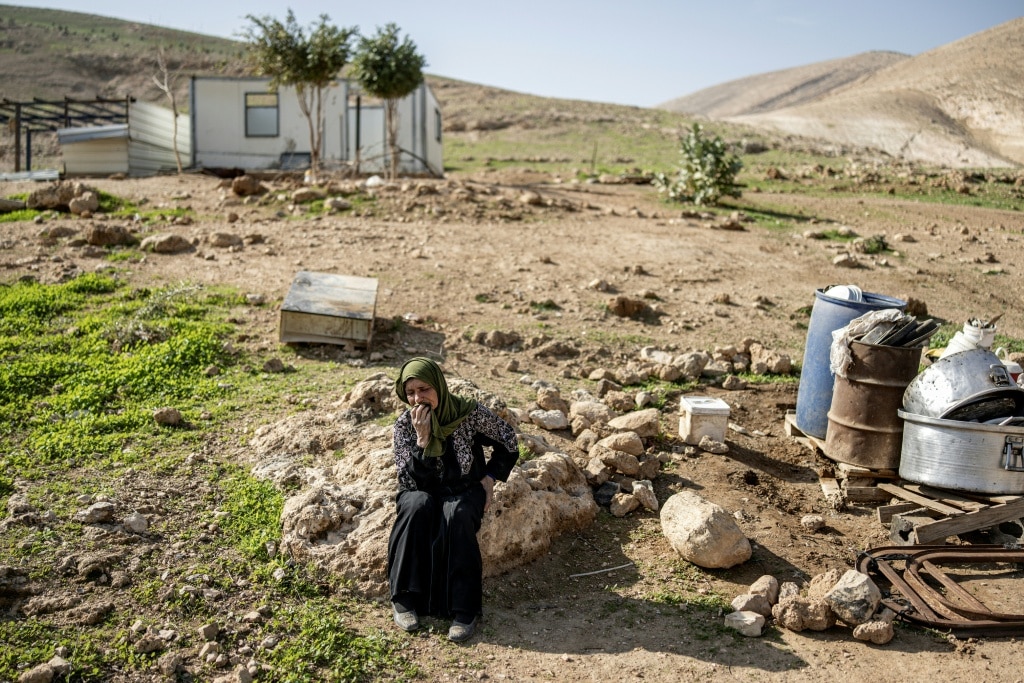
    In a distressing exodus, Bedouin communities in the occupied West Bank are being systematically displaced following relentless violence from Israeli settlers, marking a severe humanitarian crisis in the region. The semi-nomadic herders of Ras Ein al-Auja, who have inhabited these lands for generations, now dismantle their homes under duress, with approximately half of the village’s 130 families already fleeing their ancestral territories.

    This displacement pattern represents what watchdog organizations term ‘pastoral colonialism’—a strategy where settlers use agricultural expansion and livestock competition to force indigenous populations off contested lands. According to United Nations documentation, October alone witnessed an unprecedented 260 settler attacks against Palestinian communities, creating an environment of pervasive fear and instability.

    Beyond physical violence, settlers have employed sophisticated tactics to render Bedouin life unsustainable. Critical water sources have been diverted, power supplies systematically cut, and grazing lands appropriated. The community’s namesake spring in Ras Ein al-Auja—once the lifeblood of their self-sufficient existence—was commandeered in May, severing their primary water access.

    Despite military assurances of increased presence and monitoring technology implementation, residents report inadequate protection and frequent arrests when attempting to defend their properties. “If you defend your home, the police or army will come and arrest you. We can’t do anything,” lamented Naif Zayed, echoing the community’s desperation.

    The displacement creates a devastating ripple effect, as displaced families attempting to resettle in other rural areas face repeated evictions. Farhan Jahaleen, a Bedouin representative, notes that families previously displaced from Jiftlik village faced secondary displacement in the Jordan Valley, revealing a pattern of persistent territorial pressure.

    Spray-painted slogans reading “No future in Palestine” now adorn West Bank roadways, encapsulating the collective despair of communities witnessing the erosion of their centuries-old pastoral traditions and cultural identity under expanding settlement regimes.