标签: Oceania

大洋洲

  • Harry and Meghan join Aboriginal walking tour in Melbourne

    Harry and Meghan join Aboriginal walking tour in Melbourne

    On the third day of their private visit to Australia, the Duke and Duchess of Sussex Prince Harry and Meghan dived deep into the 60,000-year-long cultural history of Australia’s First Nations people during a guided walking tour through Melbourne’s most significant Indigenous heritage sites.

    Led by local Indigenous knowledge-holders, the couple traced the banks of the Birrarung – the traditional First Nations name for what is now known as Melbourne’s Yarra River – starting the journey at the Koorie Heritage Trust located in the city’s Federation Square. The walking route, known as the Scar Tree Walk, is widely recognized as one of Melbourne’s most culturally important Indigenous heritage experiences, designed to connect visitors to the ongoing story of Australia’s first peoples.

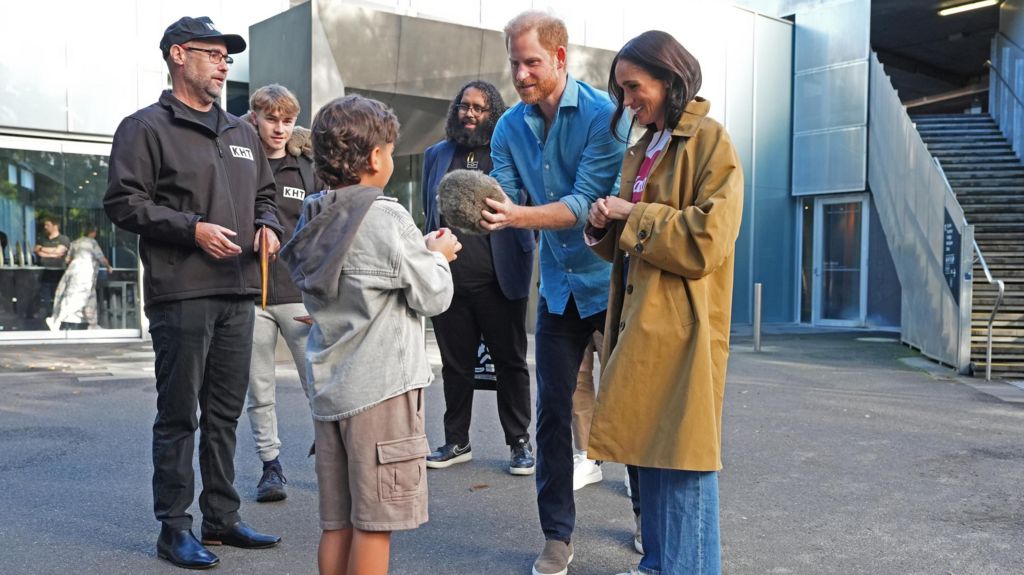
    During the tour, Harry and Meghan had the rare opportunity to examine and handle a Marngrook, a traditional handmade ball crafted from possum fur. Historians and Indigenous cultural leaders broadly believe this traditional object, used for centuries in First Nations communal games, is the original inspiration for the signature oval ball used in Australian Rules Football (AFL) – Australia’s most popular professional sport. The hands-on encounter came one day after Prince Harry joined an AFL team for a public training session to learn the fundamentals of the game, a connection Koorie Heritage Trust CEO Tom Mosby, a proud Kulkalgal and Kemer Kemer Meriam man, called deliberate and meaningful.

    “The fact that the Duke yesterday was at a football club, I think it’s a really great connection,” Mosby told the BBC in an interview after the tour. Beyond the Marngrook demonstration, the couple explored a public art installation centered on Indigenous storytelling and learned how the Birrarung and its surrounding lands have served as a critical source of food, fishing, and hunting for First Nations traditional owners for millennia.

    Mosby explained that the tour was designed to pull back the curtain on Melbourne’s layered history, showing that beneath the surface of one of the world’s most modern global cities lies a living, ongoing Indigenous connection to the land. “Melbourne is a contemporary urban place, but at the same time there is still a very strong connection by the Aboriginal people to this traditional country,” he added.

    The conversation also turned to Victoria’s groundbreaking Treaty process, a landmark policy shift that made national history when the state passed Australia’s first formal legally recognized treaty with First Nations traditional owners just this year in 2025. Mosby noted that the couple expressed keen interest in learning about the treaty and its implications for Indigenous self-determination across Australia.

    The couple’s low-key cultural outing drew spontaneous encounters with locals and tourists along the river. A Brazilian traveler, who was in Melbourne for her sister’s wedding and out for an early morning run, stumbled on the couple and called the meeting a warm, unexpected delight, describing them as “the most gorgeous couple.”

    Local resident Narelle Zagami sought out the pair to greet them, saying she felt emotional meeting Harry and calling them “just beautiful people.” When asked about public criticism of the couple’s decision to mix charitable engagement with commercial activities during their private trip as non-working royals, Zagami pushed back, arguing that as private citizens, “They’ve got to make a living as well. It’s part of their life now, this sort of thing, so I think it’s good.”

    Local Vita Benic, who also made a point to meet the couple, shared that she had previously waited to greet Harry’s father King Charles III, then Prince of Wales, and his first wife the late Princess Diana during their 1983 tour of Australia. Benic brought hand-selected children’s colouring books as gifts for Harry and Meghan’s two children, Prince Archie and Princess Lilibet, and said, “I just wanted to let them know what wonderful people they are… They’re the epitome of what a family should be.”

    This trip marks Harry and Meghan’s first visit to Australia since 2018, just months after their royal wedding, when they drew massive crowds across a nine-day official working tour. This year’s visit is being conducted in a private capacity, blending charity appearances, cultural engagement, and commercial ventures. On the day before the cultural tour, Harry headlined the launch of a new report on father’s mental health, where he opened up about his own experiences as a parent and urged new generations to build better parenting legacies than the ones they inherited. He also paid his respects at the Australian War Memorial in Canberra earlier in the trip. Meanwhile, Meghan filmed a guest appearance as a judge on the upcoming episode of top-rated cooking competition MasterChef Australia, set to air on Sunday.
  • ‘It’d be handy’: Craig Bellamy laments lack of depth in the middle as Tui Kamikamica makes shock appearance at training

    ‘It’d be handy’: Craig Bellamy laments lack of depth in the middle as Tui Kamikamica makes shock appearance at training

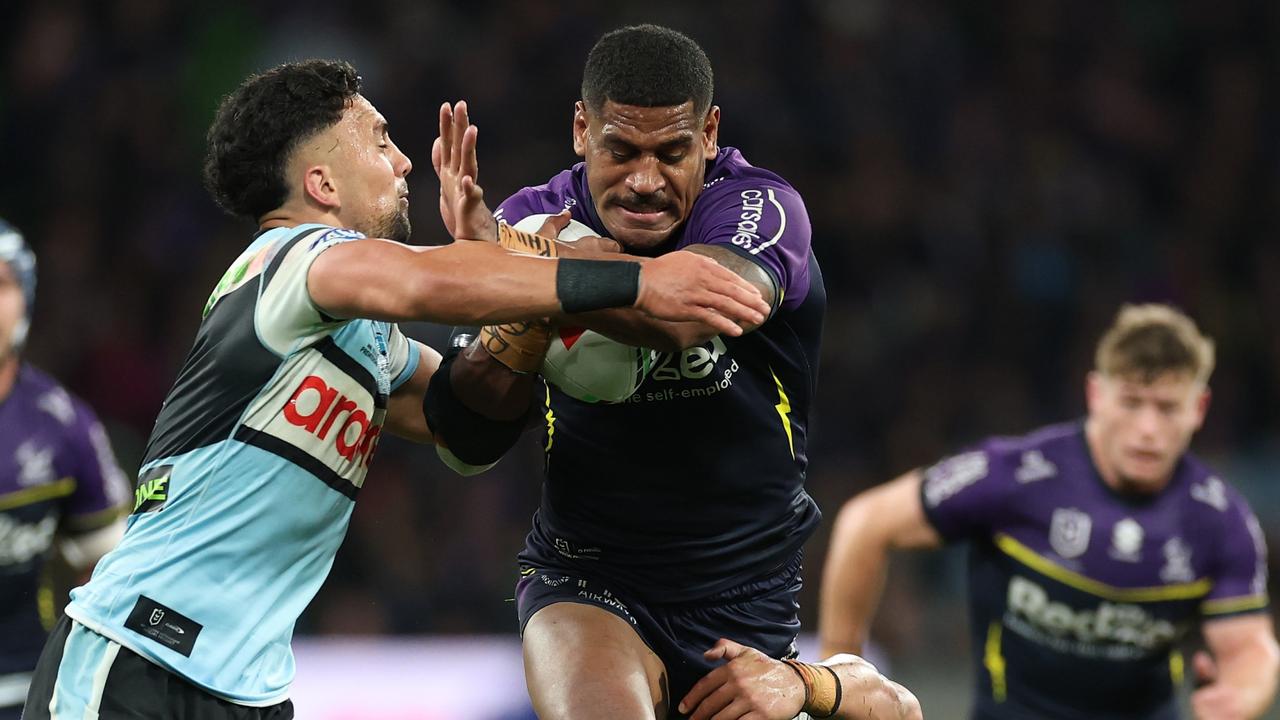
    The Melbourne Storm’s NRL season has hit a dramatic rough patch, and a surprise guest appearance at the club’s recent training session has brought a mix of hope and uncertainty to the embattled outfit. Veteran Fijian prop Tui Kamikamica, who has not played since the club’s round four away match in Townsville, showed up unannounced to watch his teammates train this week, months after a life-altering suspected stroke that forced him to immediately step away from the sport.

    Kamikamica was discharged from hospital following the medical incident earlier this year, but he has not been cleared to join any on-field training with the squad, and no timeline has been set for his eventual return to the NRL. His presence on the training sidelines ahead of Friday’s do-or-die clash against the Canberra Raiders is more about morale than a comeback, according to long-time Storm head coach Craig Bellamy.

    Bellamy explained that he hopes the sight of Kamikamica recovering well after such a severe health scare will give his struggling side a much-needed emotional boost. The Storm have dropped four consecutive matches, a slump that has sparked widespread public debate about whether the club’s 20-year run of consistent dominance at the top of the NRL is finally coming to an end. After opening the 2025 season with blistering, lopsided wins over the Parramatta Eels and St George Illawarra Dragons, the Storm’s attack has stagnated, and their defense has leaked tries at a rate that has caught even seasoned observers off guard. Last week, the team suffered a humiliating home defeat to the New Zealand Warriors, where the Storm was outmuscled and overpowered in front of their own fanbase.

    Beyond Kamikamica’s absence, the Storm has been crippled by key forward departures and injuries that have gutted their traditional physical edge in the middle of the field. Star big man Nelson Asofa-Solomona left the club and retired from rugby league entirely in the off-season, while elite edge forward Eli Katoa was ruled out of the entire 2026 season after suffering repeated concussions. The club has been forced to shift rookie Cooper Clarke out of his natural position to cover the gap, but there is some positive injury news on the horizon: forward Shawn Blore is in line to make his return from a foot injury for the Canberra away game.

    Addressing the ongoing lack of size in his forward pack, Bellamy said the team has no choice but to adapt to the hand they have been dealt. “It’d probably be handy to have another big body, but we haven’t got it so we have to go with what we’ve got and work out what we need to do well,” the coach said. Speaking about Kamikamica’s return to the club, he added: “He has been through a really tough time. To see him back looking as good as he looks is good. He’s still got a little way to go, but it’s great to see him back. Hopefully having him back here for the training session can lift the boys’ spirits a little bit. We’re probably down on that a little bit, but hopefully that will give us a bit of a lift.”

    Heading into Friday’s match, the Storm faces a steep challenge against a Raiders side that is coming off a thrilling upset win in Perth. Bellamy acknowledged that his side has produced inconsistent performances through the first half of the season, pointing to a string of injury disruptions and off-field upheaval as contributing factors to the current slump. “You don’t look back too much, you look forward and hopefully work out where we need to improve and get better,” he said. “We train for that and hopefully we do that. We’ve had a few disruptions with injuries and a few other things that happened off the field, so it’s been a bit of a tough time with that. On the field, we’ve been good in patches but then not so good in other patches so we need to be a bit more consistent.”

    Despite the team’s struggles, there are bright spots for the Storm’s future. Fullback Sua Fa’alogo, a homegrown club product, has emerged as a consistent standout performer through the slump. And another young Victorian talent could make his NRL debut on Friday: exciting young prospect Hugo Peel, who recently scored a hat-trick in the NSW Cup, has been named to the Storm’s extended 20-man bench. Bellamy praised Peel’s work ethic and fitness, noting that while the NRL’s current substitution rules only allow four interchange players to take the field from a six-man bench, the young forward has earned his call-up through his reserve grade form. “He’s great in the effort areas. He’s fit as and he just wants to be involved in the game,” Bellamy said. “With how the system works these days, you’ve got six on the bench but can only use four, so whether he gets a run or not, that’s another thing. It’d be good for him to get his debut because he certainly deserves it with the effort he’s put in in reserve grade.”

  • ‘I’ve never faced it before’: The daunting challenge being faced by Mitch Moses as Eels consider hitting the open market

    ‘I’ve never faced it before’: The daunting challenge being faced by Mitch Moses as Eels consider hitting the open market

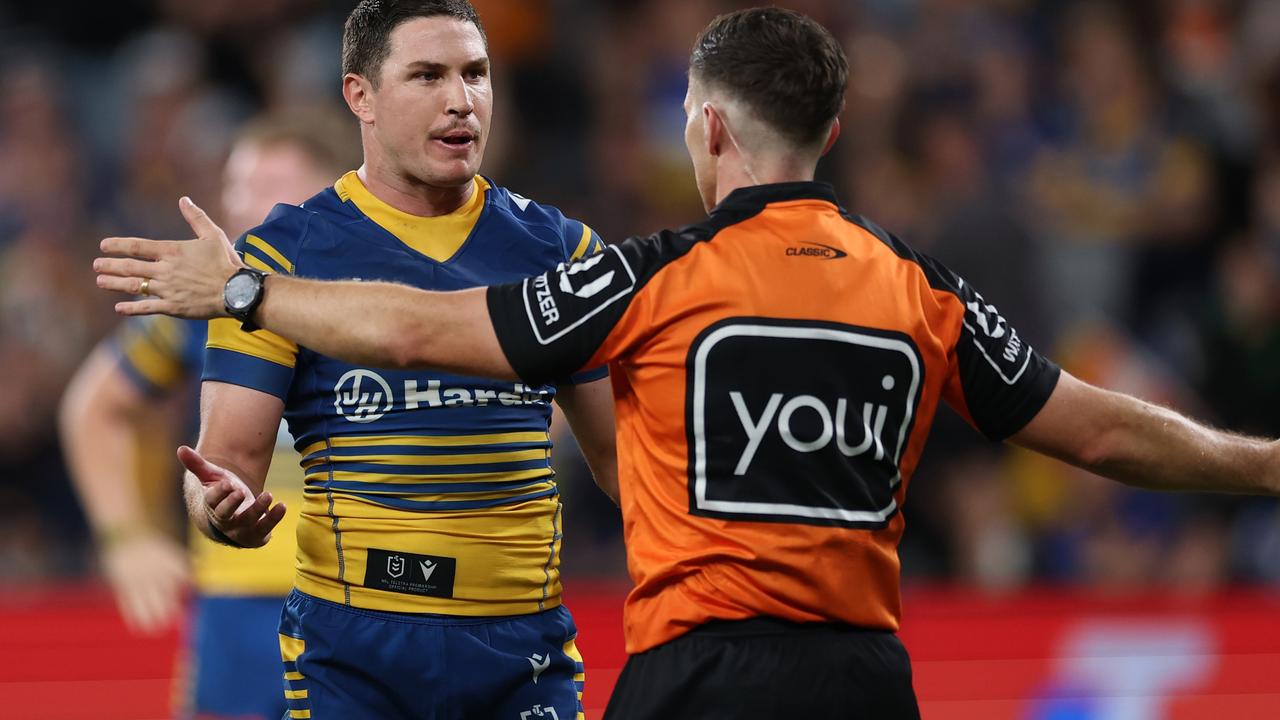
    As Parramatta Eels captain Mitchell Moses navigates the toughest leadership test of his professional rugby league career, a potential mid-season addition of star forward Jaydn Su’A sits firmly on the back burner, with an unprecedented injury crisis taking every ounce of his focus.

    Speaking at an event launching Greyhound National Adoption Day alongside Sydney Roosters captain James Tedesco in central Sydney, Moses opened up about the unprecedented challenges his side has faced through the opening six rounds of the NRL season. The Eels are coming off a demoralizing 52-point defeat to the Gold Coast Titans, a result that saw the under-strength side booed off the field by frustrated fans at full-time. But Moses made clear the club has a valid explanation for its poor form: an injury toll that has gutted the playing roster unlike anything he has experienced in his career.

    Three key first-team players – J’maine Hopgood, Bailey Simonsson and Matt Doorey – have already been ruled out for the entire 2024 season. For this weekend’s clash against the Canterbury Bulldogs, the list of unavailable talent grows even longer, with rising stars Jonah Pezet and Isaiah Iongi among the multitude of sidelined players. This has forced the Eels to field a roster heavy with inexperienced rookies, who are still learning the ropes of top-flight NRL football.

    That youth-driven lineup has forced a shift in Moses’ approach to on-field leadership. Known for wearing his heart on his sleeve and not holding back when challenging teammates, the captain said he has had to rein in his outward frustration to avoid undermining the young players getting their first opportunities at the top level. “That’s the core challenge I’m facing right now as skipper – I’ve never encountered anything like this, even before I took the captaincy,” Moses explained. “I’ve never been part of a team that’s been hit this hard by injuries. It’s already unprecedented, but add the captaincy on top, and you have to figure out how to lead the right way. With all these young kids coming in, you don’t want to lose your temper and let that negativity filter through the group. I’m taking lessons from how I’ve led in the past and working to get better at this.”

    The brutal 52-point defeat exposed major flaws in Parramatta’s defensive structure, with the side conceding a massive 226 points across the first six rounds of the season. A tough post-match video review only confirmed how far below the club’s standard the performance was. “To be honest, it was really tough to sit through that review,” Moses admitted. “It didn’t feel like us, as a team or as a club. This isn’t one person’s fault – it’s on all of us, and we all have to step up to fix this. This week’s match against the Bulldogs isn’t going to get any easier, either. There were moments in the Titans game where we could have clawed our way back into contention, and we failed to take those chances. We have to do better.”

    A mainstay of the New South Wales Blues Origin squad for several years, Moses has been a consistent standout for the state side. But right now, he said, even thinking about Origin selection is impossible – every bit of his energy is focused on righting the ship at Parramatta. “My full attention is on this club right now, it’s the only thing I can focus on,” he said. “I’ve never been through anything like this injury crisis in my career, and as captain, I’m actually excited for the challenge of pulling us out of this slump. We’re not hiding from how bad the last performance was. We weren’t happy with it, we don’t want to see that again, and we’re going to step straight into the pressure to fix it.”

    With the injury crisis mounting, speculation has grown that the Eels will look to the mid-season transfer market to bolster their thin roster. The most high-profile name linked with a move to the club is St George Illawarra Dragons forward Jaydn Su’A, who has already confirmed he will leave the Red V at the end of his contract, with a 2027 move to Parramatta already widely reported. Moses made clear he would jump at the chance to add a player of Su’A’s quality to the Eels’ right edge immediately, but stressed that any transfer deal is out of his hands as he focuses on leading the injury-hit side. “There’s no point hiding how bad our injury situation is right now,” Moses said. “If the club’s recruitment team decides bringing in someone like Su’A is the best move for us, I fully support whatever they think is the right fit for this team. When you talk about Su’A, any club would jump at the chance to add a player of his calibre. I’d love to have him here, but this decision isn’t up to me.”

  • Pope to visit Cameroon conflict zone under high security

    Pope to visit Cameroon conflict zone under high security

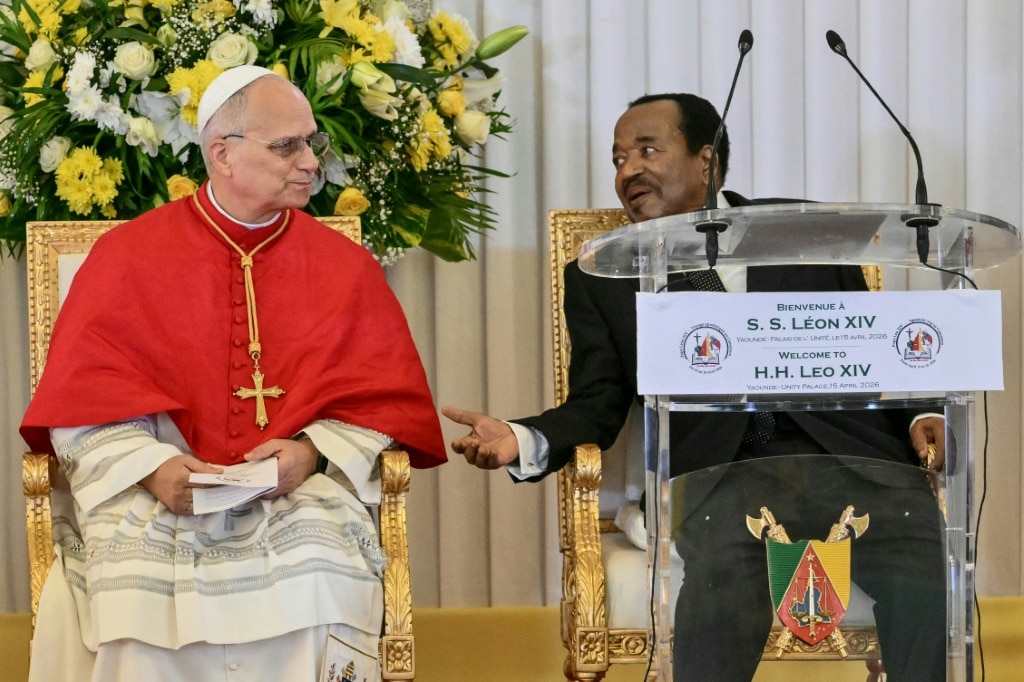
    Nearly a decade after a deadly separatist insurgency first erupted in Cameroon’s English-speaking northwest region, Pope Leo XIV arrived in the conflict’s epicenter, Bamenda, on Thursday for a heavily secured peace mission aimed at healing divisions and ending years of bloodshed.

    The pontiff’s visit to the volatile zone comes on the third leg of his first major international tour, which already saw two days of unrest and political tension in Algeria, marked by twin suicide bombings and a public spat with former U.S. President Donald Trump. Ahead of the trip, separatist fighters fighting for an independent “Ambazonia” announced a three-day truce to clear the way for the papal visit, clearing a path for an expected gathering of 20,000 worshippers to attend the pope’s public mass and keynote address.

    For local residents and religious leaders, the pontiff’s visit carries profound hope for a breakthrough in the conflict that has shattered communities across Cameroon’s two anglophone regions. “The pope’s visit will soften the hearts of the extremists so that we can find common ground… and reach a peaceful solution,” said Andrew Nkea, Archbishop of Bamenda, echoing widespread local expectations of progress. Even among those who have personally suffered from the violence, the visit has sparked tentative optimism: Giovanni Mbuna, a 36-year-old who was abducted by separatists in 2023, told reporters that all violence and kidnapping should cease the moment the pope sets foot on Bamenda’s soil.

    Not all voices have greeted the visit with unreserved support, however. Some Cameroonian Catholics have raised concerns that the trip could inadvertently lend credibility to 93-year-old long-serving President Paul Biya, whose disputed fourth-term re-election six months prior was met with a violent government crackdown on protesters. On Wednesday, during a meeting with Biya at the presidential palace, the pope pushed back against government abuses carried out in the name of counterinsurgency, delivering an uncharacteristically pointed rebuke that the president heard firsthand. “Security is a priority, but it must always be exercised with respect for human rights,” Leo stated, a clear call for accountability amid reports of extrajudicial violence by both government forces and separatist fighters.

    The conflict that brings the pope to Cameroon dates back to 2016, when protests against systemic marginalization of the country’s anglophone minority—who make up roughly one-fifth of the national population—by the French-speaking majority were violently suppressed by authorities. The crackdown escalated into a full insurgency by 2017, and by 2024, human rights groups estimate the conflict has killed more than 6,000 people and displaced hundreds of thousands.

    Leo’s visit to Cameroon is only the fourth papal trip to the central African nation, and the first since Pope Benedict XVI’s 2009 visit. When the U.S.-born pontiff arrived in the country on Wednesday, crowds of singing worshippers turned out to greet him despite the lingering security and political tensions.

    The papal tour has already faced political headwinds before arriving in Cameroon, after Trump publicly stated he was “not a big fan” of Leo following the pope’s calls for peace in the Middle East. U.S. Vice President JD Vance, a practicing Catholic, added to the criticism, urging the Vatican to “stick to matters of morality.” Leo dismissed the attacks outright during a press briefing aboard the papal plane on Monday, saying: “I have no fear, neither of the Trump administration, nor speaking out loudly about the message of the Gospel.”

    After concluding his visit to Bamenda, the pope will travel to Cameroon’s economic capital Douala on Friday to lead mass for a crowd projected to reach hundreds of thousands, before departing for Angola on Saturday to continue his international tour.

  • Fuel supply fears after blaze tears through crucial Australian refinery

    Fuel supply fears after blaze tears through crucial Australian refinery

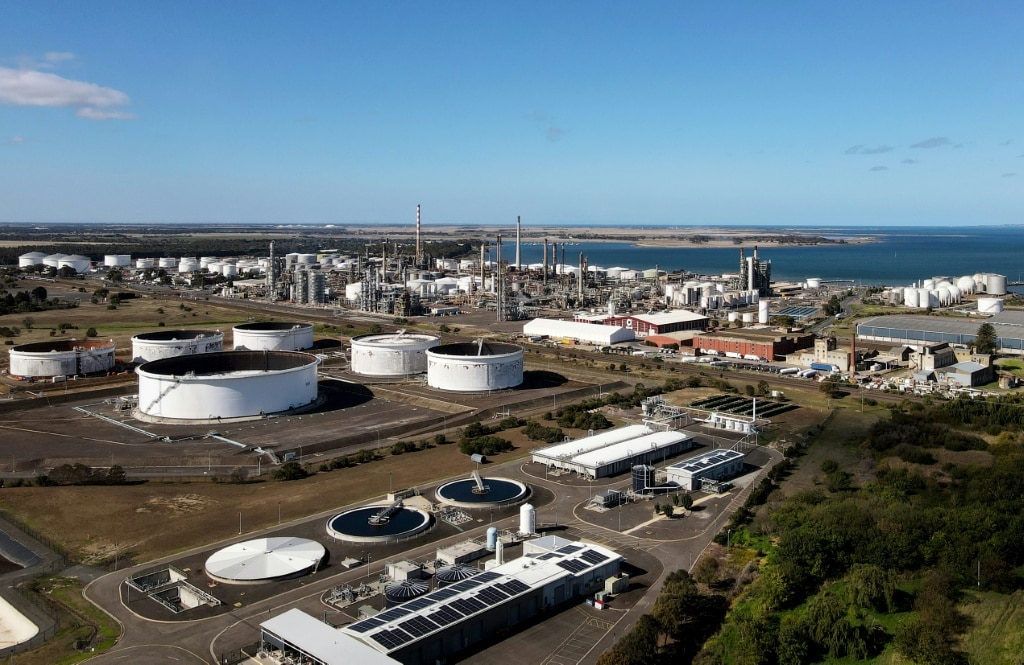
    A devastating chain of explosions sparked by a gas leak has torn through one of Australia’s only two operating oil refineries, leaving authorities warning of imminent domestic fuel supply disruptions just months after regional conflict upended global energy markets. The blaze broke out late Wednesday at Viva Energy’s Geelong refinery, located roughly an hour’s drive southwest of Melbourne in Victoria state. At its peak, flames reached 60 meters into the sky, turning the sky over the industrial hub thick with acrid black smoke.

    Fire Rescue Victoria confirmed Thursday that the inferno had been contained, though emergency officials cautioned hotspots could continue to smolder for the rest of the day. Initial assessments confirm the fire was concentrated in the section of the facility dedicated to high-octane petrol production, Energy Minister Chris Bowen confirmed to reporters. Rapid action by plant personnel to trigger emergency isolation valves prevented the fire from spreading to adjacent units that produce jet fuel and diesel, sparing those critical operations from major damage.

    Owned by energy firm Viva Energy, the Geelong plant accounts for roughly 10% of Australia’s total domestic fuel output, with a maximum processing capacity of 120,000 barrels of crude oil per day. Combined with the only other operating refinery, Ampol’s Brisbane facility, the two plants produce just 10 to 20% of the nation’s total fuel demand, leaving Australia heavily dependent on imports to cover the gap. This geographic isolation and limited domestic refining capacity leaves the country uniquely vulnerable to global supply shocks, a risk that has been amplified by ongoing conflict in the Middle East.

    Incident controller Mark McGuinness described the blaze as unusually intense, saying “It was quite ferocious. It went from a small fire through several explosions to a large, intense fire” in short order. Viva Energy CEO Scott Wyatt emphasized that safety remained the company’s top priority in the aftermath of the incident, noting “Production is not our primary priority today. Today it is getting the site safe.” No casualties have been reported as of Thursday, but full assessments of damage and production shutdown timelines are still underway.

    Already strained by the halt of shipping traffic through the Strait of Hormuz—an artery that carries one-fifth of the world’s global oil and gas supply, which has been effectively closed since U.S. and Israeli strikes against Iran on February 28—Australia’s fuel markets are now facing a second major shock. Government data shows Australia currently holds just 38 days of petrol reserves, far below the 90-day minimum stockpile requirement set by the International Energy Agency. The federal government has not yet activated fuel rationing, but has urged motorists to conserve fuel where possible and switch to public transit for routine travel when they can.

    In a public address Thursday, Minister Bowen urged Australians to avoid panic buying that would exacerbate existing supply strains. “It’s important that people buy as much fuel as they need. But no more, no less,” he said, adding that the timing of the incident was particularly unfavorable given already tight market conditions. “It’s not great. It’s not great timing, is it?”

  • Doubt cast over One Nation seat as ‘absent votes’ found

    Doubt cast over One Nation seat as ‘absent votes’ found

    A razor-thin election victory for Australia’s One Nation party in the state of South Australia has been thrown into uncertainty after election officials uncovered dozens of overlooked ballots that could overturn the initial result.

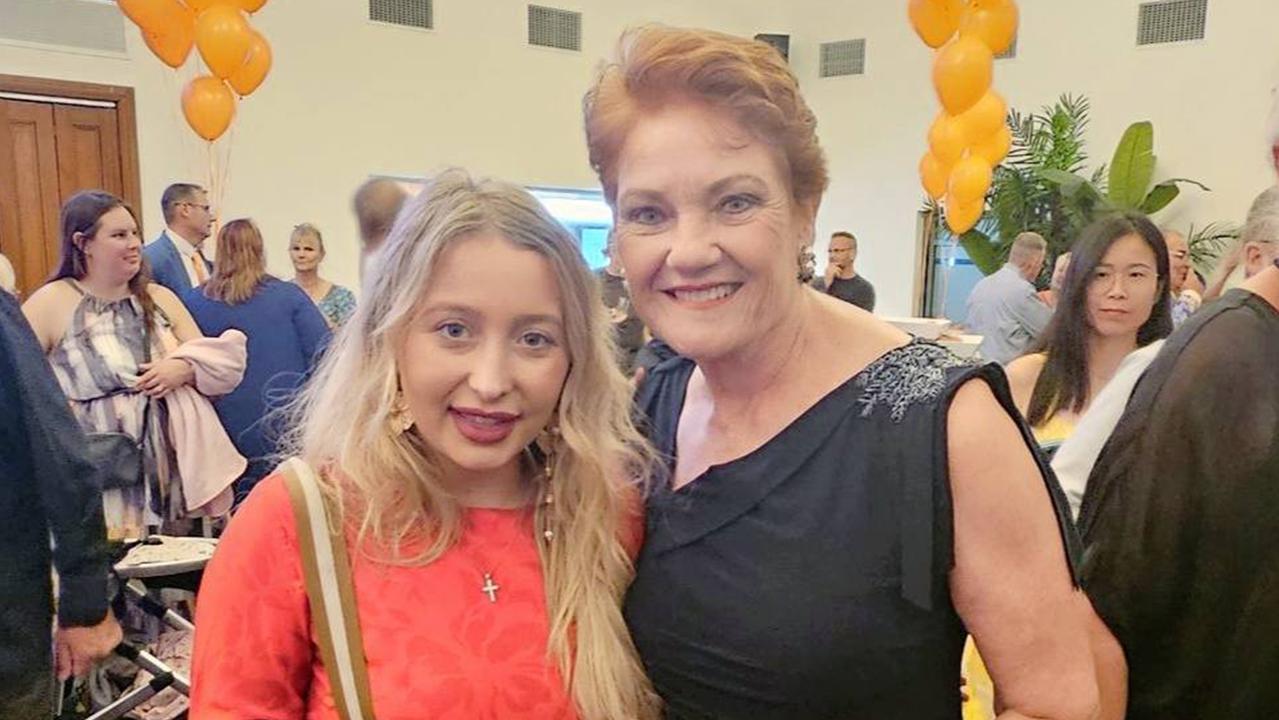
    Chantelle Thomas, running on behalf of Pauline Hanson’s right-wing populist party, was officially declared the winner of the regional Narungga seat in last month’s state election, holding a wafer-thin 58-vote advantage over her closest competitor, Liberal Party candidate Tania Stock. That narrow margin, the smallest of any contest across the entire election, meant Thomas’s victory was not finalized until April 2, nearly two full weeks after polling closed on March 21. The Narungga electorate covers most of South Australia’s rural Yorke Peninsula region.

    The entire outcome was upended this week when election administrators discovered 77 uncounted absent ballots that had not been included in the original final tally. Critically, the number of uncounted votes exceeds Thomas’s winning majority by 19 votes, opening the door for the result to be reversed.

    On Thursday, the Electoral Commission of South Australia officially notified all competing candidates of the discovery and ordered a full recount scheduled for Friday April 17. “Following the discovery of votes that have not been counted, I have secured the unopened ballot papers and have ordered a further count for the district of Narungga,” explained Leah McLay, the commission’s acting commissioner. “I have informed all candidates and will oversee the count on Friday, April 17 and nominated scrutineers are invited to attend.”

    Reaction to the administrative blunder has been sharp, with One Nation’s South Australian leader Cory Bernardi launching a scathing attack on the electoral commission’s competence. “How can we rely on the integrity of what has transpired?” Bernardi told local outlet The Advertiser. “Now there’s plenty of questions to be asked and I think the answers need to be forthcoming, but this is very shaky territory for democracy right now.”

    For the opposition Liberal Party, leadership has called for rapid transparency from election officials to clear up widespread public confusion. “Who knows what this will mean for the seat of Narungga, but that’s why I think the electoral commission needs to provide some clarity to people quickly,” said Ashton Hurn, leader of the South Australian Liberals, in comments to the Australian Broadcasting Corporation. Stock, the Liberal candidate who placed second in the original count, told reporters she had not yet been contacted by the commission and was unaware of the planned recount when approached for comment.

    All parties and local voters are now bracing for an anxious 24 hours as the recount gets underway, with the final result of the closely contested seat hanging in the balance. The unforeseen error has sparked broader questions about the integrity of South Australia’s election administration, even as officials move quickly to correct the mistake and confirm a definitive final result.

  • LIV Golf reassures players over Saudi withdrawal rumors

    LIV Golf reassures players over Saudi withdrawal rumors

    As swirling rumors of imminent Saudi Arabian funding withdrawal sparked fears of an imminent collapse for the breakaway LIV Golf tour, league executives moved swiftly this Wednesday to reassure players and staff that operations and funding remain fully intact. The Saudi-backed circuit has roiled global men’s professional golf since its controversial 2022 launch, when it lured dozens of the sport’s top stars away from the established PGA Tour and DP World Tour with nine-figure guaranteed contracts that split the golf community.

    Over the past week, speculation has grown that Saudi Arabia’s deep-pocketed backers, the Public Investment Fund (PIF), the kingdom’s $1 trillion sovereign wealth fund, have grown weary of the high-cost venture. To date, the project is estimated to have cost PIF more than $5 billion, with no path to near-term profitability. Multiple major outlets including the *Financial Times*, *New York Times*, and *Wall Street Journal* all reported this Wednesday, citing unnamed anonymous sources, that PIF’s exit from the tour was imminent.

    But in an internal email to all players and staff obtained by Agence France-Presse, LIV Golf CEO Scott O’Neil sought to quash the uncertainty. “I want to be crystal clear: Our season continues exactly as planned, uninterrupted and at full throttle,” O’Neil wrote. The executive’s statement came as players gathered in Mexico City ahead of the tour’s upcoming event at Club de Golf Chapultepec, where organizers have doubled down on maintaining a business-as-usual posture. Tour officials published first-round tee times on schedule as planned, and even leaned into humor to address the speculation on social media. “Slow news day? We are ON,” read one social post, paired with a graphic reading “BREAKING NEWS. TUNE IN TOMORROW” alongside the tournament’s full starting schedule.

    Unnamed sources close to LIV Golf’s operations also pushed back on the exit rumors to AFP, noting that the tour projects its revenue will double between 2024 and 2025, and pointing to record-breaking spectator turnouts at recent events held in Australia and South Africa. Still, questions remain: the *Telegraph* of London reported that top LIV Golf executives were summoned to a New York meeting this week to discuss contingency plans for a potential PIF withdrawal.

    The speculation comes on the same day PIF unveiled a new five-year strategic plan that will restructure the fund’s global investment portfolio, an announcement that comes against a backdrop of rising geopolitical instability across the Middle East. The region has faced escalating security risks following a wave of Iranian strikes on military, energy, and transportation infrastructure that came after a joint U.S.-Israeli strike on Iranian targets in late February. Even before the current outbreak of conflict, Saudi Arabia’s domestic economic reform agenda faced pressure, as years of sustained low global oil prices have cut into government revenues.

    Signs of internal instability have already emerged on LIV Golf’s player roster. Two high-profile golfers, five-time major champion Brooks Koepka and 2018 Masters winner Patrick Reed, have recently left the breakaway tour to secure a return to the PGA Tour. For the hundreds of remaining players still under LIV contract, the full implications of a potential PIF exit remain unclear. Speaking to reporters in Mexico City, LIV veteran and 2017 Masters champion Sergio Garcia noted that players have received no official communication of any funding shift. “We haven’t heard anything” since the start of the year, Garcia said, when PIF governor Yasir al-Rumayyan reassured golfers that the fund remained committed to the circuit as a long-term project.

    In his Wednesday email, O’Neil did not directly refute the claims of an impending Saudi withdrawal, instead framing the current speculation as a growing pain common to new disruptive ventures. “The life of a startup movement is often defined by these moments of pressure,” he wrote. “We signed up for this because we believe in disrupting the status quo. We are pioneers, and while the road isn’t always smooth, the destination is worth every mile.”

  • Much-hyped Alzheimer’s drugs do not help patients, review finds

    Much-hyped Alzheimer’s drugs do not help patients, review finds

    For decades, the global medical community has pinned its hopes on the amyloid hypothesis as the foundation for breakthrough treatments for Alzheimer’s disease, the progressive neurodegenerative condition that impacts millions of older adults worldwide. On Thursday, a gold-standard systematic review upended that long-held consensus, concluding that the much-touted class of anti-amyloid Alzheimer’s medications fails to deliver meaningful clinical benefits to patients – a finding that has already sparked fierce debate across the neuroscience and pharmaceutical sectors.

    The analysis was conducted by the Cochrane Collaboration, an independent research organization widely recognized as the global gold standard for evidence-based synthesis of existing clinical data. The review focused on the entire class of drugs designed to target and clear amyloid beta plaques, the sticky protein clumps that accumulate in the brains of people living with Alzheimer’s, a hallmark of the disease that researchers have long theorized is its root cause.

    After decades of expensive high-stakes research that yielded little progress, two newer anti-amyloid medications – lecanemab (marketed as Leqembi, developed by Biogen and Eisai) and donanemab (sold as Kisunla by U.S. pharmaceutical giant Eli Lilly) – were celebrated as transformative gamechangers when they debuted. Both secured regulatory approval from the United States Food and Drug Administration and the European Union within the last three years, bringing new hope to patients and their families grappling with the currently untreatable condition.

    Even before the review was published, however, growing concerns about the drugs’ real-world effectiveness, exorbitant pricing, and dangerous side effects – including elevated risks of brain swelling and cerebral bleeding – had led to widespread caution. In the United Kingdom and France, for example, national public health systems have already declined to cover the treatments for most patients.

    To conduct the most comprehensive analysis to date of this drug class, Cochrane researchers aggregated pooled data from 17 separate clinical trials involving more than 20,000 total participants, all of whom had either mild cognitive impairment or early-stage Alzheimer’s dementia. Across an 18-month average follow-up period, the trials evaluated seven distinct anti-amyloid drugs, with one trial focused on donanemab and another examining lecanemab.

    While the drugs did successfully reduce amyloid plaque buildup in patients’ brains, as confirmed by brain imaging, that biological change did not translate into tangible, clinically meaningful improvements for patients, lead study author Francesco Nonino from Italy’s IRCCS Institute told reporters during a press briefing. “Even though early smaller trials reported statistically significant changes in disease progression markers, that improvement does not add up to a noticeable benefit for people living with Alzheimer’s,” Nonino explained.

    Co-author Edo Richard, a neurologist at Radboud University Medical Center in the Netherlands, emphasized that the study’s findings directly challenge decades of core thinking in Alzheimer’s research. “The long-held hypothesis that removing amyloid plaques will improve patient outcomes is refuted by our results,” he said, adding that he hopes the findings will redirect research funding toward other potential biological mechanisms driving Alzheimer’s, which could yield more effective treatments down the line. “The current generation of these drugs is simply not delivering on the transformative promise that has been used to promote them,” Richard added.

    Not all leading experts agree with the review’s conclusions, however. John Hardy, the British biologist who first proposed the amyloid hypothesis back in the 1990s, issued a scathing rebuke of the work. Hardy, who disclosed he has worked as a paid consultant for Eli Lilly, Biogen, and Eisai, argued that the review’s methodology was fatally flawed: it pooled data from the newer, more promising lecanemab and donanemab alongside older anti-amyloid drugs that were already known to be ineffective, dragging down the overall average of measured benefit. “This is a silly paper which should not have been published,” Hardy told AFP in an interview.

    In response to the criticism, Richard defended the review’s approach, noting that while the included drugs may use slightly different mechanisms to attack amyloid, they all share the same core target: amyloid beta proteins, so grouping them for analysis is methodologically sound.

    Other independent experts have struck a more moderate middle ground. Bryce Vissel, an Australian neuroscientist who was not affiliated with the research, noted that the review does not definitively prove that amyloid plays no role in Alzheimer’s development, nor does it rule out the possibility that future, improved amyloid-targeted therapies could one day help patients. Even so, Vissel acknowledged that the analysis delivers a clear, sobering conclusion: the current generation of widely hyped anti-amyloid drugs has not lived up to the lofty expectations that surrounded their arrival to the market.

  • Albanese government considering exempting new houses from capital gains reform

    Albanese government considering exempting new houses from capital gains reform

    As Australia’s Albanese government prepares for its upcoming May federal budget, a key policy debate over capital gains tax (CGT) reform has moved to the forefront, with new residential properties emerging as a potential candidate for exemption from planned cuts to the controversial CGT discount.

    CGT is a levy applied to profits earned from the sale of assets including stocks and real estate, which is counted toward a taxpayer’s annual income. Current rules grant a 50% discount on capital gains for assets held longer than 12 months, with an automatic full exemption for an individual’s primary place of residence.

    Ahead of potential changes expected to be outlined in the budget, the Business Council of Australia (BCA) has formally called on the government to carve out an exception for newly built dwellings if it proceeds with rolling back the existing 50% CGT discount. BCA chief executive Bran Black argued that any adjustment to the CGT discount must be structured to avoid discouraging critical investment in new housing supply, a core priority of the current government’s economic agenda. Black also pushed back against any retrospective application of CGT changes, noting that any alterations to the tax code are best implemented as part of a broader, comprehensive tax reform effort rather than isolated adjustments.

    Prime Minister Anthony Albanese this week confirmed to Nine Entertainment publications that the government is exploring policy changes that go beyond simply increasing overall housing supply, amid ongoing political pressure to address rising wealth inequality. The Labor government is currently facing growing pressure from populist party One Nation, which has sought to mobilize voter anger over widening income and wealth gaps. Albanese pushed back against populist framing, arguing that meaningful change comes from giving all Australians a tangible stake in the national economy, not divisive rhetoric.

    The push for CGT reform lines up with recent comments from Treasurer Jim Chalmers, who said last week he would be “pretty happy” if the 2026-27 budget is remembered as a landmark tax reform budget. The budget’s finalization has been delayed compared to typical timelines, a knock-on effect of economic volatility stemming from the ongoing war in the Middle East.

    This is not the first time Labor has pursued changes to property-focused tax arrangements: prior to the 2016 and 2019 federal elections, the party proposed adjustments to negative gearing that were intentionally structured to avoid retrospective application and exempt new housing, in a bid to protect investment in new supply.

    Ahead of the May budget, the government faces competing pressure from both the opposition crossbench and major political parties on the CGT debate. Greens Senator Nick McKim argued last month that Labor holds a historic opportunity to pass ambitious, progressive tax reform through the current parliament, saying that if the government is serious about cutting inequality and addressing the national housing crisis, now is the time to modify CGT. On the opposite side of the debate, the center-right Coalition has raised repeated concerns that any changes to CGT will increase the overall tax burden for Australian investors and homeowners.

    Independent voices have also weighed in to the Senate Select Committee on the Operation of the Capital Gains Tax, which has been collecting submissions on the current system. Prominent financial journalist and author Alan Kohler told the committee earlier this year that the current tax structure sends a clear signal that capital income is prioritized over labor income in Australia, a dynamic he described as one of the foundational drivers of national inequality. Kohler argued that the current CGT framework over-adjusts for inflation, unlike income tax, and that the 50% discount is larger than needed to account for inflation while unnecessarily distorting investment choices toward existing assets.

  • Viva Energy halts trading after major fire engulfs Geelong oil refinery

    Viva Energy halts trading after major fire engulfs Geelong oil refinery

    A sudden out-of-control fire at Viva Energy’s Corio oil refinery near Geelong, Victoria, has prompted the Australian fuel giant to request a temporary suspension of its shares on the Australian Securities Exchange (ASX), sending ripples through domestic energy markets amid already volatile global supply conditions. The blaze erupted overnight following a reported equipment failure, with multiple eyewitness accounts confirming successive explosions at the site, one of only two operating oil refineries remaining in Australia.

    In an official filing to the ASX, Viva Energy, a leading domestic refiner, importer and distributor of petroleum products, confirmed it had applied for a trading halt that will remain in effect until either the company issues a detailed public update on the incident or markets open on Monday, 20 April 2026. The request comes at a time when Viva Energy’s shares have already seen significant upward momentum, surging 21.63% over the past month as escalating Middle East conflicts disrupt global oil production and shipping routes.

    Addressing reporters at a press conference on Thursday, Viva Energy chief executive Scott Wyatt confirmed that the fire has hit critical infrastructure within the refinery’s petrol production complex. “The units that are impacted are in the petrol complex and are part of the collection of units that do make petrol,” Wyatt said. He added that while some petrol production units remain undamaged, output of the fuel will almost certainly be affected in the coming period, with the full scale of disruption dependent on damage assessments and adjustments to refinery operations.

    The incident comes just one week after Australian Prime Minister Anthony Albanese announced a new government-backed support scheme for the nation’s two remaining refineries – owned by Viva Energy and competitor Ampol respectively. Under the scheme, Export Finance Australia will provide underwriting for domestic fuel imports, a policy designed to shore up national fuel security after decades of refinery closures across the country left Australia reliant on just two domestic production facilities. Analysts warn that any extended outage at the Corio refinery could put additional pressure on national fuel supplies and push petrol prices higher for Australian consumers, at a time when global energy markets are already facing significant uncertainty from geopolitical tensions.