标签: Oceania

大洋洲

  • Manhunt in Australian bush brings long-dismissed conspiracy theorists to the fore

    Manhunt in Australian bush brings long-dismissed conspiracy theorists to the fore

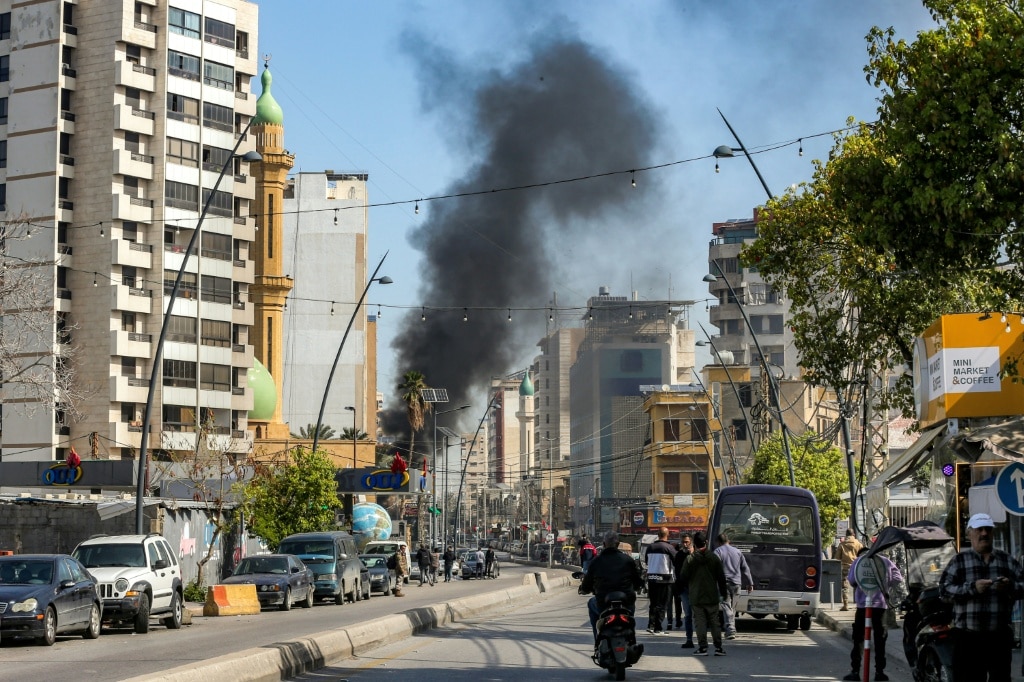
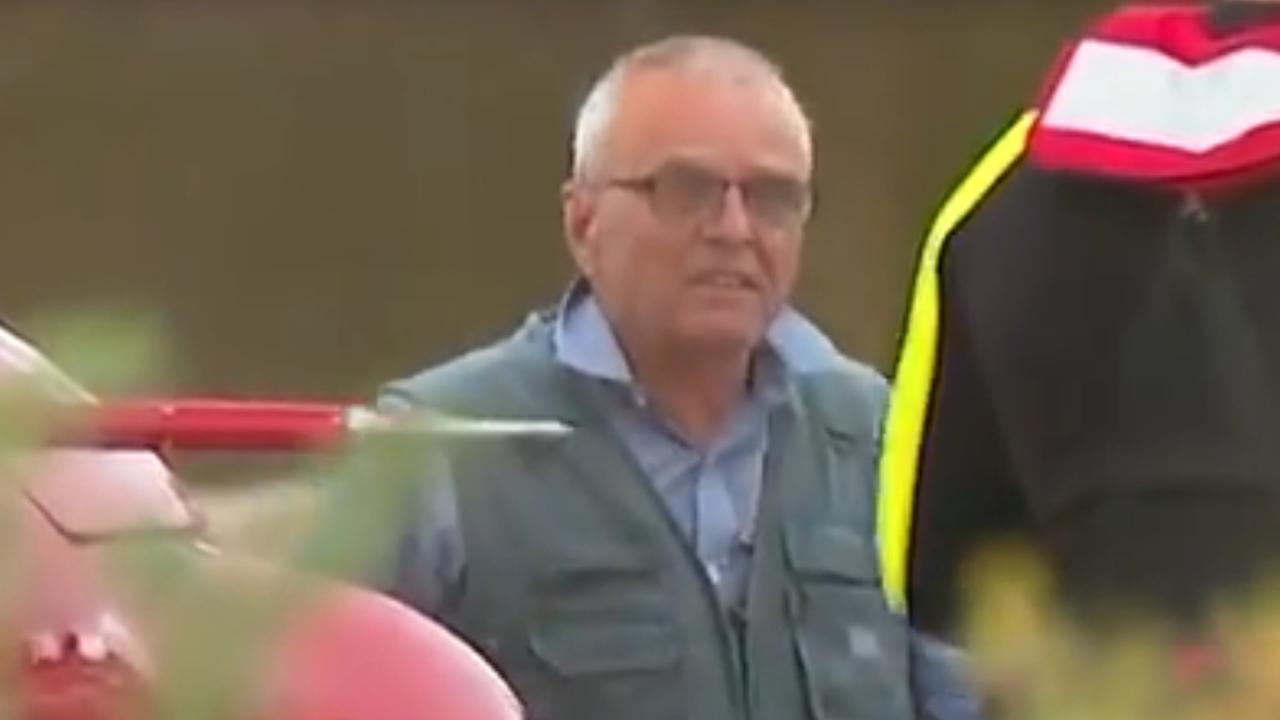
    The tranquil town of Porepunkah, nestled in the Australian Alps, has been thrust into chaos as a massive manhunt unfolds for a heavily armed fugitive accused of fatally shooting two police officers. The incident, which occurred on Tuesday, has shattered the peace of this close-knit community of 1,000 residents, known for its wineries and serene bushwalking trails.

  • FIFA Club World Cup: When it starts and which teams are playing in soccer’s new-look tournament

    FIFA Club World Cup: When it starts and which teams are playing in soccer’s new-look tournament

    The highly anticipated FIFA Club World Cup, now expanded to 32 teams, is set to commence on June 14 in Miami, featuring soccer’s elite players and clubs, including Lionel Messi’s Inter Miami and European giants like Real Madrid and Manchester City. This revamped tournament, hosted across multiple U.S. cities, marks FIFA’s ambitious attempt to establish a premier global club competition akin to the international World Cup. However, the event faces challenges, including concerns over player burnout and fan engagement in an already congested soccer calendar. The tournament’s format mirrors the World Cup, with eight groups of four teams competing in a round-robin stage, followed by knockout rounds culminating in the final on July 13 at New Jersey’s MetLife Stadium. Notable participants include top clubs from Europe, South America, and other regions, though some European powerhouses like Barcelona and Manchester United are absent due to FIFA’s stringent qualifying criteria. With a staggering $1 billion prize pool, the competition promises high stakes, but its success remains uncertain amidst mixed reactions from players and fans alike.

  • FIFA details Club World Cup prize money with $125M target for the winner in $1BN fund

    FIFA details Club World Cup prize money with $125M target for the winner in $1BN fund

    The inaugural 32-team FIFA Club World Cup, set to take place in the United States from June 14 to July 13, has unveiled a staggering $1 billion prize pool, with the winning team potentially earning up to $125 million. FIFA announced that $525 million will be distributed as guaranteed fees to participating teams, ranging from $38.19 million for the top-ranked European team to $3.58 million for Oceania’s Auckland City. An additional $475 million will be awarded based on tournament performance, including $2 million for group-stage victories, $7.5 million for advancing to the round of 16, and $40 million for the champion crowned at New York’s MetLife Stadium. The top European team, likely Real Madrid, could amass the full $125 million by winning all group-stage matches and progressing through the knockout rounds. The tournament’s golden trophy, currently displayed in the White House’s Oval Office, was presented to former President Donald Trump by FIFA President Gianni Infantino, who invited Trump to award it to the winning captain. The prize fund’s announcement was delayed until December, when FIFA secured a global broadcast deal with streaming service DAZN, backed by a major investment from a Saudi Arabian state sports agency. Fans can stream matches for free on DAZN’s platform. The expanded tournament features 12 European teams, each guaranteed at least $12.81 million, with payments determined by sporting and commercial criteria. Notable qualifiers include Manchester City, Bayern Munich, Paris Saint-Germain, and Chelsea. South American teams will receive $15.21 million each, while African, Asian, and CONCACAF teams, including Lionel Messi’s Inter Miami, will earn $9.55 million. FIFA also plans to distribute $250 million to clubs worldwide that did not qualify. Despite the record-breaking prize pool, the $125 million maximum falls short of the English Premier League and UEFA Champions League payouts. The Club World Cup’s $1 billion fund more than doubles the $440 million shared among teams at the 2022 Qatar World Cup. Sponsors for the Club World Cup have also secured deals for the 2026 men’s World Cup, co-hosted by the U.S., Canada, and Mexico.

  • 2026 World Cup spot at stake: New Zealand, New Caledonia to meet in the Oceania qualifying final

    2026 World Cup spot at stake: New Zealand, New Caledonia to meet in the Oceania qualifying final

    In a stunning display of dominance, New Zealand’s national football team triumphed over Fiji with a resounding 7-0 victory in the Oceania World Cup qualifying semifinal. The match, held on Friday, was highlighted by a remarkable hat trick from Nottingham Forest striker Chris Wood, who scored all three goals with his head. This victory propels New Zealand into the final against New Caledonia, who earlier secured their place by defeating Tahiti 3-0. The winner of Monday’s final in Auckland will earn direct entry to the 2026 World Cup, marking a historic first for the Oceania confederation. The victor will join hosts Canada, the United States, Mexico, and Japan, the first nation to qualify for the expanded 48-team tournament. Wood opened the scoring in the sixth minute, capitalizing on a cross from Sarpreet Singh, and added two more goals in the second half before being substituted. Singh, Tim Payne, and Kosta Barbarouses also contributed to the scoreline, while Fiji’s own goal compounded their woes. Despite missing a late penalty, New Zealand’s performance was a testament to their teamwork and preparation. Meanwhile, New Caledonia’s Georges Gope-Fenepej shone with two goals in their semifinal victory, showcasing his experience and skill. The loser of the final will still have a chance to qualify through an intercontinental playoff, offering hope to the region’s smaller footballing nations. This opportunity is particularly significant for New Zealand, the highest-ranked Oceania nation, and New Caledonia, which overcame political unrest to compete in the tournament.

  • Chris Wood backs automatic World Cup qualifying for Oceania minnows

    Chris Wood backs automatic World Cup qualifying for Oceania minnows

    In a historic move for Oceania’s football confederation, FIFA has granted direct qualification to the 2026 World Cup, marking the first time a team from the region will bypass the intercontinental playoff system. New Zealand, the highest-ranked team in Oceania at 89th in FIFA’s rankings, is favored to secure the spot as they face Fiji in the semifinals of the Oceania qualifying tournament in Wellington on Friday. Tahiti and New Caledonia will compete in the other semifinal, with the final set for Auckland next Monday. The winner will join hosts Canada, the United States, and Mexico in the expanded 48-team tournament. The runner-up will still have a chance to qualify through a playoff series involving teams from Asia, Africa, South America, and CONCACAF. Critics have questioned the fairness of low-ranked teams qualifying directly while higher-ranked teams from more competitive confederations are eliminated. However, New Zealand captain Chris Wood defended the decision, stating that a true global World Cup requires representation from every continent. New Zealand’s coach, Danny Bazeley, emphasized the team’s determination to avoid past playoff disappointments, while Fiji’s coach, Rob Sherman, acknowledged the challenge of facing a more experienced and professional New Zealand squad. Despite the odds, teams like New Caledonia and Tahiti have celebrated their semifinal achievements as significant milestones.

  • The draw for FIFA’s revamped Club World Cup is coming up. Here’s what to know

    The draw for FIFA’s revamped Club World Cup is coming up. Here’s what to know

    The United States is set to host the most expansive edition of FIFA’s Club World Cup in 2025, marking a significant evolution for the global club tournament. The event, scheduled from June 15 to July 13, will feature 32 teams competing across 11 U.S. cities, a dramatic increase from the previous seven-team format. This edition will also transition the tournament to a quadrennial schedule, aligning it with the FIFA World Cup for national teams. The draw for the group stage will take place in Miami on Thursday, December 7, at 1 p.m. (1800 GMT).

    Among the participants are European giants like Real Madrid and Manchester City, Lionel Messi’s Inter Miami, South American champion Botafogo, and top clubs from Asia, Africa, and Oceania. The tournament’s new structure includes eight groups of four teams each, with the top two advancing to a knockout stage. FIFA has allocated 12 spots to Europe, six to South America, four each to Africa, Asia, and North America, and one each to Oceania and the host nation.

    The 2025 Club World Cup represents FIFA’s most ambitious project to date, aiming to create a month-long spectacle that rivals the global appeal of the men’s World Cup. Teams qualified based on their continental championship victories or consistent performance from 2021 to 2024. Notable absences include Liverpool, Barcelona, and Napoli, while emerging stars like Kylian Mbappé, Erling Haaland, and Jude Bellingham are expected to shine.

    Inter Miami’s inclusion, secured through FIFA’s decision to award the host nation’s spot based on regular-season standings, adds star power with Lionel Messi and co-owner David Beckham. The tournament promises significant financial rewards, with FIFA president Gianni Infantino guaranteeing hundreds of millions in prize money. A recent broadcasting deal with DAZN ensures all 63 matches will be streamed for free, with potential public broadcaster partnerships.

    The Club World Cup’s history dates back to the Intercontinental Cup, which pitted European and South American champions. FIFA’s modern iteration began in 2000, evolving into an annual seven-team event. However, the tournament struggled to gain traction in Europe, where the UEFA Champions League remained the pinnacle of club competition. The 2025 edition aims to redefine the Club World Cup as a premier global event, combining tradition with innovation.

  • Pope urges church in Papua New Guinea to be close to women after hearing of sorcery ‘superstitions’

    Pope urges church in Papua New Guinea to be close to women after hearing of sorcery ‘superstitions’

    During his visit to Papua New Guinea, Pope Francis emphasized the need for the Catholic Church to support women who have faced abuse and marginalization, particularly in a country where violence against women is alarmingly prevalent. Speaking at APEC Haus in Port Moresby on September 7, 2024, the Pope highlighted the struggles of women accused of witchcraft and sorcery, who are often ostracized by their families and communities. He urged the Church to show ‘closeness, compassion, and tenderness’ to these marginalized individuals.

  • Pope arrives in Papua New Guinea for the second leg of his Southeast Asia and Oceania trip

    Pope arrives in Papua New Guinea for the second leg of his Southeast Asia and Oceania trip

    Pope Francis arrived in Papua New Guinea on Friday, marking the second stop of his extensive 11-day journey across Southeast Asia and Oceania. This visit makes him only the second pope to set foot in the strategically significant South Pacific nation, following in the footsteps of St. John Paul II, who visited in 1984 and 1995. The 87-year-old pontiff was greeted at Port Moresby airport with a cannon salute and a marching band, though he briefly lost his balance during the welcome ceremony, requiring assistance from his security team. Francis’ visit comes on the heels of a vibrant three-day stay in Indonesia, where he addressed a crowd of over 100,000 at a jubilant Mass and signed a historic interfaith declaration with Jakarta’s grand imam, pledging to combat religious violence and protect the environment. In Papua New Guinea, Francis’ agenda focuses on social justice, environmental stewardship, and fostering harmony among the nation’s diverse tribal communities. He is scheduled to meet with government officials, address local clergy, and visit Catholic missionaries working in remote areas. The country, home to over 10 million people, faces challenges such as tribal conflicts, environmental degradation, and the impacts of climate change. Francis’ visit is seen as a beacon of hope for the nation’s Catholic community, which makes up a significant portion of the population. The pope’s journey will continue to East Timor and Singapore before concluding on September 13.

  • Pope and imam of Southeast Asia’s largest mosque make joint call to fight violence, protect planet

    Pope and imam of Southeast Asia’s largest mosque make joint call to fight violence, protect planet

    In a historic moment of interfaith solidarity, Pope Francis and Grand Imam Nasaruddin Umar of Southeast Asia’s largest mosque, Istiqlal Mosque in Jakarta, jointly pledged to combat religiously inspired violence and address the pressing climate crisis. The leaders issued the “Joint Declaration of Istiqlal 2024” during the Pope’s visit to Indonesia, marking a significant step in fostering global harmony and environmental stewardship. The declaration emphasized that religion must never be used to justify violence but should instead promote peace, human dignity, and environmental protection. The event, held at the iconic Istiqlal Mosque, brought together representatives of Indonesia’s six officially recognized religions: Islam, Buddhism, Confucianism, Hinduism, Catholicism, and Protestantism. The gathering underscored the nation’s commitment to religious freedom, despite ongoing challenges of intolerance and discrimination. Francis and Umar’s personal rapport was evident as they shared heartfelt gestures of mutual respect, symbolizing the potential for unity across faiths. The Pope’s visit also included a jubilant Mass at Jakarta’s stadium, attended by an estimated 100,000 faithful, where he urged Indonesians to build a civilization of peace and hope. This visit is part of Francis’ 11-day journey across Southeast Asia and Oceania, aimed at strengthening Catholic-Muslim ties and promoting fraternity. The Istiqlal Declaration builds on Francis’ longstanding efforts to bridge religious divides, following similar initiatives in the Gulf and Iraq. The document also highlighted the urgent need for decisive action to combat climate change, a cause close to the Pope’s heart, particularly in Indonesia, a nation vulnerable to environmental crises. Umar emphasized the mosque’s role as a unifying space, designed by a Christian architect and serving diverse communities. The event concluded with a powerful message of unity, as Francis and Umar called on people of all faiths to work together for a sustainable and peaceful future.

  • Saudi Arabia formally informs FIFA of its wish to host the 2034 World Cup as the favorite to win

    Saudi Arabia formally informs FIFA of its wish to host the 2034 World Cup as the favorite to win

    In a strategic move that positions Saudi Arabia as the frontrunner to host the 2034 FIFA Men’s World Cup, the Saudi Arabian Football Federation formally submitted its bid to FIFA on Monday. The kingdom’s candidacy is bolstered by a streamlined bidding process that restricts participation to members of the Asian and Oceania football governing bodies. This development follows FIFA’s recent decision to fast-track the 2034 hosting contest, effectively paving the way for Saudi Arabia’s potential victory. The 2030 World Cup, set to be co-hosted by six nations across three continents—Europe, Africa, and South America—has already been decided, leaving Asia as the focal point for the 2034 edition. Saudi Arabia’s bid is supported by over 70 of FIFA’s 211 member federations, reflecting its global outreach and commitment to expanding football’s reach. The kingdom’s infrastructure, including its readiness to host the 2027 Asian Cup, aligns with FIFA’s stringent hosting criteria. However, the bid has sparked concerns about potential scheduling conflicts, as the tournament would likely be held in November-December, disrupting European football leagues. FIFA’s decision-making process, influenced by its 37-member council, is expected to finalize the 2034 host by late next year. Saudi Arabia’s growing influence in global football, underscored by its acquisition of Newcastle United and investments in domestic clubs, further solidifies its candidacy.