标签: Oceania

大洋洲

  • Wayne Bennett launches passionate defence of six again rule, explains why Latrell won’t play fullback

    Wayne Bennett launches passionate defence of six again rule, explains why Latrell won’t play fullback

    The National Rugby League’s contentious six again rule has sparked a heated divide between two of the code’s most long-serving and respected coaches, with legendary South Sydney Rabbitohs mentor Wayne Bennett doubling down on his support for the controversial regulation, arguing it has rescued the sport from more than a decade of slow, grapple-heavy stagnation.

    Bennett’s outspoken defense of the rule, which replaces traditional penalties for ruck infringements and offside offences beyond the 20-metre line with fresh set restarts, comes just 24 hours after Canberra Raiders head coach Ricky Stuart delivered a scathing rebuke of the policy, claiming it has eroded the core identity of rugby league. While the rule change has drawn widespread criticism from fans online, who argue its frenetic pace and frequent set changes have stripped the game of its traditional fabric, Bennett says the current format is a dramatic improvement over the slow, wrestling-dominated play that bogged matches down for 10 years.

    “There’s no doubt it’s a game-changer,” Bennett told reporters this week. “We’ve got a game that’s full of entertainment right now, some wonderful tries being scored, some great ball movement. Do we go back to when we had wrestle and we had all the other terms for different types of tackles that were making the whole game bog down? I don’t want to go back to that. We suffered for over a decade with that and I don’t want to go back there. If we find an answer for not having the six again then I’d be happy, but the reality of it is the onus is back on the players. The players are always playing on the edge with the rules and this is one they really can’t play on the edge with because it really hurts your team.”

    Beyond the rule debate, Bennett is facing a string of injury challenges ahead of his side’s Saturday night clash against the winless St. George Illawarra Dragons, and has made a surprising selection call to bring dynamic fullback Matt Dufty back for his first NRL outing in four years. Dufty, who most recently played in the UK’s Super League for Warrington Wolves, returned to Australia earlier than planned and linked up with the Rabbitohs, earning an unexpected call-up after starting fullback Jye Gray was sidelined for two to three weeks with an AC joint injury.

    Many fans and analysts expected Bennett would shift star back Latrell Mitchell from his current position at left centre back to fullback, a role Mitchell has played extensively throughout his career. But Bennett opted against a major reshuffle of his backline, noting Gray’s absence is only short-term, and that the team already has an injury gap on the left edge after second-rower David Fifita was ruled out for three to four weeks with a hamstring injury. “That was based on the fact that Jye will be back in a couple of weeks, probably two to three weeks max, so do I change one position or do I change four positions to put Latrell back at fullback?” Bennett explained. “That really wasn’t an option for me with only two or three weeks. If Jye had been out for a lot longer I might have made a different decision, but next couple of weeks I think we can get the job done there and it makes us more stable in our backline because these guys are playing together each week, and I think any coach in the game wants his players to play together as much as they possibly can.”

    Bennett added that Mitchell’s permanent shift to centre this season was already a deliberate choice made in the best interest of the club, and a short-term injury did not justify upending the entire unit. “I don’t see a world where he won’t go back to fullback eventually,” he said. “It was only a decision we made this year because we believed it was in the best interest of the club, and we made this decision again because I believe it’s in the best interest of the team that we have one new guy coming in rather than moving the whole backline around.”

    The Rabbitohs are already stretched thin in their forward pack, with five forwards currently sidelined in rehab. Prop Keaon Koloamatangi will play through a painful knee injury this weekend, after Bennett ruled out resting him, with the club awaiting the return of Junior Tatola next week to ease their forward depth crisis. “He’s a bit restricted as well. We probably need a week off for him, but we just can’t do it at the moment,” Bennett said. “We’ve got five forwards sitting in rehab at the moment with injuries and won’t be back for a couple of weeks, we’ll probably get Junior Tatola back next week, so we just need a bit of relief there and have to hang on a little bit longer for Keaon.” Dufty, a former Dragons player, will make his Rabbitohs debut against his old club this weekend, with Bennett saying the club is excited to welcome him to the squad. Assistant coach Ben Hornby has a long history of coaching Dufty, giving the South Sydney staff confidence he will fit in both on and off the pitch, Bennett added.


  • Escaped wolf in South Korea recaptured, returned to zoo

    Escaped wolf in South Korea recaptured, returned to zoo

    After nine days of evading hundreds of search personnel, roaming through wooded and urban areas of South Korea’s Daejeon, and triggering a series of public disruptions and official missteps, a young escaped gray wolf named Neukgu has been safely recaptured and returned to his home zoo, local authorities confirmed Friday.

    The 2-year-old male wolf, weighing 30 kilograms, first broke free from his Daejeon zoo enclosure on April 8 by digging an escape tunnel under his compound fence and breaking through an outer boundary. What followed was one of the most high-profile fugitive searches in the region in recent years: local officials mobilized a joint team of hundreds of police officers, firefighters, and military troops, deploying drones equipped with thermal imaging cameras and encouraging residents to report any potential sightings to authorities. But for nearly a week and a half, the young wolf repeatedly avoided capture, slipping out of search cordons even after multiple confirmed sightings across the city.

    The search concluded in the early hours of Friday, after officials received a credible citizen tip that the wolf had been spotted resting in a local Daejeon park, according to South Korea’s Yonhap News Agency. Search teams moved in quickly, firing a tranquilizer dart to subdue the animal without injury, taking him into custody alive.

    In a celebratory post on the social platform X shortly after the capture, the Daejeon Metropolitan City government wrote: “Welcome back, #Neukgu!” The city also released official footage and photos of the capture, showing search teams carrying a sedated, sleepy Neukgu in a canvas sack before moving him into a secure transport crate. Subsequent images released by the city showed the shaggy-furred wolf sedated and resting on a veterinary examination table, fitted with a soft muzzle to protect medical staff.

    Preliminary veterinary checks completed after the capture confirmed Neukgu is in good condition, with normal pulse and body temperature readings, the city government added in an official statement. “We would like to thank everyone who offered their support to ensure Neukgu’s safe and healthy return. We also apologise to the public for the anxiety and concern this incident has caused,” the statement read.

    Neukgu’s escape sparked immediate public safety concerns across Daejeon, prompting a local elementary school to suspend in-person classes for at least one day out of caution. The incident also drew embarrassment for city officials after a fake AI-generated image, purporting to show Neukgu trotting across a busy Daejeon intersection, was widely shared by the city government and multiple major South Korean and international media outlets, including AFP, which later withdrew the image after an AFP analysis confirmed it was inauthentic.

    Now that Neukgu has been returned to the zoo, South Korean animal welfare advocates are calling for sweeping reforms to captive animal safety standards, pointing to a 2018 escape from the exact same Daejeon facility that ended in tragedy. In that earlier incident, a puma named Bborong escaped the zoo and was shot and killed by responding authorities.

    “The fact that Neukgu has returned to his cage at the zoo does not signify a ‘happy ending’ to the incident,” the Korean Animal Welfare Association said in a statement following the recapture, arguing that repeated escape incidents point to systemic failures in enclosure safety and captive animal care at the facility.

  • France makes reusable period products free for young women

    France makes reusable period products free for young women

    In a landmark step to address the growing crisis of period poverty across the country, the French government announced Thursday that it will fully reimburse the cost of reusable menstrual products, including menstrual cups and reusable period underwear, for two vulnerable groups of women: those under the age of 26, and low-income women of all ages experiencing financial hardship.

    The policy, which is set to take effect at the start of the 2024 autumn academic year, is projected to benefit approximately 6.7 million people — a figure that equals nearly one-tenth of France’s total population of 69 million. To access the reimbursement, eligible individuals need only present their state-issued French health insurance card when purchasing items at a registered pharmacy, with costs returned directly to their accounts after purchase.

    The measure was originally approved by French parliament as a key component of the country’s 2024 social security budget, but a months-long delay in issuing the formal executive decree required to put the policy into practice sparked widespread frustration from both feminist advocacy organizations and manufacturers of sustainable sanitary products, who had pushed for the reform to launch on schedule.

    Data from the French anti-poverty charity Dons Solidaires underscores the urgent need for this intervention. A November 2023 survey of 4,000 French women conducted by the organization found that 1 in 10 respondents have been forced to use makeshift alternatives to commercial period products — including ripped up clothing — because they cannot afford standard sanitary items.

    This new policy is the latest in a series of progressive reforms France has rolled out to improve menstrual equity over the past decade. Back in 2016, the country cut the sales tax on period products from 20 percent to 5.5 percent, reducing the financial burden for all women purchasing menstrual supplies. France is not alone in its push for global menstrual equity: in 2020, Scotland made history as the first nation in the world to pass legislation guaranteeing free universal access to period products in all public buildings, setting a benchmark for other countries to follow.

  • Embattled LIV Golf to make ‘surprise’ changes: CEO

    Embattled LIV Golf to make ‘surprise’ changes: CEO

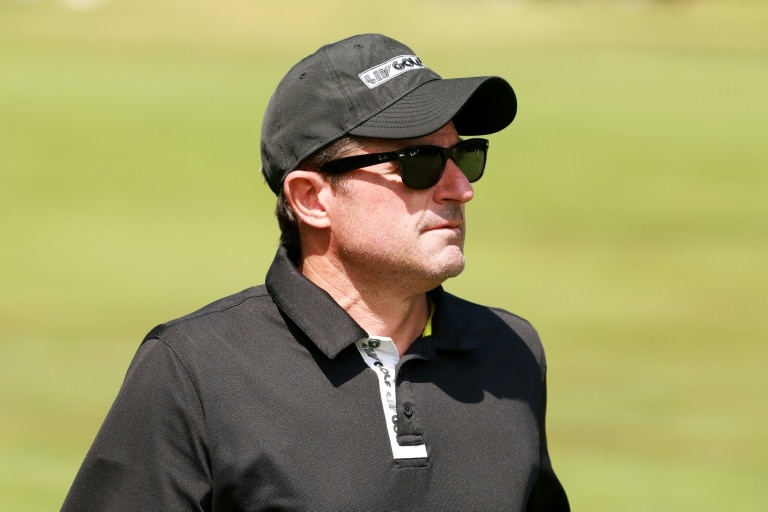
    Embattled breakaway golf circuit LIV Golf is set to implement unexpected structural adjustments as it navigates swirling speculation that its primary backer, Saudi Arabia’s sovereign wealth fund, is preparing to end its massive financial support, chief executive Scott O’Neil confirmed Thursday.

    Recent reports from multiple international media outlets have claimed that the Saudi fund, which has poured billions into luring top-tier golf talent away from the established PGA Tour and DP World Tour since LIV launched in 2022, will imminently halt its funding commitments for the divisive league. Despite the uncertainty, LIV has insisted its ongoing 2024 season will proceed without interruption. This week’s tournament in Mexico City kicked off as scheduled Thursday, though broadcast coverage was disrupted for an extended period by local power outages that caused a blackout.

    In an on-air interview during the Mexico City event, O’Neil addressed the growing speculation head-on. “I talked about some structural changes. They’re coming,” he said, referencing a plan he had already presented to roughly 50 stakeholders during last weekend’s Masters tournament at Augusta. “We have one, and it is… It might surprise some people.”

    Since its debut in 2022, the Saudi-backed league has upended the global golf landscape, pitting the new circuit against traditional golf governing bodies. Built around a format of shorter, faster events with team-based competition and a geographically diverse tournament schedule, LIV has attracted some of the sport’s biggest names, including major champions Bryson DeChambeau and Jon Rahm, while drawing large crowds to stops in emerging markets such as Australia and South Africa. However, the circuit has struggled to secure the lucrative multi-year media rights deals that are a core revenue stream for established major sports leagues.

    Industry estimates peg the Saudi sovereign wealth fund’s total spending on LIV Golf at roughly $5 billion to date. During a recent five-year strategy presentation, the fund signaled a shift to prioritize “increasing the efficiency of investments,” fueling rumors of an imminent pullback from the golf project.

    O’Neil acknowledged Thursday that LIV will “probably” need to secure new external capital to sustain operations, pointing to the league’s long-stated strategy of selling ownership stakes in its 12 existing team franchises. The circuit’s long-term business model is modeled after motorsport’s Formula 1, which relies on independently owned and operated team franchises. “I had two calls this morning” about stake sales, O’Neil confirmed. Prior to this week’s funding rumors, LIV had already been exploring the sale of minority or even controlling stakes in two teams to outside wealthy investors or corporations, and in January Bloomberg reported the league was targeting valuations as high as $300 million per team. No public valuation of the franchises has been released to date.

    O’Neil also pushed back against recent sensationalized media coverage of the league’s turmoil, specifically calling out a report from Britain’s *Telegraph* that claimed LIV executives had been called to an emergency emergency meeting in New York. “It’s a lot of reaching and grabbing for headlines and clickbait and stories,” he said. While he rejected claims of an imminent collapse, he did confirm that operational shifts are on the horizon. “Will there be a change in how we operate? Of course,” he added.

  • Iranian footballers say Australia has given them ‘hope’ for safe future

    Iranian footballers say Australia has given them ‘hope’ for safe future

    Two Iranian female footballers who have been granted political asylum in Australia have opened up about their new chapter, saying the country has given them a renewed chance to build a secure life where they can both live and compete without fear. Atefeh Ramezanisadeh and Fatemeh Pasandideh were part of a seven-member group of Iranian national team delegation that initially received humanitarian visas while participating in the 2024 Women’s Asian Cup hosted in Australia. In a surprise turn of events, the remaining five members of the group ultimately chose to return to Iran, reversing their initial decision to seek protection abroad.

    The crisis surrounding the team began shortly after the squad declined to sing Iran’s national anthem ahead of their opening tournament match, a silent protest that came just days after joint air strikes by Israel and the United States sparked deadly conflict in Iran starting February 28. After the protest, footage emerged of an Iranian state television host labeling the players as “traitors” who deserved punishment for their silence during the anthem, triggering widespread international alarm over the players’ safety if they returned home.

    In their first formal public statement since their asylum application was approved, Ramezanisadeh and Pasandideh expressed gratitude to supporters who have stood by them, while requesting space to adjust to their new lives. “At this stage, our primary focus is on our safety, our health and beginning the process of rebuilding our lives,” the joint statement reads. The pair added that they have been deeply moved by the warmth and generosity of Australia’s large Iranian diaspora community, saying that widespread community support has made them feel welcome and eased the isolation of their major life transition. They also extended thanks to the Australian government for granting them a safe haven in the country, and to Home Affairs department officials for their committed, personalized support throughout the visa and asylum process.

    The two players have already begun integrating into Australia’s domestic football landscape, with recent photos showing them training with A-League Women side Brisbane Roar. They confirmed in their statement that they aim to continue pursuing elite professional football careers in their new home.

    To understand the full context of the players’ decision, the sequence of events that unfolded during the Asian Cup offers critical context: after the anthem protest sparked backlash back home, the players were relocated from their original accommodation on the Gold Coast to Brisbane, roughly an hour’s drive north. It was there that they slipped away from the minders accompanying the Iranian delegation, seeking protection from the Australian Federal Police before starting their asylum claims.

    Human rights activists have long raised allegations that the five players who chose to return to Iran faced extreme coercion, arguing that Iranian authorities made threats against their immediate family members remaining in the country to force the players to reverse their decision to seek asylum. Speaking at the height of the crisis earlier this year, Australian Home Affairs Minister Tony Burke acknowledged that the government could not ignore the immense external pressures that shaped each player’s impossible decision.

    The Iranian government has pushed back sharply against the events, with the country’s sports ministry claiming that the return of the five players proved they had “defeated the enemy’s plans” through national unity and patriotism. The ministry also accused the Australian government of advancing foreign political agendas, claiming Canberra was “playing in Trump’s field.” Tasnim News Agency, an outlet closely affiliated with Iran’s Islamic Revolutionary Guard Corps, has further claimed that the two players who stayed were subjected to systematic “psychological warfare, extensive propaganda and seductive offers” from Australian actors to convince them to remain in the country.

    The case has drawn global attention to the risks facing Iranian athletes who speak out against their government, and has sparked renewed debate over Australia’s humanitarian visa obligations for at-risk sportspeople from conflict zones.

  • Global warming causes Colombian glacier to disappear

    Global warming causes Colombian glacier to disappear

    A stark visual testament to the accelerating impacts of human-caused climate change has emerged from the Colombian Andes, where the Cerros de la Plaza glacier has been officially declared completely vanished after more than a century of gradual retreat driven by rising global temperatures.

    New satellite composite imagery compiled from 2026 Copernicus Sentinel data illustrates the dramatic transformation: in late December 2015, the mountain peak still retained a visible layer of permanent ice and snow, but by the end of February 2026, no frozen cover remained, leaving only exposed bedrock where the glacier once stood. Official confirmation of the glacier’s total disappearance came last week from Colombia’s Institute of Hydrology, Meteorology and Environmental Studies (IDEAM), the government agency tasked with monitoring the country’s changing natural landscapes.

    Historical data compiled by IDEAM underscores the scale of the loss: at its peak in the 19th century, Cerros de la Plaza spanned 5 square kilometers (1.93 square miles) across the high peaks of the Sierra Nevada del Cocuy range in northeastern Colombia, where summits rise more than 5,000 meters above sea level. Decades of rising temperatures pushed the glacier into steady retreat, with the ice sheet shrinking incrementally from 2015 until it vanished entirely by March 2026.

    IDEAM’s official statement framed the loss as a tangible warning of climate change’s irreversible impacts. “Climate change is a reality that is already transforming our territories. And what is at stake is not only the landscape, but the very balance of these ecosystems,” the agency said.

    The Colombian Andes are recognized as one of the world’s most biodiverse mountain regions, hosting iconic threatened species including Andean condors and the rare spectacled bear, a mammal endemic to South America’s high altitude ecosystems. The Sierra Nevada del Cocuy glacial system is already one of only six remaining glacial networks left in Colombia, and national environment ministry data shows the country’s total glacial ice coverage has plummeted by 90% since the 19th century.

    Beyond biodiversity, the loss of Andean glaciers carries direct consequences for human communities across the region. Glacial melt feeds critical freshwater sources that sustain mountain ecosystems, and underpin key human activities ranging from agricultural crop irrigation to commercial and subsistence fishing.

    The disappearance of Cerros de la Plaza aligns with broader global climate trends: both the European Union’s Copernicus Climate Change Service and U.S.-based non-profit research organization Berkeley Earth have confirmed that the past 11 years are the warmest ever recorded on Earth. A landmark 2023 study published in the *Science* journal projected that even if all nations meet their Paris Agreement commitments to limit global warming to 1.5 degrees Celsius above pre-industrial levels, half of the planet’s total glacier mass will have melted by the end of the 21st century.

  • Hungary’s Orban urges party ‘renewal’ after vote loss

    Hungary’s Orban urges party ‘renewal’ after vote loss

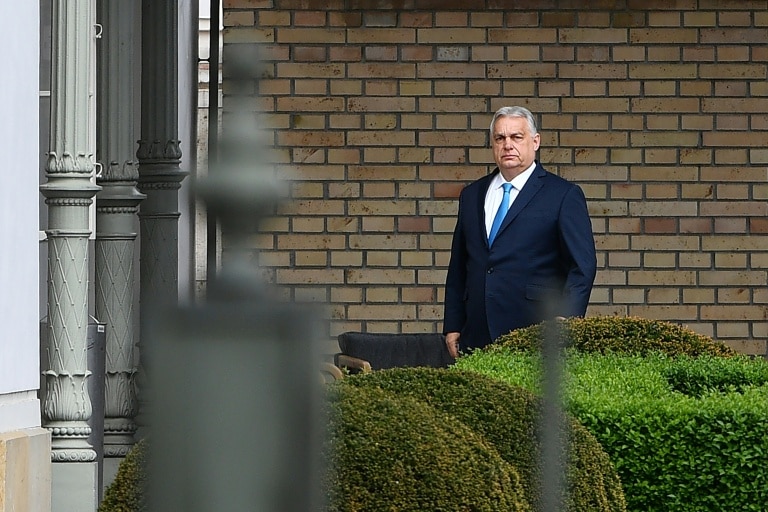
    After 16 consecutive years at the helm of Hungarian politics, nationalist outgoing Prime Minister Viktor Orban has publicly called for a full overhaul of his long-ruling Fidesz party, just days after a landslide defeat to pro-European political newcomer Peter Magyar.

    Magyar, a conservative newcomer who rose rapidly to challenge Orban’s nationalist agenda, secured a two-thirds parliamentary majority in Sunday’s general election, a contest that saw a record voter turnout across the central European nation. The upset result brought an end to one of the longest-serving administrations in modern European history.

    In his first public remarks since the defeat, broadcast live on the YouTube channel Patriota, Orban acknowledged that the old governing model could not continue. “We cannot continue the way we have been operating until now,” he stated. “A complete renewal is needed, and this applies not only to Fidesz, but to the entire national conservative bloc.”

    The former prime minister admitted he was still processing the scale of the loss, saying he was “trying to somehow come out of this shock” and accepted full accountability for the defeat in his role as party leader.

    Orban outlined two immediate priorities moving forward: first, overseeing a smooth transition of power to the incoming administration, a process he confirmed is already underway. Second, he has begun convening party governing bodies, including a delegate national assembly and full party congress, to carry out the planned renewal process, with preliminary work already in motion.

    In a related announcement Thursday, Hungarian EU Minister Janos Boka confirmed on Facebook that Orban will skip next week’s informal EU heads of state summit in Cyprus, scheduled for April 23–24, to focus on the government handover. The summit would have forced Orban into a potential high-stakes confrontation over his ongoing veto of a €90 billion ($106 billion) EU macro-financial assistance package for Ukraine, a policy that has been a major point of friction between Budapest and Brussels for months.

    Orban’s longstanding close ties to Russian President Vladimir Putin and former U.S. President Donald Trump, paired with policies widely criticized as democratic backsliding, have put his administration at repeated odds with the European Union. Brussels previously froze billions in allocated cohesion funds for Hungary over rule of law concerns that went unaddressed during Orban’s tenure.

    Since his election victory, Magyar has pledged to dismantle the core structures of Orban’s nationalist administration and reset Hungary’s strained relationship with the EU, a move that would unlock the frozen billions in European funding for the country.

    Within 24 hours of Orban’s post-defeat remarks, EU officials confirmed that a preliminary negotiating delegation will travel to Budapest Friday to open talks with the incoming Tisza party government. EU spokeswoman Paula Pinho noted that the early talks are designed to avoid delays, saying: “These are preliminary talks that are taking place in order to make sure that once the government is in place, really, action can be taken if appropriate, and that we do not waste any time.”

    Magyar’s ‘regime change’ agenda accelerated further Thursday, when the Tisza party leader announced a symbolic break from Orban’s governance style: his administration will not occupy the Carmelite Palace, a hilltop monastery compound overlooking Budapest that Orban converted into his prime ministerial office in 2019. “Under the TISZA government, the prime minister’s office will not be located in the Carmelite Palace, but in a ministry building near the parliament,” Magyar wrote in a Facebook post.

    Orban’s 2019 move to the former monastery, located in Budapest’s historic Castle District, drew widespread criticism from opponents, who condemned the millions in public funds spent on renovations and the heavy security perimeter that restricted public access to the landmark, which the government appropriated for state use back in 2014.

    Magyar has also promised to suspend biased coverage from state-run media outlets, which opponents have long described as a propaganda mouthpiece for Orban and Fidesz. On Thursday, staff at Hungary’s state-owned national news agency MTI released an open letter calling for the immediate restoration of editorial autonomy, with one senior editor telling AFP that staff had “had enough of unlawful, external political interference” in newsroom operations.

  • Villa and Forest set up all-English showdown in Europa League semis

    Villa and Forest set up all-English showdown in Europa League semis

    Two English Premier League sides have written their names into 2024-25 UEFA Europa League history, securing an unprecedented all-English showdown in the semi-finals after commanding quarter-final second leg wins on Thursday.

    Unai Emery’s in-form Aston Villa turned a solid 3-1 first-leg advantage into an emphatic 7-1 aggregate rout, crushing Italy’s Bologna with a 4-0 clean sheet at their home ground Villa Park. The result marked Villa’s second consecutive European semi-final appearance under Emery, following their 2023-24 Conference League last-four run, and extends the four-time Europa League-winning manager’s incredible legacy in the competition.

    England international striker Ollie Watkins once again led the charge for Villa, opening the scoring in the 16th minute to cap a fluid 14-pass team build-up finished with a close-range tap-in from Morgan Rogers’ assist. The goal marked Watkins’ 100th goal across all competitions for the club, pushing him to the top of Villa’s all-time European scoring charts with 10 goals, overtaking club legends Peter Withe and John McGinn.

    Though Rogers missed a 25th-minute penalty after a Bologna handball, Emiliano Buendia struck just one minute later with a blistering effort to double Villa’s lead. Rogers redeemed his miss before halftime, scoring his first goal in 12 matches with a clinical strike past Bologna goalkeeper Federico Ravaglia. Center-back Ezri Konsa capped the dominant display with a 89th-minute volley, sealing a resounding home victory.

    “We needed to get the first goal, it was very important. They are a dangerous team away from home,” Villa captain John McGinn said after the match. “A great first half gets us to a semi-final, I’m delighted.”

    Over at Nottingham Forest’s City Ground, the underdogs pulled off a historic upset to knock out Portugal’s Porto, securing a 2-1 aggregate win with a 1-0 second-leg victory. Forest, currently 12 places below Villa in the Premier League table, reached their first continental semi-final since the 1983-84 UEFA Cup, more than 40 years ago. Playing in Europe for the first time since 1995-96, the result is a landmark moment for the club. The match was shaped by an early red card for Porto defender Jan Bednarek, who was sent off in the 8th minute for a dangerous foul on striker Chris Wood that forced the New Zealander off injured.

    Forest capitalized on their numerical advantage just four minutes later, when Morgan Gibbs-White’s deflected strike from the edge of the box looped into the Porto net. The goal celebration carried emotional weight: Gibbs-White held up a shirt bearing the name of teammate Elliot Anderson, who missed the match following the death of his mother. Another touching moment came at halftime, when former Forest striker Tony Woodcock was finally presented with his 1980 European Cup winner’s medal — he had been denied the honor after leaving the club mid-season during the side’s second consecutive European Cup title run amid a strained relationship with legendary manager Brian Clough.

    Porto came close to forcing extra time twice in the second half, with William Gomes and Alan Varela both hitting the woodwork from close range, but Forest held on to secure their place in the semis. Forest manager Vitor Pereira, whose side is currently fighting a relegation battle in the Premier League, paid tribute to his team’s character after the win. “The club and the supporters deserve it. I have a fantastic team. They have the spirit, character and quality,” he said, adding he would not turn his focus to the Villa semi-final until after this weekend’s league match against Burnley.

    Two other sides booked their semi-final spots on Thursday. Germany’s Freiburg reached their first ever Europa League semi-final after a 3-1 away win over Spain’s Celta Vigo, wrapping up a dominant 6-1 aggregate win with an opener from Igor Matanovic and a brace from Japanese winger Yuito Suzuki. Portugal’s Sporting Braga completed a comeback to beat Real Betis 4-2 away, sealing a 5-3 aggregate win to set up a semi-final tie against Freiburg.

  • New twist in SA Premier’s $2.3m lawsuit row

    New twist in SA Premier’s $2.3m lawsuit row

    A high-stakes $2.3 million legal battle involving South Australian Premier Peter Malinauskas has taken an unexpected turn, just one month after a judge threw out the initial civil claim against him. The long-running, acrimonious dispute traces back to blackmail charges filed against former state lawmaker Annabel Digance and her husband Greg, which were ultimately dropped before going to trial. Digance, a one-time Labor Party colleague of Malinauskas, launched the damages suit over what she alleges was Malinauskas’ malicious role in the aborted prosecution that led to the charges against her and her spouse.

    Last month, South Australia’s Supreme Court Associate Justice Graham Dart dismissed the civil case entirely, ruling that Digance’s claims against the premier lacked any “reasonable basis” to proceed. Following that ruling, Malinauskas publicly embraced the court’s decision, framing it as a vindication for ethical governance. “I knew at the time that when I reported the matter to police it would set in train a sequence of events that was beyond my control, and it would be very public and there would be difficult days associated with that politically,” Malinauskas said in his post-ruling statement. “I am particularly grateful for the court decision because I think it sends a clear message to people in any position of responsibility that there is nothing to fear in doing the right thing.”

    But Digance immediately signaled the fight was not over, warning the dispute remained “far from resolved” and confirming plans to challenge the dismissal. This week, that challenge moved forward, with a new procedural hearing at the Supreme Court locking in next steps for the appeal. Neither Malinauskas nor Digance appeared in person for the short administrative hearing, overseen by Justice Mark Livesey. Livesey set an August deadline for both legal teams to submit their formal written arguments to the court. Court documents confirm Digance’s appeal will be built on four distinct legal grounds, including a reference to “unidentified evidence” that was not considered in the initial dismissal. The full details of these appeal grounds were not debated during this week’s procedural session. The case has now been adjourned for the full appeal listing, scheduled to open on Monday, September 14, bringing the high-profile political legal saga back into the public spotlight later this year.

  • France reports over 40 cryptocurrency kidnappings so far this year

    France reports over 40 cryptocurrency kidnappings so far this year

    A disturbing new trend in organized crime has emerged across France, where law enforcement officials confirmed Thursday that more than 40 cases of kidnapping and illegal confinement linked to cryptocurrency extortion have been recorded since the start of 2025. This sharp rise in violent targeting of digital asset holders marks a rapid expansion of a criminal tactic that was virtually unheard of before 2024.

    French judicial and interior ministry authorities outlined the growing threat to reporters this week, noting that the wave of targeted abductions began gaining traction in late 2024, when criminal networks first began focusing on wealthy cryptocurrency investors and their families. What was once a marginal criminal activity has exploded in frequency: just 30 cases were reported across all of 2024, a figure that has already been surpassed in the first four months of 2025 alone.

    Philippe Chadrys, deputy national director of France’s judicial police, explained that the criminal networks behind these attacks typically operate with a distributed structure, with masterminds based outside of France coordinating local henchmen, who often only receive their target’s identity at the last minute. Attacks have targeted a wide range of people connected to the crypto space, from individual retail holders with large digital asset portfolios to senior executives at major institutional cryptocurrency firms. Not all incidents end in abduction, Chadrys added, with some attempts resulting in extortion or theft without prolonged confinement.

    Annabelle Vandendriessche, who leads the interior ministry’s Service for Information, Intelligence, and Strategic Analysis on Organised Crime (Sirasco), confirmed the rapid growth of the phenomenon, saying it remained a niche threat just 12 months ago before becoming a major priority for law enforcement this year.

    Recent high-profile cases underscore the severity of the threat. On Monday this week, a woman and her 11-year-old son were abducted in France’s central Burgundy region, with kidnappers issuing a demand for cryptocurrency ransom. A coordinated operation involving roughly 100 law enforcement officers located and freed the pair by Tuesday, with seven men taken into custody in connection with the crime.

    Earlier this month, on April 10, five abductors carried out an attack in the southern French coastal town of Anglet, targeting a known cryptocurrency investor. The group stole luxury jewelry, personal electronics including computers and phones from the property, but they ultimately failed to capture their intended target. Law enforcement intercepted the five suspects at Paris’s Montparnasse train station following the mistaken-target error.

    The most violent case to date dates back to January 2025, when kidnappers seized David Balland, co-founder of leading cryptocurrency hardware firm Ledger— a company that was valued at over $1 billion at the time of the attack. During his confinement, Balland’s captors cut off one of his fingers to pressure him into paying a massive crypto ransom, while his girlfriend was bound and locked in the trunk of a car left outside Paris. Balland was rescued by authorities the day after his abduction.