标签: Oceania

大洋洲

  • AFL 2026: Collingwood coach Craig McRae confirms Scott Pendlebury’s milestone game

    AFL 2026: Collingwood coach Craig McRae confirms Scott Pendlebury’s milestone game

    AFL side Collingwood is standing firm on its controversial pre-planned strategy to rest veteran star Scott Pendlebury for an upcoming clash against ladder-topping Sydney, doubling down on its commitment to stage his historic record-breaking match in front of a home crowd at the iconic MCG the following week.

    Head coach Craig McRae made the stance clear in the aftermath of the Magpies’ lopsided 54-point defeat at the hands of Geelong on Saturday night, a result that has left Collingwood’s 2024 season prospects hanging by a thread. Even with a critical matchup against competition leaders Sydney looming next round, McRae says the club will not waver from its long-held plan to hold Pendlebury out to set up his milestone game against West Coast on home turf.

    “No, Scott won’t play next week, we’re unashamed in our plans to play him the week after all going to plan with his body,” McRae told reporters post-match. Over the weekend, Pendlebury tied the all-time VFL/AFL record of 432 career games, jointly held by retired Kangaroos star Brent Harvey, in the round clash against Geelong.

    The veteran leader was captured sharing an emotional embrace with former Collingwood captain and coach Nathan Buckley after the final siren, a moment that underscored his standing as one of the club’s greatest ever products. McRae argued that prioritizing a home celebration for this once-in-a-career milestone is a fitting call for one of the sport’s modern greats, even amid a tight run of fixtures and a rocky season for the club.

    “This is a plan we stick to, high-performance but also rewarding and celebrating one of the greats of our game,” McRae said. “We’re excited for what that looks like in a couple of weeks time, we’ll sit in this now and have a shallow loss, dust ourselves off quickly and get up to Sydney, put on a good performance for our fans because it wasn’t good enough tonight.”

    McRae added that the club will name a full 22 plus interchange to face the Swans, and is fully focused on putting up a competitive performance that the club’s supporter base can be proud of, even without their veteran playmaker.

    Beyond the Pendlebury plan, Collingwood is also facing fresh injury concerns: starting captain Darcy Moore was forced out of the Geelong clash before halftime after sustaining a concussion in a heavy collision with Geelong midfielder Oisin Mullin, ruling him out of contention for the Sydney matchup as well.

    McRae conceded that the absence of both Moore and Pendlebury will exacerbate a long-running problem for the Magpies: poor performance in winning and defending centre clearances, an issue that was brutally exposed by Geelong on Saturday night. The Cats kicked six goals directly from centre bounce possessions, a stat McRae admitted is well below the standard his side needs to compete against top opposition.

    “Six goals tonight (from centre bounce) is just not at a level against teams like Geelong, we can’t afford to have that,” he said. “The numbers balance around, it was pretty even, I think it was 13-apiece but it’s a little bit of inability to stop scoring out of that source.”

    McRae also acknowledged that Geelong’s dominant performance exposed uncharacteristic flaws in Collingwood’s usually solid defensive system, marking the first time this season the club’s defensive structures have been tested so severely. Geelong recorded more than 20 marks inside Collingwood’s 50-metre arc, a sign that the Magpies’ defensive pressure was not up to its usual standard for the full 80 minutes.

  • Canary Islands brace for arrival of hantavirus-hit cruise ship

    Canary Islands brace for arrival of hantavirus-hit cruise ship

    A cruise ship grappling with a deadly hantavirus outbreak is making its way to Spain’s Canary Islands, where authorities are preparing to evacuate nearly 150 passengers and fly them back to their home countries after weeks of isolation at sea. Three fatalities have already been linked to the outbreak on the Dutch-flagged MV Hondius, and multiple other passengers have fallen ill with the rare pathogen, which is most commonly carried and spread by rodent populations.

    The vessel, which departed Cape Verde after three infected people were evacuated earlier this week, is projected to reach offshore waters near Tenerife by early Sunday dawn, between 03:00 and 05:00 GMT. World Health Organization Director-General Tedros Adhanom Ghebreyesus is personally assisting with coordination of the complicated evacuation operation, after meeting with Spanish Prime Minister Pedro Sanchez in Madrid Saturday ahead of traveling to the archipelago with the country’s health and interior ministers.

    Confirmed cases on the ship have been identified as Andes virus, the only strain of hantavirus capable of spreading between human beings — a detail that has sparked widespread international concern over potential secondary transmission. To mitigate this risk, regional Canary Islands authorities have rejected requests to allow the ship to dock at a local port. Instead, the MV Hondius will remain anchored offshore during the evacuation, which is scheduled to take place between Sunday and Monday, the only window health officials say weather conditions will permit for the complex operation.

    On the quay at Granadilla de Abona port, AFP reporters observed emergency response teams have already erected white screening tents, but daily life across the island has continued largely unchanged. Local lottery vendor David Parada noted that while there is underlying worry about potential community risk, most residents have not panicked over the situation. Tedros sought to further calm public fears in an open letter to Tenerife residents Saturday, stressing that “this is not another Covid” and that the population-wide risk of transmission from the ship remains “low”.

    Spanish officials have echoed these assurances, outlining strict protocols to prevent any contact between passengers from the ship and local communities. After completing medical screenings on board the MV Hondius, passengers will be transferred via small boats to shore, then bussed directly to the airport along fully sealed routes. A maritime exclusion zone will be enforced around the anchored vessel, and all areas passengers transit through on shore will be closed off to the public. Evacuations will proceed in groups organized by nationality, with the 14 Spanish citizens on board set to leave first, according to Spanish Health Minister Monica Garcia Gomez. A portion of the crew will remain on the ship to sail it onward to the Netherlands after the evacuation is complete.

    As of Friday, the WHO confirmed six positive hantavirus cases out of eight earlier suspected cases on the vessel, and no new suspected cases remain on board. Global health authorities are now conducting extensive contact tracing for passengers who disembarked the MV Hondius earlier in its voyage, which began on April 1 when it departed Ushuaia, Argentina for a transatlantic cruise to Cape Verde. Argentine health officials have concluded that the initial infected Dutch passenger almost certainly did not contract the virus in Ushuaia, based on the pathogen’s incubation period.

    Multiple secondary testing and monitoring efforts are underway across the globe: A KLM flight attendant who developed mild symptoms after coming into contact with an infected passenger tested negative for the virus, though a Spanish woman who sat two rows away from one of the fatal cases on a Johannesburg-Amsterdam flight has been isolated in a Spanish hospital for testing, with officials noting her infection remains highly unlikely. Two former passengers in Singapore tested negative but will remain in quarantine as a precaution, and British health authorities are investigating a suspected case on the remote South Atlantic outpost of Tristan da Cunha, which is home to just 220 permanent residents.

  • War in the Middle East: latest developments

    War in the Middle East: latest developments

    As the Middle East grapples with sustained regional conflict, a cascade of new developments has unfolded across the Gulf, the Israel-Lebanon border, and global diplomatic channels over the past 24 hours, deepening uncertainty for both regional populations and international stakeholders. Ongoing dual blockades imposed by the United States Navy and Iran continue to choke commercial shipping movement into and out of the Gulf, creating a protracted logjam that has left thousands of seafarers stranded for more than two months.

  • Putin chides NATO in speech at scaled-back Victory Day parade

    Putin chides NATO in speech at scaled-back Victory Day parade

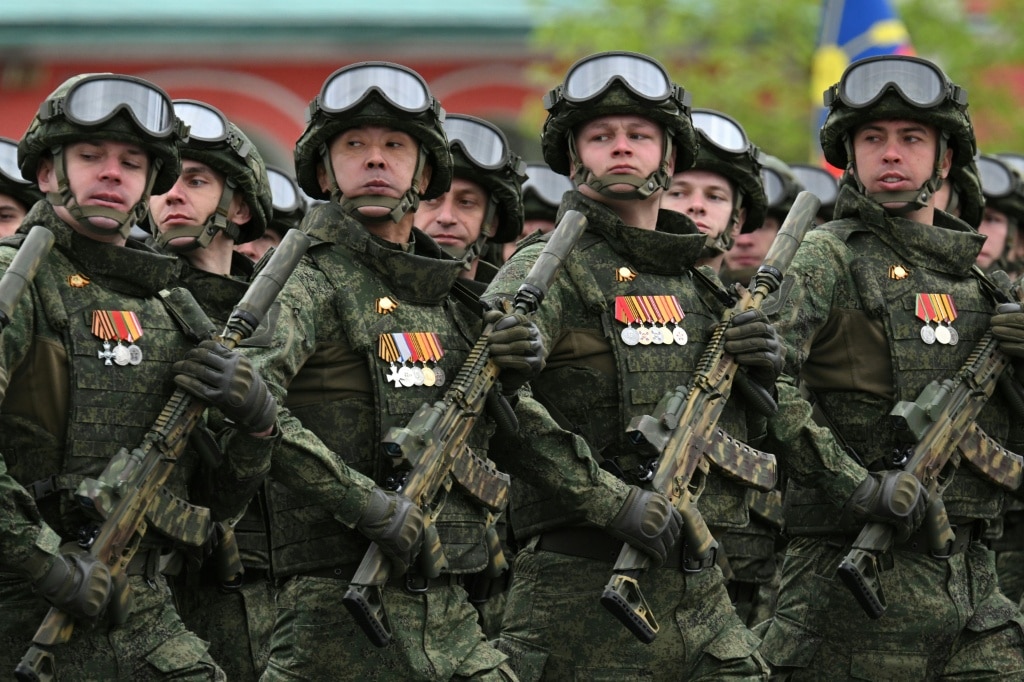
    On Saturday, Russia’s annual Victory Day commemoration marking the Soviet Union’s 1945 defeat of Nazi Germany unfolded far differently than usual on Moscow’s Red Square, with a drastically downsized parade overshadowed by the ongoing full-scale war in Ukraine and punctuated by a new US-brokered three-day truce between Moscow and Kyiv.

    For 25 years, Russian President Vladimir Putin has centered the legacy of the Soviet World War II victory as a core ideological pillar of his leadership, with past celebrations featuring elaborate displays of military hardware, thousands of marching troops, and dozens of high-profile foreign dignitaries. But this year, a wave of recent long-range Ukrainian strikes on Russian territory forced the Kremlin to tighten security measures and slash the scale of the event, marking the first time in nearly 20 years that no heavy military equipment was featured in the parade. Only a small group of foreign leaders, most from Russia’s close allied nations, attended the ceremony: the heads of state of Belarus, Malaysia, Laos, Uzbekistan and Kazakhstan, a sharp drop from 2024’s guest list that included Chinese President Xi Jinping.

    In his opening address to the assembled parade participants – which included Russian military units and a contingent of soldiers from North Korea – Putin invoked the World War II victory to rally domestic support for what Russia calls its “special military operation” in Ukraine, framing the conflict as a fight against a NATO-backed aggressive force. “The great feat of the generation of victors inspires the soldiers carrying out the goals of the special military operation today,” Putin told the crowd. “They are confronting an aggressive force armed and supported by the entire NATO bloc. And despite this, our heroes move forward. I firmly believe that our cause is just.”

    The scaled-back event came amid growing war fatigue among many Russian residents in Moscow, where strict security measures included widespread street closures and intentional mobile internet disruptions. Speaking to AFP, 36-year-old Moscow economist Elena summed up the muted public mood: “Nothing. I need the internet, and I don’t have it,” she said, adding she had no plans to watch the parade broadcast.

    The lead-up to the parade was marked by escalating tensions: Russia had threatened to carry out a massive strike on central Kyiv if Ukraine disrupted the Moscow commemoration, and urged foreign diplomatic staff to evacuate the Ukrainian capital ahead of the event. Ukrainian President Volodymyr Zelensky had initially pushed back against the idea of a truce tied to the Russian celebration, warning Russia’s allies against attending the event.

    That changed after former US President Donald Trump, who has prioritized ending the Ukraine war, announced a three-day ceasefire agreement between the two warring parties that would take effect starting May 9, accompanied by a large-scale prisoner exchange. “Hopefully, it is the beginning of the end of a very long, deadly, and hard fought War,” Trump wrote on his Truth Social platform Friday. The Kremlin later clarified that as of the announcement, there were no plans to extend the temporary truce beyond its three-day timeline.

    Zelensky ultimately confirmed Ukraine would abide by the ceasefire, issuing a formal order barring Ukrainian forces from launching attacks to disrupt the parade and noting the truce would allow for the exchange of 1,000 detained service members from each side. “Red Square is less important to us than the lives of Ukrainian prisoners who can be returned home,” Zelensky said in a statement.

    In the first overnight period of the truce, both the Ukrainian Air Force and Russian Ministry of Defense reported a sharp drop in drone attacks compared to previous nights, a promising sign for the temporary agreement. This ceasefire marks the third attempted truce between Russia and Ukraine this week, after two earlier agreements fell apart quickly.

    Now entering its fifth year, the war in Ukraine has killed hundreds of thousands of people and become the deadliest conflict in Europe since World War II. US-mediated peace talks have stalled since February, when the United States shifted its diplomatic and military focus to its ongoing conflict with Iran. While the current truce has reduced violence temporarily, it remains unclear whether it will open a path to longer-term negotiations to end the wider war.

  • Magyar to become Hungary’s ‘regime change’ PM

    Magyar to become Hungary’s ‘regime change’ PM

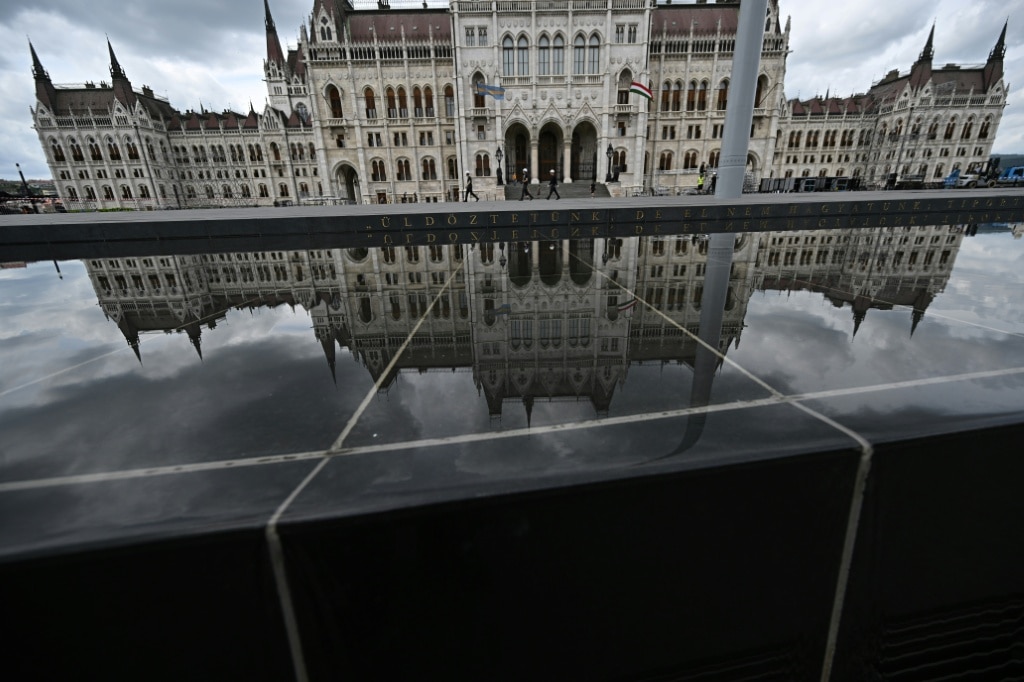
    After 16 years of nationalist leadership under Viktor Orban, Hungary is on the cusp of a historic political shift this Saturday, as pro-European conservative Peter Magyar prepares to be sworn in as the country’s new prime minister, fulfilling his campaign promise of widespread “regime change”.

    Magyar, a 45-year-old former insider of Orban’s government who rose to prominence as a fierce critic of the long-serving leader, secured a landslide victory in the April 12 parliamentary election. His Tisza Party captured 141 of the 199 seats in Hungary’s national legislature, granting the party a commanding two-thirds majority — a threshold large enough to rewrite the country’s constitution and push through the sweeping anti-corruption and institutional reforms Magyar campaigned on.

    A core pillar of Magyar’s policy agenda is rolling back the structural changes Orban implemented over his tenure to consolidate state control over key independent sectors, including the judiciary, mainstream media, and academia. Orban, a 62-year-old leader who built close political ties with both former U.S. President Donald Trump and Russian President Vladimir Putin, centered his rule on building what he called an “illiberal democracy” that rolled back many liberal democratic rights in the Central European nation of 9.5 million people. Following his election defeat, Orban announced last month that he would step back from legislative politics — leaving the parliamentary seat he won vacant, a break from his continuous participation in parliament since Hungary’s 1990 democratic transition. He has stated he will now focus on reorganizing his conservative nationalist political camp.

    Top of Magyar’s immediate policy priorities is unlocking billions of euros in European Union cohesion funds that Brussels has frozen over longstanding concerns about rule of law erosion under Orban’s government. Last week, ahead of his inauguration, Magyar held high-stakes talks with European Commission President Ursula von der Leyen in Brussels to move the process forward.

    The inauguration proceedings will kick off at 10 a.m. local time (8 a.m. GMT) during the new parliament’s opening inaugural session, with the ceremony live-streamed on large public screens installed around the Budapest parliamentary building. Lawmakers will hold a formal vote to confirm Magyar as prime minister in the afternoon, after which he is expected to deliver remarks to assembled supporters gathered outside the legislature.

    Magyar’s new administration has already signaled a clear break from Orban’s government in terms of representation. Lawmakers are set to confirm hotelier Agnes Forsthoffer as the new parliament speaker, one of dozens of women tapped by Tisza for senior leadership roles. Other historic nominations include Vilmos Katai-Nemeth, a lawyer set to serve as social and family affairs minister — Hungary’s first ever visually impaired cabinet member — and Krisztian Koszegi, a Roma history teacher nominated for deputy parliament speaker. Saturday’s inauguration ceremonies, both inside and outside parliament, are intentionally crafted to carry strong symbolic meaning: the event features branding and music that honors Hungary’s EU membership, the country’s large Roma minority community, and ethnic Hungarian populations living in neighboring nations.

    Hungary faces steep structural challenges entering the new era, including years of stagnant economic growth and declining quality of core public services that analysts say will require long-term overhauls. Expectations among Hungarian voters are exceptionally high, with broad public goodwill toward the new government matched by pressure to deliver tangible changes quickly. “There is a lot of patience and goodwill toward the new government, but the expectations are through the roof and need to be met in the short-term as well,” Andrea Virag, strategy director at the Budapest-based liberal think tank Republikon Institute, told Agence France-Presse.

    As part of his “regime change” agenda, Magyar has already called on Orban-aligned President and other senior allies of the former leader to resign from their posts. He has also urged Hungarian authorities to block Orban’s close associates from moving financial assets abroad ahead of the leadership transition.

    Virag noted that the inclusive framing of the inauguration is intentional: it underscores Magyar’s mission of national unity and reconciliation after years of polarizing, divisive politics under Orban. “Magyar seeks to show that he represents a form of national unity and reconciliation after Orban’s politics of division,” Virag said. “With the festivities he also wants to show that it was not a mere change of government, but a start of a new era.”

    Notably, the new parliament will mark the first time since 1990 that left-of-center and liberal opposition parties will have no representation in the legislature, following the election results.

  • Acting US attorney general pursues Trump grievances at Justice Dept

    Acting US attorney general pursues Trump grievances at Justice Dept

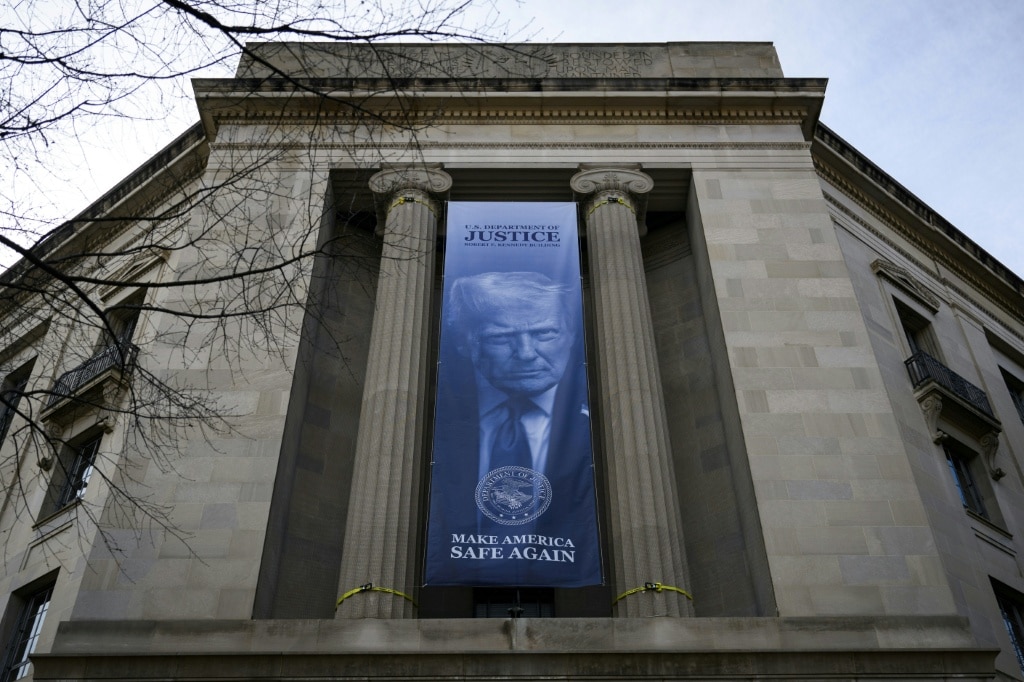
    Weeks after U.S. President Donald Trump ousted former Attorney General Pam Bondi for what multiple reports indicate was her refusal to aggressively target his political opponents, Trump’s hand-picked interim replacement, his ex-personal lawyer Todd Blanche, has moved rapidly to advance the commander-in-chief’s political agenda through the nation’s top law enforcement agency. The development has sparked fierce debate over the future of the Department of Justice’s long-standing tradition of impartiality and independence from presidential influence.

    Blanche, a former federal prosecutor who previously served as the Justice Department’s deputy attorney general and was a core member of Trump’s legal defense team during his multiple pre-2025 inauguration criminal cases, has already made sweeping moves targeting figures and organizations labeled as enemies by Trump. His actions have prompted critics to warn that the department is being transformed from an impartial arbiter of justice into a political weapon for the sitting president.

    According to reporting, Bondi was removed from her post last month largely over her failure to pursue high-profile criminal cases against two of Trump’s most prominent critics: former FBI Director James Comey, who has been an outspoken opponent of Trump since his first term, and New York Attorney General Letitia James, who secured a $454 million civil judgment against Trump in a 2023 real estate fraud case. Within weeks of taking the top role at the Justice Department, Blanche secured a new criminal indictment against Comey, centered on a seemingly innocuous Instagram post featuring seashells arranged to spell out the numbers “8647”. Prosecutors argue “86” is coded slang for assassination, and “47” references Trump’s status as the 47th U.S. president.

    Legal experts across the political spectrum have widely condemned the indictment as a blatant abuse of prosecutorial power. Randall Eliason, a former federal prosecutor, called the case against Comey a “joke” in a recent Substack analysis, while noting that the underlying abuse of power represented by the prosecution is no laughing matter. “This is not about prosecuting a legitimate criminal case,” Eliason wrote. “It’s about using the justice system to punish one of Trump’s perceived enemies. Even if it does not result in a conviction, such a prosecution results in tremendous emotional and financial harm. And that’s precisely the point.”

    Beyond targeting individual Trump critics, Blanche has also opened a major criminal case against the Southern Poverty Law Center (SPLC), a prominent civil rights organization that has long monitored and opposed far-right extremist groups across the United States. The SPLC faces charges of wire fraud, bank fraud, and money laundering conspiracy related to its long-standing practice of using donor funds to pay confidential informants embedded within hate groups including the Ku Klux Klan and the National Socialist Party of America.

    In his first public press conference after taking office, Blanche defended his actions and pushed back against accusations that he is weaponizing the Justice Department for political purposes. He argued that investigating figures the president views as threats is not just within the president’s right, but a core duty of his administration. “It is true that some of them involve men, women and entities that the president, in the past, has had issues with and believes should be investigated,” Blanche said. “That is his right, and indeed, it is his duty to do that.”

    Blanche also reversed the accusation of weaponization, claiming that the Department of Justice had already been turned into a political tool by the prior Biden administration in unprecedented fashion. Blanche’s history as a core member of Trump’s legal team is well-documented: he represented Trump during his 2024 New York hush money trial and the two federal criminal cases brought by Special Counsel Jack Smith, one over alleged improper handling of classified documents and another over efforts to overturn the 2020 presidential election results. Both federal cases were dropped immediately after Trump won the 2024 presidential election.

    Barbara McQuade, a former U.S. attorney and current law professor at the University of Michigan, told reporters that even prior to Blanche’s appointment, the Justice Department was already operating more like Trump’s personal law firm than an impartial government agency. But she added that the situation has deteriorated sharply under Blanche’s leadership. McQuade argued that Blanche’s aggressive moves to target Trump’s opponents give every indication that he is actively auditioning for a permanent appointment as attorney general by currying favor with the president.

    Blanche is permitted to serve in an acting capacity for 210 days under federal law, after which he will require confirmation by the U.S. Senate to keep the post permanently. The push to target political opponents is just one part of a broader post-inauguration purge by Trump, who has already removed hundreds of government officials he deems insufficiently loyal, targeted private law firms that participated in prior cases against him, and pulled federal funding from universities that have drawn his ire.

    Former Democratic President Barack Obama recently spoke out against the sweeping changes to U.S. governing norms, during an appearance on *The Late Show with Stephen Colbert*. While he did not mention Trump by name, Obama made clear his opposition to the idea that the White House should direct law enforcement to target political opponents. “The White House shouldn’t be able to direct the attorney general to go around prosecuting whoever the president wants to prosecute,” Obama said. “The norm is, the idea is, that the attorney general is the people’s lawyer. It’s not the president’s consigliere.”

  • Australian by-election a litmus test for right-wing One Nation Party

    Australian by-election a litmus test for right-wing One Nation Party

    Polling stations opened Saturday in the high-stakes Farrer by-election, a contest that could reshape Australian federal politics by delivering right-wing populist party One Nation its first ever elected member of the House of Representatives. The race was called after Sussan Ley, former leader of the conservative opposition Liberal Party, stepped down from the sprawling regional New South Wales seat following her ousting after just nine months in the leadership role. Though the Liberal Party has fielded a candidate to retain the historically conservative-held electorate, recent polling points to a tight, unexpected race between local independent candidate Michelle Milthorpe and One Nation’s nominee David Farley.

    Milthorpe, a local educator, secured second place in the two-candidate preferred count against Ley during the 2025 federal election, where Ley turned in her weakest electoral performance since first capturing the seat in 2001. Under Australia’s preferential voting system, voters rank candidates by preference, and the final result is determined by a head-to-head count after lower-ranked candidates’ preferences are distributed to remaining contenders. Notably, the center-left Labor Party, which holds a commanding majority in the federal parliament, has opted not to contest the by-election, opening a path for neither of the country’s two major political blocs to reach the final two-candidate preferred count — a first in modern Australian federal electoral history.

    The by-election doubles as a critical first electoral test for One Nation, led by founder Pauline Hanson, fresh off the party’s strongest ever showing at the state level. In March’s South Australian state election, One Nation secured the second-largest share of the national vote across the state, a milestone that signaled growing voter appetite for the party’s populist platform. While Hanson has served in the Australian Parliament as a senator since 2016, and briefly held a lower house seat as an independent in the 1990s, One Nation as an organization has never won a federal lower house constituency.

    One Nation’s candidate Farley, former chief executive of major Australian beef producer Australian Agricultural Company, has centered his campaign on growing voter disillusionment with the country’s major political parties. “I’ve lost a bit of faith in the major parties,” Farley said in a campaign video circulated on social media. “They say one thing to your face and then go and do something else in parliament.”

    Stretching across 127,000 square kilometers — an area larger than the entire nation of South Korea — the Farrer electorate covers major regional hubs including Albury, Griffith and Deniliquin, and has been held exclusively by either the Liberal Party or its conservative coalition partner the National Party since its creation. This by-election also marks the first electoral test for the new leadership of both opposition conservative parties: Angus Taylor, who replaced Ley as Liberal leader in February, and Matt Canavan, who took over the National Party leadership from David Littleproud in March. The Liberal-National coalition has faced ongoing internal turmoil and consistently poor polling since suffering a historic landslide defeat in last year’s federal election.

    Voting is scheduled to close at 6 p.m. local time Saturday, 9 a.m. BST, with official projections and results expected to emerge shortly after polls close. While the final outcome will not alter Labor’s governing majority in Canberra, a One Nation victory would mark a seismic shift in Australian conservative politics, reflecting sustained erosion of support for the traditional major parties among regional voters.

  • Sydney’s worst suburbs for hiding fuel prices named and shamed

    Sydney’s worst suburbs for hiding fuel prices named and shamed

    A sweeping compliance inspection of Sydney service stations conducted by New South Wales Fair Trading has laid bare a stark geographic divide in fuel pricing rule adherence, with regulators issuing hundreds of fines to non-compliant operators and pushing for stiffer legal penalties to protect motorists.

    The recent audit, which targeted sites across the Sydney metropolitan area, resulted in more than 245 financial penalties being handed out to petrol station operators found violating pricing transparency rules. Approximately 80% of these penalties stemmed from mismatches between the fuel prices listed on the state government’s FuelCheck platform and the actual charges applied at the pump, a deceptive practice that leaves consumers misled when they plan their fuel purchases.

    The inspection results revealed sharp disparities across different regions of Sydney. In Sydney’s north western suburb of West Ryde, one in three service stations failed to meet compliance standards. In the 2142 postcode zone, which covers the western Sydney communities of Granville, Rosehill, Camellia, Clyde and Holroyd, two out of 12 inspected stations were sanctioned for rule breaches. By contrast, every single one of the 35 service stations surveyed in south western Sydney’s Liverpool, Chipping Norton, Prestons and Mount Pritchard areas passed inspection with full compliance. Neighbouring western Sydney suburbs including Greystanes, Girraween, Pendle Hill and Wentworthville also recorded perfect compliance records across all their petrol outlets.

    The FuelCheck scheme, the state’s official fuel pricing monitoring program, requires all service stations to update and lock in real-time fuel prices to the platform, allowing motorists to compare costs across retailers before they travel to fill up. Consumers are also actively encouraged to report any discrepancies they notice between the advertised price and the price charged at the bowser.

    NSW Fair Trading Commissioner Natasha Mann explained that inspectors have ramped up targeted checks across the entire state to root out non-compliance. “Our inspectors have been working around the clock and in every corner of the state checking compliance in petrol stations to ensure motorists are getting the right price at the pump,” Mann said. “This compliance work helps ensure fuel retailers are doing the right thing and that consumers can rely on accurate pricing information before they get to a petrol station.”

    To strengthen regulators’ ability to penalize repeat and serious offenders, the NSW state government has introduced new legislation to state parliament that will codify the FuelCheck price reporting requirement into law. Under the proposed new rules, deliberate failure to update and report accurate prices to FuelCheck will become a formal criminal offense, with maximum penalties reaching AU$110,000 for serious breaches – a significant increase from current penalty levels.

    Better Regulation and Fair Trading Minister Anoulack Chanthivong echoed the government’s call for active consumer participation in policing fuel pricing, urging motorists to remain vigilant and report any suspected mismatches directly to the FuelCheck program for follow-up by inspectors.

  • War in the Middle East: latest developments

    War in the Middle East: latest developments

    On a day marked by rapidly shifting geopolitical friction across the Middle East, multiple interconnected developments unfolded Friday, amplifying concerns over regional stability and global energy security.

    The most direct military action came from U.S. forces, which confirmed they had disabled two Iran-flagged cargo tankers that attempted to breach an American blockade of Iranian ports, a restriction that has been in place since mid-April. According to a statement posted on social platform X by U.S. Central Command, a Navy F/A-18 Super Hornet struck the vessels with precision munitions targeted at their smokestacks, successfully stopping the non-compliant ships from reaching Iranian territorial waters. This incident brings the total number of vessels forcibly halted by U.S. forces for alleged blockade violations to four.

    In a diplomatic push following the strike, U.S. Secretary of State Marco Rubio called on European NATO allies to take on a larger share of responsibility for securing the Strait of Hormuz, a critical global chokepoint through which roughly 20% of the world’s oil supplies pass. Speaking after a meeting with Italian Prime Minister Giorgia Meloni, Rubio argued that Iranian efforts to assert unilateral control over the international waterway are unacceptable to the global community. He also raised questions about alliance commitments, noting that a core purpose of NATO’s U.S. force deployments in Europe has long been the ability to project power to regional contingencies, and that failure to address current threats requires a re-examination of this arrangement.

    Iran, for its part, has framed its influence over the strait as a major strategic advantage. Mohammad Mokhber, an adviser to Iran’s supreme leader, described control of the Strait of Hormuz as an opportunity as valuable as an atomic bomb, emphasizing that holding sway over a chokepoint that can directly move the global economy represents an unmatched strategic lever for the country.

    Diplomatic efforts to de-escalate tensions are already underway, with Qatar’s prime minister traveling to Washington Friday for talks with U.S. Vice President JD Vance. A source familiar with the closed-door meeting, speaking on condition of anonymity, confirmed that the discussions would center on U.S.-Qatar bilateral relations, the unfolding standoff over Iran, global liquefied natural gas (LNG) market stability, and broader regional security. Qatar has served as a key neutral intermediary between the U.S. and Iran in past diplomatic engagements.

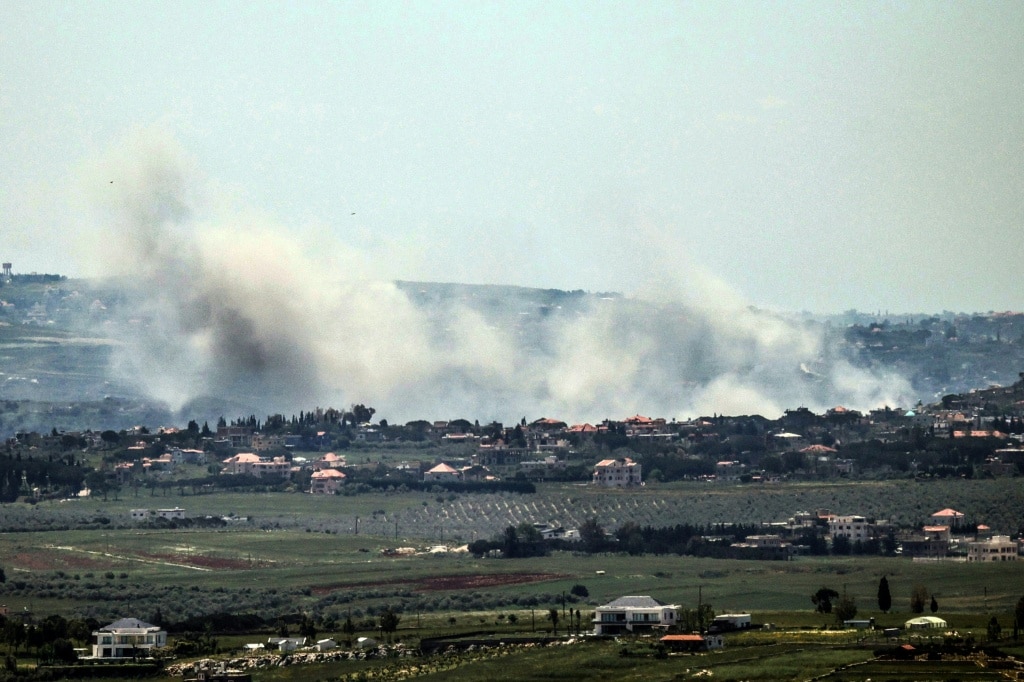
    Alongside the standoff over Hormuz, cross-border violence between Israel and Lebanese militant group Hezbollah continued to flare, despite recent truce efforts. Hezbollah announced Friday that it had launched a missile attack on an Israeli military base located south of Nahariya in northern Israel, saying the strike was carried out in retaliation for recent Israeli attacks on southern Lebanon and the southern suburbs of Beirut. Shortly after the Hezbollah announcement, Lebanon’s civil defence rescue organization confirmed one of its members had been killed in an Israeli airstrike on southern Lebanon, near the village of El Qlaile where video footage shows thick smoke rising from the impact site.

    In another setback for U.S. regional military operations, two anonymous Saudi sources told Agence France-Presse that Riyadh has prohibited the U.S. from using Saudi airspace and military bases for operations aimed at reopening the Strait of Hormuz. The sources clarified, however, that U.S. access to Saudi infrastructure and airspace remains intact for all other military and security purposes.

    The escalating tensions have already rippled into global economic policy, with the European Union announcing new rules Friday to protect airline passengers amid spiking fuel costs driven by Middle East supply fears. The EU made clear that airlines will no longer be allowed to add retroactive fuel surcharges to tickets that have already been purchased by customers. Separately, the EU Aviation Safety Agency (EASA) updated its rules to approve widespread use of Jet A, a U.S.-produced aviation fuel that was previously only permitted in Europe for return flights originating in the United States, a move designed to expand available fuel supplies amid potential shortages.

    Closing out the day’s developments, the United Arab Emirates confirmed that a recent Iranian attack using drones and missiles against the country left three people with moderate injuries, marking the latest direct escalation between Iran and Gulf Arab states.

  • Return of IS-linked families sparks debate in terror-traumatised Australia

    Return of IS-linked families sparks debate in terror-traumatised Australia

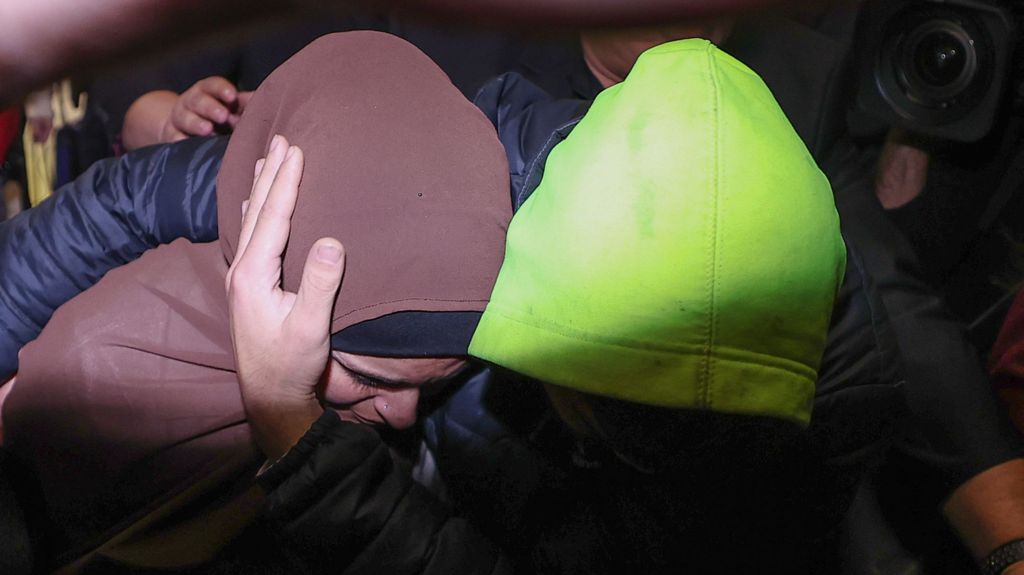
    After years of indefinite detention in overcrowded, conflict-ridden camps in northeastern Syria, four Australian women and nine children with ties to the Islamic State (IS) touched down on Australian soil on Thursday, marking the latest flashpoint in a years-long national debate over citizenship, security and legal responsibility. Three of the four women were taken into custody on terrorism-related charges within hours of landing, while the fourth was left to navigate a crush of aggressive media outside the airport, her small children beside her, facing the constant threat of imminent arrest.

    This repatriation comes after half a decade of Australian government resistance to bringing home more than 30 of its citizens trapped in former IS detention camps. When the US-led coalition and local allies defeated IS’s self-declared “caliphate” in 2019, thousands of foreign citizens—including family members of IS fighters—were confined to heavily guarded camps, where they have since endured chronic humanitarian shortages, systemic violence and widespread radicalization risks. Australia is far from unique in its reluctance to repatriate these groups: the United Kingdom and dozens of other nations have similarly refused to take back their citizens, leaving roughly 2,000 people from dozens of countries stranded in the only remaining camp, Al-Roj, including British citizen Shamima Begum, who was stripped of her citizenship after traveling to Syria to marry an IS fighter at 15. Al-Hol, the larger of the two original camps, was closed by Syrian government forces in February, increasing pressure on nations to resolve the fates of remaining detainees.

    Public sentiment in Australia has hardened dramatically against repatriation in the wake of the country’s deadliest terrorist attack in recent history: a December mass shooting at a Bondi Beach Jewish community event that killed 15 people, which authorities say was inspired by IS ideology. Prime Minister Anthony Albanese has repeatedly stated his open contempt for the detained IS-linked families, repeating his well-known mantra: “If you make your bed, you have to lie in it.” Despite this official stance, human rights advocates and community leaders warn that deteriorating security in Al-Roj has made the predicament of the 21 remaining Australian citizens—seven women and 14 children, many of whom were born or raised entirely in the camps—growing more urgent by the day, describing the facility as a “ticking time bomb” for extremism and humanitarian disaster.

    Among those who returned Thursday was 32-year-old Janai Safar, a former nursing student who arrived in Sydney with her 9-year-old son. In 2019, Safar told local media she did not regret traveling to join IS, though she maintains she never participated in training or violence. She now faces formal terrorism charges. Also returning were 33-year-old Zahra Ahmed, her 31-year-old sister Zeinab, and 54-year-old mother Kawsar Abbas, who landed in Melbourne. The three have long claimed they traveled to Syria solely for a family wedding and were trapped after discovering the groom had sworn allegiance to IS, though authorities suspect the family’s patriarch funneled financial support to the group. Zeinab and Kawsar have been charged with crimes against humanity linked to slavery, while Zahra remains under active investigation. This group’s journey to Australia was not straightforward: an initial attempt at repatriation in February was halted within hours over what officials described as “technical issues,” with camp sources indicating Syrian authorities backed out after learning Australia would not welcome the detainees.

    Australian federal authorities confirmed the nine returning children will be placed into community integration and countering violent extremism de-radicalization programs, noting many have never experienced life outside of detention camps. Among the 21 Australians who remain stranded in Al-Roj is 14-year-old Kirsty Rosse-Emile, who was groomed by an older extremist and married him before leaving Australia as a teenager.

    This week’s repatriation is not the first time IS-linked Australians have returned home: the government facilitated the repatriation of a group of orphans in 2019 and 17 additional women and children in 2022, but amid widespread public backlash, officials formally announced they would end all future repatriation efforts, despite two additional women quietly returning in September. Thursday’s arrivals have reignited fierce public division across the country. Many ordinary Australians, including survivors of IS atrocities who fled to Australia for safety, have expressed deep anger over the decision to allow the group to return. “Imagine a Yazidi survivor encountering ISIS brides here,” Sami, a refugee who escaped IS atrocities, told public broadcaster SBS. Speaking to the BBC at Melbourne Airport, local resident Peter Cockburn summed up the views of many opponents: “They made their choice to go over there and be with their terrorist husbands, so let them stay there. It’s a disgrace that both governments, state and federal, are letting them come back.”

    But advocates and interfaith leaders argue Australia has a legal and moral obligation to repatriate its citizens, particularly children who bear no responsibility for the actions of their family members. Jamal Rifi, a prominent Sydney doctor who became a public hero for his interfaith work and public health advocacy, has spent years supporting the detained families, providing remote health care and helping the group secure emergency travel documents to return home. Rifi argues that repatriation and prosecution within Australia’s legal system makes the country safer than leaving detainees to radicalize in Syrian camps. “If those women have done anything wrong by our legal system… if the prime minister wants to ‘throw the book’ at them, let him throw the book. We’re not going to stop him. But while they are staying in Syria, he can’t throw anything at them, except words. We believe those children should not continue to pay the heavy price for the sins of their fathers and mothers… It’s not what we understand of Australian values,” Rifi told the BBC in February. For his work, Rifi has gone from celebrated public figure to a target of political backlash, with the federal opposition even proposing legislation that would criminalize his support for the families.

    Other legal and community leaders echo Rifi’s argument, noting that all Australian citizens hold a legal right to return to their home country, and that bowing to public pressure to restrict that right sets a dangerous precedent. “Once politicians start… deciding how citizens should be treated, what right citizens should have, that is a dangerous and slippery slope,” said Jana Fevaro, who works with the Asylum Seeker Resource Centre. Aftab Malik, Australia’s special envoy to combat Islamophobia, acknowledged that public fear and anger is “entirely understandable” and that the repatriation has placed the Australian Muslim community in a uniquely difficult position, but added that the rule of law must take precedence over public anger, calling for cooler heads in the national debate.

    Though the ruling Labor government faces intense criticism from opposition parties who have demanded officials block all future arrivals at any cost, Home Affairs Minister Tony Burke noted that the government has little legal power to stop citizens from returning. Burke confirmed that the government did not assist this group in returning and will not assist future repatriations, but added that there are “very serious limits” on what can be done to block Australian citizens from entering the country. The legal threshold to bar a citizen from entry on national security grounds is extremely high, and only one unnamed woman from the larger group of remaining detainees has met that standard, Burke explained.

    Rodger Shanahan, a Middle East expert at the Lowy Institute, noted that the issue has become far more politically volatile in the wake of the December Bondi Beach attack, arguing that if the government had resolved the repatriation issue years earlier, public backlash would have long faded. For advocates who have spent years fighting to bring all Australian detainees home, Thursday’s arrivals brought only temporary relief. 21 citizens remain trapped in Al-Roj, with conditions growing so desperate that some mothers have offered to send their children home alone—an outcome Rifi calls unthinkable. Rifi says his current priority is correcting widespread misinformation about the detained group to win over public opinion, noting that leaving detainees in the camps for another decade will only worsen risks of radicalization and mental health harm. “If you bring them right now, it’s easier to rehabilitate. It is easier to educate. And if there is any danger of radicalisation, it’s easier to de-radicalise,” he said.