标签: Oceania

大洋洲

  • Iran’s supreme leader gone, but opposition still at war with itself

    Iran’s supreme leader gone, but opposition still at war with itself

    The assassination of Iran’s Supreme Leader by a joint US-Israeli military operation has created an unprecedented power vacuum, yet the nation’s opposition movements remain dangerously fragmented despite American calls for regime change. While many Iranians celebrated the elimination of the Islamic Republic’s leadership, the absence of a unified alternative and Washington’s ambiguous strategic objectives have left the country’s political future hanging in the balance.

    President Donald Trump’s initiation of ‘Operation Epic Fury’ included direct appeals for Iranians to ‘take over your government,’ though subsequent mixed signals from his administration regarding regime change objectives have created confusion. Within Iran, authorities are scrambling to appoint a new supreme leader while state media amplifies pro-government demonstrations, even as internal opposition figures face severe repression—exemplified by imprisoned Nobel Peace laureate Narges Mohammadi.

    The diaspora community reflects similar divisions, with bitter rivalries preventing consensus. According to Ali Vaez, Iran Project Director at International Crisis Group, ‘No opposition leader has managed to forge the kind of broad-based coalition needed to unify the fragmented opposition landscape.’ This polarization has intensified despite efforts like last year’s opposition conference that brought together previously estranged groups.

    Reza Pahlavi, US-based son of the deposed Shah, has emerged as a prominent figure, gaining recognition during the 2022-2023 Woman, Life, Freedom movement. However, experts note he lacks broad consensus, facing criticism for his support of Israel and failure to distance himself from his father’s autocratic legacy. His supporters have clashed online with other opposition factions, particularly ethnic minority groups who reject his leadership.

    The People’s Mujahedin Organisation of Iran (MEK), designated as terrorist by Tehran, has organized rallies under the ‘No Shah, No Mullahs’ banner but remains controversial due to its alignment with Iraq during the 1980s Iran-Iraq war. Both Pahlavi and MEK have American political supporters, though Trump has notably refrained from endorsing any specific alternative.

    In recent remarks, Trump suggested preference for ‘somebody from within’ Iran who is ‘currently popular,’ drawing comparisons to US strategy in Venezuela where the ruling system was maintained despite leadership changes. However, he acknowledged the lack of clear alternatives, noting ‘most of the people we had in mind are dead’ while criticizing post-invation de-Baathification policies in Iraq.

    This approach reflects the practical reality that most opposition groups lack operational capacity within Iran, making elements within the existing power structure potentially more consequential. Meanwhile, many protesters who risked their lives in recent demonstrations remain focused primarily on removing the current government rather than planning what comes next, highlighting the challenges ahead for any transition of power.

  • Greg Lynn: D-Day for pilot’s bail bid ahead of possible retrial over Carol Clay’s death

    Greg Lynn: D-Day for pilot’s bail bid ahead of possible retrial over Carol Clay’s death

    Former Jetstar pilot Greg Lynn, 59, is scheduled to appear before the Supreme Court of Victoria on Thursday morning for a crucial bail hearing decision. Justice David Beach will determine whether Lynn will be released from custody to reside with his son, Geordie Lynn, while awaiting a potential retrial concerning the death of 73-year-old Carol Clay in March 2020.

    The development follows a significant appellate court ruling more than two months ago, where a three-judge panel from the Court of Appeal overturned Lynn’s previous conviction. The judicial panel determined that prosecutorial misconduct had fundamentally compromised the fairness of the initial trial proceedings. Notably, Lynn had been acquitted of murder charges regarding Russell Hill, 74, while being convicted of Clay’s murder during their camping trip in Victoria’s Wonnangatta Valley—a verdict he consistently contested through not guilty pleas.

    Defense counsel Dermot Dann KC presented multiple compelling arguments for bail approval, emphasizing Lynn’s 4+ years of incarceration, strong family support system, stable residential arrangements, and concerns about prejudicial media coverage. Mr. Dann characterized certain news reports as “explosive” and damaging to his client’s right to a fair trial, prompting the defense team to prepare a motion for stay of proceedings that could potentially halt legal proceedings indefinitely.

    The prosecution indicated that a retrial could commence as early as July or August this year, though the defense maintains that extensive media attention has substantially diminished the likelihood of impartial proceedings in the foreseeable future. The case continues to attract significant public attention as both legal teams await the court’s bail determination.

  • War in the Middle East: latest developments

    War in the Middle East: latest developments

    The Middle East faces a severe escalation of conflict with multiple nations now embroiled in heightened military engagements. Iranian cities, including Tehran, experienced significant explosions and aerial bombardments as regional tensions reached critical levels.

    China has announced diplomatic intervention with Foreign Minister Wang Yi confirming Beijing’s deployment of a special envoy to mediate the crisis. ‘China has consistently served as a stabilizing force for peace and remains prepared to maintain its constructive involvement,’ Wang stated.

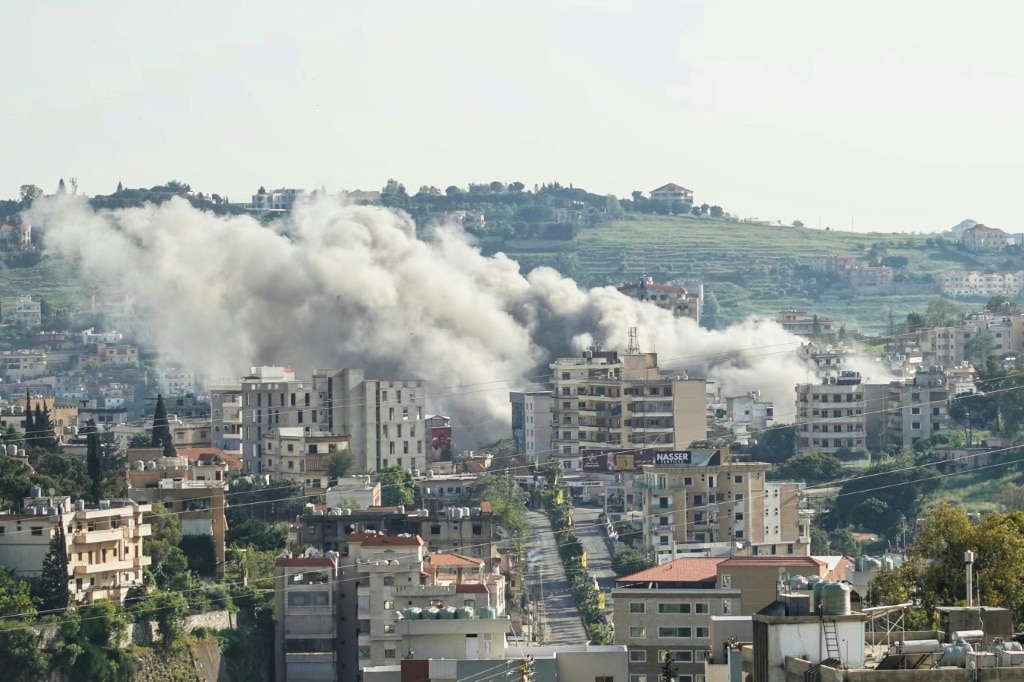
    Israeli military operations have expanded into southern Lebanon, with forces advancing into towns including Khiam, approximately six kilometers inside Lebanese territory. According to UNIFIL sources, this movement represents Israel’s effort to establish a defensive buffer zone against Hezbollah militants.

    Regional diplomacy faces strain as Qatar’s Prime Minister strongly criticized Iran’s foreign minister during a telephone conversation, accusing Tehran of attempting to provoke neighboring nations into broader conflict. Simultaneously, Turkey summoned the Iranian ambassador after a missile intended for a Cyprus base landed within Turkish borders.

    Maritime security has become a critical concern with Danish shipping conglomerate Maersk suspending all Gulf bookings following updated risk assessments. The strategic Strait of Hormuz witnessed dramatic developments as Omani naval forces rescued 24 crew members from a missile-stricken container ship. Iranian forces asserted complete control over the vital waterway shortly after former US President Trump declared readiness to provide naval escorts for tankers.

    The human cost continues to mount with Sri Lankan authorities recovering 87 bodies following the sinking of Iranian warship IRIS Dena, reportedly struck by US torpedoes. Iran’s official IRNA news agency reported 1,045 military and civilian casualties from US-Israeli strikes, though independent verification remains unavailable.

    Economic repercussions emerge as Kpler energy analysts report a 90% reduction in oil tanker traffic through the Strait of Hormuz since conflict initiation. European stock markets showed stabilization after substantial Asian losses triggered by soaring oil prices.

    Military operations continue with The Times of Israel reporting planned Israeli operations in Iran extending ‘at least one or two more weeks’ with thousands of additional targets identified. Iranian state television announced postponement of Ayatollah Ali Khamenei’s funeral citing anticipated unprecedented attendance, while succession deliberations remain ongoing.

    Regional defenses activated with the United Arab Emirates intercepting three missiles and 121 drones, while Qatar neutralized ten drones and two missiles. Iran’s Revolutionary Guards targeted opposition groups in Iraq’s Kurdish region, while missile barrages toward Jerusalem triggered air raid sirens before reported interceptions.

    International political tensions surface as Spanish Prime Minister Pedro Sanchez defiantly rejected war participation after Trump threatened complete trade termination over Spain’s refusal to permit US military base usage for Iranian operations.

  • Iran claims ‘complete control’ of key waterway for energy transit

    Iran claims ‘complete control’ of key waterway for energy transit

    Amid escalating hostilities in the Middle East, Iran’s Revolutionary Guards declared complete dominance over the strategically vital Strait of Hormuz on Wednesday. This assertion comes as Israel intensified its aerial campaign against Tehran, launching fresh strikes on the Iranian capital while global governments accelerated evacuation efforts for their citizens.

    The strategic waterway, responsible for approximately one-fifth of global oil transit, has become a focal point in the conflict that entered its fifth day. The Revolutionary Guards issued warnings against maritime traffic attempting to navigate the strait, following reports of multiple vessel attacks. Major shipping conglomerates have consequently suspended transit operations through the critical chokepoint.

    President Donald Trump confirmed U.S. naval readiness to escort oil tankers through the Gulf shipping corridor while announcing the neutralization of Iran’s naval capabilities, air force, and radar infrastructure. Pentagon officials reported nearly 2,000 targets struck since initial operations commenced on Saturday.

    The conflict has expanded beyond Iran’s borders, with Lebanon experiencing intensified Israeli airstrikes targeting areas near the presidential palace and Hezbollah’s strongholds in southern Beirut. Lebanese authorities confirmed eleven fatalities from the renewed bombardments.

    Regional volatility manifested through multiple attack vectors: Saudi Arabia intercepted two cruise missiles, drone strikes hit near the U.S. consulate in Dubai and the Al-Udeid military base in Qatar, while Kuwait reported civilian casualties including an 11-year-old girl killed by falling shrapnel. The Pentagon identified four of six U.S. service members killed in a drone attack in Kuwait.

    Civilian displacement has reached critical levels, with Tehran’s normally bustling streets described as eerily empty. A nurse residing in the capital reported: ‘There are so few people that you’d think no one ever lived here.’ Iranian authorities previously urged evacuation from urban centers, with security forces establishing checkpoints at major intersections.

    European powers demonstrated diplomatic fractures regarding the conflict. The European Commission affirmed readiness to protect EU interests after President Trump threatened trade termination with Spain over its refusal to permit U.S. military base usage. Spanish Prime Minister Pedro Sanchez countered: ‘We will not be complicit in something harmful to the world and contrary to our values and interests.’

    Humanitarian organizations report 787 fatalities within Iran from U.S.-Israeli operations, though these figures remain unverified independently. Iranian judicial authorities promised severe retaliation against those assisting ‘the country’s enemies,’ reflecting the escalating nature of the multinational conflict.

  • Man, 52, charged with manslaughter over Jarrad Antonovich’s death on spiritual retreat in NSW

    Man, 52, charged with manslaughter over Jarrad Antonovich’s death on spiritual retreat in NSW

    New South Wales Police have formally charged a 52-year-old man with manslaughter in connection with the 2021 death of Jarrad Antonovich during a spiritual retreat. The charges come after an extensive investigation and a recent coronial inquest into the tragic incident that occurred in the Northern Rivers region.

    According to police statements, emergency services were summoned to a Collins Creek property in the early hours of October 17, 2021, following reports of a participant’s collapse. Despite paramedic intervention, the 47-year-old Mr. Antonovich could not be revived at the scene.

    The coronial inquest held in May 2024 revealed disturbing details about the circumstances preceding the death. Testimony indicated that Mr. Antonovich had allegedly been administered kambo frog poison earlier that day, after which he reported experiencing “intense pain.” Witnesses further testified that he was subsequently given ayahuasca, a potent hallucinogenic brew traditionally used by Indigenous Amazonian cultures for spiritual purposes.

    Police allege that the retreat host, now charged, not only supplied the hallucinogenic substance but critically delayed seeking medical assistance as Mr. Antonovich’s condition deteriorated. The accused was apprehended in Coorabell within the Byron Shire region and has been processed at Byron Bay Police Station.

    The case highlights growing concerns about the safety protocols and regulatory oversight of alternative spiritual practices involving psychoactive substances. The charged individual is scheduled to appear before Lismore Local Court on March 30 to face the manslaughter allegations, marking a significant development in a case that has spanned nearly five years of investigation.

  • Canada PM says Israeli-US strikes on Iran ‘inconsistent with international law’

    Canada PM says Israeli-US strikes on Iran ‘inconsistent with international law’

    Canadian Prime Minister Mark Carney has publicly characterized recent US-Israeli military actions against Iran as fundamentally incompatible with established international legal standards. During an address at Sydney’s Lowy Institute think tank on Wednesday, Carney articulated Canada’s official position calling for immediate de-escalation in the Middle East conflict while simultaneously condemning Iran’s regional influence.

    While acknowledging Canada’s support for initiatives aimed at transforming Iran’s governmental structure—which Carney identified as the ‘primary catalyst for instability and terrorism’ in the region—the Prime Minister maintained that the military strikes ‘would appear, prima facie, inconsistent with international law.’ Carney cautiously noted that definitive legal assessment ‘is a judgement for others to make,’ acknowledging his own limitations in international jurisprudence.

    The diplomatic remarks occurred during the second day of Carney’s official visit to Australia, part of a broader Asia-Pacific tour designed to strengthen economic partnerships and reduce reliance on United States leadership. This strategic pivot reflects Carney’s frequently expressed concerns about the deterioration of the US-led global order, a theme he emphasized at January’s World Economic Forum where he warned of systemic ‘rupture’ in international governance.

    Carney’s administration has experienced persistent tensions with the Trump White House, including economic threats and tariff impositions against Canada. The Prime Minister framed the Middle East conflict as ‘another example of the failure of the international order,’ while reaffirming Canada’s commitment to international legal principles that ‘bind all belligerents.’

    The military strikes that prompted Carney’s comments resulted in the death of Iranian Supreme Leader Ayatollah Ali Khamenei, occurring just two days after US diplomats engaged in nuclear negotiations with Iranian counterparts in Geneva. Subsequent retaliatory actions by Iran have targeted US diplomatic and military installations across the region, with allied groups escalating attacks on Israeli positions.

    Despite his legal objections, Carney endorsed the strategic objectives behind the strikes, citing Iran’s refusal to dismantle its nuclear program and continued support for militant organizations. However, he expressed disappointment that international diplomatic efforts failed to achieve peaceful disarmament and noted with concern that the United States and Israel acted ‘without engaging the United Nations or consulting with allies, including Canada.’

    Carney’s Australian itinerary includes meetings with Prime Minister Anthony Albanese and parliamentary addresses in Canberra, with discussions expected to focus on economic security, critical minerals collaboration, and defense cooperation between the two middle-power nations.

  • Unification Church loses Japan appeal against dissolution

    Unification Church loses Japan appeal against dissolution

    In a decisive legal judgment, the Tokyo High Court has rejected the Unification Church’s appeal against its court-ordered dissolution, marking a significant development in a case that has captivated Japanese society. The ruling affirms the lower court’s March 2023 decision that mandated the disbandment of the religious organization’s Japanese branch for inflicting ‘unprecedented damage’ on citizens through its practices.

    The judicial proceedings gained momentum following the shocking 2022 assassination of former Prime Minister Shinzo Abe, whose killer attributed his actions to resentment toward the religious group. The assailant, Tetsuya Yamagami, currently serving a life sentence, claimed his mother’s ruinous donations to the Church had bankrupted his family, prompting his violent retaliation.

    Founded in South Korea in 1954 by Sun Myung Moon, the organization—colloquially known as the ‘Moonies’—achieved global recognition during the 1970s and 1980s for its massive stadium wedding ceremonies. In Japan, the Church developed into a substantial financial operation, allegedly compelling followers to purchase expensive religious items to atone for historical sins related to Japan’s wartime occupation of Korea.

    Despite the Church’s vehement denial of wrongdoing and its characterization of Wednesday’s decision as ‘unjust,’ the judicial confirmation means liquidation procedures will commence, stripping the organization of its tax-exempt status. While the group retains the right to appeal to Japan’s Supreme Court, the current ruling represents a critical setback.

    The assassination exposed extensive connections between the Church and numerous conservative lawmakers from the ruling party, resulting in the resignation of four government ministers and prompting official actions to disband the organization. In response to mounting scrutiny, the Church has recently pledged to implement measures preventing excessive donations from members.

    Veteran journalist Eito Suzuki, who has documented the Church’s activities for decades, expressed relief at the court’s decision, noting that ‘many young people had their lives stolen’ by the organization’s practices. However, Suzuki simultaneously cautioned that underlying structural issues regarding political affiliations remain unaddressed.

  • ‘Narrative war’: disinformation surges as conflict roils Middle East

    ‘Narrative war’: disinformation surges as conflict roils Middle East

    A sophisticated digital information war has erupted in tandem with the escalating military confrontations between the United States, Israel, and Iran, creating a parallel battlefield where fabricated narratives spread faster than verifiable facts. This phenomenon, described by analysts as a ‘narrative war,’ has seen all conflict parties weaponize disinformation through advanced technological means.

    According to fact-checking organizations including AFP’s verification team, pro-Iranian accounts have systematically circulated recycled imagery and outdated videos to exaggerate damage from Tehran’s missile strikes against Israel and Gulf states. Simultaneously, Iranian opposition channels on platforms like X and Telegram have propagated false narratives blaming the government for attacks on civilian infrastructure, including a missile strike on a girls’ school.

    The Institute for Strategic Dialogue (ISD) reports the emergence of fabricated social media profiles impersonating senior Iranian leadership, while video game footage repurposed as authentic combat visuals and AI-generated depictions of sunken US warships have collectively amassed over 21.9 million views on X alone. Moustafa Ayad of ISD notes that the primary objectives appear to be ‘wearing down enemies’ through psychological warfare and rationalizing military actions across the region.

    Platform responses have emerged amid growing concerns about information authenticity. X announced new policies suspending creators from its revenue-sharing program for 90 days if they post AI-generated conflict content without disclosure. The platform’s head of product, Nikita Bier, emphasized the critical need for authentic information during warfare, noting current AI technologies make it ‘trivial to create content that can mislead people.’

    Additional complications have surfaced with NewsGuard revealing significant weaknesses in Google’s reverse-image tool, which has produced inaccurate AI-generated summaries of fabricated visuals related to the conflict. Ari Abelson of media authenticity company OpenOrigins warns that ‘the fog of war is quickly becoming the slop of war as AI synthetic content creates infinite noise in information ecosystems.’

    The situation demonstrates how digital disinformation tactics previously observed in Ukraine and Gaza have evolved with increasingly sophisticated technology, creating unprecedented challenges for information verification during international crises.

  • Transport workers target Amazon ahead of possible strike action

    Transport workers target Amazon ahead of possible strike action

    Australia faces potential widespread industrial disruption as the Transport Workers’ Union (TWU) launches a multi-stage campaign targeting e-commerce giant Amazon and other transport sector employers. The union has announced coordinated picketing at Amazon warehouses nationwide this Thursday, marking the initial phase of what it describes as a grueling confrontation with “Australia’s deadliest industry.”

    TWU National Secretary Michael Kaine characterized Amazon as “a giant anaconda squeezing the life from Australian jobs,” accusing the multinational corporation of systematically undermining industry standards through cost-cutting measures. The union warns that tens of thousands of transport workers stand ready to escalate to protected strike actions in July if companies involved in ongoing enterprise agreement negotiations fail to address working conditions and compensation standards.

    The confrontation stems from bargaining covering more than 200 enterprise agreements across road transport and aviation sectors. Union officials cite alarming industry statistics, reporting 19 fatalities—including five truck drivers—in transportation incidents since early 2026, alongside a 48% increase in transport business insolvencies compared to the previous year.

    Kaine specifically condemned what the union terms the “Amazon effect”—a multi-pronged approach that allegedly pressures transport contractors through the Amazon Flex app platform, which utilizes gig economy workers using personal vehicles. The union claims this model intensifies pressure on drivers and undermines established transport companies, with recent adoption by grocery chain Harris Farm exacerbating these concerns.

    This industrial action follows formal notices issued to Amazon in November by multiple unions, including the Shop, Distributive and Allied Employees’ Association and the Media Entertainment and Arts Alliance, regarding artificial intelligence implementation and wage structures. Amazon continues to face coordinated labor challenges globally, with similar protests occurring recently in both Australian and American facilities over working conditions and compensation.

  • Canadian PM Mark Carney takes veiled swipe at Trump, urges closer Australia ties

    Canadian PM Mark Carney takes veiled swipe at Trump, urges closer Australia ties

    Canadian Prime Minister Mark Carney has delivered a strategic address in Sydney advocating for strengthened cooperation among middle-power nations, while offering subtle critiques of American unilateralism under Donald Trump’s leadership. Speaking at the Lowy Institute during his multi-day state visit, Carney outlined Canada’s vision for a \”no regret strategy\” that prioritizes diversified international partnerships over dependence on any single global hegemon.\n\nThe Prime Minister articulated concerns about the current \”rupture in the international system,\” emphasizing that traditional norms of the rules-based order are being systematically erased. He positioned Canada and Australia as pivotal players in a coalition of democracies that collectively possess economic and strategic advantages exceeding those of the United States. \”When we only negotiate bilaterally with the hegemon, we negotiate from weakness,\” Carney stated, in what observers interpreted as a reference to U.S. dominance.\n\nCarney revealed significant economic leverage held by the proposed coalition, noting that Canada and Australia collectively control a $25 billion investment fund for critical minerals projects, one-third of global lithium and uranium reserves, and 40% of iron ore supplies. He further highlighted that the broader coalition including Japan, South Korea, and European nations represents a GDP larger than the United States, triple China’s trade flows, and the world’s largest research and development expenditure.\n\nOn defense matters, the Canadian leader disclosed that 70 cents of every dollar spent on defense capital currently goes to the United States, underscoring the need for strategic diversification. He praised the Coalition of the Willing supporting Ukraine as demonstrating the effectiveness of ad hoc international groupings that value sovereignty and territorial integrity.\n\nWhen pressed about managing relations with a potential Trump administration, Carney advocated for an approach of \”respect, but not obsequiousness,\\” noting that private directness proves more effective than public confrontation. He expressed measured criticism of recent U.S. and Israeli actions against Iran undertaken without UN consultation, while simultaneously affirming Canada’s support for regime change in Tehran.\n\nThe address positioned middle powers as having underestimated influence in shaping a more prosperous and just international order through variable geometry cooperation—forming different coalitions for different global challenges.