标签: North America

北美洲

  • World’s biggest oil companies to invest $100 billion in Venezuela, says Trump

    World’s biggest oil companies to invest $100 billion in Venezuela, says Trump

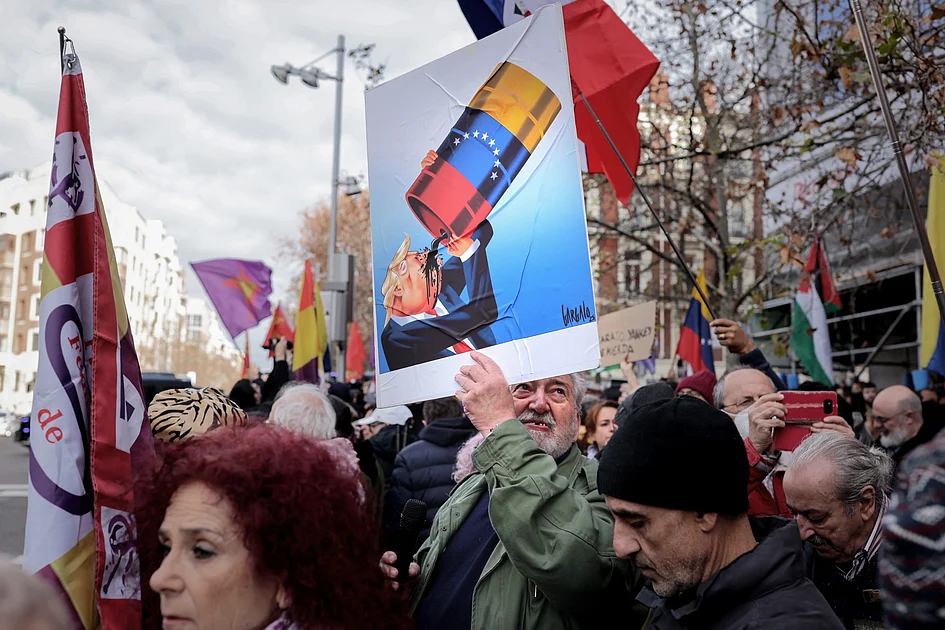
    In a significant geopolitical development, former US President Donald Trump has revealed that global energy giants committed to investing $100 billion to revitalize Venezuela’s crippled oil industry. The announcement came ahead of a high-stakes meeting at the White House with executives from major petroleum corporations, including Exxon Mobil, Chevron, and ConocoPhillips.

    This monumental investment pledge follows the dramatic military operation on January 3rd that resulted in the capture of Venezuelan leader Nicolas Maduro. The Trump administration has openly acknowledged that securing control over Venezuela’s substantial oil reserves—approximately one-fifth of global deposits—was a primary objective behind the intervention.

    Despite Venezuela’s vast energy resources, the country’s oil output has plummeted to merely one percent of worldwide production due to years of sanctions, underinvestment, and infrastructure decay. The Trump administration now positions itself as overseeing Venezuela’s energy sector, with Energy Secretary Chris Wright asserting indefinite US control over the industry.

    Interim President Delcy Rodriguez, previously Maduro’s deputy, maintains that her government remains functional, though state oil representatives confirm ongoing negotiations with American officials. Trump claims his administration canceled additional military actions against Venezuela due to emerging cooperation, including the release of political prisoners and collaborative efforts to rebuild energy infrastructure.

    The investment proposition faces substantial challenges, including governance uncertainty, security concerns, and the technical difficulties of processing Venezuela’s viscous crude. The US Department of Energy plans to facilitate the process by shipping light oil for blending and authorizing equipment exports to upgrade Venezuelan facilities.

    While Chevron maintains existing operational rights in Venezuela, Exxon Mobil and ConocoPhillips exited the country in 2007 after refusing demands to cede majority control to the government. The Trump administration now promises selective sanctions relief and long-term support for US energy companies seeking to reestablish presence in the resource-rich nation.
  • Trump says there could be more US strikes in Nigeria

    Trump says there could be more US strikes in Nigeria

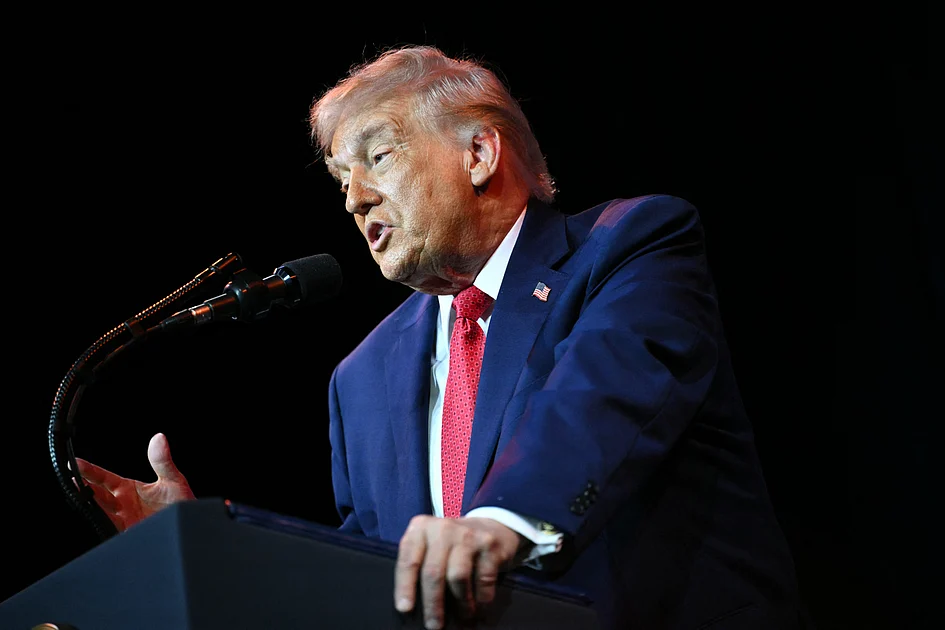
    Former President Donald Trump has indicated potential escalation of U.S. military involvement in Nigeria during a recent interview with the New York Times. Trump asserted that continued violence against Christian communities in the African nation could prompt multiple American strikes, despite Nigeria’s consistent denials of systematic religious persecution.

    The remarks follow a controversial Christmas Day operation where U.S. forces conducted a targeted strike against Daesh militants in northwestern Nigeria. According to military officials, this action was executed at the explicit request of the Nigerian government, which subsequently characterized it as a joint counterterrorism effort with no religious motivations.

    Trump’s statements reveal a significant policy position: ‘I’d prefer to consider this a single intervention… However, if the killing of Christians persists, we will respond with multiple strikes.’ This stance appears at odds with assessments from his own Africa advisory team, which noted that extremist groups like Daesh and Boko Haram have actually claimed more Muslim than Christian lives in the region.

    When confronted with this discrepancy, Trump acknowledged Muslim casualties but maintained that ‘the primary victims are Christians.’ His comments extend previous warnings issued in late October, when he declared Christianity faced an ‘existential threat’ in Nigeria and threatened military intervention over perceived government inaction.

    Nigeria, with its population of approximately 230 million people divided nearly equally between Christians (predominantly in the south) and Muslims (mainly in the north), continues to face complex security challenges. While acknowledging persistent violence from extremist insurgents in northern regions, Nigerian authorities strongly reject characterization of systematic religious persecution, noting that militants target both Muslim and Christian communities alike.

    The Nigerian government has previously responded to Trump’s threats by expressing willingness to collaborate with Washington against militant groups while firmly rejecting language suggesting special peril for Christian communities.

  • Watch: Latest plans for White House ballroom revealed

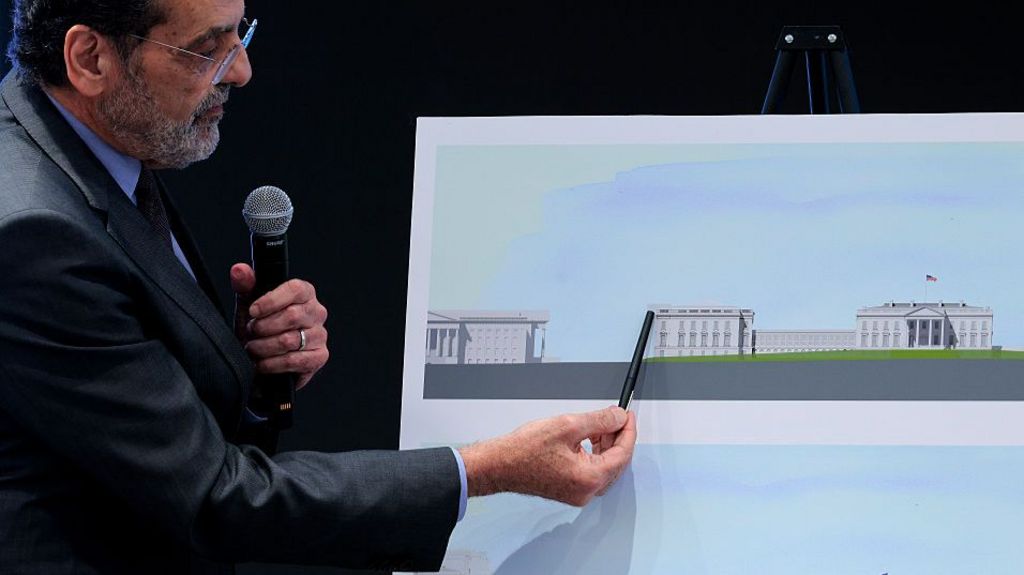
    Watch: Latest plans for White House ballroom revealed

    The Trump administration has presented updated architectural plans for a new White House ballroom to the National Capital Planning Commission, with presidential architect David Monetta confirming the structure will maintain the exact height of the existing executive mansion. The proposed addition, which continues the Trump family’s pattern of architectural enhancements to the presidential residence, has been designed to preserve the historical integrity of the White House complex while expanding its entertainment capacity. Monetta emphasized during the commission hearing that the vertical dimensions were carefully calibrated to align with the original White House roofline, ensuring visual continuity with the iconic Neoclassical structure. The ballroom project represents the latest in a series of proposed modifications to the White House grounds that have drawn both praise and scrutiny from preservationists and political observers alike. Architectural historians note that while executive mansion expansions have occurred throughout American history, each new addition undergoes rigorous review to balance functional needs with historical preservation requirements.

  • Trump indicates Machado might give him Nobel Prize at Washington meeting next week

    Trump indicates Machado might give him Nobel Prize at Washington meeting next week

    In a remarkable development in U.S.-Venezuela relations, former President Donald Trump has revealed his anticipated meeting with Venezuelan opposition figure Maria Corina Machado during her Washington visit next week. The disclosure came during Trump’s Thursday evening interview on Fox News with host Sean Hannity, where he expressed enthusiasm about the encounter.

    This prospective meeting occurs against the backdrop of significant political upheaval in Venezuela, following the dramatic capture of former Venezuelan president Nicolas Maduro and his spouse by U.S. forces just over a week ago. The couple currently faces prosecution in New York on multiple charges including narcotics trafficking and weapons violations.

    Trump’s comments regarding Venezuela’s governance capacity have drawn international attention, with the former president asserting last week that Machado lacks sufficient domestic support and respect to effectively lead the nation. He further suggested that extended American oversight might be necessary for Venezuela’s political stabilization.

    During the recent interview, Trump elaborated on his assessment of Venezuela’s current state under interim leadership, stating that the country requires comprehensive reconstruction and is presently incapable of conducting legitimate electoral processes. “We have to rebuild the country. They couldn’t have an election,” Trump remarked. “They wouldn’t even know how to have an election right now.”

    The Nobel Peace Prize has emerged as a symbolic element in this political dialogue, with Machado having previously offered to share her award with Trump, who has repeatedly expressed belief in his own deservingness of the honor. Trump characterized Norway’s failure to grant him the prize as a “major embarrassment” for the Scandinavian nation, which oversees the prestigious award through its dedicated committee.

    Trump indicated that Machado might formally present her Nobel medal to him during their upcoming meeting, a gesture he described as “a great honor” while acknowledging his understanding of her intentions.

  • India-US trade deal delayed after Modi did not call Trump, Howard Lutnick says

    India-US trade deal delayed after Modi did not call Trump, Howard Lutnick says

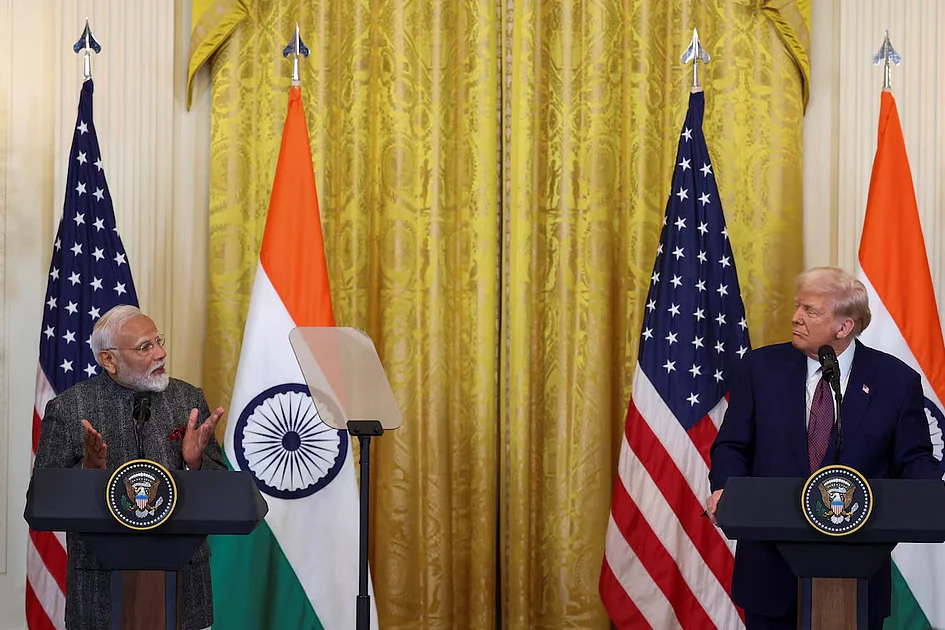
    A significant trade agreement between the United States and India has encountered unexpected delays due to a diplomatic communication breakdown, according to Commerce Secretary Howard Lutnick. The negotiations collapsed when Indian Prime Minister Narendra Modi declined to place a telephone call to President Donald Trump to finalize terms that had been previously negotiated between the two nations.

    The trade discussions, which had been progressing throughout last year, ultimately disintegrated following this communication impasse. In response, the Trump administration implemented substantial economic measures in August, doubling tariffs on Indian goods to 50 percent—the highest rate globally. This included a specific 25 percent levy imposed as direct retaliation for India’s continued purchases of Russian oil despite international pressure.

    Lutnick revealed these details during an appearance on the All-In podcast, a business and technology program hosted by prominent venture capitalists. He stated that the agreement framework was fully prepared for execution, but the necessary diplomatic gesture from the Indian leadership never materialized. ‘It’s all set up and you have got to have Modi call the President. And they were uncomfortable doing it,’ Lutnick explained, adding simply, ‘So Modi didn’t call.’

    The situation has intensified recently as President Trump escalated pressure on India through explicit warnings that additional tariff increases would follow unless India curtails its energy imports from Russia. These developments have already triggered adverse economic consequences for India, with the rupee plummeting to record lows and investor confidence weakening amid the uncertain trade outlook.

    According to Lutnick, India continues to seek a tariff rate structure comparable to those previously offered to Britain and Vietnam, though these offers have since expired. The Indian trade ministry has not provided immediate commentary on Lutnick’s statements regarding the negotiation breakdown.

    Reuters previously reported that the two nations were nearing a comprehensive trade agreement last year before communications faltered. An Indian government official involved in the negotiations suggested that Prime Modi avoided the call over concerns that a direct conversation with President Trump might create diplomatic pressure and put him in a compromised negotiating position.

  • US welcomes ceasefire in Syria’s Aleppo after days of deadly clashes

    US welcomes ceasefire in Syria’s Aleppo after days of deadly clashes

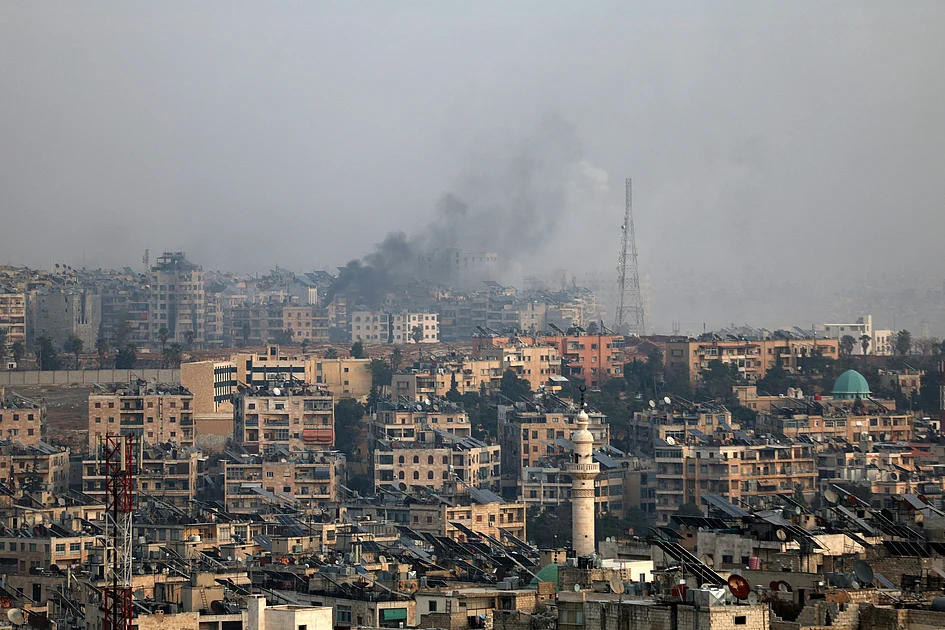
    The United States has formally endorsed a newly established ceasefire in the Syrian city of Aleppo, a critical development following several days of intense combat that triggered a significant humanitarian crisis. The hostilities, primarily between Syrian governmental forces and Kurdish-led fighters, had escalated dramatically in the Ashrafiyeh and Sheikh Maqsoud districts, compelling thousands of civilians to abandon their homes in search of safety.

    US Special Envoy Tom Barrak publicly commended the truce in a statement released on social media platform X. He expressed that the nation ‘warmly welcomes the temporary ceasefire achieved last night’ and extended ‘profound gratitude to all parties’ involved in the negotiation. Barrak’s acknowledgment specifically highlighted the cooperation of the Syrian government, the Syrian Democratic Forces (SDF), along with local authorities and community figures, crediting their ‘restraint and goodwill’ for enabling the crucial pause in violence.

    The ceasefire represents a vital window for humanitarian aid organizations to access affected populations and provide urgent assistance. It also offers a fragile opportunity for diplomatic channels to work toward a more enduring de-escalation in one of Syria’s most strategically important and war-torn cities. The international community continues to monitor the situation closely, hoping the temporary halt in fighting can evolve into a more stable resolution for the region’s protracted conflict.

  • Trump signals he may let last US-Russia nuclear treaty expire

    Trump signals he may let last US-Russia nuclear treaty expire

    The future of nuclear arms control between the world’s two largest nuclear powers hangs in the balance as former President Donald Trump indicates willingness to let the New START treaty expire without replacement. In a recent interview with The New York Times, Trump suggested rejecting Moscow’s proposal to maintain the treaty’s limitations, instead advocating for a broader agreement involving additional nations.

    The New Strategic Arms Reduction Treaty (New START), enacted in 2011, represents the final remaining nuclear arms control agreement between the United States and Russia. The landmark pact imposes crucial restrictions, capping deployed strategic nuclear warheads at 1,550 per country and limiting deployed delivery systems—including intercontinental ballistic missiles, bombers, and submarines—to 700 units. Without extension or replacement, this critical arms control mechanism is scheduled to terminate on February 5, 2026.

    Trump’s stance marks a significant departure from previous administrations. When questioned about the treaty’s potential expiration, the former president responded with apparent indifference, stating, ‘If it expires, it expires.’ He instead emphasized his preference for negotiating a ‘better agreement’ that would incorporate ‘a couple of other players’ beyond the current bilateral framework.

    This development carries profound implications for global security architecture. Should the treaty lapse, it would represent the first time in nearly fifty years that the United States and Russia operate without legally binding constraints on their nuclear arsenals. The original treaty framework permitted one five-year extension, which was utilized in 2021 through an agreement between Russian President Vladimir Putin and then-President Joe Biden.

    The current situation emerges against a backdrop of diplomatic outreach from Moscow. In September 2025, Putin reportedly proposed that both nations voluntarily continue observing the treaty’s limitations even without formal extension—a suggestion that appears to find no favor with the Trump administration. This potential collapse of nuclear arms control mechanisms raises significant concerns among international security experts about a new nuclear arms race and the erosion of strategic stability between the world’s premier nuclear powers.

  • Who was Renee Nicole Good, the woman killed by US immigration police?

    Who was Renee Nicole Good, the woman killed by US immigration police?

    The fatal shooting of 37-year-old poet and mother Renee Nicole Good by a U.S. Immigration and Customs Enforcement (ICE) officer in Minneapolis has ignited national controversy and raised serious questions about the use of deadly force by federal agents. The incident occurred Wednesday when Good was behind the wheel of her vehicle, though conflicting narratives have emerged regarding the circumstances.

    Contrary to the Trump administration’s immediate characterization of the shooting as an act of self-defense, local authorities and multiple eyewitnesses have disputed this account. Video evidence circulating widely on social media platforms appears to contradict the official version of events, showing no immediate threat to the ICE officer at the time of the shooting.

    Good was remembered by her family as an exceptionally compassionate individual who dedicated her life to caring for others. Her mother, Donna Ganger, described her to the Minnesota Star-Tribune as “loving, forgiving, and affectionate—an amazing human being” who consistently demonstrated concern for those around her.

    An accomplished writer and 2020 graduate of Old Dominion University with a degree in English literature, Good received the Academy of American Poets poetry prize during her academic career. University President Brian O. Hemphill honored her memory in an official statement, expressing hope that her life would serve as “a reminder of what unites us: freedom, love, and peace” during what he characterized as “one of the darkest and most uncertain periods in our nation’s history.”

    Beyond her literary achievements, Good was a devoted mother to three children, with personal interests including movie marathons and creative art projects with her family. Her first husband, who requested anonymity, confirmed her deep Christian faith and stated she was not involved in any activist movements targeting ICE operations.

    The tragedy has generated substantial public support, with more than $800,000 raised through crowdfunding initiatives to assist her surviving children and family members. The case continues to develop as multiple investigations proceed amid growing calls for transparency and accountability in law enforcement practices.

  • Dolby showcases latest innovations at CES 2026, highlighting Chinese partnership

    Dolby showcases latest innovations at CES 2026, highlighting Chinese partnership

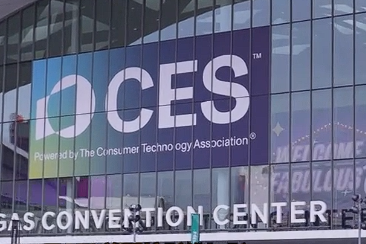
    At the 2026 Consumer Electronics Show in Las Vegas, Dolby Laboratories unveiled groundbreaking advancements in immersive technology while highlighting its strategic collaborations with leading Chinese manufacturers. The audio-visual pioneer demonstrated how these partnerships are accelerating the adoption of premium entertainment experiences across multiple consumer platforms.

    The centerpiece of Dolby’s exhibition was Dolby Vision 2, representing a significant evolution from the established Dolby Vision standard. This next-generation imaging technology delivers unprecedented picture authenticity and performance optimization for modern television displays. According to Dolby engineers, the innovation addresses evolving consumer expectations by enhancing visual quality across all screen sizes and entertainment formats.

    Chinese television manufacturers emerged as early adopters of this technology. Hisense announced integration of Dolby Vision 2 across its premium RGB-MiniLED television series, including UX, UR9 and UR8 models, with plans to extend compatibility to additional MiniLED TVs through future firmware updates. Similarly, TCL confirmed implementation within its 2026 X QD-Mini LED TV Series and C Series products.

    Javier Foncillas, Dolby’s Vice-President of Commercial Partnerships and Global Sales, emphasized the strategic importance of Chinese collaborations: “Hisense and TCL exemplify ideal innovation partners who rapidly implement emerging technologies. Our assessment identifies Chinese companies as particularly advanced in automotive, mobile and social media applications.”

    The automotive sector featured prominently in Dolby’s showcase, with Chinese electric vehicle manufacturer NIO presenting its ET9 luxury sedan equipped with both Dolby Vision and Dolby Atmos. Industry analysis reveals at least 35 automotive manufacturers now incorporate Dolby Atmos technology, with Chinese EV manufacturers representing a substantial portion of new implementations.

    Foncillas noted the distinctive advantages of Chinese partnerships: “Startup culture and leadership engagement create exceptional implementation velocity. Company founders frequently prioritize cutting-edge technology integration, creating mutually beneficial development relationships.”

    Beyond television and automotive applications, Chinese dominance extends to mobile and social media platforms. Smartphone brands including Oppo, Vivo and Xiaomi have adopted Dolby technologies, while platforms like Bilibili and Douyin have implemented Dolby Vision support.

    The executive cited Shanghai’s innovation ecosystem as particularly influential, referencing collaborations with music studios, gaming companies and eSports organizations utilizing Atmos technology. These partnerships reflect Dolby’s expanding footprint across China’s diverse digital entertainment landscape.

  • Nevada eyes Chinese tech cooperation to boost economic diversification

    Nevada eyes Chinese tech cooperation to boost economic diversification

    In a strategic move to accelerate its economic transformation, the US state of Nevada is actively pursuing deeper technological and trade cooperation with China. Lieutenant Governor Stavros Anthony articulated this vision during the recent Consumer Electronics Show (CES) in Las Vegas, signaling a deliberate shift from the state’s iconic gaming and tourism image toward a diversified, innovation-driven economy.

    Anthony emphasized that Nevada’s longstanding diversification strategy now prioritizes attracting global high-tech enterprises, with Chinese technology firms representing a key demographic. This outreach occurs against the backdrop of enduring US-China trade tensions, yet Nevada maintains its commitment to being a business-friendly jurisdiction open to international investment.

    Chinese technological prowess was prominently displayed at CES 2026, where companies led advancements in robotics, intelligent automotive systems, next-generation displays (MiniLED and rollable OLED), AI applications, smart home ecosystems, and clean energy solutions. Multiple Chinese manufacturers received CES Innovation Awards, evidencing their manufacturing sophistication and design innovation.

    Nevada’s development priorities align closely with these technological strengths. The state is actively promoting sustainable industries, particularly those focused on water conservation and energy efficiency—critical concerns given its arid climate. Anthony explicitly welcomed Chinese companies specializing in renewable energy and water-efficient technologies to explore investment opportunities within the state.

    The historical context underpins this modern partnership. Chinese immigrants contributed significantly to Nevada’s 19th-century development through mining and railroad construction. Today, China remains Nevada’s largest import source, supplying electronics, machinery, and furniture, making the state one of the most reliant on Chinese goods in the US.

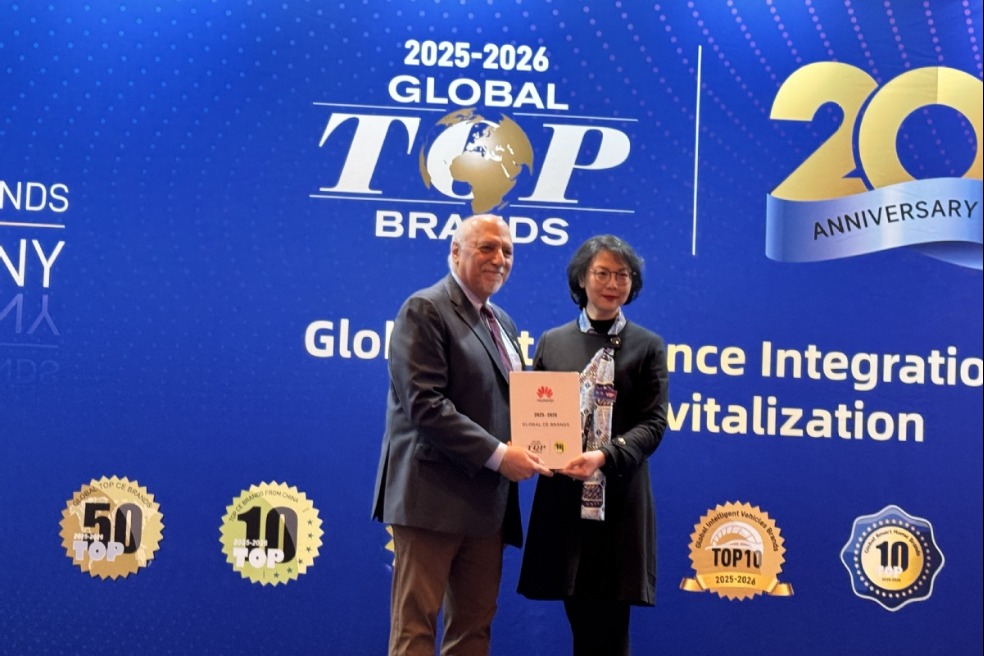
    Demonstrating its commitment, Nevada’s leadership formally recognized leading Chinese brands including Huawei, TCL, Haier, and Hisense at the Global Top Brands Awards ceremony co-hosted during CES, acknowledging their global innovative contributions. Anthony concluded by reinforcing Nevada’s ambition to be a ‘global state’ that collaborates internationally, including with China, to build a resilient and sustainable economic future.