
In a surprising turn of events, former President Donald Trump has renominated billionaire entrepreneur Jared Isaacman to lead NASA, five months after abruptly withdrawing his initial nomination. Isaacman, a 42-year-old self-made billionaire with close ties to SpaceX founder Elon Musk, was previously set to assume the role in May before Trump cited concerns over “prior associations” during a high-profile feud with Musk. While the White House did not elaborate on these associations, Isaacman’s connections to Musk and his significant financial contributions to SpaceX missions have raised eyebrows. Isaacman, an amateur jet pilot and the first non-professional astronaut to walk in space, has reportedly spent hundreds of millions of dollars on SpaceX ventures. Trump’s reversal of his decision was announced on his Truth Social platform, where he praised Isaacman’s passion for space exploration and his vision for advancing the space economy. However, Isaacman’s nomination has faced skepticism, particularly regarding potential conflicts of interest and his focus on Mars over NASA’s long-planned Moon mission. Isaacman, who founded the payment processing company Shift4 Payments at 16, has a storied history in aviation and space exploration. His nomination, which requires Senate confirmation, comes amid a government shutdown, though the Senate remains operational for such proceedings. Isaacman expressed gratitude for the nomination, vowing to uphold the trust placed in him by the space community.
标签: North America
北美洲
-
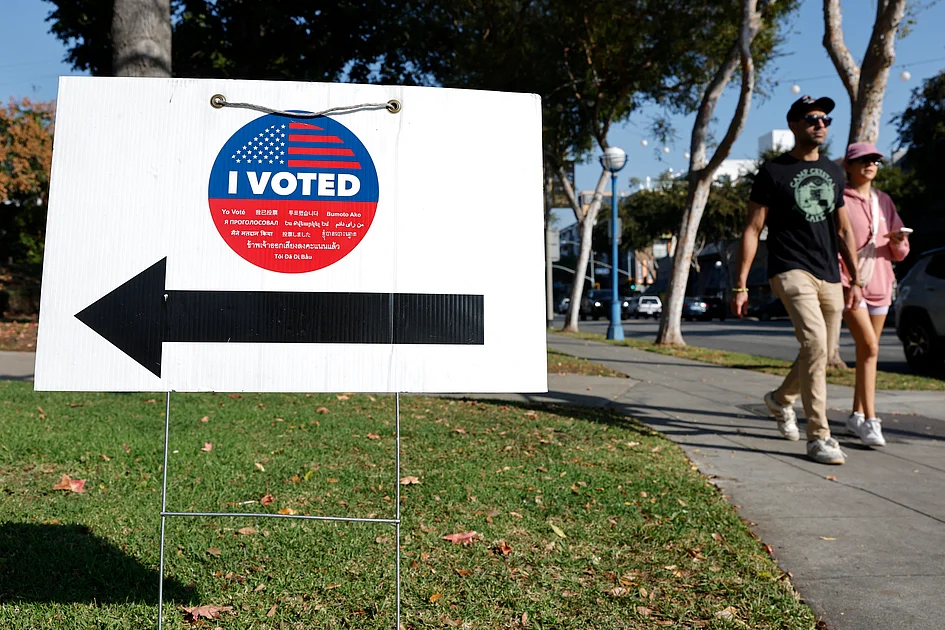
California votes to redraw election boundaries to counter Trump
In a decisive move to counter President Donald Trump’s gerrymandering efforts, California voters overwhelmingly approved Proposition 50, a measure to redraw electoral districts. Early official results indicated a two-to-one margin in favor, with major media outlets projecting a significant majority. The initiative, championed by Governor Gavin Newsom and Democratic leaders, aims to secure five additional congressional seats for the Democratic Party in the upcoming midterm elections. Newsom hailed the vote as a powerful rebuke to Trump, whom he labeled the ‘most historically unpopular president in modern history.’ Republicans criticized the measure as a partisan power grab, while Democrats argued it was a necessary response to similar redistricting efforts by Texas Republicans, which were allegedly influenced by the White House. The proposition temporarily replaces California’s independent redistricting commission with politically drawn boundaries, a move that has sparked debate about fairness and partisanship. The vote reflects broader national tensions over electoral manipulation and the integrity of democratic processes.
-
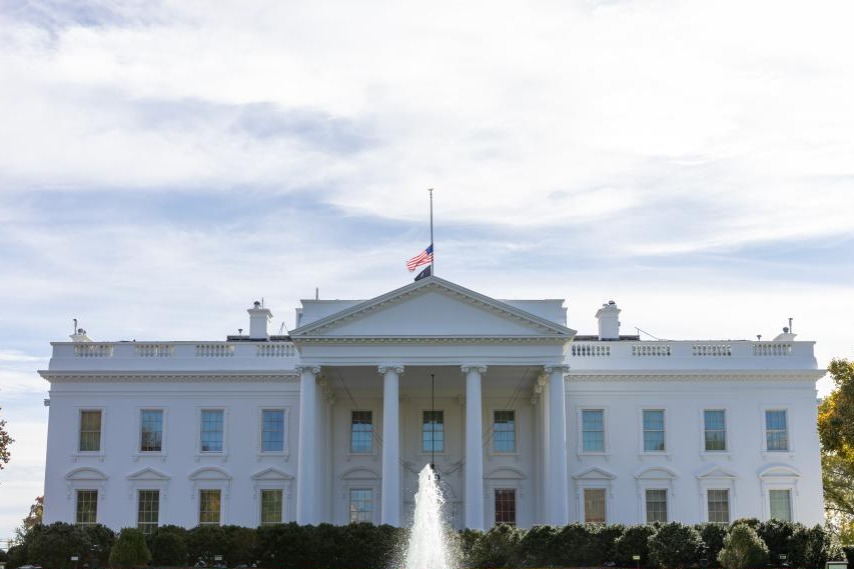
US records longest govt shutdown in history as it enters Day 36
The United States has officially entered its 36th day of a federal government shutdown, marking the longest such closure in the nation’s history. The shutdown surpassed the previous record of 35 days set during the 2018-2019 impasse. Despite repeated attempts by the Senate to pass a short-term funding bill, partisan gridlock persists, with both Republicans and Democrats refusing to compromise. House Minority Leader Hakeem Jeffries criticized Republicans for their stance on Affordable Care Act tax credits, while House Speaker Mike Johnson accused Democrats of prioritizing political retribution over governance. The prolonged shutdown has had widespread consequences, affecting aviation safety, food assistance programs, and federal employees’ livelihoods. Transportation Secretary Sean Duffy warned of potential flight cancellations and airspace closures if air traffic controllers remain unpaid. Meanwhile, millions relying on food assistance face uncertainty as emergency funds are only partially distributed. Over 1 million federal employees have gone without pay, and the lack of key economic data has heightened uncertainty. The Congressional Budget Office estimates significant economic losses, with public approval of Congress plummeting to 15%. Polls indicate widespread dissatisfaction with both parties, as Americans increasingly feel disconnected from their leaders.
-
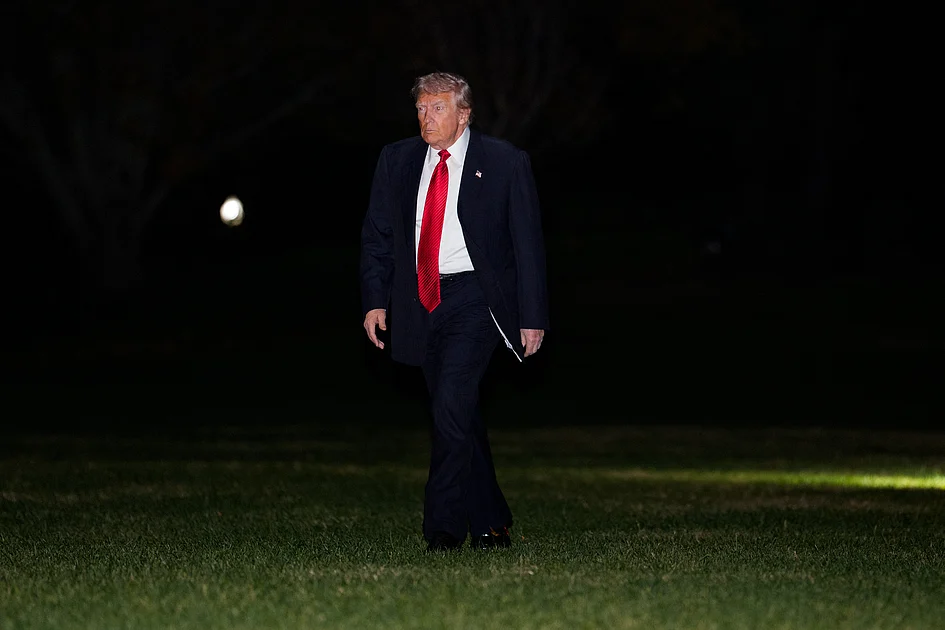
US government shutdown becomes longest in history
The US government shutdown has officially become the longest in history, surpassing the 35-day record set during Donald Trump’s first term. The impasse, now in its sixth week, stems from a stalemate between Democrats and Republicans over health care spending. Federal agencies have been largely non-operational since Congress failed to approve funding past September 30, leaving 1.4 million federal workers either on unpaid leave or working without pay. Welfare programs, including those aiding millions of Americans in affording groceries, remain in limbo. The Trump administration has warned of potential chaos in air travel, particularly during the upcoming Thanksgiving holiday, as air traffic controllers and Transportation Security Administration (TSA) officers continue to work without pay. Transportation Secretary Sean Duffy highlighted the risk of mass flight delays, cancellations, and even airspace closures due to staff shortages. Democrats are demanding an extension of expiring health insurance subsidies as a condition for ending the shutdown, while Republicans insist on reopening the government before addressing health care. Despite the deadlock, moderate lawmakers from both parties have begun exploring potential compromises. Meanwhile, President Trump has doubled down on his refusal to negotiate, threatening to cut off a vital food assistance program, though courts have blocked such actions. The White House has since clarified its commitment to fulfilling legal obligations and expediting partial SNAP payments.
-

Kristen Stewart ‘so angry Hollywood has gone backwards’ for women
In a fervent address at a women’s luncheon hosted by the Academy of Motion Picture Arts and Sciences, acclaimed actress and director Kristen Stewart expressed her profound frustration over the stagnation and regression of progress for female filmmakers in Hollywood. The event, held in Los Angeles, saw Stewart, known for her role in the Twilight series and her directorial work on the upcoming film *The Chronology of Water*, delivering a powerful critique of the industry’s treatment of women post-MeToo. ‘The backsliding from a brief moment of progress is statistically devastating,’ Stewart lamented. ‘Such a pitiful number of films from the past year have been made by women.’ Citing *The Celluloid Ceiling* report, she highlighted that only 11 of the top 100 grossing films in 2024 were directed by women, a decline from 16 in 2020. Stewart recounted the initial optimism following the MeToo movement, which had spurred a reckoning in Hollywood regarding gender representation both on and off-screen. However, she emphasized the ongoing challenges faced by women in the industry, particularly when their work delves into darker or taboo subjects. ‘The violence of silencing is pervasive,’ she stated. ‘It’s like we’re not even supposed to be angry. But I can eat this podium with a fork and knife. I’m so angry.’ Her speech, which lasted seven minutes, was met with multiple rounds of applause from attendees, including prominent figures like Sarah Paulson, Julia Louis-Dreyfus, and Tessa Thompson. Stewart concluded with a call to action, urging women to resist tokenism and assert their creative autonomy. ‘Let’s try and not be tokenized. Let’s start printing our own currency,’ she declared. Despite the presence of films by acclaimed female directors such as Chloé Zhao, Kathryn Bigelow, and Mona Fastvold in the upcoming Oscars race, the best director category is once again anticipated to be predominantly male.
-

Zohran Mamdani makes history becoming youngest mayor of New York City in over a century
In a historic victory, Zohran Mamdani, a 34-year-old Democratic socialist, has been elected as the youngest mayor of New York City in over a century. Mamdani, who is also the first Muslim and South Asian to hold the position, triumphed over seasoned opponents Andrew Cuomo and Curtis Sliwa. His campaign, centered on prioritizing working-class citizens and taxing the wealthy to fund progressive policies, resonated strongly with younger voters. Mamdani’s proposals included free bus services, rent freezes for a million tenants, and government-subsidized grocery stores. The election saw a record-breaking voter turnout, with over 2 million New Yorkers casting their ballots, the highest since 1969. Mamdani’s win is seen as a significant boost for the Democratic Party, which has been seeking a unified voice following recent electoral setbacks. His victory also comes ahead of the 2026 midterms, positioning him as a rising star in national politics. Despite criticism from older candidates and former President Donald Trump, Mamdani garnered endorsements from prominent figures like Alexandria Ocasio-Cortez and Bernie Sanders. His success marks a generational shift in New York City’s leadership and signals a new era of progressive governance.
-
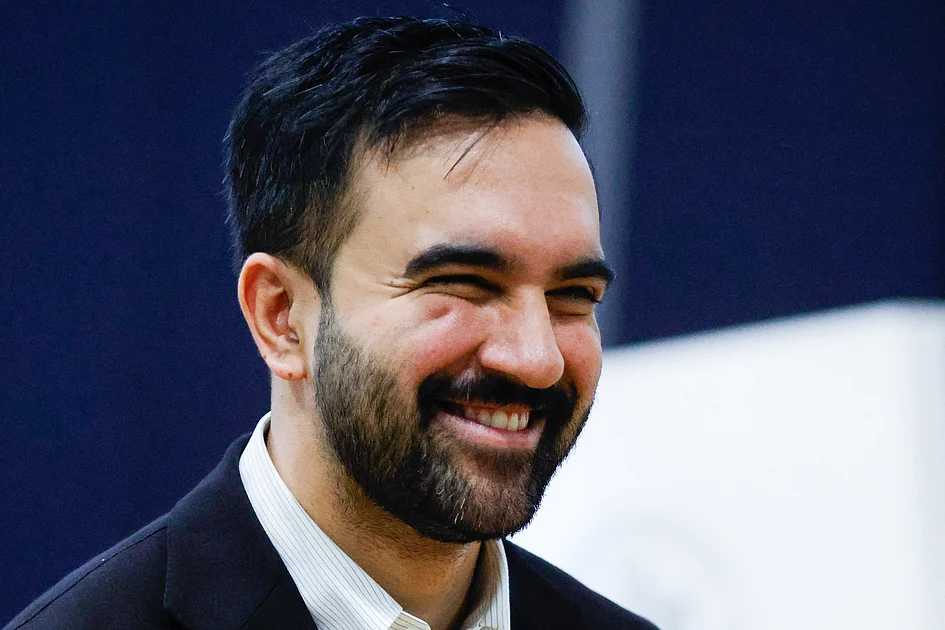
Zohran Mamdani elected New York mayor; Democrats win in New Jersey, Virginia
In a historic election, Zohran Mamdani has been elected as the next mayor of New York, marking a significant victory for the Democratic Party. Mamdani, a state lawmaker from Queens, overcame intense criticism and attacks on his policies and Muslim heritage from former President Donald Trump, business elites, and conservative media. His campaign focused on addressing the rising cost of living, promising free city bus travel, childcare, and city-run grocery stores, which resonated deeply with voters. Mamdani’s victory, alongside Democratic wins in the governor’s races in Virginia and New Jersey, signals a potential shift in the political landscape as the nation looks toward next year’s midterm elections. Despite being a self-described socialist and relatively unknown before his primary win, Mamdani’s grassroots campaign and social media strategy propelled him to success. His election also highlights the ongoing ideological debate within the Democratic Party between centrist and progressive factions. Meanwhile, in New Jersey, Democratic candidate Mikie Sherrill, a former Navy helicopter pilot, defeated Republican Jack Ciattarelli, while in Virginia, Democrat Abigail Spanberger unseated Republican incumbent Winsome Earle-Sears. Both races saw high-profile endorsements, with former President Barack Obama supporting the Democratic candidates and Trump rallying for Republicans. Mamdani’s victory, however, comes with challenges, as he will face significant political opposition in a city known for its complex governance.
-
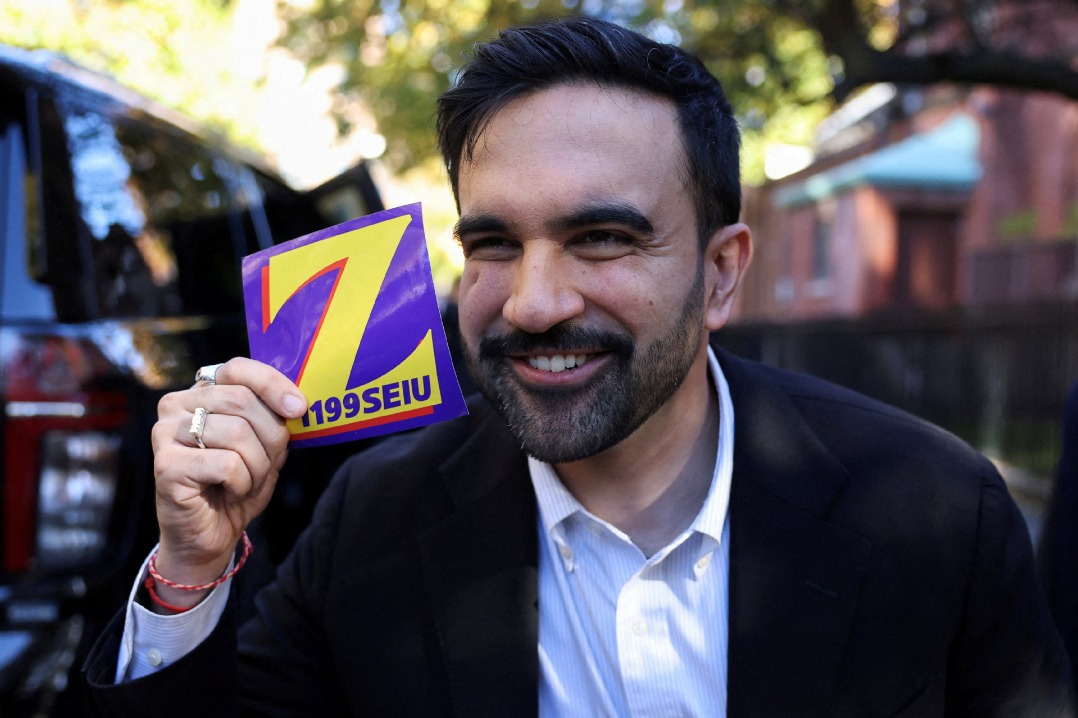
Zohran Mamdani elected as NYC mayor
In a historic turn of events, Zohran Mamdani has been elected as the next mayor of New York City, marking a significant milestone in the city’s political landscape. At just 34 years old, Mamdani, a Ugandan-born immigrant, becomes the youngest mayor in over a century and the first Muslim to hold the position. His campaign resonated deeply with working-class New Yorkers, focusing on making life more affordable and addressing economic disparities. Mamdani’s victory comes despite earlier opposition from former President Donald Trump, who endorsed his opponent, Andrew Cuomo, and threatened to cut federal funding to the city if Mamdani won. This election not only underscores a shift in New York City’s political priorities but also highlights the growing influence of diverse voices in American politics.
-

Rama Duwaji: Who is the wife of NYC’s mayor-elect Zohran Mamdani?
At just 28 years old, Rama Duwaji is set to become the youngest First Lady in New York City’s history, following her husband Zohran Mamdani’s victory in the mayoral race. Mamdani, a 33-year-old state assemblyman, publicly acknowledged his wife’s unwavering support during his victory speech, affectionately referring to her as “hayati,” the Arabic term for “my life.” Duwaji, a New York-based artist of Syrian descent, has gained recognition for her work that often explores Middle Eastern themes. Her art has been featured in prominent outlets such as BBC News, The New York Times, The Washington Post, Vice, and London’s Tate Modern museum. Despite her husband’s rising political profile, Duwaji has largely remained out of the public eye, choosing to focus on her art and personal life. However, she played a significant behind-the-scenes role in shaping Mamdani’s campaign brand identity, according to CNN. Friends and acquaintances have described her as a modern-day Princess Diana, highlighting her grace and influence. Duwaji’s work often addresses political issues, including American imperialism, Israeli war crimes, and the plight of Palestinians, aligning with some of her husband’s policy positions. She has also used her platform to advocate for individuals like Mahmoud Khalil, a Columbia University graduate facing deportation for his pro-Palestinian activism. Duwaji, who spent much of the COVID-19 pandemic in Dubai with her family, believes in the artist’s responsibility to reflect the times and speak out against injustice. Her journey from a Texas-born artist to New York City’s First Lady is a testament to her resilience and commitment to using art as a medium for change.
-

Up to Dh1 billion fine as UAE boosts Central Bank powers under new financial law
The UAE has implemented a groundbreaking financial law, Federal Decree Law No. (6) of 2025, significantly enhancing the Central Bank’s regulatory powers and introducing stringent penalties for non-compliance. The law, which came into effect on November 5, 2025, aims to bolster financial stability, protect consumers, and regulate emerging financial technologies. It applies to a broad spectrum of the financial ecosystem, including banks, insurers, fintech firms, payment system providers, and other financial service entities. Administrative fines for violations can now reach up to Dh1 billion, with the Central Bank authorized to withdraw penalties directly from violators’ accounts before a final judicial ruling. Additionally, the law mandates public disclosure of penalties and settlement decisions to enhance transparency and market discipline. The legislation also empowers the Central Bank to intervene early in distressed institutions, imposing corrective measures, replacing management, or taking control if necessary. Furthermore, the law consolidates consumer complaints under the Sanadak platform, streamlining dispute resolution for banking and insurance services. The Central Bank’s role as the national Resolution Authority is reinforced, enabling it to manage crises effectively, including restructuring capital and ensuring continuity of essential services. The law also integrates environmental, social, and governance (ESG) principles into the Central Bank’s operations, aligning with global sustainability trends. Financial institutions have one year to comply with the new requirements, with potential extensions granted as needed.