标签: North America

北美洲

  • Bridge to a Shared Future: Carrying on the Snow legacy to bridge China and US

    Bridge to a Shared Future: Carrying on the Snow legacy to bridge China and US

    The documentary ‘Bridge to a Shared Future,’ which premiered on November 7 and 8 in Los Angeles, California, and Salt Lake City, Utah, revisits the historic journey of Edgar Snow, Helen Foster Snow, and other international friends who documented China’s societal transformations during the 1930s amid the Chinese People’s War of Resistance Against Japanese Aggression (1931-45). Through the lens of Adam Foster, chairman of the Helen Foster Snow Foundation and a modern-day torchbearer of the Snows’ legacy, the film retraces their path, highlighting the enduring spirit of cross-cultural understanding and cooperation. The event underscores the importance of fostering mutual respect and collaboration between China and the United States, building on the Snows’ pioneering efforts to bridge the two nations. The documentary serves as a timely reminder of the power of shared narratives in strengthening international ties.

  • Dubai Chambers opens New York office to strengthen UAE-US business ties

    Dubai Chambers opens New York office to strengthen UAE-US business ties

    Dubai Chambers has unveiled its inaugural office in New York City, marking a significant milestone in strengthening economic and investment ties between the United Arab Emirates (UAE) and the United States (US). The announcement, made during the Dubai Business Forum-USA, highlights Dubai’s growing global influence and its strategic ambition to serve as a bridge between Eastern and Western markets. This move aligns with Dubai’s broader vision to channel $1.4 trillion in planned investments across emerging sectors, positioning the New York office as a pivotal hub for fostering international business opportunities. Eng Sultan bin Saeed Al Mansoori, Chairman of Dubai Chambers, emphasized that the office will deepen engagement with US businesses and investors, leveraging New York’s status as a global financial capital. The city’s proximity to major markets like Canada and Mexico, coupled with its concentration of multinational corporations, makes it an ideal location for Dubai’s expansion. The office will facilitate easier access for US companies to explore Dubai’s business potential while serving as a gateway for Emirati investors in the US. Notably, 787 new US companies joined the Dubai Chamber of Commerce in the first nine months of 2025, bringing the total number of active American members to 3,690. This surge underscores Dubai’s increasing appeal to the American business community. Dubai’s foreign direct investment (FDI) reached $14.2 billion in 2024, cementing its position as a top global destination for new projects. The city’s business-friendly environment, characterized by zero personal income tax, over 200 global flight connections, and thriving sectors like fintech, clean energy, and digital innovation, further enhances its attractiveness. Al Mansoori highlighted the potential for strategic partnerships in high-growth sectors, including the digital economy, infrastructure, oil, and gas. He also reiterated Dubai’s ambition to become a global leader in artificial intelligence (AI), citing initiatives like the AI-driven expansion of Dubai’s airport and DP World’s BoxBay automation system as examples of innovation in action. With a focus on fostering bilateral trade and investment, the UAE-US partnership is poised for continued growth, driven by emerging technologies and shared economic goals.

  • Table tennis on the rise in America

    Table tennis on the rise in America

    The United States is witnessing a significant surge in the popularity of table tennis, thanks to the strategic partnership between Major League Table Tennis (MLTT) and the China National Tourist Office New York (CNTO.NY). This collaboration marks a pivotal moment for the sport, as CNTO.NY steps in as the sponsor for the New York Slice, one of MLTT’s latest expansion teams. The alliance not only highlights the cultural importance of table tennis in China but also emphasizes the increasing international influence and growing appeal of MLTT within the American sports landscape. This partnership is set to enhance the visibility and accessibility of table tennis in the US, fostering a deeper appreciation for the sport across diverse communities.

  • Trump signs deal to end longest US government shutdown in history

    Trump signs deal to end longest US government shutdown in history

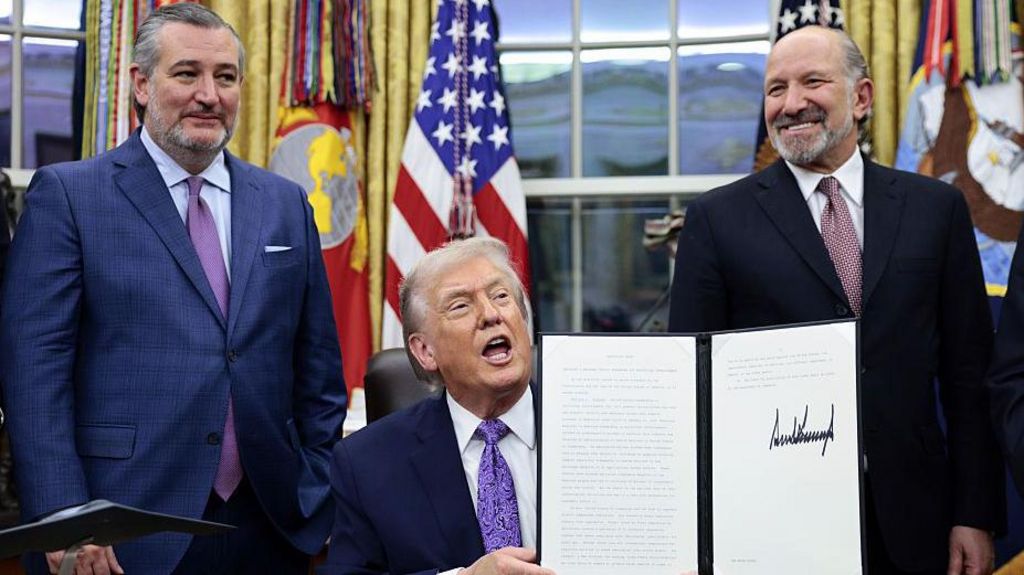
    President Donald Trump has signed a bill to conclude the longest government shutdown in U.S. history, lasting 43 days. The legislation, which passed the House of Representatives with a 222-209 vote, aims to restore federal operations, including food assistance programs, air-traffic control systems, and the salaries of hundreds of thousands of federal workers. The shutdown, which began due to a standoff over federal health insurance subsidies, has left critical government services disrupted and economic data unreported. The new funding extends through January 30, 2026, but questions remain about the speed of full service restoration and the long-term economic impact. Economists estimate the shutdown reduced GDP growth by over 0.1 percentage points weekly, though most losses are expected to be recovered in the coming months. The deal also sets the stage for a December Senate vote on healthcare subsidies, though House Speaker Mike Johnson has not committed to a similar vote. The shutdown’s end comes just ahead of the Thanksgiving holiday, offering hope for the recovery of air travel services and food aid programs. However, the political fallout remains unresolved, with public opinion divided over which party bears responsibility for the crisis. The House also faces renewed scrutiny over its handling of the Jeffrey Epstein case and privacy violations related to the January 6 Capitol attack.

  • Record-breaking US shutdown ends as political fallout begins

    Record-breaking US shutdown ends as political fallout begins

    The United States has emerged from its longest government shutdown in history, a 43-day standoff that left federal agencies paralyzed and hundreds of thousands of workers unpaid. The Republican-controlled House of Representatives voted largely along party lines to pass a Senate-approved funding package, reopening government operations and ending the political impasse that had gripped Washington. The shutdown, which began amid a bitter blame game between Democrats and former President Donald Trump’s Republicans, has left a trail of economic and political consequences. The approved package funds military construction, veterans’ affairs, the Department of Agriculture, and Congress through next fall, with other government agencies funded until the end of January. Approximately 670,000 furloughed federal employees are set to return to work, while those who worked without pay—including over 60,000 air traffic controllers and airport security staff—will receive back pay. The deal also reinstates federal workers dismissed during the shutdown and aims to restore normalcy to disrupted air travel. President Trump, who is scheduled to sign the bill, accused Democrats of costing the country $1.5 trillion through their actions, a claim widely disputed. The Congressional Budget Office estimates the shutdown caused $14 billion in lost economic growth. Politically, the shutdown has deepened divisions within the Democratic Party, with moderates breaking ranks to broker a deal that failed to secure significant health care concessions. While Democratic leaders argue they successfully highlighted Republican failures in health care, progressive factions are critical of their leadership’s inability to maintain unity. The fallout from the shutdown is expected to shape the political landscape leading up to the 2026 midterm elections.

  • Arrival of vessel sparks fears of strike in Venezuela

    Arrival of vessel sparks fears of strike in Venezuela

    The arrival of the USS Gerald R. Ford, the world’s largest aircraft carrier, in Latin America has heightened military tensions in the region, sparking fears of a potential conflict with Venezuela. The vessel, part of a US Naval Forces Southern Command deployment, entered the area on Tuesday, following orders issued nearly three weeks ago to combat drug trafficking. However, Venezuelan President Nicolas Maduro has accused the US of fabricating a pretext for war, vowing that Venezuela is prepared to defend its sovereignty. Maduro emphasized the nation’s readiness for an armed struggle to protect its legacy. The US has conducted strikes on approximately 20 vessels in international waters since early September, resulting in at least 76 fatalities. While Washington claims these actions target drug traffickers, no evidence has been provided to substantiate these claims. Human rights experts have condemned the strikes as extrajudicial killings. In response, Colombia’s President Gustavo Petro has suspended intelligence sharing with the US, a decision he announced on X, stating it would remain in effect as long as the missile attacks continue. Similarly, the UK has reportedly ceased intelligence cooperation with the US on suspected drug-trafficking vessels in the Caribbean, citing concerns over the legality of the strikes. A spokesperson for UK Prime Minister Keir Starmer declined to comment on the matter, reiterating the government’s policy of not discussing security or intelligence issues. The escalating military presence and actions in the region have raised alarms over the potential for a broader conflict.

  • Singles Day success offers lessons for US businesses

    Singles Day success offers lessons for US businesses

    The unprecedented success of China’s Singles Day, the world’s largest retail festival, has sparked a call for US businesses to explore the untapped potential of the solo economy. Originally conceived as a playful counter to Valentine’s Day, Singles Day, celebrated on November 11, has evolved into a global shopping extravaganza, generating $202 billion in sales last year. This year, Chinese e-commerce giants like Alibaba and JD.com extended the event from October 9 to November 11, leveraging AI to enhance efficiency, personalize recommendations, and provide real-time assistance. Remarkable sales figures included Apple’s Tmall store selling more iPhones in the first two hours than it did in an entire day the previous year, and JD.com reporting a 300 percent surge in apparel imports within five days. Peter McGraw, a marketing and psychology professor at the University of Colorado Boulder, emphasizes the rising singles population in the US, which constitutes nearly half of the adult population, and the emerging ‘solo economy.’ He argues that the US could benefit from a similar event, though cultural and timing challenges, such as Veterans Day on November 11, pose significant obstacles. McGraw suggests that a US version might require a new date, like November 1, and an ’emotional hook’ to resonate with consumers. He also highlights the broader lesson for US companies: singles represent a fast-growing and diverse consumer segment with significant commercial opportunities. Frank Calvino, an editor at Cross-Border Magazine, views Double 11 as a reflection of China’s consumer culture and a strategic opportunity for global brands. Despite the growing presence of international brands on Chinese e-commerce platforms, US consumer awareness of Singles Day remains low, with less than 20 percent of US consumers aware of the event, according to a recent survey.

  • I can’t take any more of this, Andrew told Epstein, released emails show

    I can’t take any more of this, Andrew told Epstein, released emails show

    Newly released documents from the estate of convicted sex offender Jeffrey Epstein have shed further light on the connections between Prince Andrew, Epstein, and Ghislaine Maxwell. Among the revelations is an email exchange from 2011, in which Prince Andrew expressed frustration after being informed that a British newspaper was about to publish a report linking him to Epstein and Maxwell. Andrew’s email, sent to Epstein and Maxwell, reads: “What’s all this? I don’t know anything about this! You must SAY so please. This has NOTHING to do with me. I can’t take any more of this.” The documents were released by Democrats on the Congressional House Oversight Committee as part of an ongoing investigation into Epstein’s network. The files also mention former U.S. President Donald Trump, with one email from Epstein to Maxwell claiming that Trump spent hours at Epstein’s house with an unnamed individual. The White House later clarified that the individual referenced was Virginia Giuffre, a prominent accuser of Epstein, who has repeatedly stated that Trump was not involved in any wrongdoing. Giuffre, who died by suicide earlier this year, had previously accused Prince Andrew of sexual abuse, allegations he has consistently denied. Andrew reached an out-of-court settlement with Giuffre in 2022, which included no admission of liability. The latest documents also include emails between Epstein and Lord Mandelson, a former UK ambassador to the U.S., who has expressed regret over his association with Epstein. The release of these documents has sparked a political battle in the U.S., with House Republicans accusing Democrats of selectively releasing files to create a negative narrative. Meanwhile, a petition signed by Democratic Congresswoman Adelita Grijalva has gained enough support to force a House vote on the release of all Epstein-related files.

  • Democrats left bruised after historic shutdown yields little

    Democrats left bruised after historic shutdown yields little

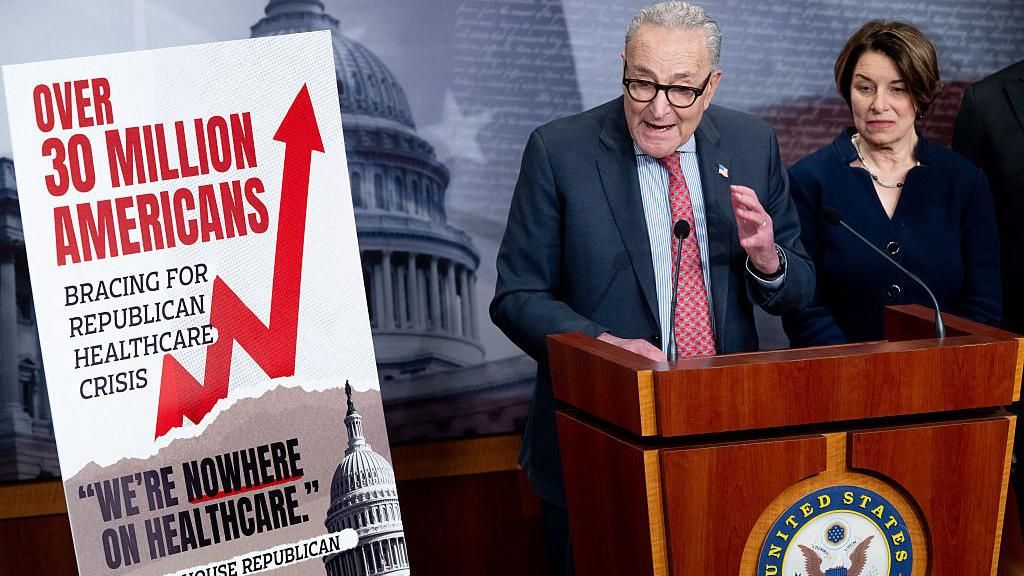
    After a grueling 43 days, the longest government shutdown in US history has finally concluded. Federal employees will soon receive their overdue paychecks, national parks will reopen, and essential government services will resume. Air travel, which had become a logistical nightmare, will return to its usual state of minor frustrations. However, as the dust settles and President Donald Trump signs the funding bill, questions linger about the shutdown’s lasting impact and its cost to the nation. The shutdown was triggered by Senate Democrats, who used the parliamentary filibuster to block a Republican-backed temporary funding measure. Their primary demand was an extension of health insurance subsidies for low-income Americans, set to expire at year’s end. Despite their efforts, the eventual reopening of the government yielded little for Democrats—only a promise of a Senate vote on the subsidies, with no guarantees of Republican support. This outcome has sparked outrage among the party’s progressive wing, with figures like California Governor Gavin Newsom labeling the deal as “pathetic” and a “surrender.” Newsom, a potential 2028 presidential candidate, criticized the Democratic leadership for failing to adapt to the political landscape reshaped by Trump. Meanwhile, Trump has celebrated the reopening as a “very big victory,” even taking jabs at Senate Democratic leader Chuck Schumer. Despite the resolution, the battle over healthcare subsidies remains unresolved, posing a significant challenge for millions of Americans facing skyrocketing insurance costs. Additionally, the Epstein case resurfaced, diverting attention from the shutdown’s conclusion and underscoring the unpredictable nature of US politics. As Congress returns to its regular schedule, the specter of another shutdown looms, with funding for several government departments set to expire by January’s end.

  • Djokovic says Sinner’s doping controversy will linger

    Djokovic says Sinner’s doping controversy will linger

    Novak Djokovic has openly criticized the handling of Jannik Sinner’s doping case, describing it as ‘odd’ and predicting that the controversy will shadow the Italian tennis star throughout his career. Sinner, a four-time Grand Slam champion, was suspended for three months earlier this year after testing positive for the anabolic agent clostebol. Authorities accepted that the substance entered his system inadvertently through massages administered by his physiotherapist during the Indian Wells tournament in March 2024. Despite the suspension, Sinner was able to return to competition in May without missing any Grand Slam events, a fact that Djokovic finds particularly troubling. In an interview with Piers Morgan, Djokovic expressed his dissatisfaction with the perceived preferential treatment given to Sinner, comparing it to his own experience of being deported from Australia in 2022 over his refusal to take a COVID-19 vaccine. Djokovic emphasized that while he does not believe Sinner acted deliberately, the inconsistency and lack of transparency in the case’s handling have left a cloud over the Italian’s career. He also noted that many other players, both male and female, have voiced similar concerns about preferential treatment in doping cases. The International Tennis Integrity Agency has maintained that all cases are dealt with based on facts and evidence, not a player’s name, nationality, or ranking. However, Djokovic’s comments have reignited the debate over fairness and consistency in the enforcement of anti-doping regulations in professional tennis.