标签: North America

北美洲

  • Ho Ho No! Santa pulled over for speeding in Ohio

    Ho Ho No! Santa pulled over for speeding in Ohio

    A festive journey took an unexpected turn in Fulton County, Ohio, when local law enforcement intercepted a most unusual speeding violation. A couple fully attired as Santa and Mrs. Claus was brought to a halt by a sheriff’s deputy during a routine traffic patrol, creating a scene more fitting for a holiday comedy than a traffic log.

    The incident, which occurred in the lead-up to the Christmas season, saw the iconic red suits and white beards fail to grant diplomatic immunity from road traffic regulations. While specific details regarding the vehicle’s speed and the precise location were not immediately disclosed by the Fulton County Sheriff’s Office, the stop was confirmed as a legitimate enforcement action.

    This whimsical encounter highlights a recurring seasonal phenomenon where holiday cheer occasionally intersects with law enforcement duties. Similar incidents have been documented across various jurisdictions, where individuals in festive regalia are reminded that traffic laws remain in full effect regardless of one’s mythical status or charitable intentions. The episode serves as a lighthearted yet firm reminder to all motorists—whether on a sleigh or in a sedan—to prioritize road safety during the bustling holiday period.

  • Ping-pong diplomacy opened up China-US relations

    Ping-pong diplomacy opened up China-US relations

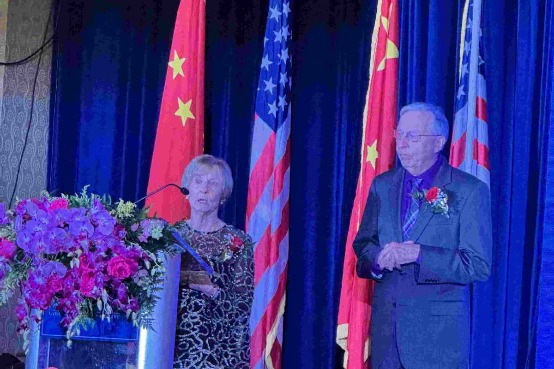
    LOS ANGELES – Five decades after a simple table tennis exchange thawed frozen diplomatic relations, the legacy of ping-pong diplomacy continues to resonate as a powerful example of sports bridging geopolitical divides. At a recent forum commemorating the 54th anniversary of the historic exchange, former athletes, diplomats, and community leaders gathered to reflect on how a sporting gesture transformed international relations.

    Connie Sweeris, former US national team member who participated in the original 1971 exchange, recounted the unexpected invitation that changed history. “On the final day of the World Table Tennis Championships in Nagoya,” Sweeris recalled, “the Chinese delegation invited the American team to extend their trip and visit China for what they termed ‘friendship matches’ – emphasizing friendship first, competition second.”

    This invitation marked the first American visit to China in 22 years, creating an unprecedented people-to-people exchange during a period of prolonged separation between the nations. Sweeris described feeling “privileged to be one of those people” who participated in the groundbreaking trip, which included a memorable meeting with Premier Zhou Enlai at the Great Hall of the People.

    Chinese Consul General in Los Angeles Guo Shaochun emphasized the historical significance of the exchange. “Fifty-four years ago, young table tennis players from China and the US planted the seeds of friendship and sincerity, breaking the ice of 22 years of separation,” Guo stated. “It opened a new chapter of our friendship that has lasted for more than half a century.”

    The forum, organized by the All American Chinese Association, highlighted how the ping-pong diplomacy initiative created a “small safe space for first exchange,” as described by International Table Tennis Federation President Petra Sorling. This human encounter, visible to the world, made larger diplomatic steps possible, including President Richard Nixon’s historic 1972 visit to China.

    Dragomir Cioroslan, Director of International Relations for the United States Olympic and Paralympic Committee, noted that the exchange proved “history is not only made in the halls of power by presidents and premiers, but also through the actions of ordinary people.”

    Contemporary applications of this diplomatic model were discussed, with participants citing recent table tennis exchanges between French and Chinese leaders in Chengdu. Virginia Sung, CEO of the USA Table Tennis Association, emphasized the ongoing relevance: “We gather not just to honor the legacy of ping-pong diplomacy, but to carry it forward – to continue using sport as a bridge to strengthen relationships rooted in mutual respect.”

    The personal impact of these exchanges was illustrated through the story of Jeffrey Lehman, now Vice-Chancellor of NYU Shanghai, whose attendance at a 1972 ping-pong match influenced his decision to pursue opportunities in China. “It taught me to cross borders, make new friends and discover myself in new ways,” Lehman reflected.

    Despite today’s more developed communication channels, participants agreed that genuine human encounters remain essential. As Sorling observed, “Today, we do not lack communication, but we lack genuine encounter – the opportunity to meet people who are different and exchange in good faith. Sport can create that space.”

  • US seizures of oil tankers condemned at Security Council

    US seizures of oil tankers condemned at Security Council

    The United Nations Security Council has become the arena for intense diplomatic confrontation following recent US naval operations in the Caribbean Sea. China’s deputy permanent representative to the UN, Sun Lei, delivered a stern condemnation of American military activities during a Security Council briefing on Tuesday, characterizing them as unlawful escalations that threaten regional stability.

    According to diplomatic accounts, the United States has intensified its military presence in waters adjacent to Venezuela under the declared objective of combating narcotics trafficking. This campaign has involved the sinking of over 28 vessels and the deaths of more than 100 crew members since early September, with Washington claiming these operations targeted drug smuggling operations.

    The controversy reached new heights with the interception and seizure of two Venezuelan oil tankers on December 10 and December 20, respectively. US Homeland Security Secretary Kristi Noem defended these actions, stating publicly that the United States would persist in disrupting the movement of sanctioned oil allegedly financing narco-terrorism networks in the region.

    Venezuela’s government has denounced these maritime interventions as ‘blatant theft and acts of international piracy,’ accusing US military personnel of hijacking private vessels and causing the enforced disappearance of crew members in international waters. Foreign Minister Yvan Gil contends that the underlying motivation involves coveting Venezuela’s substantial energy resources—the largest proven oil reserves globally, with exports averaging approximately 770,000 barrels daily last year.

    The situation has created significant uncertainty for international shipping, with numerous vessels carrying millions of barrels of oil reportedly anchored off Venezuela’s coast, hesitant to sail amid seizure risks. President Donald Trump has explicitly ordered a blockade against US-sanctioned oil tankers traveling to or from Venezuela and has not ruled out military escalation, stating he doesn’t ‘rule out’ regime change through force.

    China’s representative articulated broad principles against unilateralism, emphasizing opposition to any measures violating the UN Charter, infringing on national sovereignty, or employing force in international relations. Sun Lei called upon the United States to heed international concern, cease current operations, lift unilateral sanctions, and contribute constructively to regional peace and development.

  • China deposits with UN its instrument of ratification of agreement on marine biological diversity

    China deposits with UN its instrument of ratification of agreement on marine biological diversity

    In a significant move for global ocean conservation, China has formally deposited its instrument of ratification for the United Nations Agreement on Marine Biological Diversity with UN Secretary-General Antonio Guterres. The deposition occurred on December 15, 2025, according to official documents published on the UN website this Tuesday.

    The groundbreaking international treaty, established under the United Nations Convention on the Law of the Sea, creates comprehensive legal frameworks for conserving and sustainably using marine biological diversity beyond national jurisdictions. The agreement specifically addresses critical areas including deep-sea genetic resources, establishment of marine protected areas, environmental impact assessments, and international capacity building initiatives.

    This diplomatic achievement culminates a extensive negotiation process that began in 2004, involving more than 190 nations. The agreement reached consensus adoption on June 19, 2023, and opened for signatures that September. To date, 144 countries and the European Union have signed the accord, with 80 nations and the EU having completed their ratification processes.

    China demonstrated its commitment to the agreement by signing on the first day it became available for signature. The country’s formal ratification was completed on October 28, 2025, when the 18th session of the Standing Committee of the 14th National People’s Congress approved the decision. China will officially become a contracting party when the agreement takes effect on January 17, 2026.

    UN Secretary-General Guterres has hailed the ratification milestone as a “historic achievement for the ocean and for multilateralism,” recognizing the agreement’s significance in establishing international legal norms for deep-sea and open-ocean activities that will profoundly influence the global maritime order.

  • Venezuela accuses US of ‘extortion’ over seizure of oil tankers

    Venezuela accuses US of ‘extortion’ over seizure of oil tankers

    In a dramatic emergency session of the UN Security Council, Venezuela launched scathing accusations against the United States, characterizing recent naval operations as the “greatest extortion” in its history. The diplomatic confrontation emerged from Washington’s seizure of two Venezuelan oil tankers earlier this month, with US authorities reportedly pursuing a third vessel.

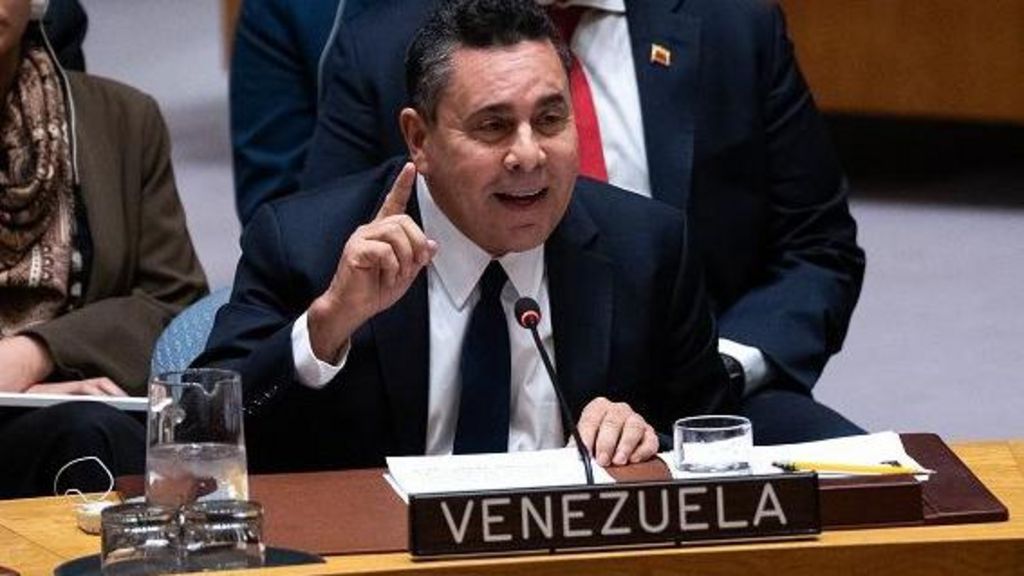
    Venezuelan Ambassador Samuel Moncada delivered an impassioned address, denouncing American actions as “worse than piracy” and accusing the US government of engaging in systematic “pillaging, looting and recolonisation” of his nation. Moncada challenged the legal basis of US jurisdiction in Caribbean waters and questioned the connection between Venezuela’s oil industry and American counter-narcotics operations.

    The Trump administration justified its military deployment—the largest to the region since the 1989 invasion of Panama—as necessary to combat drug trafficking. President Trump has explicitly accused Venezuelan leader Nicolás Maduro of overseeing a narcotics cartel and permitting criminal organizations to operate with impunity. The US naval blockade, initiated on December 16, targets all sanctioned oil tankers entering or leaving Venezuelan waters, with seized crude oil and vessels potentially being retained or sold by American authorities.

    US Ambassador Michael Waltz countered Venezuela’s claims by asserting that Washington does not recognize Maduro as Venezuela’s legitimate leader. Waltz maintained that Maduro’s ability to monetize national oil resources enables his “fraudulent claims to power and his narco-terrorist activities.”

    The geopolitical confrontation drew significant international responses, with Russia and China condemning American actions. Russian Ambassador Vassily Nebenzia warned that US operations against Venezuelan vessels established “a template for future acts of force against Latin American states,” while Chinese envoy Sun Lei urged Washington to “immediately halt relevant actions and avoid further escalation of tensions.”

    The military dimension includes the deployment of 15,000 US troops supported by aircraft carriers, guided-missile destroyers, and amphibious assault ships to the Caribbean region. American operations have targeted over 20 vessels in both Pacific and Caribbean waters in recent months, resulting in at least 100 casualties according to reports. Some international legal experts have raised concerns that these strikes may violate established laws governing armed conflict.

  • Trump says Maduro would be ‘smart’ to step down

    Trump says Maduro would be ‘smart’ to step down

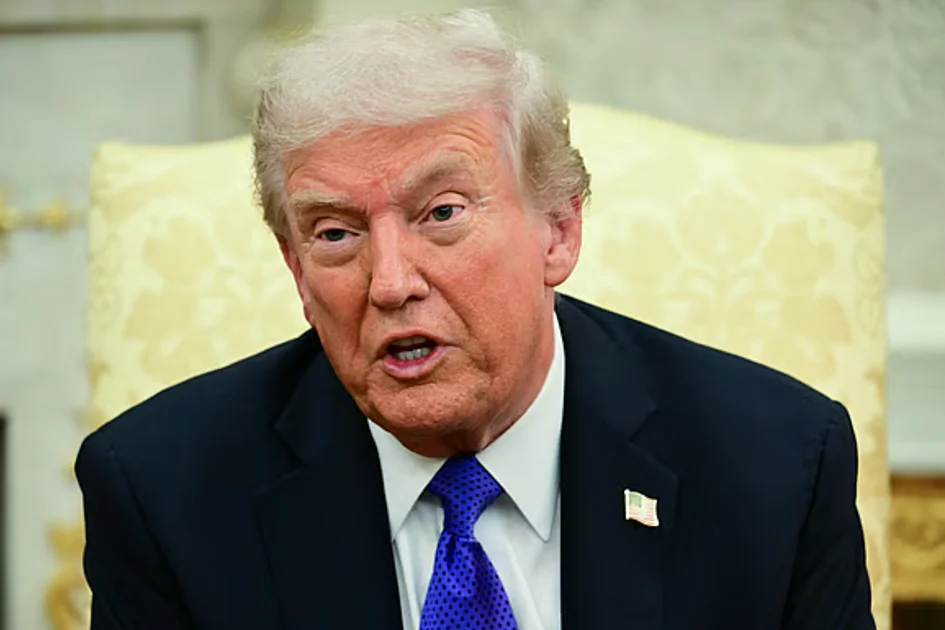
    In a significant escalation of diplomatic tensions, U.S. President Donald Trump suggested on Monday that Venezuelan leader Nicolás Maduro would be acting wisely by voluntarily relinquishing power. The remarks came as American naval forces intensified their blockade targeting Venezuela’s crucial oil resources.

    When questioned by journalists about whether Washington’s coercive measures aimed to force Maduro from office, Trump responded with characteristically blunt rhetoric. “That’s up to him, what he wants to do. I think it would be smart for him to do that,” the president stated. He followed with an implicit threat, adding, “If he wants to do something—if he plays tough, it’ll be the last time he’s ever able to play tough.”

    The Venezuelan president delivered a swift retort during a nationally televised address mere hours later. Maduro advised his American counterpart to concentrate on domestic challenges rather than issuing international threats. “He would be better off in his own country on economic and social issues, and he would be better off in the world if he took care of his country’s affairs,” Maduro asserted.

    The verbal exchange occurs against a backdrop of heightened military activity. Since September, U.S. forces have conducted strikes against vessels allegedly involved in drug trafficking operations across Caribbean and eastern Pacific waters—claims made without publicly presented evidence. These operations have resulted in over 100 fatalities, including fishermen according to family reports and regional governments.

    The geopolitical confrontation drew international attention as Russian Foreign Minister Sergey Lavrov and Venezuelan counterpart Yvan Gil held an urgent telephone consultation. Both diplomats expressed profound concern regarding Washington’s escalating military presence in the Caribbean, warning these actions could trigger serious regional consequences and endanger international maritime navigation.

    The Russian Foreign Ministry subsequently issued a statement reaffirming Moscow’s “full support for and solidarity with the Venezuelan leadership and people.” This diplomatic coordination preceded Tuesday’s scheduled United Nations Security Council emergency meeting to address the worsening crisis.

  • Andrew and Epstein is the story that will not go away

    Andrew and Epstein is the story that will not go away

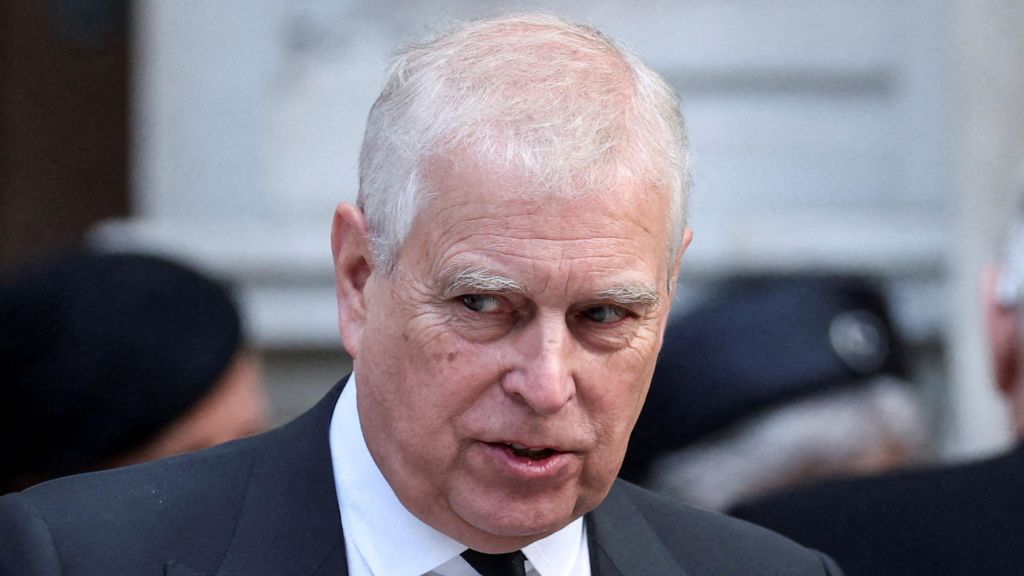
    Newly released documents from the Jeffrey Epstein case have reignited scrutiny surrounding Prince Andrew’s connections to the convicted sex offender, presenting potentially damaging correspondence that raises further questions about their relationship. The latest trove of evidence includes emails allegedly exchanged between the Duke of York and Ghislaine Maxwell, Epstein’s accomplice now serving a 20-year prison sentence for sex trafficking.

    Among the most revealing communications is an August 2001 email from an individual identified as ‘A’—believed to be Andrew—asking Maxwell to ‘find me some new inappropriate friends.’ Maxwell’s response, signed with ‘kisses,’ suggests a familiar relationship between the correspondents. While the identity of ‘A’ remains technically unconfirmed, several biographical details in the emails align with Andrew’s personal history, including references to his departure from the Royal Navy.

    The documents also reveal arrangements for a 2002 trip to Peru, with Maxwell proposing introductions to ‘intelligent pretty fun and from good families.’ These communications emerge just five months after Virginia Giuffre alleges she was forced to have sex with Andrew at Maxwell’s London residence—a claim the prince has consistently denied.

    Further evidence indicates that the US Department of Justice formally sought to question Andrew in April 2020, requesting UK government assistance in compelling his testimony regarding Epstein-linked cases. American authorities specifically inquired about financial transactions between Andrew and Epstein or women associated with them.

    The ongoing revelations represent the latest chapter in Andrew’s dramatic fall from royal grace, which has included the stripping of his titles and military affiliations. With additional parliamentary inquiries into his finances and Crown Estate lease scheduled for next year, the cascade of controversies shows no signs of abating. As thousands of Epstein documents remain unexamined, the prospect of further damaging disclosures continues to loom over the disgraced royal.

  • Trump’s AI hiring campaign: Over 25,000 interested in joining ‘Tech Force’, says official

    Trump’s AI hiring campaign: Over 25,000 interested in joining ‘Tech Force’, says official

    The Trump administration’s ambitious Tech Force program has generated substantial public interest, with approximately 25,000 applicants expressing desire to join the government’s technology initiative, according to official statements released Tuesday. This recruitment drive represents a significant strategic shift from the administration’s earlier focus on reducing federal employment positions.

    Scott Kupor, Director of the U.S. Office of Personnel Management, announced through social media platform X that the administration will utilize this extensive applicant pool to recruit software engineers, data specialists, and other technology professionals with artificial intelligence expertise. These recruits will be assigned to various federal agencies including the Departments of Homeland Security, Veterans Affairs, and Justice for two-year technology project deployments.

    The initiative forms a cornerstone of the Trump administration’s artificial intelligence agenda, continuing a tradition established by previous administrations of integrating technological talent within government operations. Notably, this technology-focused hiring campaign marks a departure from the workforce reduction policies that characterized the initial months of Trump’s second term, which primarily targeted non-essential government positions while maintaining those deemed critical for national security.

    The first cohort will select approximately 1,000 candidates from the applicant pool, creating competitive placement opportunities within the federal technology infrastructure. While the administration has publicly released recruitment figures, independent verification of the exact number of applicants remains pending through third-party sources.

  • Holiday trading: Why late-December markets demand a different playbook

    Holiday trading: Why late-December markets demand a different playbook

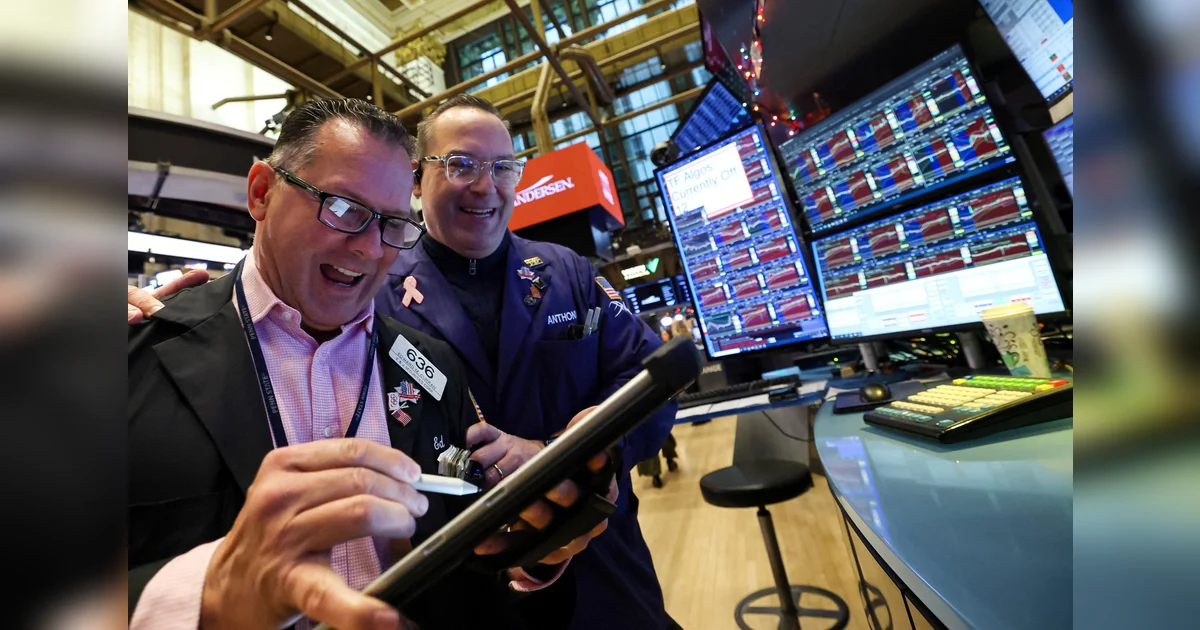
    As financial markets enter the Christmas-New Year transition period, they undergo a fundamental transformation characterized by diminished trading activity and amplified volatility. This seasonal shift creates a uniquely fragile trading environment where traditional market behaviors become less reliable.

    The convergence of multiple factors drives this annual phenomenon: institutional investors conducting year-end portfolio rebalancing, foreign exchange exposure adjustments, and significantly reduced participation across major markets. The resulting liquidity vacuum leads to wider bid-ask spreads and creates conditions where even routine data releases or isolated transactions can trigger disproportionate price movements.

    Historical patterns have often referenced the so-called “Santa Claus Rally”—a tendency for U.S. equity indices to strengthen during late December. However, this seasonal expectation remains contingent on broader macroeconomic conditions, valuation pressures, and evolving policy expectations. The 2025 market trajectory toward 2026 appears particularly dependent on Federal Reserve policy signals, global growth prospects, and investor interpretation of emerging economic indicators.

    Market analysts emphasize that technical discipline becomes paramount during this period. Traders should prioritize higher-timeframe analysis to filter out liquidity-driven distortions, await confirmed breakouts supported by volume, and maintain strict risk management protocols. Position sizing, stop-loss orders, and disciplined profit targets take on increased importance when market depth diminishes.

    Across major asset classes, distinct dynamics emerge. U.S. equities maintain a broadly bullish bias but face potential consolidation risks around stretched valuations and policy uncertainty. Precious metals continue consolidating below their 2025 peaks, awaiting catalyst events to establish new support levels. The U.S. dollar approaches critical multi-year support zones that will likely determine its longer-term trajectory, while crude oil remains sensitive to geopolitical developments and winter demand patterns.

    The consensus among trading professionals suggests that the most effective strategy involves treating holiday market movements as noise rather than meaningful trend developments. Preserving capital and maintaining strategic clarity outweighs pursuing short-term gains in unpredictable conditions. As central banks approach a potentially pivotal policy year, the cautious approach adopted during these final weeks of 2025 may well position investors more advantageously for the opportunities and challenges of 2026.

  • Trump trips, a fake video and 10 possible co-conspirators – Takeaways from new Epstein files

    Trump trips, a fake video and 10 possible co-conspirators – Takeaways from new Epstein files

    The U.S. Department of Justice has unveiled its most substantial batch of Jeffrey Epstein-related documents to date, releasing over 11,000 pages that reveal previously concealed details about the investigation into the deceased financier’s sex trafficking network. This disclosure, mandated by recent legislation, represents the largest single release in an ongoing transparency initiative that began last Friday.

    The newly public files contain heavily redacted FBI communications identifying ten potential Epstein co-conspirators, with six individuals already served subpoenas across Florida, Boston, New York City, and Connecticut. Among the unredacted names appear Ghislaine Maxwell—already serving a 20-year sentence—and former Victoria’s Secret CEO Les Wexner, though Wexner’s legal representatives maintain he was never considered a target or co-conspirator by prosecutors.

    Perhaps the most intriguing revelation involves communications from an individual identified only as ‘A’ using the email address abx17@dial.pipex.com—listed in Epstein’s records under the contact ‘Duke of York.’ In a 2001 email exchange, ‘A’ writing from ‘Balmoral Summer Camp for the Royal Family’ asked Maxwell to ‘find me some new inappropriate friends,’ to which Maxwell responded apologetically that she could only locate ‘appropriate friends.’ This correspondence resurfaces amid ongoing scrutiny of Prince Andrew’s associations with Epstein, though he has consistently denied any wrongdoing.

    The document release also sheds new light on Donald Trump’s connections to Epstein, revealing previously unreported travel arrangements. According to a federal prosecutor’s email from January 2020, flight records indicate Trump traveled on Epstein’s private jet ‘many more times than previously reported’—at least eight flights between 1993 and 1996, sometimes accompanied by family members including then-wife Marla Maples and children Tiffany and Eric. The Justice Department separately emphasized that many claims about Trump in the files are ‘untrue and sensationalist.’

    Lawmakers from both parties have expressed concern over the extent of redactions in the released documents, arguing that the legislation specifically prohibits withholding names merely to prevent ‘reputational harm.’ Democrat Congressman Suhas Subramanyam, a member of the House Oversight Committee, noted the significance of learning about ’10 co-conspirators potentially that we knew nothing about,’ suggesting congressional scrutiny may intensify.

    The document trove also included bizarre elements such as a fabricated letter purportedly from Epstein to convicted sex offender Larry Nassar, which forensic analysis determined to be inauthentic, and a computer-generated video falsely depicting Epstein in his prison cell. These inclusions demonstrate the challenge authorities face in separating credible evidence from public speculation regarding Epstein’s network and death.