标签: North America

北美洲

  • US nuclear stockpile agency to layoff hundreds as shutdown continues

    US nuclear stockpile agency to layoff hundreds as shutdown continues

    The National Nuclear Security Administration (NNSA), a semi-autonomous agency under the US Department of Energy, has announced the temporary layoff of approximately 1,400 employees as the federal government shutdown enters its 20th day. This marks the first time in the agency’s history, since its establishment in 2000, that such measures have been taken. Officials revealed that fewer than 400 employees will remain operational post-furlough. The NNSA plays a critical role in safeguarding the US nuclear stockpile and preventing the global proliferation of nuclear weapons. Spokesperson Ben Dietderich stated, ‘We are left with no choice this time. We’ve extended funding as long as we could.’ The Office of Secure Transportation, responsible for transporting nuclear weapons, has secured funding until October 27. Energy Secretary Chris Wright, who is set to address the issue at a news conference in Nevada, assured that the nuclear stockpile remains secure, though modernization efforts will be hindered. Meanwhile, the US Senate is poised to vote on a funding bill, which has already failed 10 times. Senate Majority Leader John Thune plans to introduce legislation to pay federal employees and military personnel working without pay. The shutdown, stemming from a deadlock between Republicans and Democrats over healthcare funding and budget negotiations, has left 1.4 million federal employees either furloughed or working without pay.

  • UAE President extends Diwali wishes in Hindi, hopes for ‘peace, prosperity’

    UAE President extends Diwali wishes in Hindi, hopes for ‘peace, prosperity’

    The UAE President, Sheikh Mohamed, extended heartfelt Diwali wishes in Hindi, underscoring the nation’s commitment to multicultural harmony and inclusivity. Addressing the significant Indian expatriate community, which numbers over four million, the President expressed his hopes for ‘peace, health, and prosperity’ in the coming year. His message, shared via social media, resonated deeply with the Indian diaspora, who celebrated the festival with traditional fervor across homes, community centers, and public spaces. This gesture highlights the UAE’s longstanding tradition of embracing diverse cultural celebrations, reflecting its respect for its multicultural population. Diwali in the UAE is marked by vibrant decorations, family gatherings, and government-approved fireworks displays, though authorities have reiterated the importance of safety and adherence to regulations. The festival also boosts local businesses, particularly gold jewellers, who report robust sales during this period. The UAE’s leadership, including Vice-President Sheikh Mohammed bin Rashid Al Maktoum, has consistently demonstrated its support for the Indian community, further strengthening the bond between the two nations.

  • Three Scots agree extradition to Canada over man’s death

    Three Scots agree extradition to Canada over man’s death

    Three men have consented to extradition from Scotland to Canada to face trial in connection with the death of Sharif Rahman, a 44-year-old restaurant owner. The incident, which occurred in August 2023 in Owen Sound, Ontario, allegedly involved a physical altercation over an unpaid $150 bill outside a curry house. Rahman was found unconscious by a staff member and later succumbed to his injuries in a London, Ontario hospital. Robert Evans, 24, has been charged with manslaughter, while his father, Robert Busby Evans, 47, and uncle, Barry Evans, 54, face charges of being accessories after the fact to an indictable offence. The trio, who were in Canada on holiday visas, left the country shortly after the incident. They were arrested in Edinburgh and Dalkeith last year on an international warrant. During hearings at Edinburgh Sheriff Court, all three men agreed to extradition, with Sheriff Julius Komorowski emphasizing that their decision was final and not subject to appeal. Ontario prosecutors allege that the elder Evans men attempted to obstruct the investigation, with Barry Evans driving his nephew away from the scene and Robert Busby Evans arranging his son’s return to Scotland the following day. The case will now be referred to Scottish ministers for final approval.

  • From Emirati roots to global horizons: Meethaq Manpower expands into KSA

    From Emirati roots to global horizons: Meethaq Manpower expands into KSA

    Meethaq Manpower, a prominent Emirati-owned staffing and outsourcing firm under the Al Ghandi Group, has unveiled its latest milestone with the launch of a new branch in Saudi Arabia. This strategic expansion underscores the company’s commitment to broadening its footprint beyond the UAE, targeting the GCC, the MENA region, and Europe. With over 12 years of growth under the leadership of CEO Maryam Buti AlMheiri, Meethaq has established itself as a trusted partner for businesses, government entities, and global clients, delivering innovative and ethical workforce solutions. The company’s entry into Saudi Arabia aligns with the Kingdom’s Vision 2030, a transformative economic agenda that presents significant opportunities in manpower and outsourcing. Maryam emphasized Meethaq’s mission to bridge the gap between skilled professionals and businesses, fostering a sustainable workforce ecosystem. As a 100% Emirati-owned enterprise, Meethaq embodies national pride and ambition, contributing to Emiratisation and showcasing Emirati leadership globally. This expansion not only marks a business achievement but also reinforces the UAE’s reputation as a hub of innovation and enterprise. From Dubai to Riyadh and beyond, Meethaq is paving the way for businesses and individuals to thrive, reflecting a story of vision, resilience, and determination with a lasting global impact.

  • Trump says India to continue paying ‘massive’ tariffs if Russian oil imports unrestricted

    Trump says India to continue paying ‘massive’ tariffs if Russian oil imports unrestricted

    US President Donald Trump has reiterated his stance that India will face significant tariffs if it continues unrestricted imports of Russian oil. Speaking to reporters aboard Air Force One on Sunday, Trump claimed that Indian Prime Minister Narendra Modi assured him that India would limit its purchases of Russian oil. ‘I spoke with Prime Minister Modi of India, and he said he’s not going to be doing the Russian oil thing,’ Trump stated, echoing comments he made earlier in the week. However, the Indian government has denied any such conversation took place. Trump responded to this denial by asserting that India would continue to pay ‘massive tariffs’ if it did not comply with the restrictions. This development highlights the ongoing diplomatic and economic tensions between the US and India, particularly in the context of global energy markets and international trade policies.

  • ‘No debts’: UAE’s raffle millionaires reveal how life changed after big wins

    ‘No debts’: UAE’s raffle millionaires reveal how life changed after big wins

    The UAE Lottery recently celebrated a historic milestone as a resident clinched the first-ever Dh100 million grand prize. This monumental win has sparked conversations about how such life-altering fortunes reshape lives. To delve deeper, Khaleej Times interviewed past winners to uncover their transformative experiences.

    Anish Krishnan, an Indian expat and IT engineer, won Dh10 million in the Mahzooz draw in 2022. At the time, he was living in a bed space in Ajman, struggling to make ends meet. His win allowed him to pay off a home loan, reunite with his family in Dubai, and invest in properties, including a villa in Dubai South. He also secured a Golden Visa and continues to support his relatives while contemplating future business ventures. Anish advises the latest winner to remain level-headed and avoid impulsive spending.

    Munavvar, an Al Ain resident, won Dh20 million in the Big Ticket draw in 2023. After years of working as a driver, he used his share of the winnings to start his own business, achieving financial freedom. Despite his newfound wealth, Munavvar leads a simple, debt-free life and continues to participate in the lottery with friends.

    Another winner, Charlie, who chose to remain anonymous, shared a more tumultuous experience. Winning Dh3.5 million with a group of friends brought unexpected challenges, including harassment and demands for money. Charlie used his winnings to clear debts and invest in fixed deposits, maintaining his job while securing his financial future.

    These stories highlight the profound impact of lottery wins, offering financial freedom and opportunities while underscoring the importance of prudent decision-making and resilience in the face of newfound wealth.

  • US tariffs begin to bite into trade

    US tariffs begin to bite into trade

    The ripple effects of US-imposed tariffs are now manifesting in the nation’s trade landscape, with September witnessing a significant downturn in container cargo imports. According to the latest Global Shipping Report by Descartes, a supply chain technology and data provider, US container imports plummeted by 8.4% year-on-year, with Chinese imports bearing the brunt at a staggering 22.9% decline. Despite this, US ports managed to process 2.31 million 20-foot equivalent units (TEUs) of container cargo, marking the third-highest September volume on record. The steepest declines were observed in sectors such as toys, sporting goods, footwear, apparel, aluminum, and electric machinery. This contrasts sharply with the surge in imports during July and August, as retailers stockpiled goods ahead of the holiday season. Jonathan Gold, Vice-President of Supply Chain and Customs Policy at the National Retail Federation, attributed the earlier peak to businesses’ efforts to mitigate tariff impacts by front-loading cargo. However, the uncertainty surrounding tariff policies continues to challenge businesses, with projections indicating that monthly import volumes at major US ports may drop below 2 million TEUs for the remainder of the year. Analysts, including Ben Hackett of Hackett Associates, predict further import slowdowns, citing ongoing volatility in US tariff policy as a significant source of economic uncertainty. China’s share of total US imports also declined, falling to 33% in September from 34.5% in August. The Port of Los Angeles, one of the busiest in the US, reported an 8% year-on-year decline in import volumes, processing around 883,000 container units in September. Gene Seroka, the port’s Executive Director, anticipates a further softening of cargo volumes in the coming months, exacerbated by turbulent trade negotiations with China. The US recently announced additional 100% tariffs on Chinese goods, effective November 1, following China’s imposition of export controls on rare earth minerals. China’s Ministry of Commerce has criticized these measures, emphasizing that its export controls are a legitimate effort to safeguard national and global security, not targeted at any specific country. The ongoing trade tensions have already impacted bilateral trade, with China’s exports to the US falling by 27% year-on-year in September, marking the sixth consecutive monthly decline. As both nations navigate this contentious trade landscape, the broader economic implications remain uncertain.

  • What is Aukus, the submarine deal between Australia, the UK and US?

    What is Aukus, the submarine deal between Australia, the UK and US?

    A landmark defense agreement between Australia, the United States, and the United Kingdom, known as the Aukus pact, is under scrutiny as the Trump administration evaluates its alignment with the ‘America First’ policy. The deal, valued at £176 billion over 30 years, aims to bolster Australia’s naval capabilities by supplying nuclear-powered submarines and fostering advanced military collaboration. Australia is set to acquire up to five Virginia-class submarines from the US, with plans to co-develop a new submarine model for both the UK and Australian navies. The pact also includes joint efforts in cutting-edge technologies such as hypersonic missiles, undersea robotics, and artificial intelligence. While the review has raised concerns about potential delays or cancellations, both the UK and Australia have dismissed these fears, emphasizing the routine nature of such evaluations during a new administration. The deal is widely perceived as a strategic move to counter China’s growing influence in the Indo-Pacific region, particularly in contested areas like the South China Sea. Despite criticism from China, which labeled the pact ‘extremely irresponsible,’ the Aukus partners have underscored the necessity of addressing escalating regional security threats. The agreement, unveiled in September 2021, represents a significant upgrade for Australia’s military, enabling long-range strike capabilities and enhancing its strategic presence in the region. Additionally, the pact is expected to create thousands of jobs in the UK and strengthen trilateral defense ties. The review’s outcome will likely be a focal point during upcoming discussions between US President Donald Trump and Australian Prime Minister Anthony Albanese in Washington, DC.

  • China’s economic security growth model highlighted

    China’s economic security growth model highlighted

    China’s economic strategy has pivoted towards a model that integrates high-quality development with robust security measures, emphasizing technological self-reliance and a strengthened domestic demand base. This approach, termed the ‘economic security growth model,’ was a focal point of discussion at a recent virtual panel hosted by the Peterson Institute for International Economics (PIIE) in Washington, DC. Experts highlighted how this model transcends traditional export- or investment-driven frameworks, instead focusing on strategic pillars such as dual circulation, self-reliant innovation, and mechanisms to counter foreign economic coercion. The dual circulation strategy prioritizes the domestic market while fostering synergy between internal and external markets. Trade data indicates that while direct trade with the US and other advanced economies has plateaued, China’s trade with the rest of the world continues to expand. The second pillar of this model involves a ‘whole-of-nation’ push towards self-reliant innovation, insulating the economy from geopolitical risks. This includes significant fiscal allocations for education, science, and technology, with a notable rise in approvals for science and engineering programs. China’s industrial robot adoption rates far exceed global averages, signaling a clear trajectory towards innovation-led growth. The third pillar focuses on establishing export controls and regulations to address external coercion. China’s advancements in AI exemplify the potential of this approach, with Chinese firms securing six of the top 20 AI models globally, despite US export controls on advanced AI chips. Experts noted that this competition benefits the global economy, as it ensures access to highly capable AI systems. The World Economic Forum and Stanford’s 2025 AI Index have acknowledged China’s narrowing performance gaps in AI, with innovations like the DeepSeek-R1 AI model and Huawei’s Ascend 910C chip gaining recognition. The diffusion of technology, rather than its initial development, is seen as the true determinant of success, with AI spreading faster than any prior technology.

  • ‘No Kings’ protests erupt across US

    ‘No Kings’ protests erupt across US

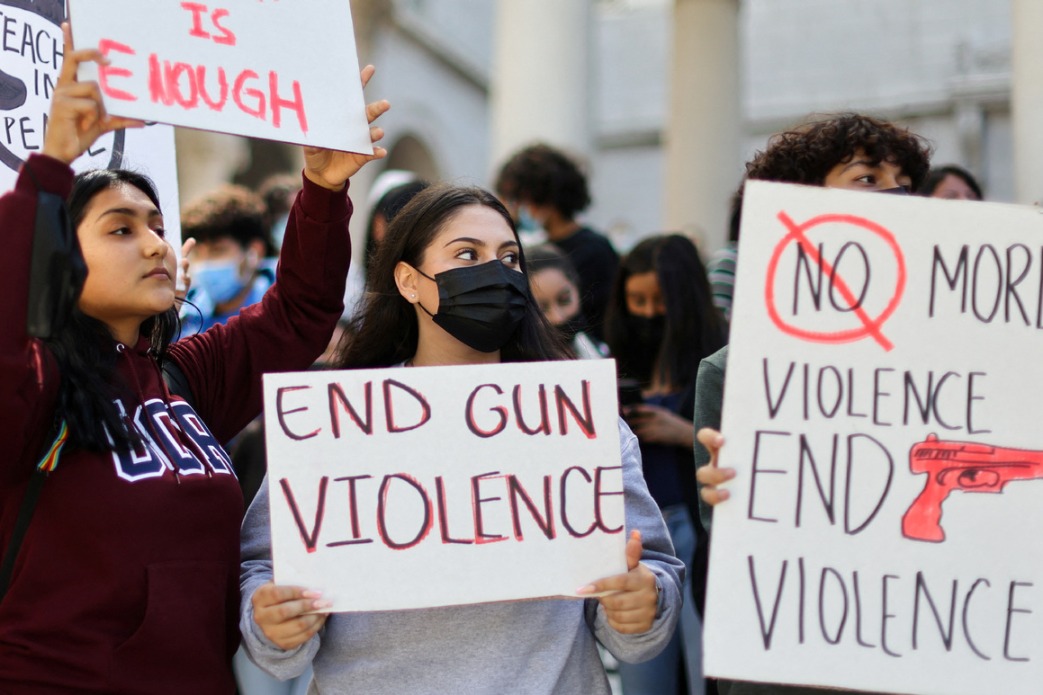
    On Saturday, October 19, 2025, millions of Americans took to the streets in all 50 states in a series of coordinated protests dubbed ‘No Kings.’ The demonstrations, which spanned from New York to Los Angeles, were a direct response to President Donald Trump’s controversial policies and perceived authoritarian tendencies. Organizers estimated that over 7 million people participated, with rallies even occurring near Trump’s Florida residence. Protesters voiced their opposition to Trump’s hard-line immigration policies, attacks on the media, and alleged erosion of democratic norms. Slogans such as ‘Protect Democracy’ and ‘Fight Ignorance, Not Migrants’ dominated the marches, reflecting widespread discontent. While the protests were largely peaceful, isolated incidents in Los Angeles saw police deploying nonlethal rounds and tear gas to disperse crowds. Trump responded with a series of AI-generated videos on his Truth Social platform, depicting himself as a king, further fueling the outrage. House Speaker Mike Johnson dismissed the rallies as ‘Hate America’ protests, a claim met with derision by demonstrators. The events underscored the deep political polarization gripping the nation, with many participants expressing fears for the future of American democracy.