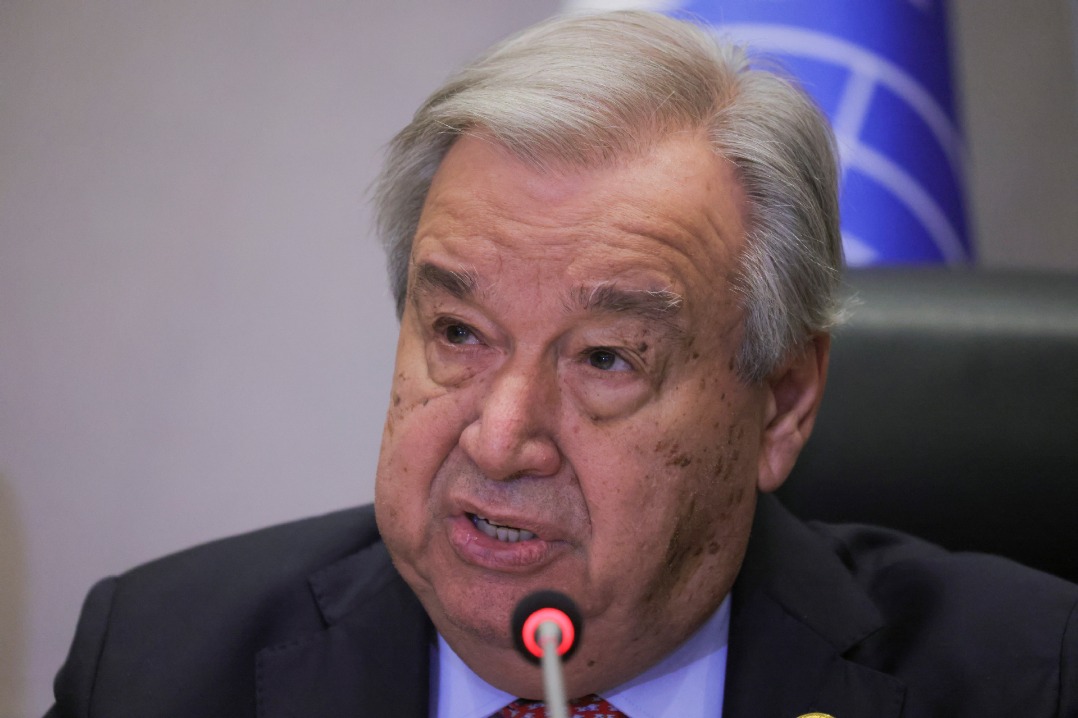
The United Nations has issued a stark warning that the world is on track to surpass the critical 1.5°C warming threshold within years, with planet-warming emissions reaching a new record high in 2024. Despite a wave of national commitments to reduce heat-trapping pollution, these efforts are insufficient to prevent devastating climate impacts, according to the UN Environment Programme (UNEP). The latest Emissions Gap report reveals that current pledges would limit global warming to between 2.3°C and 2.5°C by 2100—far above the safer 1.5°C target. Scientists emphasize that exceeding this threshold risks catastrophic consequences, including more intense hurricanes, floods, and irreversible climate tipping points. The report, released ahead of the COP30 climate summit in Brazil, underscores the urgent need for unprecedented emissions cuts. UN Secretary-General Antonio Guterres called for minimizing the overshoot of 1.5°C, urging major polluters to accelerate their efforts. However, the latest round of carbon-cutting targets has barely made progress, with only one-third of countries meeting the 2035 emissions reduction deadline. The report also highlights the disproportionate role of G20 economies, which account for 75% of global emissions, and the limited impact of recent climate pledges. With Earth projected to warm by 2.8°C under current policies, COP30 faces the challenge of reigniting global climate action amid geopolitical tensions and missed targets.
标签: North America
北美洲
-

Burjeel Holdings posts record Q3 revenue, net profit jumps 27.5%
Burjeel Holdings, a leading super-specialty healthcare provider in the Middle East, has announced a record-breaking third quarter for 2025, with revenue soaring to Dh1.42 billion and net profit increasing by 27.5% year-on-year to Dh175 million. The Abu Dhabi-listed healthcare group attributed this exceptional performance to a combination of rising patient volumes, a richer case mix, and enhanced operational efficiencies across its expanding network in the UAE and Saudi Arabia. EBITDA for the quarter rose by 17.1% to Dh320 million, with margins improving to 22.5%, reflecting disciplined cost control and heightened demand for complex care services.
CEO John Sunil highlighted the results as a testament to Burjeel’s strategic investments and growing reputation in high-acuity care. ‘Our network’s strength and market positioning have enabled us to deliver clinical excellence and robust financial momentum,’ he stated. ‘We are now firmly established as the region’s foremost destination for advanced specialties, including oncology, organ transplantation, and precision medicine.’
Patient footfall reached 5.1 million in the first nine months of 2025, marking a 7.3% year-on-year increase. Inpatient volumes rose by 8.4% in Q3, driven by strong demand in oncology, cardiology, gastroenterology, and orthopedics. The group performed over 67,000 surgeries during this period, a 10.3% increase, with bed occupancy averaging 67%. Outpatient visits also grew, rising by 4.5% in Q3 and 7.2% year-to-date, supported by new day care and physiotherapy centers.
Burjeel Medical City (BMC), the group’s flagship tertiary care hub, posted standout results with Q3 EBITDA soaring 46.8% and margins hitting an all-time high of 22%. BMC’s revenue rose by 10.9% in the first nine months, fueled by rising oncology volumes and expanded specialty services. The group also achieved several medical milestones during the quarter, including the UAE’s youngest-ever liver transplant and the GCC’s first Hepatic Artery Infusion Pump procedure, further cementing its leadership in complex and precision care.
Despite temporary restrictions on certain insurance plans, Burjeel maintained momentum through increased inflows from premium insurers and self-paying patients. This shift, combined with a rise in complex procedures, helped offset volume moderation in the basic segment. The medical centers segment also showed strong growth, with revenue up 15.8% in Q3, reflecting the ramp-up of over 40 new facilities across the UAE and KSA.
Burjeel’s balance sheet remains robust, with net debt to EBITDA at 1.9x, and recent strategic investments—including the Dh186 million acquisition of a Dubai hospital building—expected to enhance long-term asset value. Looking ahead, the group plans to continue expanding its footprint and capabilities, supported by favorable market dynamics and a robust pipeline of projects. ‘Our exceptional teams remain the driving force behind our success,’ Sunil added, ‘ensuring every patient receives world-class care.’
-

Dubai flight delayed by 9 hours as Pakistan airline’s operations halt temporarily
Pakistan International Airlines (PIA) experienced significant operational disruptions on Monday night, leading to widespread flight delays and cancellations. The disruption was triggered by the Society of Aircraft Engineers of Pakistan (SAEP), a derecognized entity, which refused to issue aircraft clearances, citing safety concerns. Among the affected flights was a Dubai-bound service from Islamabad, delayed by nine hours. PIA’s management swiftly responded, working overnight to restore operations and mitigate the impact on passengers. The airline confirmed that seven flights across major cities, including Islamabad, Karachi, Lahore, and Sialkot, faced delays ranging from four to 14 hours, while five flights were canceled. PIA emphasized its commitment to restoring full operations and prioritizing customer convenience. The incident highlights ongoing tensions within the airline as it navigates challenges, including privatization efforts.
-

Former US vice-president Dick Cheney dies at 84
Dick Cheney, the former US vice-president who served under President George W. Bush from 2001 to 2009, passed away on Monday evening at the age of 84. His family confirmed that his death was due to complications from pneumonia, cardiac disease, and vascular conditions. Cheney, often described as one of the most powerful vice-presidents in American history, played a pivotal role in shaping US foreign policy, particularly in the decisions that led to the wars in Iraq and Afghanistan. In recent years, Cheney became a vocal critic of former President Donald Trump, aligning with his daughter Liz Cheney, who has been a prominent Republican opponent of Trump in Congress. Notably, during the 2024 election, Cheney surprised many by endorsing Democratic candidate Kamala Harris and condemning Trump, marking a significant shift in his political stance. His legacy remains a subject of both admiration and controversy, reflecting his profound impact on American politics.
-

Six takeaways from Canada’s federal budget
On Tuesday, Canada’s Finance Minister François-Philippe Champagne presented the nation’s federal budget, marking Prime Minister Mark Carney’s first major fiscal plan since taking office. The budget, described as both a political manifesto and a spending blueprint, outlines a comprehensive strategy to position Canada as the strongest economy in the G7. It comes at a time of significant global change, with Canada’s relationship with the US—its largest trading partner—undergoing rapid shifts. The budget warns of economic headwinds and emphasizes the need for a robust response to ensure Canada’s competitiveness on the global stage. The plan includes C$280 billion in spending, which could push the deficit to C$78.3 billion, the second-largest in Canadian history. Key investments target infrastructure, defense, housing, and digital corridors, while C$60 billion in spending cuts over five years will be achieved through public sector job reductions and AI adoption. The budget also introduces a Climate Competitiveness Strategy, aiming to make Canada a clean energy superpower by supporting low-emission projects and carbon capture technologies. Defense spending will see a significant boost, with C$81.8 billion allocated over five years to meet NATO targets and address Arctic security. Immigration targets are being reduced, and several Trudeau-era policies, including the consumer carbon tax and luxury vehicle tax, have been scrapped. The budget also addresses the impact of US tariffs, offering C$5 billion in support for affected industries and launching a C$10 billion loan facility to help businesses weather trade-related challenges.
-

What Trump took from Dick Cheney’s political playbook
Dick Cheney, the former U.S. vice-president who passed away on Tuesday, played a pivotal role in reshaping the scope of presidential authority in the wake of the 9/11 terrorist attacks. His influence extended beyond his tenure, as Donald Trump now leverages the very mechanisms Cheney established to advance his own political objectives. Despite their personal and ideological differences, both leaders have significantly expanded the powers of the executive branch, often bypassing traditional checks and balances.
Cheney’s career in government spanned decades, beginning with his role in Richard Nixon’s administration and culminating in his influential position as vice-president under George W. Bush. The 9/11 attacks provided Cheney with a unique opportunity to redefine executive authority, enabling Bush to pursue the ‘war on terror’ with minimal constraints. This approach, as detailed in Barton Gellman’s 2008 book ‘Angler,’ was driven by a shared belief in the necessity of robust government action.
Today, Trump has inherited and further amplified these expanded powers, using them to justify actions such as military strikes and domestic surveillance. While Cheney’s policies were rooted in a post-9/11 sense of national unity, Trump’s agenda often lacks such consensus, leading to widespread public concern. Despite their differences, both leaders have demonstrated a willingness to deploy military force abroad and circumvent judicial oversight.
Cheney’s later years saw him become a vocal critic of Trump, particularly after the 2020 election. He warned of the dangers Trump posed to the republic, even endorsing Democrat Kamala Harris in 2024. Trump, in turn, dismissed Cheney as a proponent of ‘endless, nonsensical wars.’
The parallels between Cheney and Trump extend to their use of executive authority in areas such as military intervention, detention practices, and surveillance. Both leaders have pushed the boundaries of presidential power, often with controversial consequences. As the U.S. grapples with the legacy of Cheney’s policies and Trump’s ongoing actions, the debate over the limits of executive authority remains a central issue in American politics.
-

What happens if the Supreme Court rules Trump’s ‘reciprocal’ tariffs illegal?
The legality of former President Donald Trump’s sweeping global tariffs is set to be determined by the US Supreme Court. The highest court in the nation will assess whether Trump’s use of emergency powers to impose these tariffs constitutes an overreach of presidential authority. A hearing is scheduled for November 5, following a federal appeals court ruling that declared the tariffs illegal. These tariffs, announced in April, imposed a flat 10% rate on imports from all countries, a move Trump argued was necessary to address ‘unfair’ trade relations with the US. The case reached the Supreme Court after two lower courts ruled that Trump lacked the authority to implement such broad tariffs. The appellate court’s 7-4 decision rejected Trump’s claim that the International Emergency Economic Powers Act (IEEPA) permitted these tariffs, stating that the law does not grant the president the power to impose tariffs or taxes. Trump criticized the ruling, calling it ‘highly partisan’ and a ‘disaster’ for the country. The case originated from legal challenges by small businesses and a group of 12 US states. The Supreme Court’s decision could have significant implications for Trump’s political legacy, the US economy, and global trade relations. If the court upholds the lower courts’ rulings, it could lead to uncertainty in financial markets and questions about the validity of existing trade deals. Conversely, a ruling in Trump’s favor could embolden future presidents to use the IEEPA more aggressively. The conservative majority on the Supreme Court has frequently sided with Trump, but the court has also been critical of presidential overreach. The ruling will specifically address Trump’s ‘reciprocal tariffs,’ which include various rates on imports from countries like China, Mexico, and Canada. Tariffs imposed under Section 232, aimed at protecting national security, remain unaffected by this case.
-

Carney seeks to fortify Canada against tariffs shocks in first budget
Prime Minister Mark Carney’s government has introduced its first federal budget, outlining a bold economic transformation plan to address the pressures of US tariffs and foster long-term growth. Dubbed an ‘investment budget,’ the fiscal blueprint increases Canada’s deficit to C$78 billion, up from C$51.7 billion, while aiming to attract C$1 trillion in investments over the next five years. Finance Minister François-Philippe Champagne presented the budget in the House of Commons, emphasizing the need for ‘bold and swift action’ during a period of profound change. The budget includes significant spending on infrastructure, defense, and artificial intelligence (AI), alongside cuts to the federal workforce and international aid. To counter US tariffs, which have already impacted sectors like steel, aluminum, and automobiles, the government plans to invest C$280 billion to enhance productivity, competitiveness, and resilience. This includes modernizing trade infrastructure and doubling exports to non-US markets. The budget also proposes C$30 billion in defense spending, aligning with NATO commitments, and nearly C$1 billion to advance AI integration. However, the plan faces political hurdles, as Carney’s Liberal government lacks a majority and requires support from other parties to pass the budget. Opposition leaders have expressed concerns over the deficit and austerity measures, raising the possibility of a federal election if the budget fails to gain approval.
-

OpenAI clarifies ChatGPT’s limits after viral claims about legal, medical advice
OpenAI has recently clarified the boundaries of its AI chatbot, ChatGPT, following widespread claims on social media and in various media outlets that the platform had ceased offering legal, medical, and financial advice. The company emphasized that while ChatGPT can provide explanations and general information, it is not designed to offer personalized advice or recommendations in these critical fields. This clarification aligns with OpenAI’s ongoing efforts to refine its policies, balancing user freedom with safety and accountability. The discussion gained traction after media outlet Nexta shared a post on X, stating that ChatGPT had been officially labeled an ‘educational tool’ and would no longer provide specific guidance on treatment, legal issues, or financial matters. OpenAI’s Usage Policies page, last updated on October 29, explicitly prohibits the provision of tailored advice in licensed fields without the involvement of a licensed professional. Karan Singhal, OpenAI’s head of health AI, addressed the confusion on X, stating that this was not a new change and that ChatGPT has always been a resource for understanding legal and health information, not a substitute for professional advice. OpenAI’s policies also restrict the automation of high-stakes decisions in sensitive areas without human review, including legal, medical, financial, housing, employment, and insurance matters. While no major lawsuits have emerged over ChatGPT’s advice, experts believe this clarification underscores the risks of AI in regulated fields. OpenAI’s stance also reflects a broader industry shift toward regulated and accountable AI use, as legal scrutiny on AI deepens. The company is already facing lawsuits from authors, publishers, and media organizations alleging unauthorized use of copyrighted material to train AI models. Experts continue to call for stronger AI regulation, arguing that clear frameworks are essential to prevent misuse in sensitive areas like healthcare, law, and finance. For users, the update reinforces that ChatGPT should be treated as an information aid, not a professional adviser. For regulators and businesses, it marks another step in the industry’s move toward clearer boundaries, as global conversations around AI safety, liability, and governance continue to evolve.
-

Former US VP Dick Cheney dead at 84, family confirms
Dick Cheney, a pivotal figure in U.S. politics and one of the most powerful vice presidents in American history, has passed away at the age of 84. His family confirmed his death on Tuesday, attributing it to complications from pneumonia and cardiac and vascular disease. Cheney, who served as vice president under George W. Bush from 2001 to 2009, was a driving force behind the 2003 U.S. invasion of Iraq, a decision that remains highly controversial.