标签: North America

北美洲

  • Can Donald Trump buy Greenland? Cost and US interest explained

    Can Donald Trump buy Greenland? Cost and US interest explained

    The geopolitical landscape witnessed an unusual proposition as former President Donald Trump reiterated his interest in acquiring Greenland from Denmark, despite Copenhagen’s firm stance that the autonomous territory is not available for purchase. While Trump recently appeared to dismiss military options by claiming a NATO agreement ensured U.S. access to Greenland, specifics of such an arrangement remain undisclosed and unverified.

    Financial analysts project the hypothetical acquisition cost could approach $1 trillion when accounting for territory purchase, citizen compensation, welfare state maintenance, and infrastructure investments. This staggering figure raises eyebrows given the United States’ $38 trillion national deficit. Political opponents have questioned the prioritization, with Democratic Representative Brendan Boyle asking, “How about instead of giving the American people Greenland, we give them healthcare?”

    Constitutional constraints present significant obstacles to any territorial expansion. The acquisition would require Senate ratification by a two-thirds majority (67 senators), necessitating substantial bipartisan support currently absent from Congress. Even some Republican senators, including Lisa Murkowski of Alaska, have emphasized that “respect for the sovereignty of the people of Greenland should be non-negotiable.”

    Greenland’s current status as a self-governing territory within the Kingdom of Denmark complicates any potential transfer. With merely 57,000 inhabitants, statehood appears improbable, while alternative arrangements like a “compact of free association” or territorial status similar to Guam would require complex negotiations.

    The strategic rationale centers on Arctic security competition with Russia and China, plus access to Greenland’s substantial rare-earth mineral deposits. However, the United States already maintains Thule Air Base on the island, and environmental regulations currently prohibit oil and natural gas extraction, while mining projects face bureaucratic and indigenous opposition.

    Republican Senator Mitch McConnell summarized the prevailing skepticism: “I have yet to hear from this administration a single thing we need from Greenland that this sovereign people is not already willing to grant us.” The proposition remains more geopolitical theater than practical policy, highlighting the complex interplay between presidential ambition and constitutional reality.

  • White House X account alters protester photo to add tears

    White House X account alters protester photo to add tears

    The White House has ignited controversy after its official X account disseminated a digitally manipulated photograph depicting arrested protester Nekima Levy Armstrong in tears, without disclosing the image had been altered. The incident occurred on Thursday when the administration shared the modified image showing Armstrong sobbing with visible tears and distorted facial features, contrasting sharply with the original photograph posted by Homeland Security Secretary Kristi Noem that showed her calm and expressionless during arrest.

    The altered image carried a superimposed caption labeling Armstrong as a ‘far-left agitator’ following her arrest for allegedly disrupting a church service during protests against immigration policies. This episode highlights the Trump administration’s increasing utilization of artificial intelligence and deepfake technology to advance political narratives through official government channels.

    White House Deputy Communications Director Kaelan Dorr indirectly acknowledged the modification through a social media post that defended the administration’s approach, stating ‘Enforcement of the law will continue. The memes will continue.’ The alteration prompted immediate criticism from social media users who expressed concern about government entities using manipulated imagery presented as factual content.

    According to Walter Scheirer of the University of Notre Dame, such digitally altered images have become ‘commonplace in partisan politics’ and are frequently employed to humiliate opposition figures or make exaggerated political statements. Scheirer noted that while similar to traditional political cartoons, the use of such tactics through official government communication channels represents ‘a notable lack of decorum.’

    This incident occurs during the first year of President Trump’s second term, which has seen increased deployment of hyper-realistic fabricated visuals across Truth Social and other platforms. The administration has previously shared AI-generated imagery depicting the president in various scenarios including dressed as the pope, alongside lions, and conducting orchestras at prestigious venues.

  • US braces for ‘extremely dangerous’ winter storm

    US braces for ‘extremely dangerous’ winter storm

    A formidable winter storm system is poised to unleash unprecedented Arctic conditions across the United States, placing over 160 million Americans under severe weather alerts starting Friday. The National Weather Service (NWS) has issued grave warnings about this meteorological event originating from the High Plains and Rockies, predicting its eastward trajectory will generate life-threatening wind chills dipping below -50°F (-46°C) in northern regions.

    The storm’s slow-moving nature will deposit substantial snowfall from the Southern Rockies through the Mid-Atlantic into the Northeast, with projections exceeding one foot of accumulation from Colorado to Boston. Major metropolitan areas including Memphis, Nashville, Washington DC, Baltimore, Philadelphia, and New York are anticipated to experience significant snow accumulation and freezing rains.

    Transportation networks face severe disruption as airport authorities nationwide report anticipated cancellations and delays. Multiple airlines have proactively implemented flexible rebooking policies to accommodate travelers. Meteorological experts Rich Otto and Tony Fracasso emphasize that vehicular travel will become ‘nearly impossible’ during the storm’s peak intensity.

    Governors in Arkansas, Georgia, Texas, and both Carolinas have preemptively declared states of emergency, mobilizing National Guard units and emergency response teams. The NWS emphasizes the particular danger of frostbite and hypothermia from even brief skin exposure to the extreme conditions.

    The meteorological phenomenon extends into Canada, where eastern and Atlantic provinces are already experiencing severe freezing temperatures with additional snowfall expected early next week according to Environment Canada meteorologists.

  • TikTok establishes joint venture to end US ban threat; Trump thanks Xi for approving deal

    TikTok establishes joint venture to end US ban threat; Trump thanks Xi for approving deal

    In a landmark resolution to a prolonged geopolitical standoff, TikTok has successfully established a majority American-owned joint venture to continue operating its US business, effectively neutralizing the threat of a nationwide ban. The newly formed entity, TikTok USDS Joint Venture LLC, will serve the platform’s massive American user base of over 200 million users and 7.5 million businesses while implementing rigorous new protocols for data security, algorithmic transparency, and content moderation.

    The corporate restructuring directly responds to legislation passed during the Biden administration that mandated Chinese parent company ByteDance divest its US operations or face prohibition in its largest market. The complex agreement, which largely confirms an outline presented to staff last month, stipulates that ByteDance will retain a 19.9 percent stake in the venture—strategically remaining below the critical 20 percent threshold specified by US law.

    Significant American investment firms form the venture’s backbone, with Silver Lake, Oracle, and Abu Dhabi’s AI investment fund MGX each acquiring 15 percent stakes. Additional investors include Dell Family Office, affiliates of Susquehanna International Group, General Atlantic, and several other established financial institutions. Notably, Oracle’s executive chairman Larry Ellison, a longtime ally of former President Donald Trump, plays a pivotal role in the arrangement.

    The joint venture will maintain autonomous decision-making authority over all US trust and safety policies and content moderation, while TikTok’s global entities will continue managing international product integration and commercial activities including advertising and e-commerce. Under the new structure, all US user data will be securely housed within Oracle’s cloud environment, subject to independent cybersecurity audits and strict adherence to federal standards.

    Governance will be administered by a seven-member board with American majority representation, including TikTok CEO Shou Chew and executives from major investment firms. TikTok veteran Adam Presser has been appointed CEO of the new entity, with Will Farrell assuming the role of chief security officer.

    The resolution prompted immediate political reactions, with former President Trump publicly thanking Chinese President Xi Jinping for approving the arrangement. ‘I am so happy to have helped in saving TikTok!’ Trump declared in a post on Truth Social. ‘I would also like to thank President Xi, of China, for working with us and, ultimately, approving the Deal.’

    The 2024 legislation emerged from longstanding bipartisan concerns among US policymakers that China could potentially exploit TikTok to harvest American user data or exert influence through its powerful algorithm. However, Trump, who has credited the platform with bolstering his appeal among younger voters, repeatedly delayed enforcement through executive orders, most recently extending the deadline to January 22.

  • Trump withdraws invite for Canada’s Carney to join ‘Board of Peace’

    Trump withdraws invite for Canada’s Carney to join ‘Board of Peace’

    A notable diplomatic confrontation has emerged between the United States and Canada following contentious exchanges between President Donald Trump and Canadian Prime Minister Mark Carney. The dispute originated at the World Economic Forum in Davos, Switzerland, where Trump asserted that “Canada lives because of the United States.” Carney delivered a robust response during a national address in Quebec City, declaring: “Canada doesn’t live because of the United States. Canada thrives because we are Canadian,” while simultaneously acknowledging the longstanding partnership between the neighboring nations.

    In retaliation, Trump utilized his Truth Social platform to withdraw Canada’s invitation to join his proposed ‘Board of Peace’—a billion-dollar conflict resolution initiative. Government sources revealed that Canada had previously indicated it would not financially contribute to participate in this board, despite Carney’s willingness to accept membership.

    This diplomatic friction occurs against the backdrop of Carney’s widely acclaimed Davos address, where he received a standing ovation for his candid assessment of a ‘rupture’ in the US-led global order. Although not explicitly naming Trump, the speech was broadly interpreted as commentary on the former president’s disruptive influence on international affairs. Carney emphasized that middle powers like Canada must recognize that compliance alone cannot shield nations from major power aggression in the current geopolitical climate.

    The escalating tensions carry substantial economic implications, as Canada remains heavily dependent on trade with the United States, which receives over three-quarters of Canadian exports. Key industries including automotive, aluminum, and steel have already been affected by Trump’s global sectoral tariffs. With negotiations to revise the North American free trade agreement scheduled to commence this year, Trump’s repeated assertions that the United States doesn’t require access to Canadian products suggest potential sweeping consequences for Canada’s economy.

    Adding to the diplomatic strain, Trump has previously threatened annexation of Canadian territory and recently circulated a social media image depicting Canada, Greenland, and Venezuela covered by the American flag. In response, Carney emphasized Canada’s commitment to defending its sovereignty and securing its borders, while positioning the nation as a democratic beacon during an era of global uncertainty.

  • US withdraws from the World Health Organisation, sparking financial crisis for WHO

    US withdraws from the World Health Organisation, sparking financial crisis for WHO

    In a landmark decision with profound global health implications, the United States has formally terminated its membership with the World Health Organisation (WHO). The withdrawal, effective as of Thursday, culminates a year-long process initiated by an executive order from President Donald Trump on his first day in office in 2025. The administration cites significant failures in the UN agency’s handling of the COVID-19 pandemic as the primary catalyst for its departure.

    The exit triggers an immediate financial crisis for the WHO, which has historically relied on Washington for approximately 18% of its total funding. The agency has been compelled to implement severe austerity measures, including reducing its management team by half and planning to shed a quarter of its total staff by mid-year. Budgets for critical programs are being scaled back globally.

    A contentious legal and financial dispute has emerged surrounding the withdrawal. While U.S. law typically requires a one-year notice and the settlement of all outstanding fees—estimated at $260 million for 2024 and 2025—before departure, the State Department contests this obligation. A spokesperson asserted, ‘The American people have paid more than enough,’ indicating the administration’s refusal to pay the outstanding sum. The Department of Health and Human Services confirmed the cessation of all future funding contributions, with a spokesperson alleging the WHO had ‘cost the U.S. trillions of dollars.’

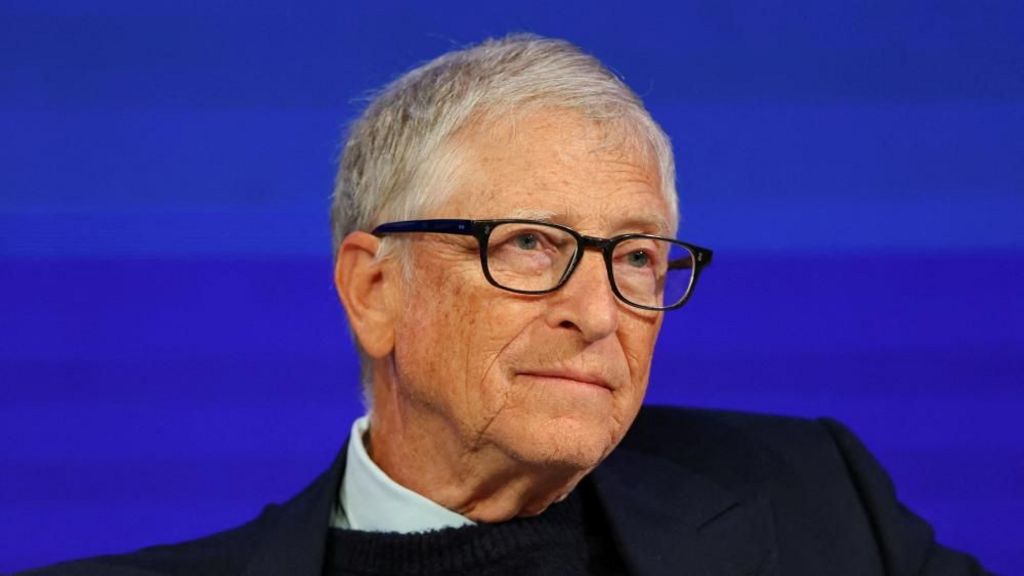
    The move has been met with widespread concern from global health leaders and philanthropists. WHO Director-General Tedros Adhanom Ghebreyesus had recently urged a reconsideration. Bill Gates, chair of the Gates Foundation, a major WHO funder, expressed disappointment at the World Economic Forum in Davos, stating, ‘The world needs the World Health Organisation.’ He acknowledged a short-term return was unlikely but vowed to continue advocacy for reinstatement.

    Health experts warn the withdrawal poses significant risks to international pandemic preparedness. Kelly Henning of Bloomberg Philanthropies noted, ‘The U.S. withdrawal from WHO could weaken the systems and collaborations the world relies on to detect, prevent, and respond to health threats.’ The U.S. government stated it would pursue direct partnerships with individual nations on disease surveillance, forgoing multilateral cooperation through the WHO. The American flag was removed from WHO headquarters in Geneva, symbolizing the formal severance of a 73-year relationship.

  • US ‘America First’ reshapes transatlantic ties

    US ‘America First’ reshapes transatlantic ties

    DAVOS, Switzerland – President Donald Trump’s appearance at the World Economic Forum has underscored a fundamental realignment of international relationships driven by his ‘America First’ doctrine. The inauguration of his Board of Peace initiative, focused initially on Gaza reconstruction, drew participation from fewer than 20 nations, with conspicuous absences from traditional allies including France, the United Kingdom, and Israel.

    The diplomatic developments occurred alongside Trump’s announcement of a framework agreement with NATO concerning Greenland, further illustrating how domestic political priorities are recalibrating longstanding transatlantic partnerships. This strategic pivot has created unexpected opportunities for expanded international cooperation, particularly with China.

    Policy experts from prominent think tanks have analyzed the profound implications of these shifts. Matthew Kroenig of the Atlantic Council warned that Trump’s confrontational approach has ‘destroyed much of the domestic political space in Europe’ for those advocating accommodation with the United States, potentially causing enduring damage to transatlantic relations.

    Chatham House analysts examining the Greenland situation emphasized that European nations must accelerate ‘strategic autonomy to stop a hemorrhage of sovereignty,’ suggesting the Anti-Coercion Instrument could emerge as a significant tool in this new geopolitical landscape.

    Forum participants noted China’s increasingly central role amid these transformations. Kimberley Botwright of the WEF highlighted China’s ‘systemic relevance’ in global value chains and clean technology sectors, observing that Chinese perspectives on shared priorities are receiving substantial international attention.

    Academic Tom Harper from the University of East London characterized China as a ‘stabilizing force’ during this period of American institutional withdrawal, advocating for strengthened European-Chinese relations. WEF Managing Director Gim Huay Neo pointed to China’s 5% economic growth and its 15th Five-Year Plan as generators of ‘new opportunities for global businesses and cooperation.’

    Chinese Vice-Premier He Lifeng reiterated China’s commitment to World Trade Organization reforms that enhance inclusivity for Global South nations, while cautioning against ‘rising unilateralism and protectionism’ in international affairs.

  • Survey finds bipartisan support for China cooperation

    Survey finds bipartisan support for China cooperation

    A comprehensive national survey has uncovered significant bipartisan support among American citizens for enhanced cooperation between the United States and China, alongside growing apprehension that escalating geopolitical tensions are adversely affecting Chinese American communities.

    The groundbreaking research, jointly conducted by the Committee of 100 and the University of Chicago’s National Opinion Research Center (NORC), represents one of the most extensive independent social studies in the United States. According to Alex Chew, NORC AmeriSpeak director and head of Amplify AAPI, this third iteration of the State of Chinese Americans research provides unprecedented breadth in understanding public perception regarding issues impacting the Chinese American population.

    The data reveals that 59% of Americans advocate for closer governmental collaboration between Washington and Beijing on diplomatic matters and mutually relevant policies. This position transcends political divisions, with 65% of Democrats and 63% of Republicans expressing support for strengthened bilateral cooperation.

    The cooperative sentiment extends into scientific and technological domains, where only 23% of respondents supported prohibiting Chinese researchers from working at U.S. institutions. This perspective demonstrated notable partisan variation, with 16% of Democrats and 34% of Republicans endorsing such restrictions.

    Sam Collitt, research lead at Committee 100 and co-author of the survey report, emphasized that these findings indicate minimal public support for policies that would strain international relations. The research was conducted amid numerous federal and state initiatives seeking to prosecute, restrict, or ban Chinese researchers from collaborating with American institutions.

    The survey aligns with recent studies by Pew Research and the Chicago Council suggesting that negative attitudes toward China among the American public may have reached their zenith. However, researchers caution that it remains uncertain whether this represents a temporary fluctuation or the beginning of a sustained trend toward improved perceptions.

    Historical context provided by University of Maryland Professor Madeline Hsu suggests that Americans often overlook China’s historical position as an elite civilization and economic powerhouse prior to 1800, before its decline under Western imperial exploitation. This historical amnesia, according to Hsu, complicates America’s ability to contextualize China’s reemergence as a global power as a restoration rather than an unprecedented development.

    The human cost of bilateral tensions was highlighted through examples including the China Initiatives program, which resulted in numerous Chinese American scientists facing false espionage allegations. The tragic case of Northwestern University’s Dr. Jane Wu, who committed suicide after being abruptly accused of wrongdoing and stripped of her position, exemplifies the devastating personal consequences that can result from sweeping geopolitical measures.

  • CES 2026: a new era of global innovation

    CES 2026: a new era of global innovation

    Las Vegas witnessed the culmination of CES 2026 on January 9, establishing the event as the largest post-pandemic gathering in the technology calendar. With over 148,000 participants from 150+ countries, including 4,100 exhibitors and 1,200 startups, the conference demonstrated a pivotal evolution from theoretical concepts to practical implementation of cutting-edge technologies.

    The exhibition highlighted the maturation of artificial intelligence into tangible, ecosystem-level applications alongside sustainability innovations and intelligent devices. Gary Shapiro, Executive Chair and CEO of the Consumer Technology Association, emphasized these technologies would “define the next decade of economic growth and competitiveness.”

    Chinese technology firms emerged as dominant forces across multiple sectors including intelligent devices, automotive technologies, next-generation displays, and AI-driven lifestyle solutions. Their presentations attracted significant international attention, reflecting not only technical prowess but increasingly localized global strategies and partnership-oriented approaches.

    Analysts noted Chinese companies are demonstrating deepened commitment to long-term innovation participation rather than mere export expansion. Many highlighted R&D collaborations across North America and Europe, alongside diversified supply chain networks spanning Asia, Latin America, and the Middle East.

    Despite geopolitical complexities, Chinese brands reported sustained acceptance in North American markets. Kenneth Hong, Head of Public Relations for Hisense Americas, noted: “Political narratives have minimal impact on daily business operations. Retailers and consumers prioritize product quality above geopolitical considerations.”

    A defining conference theme was the transition to “physical AI” where intelligence integrates directly into machines capable of perceiving, interpreting, and acting within physical environments. Chinese robotics companies featured prominently, with Shanghai-based AgiBot demonstrating advanced humanoid platforms exhibiting real-world interaction and motion planning capabilities. CES data revealed over half of humanoid robotics exhibitors originated from China, underscoring the country’s expanding influence in embodied AI technologies.

    The event featured significant cross-border collaboration dialogues, including a high-level discussion presided by Lenovo Chairman Yang Yuanqing with semiconductor leaders from Nvidia, AMD, Qualcomm, and Intel. This gathering emphasized global AI progress’s dependence on international cooperation rather than fragmentation.

    Beyond commercial applications, CES 2026 addressed AI’s societal implications, particularly regarding global equity. Derrick Johnson, President of the NAACP, emphasized the need to “narrow, not widen, the gap between developing and developed countries through AI implementation.” Representatives from Ghana’s Ministry of Labour highlighted AI’s potential as an industrial upgrade catalyst and job creation mechanism in emerging economies.

    Business and community leaders consistently emphasized the critical role of public policy in ensuring responsible AI deployment. Jacquelyn Puente of the US Hispanic Chamber of Commerce noted: “Without clear regulatory frameworks, AI systems cannot achieve meaningful organizational integration or deliver necessary solutions.” This sentiment was echoed by Claire Casey of the AARP Foundation, who stressed the necessity of public-private collaboration for scalable global solutions.

  • Trump pushes ‘America First’ at Davos

    Trump pushes ‘America First’ at Davos

    At the 2026 World Economic Forum in Davos, the United States delegation led by President Donald Trump delivered a stark departure from traditional globalist consensus with an uncompromising ‘America First’ agenda. The record-sized US contingent focused programming around aggressive trade protectionism, artificial intelligence dominance, and sovereign expansion ambitions.

    President Trump’s 70-minute special address defended tariff policies as essential tools for national growth, claiming a 77 percent reduction in monthly trade deficits while positioning the US as the planet’s primary economic engine. The administration’s trade representative, Jamieson Greer, framed tariffs as legitimate geopolitical instruments, explicitly repudiating twenty-five years of trade policy by declaring the US market would not remain “permanently available to everyone.”

    The delegation’s confrontational stance extended to artificial intelligence, where officials promoted deregulation and infrastructure ownership. Trump announced an extraordinary offer to Silicon Valley: nuclear power plant approvals within three weeks to fuel AI development. Administration officials criticized the European Union’s AI Act as “an absolute disaster” while advocating a “light-touch” regulatory approach.

    Commerce Secretary Howard Lutnick explicitly declared that “globalization has failed the West and the United States of America” in both panel discussions and a Financial Times op-ed. The administration’s position emphasized economic security and sovereign control, particularly regarding Trump’s renewed pursuit of Greenland acquisition for its strategic resources and shipping lanes.

    The delegation’s statements generated significant geopolitical concern, with experts warning that the administration’s denial strategy risks further fragmenting the international system and eroding consensus on global rules and norms. The proceedings highlighted a fundamental shift in how the United States engages with multilateral institutions and international partners.