标签: North America

北美洲

  • World Gold Council sees precious metal remaining rangebound this year

    World Gold Council sees precious metal remaining rangebound this year

    The World Gold Council (WGC) projects gold prices to remain rangebound throughout 2026, following an extraordinary performance in 2025 that saw the precious metal achieve 53 record highs and finish with a remarkable 67% annual gain in US dollar terms. According to the global body’s comprehensive analysis, gold enters the new year priced at approximately $4,368 per ounce, reflecting market consensus expectations of steady global growth, modest Federal Reserve rate reductions, and a marginally stronger US dollar.

    The Council outlines four distinct scenarios for gold’s trajectory in 2026. The base case anticipates rangebound trading amid stable economic conditions. However, the analysis reveals a pronounced upside bias should economic conditions deteriorate. A ‘shallow slip’ scenario involving softer growth and deeper policy easing could propel prices 5-15% higher, while a ‘doom loop’ of synchronized global downturn coupled with elevated geopolitical risks might trigger a substantial 15-30% surge. Conversely, stronger-than-expected US growth with higher yields and dollar strength could pressure gold downward by 5-20%.

    December 2025 witnessed historic gains across precious metals, though gold’s ascent appeared more measured compared to the volatile movements in silver and platinum. The WGC attributes gold’s strong performance to robust options activity, emerging market currency tailwinds, and falling yields, with geopolitical concerns remaining a persistent driver throughout the previous year.

    Critical wildcards that could significantly influence gold’s direction include central bank purchasing patterns—particularly from emerging markets where gold reserves remain below advanced-economy shares—and potential increases in recycling flows. Additionally, the pending Supreme Court decision regarding tariff authorities under IEEPA represents another swing factor that could either entrench policy risk premiums or refocus attention on fiscal deficits.

    Despite the rangebound base case, the Council emphasizes that gold’s fundamental supports—policy uncertainty, persistent geopolitical risks, and active investment demand—remain firmly intact. With tail risks multiplying and real rates cyclically elevated, the metal’s portfolio role as a diversifier and hedge against downside risk continues to offer compelling value for investors navigating an increasingly uncertain global landscape.

  • Bradford International Alliance brings flexible learning options to support UAE’s growing workforce

    Bradford International Alliance brings flexible learning options to support UAE’s growing workforce

    In response to the United Arab Emirates’ rapidly evolving employment landscape, Bradford International Alliance (BIA) has introduced a comprehensive suite of career-focused educational programs designed to meet the growing demands of both students and working professionals. The initiative addresses critical workforce challenges stemming from digital transformation, economic diversification, and increasingly competitive job markets.

    The newly launched offerings span multiple academic levels, including Bachelor’s, Master’s, and PhD degrees, complemented by specialized professional and corporate training modules. These programs are delivered through strategic partnerships with internationally accredited universities and maintain strict adherence to Accreditation Council for Business Schools and Programs (ACBSP) standards, ensuring global recognition and quality assurance.

    BIA’s educational model specifically targets the unique challenges faced by UAE professionals, where a workforce exceeding 9 million contends with intense competition despite one of the world’s lowest unemployment rates. The programs feature structured learning frameworks with flexible delivery options, clear admission pathways, and continuous academic support—addressing the critical need for working professionals to enhance their qualifications without interrupting their careers.

    Maha of Bradford International Alliance emphasized the organization’s mission: “We’re breaking down barriers for those who may have missed conventional academic opportunities. Our programs, guided by PhD professors and industry experts, combine academic rigor with practical relevance. We provide personalized guidance to develop not just employees, but tomorrow’s leaders and innovators.”

    The initiative represents a significant step toward strengthening the UAE’s knowledge economy by providing accessible, internationally recognized qualifications that align with both current workplace requirements and future economic ambitions.

  • From application to Arafat: Inclusiveness and equality in India’s assistance to Hajj pilgrims

    From application to Arafat: Inclusiveness and equality in India’s assistance to Hajj pilgrims

    India’s administration of the annual Hajj pilgrimage has emerged as a noteworthy model of equitable governance and inclusive public service. Each year, the Indian government facilitates the spiritual journey for thousands of Muslim citizens through a system prioritizing transparency, diversity, and non-intrusive support.

    The foundation of this approach lies in a thoroughly digitized application process managed through state Hajj committees. The transition to online applications, digital lotteries, and time-bound documentation has effectively eliminated discretionary practices and intermediary interference. This standardized procedure ensures identical treatment for applicants from metropolitan centers and remote districts alike, establishing equality from the initial registration phase.

    A significant reform occurred in 2018 with the abolition of the longstanding Hajj subsidy. Rather than representing withdrawal of support, this policy shift enabled more responsible facilitation through improved cost negotiations with airlines and Saudi authorities. The redirected funds now support educational and community welfare initiatives, creating a more sustainable system that maintains pilgrimage accessibility without artificial financial prop-ups.

    India’s Hajj delegations demonstrate remarkable diversity in their composition. Teams include officials, medical professionals, paramedical staff, sanitation workers, translators, and volunteers representing various regions and linguistic backgrounds. Medical missions provide complimentary healthcare services, with Indian doctors earning international recognition for their round-the-clock clinics in Mecca and Medina.

    Gender inclusivity marks another progressive aspect of India’s Hajj management. Aligning with updated Saudi regulations, India permits women to travel without male guardians, enabling participation by widows, single women, and elderly pilgrims previously constrained by social or logistical barriers.

    The program operates with exceptional cultural and linguistic sensitivity. Support services function in multiple Indian languages, ensuring pilgrims from Kerala, Kashmir, Uttar Pradesh, Telangana, and the Northeast receive guidance in their native tongues. Training sessions, manuals, helplines, and orientation camps are all tailored to address regional requirements.

    Logistical coordination with Saudi authorities encompasses accommodation, transportation, food services, and crowd management strategies. During the physically demanding Arafat congregation, where all pilgrims stand equal in traditional white ihram garments, administrative efficiency becomes crucial for maintaining order and safety.

    This facilitation occurs within India’s broader constitutional framework guaranteeing equality and religious freedom. The state extends similar logistical support to various religious pilgrimages including the Kumbh Mela, Amarnath Yatra, and Buddhist journeys abroad, demonstrating consistent application of secular principles without hierarchical preferences.

    For pilgrims who often save for decades to undertake this journey, government support provides practical reassurance through medical assistance, linguistic comfort in foreign lands, and available consular aid during distress situations. The state maintains a presence that enables religious practice without imposing upon it.

    India’s Hajj management model offers valuable insights into governance approaches that honor religious diversity through impartial service delivery rather than symbolic gestures. This framework demonstrates how administrative efficiency and inclusive policies can effectively support spiritual practices within a diverse democratic society.

  • UAE cybersecurity authority warns against AI fraud, says is hard to detect

    UAE cybersecurity authority warns against AI fraud, says is hard to detect

    The UAE Cybersecurity Council (CSC) has issued a critical warning regarding the escalating threat of artificial intelligence-enabled fraud, highlighting the sophisticated nature of these emerging digital crimes that are becoming increasingly difficult to detect. This alert forms part of the council’s ongoing ‘Cyber Pulse’ initiative, a weekly awareness campaign designed to educate the public about evolving cyber threats.

    According to cybersecurity authorities, AI technology has fundamentally transformed the fraud landscape by enabling malicious actors to execute complex deceptive operations within seconds—tasks that previously required substantial time and effort. These advanced technologies facilitate the creation of highly convincing fraudulent communications, including realistic voice imitations, professionally altered logos, and polished text and graphics that frame scams as urgent security requests.

    The Council revealed that AI-powered phishing now accounts for over 90% of digital breaches, with scammers crafting messages that appear virtually authentic. These sophisticated techniques effectively eliminate traditional warning signs and allow fraudsters to design operations with minimal detectable flaws, making vigilance more crucial than ever before.

    As the boundary between authenticity and imitation continues to blur, the CSC emphasized the necessity of adopting defensive tools and techniques grounded in knowledge and awareness. Protective measures include implementing multi-factor authentication (which prevents more than 90% of fraud attempts), avoiding unverified links, scrutinizing messages for spelling or linguistic errors, verifying information through official channels, and activating security software for threat detection.

    The Council stressed that combating AI-driven fraud begins at the individual level through strengthened cyber culture and awareness. Individuals must recognize that many products or advertisements circulating on social media may appear exceptionally perfect due to AI-generated images, making them seem entirely legitimate.

    Now in its second year, the ‘Cyber Pulse’ campaign continues across social media platforms as part of the UAE’s comprehensive vision to build a secure cyberspace, enhance confidence in the digital ecosystem, and foster robust cybersecurity practices among families and individuals during this era of rapid digital transformation.

  • ‘Avatar: Fire and Ash’ tops box office for fourth straight week with newcomer ‘Primate’ second

    ‘Avatar: Fire and Ash’ tops box office for fourth straight week with newcomer ‘Primate’ second

    LOS ANGELES — James Cameron’s cinematic phenomenon ‘Avatar: Fire and Ash’ continues its remarkable box office reign, securing the top position for the fourth consecutive weekend during Hollywood’s traditionally quiet January period. The latest installment in the Pandora saga generated $21.3 million in North American theaters for The Walt Disney Co., maintaining its strong performance despite the industry’s seasonal slowdown.

    The film has now accumulated $342.6 million domestically and $888 million internationally, recently joining its predecessors as a billion-dollar franchise. Meanwhile, Paramount Pictures’ new horror release ‘Primate’ emerged as the week’s top newcomer with $11.3 million in domestic earnings and $13.4 million globally.

    Disney’s animated sequel ‘Zootopia 2’ demonstrated extraordinary longevity since its November debut, particularly resonating with Chinese audiences. The film has grossed $1.65 billion worldwide, positioning it to potentially surpass 2019’s ‘The Lion King’ ($1.66 billion) as Disney’s highest-grossing animated feature. In its seventh week, the animation collected $10.1 million domestically, bringing its North American total to $378.8 million.

    Lionsgate’s thriller ‘The Housemaid’ continued its impressive commercial performance, earning $11.2 million domestically in its fourth weekend. With a production budget of just $35 million, the film has generated $94.15 million in North America and $192.5 million worldwide, prompting the studio to greenlight a sequel.

    The box office results arrived as Hollywood focused on the Golden Globe Awards, where both ‘Avatar: Fire and Ash’ and ‘Zootopia 2’ received two nominations each. Among major Globe contenders, only A24’s ‘Marty Supreme’ appeared in the weekend’s top ten, finishing sixth with $7.6 million and a $70.1 million four-week domestic total. The film earned nominations for Best Picture Musical or Comedy, Best Actor for Timothée Chalamet, and Best Screenplay for co-writer and director Josh Safdie.

    Industry analysts note that 2026 has begun strongly, with weekend revenues showing a 23% increase compared to the same period in 2025. This upward trend follows a challenging 2025 that saw declining theater attendance, generating optimism that 2026 could become the industry’s strongest performing year of the decade with anticipated releases including new ‘Avengers,’ ‘Spider-Man,’ ‘Toy Story,’ ‘Super Mario Bros,’ and ‘Dune’ installations.

  • Thousands march and dozens arrested in Minneapolis protests against ICE

    Thousands march and dozens arrested in Minneapolis protests against ICE

    Minneapolis became the epicenter of nationwide demonstrations as thousands braved freezing temperatures Saturday to protest U.S. Immigration and Customs Enforcement (ICE) operations. The protests erupted following Wednesday’s fatal shooting of 37-year-old Renee Nicole Good by an ICE agent during what authorities describe as an enforcement operation.

    The ‘ICE out of Minnesota’ rally drew tens of thousands to Powderhorn Park before marching through city streets. Despite Mayor Jacob Frey’s characterization of the protest as predominantly peaceful, tensions flared Friday night when several hundred demonstrators surrounded the Canopy Hotel, believed to house ICE personnel. Police declared an unlawful assembly after protesters forced entry through an alley and allegedly threw ice, snow, and rocks at officers.

    The political fallout intensified as three Minnesota congresswomen—Ilhan Omar, Kelly Morrison, and Angie Craig—accused ICE and the Department of Homeland Security of obstructing congressional oversight after being denied access to local ICE facilities. Their attempted visit came amid revelations of a new DHS policy requiring seven days’ notice for congressional visits, implemented the day after Good’s shooting.

    The incident has exposed deep ideological divisions. Homeland Security Secretary Kristi Noem characterized Good’s actions as ‘domestic terrorism,’ claiming she ‘weaponized’ her vehicle against agents. Conversely, Mayor Frey described the victim as attempting a three-point turn to escape the scene, stating local law enforcement felt ‘outnumbered’ by federal agents.

    Video evidence shows ICE agents approaching Good’s stationary vehicle before shots were fired as she attempted to drive away. The agent involved was identified as Jonathan Ross, a veteran officer previously injured in the line of duty. The FBI has assumed sole investigative authority over the case, prompting Minnesota officials to launch their own inquiry after claiming they were ‘frozen out’ of the federal investigation.

    Protests extended beyond Minneapolis to major cities including New York, Los Angeles, Seattle, and Austin, reflecting growing national tension over immigration enforcement methodologies.

  • Rani Mukerji’s ‘Mardaani 3’ to hit theatres a month earlier

    Rani Mukerji’s ‘Mardaani 3’ to hit theatres a month earlier

    In a strategic scheduling shift, Yash Raj Films has announced the accelerated theatrical release of ‘Mardaani 3,’ moving the premiere forward by nearly four weeks. The third installment of Rani Mukerji’s acclaimed action-thriller franchise will now debut on January 30, 2026, instead of the previously announced February 27 date.

    The production company revealed the new timeline through official social media channels, accompanied by a freshly unveiled promotional poster. The franchise continuation will see Mukerji reprise her role as Superintendent Shivani Shivaji Roy, a character that has become synonymous with gritty, female-led police procedurals in Indian cinema.

    According to production notes, the narrative thrust involves a race against time as Officer Roy investigates the disappearance of multiple young women. The filmmakers describe the project as confronting ‘dark and dangerous forces’ while maintaining the series’ signature hard-hitting approach to criminal investigations.

    Mukerji previously characterized the project as an ‘edge-of-the-seat thriller’ with distinctly dark and brutal undertones. The production promises intense confrontations between the protagonist’s moral integrity and the sinister antagonists she pursues.

    Directed by Abhiraj Minawala under the production oversight of Aditya Chopra, the Mardaani franchise has established itself as a serious-minded thriller series since its 2014 inception. Previous installments tackled weighty societal issues including human trafficking and systemic corruption within law enforcement, establishing a template for socially conscious action cinema within the Bollywood landscape.

  • Trump tells Cuba to ‘make a deal, before it is too late’

    Trump tells Cuba to ‘make a deal, before it is too late’

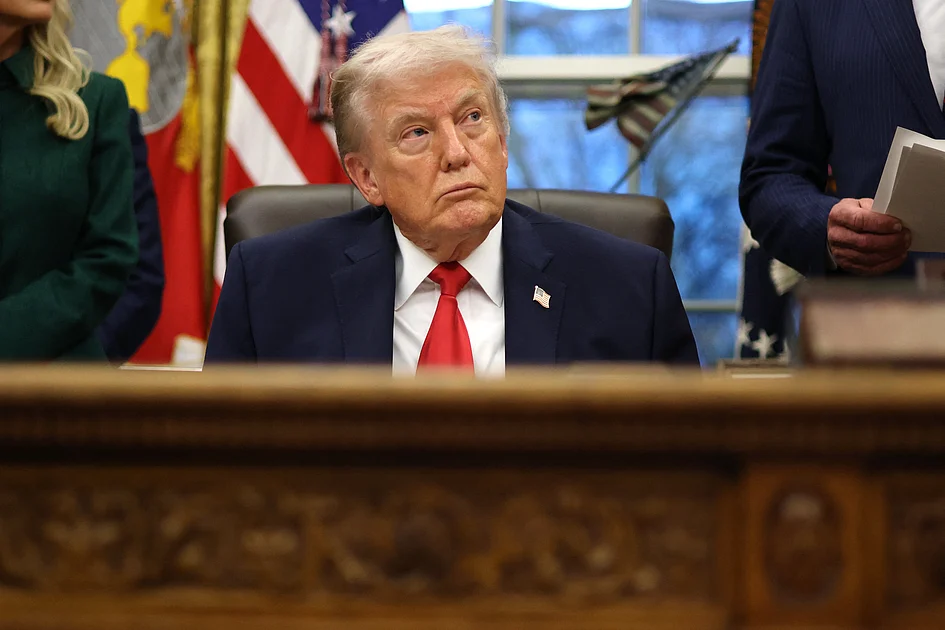
    In a significant escalation of hemispheric tensions, former U.S. President Donald Trump has delivered a stark warning to Cuba, demanding the nation “make a deal” or face severe consequences following the interception of Venezuelan oil shipments. The ultimatum comes amid a broader campaign against left-wing governments in Latin America that Trump has framed through his revived “Donroe Doctrine”—an aggressive reinterpretation of the 19th-century Monroe Doctrine asserting U.S. supremacy in the Western Hemisphere.

    The confrontation intensified after U.S. forces conducted an unprecedented raid in Caracas on January 3rd, resulting in the capture of Venezuelan leader Nicolás Maduro and his wife, Cilia Flores, who now face drug trafficking charges in the United States. This operation reportedly resulted in the deaths of 32 Cuban nationals who formed part of Maduro’s security detail, a claim that has heightened diplomatic tensions.

    Venezuela, a longstanding Cuban ally, has historically supplied approximately 35,000 barrels of oil daily to the island nation—a vital economic lifeline that the Trump administration has now effectively severed through the seizure of five sanctioned oil tankers. This tactic has already exacerbated existing fuel and electricity shortages in Cuba, creating a humanitarian crisis.

    Trump articulated his position emphatically on Truth Social, stating: “Cuba lived, for many years, on large amounts of OIL and MONEY from Venezuela. In return, Cuba provided ‘Security Services’ for the last two Venezuelan dictators, BUT NOT ANYMORE! THERE WILL BE NO MORE OIL OR MONEY GOING TO CUBA – ZERO! I strongly suggest they make a deal, BEFORE IT IS TOO LATE.” Despite the forceful rhetoric, the former president did not specify what terms such a deal might entail or what precise consequences Cuba would face for non-compliance.

    Cuban leadership responded with defiance. Foreign Minister Bruno Rodríguez asserted the nation’s “absolute right to import fuel without interference or subordination to the unilateral coercive measures of the United States,” emphasizing that Cuba does not engage in “blackmail or military coercion against other States.” President Miguel Díaz-Canel similarly rejected external pressure, stating: “Those who turn everything into a business, even human lives, have no moral authority to point fingers at Cuba for anything, absolutely anything.”

    The administration’s approach appears coordinated, with Secretary of State Marco Rubio—a Cuban-American former senator—suggesting that Cuban leaders “should be worried” and are “in a lot of trouble.” Trump amplified this messaging by sharing a social media post suggesting Rubio could become president of Cuba, commenting: “Sounds good to me!”

    This confrontation represents the latest chapter in the complex U.S.-Cuba relationship that has been strained since the 1959 revolution. While diplomatic relations saw improvement during the Obama administration, Trump has reversed many of those advances, including reinstating Cuba’s designation as a state sponsor of terrorism shortly after beginning his second term—a designation that had been lifted by the Biden administration just days earlier.

    The administration’s Latin American focus has expanded beyond Cuba and Venezuela, with Trump suggesting potential military action in Colombia and offering to deploy U.S. troops to Mexico—proposals that have been firmly rejected by both nations’ leaders. This aggressive posture signals a fundamental shift in hemispheric relations centered on combating drug trafficking and challenging left-wing ideologies throughout the region.

  • Trump won’t take Greenland by force, Mandelson says

    Trump won’t take Greenland by force, Mandelson says

    A significant geopolitical confrontation is unfolding in the Arctic region as the United States under President Donald Trump’s administration demonstrates renewed interest in acquiring Greenland, creating diplomatic friction with NATO allies. While former UK ambassador Lord Mandelson has dismissed the possibility of military action, stating Trump wouldn’t “land on Greenland and take it by force,” the situation has escalated into a serious international discussion about Arctic sovereignty and security.

    The strategic importance of Greenland cannot be overstated. Its geographical position between North America and the Arctic makes it ideally situated for missile early warning systems and monitoring maritime activity. President Trump has repeatedly emphasized Greenland’s vital role in U.S. national security, claiming without evidence that Russian and Chinese vessels increasingly populate surrounding waters. This focus intensified following recent military operations in Venezuela that resulted in the capture of President Nicolas Maduro.

    Denmark and Greenland have firmly maintained that the territory is not for sale, with Danish officials warning that any military intervention would effectively destroy the NATO alliance. This stance has garnered support from major European nations and Canada, who have collectively reaffirmed that “only Denmark and Greenland can decide on matters concerning their relations.”

    The UK government finds itself navigating delicate diplomatic waters. Transport Secretary Heidi Alexander acknowledged the need for enhanced Arctic security cooperation with NATO allies while carefully distinguishing these discussions from being a direct response to U.S. posturing. Meanwhile, political leaders expressed divergent views, with Conservative leader Kemi Badenoch considering Greenland a “second order” issue compared to events in Iran, while Liberal Democrat leader Sir Ed Davey criticized Trump’s “outrageous threats” as benefiting Russian President Vladimir Putin.

    Complicating the diplomatic landscape is the background of Lord Mandelson himself, whose brief tenure as ambassador ended due to revelations about his contacts with convicted sex offender Jeffrey Epstein. Mandelson claims the government was fully aware of his background when appointing him, though Number 10 sources previously stated he had been “economical with the truth” during his vetting process.

    Beyond geopolitical positioning, Greenland’s signifcance extends to its substantial natural resources, including rare earth minerals, uranium, iron, and potential oil and gas reserves that are becoming increasingly accessible due to climate-change-induced ice melt. This economic dimension adds another layer to the ongoing international interest in the strategically crucial territory.

  • UAE: Indian influencer Dhruv Rathee says ‘every line fact-checked’ in his YouTube videos

    UAE: Indian influencer Dhruv Rathee says ‘every line fact-checked’ in his YouTube videos

    At the prestigious 1 Billion Summit in Dubai, Indian digital content creator Dhruv Rathee revealed his rigorous approach to combating misinformation through meticulous verification processes. With over 30 million YouTube subscribers, Rathee has established himself as one of India’s most influential digital educators, producing explainer-style videos covering politics, governance, climate change, and social issues.

    Rathee disclosed that his operation employs a dedicated team of researchers and fact-checkers who scrutinize every single line presented in his videos. This verification process is complemented by comprehensive documentation, with each video accompanied by a publicly available resource paper containing all sources used. “Viewers can access these documents through links in the video description, ensuring complete transparency,” Rathee explained to Khaleej Times.

    The selection of topics follows a structured methodology incorporating multiple criteria, including audience demand, personal passion, and relevance within the current political and social landscape. Each potential subject undergoes a scoring system before receiving approval for coverage.

    Beyond content creation, Rathee has expanded into entrepreneurship by co-founding AI Fiesta, an all-in-one platform he describes as one of his most challenging career transitions. “Creating videos for ten years didn’t prepare me for business management involving HR, customer support, and product development,” he acknowledged. His team now comprises 10-15 members, requiring him to balance filming, video reviews, and operational management.

    Despite facing legal threats and online trolling throughout his career, Rathee has developed resilience and maintains a legal team to handle disputes. When questioned about concerns regarding democratic discourse’s future, he identified public apathy as the primary worry, emphasizing the need for greater public engagement.

    Now a father, Rathee has shifted priorities toward efficiently managing time between work and family life. He described this year’s 1 Billion Summit, which gathers content creators worldwide, as the most impressive edition yet, noting the event’s scale resembled “an entire city.”