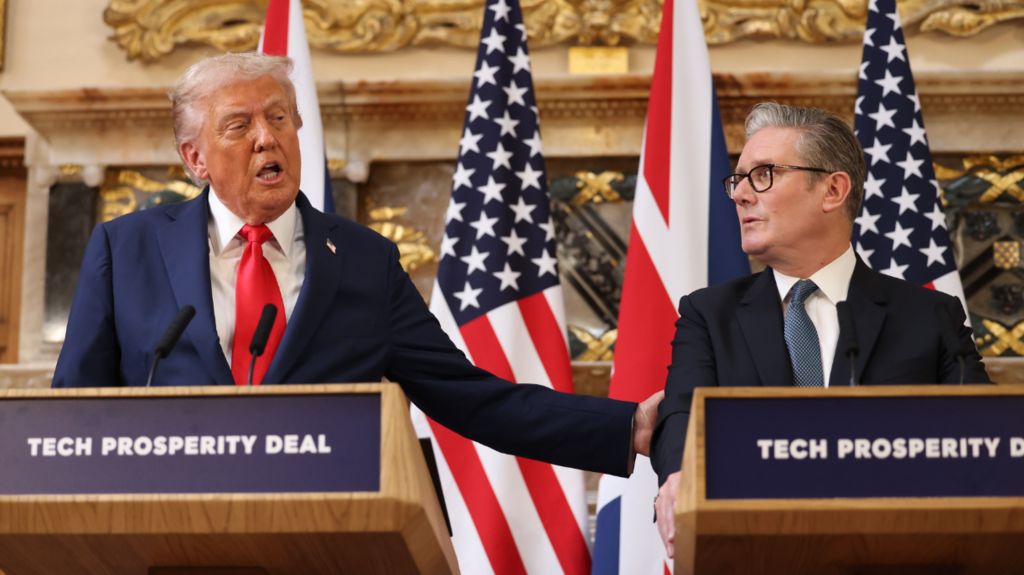
Sir Keir Starmer and Donald Trump held a joint press conference at Chequers, the UK Prime Minister’s country residence, marking the conclusion of Trump’s second state visit to the UK. The hour-long event covered a range of topics, from international relations to domestic policies, with both leaders addressing contentious issues diplomatically. One of the key points of discussion was the UK’s imminent recognition of Palestinian statehood, a move Trump had previously criticized as potentially rewarding Hamas. However, Trump downplayed the disagreement, stating it was one of only a few differences between him and Starmer. Starmer clarified that the timing of the decision was unrelated to Trump’s visit and emphasized that Hamas would have no role in any future Palestinian state. Trump praised Starmer’s stance, even giving him a pat on the back during the conference. Another hot topic was the UK’s efforts to curb illegal migration, particularly the record number of small boat crossings in the English Channel. Trump suggested that Starmer consider involving the military, drawing parallels to his own border security policies in the US. Starmer highlighted the recent launch of the first flight under the UK-France migrant returns deal as a significant step forward. Both leaders also united in condemning Russia’s invasion of Ukraine, with Starmer criticizing recent Russian missile attacks and Trump expressing disappointment in Vladimir Putin’s actions. Trump admitted he had hoped the Russia-Ukraine conflict would be easier to resolve but reaffirmed his commitment to finding a peaceful solution. The issue of free speech also surfaced, with Starmer vowing to protect it as a fundamental British value while balancing it with necessary safeguards. The press conference concluded without addressing the recent dismissal of Lord Mandelson as the UK’s US ambassador, a decision linked to his past association with Jeffrey Epstein. Trump distanced himself from Mandelson, stating he did not know him well, while Starmer reiterated that the decision was based on new information about Mandelson’s ties to Epstein.
标签: North America
北美洲
-
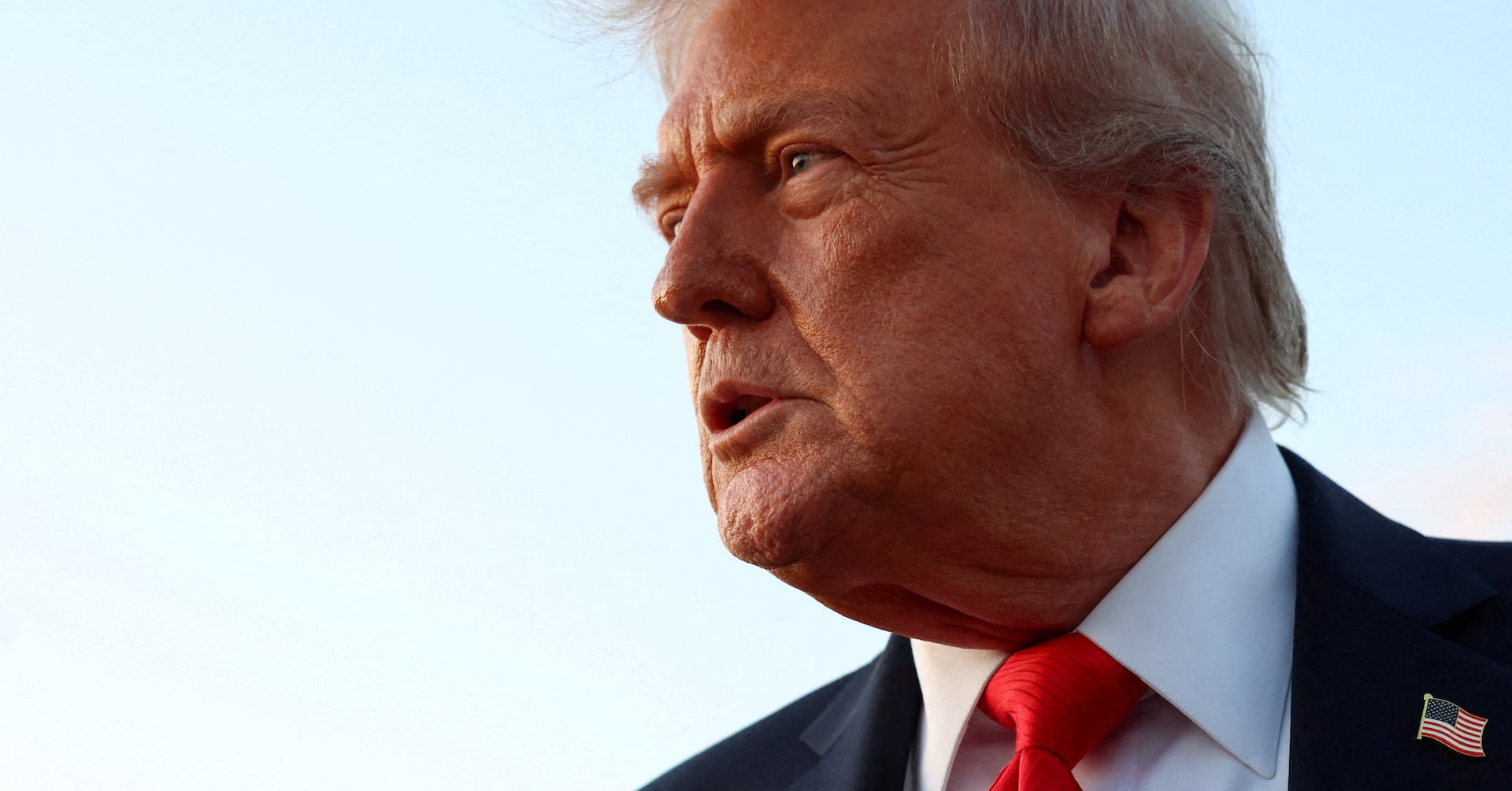
Trump targets antifa movement as ‘terrorist organization’
In a significant move following the assassination of right-wing activist Charlie Kirk, U.S. President Donald Trump announced on Wednesday his intention to designate the anti-fascist movement, Antifa, as a terrorist organization. Trump made the declaration on his social media platform, Truth Social, stating, \”I will also be strongly recommending that those funding ANTIFA be thoroughly investigated in accordance with the highest legal standards and practices.\
-
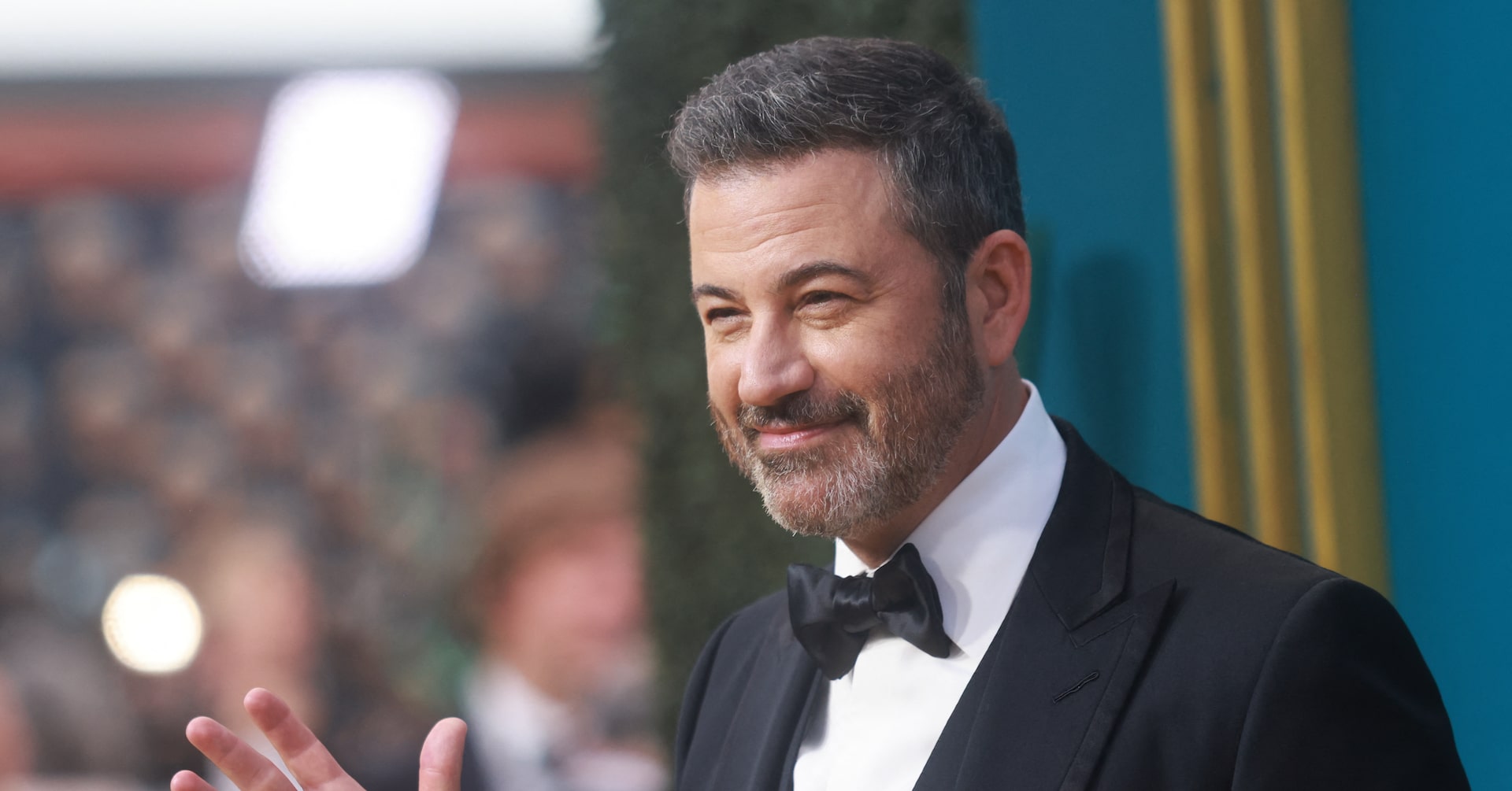
Disney’s ABC yanks ‘Jimmy Kimmel Live’ off air after remarks about Kirk
In a dramatic turn of events, ABC announced the indefinite suspension of ‘Jimmy Kimmel Live’ following controversial remarks made by the host regarding the assassination of conservative activist Charlie Kirk. The decision came after Federal Communications Commission (FCC) Chair Brendan Carr urged broadcasters to cease airing the show, citing concerns over the content’s appropriateness. Carr hinted at potential investigations and penalties for broadcasters who continued to air the program. Nexstar Media Group, one of ABC’s major affiliates, swiftly complied, pulling the show from its 32 stations. Sinclair, the largest ABC affiliate group, also announced it would not air the show unless Kimmel issued an apology and took ‘appropriate steps.’ The move has sparked a heated debate over free speech, with Democrats condemning the suspension as censorship, while Republicans and conservative commentators praised the decision. President Donald Trump, who has long criticized media figures for their coverage of him, celebrated ABC’s action on social media, calling it a ‘courageous’ move. The controversy has reignited discussions about the role of media in political discourse and the boundaries of free expression in the United States.
-
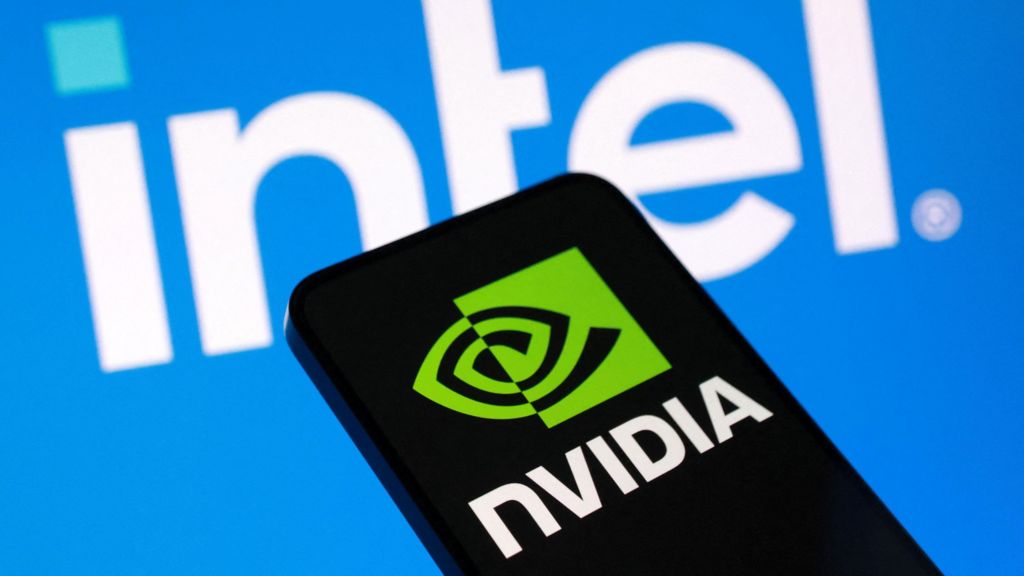
Chipmaker Nvidia to invest $5bn in rival Intel
In a landmark move, Nvidia, the global leader in artificial intelligence (AI) chip manufacturing, has announced a $5 billion investment in Intel, its long-time rival. The deal, unveiled on Thursday, marks a significant lifeline for Intel, which has been grappling with declining market share and operational challenges. The partnership will focus on developing cutting-edge chips for personal computers and data centers, capitalizing on the surging demand for AI technologies. This strategic alliance will grant Nvidia a 4% stake in Intel, positioning it as one of the company’s largest shareholders. Following the announcement, Intel’s stock surged by over 25%, while Nvidia’s shares saw a modest 3% increase. Intel, once a dominant force in the semiconductor industry, has struggled to keep pace with Nvidia, whose market capitalization has soared past $4 trillion, dwarfing Intel’s $100 billion valuation. Nvidia CEO Jensen Huang described the collaboration as a ‘fusion of two world-class platforms,’ emphasizing its potential to drive innovation and shape the future of computing. The deal comes on the heels of a separate $10 billion investment in Intel by the U.S. government, aimed at bolstering domestic semiconductor production and maintaining America’s technological edge. Intel CEO Lip-Bu Tan welcomed Nvidia’s investment, expressing gratitude for the confidence placed in his company. The partnership also unfolds against a backdrop of geopolitical tensions, as Nvidia faces challenges in the Chinese market due to the U.S.-China trade war and China’s push for domestic chip production. Despite these hurdles, the collaboration between Nvidia and Intel signals a new chapter in the semiconductor industry, with both companies poised to leverage their strengths in the rapidly evolving AI landscape.
-

Exclusive: U.S. diplomats on Syria abruptly let go amid pro-Damascus policy push, sources say
In a surprising turn of events, several senior U.S. diplomats stationed at the Syria Regional Platform (SRP) in Istanbul have been abruptly dismissed, according to sources familiar with the matter. The SRP, which functions as the de facto U.S. mission to Syria, has been a key player in Washington’s efforts to integrate Syrian Kurdish allies with the central administration in Damascus. The dismissals, which occurred suddenly and involuntarily, are part of a broader reorganization of the team, though they are not expected to impact U.S. policy in Syria. The diplomats reported to Tom Barrack, the U.S. special envoy for Syria and a close confidant of former President Donald Trump. Barrack, who was appointed in May, has been advocating for a unified Syrian state under President Ahmed al-Sharaa, who rose to power in a swift advance last year. The move to integrate the Kurdish-led Syrian Democratic Forces (SDF) into national security forces has been met with resistance from some SDF leaders, who have fought alongside the U.S. against Islamic State during former President Bashar al-Assad’s rule. The SDF continues to push for a less centralized government, aiming to retain the autonomy they gained during Syria’s civil war. Barrack, who also serves as the U.S. ambassador to NATO member Turkey, has been actively involved in addressing regional issues, including a recent plan to resolve a standoff with the Druze minority in southern Syria. The State Department has declined to comment on the dismissals, emphasizing that core staff working on Syrian issues remain operational from various locations. The SRP, headquartered at the U.S. consulate in Istanbul, has been the primary U.S. diplomatic presence in Syria since the closure of the embassy in Damascus in 2012.
-
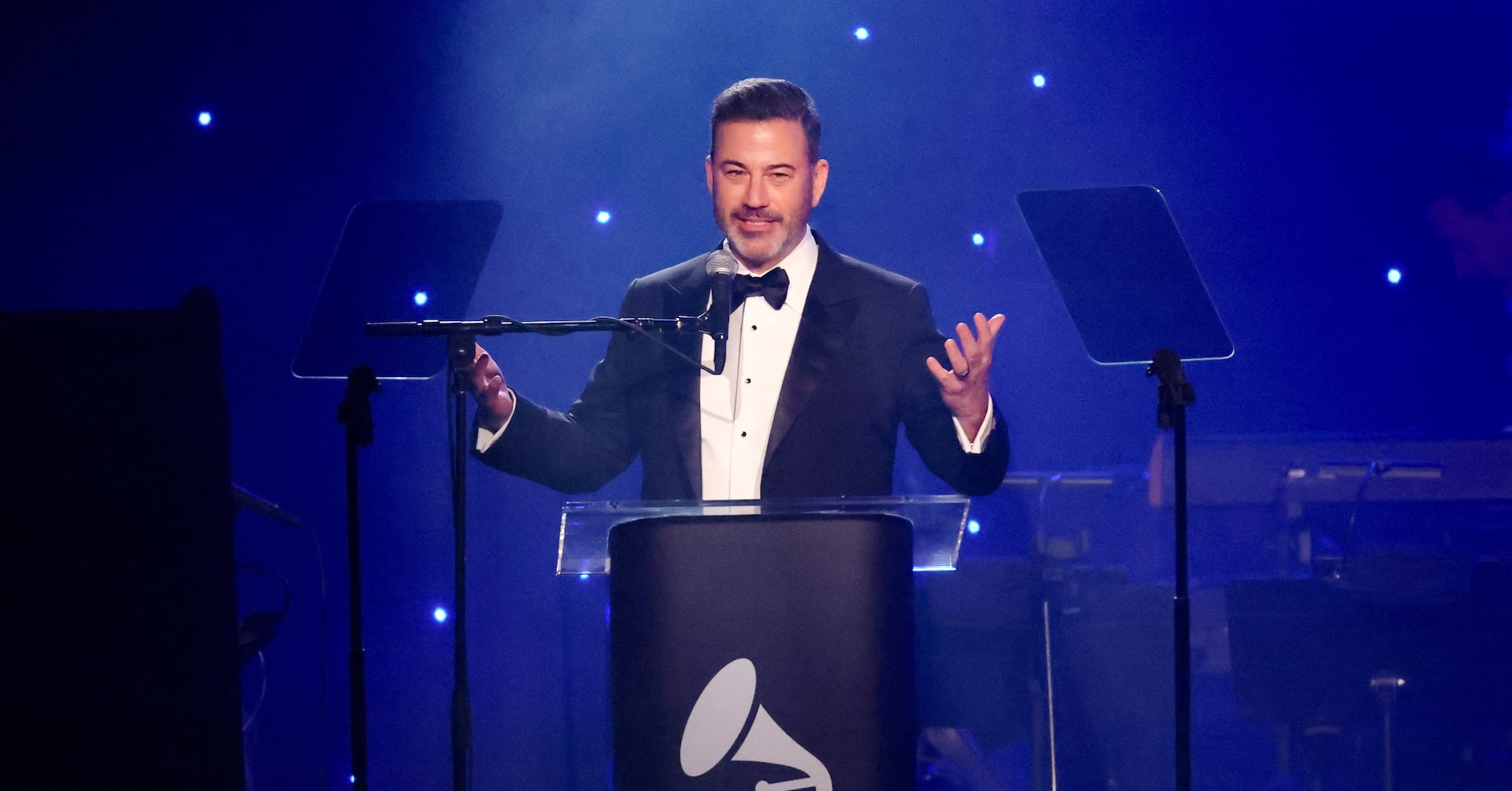
Hollywood comes to Kimmel’s defense after ABC pulls late-night show
In a dramatic turn of events, ABC has indefinitely suspended ‘Jimmy Kimmel Live’ following intense regulatory threats from the Trump administration. The decision came after Jimmy Kimmel, a vocal critic of former President Donald Trump, made controversial remarks about the assassination of conservative activist Charlie Kirk during his September 10 monologue. Kimmel suggested that Kirk’s allies were exploiting his death for political gain, a statement that sparked widespread backlash from conservative circles. The Walt Disney-owned broadcaster faced pressure from Nexstar Media Group, which owns 32 ABC affiliates, and the Federal Communications Commission (FCC), which threatened investigations and potential fines. FCC Chair Brendan Carr urged local broadcasters to cease airing the show, praising Nexstar for its stance. Unions representing writers, actors, and musicians have condemned the suspension, labeling it an attack on free speech and a form of state censorship. The Writers Guild of America West and East issued a joint statement, emphasizing the importance of protecting constitutional rights. Meanwhile, actor Ben Stiller and SAG-AFTRA voiced their support for Kimmel, criticizing the decision as a dangerous precedent. The incident has reignited debates about media freedom and government interference in the entertainment industry.
-
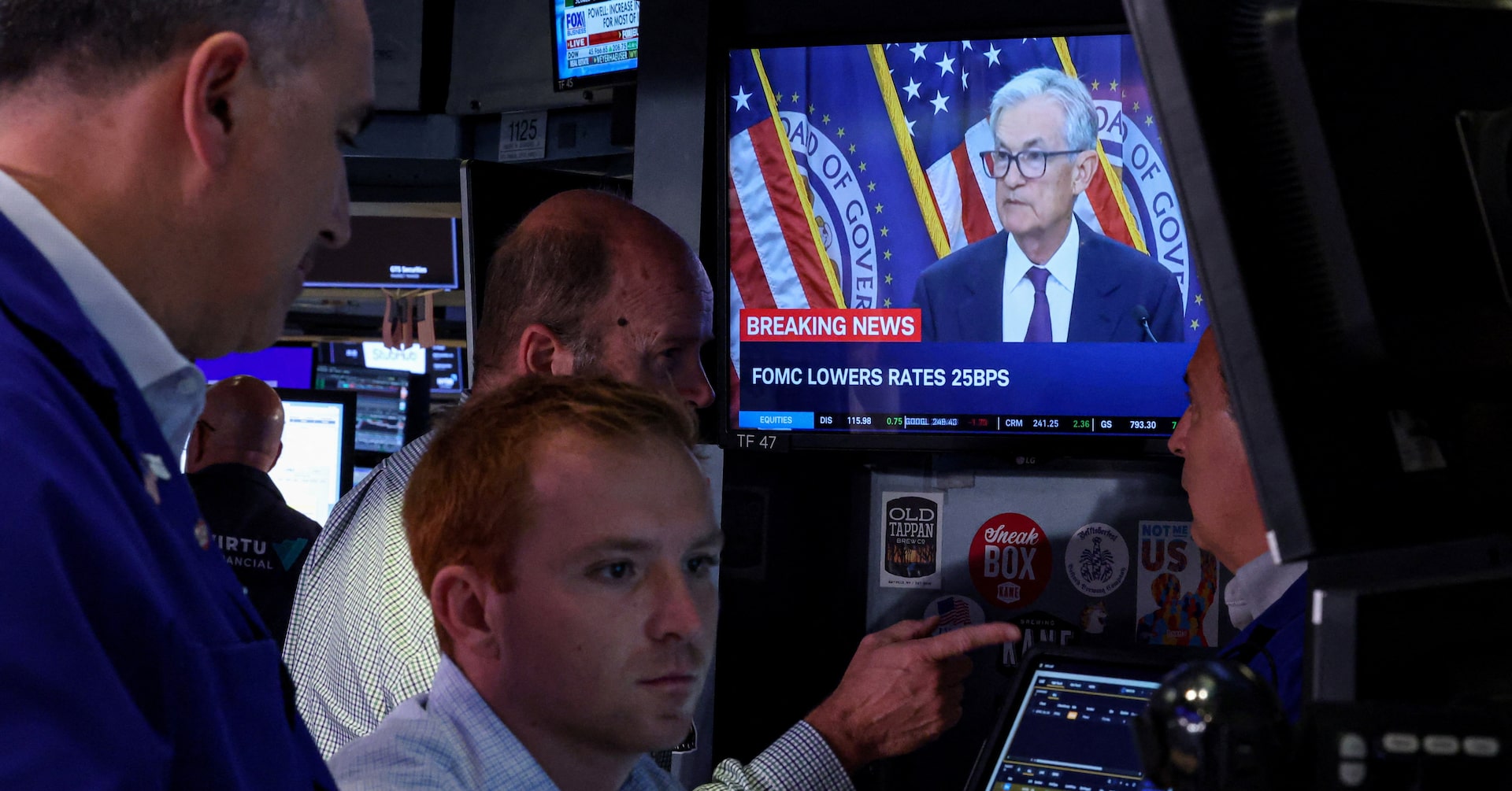
Fed’s rate cut comes with caveats, leaving investors lukewarm
The Federal Reserve’s recent decision to cut interest rates by 25 basis points has left investors navigating a complex landscape of economic uncertainty. On September 17, 2025, Fed Chair Jerome Powell announced the first rate cut since December, lowering the policy rate to a range of 4%-4.25%. While the move signaled a dovish shift, Powell tempered expectations by highlighting persistent inflation risks and a weakening labor market, leaving markets cautious about the pace of future easing. The Fed’s updated economic projections, including its ‘dot plot,’ indicated a potential 50 basis points in cuts by year-end, but inflation is still forecasted to remain above the 2% target at 3%. This nuanced messaging has dampened optimism, with the Nasdaq and S&P 500 closing lower in choppy trading. Treasury yields rose, reflecting market unease. Analysts warn of stagflation risks, a mix of sluggish growth and high inflation, complicating the Fed’s ability to support the economy. Internal disagreements within the Fed, including a lone dissent advocating for a larger rate cut, have added to the volatility. Investors now face a challenging environment as they digest conflicting signals and brace for heightened market fluctuations.
-
US vaccine panel to vote on the use of combined measles shot this week
The U.S. Centers for Disease Control and Prevention (CDC) is set to host a pivotal meeting this week, where vaccine advisers will vote on a proposal to eliminate recommendations for the combined measles, mumps, rubella, and varicella (MMRV) vaccine for children under four. This decision comes amid heightened scrutiny from Health Secretary Robert F. Kennedy Jr., who has long questioned vaccine safety despite overwhelming scientific evidence to the contrary. Kennedy has promoted the unfounded claim that the MMRV vaccine is linked to autism, a theory repeatedly debunked by rigorous scientific studies. The Advisory Committee on Immunization Practices (ACIP) will convene on September 18-19 to deliberate on the proposal, as outlined in a draft agenda on the CDC’s website. The meeting follows Kennedy’s controversial decision in June to dismiss all 17 ACIP members and appoint eight new advisers, some of whom have previously opposed vaccines. Since assuming his role under the Trump administration, Kennedy has initiated a review of vaccine policies, including the measles shot, which remains the most effective method to prevent the highly contagious and potentially deadly virus. Currently, the CDC recommends that children under four receive separate doses of the MMR and varicella vaccines, with the MMRV vaccine preferred for older children. This year, the U.S. has reported 1,454 measles cases, the highest in over three decades, underscoring the urgency of the debate. The MMRV vaccine is marketed in the U.S. by pharmaceutical giants Merck and GSK, with Merck also offering the ProQuad shot, which protects against measles, mumps, rubella, and varicella.
-

Trump tariffs could fund bailout for US farmers, agriculture secretary tells FT
The Trump administration is reportedly formulating a plan to utilize tariff revenue to finance a support program for U.S. farmers, according to a Financial Times report published on Thursday. Agriculture Secretary Brooke Rollins revealed in an interview that the administration is actively considering this approach, stating, ‘There may be circumstances under which we will be very seriously looking to and announcing a package soon.’ Rollins emphasized that using ‘tariff income that is now coming into America’ is ‘absolutely a potential’ funding source. The White House has yet to comment on the matter. This development comes amid mounting pressure from agricultural groups, exacerbated by China’s halt in soybean purchases from the U.S. due to the ongoing trade dispute. Additionally, tariffs have increased costs for essential farming inputs such as fertilizer and machinery. Agriculture has become a focal point in the escalating trade tensions between the two superpowers, initiated by President Donald Trump’s tariff policies. The situation underscores the broader economic challenges faced by U.S. farmers in the current geopolitical climate.
-
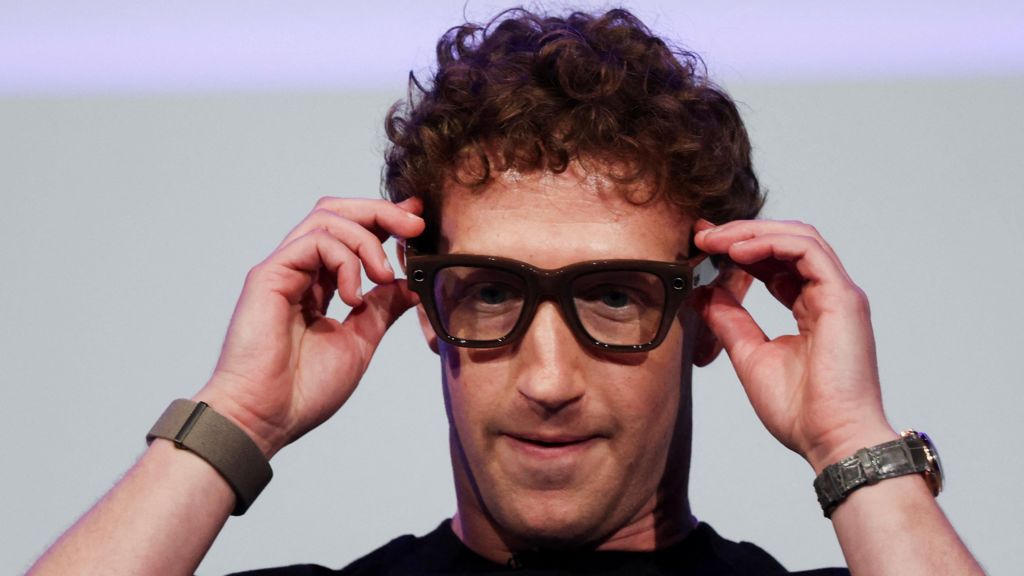
Facebook owner unveils new AI-powered smart glasses
At the annual Meta Connect conference held in Silicon Valley, Meta CEO Mark Zuckerberg introduced a groundbreaking lineup of smart glasses and AI-powered wearable devices, signaling the company’s ambitious push into the future of wearable technology. The event, attended by hundreds of tech enthusiasts and industry leaders, showcased Meta’s latest innovations, including the Meta Ray-Ban Display glasses and the Oakley Meta Vanguard, both designed to integrate seamlessly with the company’s AI ecosystem. The Meta Ray-Ban Display features a high-resolution, full-color screen embedded in one lens, enabling users to conduct video calls, view messages, and capture photos with a 12-megapixel camera. Additionally, Meta unveiled a neural wristband that pairs with the glasses, allowing users to perform tasks like sending messages through subtle hand gestures. Despite a minor hiccup during the live demonstration—a WhatsApp call failed to connect—Zuckerberg emphasized the transformative potential of these devices, calling the technology a ‘huge scientific breakthrough.’ Analysts predict that smart glasses, with their everyday practicality, could outperform Meta’s Metaverse project in terms of market adoption. However, challenges remain in convincing consumers of their value, particularly given the $799 price tag for the Meta Ray-Ban Display. Zuckerberg also highlighted Meta’s massive investments in AI infrastructure, including plans to build sprawling data centers across the U.S., as part of its mission to develop ‘superintelligence.’ The event was not without controversy, as activists protested outside Meta’s New York headquarters, demanding stronger safeguards for children on social media platforms. These concerns were amplified by recent Senate testimonies from former Meta researchers alleging the company downplayed potential harms of its VR products. Meta has denied these claims, labeling them as ‘nonsense.’