标签: North America

北美洲

  • Countries slam US interference in Venezuela at UN

    Countries slam US interference in Venezuela at UN

    A wave of international criticism targeted United States policies toward Venezuela during an emergency session of the UN Security Council convened Monday at UN Headquarters in New York. The meeting, focused on the ongoing political situation in Venezuela, became a platform for numerous nations to voice strong opposition to American intervention in the South American country’s internal affairs.

    Diplomatic representatives from multiple countries delivered statements condemning what they characterized as destabilizing interference by the US government in Venezuela’s sovereign matters. The emergency session highlighted growing global concern over external involvement in Venezuela’s political crisis, with several nations emphasizing the fundamental principles of national sovereignty and non-intervention established in the UN Charter.

    The meeting occurred amid heightened tensions surrounding Venezuela’s political leadership and economic challenges. While the US has maintained its position regarding the Venezuelan government, the Security Council discussion revealed significant international resistance to American approaches, suggesting a diplomatic divide within the global community regarding appropriate engagement with Venezuela.

    The coordinated criticism at the UN’s most powerful body represents a notable challenge to US foreign policy in Latin America and demonstrates the complex geopolitical dynamics surrounding the Venezuelan situation. The emergency session underscored how Venezuela’s internal affairs have become a flashpoint for broader debates about sovereignty, intervention, and international law within global governance institutions.

  • UN members denounce US attack

    UN members denounce US attack

    The United Nations Security Council convened its inaugural 2026 session amidst unprecedented diplomatic turmoil, as numerous member states delivered scathing condemnations of the United States’ military operation in Venezuela. The emergency meeting witnessed a remarkable display of international unity against what multiple diplomats characterized as a flagrant violation of established international law and the UN Charter.

    China’s Deputy Permanent Representative to the UN, Sun Lei, articulated the position of many nations when he denounced the American strike as “unilateral, illegal and bullying acts” that represented a dangerous escalation in hemispheric relations. The Chinese diplomat emphasized that Washington had effectively “placed its own power above multilateralism and military actions above diplomatic efforts,” creating grave implications for regional stability throughout Latin America and the Caribbean.

    The controversy stems from Saturday’s large-scale US military operation that resulted in the capture and extradition of Venezuelan President Nicolas Maduro, who subsequently appeared in a New York federal court facing narco-terrorism charges. While US representatives defended the action as a “surgical law enforcement operation,” the overwhelming majority of Security Council members rejected this characterization.

    Russia’s UN Ambassador Vassily Nebenzia joined China in demanding Maduro’s immediate release, labeling the American intervention a “crime cynically perpetrated” that signaled a return to an era of “lawlessness.” This perspective found support across geographical blocs, with representatives from Mexico, Chile, Spain, Brazil, South Africa, Pakistan, and the A3 group (Democratic Republic of Congo, Somalia, and Liberia) all expressing variations of the same fundamental objection: that democracy cannot be imposed through military coercion.

    Notably, US economist Jeffrey Sachs provided expert testimony condemning the operation as violating Article 2, Section 4 of the UN Charter. Sachs contextualized the intervention within a historical pattern of American “covert regime change” operations, citing documentation of approximately 70 such operations between 1947 and 1989 alone.

    The emergency session revealed a stark division between the United States and its few supporters—including Argentina, which framed the operation as anti-narco-terrorism enforcement—versus the majority of international community that viewed the action as establishing a dangerous precedent for unilateral military interventions against sovereign nations.

  • Trump weighs options to acquire Greenland including use of US military: White House

    Trump weighs options to acquire Greenland including use of US military: White House

    The White House has officially acknowledged that the Trump administration is conducting a comprehensive assessment of potential mechanisms to acquire Greenland from Denmark, with Press Secretary Karoline Leavitt confirming the evaluation includes the possible utilization of U.S. military resources. This unprecedented territorial consideration represents one of the most unconventional geopolitical maneuvers in recent American foreign policy.

    The strategic evaluation, which Leavitt described as encompassing “a range of options,” signals a serious governmental exploration rather than mere speculative discussion. The inclusion of military considerations within this assessment framework suggests the administration views Greenland’s acquisition as a matter of national security significance, potentially relating to its strategic Arctic positioning and abundant natural resources.

    This development emerges against the backdrop of increasing global competition for influence in the Arctic region, where melting ice caps are opening new shipping routes and access to previously inaccessible mineral deposits. Greenland’s geographical location offers substantial strategic advantages for whichever nation controls its territory, particularly as Arctic resources become increasingly viable for extraction.

    The confirmation from the White House press secretary elevates what might otherwise be considered diplomatic speculation to the level of formal policy consideration, indicating the administration’s serious commitment to exploring all avenues for expanding U.S. territorial holdings through unconventional means.

  • Aldrich Ames, CIA agent who sold secrets to the Soviets, dies aged 84

    Aldrich Ames, CIA agent who sold secrets to the Soviets, dies aged 84

    Aldrich Ames, the former CIA counterintelligence officer who orchestrated one of the most devastating espionage operations in American history, has died at age 84 while serving a life sentence without parole. His death occurred on Monday at the Federal Correctional Institution in Cumberland, Maryland, according to CBS News.

    Ames’ treasonous activities, which began in April 1985, fundamentally compromised U.S. intelligence operations during the final years of the Cold War. Motivated primarily by financial gain, the disgruntled officer initiated his betrayal by providing the KGB with classified information in exchange for $50,000. This initial transaction marked the beginning of a nine-year espionage campaign that would net him approximately $2.5 million from Soviet and later Russian intelligence services.

    Operating under the codename ‘Kolokol’ (The Bell), Ames systematically identified virtually all CIA operatives within Soviet territory. His disclosures resulted in the compromise of more than 100 clandestine operations and the exposure of over 30 Western intelligence agents, leading to the confirmed executions of at least 10 CIA assets.

    The financial rewards enabled Ames to maintain an extravagant lifestyle far beyond his $70,000 annual government salary. He purchased a $540,000 home, drove luxury Jaguar automobiles, and funded extensive foreign travel—all while accumulating substantial debts that further fueled his espionage activities.

    Ames’ 31-year CIA career began in 1962 through his father’s connections within the agency. Despite documented security violations, including leaving classified materials on public transportation, he advanced to lead the CIA’s Soviet counterintelligence department in 1983. His professional success contrasted sharply with personal struggles, including alcoholism and financial mismanagement that ultimately drove his betrayal.

    His second wife, Maria del Rosario Casas Dupuy, a Colombian cultural attaché and CIA asset, was charged as an accomplice but received a reduced sentence of five years after cooperating with investigators. The investigation leading to Ames’ February 1994 arrest represented one of the FBI’s most significant counterintelligence successes.

    Former CIA Director R. James Woolsey characterized Ames as ‘a malignant betrayer of his country,’ noting that agents died because ‘a murdering traitor wanted a bigger house and a Jaguar.’ Ames’ cooperation with authorities secured leniency for his wife but couldn’t mitigate the profound damage inflicted upon U.S. intelligence capabilities during a critical geopolitical period.

  • Greenland, Denmark ask to meet US Secretary of State Marco Rubio

    Greenland, Denmark ask to meet US Secretary of State Marco Rubio

    The governments of Greenland and Denmark have formally requested an expedited high-level meeting with US Secretary of State Marco Rubio following renewed territorial claims about the Arctic island by former President Donald Trump.

    Greenland’s Foreign Minister Vivian Motzfeldt announced the diplomatic initiative through an official Facebook post, stating the meeting’s objective is to address “significant statements made by the United States about Greenland.” The autonomous Danish territory seeks clarification and dialogue regarding Trump’s assertions, which have raised concerns in both Nuuk and Copenhagen.

    Minister Motzfeldt revealed that despite persistent efforts throughout 2025, both the Greenlandic and Danish governments have been unable to secure a ministerial-level meeting with Secretary Rubio. This continued lack of engagement has prompted the current urgent request for diplomatic discussions.

    The situation highlights ongoing geopolitical tensions in the Arctic region, where Greenland’s strategic importance has attracted international attention. The island’s vast natural resources and strategic location have made it a subject of interest for global powers, including the United States, China, and Russia.

    This development occurs amid changing Arctic dynamics due to climate change, which has opened new shipping routes and made previously inaccessible resources potentially available. The diplomatic request underscores the complex relationship between Greenland, Denmark, and the United States, particularly regarding sovereignty and regional influence in the rapidly changing polar landscape.

  • Brown University gunman recorded videos saying attack was planned for months

    Brown University gunman recorded videos saying attack was planned for months

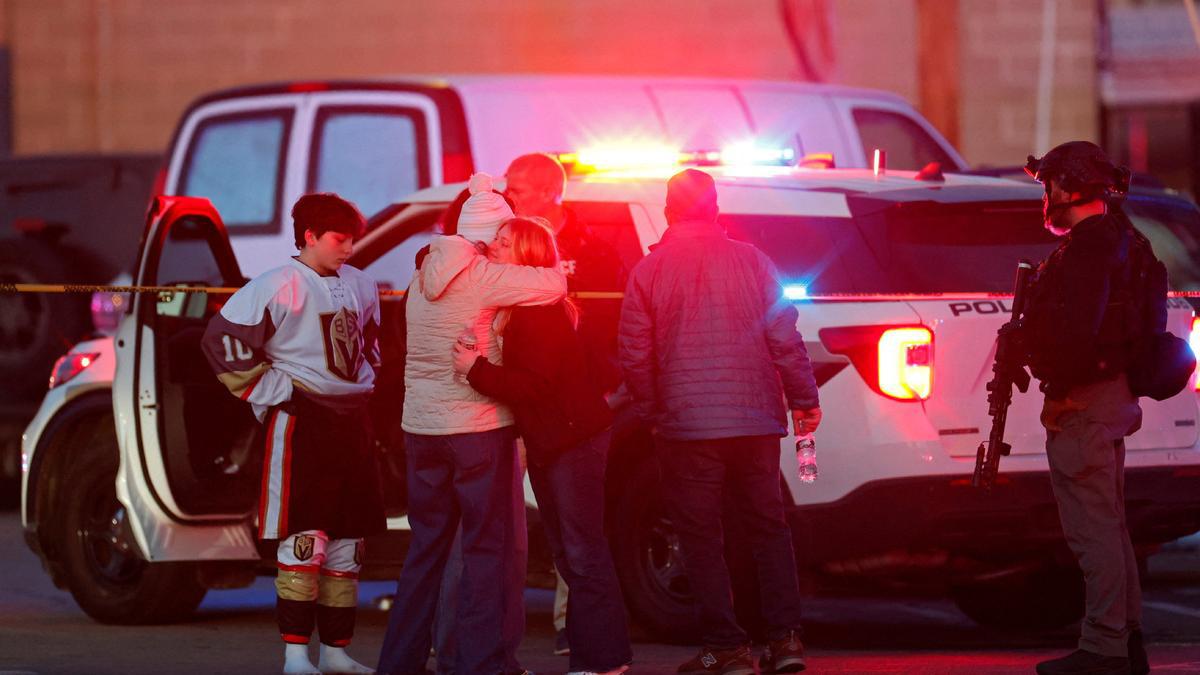
    Federal investigators have released disturbing confessional-style videos revealing that a gunman meticulously planned his deadly shooting spree across multiple universities over several months. Claudio Manuel Neves Valente, 48, documented his preparations in Portuguese before executing attacks that claimed three lives and injured nine others.

    According to translated transcripts released by the U.S. Attorney’s Office for the District of Massachusetts, Valente stated he spent ‘six semesters’ planning the December 13th assault at Brown University in Providence, Rhode Island. The attack resulted in the deaths of two students—19-year-old Ella Cook and 18-year-old Mukhammad Aziz Umurzokov—and left nine others wounded.

    Two days following the campus shooting, Valente traveled to Massachusetts where he fatally shot MIT professor Nuno Loureiro at his residence near Boston. Investigators confirmed both men had attended the same university in Portugal and were believed to be acquainted, though no specific motive for targeting either institution was provided in the recordings.

    The footage, discovered in a New Hampshire storage unit alongside Valente’s body on December 18th following a multi-state manhunt, shows the gunman expressing zero remorse for his actions. Instead, he blamed his unarmed victims for their own deaths and complained about a self-inflicted injury sustained during the professor’s shooting when a bullet casing struck his eye.

    Despite his violent actions, Valente denied having mental illness or anti-American sentiments in his recordings, calling his decision to immigrate to the United States a ‘mistake’ while asserting he held ‘no hatred towards America.’

    The prolonged investigation and delayed suspect identification drew significant criticism, though prosecutors have confirmed there is no ongoing threat to public safety while the investigation continues.

  • 55 Cuban, Venezuelan troops killed during US capture of Maduro: official tolls

    55 Cuban, Venezuelan troops killed during US capture of Maduro: official tolls

    A military operation conducted by United States forces in Caracas has resulted in the deaths of fifty-five Cuban and Venezuelan military personnel, according to official statements released by both nations. The incident occurred during a nighttime assault on January 3rd that led to the capture of Venezuelan leader Nicolás Maduro from his residence.

    Venezuelan Defense Minister Vladimir Padrino López characterized the operation as a brutal engagement, stating that Maduro’s presidential guard was largely eliminated ‘in cold blood’ by American troops who initiated bombardment in the capital city. The minister’s comments, delivered on Sunday, described the operation as disproportionate in its use of force.

    Cuba subsequently released the identities of thirty-two deceased military members, including three high-ranking officers from the country’s interior ministry. Simultaneously, Venezuela published an online memorial honoring twenty-three fallen personnel, among them five admirals from its naval forces.

    The longstanding military cooperation between Cuba and Venezuela, maintained despite consistent pressure from Washington, represents a strategic alliance that has persisted through both the Chavez and Maduro administrations. This partnership extends beyond defense to include collaborative efforts in public health and educational exchanges, forming a cornerstone of leftist governance in the region.

    The operation marks a significant escalation in international tensions regarding Venezuela’s political leadership, which has faced sustained opposition from Western governments questioning the legitimacy of Maduro’s presidency since his controversial 2018 re-election.

  • Maduro copied my dance, but Melania hates it, says Trump

    Maduro copied my dance, but Melania hates it, says Trump

    In a wide-ranging address to Republican lawmakers at the Trump-Kennedy Center in Washington, President Donald Trump celebrated the capture of Venezuelan leader Nicolas Maduro while offering unexpected commentary on presidential dance aesthetics. The speech, delivered on the fifth anniversary of the U.S. Capitol attack, primarily served as a campaign launch for the crucial 2026 midterm elections.

    Trump accused the captured Venezuelan president of attempting to imitate his signature rally dance moves, referencing Maduro’s recent public appearances where he danced to a techno remix of his ‘No War, Yes Peace’ mantra as U.S. forces gathered in the Caribbean late last year. While acknowledging the ‘brilliant’ special forces operation that captured Maduro and his wife on Saturday, Trump provided no additional details about his previously stated plans for U.S. management of Venezuela’s oil resources.

    The president diverted from foreign policy matters to demonstrate an exaggerated imitation of a transgender weightlifter while discussing his administration’s ban on transgender women in women’s sports. This performance prompted him to reveal First Lady Melania Trump’s disapproval of both his dance moves and physical comedy routines, which she deemed ‘so unpresidential.’

    Trump framed the upcoming midterms as critical to preventing another impeachment attempt, referencing his second impeachment following the January 6 Capitol riot. He pardoned nearly 1,600 rioters on his first day back in office on January 20, 2025. Despite claiming strong economic performance, Trump expressed frustration with public concerns about affordability of basic goods, telling lawmakers: ‘I wish you could explain to me what the hell’s going on with the mind of the public. Because we have the right policy.’

  • Trump says Republicans must win 2026 midterms or else he’ll be impeached by Democrats

    Trump says Republicans must win 2026 midterms or else he’ll be impeached by Democrats

    Former President Donald Trump issued a stark warning to Republican lawmakers on Tuesday, asserting that Democratic forces would move to impeach him should the GOP fail to secure victory in the upcoming 2026 midterm elections. Speaking at a private gathering for House Republicans in Washington, Trump framed the November contests as a critical juncture for his political future and policy objectives.

    “The imperative is clear—we must prevail in the midterms,” Trump declared during the retreat. “A defeat would provide the opposition with sufficient pretext to initiate impeachment proceedings against me.”

    The midterm elections, scheduled for November 2026, will determine the complete composition of the House of Representatives and one-third of Senate seats. These outcomes will fundamentally shape the balance of power in Congress and directly influence the viability of Trump’s political agenda during his potential second term.

    Trump’s remarks underscore the heightened political tensions surrounding the upcoming electoral battle, which both parties view as potentially one of the most consequential midterm elections in recent history. The former president’s statement reflects growing concerns within Republican circles about maintaining congressional majorities amid challenging political headwinds.

    Political analysts note that Trump’s warning serves multiple purposes: motivating the Republican base, consolidating support among party legislators, and framing the election as a referendum on his presidency rather than merely a conventional midterm contest. This strategic positioning comes as both parties prepare for what is expected to be an intensely fought electoral campaign with significant implications for the nation’s political trajectory.

  • US-China couple revive a century-old theater in San Francisco’s Chinatown

    US-China couple revive a century-old theater in San Francisco’s Chinatown

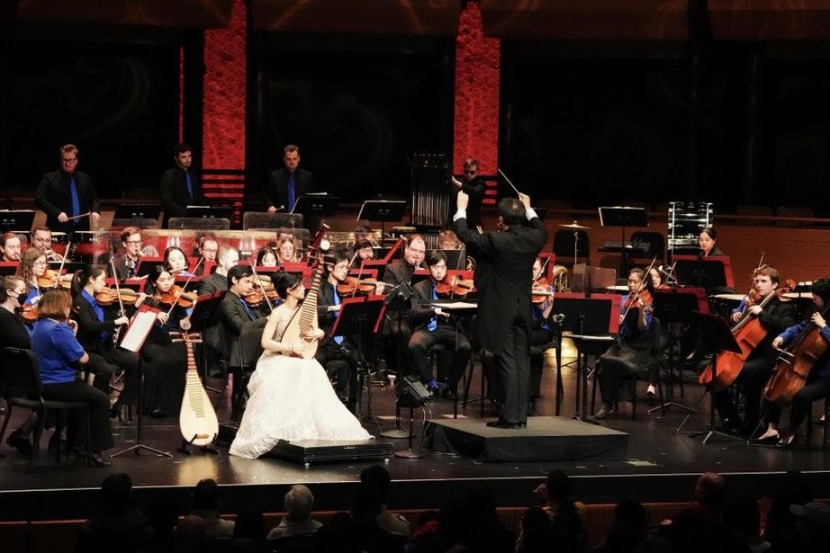
    In a remarkable cultural preservation story, San Francisco’s historic Great Star Theater has been triumphantly restored to its former glory through the dedicated efforts of a binational couple. Roger Pincombe and Alice Chu, whose partnership symbolizes US-China cultural fusion, undertook the ambitious project when the venue faced permanent closure five years ago.

    The century-old theater, which recently celebrated its 100th anniversary in 2025, stood as a cultural landmark in the heart of Chinatown before falling into disrepair. When the previous operators could no longer sustain operations, the couple recognized both the cultural significance and community value of the institution and intervened to prevent its demise.

    Their revitalization effort represents more than mere architectural preservation—it signifies the reactivation of a vital community hub that has hosted generations of performances, from traditional Chinese opera to contemporary productions. The theater’s revival has reinvigorated the neighborhood’s cultural landscape while honoring the rich immigrant history embedded within its walls.

    The restoration project required meticulous attention to both historical accuracy and modern functionality, balancing preservation with necessary updates for contemporary use. The couple’s binational background brought unique perspective to the endeavor, allowing them to bridge cultural traditions while creating space for new artistic expressions.

    The successful reopening has been celebrated by community members and cultural preservation advocates alike, serving as a model for how historic venues can adapt to modern contexts while maintaining their original character and purpose.