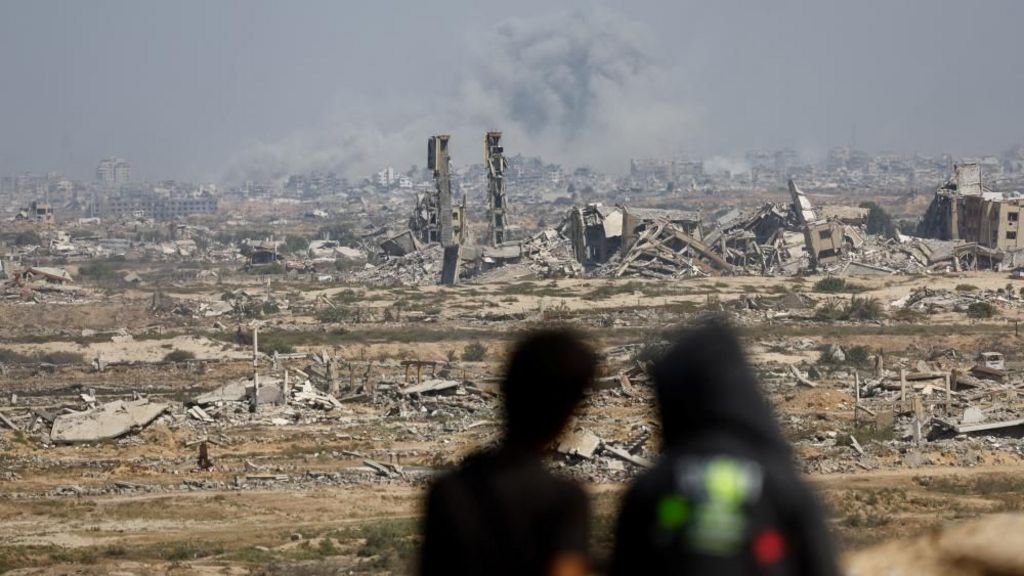
In a high-profile announcement at the White House, U.S. President Donald Trump and Israeli Prime Minister Benjamin Netanyahu unveiled a 20-point peace plan aimed at ending the protracted war in Gaza. Trump hailed the proposal as a historic milestone, potentially ushering in “eternal peace in the Middle East.” However, the plan, while ambitious, remains a framework for further negotiations rather than a detailed roadmap to resolution. The proposal marks a significant shift in the Trump administration’s stance on Gaza’s post-war future and increases pressure on Netanyahu to accept a deal. Key elements include a ceasefire, limited Israeli withdrawal, the release of hostages and Palestinian prisoners, and the establishment of a technocratic administration in Gaza overseen by a U.S.-led “Board of Peace.” The plan also vaguely references Palestinian statehood, contingent on reforms within the Palestinian Authority. While Arab nations view the proposal as a breakthrough, Hamas remains skeptical, with one figure criticizing its failure to safeguard Palestinian interests. Netanyahu’s domestic opponents also question his commitment, citing his history of derailing deals for political gain. The plan’s success hinges on overcoming longstanding obstacles, including Hamas’s demands for Israeli withdrawal and Netanyahu’s coalition’s resistance to concessions. The proposal, crafted by Trump’s envoy Steve Witkoff and Jared Kushner, draws on previous diplomatic efforts, including the Saudi-French plan and Tony Blair’s involvement. Despite its lofty goals, the plan’s ambiguity leaves room for both sides to exploit negotiations, potentially stalling progress. As the world watches, the path to peace remains fraught with challenges, with the response from Hamas and Netanyahu’s government likely to determine the plan’s fate.
标签: North America
北美洲
-
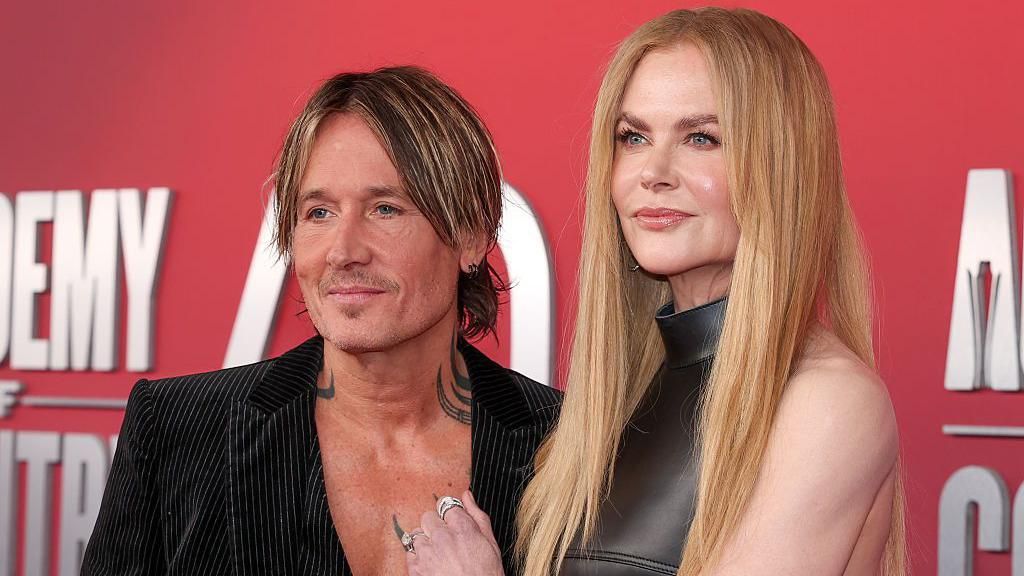
Nicole Kidman and Keith Urban separate after almost 20 years
Hollywood power couple Nicole Kidman and Keith Urban have reportedly parted ways after nearly 20 years together, according to a source close to the BBC. The duo, who tied the knot in June 2006, share two daughters: Sunday Rose, 17, and Faith Margaret, 14. TMZ initially broke the news, revealing that the pair had been living separately since the summer, with Kidman reportedly reluctant about the separation. The BBC’s source corroborated this information, though the exact reasons for their split remain undisclosed. Both Kidman, an Oscar-winning actress, and Urban, a four-time Grammy-winning country singer, have faced challenges and triumphs throughout their relationship. Urban’s battle with drug and alcohol addiction shortly after their wedding tested their bond, but the couple emerged stronger, with Kidman playing a pivotal role in his recovery. Over the years, they have been a constant support system for each other, frequently appearing together at high-profile events. Despite recent public appearances that suggested a harmonious relationship, including attending a FIFA Club World Cup match in June and Urban’s ACM Triple Crown Award ceremony in May, the couple has now decided to go their separate ways. Kidman was previously married to actor Tom Cruise, with whom she shares two children, before their divorce in 2001.
-

YouTube to pay $24.5m to settle Trump lawsuit over Capitol riot
YouTube, the video-sharing giant owned by Alphabet, has agreed to pay $24.5 million to settle a lawsuit filed by former U.S. President Donald Trump. The lawsuit stemmed from the platform’s decision to suspend Trump’s account in the aftermath of the January 6, 2021, attack on the U.S. Capitol. This settlement marks the latest in a series of payouts by major tech companies, including Meta (Facebook) and X (formerly Twitter), which also faced legal action from Trump over account suspensions. Trump had accused these platforms of political bias, alleging unfair censorship of conservative voices. As part of the agreement, YouTube will allocate $22 million to the Trust for the National Mall, a non-profit organization raising funds for a new White House ballroom, while $2.5 million will be distributed to other plaintiffs, including the American Conservative Union. The settlements reflect a broader shift in Silicon Valley’s approach to Trump, with tech leaders adopting a more conciliatory stance. YouTube also announced plans to reinstate accounts previously banned for spreading misinformation about COVID-19 and the 2020 election, emphasizing its commitment to conservative voices and civic discourse.
-
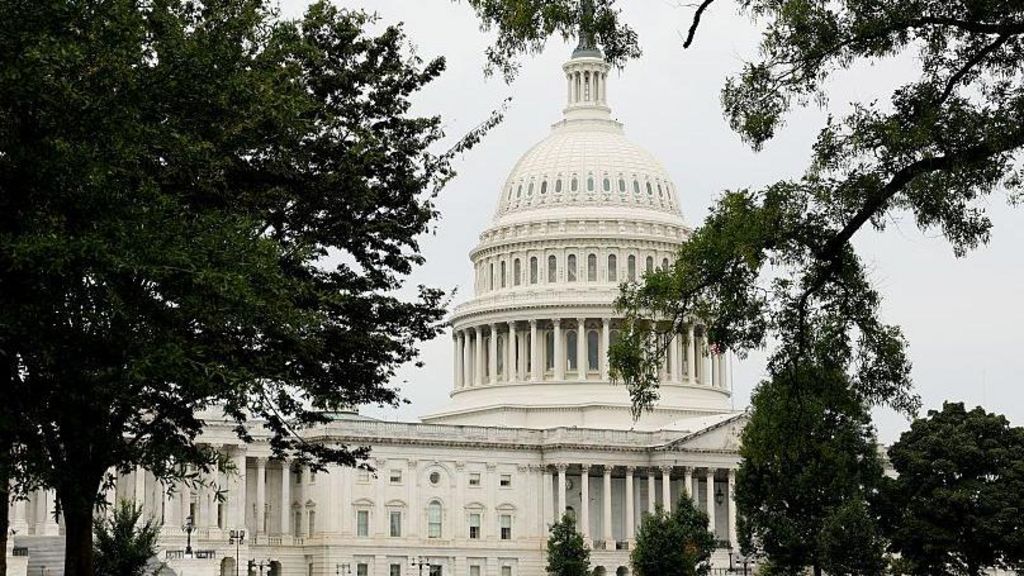
Trump and Democrats end meeting without a deal as US shutdown looms
The United States is on the brink of a government shutdown as bipartisan negotiations have reached a stalemate, with neither Republicans nor Democrats showing willingness to compromise. A recent meeting between President Donald Trump and Democratic congressional leaders yielded no progress, further entrenching both sides in their positions. Republican Senate Majority Leader John Thune accused Democrats of ‘hostage-taking,’ while Democratic Senate Leader Chuck Schumer emphasized the ‘very large differences’ between the parties. Republicans advocate for a short-term extension of current spending levels, while Democrats demand an end to unilateral spending cuts by the Trump administration and a renewal of health-insurance subsidies for low-income individuals. The impasse reflects deeper political strategies, with Republicans positioning themselves as the reasonable party and Democrats leveraging healthcare as a key issue. Complicating matters, some Republicans appear unfazed by the prospect of a prolonged shutdown, viewing it as an opportunity to implement long-term spending reductions. Democratic leaders, however, see this as a bluff and remain steadfast under pressure from their base. The looming shutdown is a test of political will, with both sides weighing the potential fallout. The last major shutdown during Trump’s first term lasted 35 days, setting a record and causing widespread disruption. As tensions escalate, the outcome remains uncertain, with both parties seemingly prepared for a protracted battle.
-
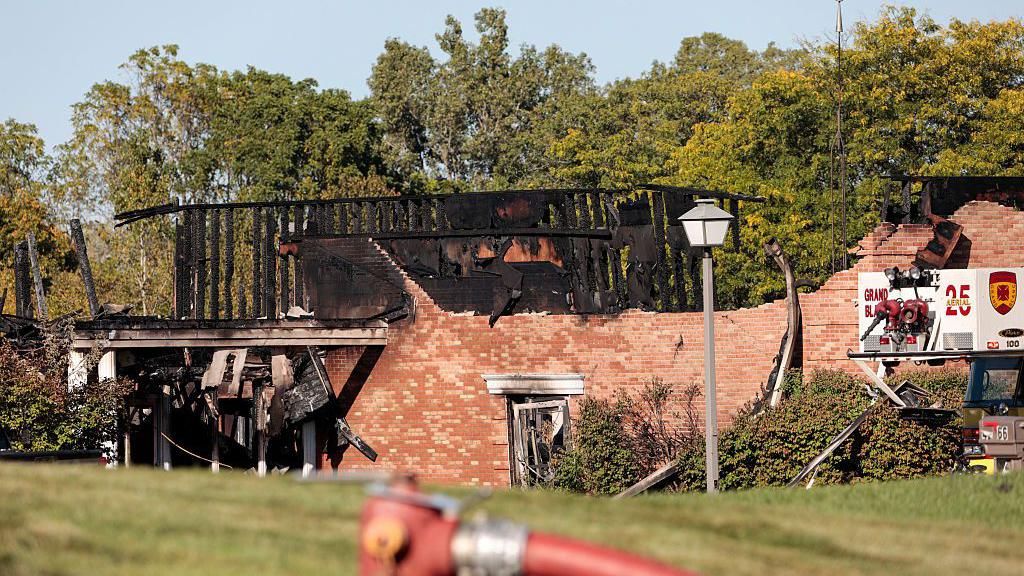
What we know about Michigan church shooting and arson attack
A tragic and violent incident unfolded at a Mormon church in Grand Blanc, Michigan, during a Sunday service, leaving four people dead and eight others injured, one critically. The suspect, identified as 40-year-old Thomas Jacob Sanford from Burton, Michigan, reportedly used gasoline or an accelerant to set the church on fire after opening fire on congregants. Sanford, a former Marine who had been deployed to Iraq, was killed in a shootout with police less than 10 minutes after the attack began. Officials described the incident as a ‘targeted act of violence’ but have yet to determine a motive. Michigan Governor Gretchen Whitmer urged the public to avoid speculation, emphasizing the importance of allowing investigators to conduct their work. The attack occurred around 10:30 AM EST when Sanford crashed his vehicle into the church building before shooting at attendees and setting the structure ablaze. Investigators found makeshift explosive devices at the scene, adding to the complexity of the case. Over 100 victims and witnesses have been interviewed as part of the ongoing investigation. While Sanford’s motives remain unclear, his social media activity and previous arrests for burglary and drunk driving have drawn attention. The incident has reignited discussions about gun violence in the United States, particularly in Michigan, where such tragedies have become increasingly frequent.
-
Why the US government might shut down and what to know
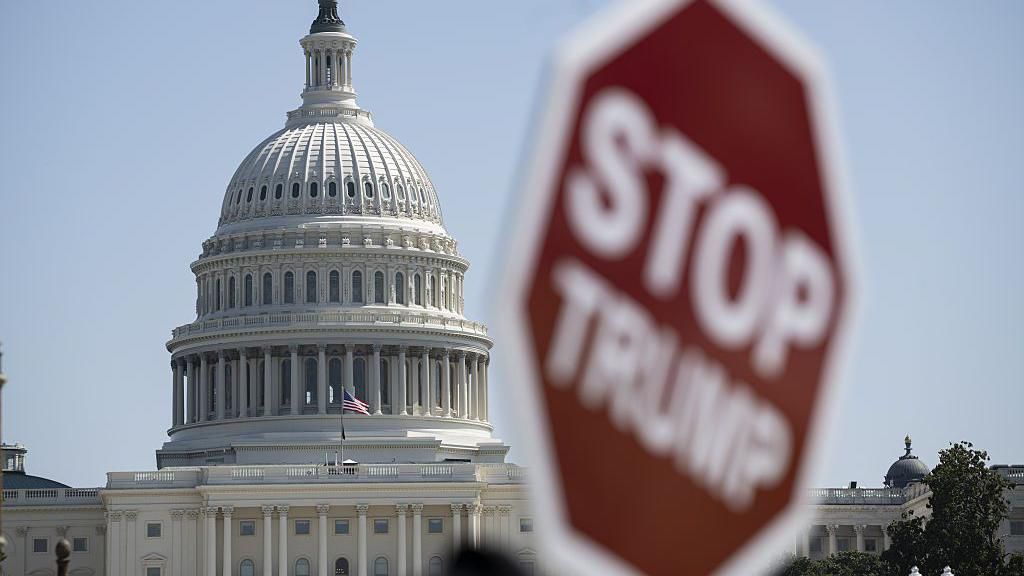
The United States is on the brink of a government shutdown as President Donald Trump’s Republican Party and opposition Democrats remain deadlocked over a critical spending bill. If an agreement is not reached by the end of Tuesday, federal funding will expire, leading to a partial halt in government services. This impending crisis underscores the deepening political divide in Washington, exacerbated by Trump’s aggressive efforts to reduce the size of the federal government over the past nine months. The Republicans, who control both chambers of Congress, lack the necessary 60 votes in the Senate to pass the bill unilaterally, giving Democrats significant leverage. Democrats are refusing to support the Republican-proposed bill, which they argue would undermine healthcare affordability for millions of Americans. Instead, they are pushing for an extension of health insurance tax credits and a reversal of Medicaid cuts enacted by the Trump administration. A stopgap bill has already passed the House but remains stalled in the Senate. If no resolution is found by 00:01 EDT on Wednesday, the US will experience its first government shutdown in nearly seven years. The last shutdown occurred in late 2018 during Trump’s first term, lasting 36 days and costing the economy an estimated $11 billion. This time, the Trump administration appears less concerned about the political fallout, with officials even suggesting that a shutdown could help identify and eliminate ‘non-essential’ federal workers. While essential services like border protection, law enforcement, and air-traffic control would continue, programs such as food assistance, federally-funded pre-schools, and national park operations would be severely impacted. The standoff highlights the unique nature of US budget politics, where divided government branches often lead to such impasses. As both sides make last-ditch efforts to avoid a shutdown, the stakes for the nation’s economy and public services remain high.
-
Trump renews threat to impose 100% tariffs on non-US made movies
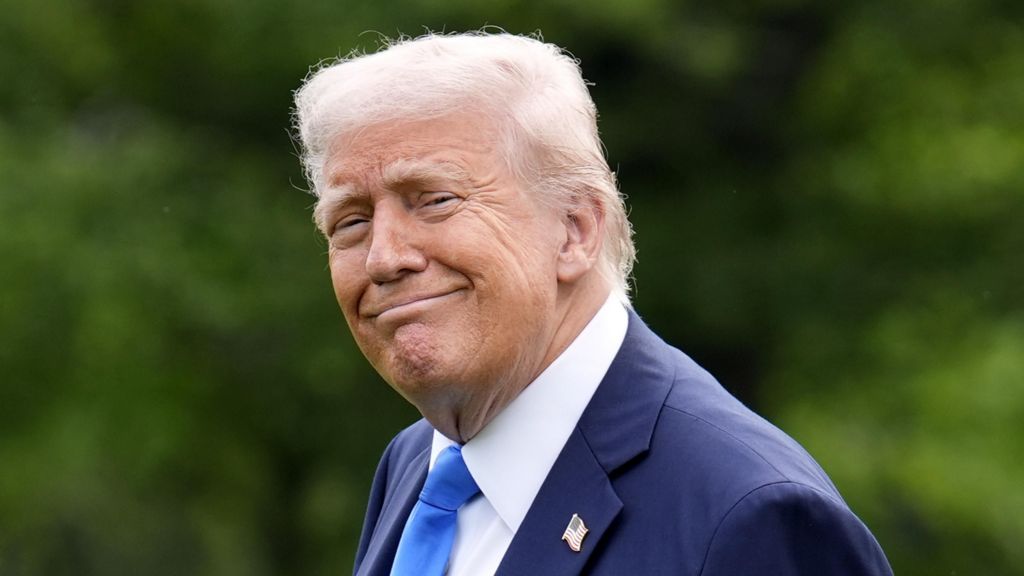
Former U.S. President Donald Trump has reiterated his controversial proposal to impose a 100% tariff on all films not produced within the United States, asserting that the American film industry has been ‘stolen’ by other nations. Speaking on his Truth Social platform, Trump emphasized that California, in particular, has suffered significantly due to the decline in domestic film production. He framed the tariff as a solution to what he described as a ‘long-time, never-ending problem.’
This announcement follows Trump’s broader tariff strategy, which recently included a 100% levy on branded or patented drug imports and 50% tariffs on kitchen and bathroom cabinets. Trump’s rhetoric has drawn criticism and skepticism, with many questioning the feasibility and economic impact of such a policy. Investment analyst Dan Coatsworth of AJ Bell highlighted the complexities of defining what constitutes an ‘American-made’ film, especially when productions involve foreign actors, directors, or funding.
Coatsworth also noted that filmmakers have increasingly relocated to countries offering more favorable tax incentives, leading to a decline in the prominence of the Los Angeles film industry. He warned that forcing productions back to the U.S. could drive up costs, which might ultimately be passed on to consumers, potentially harming demand for streaming services and cinema operators. Despite these concerns, investors have yet to treat the proposal as a serious threat, with stocks for companies like Netflix and Disney showing only brief dips before recovering.
The proposal’s implications for streaming platforms and international co-productions remain unclear. For instance, films like ‘Wicked,’ which was shot in the UK but produced by an American studio, could face ambiguous treatment under the proposed tariffs. Recent data from movie industry research firm ProdPro reveals that while the U.S. remains a major global production hub, spending has declined by 26% since 2022, with countries like Australia, New Zealand, Canada, and the UK attracting increased investment.
-
MrBeast defends trapping man in burning building for $500,000
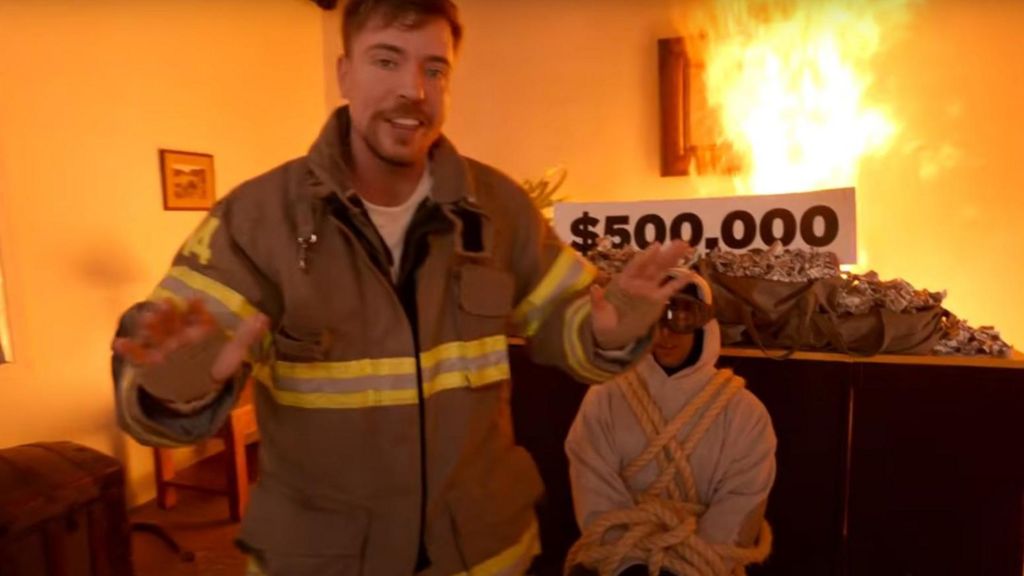
Jimmy Donaldson, better known as MrBeast, the world’s most subscribed YouTuber, has come under fire for his latest high-octane video titled ‘Would You Risk Dying for $500,000?’ The video, which premiered on Saturday, features professional stuntman Eric navigating a series of perilous challenges, including escaping a burning building and surviving massive explosions, all while collecting bags of cash. The dramatic visuals, however, have sparked widespread criticism, with many accusing the content of being dangerously irresponsible and potentially encouraging copycat behavior. In response, MrBeast took to social media platform X to defend the production, emphasizing that safety was a top priority. He revealed that the stunt was meticulously planned with ventilation systems, kill switches, and a professional pyro team to control the fires. Eric, the contestant, successfully completed the challenges, walking away with $350,000, which he plans to use to support his retired parents. Despite the backlash, the video has amassed over 45 million views, showcasing MrBeast’s unparalleled influence on the platform. This incident adds to a series of controversies surrounding Donaldson, including allegations of exploitation in his Amazon series ‘Beast Games’ and accusations from the Mexican government regarding his use of Mayan pyramids in a video. While some critics labeled the stunt as dystopian and humiliating, others argued that it was a well-executed PR stunt with minimal real danger involved.
-
Russell M Nelson, head of Church of Latter-day Saints, dies aged 101
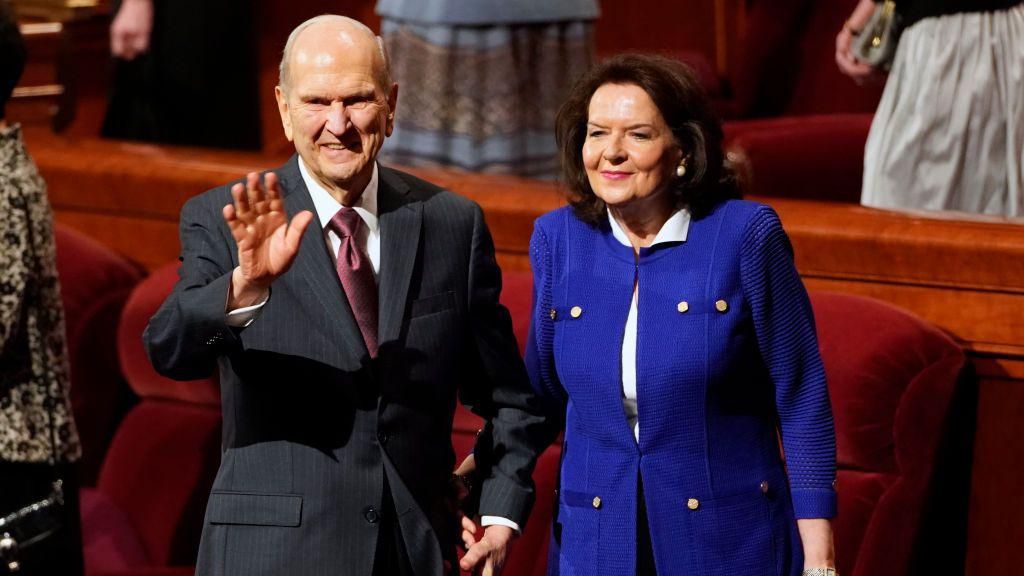
Russell M. Nelson, the esteemed president of the Church of Jesus Christ of Latter-day Saints, passed away on Saturday at the age of 101 in Salt Lake City, Utah. Dr. Nelson, who was the oldest serving head of the church, was widely revered as a prophet and credited with spearheading significant policy changes during his tenure. The church praised his leadership, highlighting his global ministry, increased temple construction, and profound impact on the faith. Dallin H. Oaks, anticipated to succeed Dr. Nelson, described him as a man of ‘extraordinary modesty’ and ‘gentleness.’ U.S. President Donald Trump also honored Dr. Nelson, acknowledging his pioneering work in heart surgery and his decades-long ministry. Dr. Nelson, a trained surgeon, was called as an apostle in 1984 and became president in 2018. During his leadership, he visited 32 countries, announced 200 new temples, and rolled back anti-LGBT policies introduced in 2015. He also severed ties with the Boy Scouts of America and campaigned to eliminate the use of the nickname ‘Mormon.’ Dr. Nelson, who developed a machine for open-heart surgery and was the first to perform the procedure in Utah, is survived by his wife, Wendy, and eight of his ten children.
-
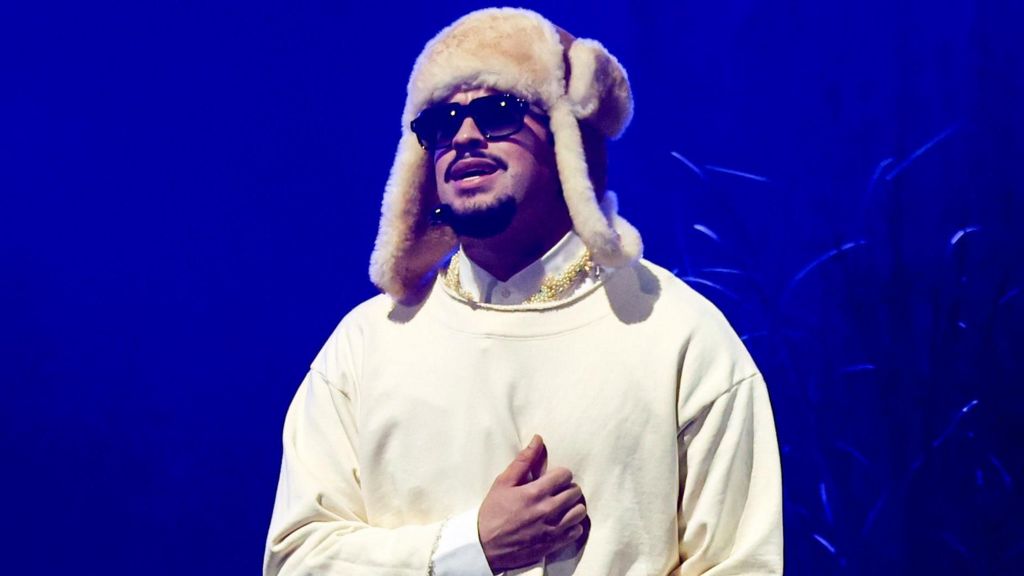
Bad Bunny revealed as Super Bowl half-time show performer
Puerto Rican global music sensation Bad Bunny, born Benito Antonio Martínez Ocasio, has officially announced his headline performance at the Super Bowl LVIII halftime show in Santa Clara, California, on February 8, 2024. The 31-year-old artist, a three-time Grammy winner and 12-time Latin Grammy recipient, expressed his excitement in a football-themed statement, emphasizing the cultural significance of the moment. ‘This is not just about me,’ he said. ‘It’s for those who paved the way, for my people, my culture, and our history.’ Bad Bunny, who has dominated Spotify’s most-streamed artist list three times in the past five years, also switched to Spanish, urging fans to share the news with their families: ‘Ve y dile a tu abuela, que seremos el halftime show del Super Bowl’ (‘Go tell your grandma we’re going to be the Super Bowl halftime show’). The announcement follows his recent decision to avoid U.S. tour stops due to concerns about Immigration and Customs Enforcement (ICE) raids at his concerts. Instead, he concluded a highly successful residency in Puerto Rico, drawing over 500,000 fans. Bad Bunny’s groundbreaking 2022 album, ‘Un Verano Sin Ti,’ became the first all-Spanish-language album to top the U.S. charts. His Super Bowl performance at Levi’s Stadium will join the ranks of recent halftime stars like Kendrick Lamar, Rihanna, and Shakira, further cementing his status as a global music icon.