
Tesla has introduced more affordable versions of its popular Model Y SUV and Model 3 sedan in the US, aiming to counteract declining sales following the expiration of a crucial federal tax credit for electric vehicles. The new models are priced $5,000 lower than their predecessors, with the Model Y starting at $39,990 and the Model 3 at $36,990. However, the announcement failed to impress investors, causing Tesla’s shares to drop by approximately 4%. The company has been grappling with increased competition, sluggish innovation in affordable vehicles, and reduced government support for EVs. Earlier this year, Tesla reported a 12% decline in second-quarter sales to $22.4 billion, marking its steepest drop in over a decade. While the company recently saw a surge in EV sales, analysts attribute this to consumers rushing to purchase before the tax credit expired. Tesla’s reliance on its core car business remains critical, even as CEO Elon Musk shifts focus toward AI-driven ventures like robotaxis and humanoid robots. The stripped-down versions of the Model Y and Model 3, designed to mitigate the loss of the EV credit, lack some features found in other Tesla vehicles. The company’s latest major launch, the Cybertruck, has also underperformed, with US sales totaling around 52,000 units since its 2023 debut.
标签: North America
北美洲
-

Canada Freedom Convoy leaders spared more jail time at sentencing
Tamara Lich and Chris Barber, key figures in the 2022 ‘Freedom Convoy’ protests that paralyzed Ottawa, have been handed conditional sentences, avoiding further incarceration. The duo was convicted of mischief in April after a protracted trial but were acquitted of most other charges. The protests, which saw hundreds of trucks and vehicles blockading the capital for three weeks, were a response to COVID-19 mandates and the policies of then-Prime Minister Justin Trudeau’s government. The Crown had initially sought seven and eight-year prison terms for Lich and Barber, respectively, but the court opted for 18-month conditional sentences. This includes 12 months of home confinement with limited outings, followed by six months under curfew, plus 100 hours of community service. Additionally, the Crown is pursuing the seizure of Barber’s ‘Big Red’ truck, a prominent symbol of the protest, with a hearing scheduled for November. In a separate legal development, the Crown is appealing the lenient sentence given to Pat King, another protest organizer, who received three months of house arrest despite prosecutors pushing for a decade-long sentence. The protests, which began in February 2022, were triggered by a federal vaccine mandate for cross-border truckers and were eventually quelled when Trudeau invoked the Emergencies Act, marking its first use in Canadian history. The act empowered law enforcement to dismantle the blockades and imposed restrictions on public gatherings.
-
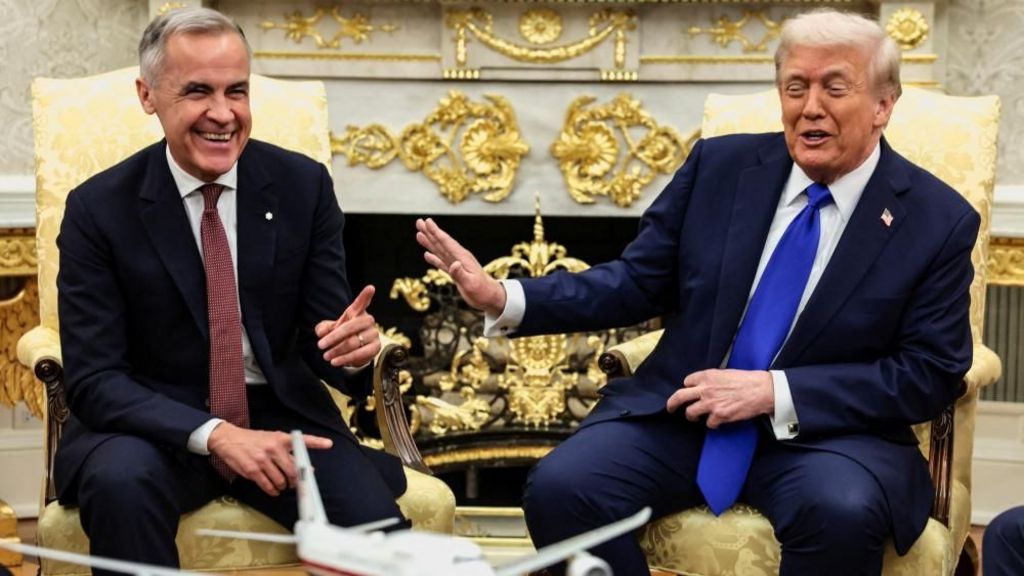
Trump says trade talks ‘complicated’ but Canada will be ‘very happy’ with eventual deal
In a cordial meeting at the White House, US President Donald Trump and Canadian Prime Minister Mark Carney addressed the complexities of trade negotiations between their nations. Trump described the relationship as one of ‘natural conflict,’ particularly in industries like automotive and steel, where both countries compete. Despite this, he expressed optimism about reaching a future agreement that would satisfy both parties. Carney echoed this sentiment, emphasizing the deep economic ties between the two nations and expressing confidence in securing a favorable deal. Trump’s administration has imposed significant tariffs on Canadian imports, including 35% on general goods and sector-specific levies of 50% on metals and 25% on automobiles. However, exemptions exist under the USMCA, a trade agreement negotiated during Trump’s first term. The meeting marked Carney’s second visit to the White House since taking office in March and concluded on a friendly note, with both leaders praising each other’s leadership. This contrasts sharply with Trump’s previously contentious relationship with former Canadian Prime Minister Justin Trudeau. While trade negotiations have extended past an August deadline, the tone of the discussions suggests progress toward a mutually beneficial resolution.
-

Trump’s farmer bailout raises fears about trade war winners and losers
The Trump administration’s decision to allocate billions in aid to farmers, particularly soybean growers, has ignited a heated debate over the fairness and effectiveness of such targeted relief. Farmers like Brad Smith from Illinois, who have been hit hard by China’s halt on soybean purchases, welcome the financial lifeline. However, the move has left other industries, from craft breweries to toy shops, feeling sidelined and frustrated. Justin Turbeest, a Wisconsin brewer, described the tariffs as a ‘final blow’ to his business, forcing layoffs and a 40% cost increase. Alexis D’Amato of the Small Business Majority criticized the administration for ‘picking winners and losers,’ while Chris Swonger of the Distilled Spirits Council urged inclusion for other affected sectors. Economists like Cornell’s Chris Barrett questioned the equity of bailing out a politically favored group, noting that the aid disproportionately benefits larger farms. Meanwhile, farmers like Mark Legan of Indiana view the relief as a temporary ‘band-aid’ rather than a solution to deeper economic challenges. As the debate rages, the broader impact of Trump’s tariff policies continues to ripple across the U.S. economy.
-
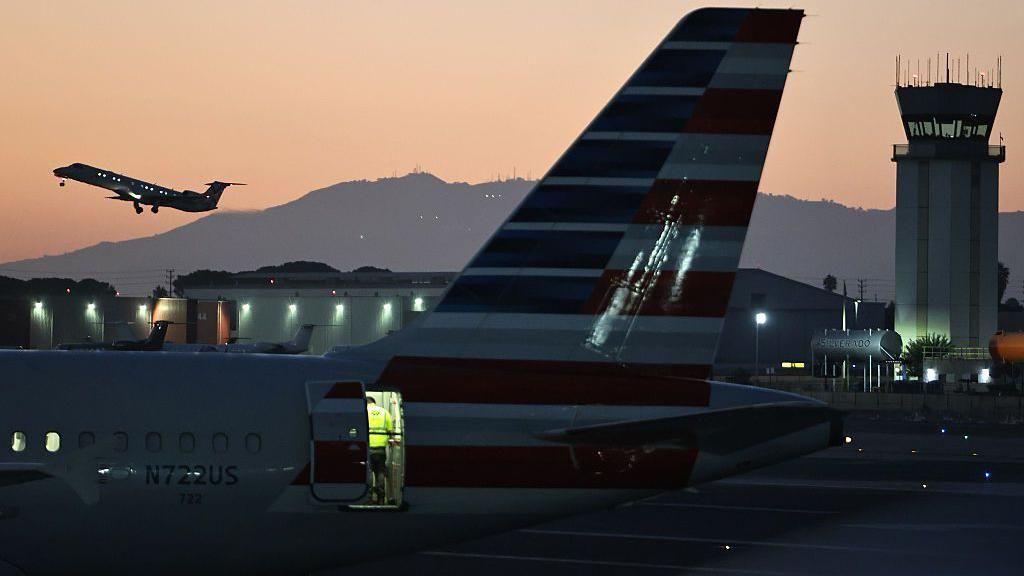
Burbank and other US airports see delays as shutdown hits air travel
The Hollywood Burbank Airport in Los Angeles experienced a significant disruption on Monday evening as air traffic control operations were left unmanned for nearly six hours due to staffing shortages. This incident, part of a broader crisis exacerbated by the ongoing U.S. government shutdown, led to widespread flight delays and cancellations across multiple airports, including Newark, Phoenix, Denver, Las Vegas, and Burbank. Delays ranged from 40 to 60 minutes, according to flight data. Transportation Secretary Sean Duffy revealed that some air traffic controllers are calling in sick, citing the stress of working without pay during the shutdown, now in its seventh day. He estimated that staffing levels have plummeted to 50% in some areas. Air traffic controllers, classified as essential workers, are required to work without pay during government shutdowns. The National Air Traffic Controllers Association (NATCA), representing over 20,000 professionals, has warned employees that absenteeism could result in termination. Duffy emphasized that safety remains the top priority, even if it means delays or cancellations. He expressed concern that controllers are distracted by financial worries, such as paying mortgages, rather than focusing on their critical duties. The shutdown, which began on October 1 after lawmakers failed to resolve a budget dispute, has left approximately 750,000 federal workers on unpaid leave. This situation mirrors the 2019 shutdown, which strained air travel and ultimately led to its resolution after 35 days. The current deadlock in Congress shows no signs of ending, raising fears of further disruptions to air travel and other essential services.
-
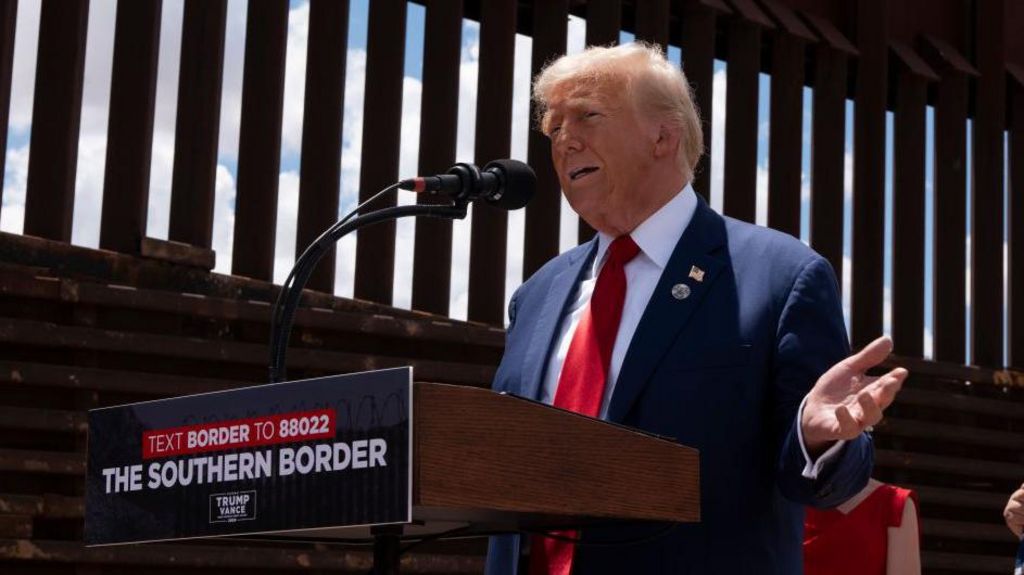
What is the Insurrection Act?
On his first day back in the White House, President Donald Trump signed an executive order declaring a national emergency at the US southern border. He directed his top officials to evaluate the potential use of the Insurrection Act of 1807, a rarely invoked 19th-century law that permits the deployment of active-duty military personnel for domestic law enforcement. Trump emphasized that he would consider invoking the Act if federal courts obstructed his plans to deploy the National Guard to protect federal buildings and enforce immigration laws. The Insurrection Act grants the president broad authority to mobilize troops in response to situations where it becomes ‘impracticable to enforce’ US law through standard judicial processes. This could include quelling civil unrest, enforcing court orders, or detaining migrants. Trump’s administration has already implemented aggressive measures at the border, including nationwide deportation sweeps and transferring alleged gang members to foreign prisons. However, these actions have faced legal challenges. Migrant apprehensions have significantly declined in recent months, yet Trump continues to frame the border situation as a critical national emergency. His consideration of the Insurrection Act follows a federal judge’s decision to block the deployment of National Guard troops to Portland, Oregon, which Trump claims is overrun by ‘domestic terrorists.’ White House deputy chief of staff Stephen Miller echoed this sentiment, describing court rulings against the administration as a ‘legal insurrection.’ Historically, the Insurrection Act has been used sparingly, most notably during the Civil War, the Ku Klux Klan’s racist violence, and the 1992 Los Angeles riots. Trump’s potential invocation of the Act raises questions about its legal implications and the broader use of military force on US soil.
-

Canadian marine park threatens to euthanise 30 beluga whales
Marineland, a Canadian amusement park located in Niagara Falls, Ontario, has sparked widespread outrage after threatening to euthanize 30 beluga whales due to its financial struggles and the Canadian government’s refusal to approve their transfer to a theme park in China. The park, which houses the largest captive group of beluga whales in Canada, had sought to relocate the cetaceans to Chimelong Ocean Kingdom in Zhuhai, China, following years of animal welfare concerns and financial instability. However, Fisheries Minister Joanne Thompson denied the export permit, citing Canada’s 2019 fisheries legislation that prohibits the use of whales and dolphins for entertainment. Thompson stated that approving the transfer would have perpetuated the animals’ life in captivity and subjected them to public entertainment, a fate she could not endorse. Marineland then requested federal funding to continue caring for the whales, but this was also denied, with Thompson labeling the request as ‘inappropriate.’ Facing a ‘critical financial state’ and unable to provide adequate care, Marineland has now warned that euthanasia may be the only option. Animal welfare advocates have condemned the park’s actions, with organizations like Animal Justice and World Animal Protection calling for provincial intervention to ensure the whales’ safety and well-being. The controversy follows years of scrutiny over Marineland’s treatment of its marine life, including the deaths of 20 beluga whales since 2019 and a 2020 investigation that found all marine life at the park to be under distress.
-
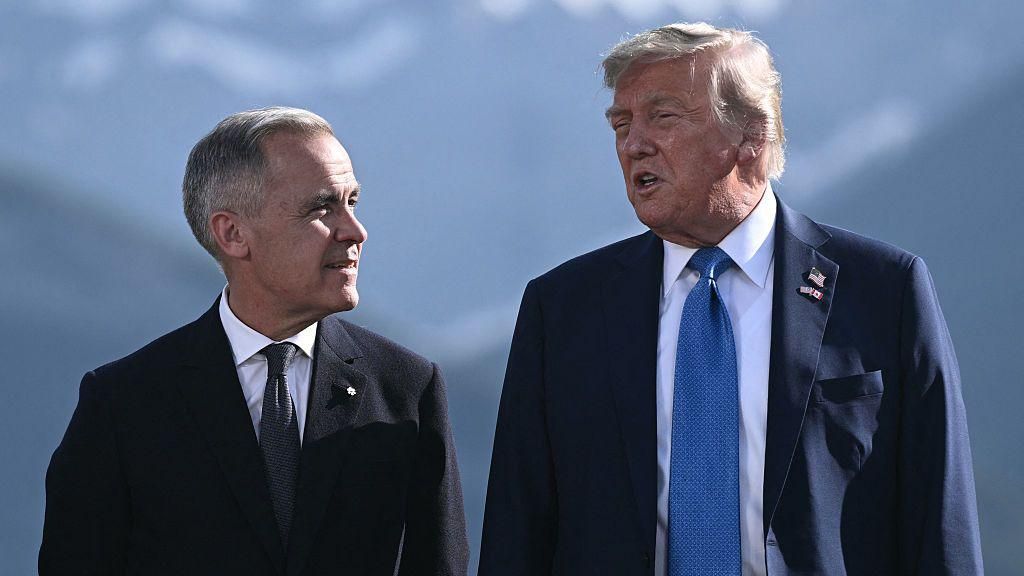
Carney to meet Trump in search of ‘best deal for Canada’
Canadian Prime Minister Mark Carney is set to meet with U.S. President Donald Trump in Washington on Tuesday, marking his second visit to the U.S. capital this year. The primary focus of the meeting is to revive stalled trade negotiations between the two nations, which have dragged on past an August deadline. Despite the prolonged discussions, few details have emerged about the sticking points preventing a deal. Canada remains the only G7 country without a trade agreement with the Trump administration this year, though Ottawa is not in a rush due to exemptions under the US-Canada-Mexico Free Trade Agreement (USMCA).
Trump has recently reignited controversial rhetoric, suggesting Canada should become the 51st U.S. state, while Carney faces domestic pressure to secure a deal that would lower tariffs, particularly for sectors like steel and lumber. Canadian Trade Minister Dominic LeBlanc has indicated progress toward an agreement, with media reports suggesting potential relief from U.S. steel tariffs. However, insiders express frustration over the lack of clarity from the White House regarding the terms of a potential trade and security deal.
Carney’s visit is framed as a ‘working visit’ aimed at finding common ground on economic and security issues, though no major breakthroughs are anticipated. Experts note that face-to-face discussions with Trump, who values personal relationships, could help ease the trade stalemate. Meanwhile, Carney has faced criticism for softening his initially aggressive stance toward the Trump administration, making concessions such as dropping retaliatory tariffs and withdrawing long-standing legal disputes.
The meeting coincides with the upcoming review of the USMCA, with U.S. Trade Representative Jameison Greer signaling that the review may be conducted separately with Canada and Mexico. U.S. Ambassador to Canada Pete Hoekstra has expressed frustration with Canadians’ discontent toward the U.S., highlighting the challenges in fostering a passionate bilateral relationship. Public sentiment in Canada has soured, with tourism data showing a decline in Canadian visits to the U.S. and polls indicating a loss of trust in the U.S.-Canada relationship.
As Carney navigates these complexities, he has spent the summer strengthening ties with allies like the UK and Mexico to diversify Canada’s trade options. Domestically, he has focused on long-term economic projects to bolster Canada’s output. However, there is broad consensus across Canada’s political spectrum that a deal with the U.S. is essential to protect the economy, given that 75% of Canadian exports are destined for the U.S. market. The outcome of Tuesday’s meeting could have significant implications for Canada’s economic future.
-
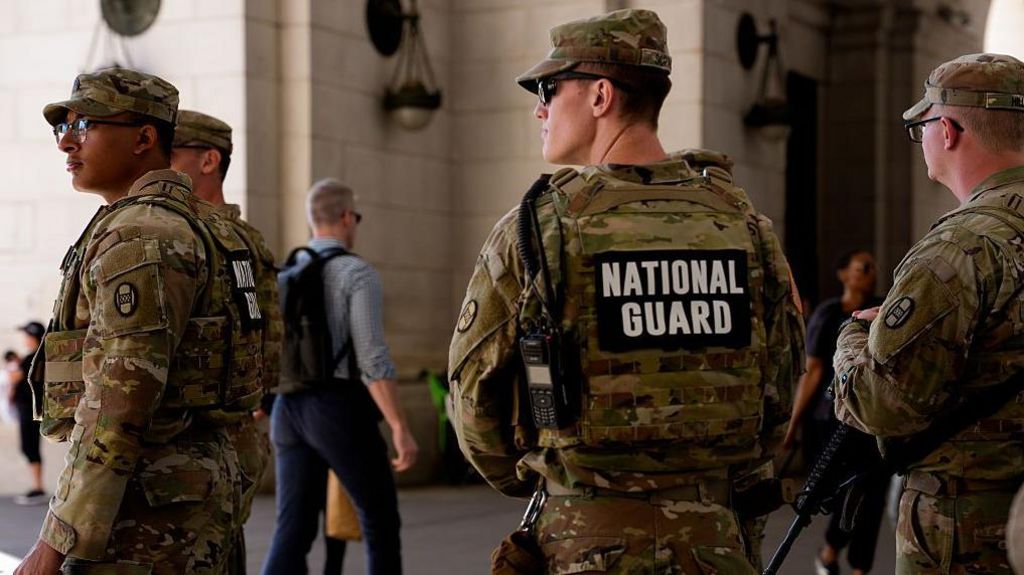
Why is Trump trying to deploy the National Guard to US cities?
Since assuming office, President Donald Trump has repeatedly stirred controversy with his unconventional deployment of the National Guard, traditionally a state-based force reserved for natural disasters or large-scale protests. Trump has sought to repurpose these troops to address political unrest in major U.S. cities, particularly in response to protests against his immigration policies. He argues that the National Guard is essential to quell violence, support deportation initiatives, and combat crime in Democratic-controlled cities. However, critics, including former military officials, Democratic governors, and federal judges, have raised concerns about the politicization of the military and potential overreach of presidential authority. The latest flashpoint occurred in early October when Trump attempted to deploy National Guard troops to Portland, Oregon, where protests erupted outside a U.S. Immigration and Customs Enforcement (ICE) building. A federal judge temporarily blocked the move, and the legal battle continues. The National Guard, which operates under state governors during emergencies, can be federalized by the president under specific circumstances. Trump has invoked U.S. Code § 12406, which allows the president to call National Guard troops into federal service in cases of invasion or rebellion, to support ICE missions. However, his actions have faced legal challenges, including a ruling that his deployment of troops in Los Angeles violated the Posse Comitatus Act, which restricts the use of military force for domestic matters. Trump’s recent attempt to send 300 National Guard troops to Chicago following immigration protests has also drawn criticism, with Illinois Governor JB Pritzker accusing him of manufacturing a crisis. In Portland, federal law enforcement clashed with demonstrators opposing Trump’s mass deportation initiative, leading to arrests and the use of tear gas. Despite Trump’s claims of lawlessness, Oregon Governor Tina Kotek dismissed the notion of an insurrection or national security threat. The Trump administration is expected to appeal the recent court rulings blocking his deployment of the National Guard in Oregon.
-
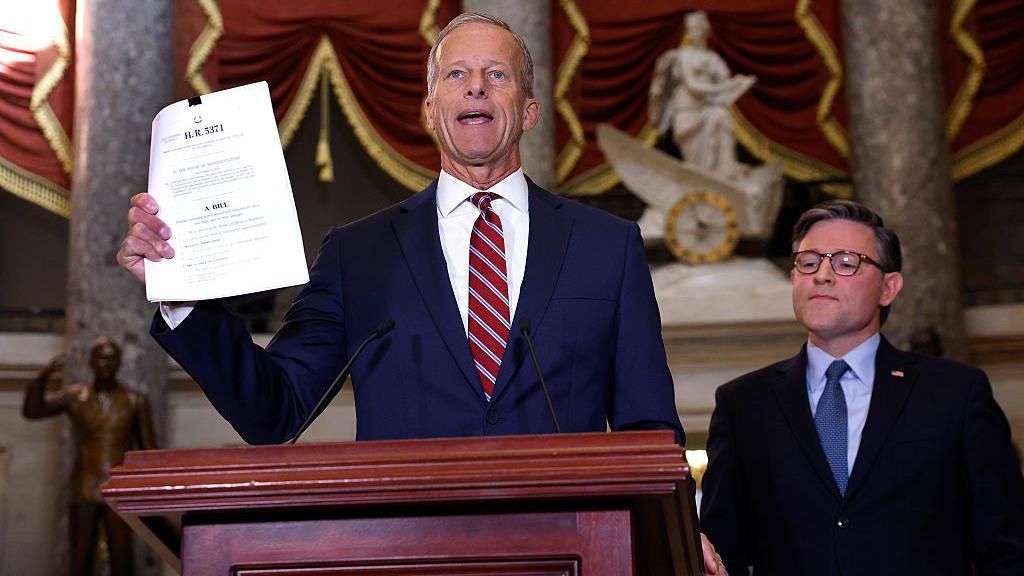
Senate to vote again on funding the US government
The United States Senate convened on Monday to vote on competing proposals aimed at reopening the federal government, yet neither resolution garnered sufficient support to pass. This deadlock ensures that the government shutdown, now in its sixth day, will persist for the foreseeable future. President Donald Trump issued a stark warning earlier in the day, cautioning that further legislative failures could lead to widespread layoffs among federal employees. Thousands have already been furloughed or forced to work without pay since funding for their agencies expired last week. The impasse between Democrats and Republicans shows no signs of resolution, with both parties entrenched in mutual blame. Democrats insist that any funding bill must address healthcare provisions, particularly safeguarding subsidies for lower-income Americans and reversing cuts to Medicaid. Republicans, however, advocate for a ‘clean’ funding bill, free of additional policy riders. The White House has repeatedly warned of ‘imminent’ permanent layoffs, a sentiment echoed by Press Secretary Karoline Leavitt, who stated that the Office of Management and Budget is preparing for such outcomes. Leavitt urged Democrats to relent, emphasizing, ‘There’s nothing to negotiate. Just reopen the government.’ Meanwhile, in separate interviews on NBC’s ‘Meet the Press,’ House Democratic Leader Hakeem Jeffries and Republican Speaker Mike Johnson each accused the opposing party of perpetuating the stalemate. Jeffries criticized Republicans for ‘lying’ about Democratic intentions, while Johnson claimed Democrats were ‘not serious’ in negotiations. The ongoing shutdown underscores the deep partisan divide in Washington, with no immediate solution in sight.