标签: North America

北美洲

  • Meghan’s lifestyle brand and Netflix end partnership

    Meghan’s lifestyle brand and Netflix end partnership

    American Riviera Orchard, the lifestyle venture established by Meghan, Duchess of Sussex, has officially concluded its financial partnership with Netflix, transitioning to complete operational independence. This development marks a significant evolution in the business relationship between the streaming giant and the Duchess’s entrepreneurial endeavor.

    The separation follows last year’s substantial restructuring of the comprehensive content agreement between Netflix and the Sussexes’ production entity, Archewell Productions. Both American Riviera Orchard and Netflix issued coordinated statements on Friday confirming the brand’s newly independent status.

    A spokesperson for American Riviera Orchard expressed gratitude for Netflix’s initial support, stating: “We appreciate Netflix’s foundational partnership during our inaugural year. The brand has demonstrated remarkable growth trajectories and is now positioned to operate as a fully autonomous enterprise.”

    Netflix’s official response praised the Duchess’s creative vision: “Meghan’s distinctive approach to celebrating life’s simple pleasures through elegant products inspired the brand’s creation. We take pride in our role in launching this vision and support its independent future development as originally intended.”

    Launched in 2023, American Riviera Orchard has gained recognition for its premium artisanal jams while expanding into complementary product categories including rosé wines, specialty teas, shortbread biscuits, and edible floral garnishes.

    This business development occurs against the backdrop of the Sussexes’ broader $100 million content agreement with Netflix, signed in 2020. The Duchess’s culinary series “With Love, Meghan” completed two seasons and a holiday special under this arrangement, though audience metrics indicated moderate viewership performance.

    Following the conclusion of the original production contract last summer, the parties established a revised “first look” arrangement granting Netflix preferential consideration rights for future projects developed by the Sussexes’ production company.


  • Trump puts pressure on Cuba as island faces fuel crisis

    Trump puts pressure on Cuba as island faces fuel crisis

    In a striking declaration made before Inter Miami’s soccer stars, including Lionel Messi and Luis Suarez, former US President Donald Trump predicted the imminent collapse of Cuba’s communist government. The remarks came just one day after the island nation suffered a devastating 24-hour nationwide blackout, exacerbating an already severe energy crisis.

    Addressing team owner and Cuban-born billionaire Jorge Mas, Trump asserted that Cuban authorities desperately seek a negotiated settlement, stating they “want to make a deal. So badly you have no idea.” He promised celebrations would soon follow developments in Cuba, with Mas enthusiastically responding: “It’s going to be an amazing day.”

    In subsequent comments to CNN, Trump revealed plans to involve Senator Marco Rubio in Cuba negotiations, declaring “Cuba’s gonna fall pretty soon” while emphasizing continued pressure on the island nation. Although prioritizing Iran currently, Trump noted Cuba had been “ready after 50 years” of communist rule.

    The energy crisis stems directly from Venezuela’s political upheaval in January, when US military action removed Nicolás Maduro from power. Cuba lost its primary crude oil supplier, with no other partners—particularly Mexico—willing to breach the supply gap under Trump administration pressure.

    The consequences are visible nationwide: mountains of uncollected garbage create public health hazards, forcing residents to burn waste amid acrid smoke. Even affluent Havanans resort to cooking with firewood during blackouts. The fuel shortage cripples transportation and backup generators, with few alternatives to Cuba’s deteriorating Soviet-era electrical grid.

    While the Cuban government remains silent on alleged negotiations—reportedly conducted through Raúl Castro’s grandson—it has permitted limited private sector fuel imports. However, these measures prove insufficient against nationwide shortages that now threaten Cuba’s tourism industry, with Air France recently suspending flights due to refueling difficulties.

    As Cubans brace for summer without air conditioning or fans, the Trump-Rubio approach maintains maximum pressure despite critics noting the policy disproportionately harms ordinary citizens rather than leadership, raising questions about intentions to spark internal uprising.

  • ‘It tried to attack me!’ – Loose turkey gives police runaround

    ‘It tried to attack me!’ – Loose turkey gives police runaround

    Law enforcement officers in Georgia found themselves in an unexpected wildlife encounter this week, engaging in a protracted pursuit of a belligerent wild turkey that had taken up residence on a busy roadway. Body camera footage released by local authorities captures the peculiar standoff, showing officers making multiple attempts to corral the agitated bird while managing traffic safety concerns.

    The incident unfolded when police responded to calls about a large turkey obstructing traffic and demonstrating aggressive behavior toward motorists. The footage reveals the substantial bird, with feathers flared and wings spread, charging at officers who attempted to guide it to safety. “It tried to attack me!” one officer can be heard exclaiming as the turkey advanced toward him with clear hostile intent.

    Traffic came to a temporary standstill as officers employed creative tactics to resolve the situation without harming the animal. The encounter lasted approximately twenty minutes before the turkey eventually retreated into nearby woodland. Wildlife experts note that wild turkeys can become particularly aggressive during mating season or when they feel threatened in urban environments.

    Local police departments have increasingly faced similar wildlife interventions as urban expansion continues to encroach upon natural habitats. This incident highlights the unusual challenges law enforcement officers encounter beyond traditional crime prevention, requiring adaptability in handling non-human disturbances to public order.

  • Pokémon condemns White House for using its imagery

    Pokémon condemns White House for using its imagery

    The Pokémon Company International has issued a formal condemnation against the White House for appropriating its intellectual property without authorization. The controversy emerged when official government social media channels disseminated a meme featuring the iconic character Pikachu alongside the political slogan “Make America Great Again.”

    Corporate spokeswoman Sravanthi Dev explicitly stated that the company had no involvement in the creation or distribution of the content and did not grant permission for using its assets. “Our mission centers on unifying people worldwide through entertainment,” Dev emphasized, “and this purpose remains entirely separate from any political perspective or agenda.”

    This incident marks the latest in a series of confrontations between the entertainment giant and the Trump administration. Previously, the company criticized the same administration for utilizing its theme song and trademark phrase “Gotta catch ’em all” in promotional materials related to immigration enforcement operations.

    The recent meme appears to incorporate imagery from the newly released game Pokopia, with Pikachu emerging playfully from behind the letter ‘e’ in “make.” In response to Pokémon’s statement, White House spokesman Kaelan Dorr attempted to counter the criticism by referencing a decade-old article about Hillary Clinton’s Pokémon Go-related voting initiative during the 2016 campaign.

    This situation reflects the current administration’s distinctive approach to digital communication, which White House Spokeswoman Abigail Jackson has characterized as employing “engaging posts and banger memes” to promote presidential policies. However, this strategy has repeatedly drawn objections from content creators and intellectual property holders across various industries, including comedian Theo Von, who previously demanded compensation and removal of his likeness from government deportation videos.

  • Canada and US resume trade talks after months-long pause

    Canada and US resume trade talks after months-long pause

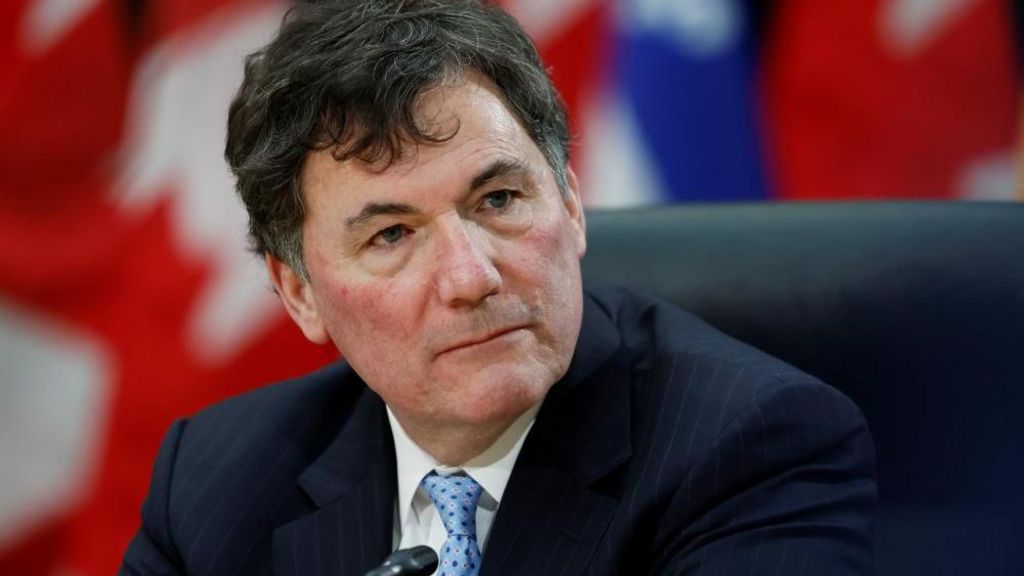
    In a significant diplomatic development, Canadian Minister for US-Canada Trade Dominic LeBlanc has arrived in Washington for crucial negotiations with US Trade Representative Jamieson Greer. These talks represent the first high-level engagement between the two nations since trade discussions collapsed abruptly in October of last year.

    The primary focus of the meetings centers on the future of the USMCA (United States-Mexico-Canada Agreement), which faces a mandatory review this year. The trade pact, known as CUSMA in Canada, has provided essential protection for the majority of Canadian exports against broad-based tariffs imposed by the Trump administration.

    Trade relations between the neighboring countries deteriorated significantly after President Trump suspended formal negotiations in response to an anti-tariff advertisement run by the province of Ontario. Since then, the Trump administration has contemplated either abandoning the trilateral agreement entirely or pursuing separate bilateral deals with Canada and Mexico.

    Prime Minister Mark Carney expressed serious concerns about the current state of affairs, stating that the agreement has been ‘effectively broken in the short term by US actions.’ The Canadian government fears either a ‘zombie CUSMA’ that exists in name only or complete termination of the pact.

    Despite USMCA protections, Canada continues to face substantial sector-specific tariffs on steel, aluminum, and automobiles that have resulted in significant job losses, particularly in Ontario’s automotive manufacturing sector. Both nations acknowledge that certain baseline tariffs will likely persist regardless of the USMCA review outcome.

    The automotive industry remains particularly contentious, with US officials historically advocating for complete relocation of manufacturing to the United States. This complex supply chain sees vehicles crossing North American borders multiple times during production, making the industry deeply integrated across all three USMCA countries.

    Meanwhile, parallel developments are occurring in the Indo-Pacific region, where Prime Minister Carney has been securing alternative trade partnerships. Canada recently signed a strategic partnership with Japan covering defense, energy, and technology cooperation, though Japanese officials noted that their continued support for Canada’s auto sector depends on successful USMCA negotiations.

    Additionally, Canada has pursued significant agreements with India, including a decade-long nuclear energy pact, and strengthened defense ties with Australia, which will join Canada’s G7 critical minerals production alliance. These efforts align with Carney’s election platform of reducing Canada’s economic dependence on the United States, which has already decreased from 75% to 67.3% of exports since October.

  • US economy unexpectedly sheds 92,000 jobs in February

    US economy unexpectedly sheds 92,000 jobs in February

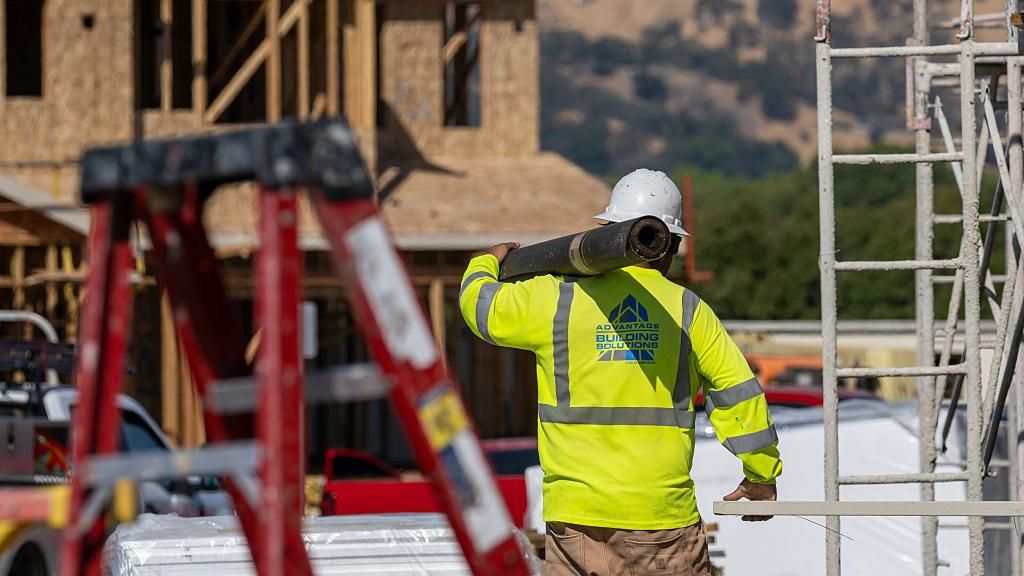
    The U.S. labor market delivered an unexpected setback last month as payrolls contracted by 92,000 positions, marking the most significant monthly decline since October’s government shutdown. According to the Labor Department’s latest figures, the national unemployment rate edged upward to 4.4%, contradicting analyst projections that had anticipated stable hiring conditions.

    This concerning development emerged against a backdrop of escalating geopolitical tensions, particularly the U.S.-Israel conflict in Iran, which has triggered a surge in oil prices that economists fear could undermine economic growth. The employment contraction proved remarkably widespread, affecting nearly every sector including typically resilient healthcare—which faced substantial strike activity—and federal government agencies, which shed 10,000 positions. Federal employment has now declined by 330,000 jobs (11%) since its October 2024 peak.

    The report contained additional sobering revisions, indicating that previously reported job gains for December and January were less robust than initially estimated. Samuel Tombs, Chief U.S. Economist at Pantheon Macroeconomics, noted these figures dashed hopes for labor market stabilization following 2025’s pandemic-era worst performance. ‘What stabilization?’ Tombs questioned in an analytical note. ‘The idea the labor market has turned a corner implodes with this report.’

    The immediate financial market reaction saw Wall Street shares retreat as investors processed the implications. Politically, the numbers intensified pressure on President Donald Trump, who had built his campaign around economic improvement promises. Democratic lawmakers, including Senator Elizabeth Warren, quickly characterized the report as evidence the administration was ‘tanking the job market,’ while White House officials downplayed its significance.

    Kevin Hassett, Director of the National Economic Council, maintained an optimistic outlook in a CNBC interview, predicting strong growth would fuel job creation in coming months: ‘There will be so much activity that everybody is going to be able to find a job that wants one.’

    The mixed economic signals present a complex challenge for Federal Reserve policymakers, who typically respond to labor market softening with interest rate cuts. However, analysts note that rising oil prices creating inflationary pressures may complicate this calculus. Ellen Zentner, Chief Economic Strategist for Morgan Stanley Wealth Management, observed: ‘Today’s numbers may have put the Fed between a rock and a hard place.’

  • China urges global stability of energy and mineral supply chains amid Middle East tensions

    China urges global stability of energy and mineral supply chains amid Middle East tensions

    China’s top diplomat at the United Nations has issued a compelling appeal for international collaboration to safeguard global energy and critical mineral supply chains against escalating Middle Eastern tensions. Ambassador Fu Cong, China’s Permanent Representative to the UN, addressed the Security Council on Thursday, emphasizing the urgent need to maintain stability in vital maritime corridors and resource distribution systems.

    The diplomatic intervention comes as the strategic Strait of Hormuz, a crucial artery for global energy transportation, faces significant disruptions following recent military developments. According to reports, Iran’s armed forces have threatened to block oil shipments through this critical waterway, resulting in damaged commercial vessels and suspended transit operations by shipping companies. These developments have created ripple effects across international energy markets, raising concerns about broader economic implications.

    Ambassador Fu articulated China’s position that geopolitical conflicts in resource-rich regions like the Middle East and Africa directly impact the normal production and transportation of essential resources. He urged all parties to adhere to UN Charter principles, resolve disputes through diplomatic dialogue, and protect non-military infrastructure. The Chinese representative emphasized that approximately 40% of global oil shipments traditionally pass through the Hormuz Strait, making its security paramount to international economic stability.

    The ambassador presented a comprehensive framework for addressing these challenges, advocating for a fair and transparent global economic order that avoids politicization of resource issues. He specifically warned against Cold War mentalities and the formation of exclusive blocs with geopolitical motivations. Fu emphasized that supply chain dynamics should remain governed by market mechanisms rather than political manipulation, which he stated would ultimately prove counterproductive to instigators.

    China also highlighted its own role as the world’s largest mineral producer, consumer, and trader, introducing the Green Minerals International Economic and Trade Cooperation Initiative launched during the G20 Leaders’ Summit. This initiative aims to promote sustainable development within the global mineral sector while maintaining stable and mutually beneficial supply chains. The Chinese position maintains that developing nations should exercise full sovereign rights over their natural resources while avoiding confinement to lower-value segments of global industrial chains.

  • Youth ambassadors carry music forward with Lang Lang

    Youth ambassadors carry music forward with Lang Lang

    NEW YORK – The Lang Lang International Music Foundation celebrated its enduring mission to shape future musical talents during a prestigious gala at the Metropolitan Club on Wednesday. The event showcased both the artistic excellence and philanthropic vision that has defined the organization since its 2008 inception.

    Internationally acclaimed pianist Lang Lang emphasized music’s dual role as both artistic discipline and cultural connector. “Music functions similarly to language acquisition,” he explained. “Early immersion fosters natural connection, while simultaneously serving as a powerful bridge between diverse cultures and backgrounds.” This philosophy underpins the foundation’s comprehensive approach to musical education and outreach.

    The foundation’s impact spans multiple continents through specialized initiatives. Its Keys of Joy program in China has established a nationwide network encompassing 25 provinces, 71 cities, and 102 county-level regions. Simultaneously, the Keys of Inspiration international initiative has funded 127 music classrooms, donated over 1,800 smart pianos, and directly benefited more than 180,000 children across the United States and Europe.

    Young Scholars from the foundation – including Sencheng Zhang, Taige Wang, Anna Kesselman, Ryan Wang, Alexander Liu, and Ryan Huang – demonstrated their artistic development through collaborative performances. These emerging musicians have gained international exposure through the program, performing in renowned concert halls while also bringing music to underserved communities, hospitals, and rural areas.

    Anna Kesselman, one of the participating scholars, described Lang as both musical inspiration and humanitarian role model. “He has pioneered extraordinary efforts to make classical music accessible through diverse platforms,” she noted. “I aspire to emulate his work in bringing beautiful music to widespread audiences as a cultural ambassador.”

    Fourteen-year-old scholar Alexander Liu recounted his transformative experience performing with the foundation on China’s Great Wall. “Everything presented new perspectives – from performance techniques to cultural nuances in communication and even how musicians approach the piano,” he reflected.

    Foundation CEO Lukas Barwinski-Brown highlighted the organization’s unique capacity to “reach students across communities and open doors through music.” Board Chairman David Hsieh reinforced this vision, stating: “We aim not only to cultivate the next generation of virtuosos but also to bring musical education to schools and underprivileged neighborhoods worldwide.”

  • What Americans think of Trump’s war on Iran

    What Americans think of Trump’s war on Iran

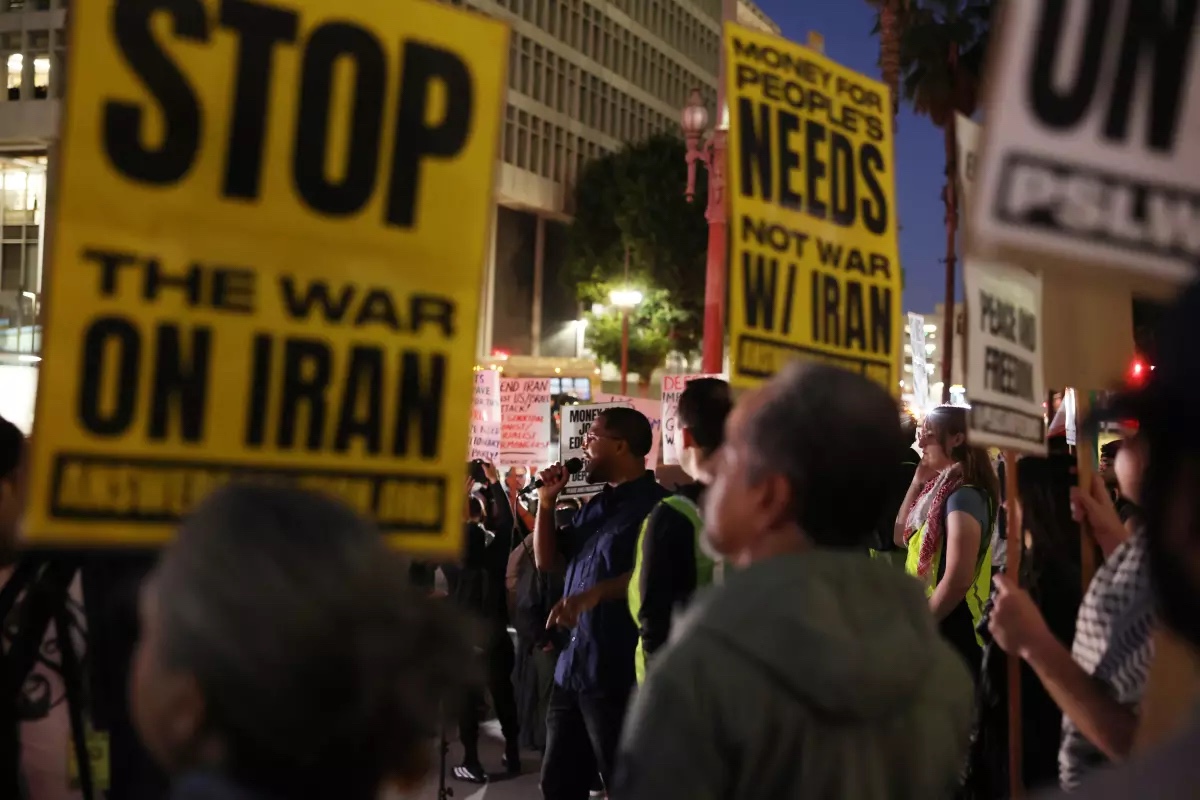
    A profound national division has surfaced among Americans regarding the escalating military engagement with Iran, revealing stark contrasts along demographic and political lines. The conflict, initiated through joint US-Israel airstrikes on February 28th, has rapidly expanded regionally, testing President Donald Trump’s 2024 campaign pledge of “no new wars.

    Recent polling data from Economist/YouGov conducted March 2nd indicates significant public ambivalence toward military objectives. With administration messaging oscillating between preventing nuclear proliferation, destroying missile capabilities, and advocating regime change, public consensus remains elusive. The survey reveals only 32% of Americans support using military force to overthrow Iran’s government, while 45% explicitly oppose such action.

    The demographic breakdown reveals striking patterns: racial disparities show 37% white support versus merely 7% among Black respondents. Gender divides are equally pronounced with 37% of men supporting compared to 26% of women. Generational gaps are particularly dramatic—only 21% of 18-29 year-olds endorse military action while 40% of those over 65 support it. Educational attainment further influences perspectives, with 34% support among non-college graduates versus 27% among degree holders.

    Political affiliation reveals the most extreme polarization. A mere 8% of Democrats support military action compared to 64% of Republicans. The MAGA constituency demonstrates the strongest war support at 75%, while liberal respondents oppose at near-total levels. Moderates occupy middle ground with 25% support and 50% opposition.

    This polarization carries significant implications for the upcoming midterm elections. While the president maintains strong loyalty within his base—particularly valuable given his policy reversals—electoral mathematics favor opposition forces. With Democrats and Independents constituting approximately 60% of the electorate, and widespread concern about presidential conduct, Republicans face substantial challenges in maintaining congressional control.

    Political analysts suggest that regardless of conflict outcomes, the administration’s popularity appears insufficient to prevent potential losses in both House and Senate chambers come November.

  • Equipment makers eye US data centers

    Equipment makers eye US data centers

    LAS VEGAS – The explosive growth in US data center construction is generating substantial opportunities for China’s premier heavy machinery manufacturers, who showcased their specialized capabilities at North America’s largest construction equipment exhibition this week.

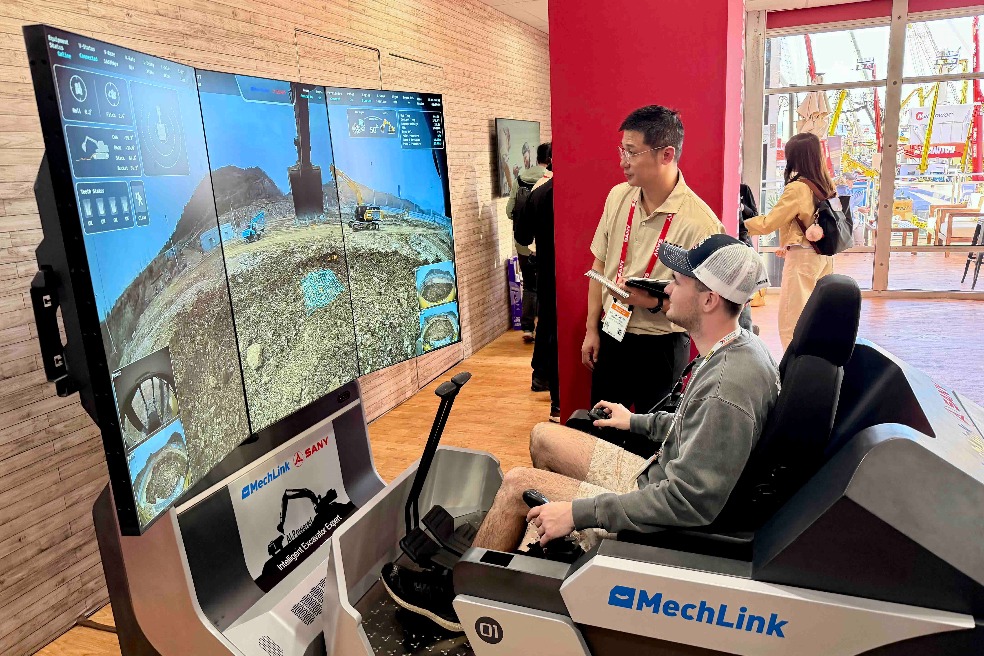
    At CONEXPO-CON/AGG, the premier industry trade show running through March 7 in Las Vegas, companies including SANY America and XCMG Group demonstrated how their expanding equipment portfolios align with the unprecedented demand driven by artificial intelligence infrastructure development.

    David Nicoll, CEO of SANY America, revealed that the company recently supplied multiple SY500H excavators – among their largest models – to a major data center project. “We see data center demand as exceptionally strong in the US,” Nicoll stated. “These are substantial capital projects requiring larger equipment, and SANY offers a comprehensive range from compact machinery to 330-ton cranes.”

    The market expansion is supported by significant industry projections. According to construction consultancy MOCA Systems, the US data center construction sector is anticipated to reach $86 billion in 2026, representing an eightfold increase from 2022 levels. A separate Fortune Business Insights report identified data center construction as a primary catalyst for broader construction equipment demand, fueled by accelerated digitalization and AI adoption.

    Nicoll explained that data center projects typically involve multiple contractors and diverse machinery requirements, creating opportunities across SANY’s product lines including large excavators, wheel loaders, motor graders, and cranes. The temporary nature of these projects – typically spanning six to twelve months – also generates robust rental sector demand as contractors often prefer leasing equipment rather than making capital purchases.

    Meanwhile, XCMG Group unveiled its new PRO series at the exhibition – premium construction machines featuring advanced human-machine interaction capabilities including fault self-diagnosis and intelligent control systems. Feng Ruoyu, XCMG’s senior brand manager, reported immediate market interest with several major North American dealers submitting preliminary orders.

    “The rapid expansion of AI in the United States has created substantial infrastructure demand,” Feng noted. “Whether constructing large server centers or expanding power capacity, both require significant construction machinery. While domestic brands currently dominate this market, we identify considerable opportunities.”

    The exhibition coincides with SANY’s 20th anniversary in the North American market, during which the company has established a 230-acre manufacturing and distribution campus in Georgia and expanded its dealer network to 72 dealers operating across 191 locations. Industry outlook for 2026 remains constructive according to Nicoll, who cited ongoing infrastructure, data center, and renewable energy projects as sustaining historically high equipment demand.