标签: North America

北美洲

  • Experts examine AI’s potential risks

    Experts examine AI’s potential risks

    Washington witnessed a pivotal gathering of artificial intelligence experts this week as the Center for Strategic and International Studies hosted an in-depth analysis of the newly released International AI Safety Report 2026. This second edition of the comprehensive global assessment, chaired by Turing Award laureate Professor Yoshua Bengio of Universite de Montreal and the Mila-Quebec AI Institute, represents a collaborative effort spanning more than 30 nations and international organizations, including significant contributions from China.

    The seminar revealed that international coordination has emerged as the paramount concern in addressing AI’s rapidly evolving risks. Stephen Clare, the report’s lead writer, explained the foundational purpose: “to build a shared evidence base to inform decision-making about AI technologies” amid widespread uncertainty about the actual technical realities.

    Technical safeguards expert Stephen Casper presented a detailed examination of frontier model development stages, emphasizing that “different types of safeguards and risk management techniques apply at different parts in the life cycle.” While acknowledging progress in creating multi-layered defenses, Casper highlighted persistent governance gaps, particularly concerning open-weight models that cannot be recalled once released and whose safeguards are easier to remove.

    The report particularly noted China’s substantial contributions to the AI landscape, accounting for 24.2% of notable models in 2024. Chinese advancements including DeepSeek R1, Alibaba’s Qwen series, Tencent’s Hunyuan-Large, and Moonshot AI’s Kimi models have narrowed the capability gap with leading closed models to less than one year in certain cases. China’s AI Safety Governance Framework 2.0 (2025) received special recognition for providing structured guidance on risk categorization and countermeasures throughout the AI lifecycle.

    Despite the daunting challenges posed by AI’s rapid progression, Professor Bengio expressed optimism based on the collaborative spirit demonstrated by the international expert community. The report deliberately avoids specific policy recommendations, instead focusing on synthesizing scientific evidence to support informed policymaking and establish a shared evidence base for global decision-makers navigating this complex technological landscape.

  • UAE jobs: Hiring slows as companies invest in upskilling existing staff

    UAE jobs: Hiring slows as companies invest in upskilling existing staff

    A significant transformation is underway in the United Arab Emirates’ employment landscape as organizations increasingly redirect resources toward enhancing their current workforce capabilities rather than expanding headcount through traditional hiring. Recent market analysis reveals that 42% of UAE employers are now prioritizing employee upskilling initiatives over external recruitment, marking a fundamental shift in human resource strategy.

    According to the Hays 2026 US Salary & Hiring Trends Guide, this paradigm shift extends beyond competitive market pressures. Business leaders and hiring managers are deliberately slowing recruitment processes even while maintaining open position listings, reflecting a more cautious and pragmatic approach to workforce development.

    Zaid Alhiali, Co-Founder of Marc Ellis, observes that this strategic reorientation stems from multiple economic factors. “Businesses are navigating tighter budgetary constraints, challenges in attracting suitable talent, and rapidly evolving skill requirements,” Alhiali explained. “Rather than onboarding new personnel and enduring extended acclimatization periods, organizations are choosing to invest in already-trusted employees.”

    The implications for job seekers are substantial, as conventional qualifications and experience alone no longer guarantee employment. Successful candidates now demonstrate ongoing learning initiatives, adaptability, and alignment with immediate organizational needs—particularly in digital competencies, commercial awareness, and leadership capabilities.

    Industry practitioners are already witnessing tangible benefits from this approach. Shabeel Ummer, Head of HR at V Group International Middle East, detailed their implementation strategy: “We concentrate on training sales associates in advanced product knowledge, personalized customer service, and digital sales tools. This enables current staff to manage high-value clients, online orders, and loyalty programs effectively without expanding personnel.”

    This methodology delivers multidimensional advantages, including enhanced customer experiences, improved sales performance, and increased employee retention while maintaining stable operational costs. Karuna Agarwal, Director of Future Tense UAE, emphasizes the value proposition: “Upskilling represents investment in known assets with established organizational familiarity. Employees with proven performance understand company DNA, making them twice as attractive for development compared to new hires.”

    The phenomenon of unfilled positions despite public listings indicates employers’ heightened selectivity and willingness to await ideally qualified candidates. This trend suggests organizations are seeking increasingly specialized skills and industry-specific expertise, with mass hiring initiatives becoming progressively uncommon across sectors.

    HR experts consequently advise job seekers to embrace continuous professional development. Jessie Joy, Head of HR at Magnitude Creative in Abu Dhabi, notes: “Existing employees possess institutional knowledge of systems, clients, and culture. Upskilling closes productivity gaps more rapidly while boosting morale and loyalty through demonstrated investment in growth.”

    This strategic evolution in UAE workforce development reflects a maturation of the regional job market, emphasizing quality over quantity in human capital investment while creating new paradigms for both employer strategy and employee career development.

  • ‘Canadians are with you,’ says PM at Tumbler Ridge vigil

    ‘Canadians are with you,’ says PM at Tumbler Ridge vigil

    In a powerful display of national solidarity, Canadian Prime Minister Mark Carney joined hundreds of mourners at a vigil in Tumbler Ridge, British Columbia, to honor the eight victims of this week’s devastating mass shooting. The Prime Minister was accompanied by Governor-General Mary Simon and federal leaders from across the political spectrum, including Conservative leader Pierre Poilievre, who emphasized that partisan divisions had been set aside in the face of tragedy.

    The emotional gathering brought together grieving families, local residents, and visitors from neighboring communities, all united in their shock and sorrow. Colaina Hall, who traveled two hours from Fort St John, expressed the collective disbelief: ‘I never thought that it would happen here. In our little northern communities, we’re pretty tight-knit, we take care of one another.’

    RCMP investigators revealed disturbing new details about the attack, identifying the perpetrator as 18-year-old Jesse Van Rootselaar, a local resident who died from a self-inflicted gunshot wound at the scene. Deputy Commissioner Dwayne McDonald described the suspect as ‘hunting’ victims rather than targeting specific individuals, with four firearms recovered from the school and the suspect’s residence.

    The tragedy claimed the lives of six students aged 12-13 at Tumbler Ridge Secondary School: Kylie Smith, Abel Mwansa, Zoey Benoit, Ticaria Lampert, and Ezekiel Schofield, along with 39-year-old teacher Shannda Aviugana-Durand. Two additional victims—the suspect’s mother Jennifer Jacobs (also known as Jennifer Strang) and 11-year-old stepbrother Emmett Jacobs—were killed at a separate location.

    Families shared heartfelt tributes to their lost loved ones, with Benoit’s family remembering her as ‘resilient, vibrant, smart, caring and the strongest little girl you could meet.’ Ticaria Lampert’s mother described her daughter as ‘a blazing light in the darkness’ who would have turned 13 in two months.

    Authorities confirmed the suspect had a history of mental health struggles and a recently expired firearm license. While the suspect’s mother held an active gun license, no firearms were registered to her name. Police are investigating how the weapons were obtained, particularly the primary firearm used in the school attack, whose origin remains unknown. The investigation continues as the community begins its long journey toward healing.

  • Indian man admits plot to kill US-based Sikh separatist leader

    Indian man admits plot to kill US-based Sikh separatist leader

    In a significant development in international relations and counterterrorism efforts, 54-year-old Indian national Nikhil Gupta has entered guilty pleas on three serious criminal charges in a United States federal court. The charges—murder-for-hire, conspiracy to commit murder-for-hire, and conspiracy to commit money laundering—stem from an alleged plot to assassinate Gurpatwant Singh Pannun, an American citizen and prominent advocate for the Khalistan movement, on New York City soil.

    US prosecutors presented a detailed case alleging that Gupta was not acting alone but was directed by an Indian government official, identified as Vikash Yadav from India’s Cabinet Secretariat—a body housing the nation’s foreign intelligence service. The indictment claims that in May 2023, Gupta was recruited by Yadav, with whom he met in Delhi to orchestrate the assassination. Following these discussions, Gupta allegedly attempted to hire a hitman, who was, in reality, an undercover officer from the US Drug Enforcement Administration.

    The target, Mr. Pannun, leads an organization labeled as terrorist by the Indian government, though he personally denies these allegations, identifying instead as a political activist for Sikh independence. The Khalistan movement seeks a sovereign homeland for Sikhs, a religious minority constituting approximately 2% of India’s population. While the movement has limited traction within India today, it maintains support among parts of the global Sikh diaspora.

    This case is deeply interwoven with broader international tensions. It emerged shortly after the murder of Hardeep Singh Nijjar, another Sikh separatist figure, in Canada in June. Canadian authorities have similarly accused Indian government agents of involvement in Nijjar’s killing—a claim India has also denied. US Attorney Jay Clayton emphasized the gravity of Gupta’s actions, stating that the plot represented a severe violation of US sovereignty and the rights of its citizens. Gupta now faces a potential maximum sentence of 40 years in imprisonment.

    India’s government has consistently denied any official connection to the alleged assassination plots in both the US and Canada, creating a diplomatic rift with two key Western allies. The guilty plea marks a critical judicial step in a case that continues to strain international relations and raise questions about extraterritorial threats to free speech and citizen safety.

  • Trump administration ends temporary protected status for Yemen

    Trump administration ends temporary protected status for Yemen

    The Trump administration has officially terminated Temporary Protected Status (TPS) for Yemeni nationals residing in the United States, Homeland Security Secretary Kristi Noem announced on Friday, February 13, 2026. This decision marks the latest in a series of immigration policy shifts by the current administration.

    Secretary Noem stated that the determination to revoke humanitarian protections for approximately 1,380 Yemeni immigrants followed extensive review and interagency consultation. The administration concluded that maintaining TPS designation for Yemen conflicted with U.S. national interests, despite ongoing concerns about the country’s stability.

    The TPS program, established to provide temporary refuge for individuals whose home countries experience natural disasters, armed conflicts, or other extraordinary circumstances, has faced systematic reduction under Trump’s presidency. Administration officials have consistently argued that the program’s expansion contradicts American immigration priorities.

    According to U.S. Citizenship and Immigration Services data, Yemen’s TPS designation was last extended in 2024 and scheduled to expire on March 3, 2026. The termination means affected Yemeni nationals will lose protection from deportation and work authorization privileges unless they secure alternative immigration status.

    The decision comes amid ongoing humanitarian concerns in Yemen, where conflict and economic instability have persisted for years. Immigration advocates have criticized the move, arguing that returning individuals to Yemen could expose them to dangerous conditions, while administration officials maintain that the program was never intended as a permanent immigration solution.

  • Officials investigating DNA found in Nancy Guthrie’s home

    Officials investigating DNA found in Nancy Guthrie’s home

    A significant development has emerged in the investigation into the disappearance of Nancy Guthrie, the 84-year-old mother of NBC News anchor Savannah Guthrie. The Pima County Sheriff’s Department has confirmed the discovery of unidentified DNA evidence within her Tucson, Arizona residence, which authorities confirm does not match the missing woman or any individuals known to be in close contact with her.

    The evidence, collected from Ms. Guthrie’s home, has been submitted for comprehensive laboratory analysis. While officials declined to specify the exact location of the DNA find within the property, they did clarify earlier media reports, stating that no gloves were discovered inside the home or on its immediate grounds. However, investigators have recovered several gloves in the wider vicinity, with one located approximately two miles from the residence.

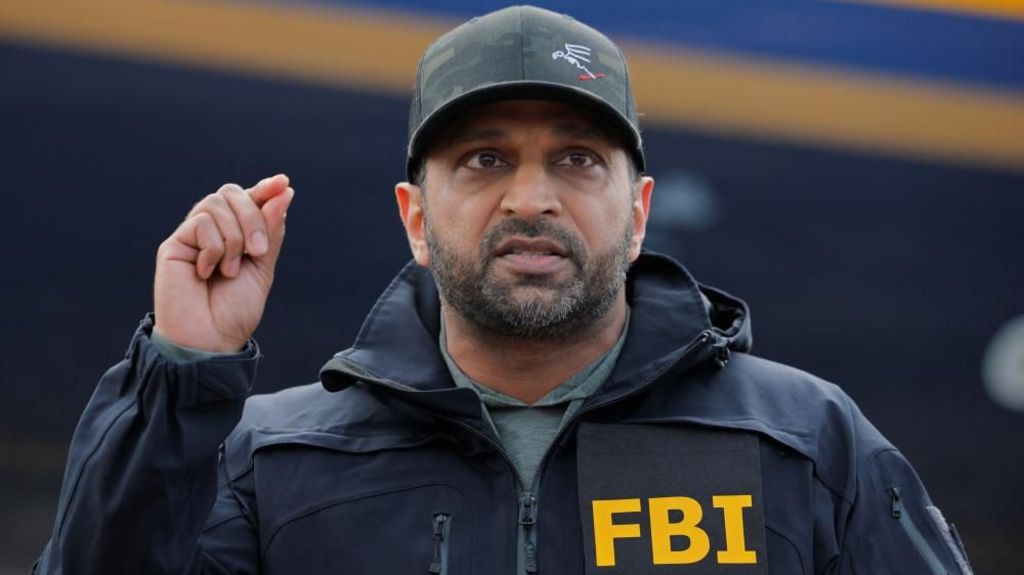
    In a crucial step forward, the FBI has disseminated a physical description of a primary suspect, derived from analysis of doorbell camera footage captured outside the Guthrie home on the night of the disappearance. The individual is described as a male standing between 5’9″ and 5’10” (175-177 cm) with an average build. A key identifying detail is the backpack he was wearing—a 25-litre Ozark Trail Hiker Pack.

    The release of this footage has generated an overwhelming public response, with investigators receiving more than 13,000 tips, including 4,000 within a single 24-hour period. Consequently, the reward for information leading to a resolution in the case has been doubled from $50,000 to $100,000.

    Authorities maintain that the suspect description is a key focus but emphasize that no possibilities are being ruled out. A broader appeal has been issued for additional video footage from neighbors in the area. With the investigation now entering its second week, concerns are heightened for Ms. Guthrie’s welfare, as she requires daily medication and has limited mobility. Her children have made public appeals, expressing their belief that she is alive and their willingness to negotiate for her safe return.

  • Chinese robots and culture converge at UN’s Year of the Horse celebration

    Chinese robots and culture converge at UN’s Year of the Horse celebration

    The United Nations headquarters in New York transformed into a showcase of technological innovation and cultural diplomacy during Thursday’s Chinese New Year gala. Organized by the UN Chinese Book Club, the event featured an unprecedented performance where robotic lion dancers, panda-shaped robots, and humanoid dancing machines shared the stage, captivating hundreds of UN staff members, diplomats, and international visitors.

    The celebration marked a significant milestone as the Spring Festival now holds official recognition as a floating holiday on the United Nations calendar and appears on UNESCO’s list of intangible cultural heritage. China’s Permanent Representative to the UN, Fu Cong, emphasized the festival’s global significance, stating that ‘Spring Festival conveys to the world the values of harmony in diversity and peaceful coexistence, and embodies people’s shared aspiration for a better life.’

    Fu Cong called for strengthened cooperation between China and the United Nations, urging all parties to move forward ‘with unstoppable momentum and tireless vitality’ in the Year of the Horse. The event occurred against the backdrop of broader UN challenges addressed by Li Junhua, UN Under-Secretary-General for Economic and Social Affairs, who noted the organization faces ‘unprecedented challenges’ including raging conflicts, declining mutual trust, and widening poverty gaps.

    The technological demonstration represented more than entertainment, appearing for the second time within a week at UN headquarters. Cuban Deputy Permanent Representative Yuri Gala Lopez acknowledged China’s technological leadership, expressing admiration for the display. Dima Al-Khatib, Director of the UN Office for South-South Cooperation, found the performance ‘very impressive’ and indicated interest in exploring technology transfer opportunities to Global South countries.

    The convergence of robotics and traditional celebration highlighted China’s growing role in both technological innovation and cultural diplomacy. Khaled Khiari, UN Assistant Secretary-General for multiple regions, recognized China’s substantial contributions to UN peacekeeping operations, where China remains one of the largest troop contributors among Security Council permanent members.

  • Gasps and disbelief at Malinin’s home rink as Olympic dream falters

    Gasps and disbelief at Malinin’s home rink as Olympic dream falters

    A palpable atmosphere of shock and devastation descended upon the Virginia-based training rink of figure skating phenom Ilia Malinin, famously dubbed the ‘Quad God,’ during what was anticipated to be a victorious Olympic broadcast. The BBC, capturing the scene firsthand, documented the raw emotional collapse among Malinin’s most dedicated supporters—his closest friends, teammates, and coaches—as his performance at the Winter Games dramatically veered off its predicted golden course.

    The gathering, meticulously organized to celebrate an expected triumph, transformed instantaneously into a vigil of shared disbelief. The air, once buzzing with excited anticipation, was pierced by gasps and fell into a heavy silence as the competition unfolded contrary to all forecasts. This was not merely a competition loss; it was the shattering of a widely held certainty within his inner circle, a testament to the immense pressure and unpredictable nature of elite sports.

    Malinin, renowned for his unprecedented ability to land quadruple jumps, had carried the heavyweight of immense expectation into the games. The scene at his home rink serves as a powerful, microcosmic study of the immense psychological burden shouldered by athletes and the profound emotional investment of those who support them behind the scenes. The incident transcends a simple sports report, morphing into a human-interest story about resilience, expectation, and the fragile line between perceived destiny and competitive reality.

  • Canada Supreme Court overturns one-vote election win in Quebec

    Canada Supreme Court overturns one-vote election win in Quebec

    In an unprecedented judicial decision with significant political ramifications, Canada’s Supreme Court has invalidated a federal election result determined by a single vote margin. The ruling concerns the Terrebonne electoral district in Quebec, where a razor-thin victory initially awarded to Liberal candidate Tatiana Auguste has been formally nullified.

    The judicial reversal stems from a contested mail-in ballot during the April federal election. Media investigations revealed that a Bloc Québécois supporter’s ballot was returned due to a postal code misprint on the return envelope. While the Liberal campaign successfully argued in lower court that this constituted routine human error rather than electoral irregularity, the Supreme Court’s Friday ruling fundamentally disagreed with this assessment.

    The court’s decision mandates that the parliamentary seat remain vacant until a special byelection can be conducted, pitting Auguste against Bloc Québécois candidate Nathalie Sinclair-Desgagné in a highly anticipated rematch. This development substantially alters the parliamentary mathematics for Prime Minister Mark Carney’s Liberal government, which now finds itself three seats short of a majority in the House of Commons.

    The Terrebonne district carries particular significance, having been a Bloc Québécois stronghold for decades prior to Auguste’s narrow victory. The 25-year-old Liberal representative had been serving in Parliament since the election, but her tenure has now been retroactively invalidated. Political analysts note that recapturing this seat presents a formidable challenge for the Liberals as they attempt to regain majority governance capabilities.

  • Shaidorov wins gold as ‘Quad God’ Malinin crumbles

    Shaidorov wins gold as ‘Quad God’ Malinin crumbles

    In a breathtaking and wholly unexpected turn of events at the Milano Ice Skating Arena, the men’s figure skating competition at the Milan-Cortina 2026 Winter Olympics delivered one of the most dramatic upsets in recent Olympic history. Ilia Malinin of the United States, the overwhelming favorite dubbed the ‘Quad God’, suffered a catastrophic collapse under pressure, falling twice in his free skate routine and plummeting to an eighth-place finish, entirely out of medal contention.

    The night belonged instead to Mikhail Shaidorov of Kazakhstan, who delivered the only clean performance among the final six skaters to claim a stunning gold medal. This victory marks Kazakhstan’s first Winter Olympic medal in 32 years and its first gold since 1994. The 21-year-old Shaidorov, who trailed Malinin by 16 points after the short program, maintained impeccable composure while his rivals faltered, executing two flawless quad techniques to secure the top spot on the podium.

    Japan’s Yuma Kagiyama, widely considered Malinin’s primary rival for gold, captured the silver medal despite a fall on his quad flip attempt. The bronze medal was awarded to his compatriot, Shun Sato.

    The competition unfolded as a spectacle of unravelling talent, with five of the final six athletes suffering falls in their routines. Malinin’s performance proved particularly devastating. The 21-year-old phenom, who arrived at his first Olympics as the only skater to have successfully landed the quadruple axel, abandoned his signature move entirely. His planned program, which typically features a high-risk combination of seven quads, was drastically scaled back. A quad lutz attempt ended with a hard fall on the ice, and he fell again just two elements later, reducing his ambitious quad loop to a double and executing only a single axel to audible groans from the crowd.

    The dramatic collapse ended Malinin’s two-and-a-half-year unbeaten streak in international competition. His free skate score of 156.33 points ranked only 15th best for the night, more than 40 points behind Shaidorov’s winning total. Visibly distraught, Malinin could only shake his head on the verge of tears as he left the ice, his Olympic individual medal hopes completely shattered.

    In a poignant display of sportsmanship, Malinin immediately congratulated the new champion following the score announcement. Shaidorov’s victory represents a historic moment for Kazakh winter sports, echoing the nation’s last gold medal won by cross-country skier Vladimir Smirnov at the 1994 Lillehammer Games—a decade before the new champion was born.