标签: North America

北美洲

  • Russia, US, Ukraine to talk in UAE

    Russia, US, Ukraine to talk in UAE

    In a significant diplomatic development, Russia, the United States, and Ukraine have agreed to convene security discussions in the United Arab Emirates, marking the first tripartite dialogue since the inception of Moscow’s military campaign in Ukraine nearly four years ago. The confirmation came from Yuri Ushakov, foreign policy aide to Russian President Vladimir Putin, who disclosed that the Russian delegation would be led by General Igor Kostyukov, director of the GRU military intelligence agency, acting upon Putin’s direct instructions.

    The negotiating teams will feature prominent representatives from each nation. The US contingent will be headed by President Donald Trump’s special envoy, Steve Witkoff, while Ukraine’s delegation will be orchestrated by Rustem Umerov, Secretary of the National Security and Defense Council. Although specific details remain guarded, Ukrainian President Volodymyr Zelensky indicated that this inaugural trilateral meeting would span two days in Abu Dhabi.

    This breakthrough follows extensive late-night discussions at the Kremlin between Putin, Witkoff, and Trump’s son-in-law Jared Kushner, which concluded in the early hours of Friday. Ushakov, who participated in these marathon talks, emphasized that any enduring settlement must address territorial disputes—a clear reference to Moscow’s insistence on Ukrainian withdrawal from Russian-controlled eastern regions. He characterized the US-Russia dialogue as mutually beneficial, noting Washington’s optimism that continued communication could facilitate conflict resolution.

    Concurrently, at the World Economic Forum in Davos, President Zelensky underscored that genuine progress would necessitate reciprocal concessions from both combatants, not unilateral sacrifices from Kyiv alone. He acknowledged the ‘difficult situation’ confronting both nations and the unresolved status of occupied territories, despite nearly finalized peace proposals. Zelensky’s private meeting with Trump on the forum’s sidelines was described by the US president as productive, with Trump noting ‘everyone’s making concessions’ to achieve peace.

    Envoys report substantial advancements in the prolonged negotiations, with Witkoff revealing that discussions have narrowed to a single pivotal issue, suggesting a potentially solvable deadlock. However, NATO Secretary-General Mark Rutte urged sustained focus on Ukraine, cautioning that while peace talks are promising, successful conclusion remains distant. The US has engaged in separate consultations with Russian, Ukrainian, and European leaders on various draft frameworks, though no formal agreement has been realized despite Trump’s repeated commitments to broker a resolution.

  • Minnesota gears up for more protests against ICE

    Minnesota gears up for more protests against ICE

    Minnesota braces for intensified demonstrations as a powerful coalition of labor unions, progressive advocacy groups, and religious leaders calls for statewide work and school walkouts on Friday. The planned protests target U.S. Immigration and Customs Enforcement operations that have sparked widespread community outrage following recent confrontations.

    The movement gained momentum after the January 7th fatal shooting of Renee Good by an ICE officer during an enforcement operation. Since this incident, the Twin Cities of Minneapolis and St. Paul have experienced continuous daily protests, with federal officers frequently clashing with activists who monitor their movements through digital tracking and street surveillance.

    At the heart of the controversy lies the detention of at least four children from Columbia Heights, including five-year-old Liam Conejo Ramos. According to school district superintendent Zena Stenvik, masked and armed ICE officers have apprehended students ranging from elementary to high school age, creating what she describes as “trauma taking a toll on our children.”

    The case of Liam and his father, Adrian Alexander Conejo Arias, has become particularly contentious. Though both were in the country legally as asylum applicants according to family attorney Marc Prokosch, they were transported to a family detention facility in Dilley, Texas. Witnesses describe how masked agents took the father from their driveway after returning from preschool, then allegedly attempted to use the child as bait to lure the mother from their home.

    Vice-President JD Vance presented a contrasting narrative during his Minneapolis visit, stating immigration officers were pursuing Liam’s father who abandoned his child, leaving officers no choice but to take custody. “What are they supposed to do? Are they supposed to let a five-year-old child freeze to death?” Vance challenged during a news conference.

    However, multiple witnesses including school board chair Mary Granlund assert that school officials and neighbors offered to take custody of the child but were denied by ICE agents, despite having legal authorization to assume guardianship in parental absence.

    The Department of Homeland Security maintains that Liam’s father was in the country illegally but has not provided detailed evidence supporting this claim. As tensions escalate, community organizations continue mobilizing residents to pressure ICE to cease operations in Minnesota neighborhoods and school zones.

  • Pentagon to offer ‘more limited’ support to US allies in defence strategy shift

    Pentagon to offer ‘more limited’ support to US allies in defence strategy shift

    The U.S. Department of Defense has unveiled a transformative National Defense Strategy that fundamentally reorients American security priorities toward domestic protection and Western Hemisphere security. This strategic pivot marks a significant departure from previous frameworks that prioritized countering China as the primary defense concern.

    The 34-page document, published quadrennially, establishes homeland security as the Pentagon’s foremost objective rather than focusing on great power competition. While acknowledging China and Russia as security considerations, the strategy approaches relations with Beijing through a lens of ‘strength, not confrontation’ rather than direct opposition. Notably, the document omits specific mention of Taiwan, though it affirms commitment to preventing any nation from dominating the U.S. or its allies.

    This revised framework emphasizes burden-sharing among international partners, particularly regarding European security and North Korean deterrence. The strategy characterizes Russia as a ‘persistent but manageable threat’ to NATO’s eastern members while asserting that South Korea should assume primary responsibility for addressing North Korean threats.

    The document reflects President Trump’s repeated calls for allied nations to contribute more substantially to collective security arrangements. It explicitly denies representing a move toward isolationism, instead framing the approach as ‘a focused and genuinely strategic approach to the threats our nation faces.’

    The strategy identifies specific geographical priorities including the Panama Canal, Gulf of America, and Greenland as areas where the Pentagon will guarantee military and commercial access. This focus aligns with recent administration actions including strikes against suspected drug vessels in the Caribbean and pressure on allies regarding Greenland’s acquisition.

    The philosophical underpinnings of the new strategy reject ‘utopian idealism’ in favor of ‘hardnosed realism,’ signaling a definitive break from post-Cold War defense paradigms. This repositioning occurs alongside growing international concern about the erosion of established global order, as expressed by leaders including French President Emmanuel Macron and Canadian Prime Minister Mark Carney at the World Economic Forum.

  • ‘A natural partner’: US treasury secretary weighs in on Alberta separatism

    ‘A natural partner’: US treasury secretary weighs in on Alberta separatism

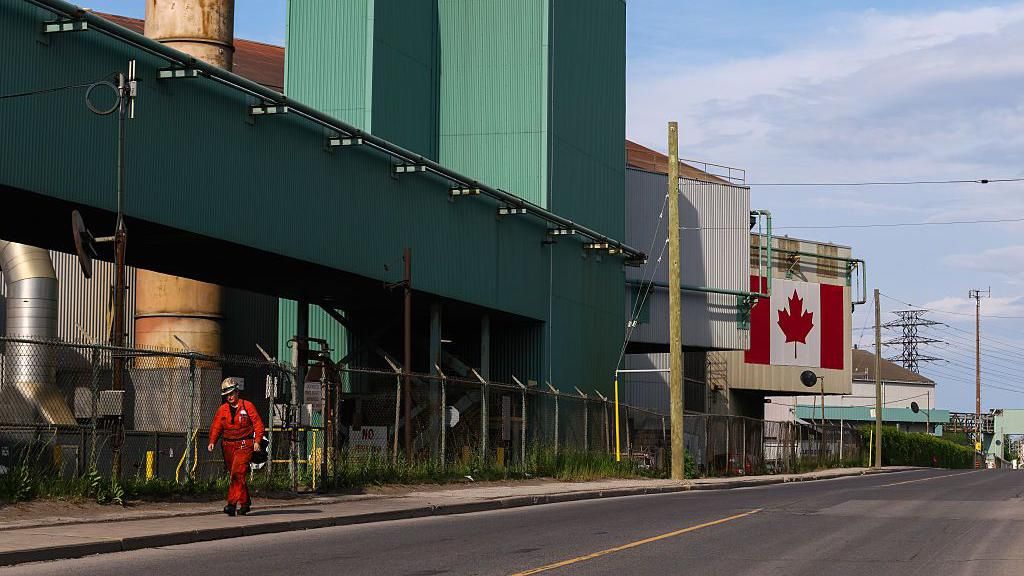
    In a remarkable diplomatic intervention, US Treasury Secretary Scott Bessent has openly sympathized with separatist sentiments in Alberta, describing the western Canadian province as a “natural partner for the United States” during an interview with right-wing commentator Jack Posobiec on Thursday.

    The comments emerge amidst significantly strained relations between the two neighboring nations and coincide with an active signature collection campaign in Alberta seeking an independence referendum. Bessent specifically criticized Canadian energy policies, noting that “Alberta has a wealth of natural resources, but they won’t let them build a pipeline to the Pacific,” while praising Albertans as “very independent people.”

    Canadian Finance Minister Francois-Philippe Champagne delivered a sharp rebuke on Friday, stating he would tell Bessent “thanks but no thanks, we will do our own things.” Champagne highlighted Canada’s capability to develop its natural resources domestically and referenced a recently signed agreement between Prime Minister Mark Carney and Alberta that facilitates an oil pipeline to the Pacific coast—a long-sought project facing substantial implementation challenges.

    Alberta Premier Danielle Smith’s office issued a measured response, expressing support for pipeline expansion “west, east, north, and south” while maintaining collaboration with US partners. However, the statement emphasized that “the overwhelming majority of Albertans are not interested in becoming a US state.” This position is supported by recent polling data and a 430,000-signature petition from late last year advocating for a united Canada.

    Referendum organizer Mitch Sylvestre clarified to CBC that his movement seeks independence from Canada rather than annexation by the United States, though he acknowledged the obvious energy trading relationship between Alberta and the US. Some separatist organizers have reportedly traveled to Washington for meetings with Trump administration officials.

    The diplomatic friction extends beyond Alberta, with US-Canada trade negotiations currently suspended. Tensions escalated following Prime Minister Carney’s speech at the World Economic Forum in Davos, where he criticized “great powers” for weaponizing economic influence. President Trump responded pointedly: “Canada lives because of the United States. Remember that, Mark, the next time you make your statements.” Commerce Secretary Howard Lutnick further accused Canada of “arrogance” and characterized Carney’s stance as domestically-motivated anti-Americanism.

  • Abu Dhabi hosts trilateral talks on Ukraine: 5 previous attempts to end war

    Abu Dhabi hosts trilateral talks on Ukraine: 5 previous attempts to end war

    Abu Dhabi has positioned itself as a pivotal diplomatic arena for high-stakes trilateral discussions aimed at resolving the ongoing Ukraine conflict. On January 23, 2026, senior officials from Ukraine, Russia, and the United States convened in the UAE capital to deliberate on a American-proposed peace framework, despite persistent disagreements over territorial sovereignty.

    This latest diplomatic initiative represents the sixth major attempt to broker a cessation of hostilities since Russia’s full-scale invasion in February 2022. The current negotiations follow five previously unsuccessful diplomatic endeavors:

    The initial negotiations occurred mere days after the invasion commenced, with meetings near the Belarusian border. Russian delegates presented ultimatums including Ukrainian recognition of Russian sovereignty over Crimea and the Donbas regions—terms immediately rejected by Kyiv as unacceptable.

    Subsequent talks in Antalya and Istanbul during March 2022 showed tentative progress, with Russia offering partial troop withdrawals and Ukraine considering neutral status. These discussions collapsed following the discovery of mass civilian casualties in Bucha after Russian forces withdrew from the Kyiv suburb.

    Diplomatic efforts remained dormant throughout 2023-2024 until President Donald Trump’s return to office in January 2025. The new administration reversed previous policies of isolating Moscow while simultaneously suspending military assistance to Ukraine. Despite direct engagement with Vladimir Putin, Trump’s administration secured only a temporary—and frequently violated—commitment to avoid targeting energy infrastructure.

    Further negotiations in Istanbul during May 2025 yielded limited success, resulting solely in prisoner exchanges without achieving a ceasefire agreement. The subsequent Trump-Putin summit in Alaska marked the Russian leader’s first visit to Western territory since the invasion began, yet concluded without tangible concessions or progress toward ending hostilities.

    The current Abu Dhabi negotiations represent a continuation of months of shuttle diplomacy conducted by American envoys between Moscow and Kyiv. While President Trump has expressed optimism about reaching a settlement, fundamental disagreements regarding territorial control continue to present significant obstacles to any comprehensive peace agreement.

  • TikTok US venture to collect precise user location data

    TikTok US venture to collect precise user location data

    TikTok’s newly formed US joint venture has implemented significant revisions to its privacy policy, substantially expanding the scope of location data collection from its 200 million American users. The policy update follows Thursday’s finalized investment deal between TikTok’s Chinese parent company ByteDance and a consortium of American investors, establishing a new operational framework for the popular short-form video platform in the United States.

    The updated privacy terms now permit the collection of ‘precise location data, depending on your settings’—a notable departure from the previous policy that only authorized the gathering of ‘approximate’ location information. While TikTok remained unavailable for immediate commentary regarding these changes, the company’s policy documentation emphasizes that sensitive personal information will be processed ‘in accordance with applicable law’ and that users retain the ability to disable location services through their device settings at any time.

    Historically, TikTok gathered location data through user SIM cards and IP addresses even before the joint venture’s establishment. However, the platform had refrained from collecting GPS information—even approximate data—from American users operating the most current application version, according to its 2024 privacy policy.

    The restructured entity has also broadened its permissions regarding user interactions with TikTok’s artificial intelligence tools. The enhanced data collection now encompasses user-submitted prompts and queries, along with comprehensive metadata detailing how, when, and where AI-generated content was initiated or produced.

    TikTok USDS Joint Venture LLC comprises three principal investors, including cloud computing behemoth Oracle, which is making substantial investments in AI infrastructure despite accruing significant debt to finance its ambitions in this rapidly expanding sector. Oracle, chaired by Republican megadonor and longtime Trump ally Larry Ellison, played a pivotal role in the negotiations that culminated in this arrangement.

    This agreement concludes years of diplomatic tensions between Washington and Beijing that originated during President Trump’s first term, when his administration attempted—unsuccessfully—to ban the application over national security apprehensions. The 2024 legislation mandating ByteDance’s divestiture of US operations by January 2025 prompted repeated enforcement delays until this week’s finalized joint venture.

    The newly established entity asserts its primary objective is ‘to secure U.S. user data, apps and the algorithm through comprehensive data privacy and cybersecurity measures.’ Oracle will supervise the retraining of TikTok’s content recommendation algorithm using existing American user data, with the algorithm subsequently secured within Oracle’s US cloud environment. ByteDance maintains a minority stake of approximately 20% in the venture.

    Additional managing partners include US technology investment firm Silver Lake and Abu Dhabi’s state-owned investment fund MGX, which has previously conducted business with the Trump family’s cryptocurrency enterprise, World Liberty Financial.

    On Friday, House Select Committee on China Chairman John Moolenaar (R-MI) voiced concerns regarding ByteDance’s continued involvement, questioning whether the arrangement adequately prevents Chinese influence over the algorithm and ensures American data security—issues he emphasized would require thorough congressional oversight.

  • Australian Open: Alcaraz dazzles in 100th Slam match as Sabalenka, Gauff grind through

    Australian Open: Alcaraz dazzles in 100th Slam match as Sabalenka, Gauff grind through

    The Australian Open witnessed a spectacular display of generational talent on Friday as established stars and emerging phenoms battled through contrasting challenges to secure their spots in the fourth round.

    Carlos Alcaraz delivered a masterclass performance in his milestone 100th Grand Slam match, dismantling French drop-shot specialist Corentin Moutet 6-2, 6-4, 6-1. The Spanish sensation showcased his extraordinary athleticism with what many are calling the rally of the tournament, chasing down a lob with a between-the-legs ‘tweener’ before threading a precision shot down the line. The victory extended Alcaraz’s unbeaten record against left-handers to 14 matches as he continues his quest to become the youngest man to complete the career Grand Slam.

    Home favorite Alex de Minaur created history by reaching the last 16 for the fifth consecutive year, joining John Newcombe as only the second Australian to achieve this feat in the professional era. His efficient 6-3, 6-4, 7-5 victory over American Frances Tiafoe has ignited local hopes for a first men’s champion since Mark Edmondson in 1976. “I’m looking for more and I’m in a position where I want more,” declared an ambitious de Minaur.

    The women’s draw saw top contenders tested severely. Defending champion Aryna Sabalenka survived a monumental scare against Russia-born Austrian Anastasia Potapova, prevailing 7-6(4), 7-6(7) while extending her incredible tiebreak winning streak to 21 consecutive sets. “You have to be there 100% in tiebreaks,” Sabalenka emphasized. “I just take it one point at a time.”

    American teenager Coco Gauff demonstrated resilience after dropping her first set of the tournament, rallying to defeat compatriot Hailey Baptiste 3-6, 6-0, 6-3. Meanwhile, the youth movement continued spectacularly as 18-year-old Iva Jovic toppled seventh seed Jasmine Paolini, and 19-year-old Canadian Victoria Mboko defeated 14th seed Clara Tauson to set up a showdown with Sabalenka.

    In other notable results, third seed Alexander Zverev continued his dominance over Briton Cameron Norrie with their seventh consecutive meeting victory, while Daniil Medvedev staged a remarkable comeback from two sets down against Hungary’s Fabian Marozsan. The tournament also saw emotional moments as wily Kazakh Yulia Putintseva ended Turkish qualifier Zeynep Sonmez’s dream run amid intense crowd support from Melbourne’s Turkish community.

  • Patrick Reed seizes halfway lead at Dubai Desert Classic

    Patrick Reed seizes halfway lead at Dubai Desert Classic

    American golfer Patrick Reed has surged to the top of the leaderboard at the halfway mark of the Dubai Desert Classic, delivering a masterclass in precision golf at the Emirates Golf Club. The 2026 tournament witnessed Reed card a spectacular bogey-free 66 during Friday’s second round, establishing a one-stroke advantage over his closest competitor.

    Reed, who began the day four shots behind overnight leader Francesco Molinari, demonstrated remarkable consistency throughout his round. He quickly leveled with the Italian star through two birdies and an eagle on the front nine, then added two more birdies at the first and third holes after the turn to reach nine under par. The former Masters champion maintained his composure through the remaining holes, finishing without a single blemish on his scorecard.

    Englishman Andy Sullivan mounted a formidable challenge, posting the week’s joint-lowest round with a brilliant seven-under 65 that included a spectacular eagle on the final hole. Sullivan’s remarkable recovery after a mid-round stumble saw him finish just one shot behind Reed at eight under par.

    The leaderboard remains tightly contested with Italian duo Molinari and Andrea Pavan sitting one shot further back at seven under. Denmark’s Nicolai Højgaard delivered a bogey-free 67 to claim solo fifth position at six under par.

    Reed expressed satisfaction with his performance, stating: ‘The game felt good today. I gave myself plenty of quality opportunities and only missed one green, which is crucial on this course. When you see a few putts drop early, it builds momentum throughout the round.’

    World number two Rory McIlroy remains in contention at two under par, seven strokes off the pace. The Northern Irishman improved significantly from his opening round with a 68, keeping his hopes alive for a record fifth Dubai Desert Classic title. McIlroy remained optimistic about his chances, noting: ‘If I can post a low score in tomorrow’s morning conditions, I’ll be right in the mix come Sunday.’

    The tournament continues through the weekend with Reed seeking to convert his narrow lead into victory at a venue where he has previously finished runner-up (2023) and recorded multiple top-ten finishes.

  • Watch: ‘It’s just plain incorrect’ – Afghanistan veterans react to Trump Nato remarks

    Watch: ‘It’s just plain incorrect’ – Afghanistan veterans react to Trump Nato remarks

    Military veterans with extensive combat experience in Afghanistan have issued strong rebuttals against recent statements by former President Donald Trump regarding NATO allies’ participation in frontline operations. The veterans’ responses came after Trump suggested that NATO member nations systematically avoided combat engagements during the Afghanistan conflict.

    Multiple decorated veterans have come forward with firsthand accounts contradicting these assertions, providing detailed testimony about international coalition forces’ active combat roles. Their evidence includes documentation of joint operations where NATO partners sustained significant casualties while fighting alongside American troops.

    Military analysts corroborate the veterans’ positions, pointing to official Pentagon records showing that numerous NATO countries suffered combat fatalities throughout the twenty-year campaign. Defense experts emphasize that international forces operated under unified command structures and shared combat responsibilities across various regions of Afghanistan.

    The controversy has sparked broader discussions about international military cooperation and the importance of accurate historical accounting of multinational combat operations. Several veterans organizations have called for greater recognition of allied contributions to counterterrorism efforts in South Asia.

  • Stuck between the US and Russia, Canada must prove it can defend its Arctic territory

    Stuck between the US and Russia, Canada must prove it can defend its Arctic territory

    In a significant strategic shift, Canadian Prime Minister Mark Carney has committed to deploying substantial military resources—including personnel, advanced radar systems, submarines, and aircraft—to secure Canada’s vast Arctic territories. This massive region spans nearly 4 million square kilometers, an area larger than continental Europe, yet is sparsely populated and notoriously treacherous.

    The Arctic has become a focal point of intense geopolitical competition, with Russia and the United States bordering the North Pole, and China aggressively expanding its naval and icebreaker fleets while declaring itself a ‘near Arctic state.’ The security landscape has been further complicated by the Trump administration’s expressed interest in Greenland and its criticism of Canada’s defense capabilities.

    Former Canadian Forces Northern Area Commander Pierre Leblanc emphasized the environmental and strategic challenges, noting that existing infrastructure—aging early warning radars, eight military bases, and approximately 100 Coast Guard personnel monitoring 162,000 km of coastline—is inadequate for modern threats. This assessment is supported by experts who point to the emergence of hypersonic missiles, which travel at least five times the speed of sound and render traditional defense systems obsolete.

    Russia’s operational use of hypersonic weapons in Ukraine, including the nuclear-capable ‘Oreshnik’ missile, has accelerated the need for advanced defense technologies. The Trump administration’s proposed Golden Dome missile defense system, incorporating over-the-horizon radar and space-based sensors, has sparked complex negotiations with Canada. Despite public tensions and provocative statements from Trump—including suggestions that Canada could become the ’51st state’—on-the-ground cooperation between U.S. and Canadian military practitioners remains strong.

    Canada’s defense spending is set to increase from 2% to 5% of GDP by 2035, funding what Col. Leblanc describes as ‘real action’ in Arctic security. However, logistical challenges persist, including limited port facilities and the difficulty of resupplying remote bases. While political rhetoric escalates, experts like Troy Bouffard of the Center for Arctic Security and Resilience affirm that bilateral operational coordination continues effectively, for now.