标签: North America

北美洲

  • NASA delays astronaut moon mission over glitch

    NASA delays astronaut moon mission over glitch

    CAPE CANAVERAL, Florida — NASA has announced another significant postponement of its landmark Artemis II lunar mission, pushing humanity’s first crewed moon flight in over fifty years to April at the earliest. The decision comes after a critical technical malfunction emerged during testing operations on Saturday.

    The setback occurred when engineers detected an unexpected interruption in the helium flow to the upper stage of the Space Launch System (SLS) rocket. This helium system plays a vital role in engine purging procedures and maintaining proper pressurization within the fuel tanks. The incident represents a fresh challenge distinct from previous hydrogen leakage issues that had already delayed the mission timeline.

    NASA Administrator Jared Isaacman addressed the technical complications, indicating that the root cause likely involves malfunctioning components within the helium delivery system. Potential culprits include a compromised filter, defective valve, or faulty connection plate. Due to the inaccessible location of these components, the agency must return the 98-meter rocket to its protective hangar for comprehensive repairs and component replacement.

    “We will initiate preparations for rollback operations, which effectively eliminates the March launch window from consideration,” Isaacman stated via social media platform X. The space agency now targets either early or late April for the next viable launch opportunity, pending successful resolution of the technical issues.

    The administrator acknowledged public disappointment while emphasizing the profound frustration within NASA’s engineering teams. “I understand people are disappointed by this development,” Isaacman remarked. “That disappointment is felt most acutely by the dedicated NASA team members who have been working tirelessly to prepare for this monumental endeavor.”

    The helium system anomaly emerged unexpectedly during routine post-testing procedures, requiring engineers to work through the night to assess the situation. Notably, the system had performed flawlessly during previous dress rehearsal exercises, making this development particularly surprising for mission planners.

    This delay follows earlier complications with hydrogen fuel leaks that had already pushed the Artemis II mission timeline back by approximately one month. NASA had successfully addressed those issues during a second fueling test last Thursday, which showed minimal leakage and had initially restored confidence in a March launch timeframe.

  • France says EU has tools to hit back at Washington over import levies

    France says EU has tools to hit back at Washington over import levies

    European powers are mobilizing a coordinated response against Washington’s dramatic escalation of global trade levies, with France declaring the bloc possesses formidable countermeasures while Germany seeks a unified diplomatic approach.

    Following the US Supreme Court’s landmark ruling that invalidated numerous existing tariffs as illegal, the Biden administration has moved aggressively to implement a sweeping flat tariff structure. Initial 10% global levies announced Friday were abruptly raised to 15% on Saturday, signaling a hardening US trade stance.

    French Trade Minister Nicolas Forissier revealed in a Financial Times interview that Paris is actively consulting with EU counterparts and the European Commission regarding retaliatory options. “Should it become necessary, the EU has the appropriate instruments at its disposal,” Forissier stated, indicating the bloc’s readiness to deploy economic countermeasures.

    Among the potential weapons in Europe’s arsenal is the recently developed “trade bazooka”—an anti-coercion instrument granting Brussels broad authority to implement export controls, service tariffs, and exclusion of US technology firms from lucrative EU procurement contracts. Additionally, a suspended package of retaliatory tariffs targeting over €90 billion ($106 billion) in American goods remains available for activation.

    Simultaneously, German Chancellor Friedrich Merz announced plans to consolidate a common European position ahead of his Washington visit scheduled within the coming week. “Customs policy is a matter for the European Union, not for individual member states,” Merz emphasized during an ARD broadcaster appearance, underscoring the bloc’s determination to present a united front.

    Despite the escalating trade tensions, Merz identified a silver lining in the Supreme Court’s intervention, noting: “For me, there is a reassuring element in yesterday’s Supreme Court decision: the separation of powers in the USA still seems to be working.”

    The US judicial ruling has triggered international scrutiny, with Croatian economist Ljubo Jurcic describing it as a “major setback for a flawed economic model” that ultimately damaged American interests. Portuguese commentator Rui Cardoso criticized the EU’s previous conciliatory approach, suggesting recent developments demonstrate Brussels “did not need to concede as much as it did” in earlier trade negotiations.

  • UAE supports Kuwait’s sovereignty over its maritime areas

    UAE supports Kuwait’s sovereignty over its maritime areas

    The United Arab Emirates has issued a strong statement affirming its complete solidarity with Kuwait regarding sovereignty over maritime territories, expressing profound concern over recent actions taken by Iraq at the United Nations. On February 22, 2026, the UAE Ministry of Foreign Affairs declared its unwavering support for Kuwait’s sovereignty amid a developing diplomatic situation involving coordinates and maps deposited by Iraq with the UN that potentially affect Kuwait’s rights over its maritime areas and territorial waters.

    The UAE specifically highlighted concerns regarding the status of the Al-Qudra Shoals and Al-Ayij Shoals, areas of significant strategic importance. In its official statement, the Emirati government called upon Iraq to consider the fraternal and historical relationship between the two neighboring nations, urging resolution through responsible dialogue consistent with international law.

    The Ministry emphasized the importance of addressing such matters through established diplomatic channels and in accordance with the United Nations Convention on the Law of the Sea (1982). The statement further stressed the necessity of honoring existing bilateral understandings, agreements, and memoranda of understanding between Iraq and Kuwait.

    This declaration positions the UAE firmly alongside Kuwait against any perceived encroachment on its sovereignty or national interests. The Emirati government’s intervention underscores the broader regional implications of the dispute, calling for resolution mechanisms that enhance security and stability throughout the Gulf region. The statement represents a significant show of Gulf Cooperation Council (GCC) unity in addressing territorial and maritime sovereignty issues.

  • Oman FM confirms US-Iran talks in Geneva on Thursday

    Oman FM confirms US-Iran talks in Geneva on Thursday

    Omani Foreign Minister Badr Albusaidi has officially confirmed the resumption of high-stakes diplomatic negotiations between the United States and Iran, scheduled to convene in Geneva this Thursday. The announcement comes amid ongoing regional tensions and represents a significant development in international nuclear diplomacy.

    Albusaidi, whose nation has played a pivotal mediating role in facilitating dialogue between the longstanding adversaries, characterized the upcoming talks as possessing “a positive push to go the extra mile towards finalising the deal.” This statement suggests both parties are approaching the negotiations with renewed commitment to reaching a comprehensive agreement.

    The Geneva meeting marks the latest chapter in complex diplomatic efforts to address Iran’s nuclear program and the corresponding sanctions regime imposed by the United States. Oman’s continued involvement as an intermediary highlights its unique diplomatic position and trusted status with both Western and Iranian leadership.

    This development follows recent statements from Iranian officials expressing optimism about finding diplomatic solutions to the ongoing standoff with the United States. The timing of these talks suggests a potential window of opportunity for diplomatic breakthrough, though significant challenges remain regarding verification mechanisms, sanctions relief, and regional security concerns.

    The international community will be closely monitoring these negotiations, recognizing their profound implications for Middle Eastern stability, non-proliferation efforts, and global energy markets. The outcome could potentially reshape regional alliances and security dynamics beyond the immediate nuclear considerations.

  • New York mayor Mamdani orders citywide travel ban ahead of major storm

    New York mayor Mamdani orders citywide travel ban ahead of major storm

    New York City Mayor Zohran Mamdani has instituted a comprehensive citywide travel prohibition in anticipation of a severe winter storm forecasted to impact the US East Coast. The emergency measure, announced during a press briefing on Sunday evening, will remain in effect from 9:00 PM February 22 until 12:00 PM February 23, 2026.

    The directive mandates the closure of all vehicular traffic across New York’s thoroughfares, including streets, highways, bridges, and tunnels. The restriction encompasses private automobiles, commercial trucks, scooters, and electric bicycles. Mayor Mamdani emphasized that the unprecedented action aims to ensure public safety during what meteorologists predict could be one of the most significant winter weather events in recent years.

    Critical exemptions to the travel ban have been established for essential personnel and emergency circumstances. First responders, healthcare workers, utility crews, and other designated essential employees will maintain transportation access throughout the duration of the emergency declaration. Additionally, residents requiring travel for urgent medical needs or other bona fide emergencies will be permitted movement despite the general prohibition.

    The mayor’s decision follows coordinated efforts with state emergency management officials and weather forecasting agencies that project potentially hazardous conditions, including heavy snowfall, strong winds, and reduced visibility. The travel prohibition represents the most severe level of emergency response implemented by the city administration to mitigate storm-related risks and facilitate unimpeded emergency operations.

  • Last dance in Dubai: Wawrinka on beating GOATS in Grand Slam finals

    Last dance in Dubai: Wawrinka on beating GOATS in Grand Slam finals

    As the sun sets on an illustrious career, Swiss tennis legend Stan Wawrinka embarks on his farewell season with nostalgic reflections and profound gratitude. The 40-year-old champion, currently competing in his final professional tournaments, recently sat down with Khaleej Times in Dubai to discuss his remarkable journey through tennis’s most competitive era.

    Wawrinka’s career represents one of tennis’s most compelling narratives – a persistent challenger who secured three Grand Slam titles during the unprecedented dominance of the ‘Big Three’ (Djokovic, Nadal, and Federer). His triumphs include defeating world number ones in all three major finals: Nadal at the 2014 Australian Open, Djokovic at the 2015 French Open, and Djokovic again at the 2016 US Open.

    Now competing on wildcard entries, Wawrinka expressed appreciation for the overwhelming support from global fans during his final matches. ‘The most important thing is to be competitive and play well because I remain a competitor who likes to win,’ Wawrinka stated. ‘I’m happy with my level and incredibly grateful for the wildcards and fan support throughout Australia, France, and Rotterdam.’

    The Dubai Duty Free Tennis Championships holds special significance for Wawrinka, who claimed the title in 2016 after an epic final against Marcos Baghdatis featuring a legendary 15-13 tiebreak. ‘Dubai was always one of the premier tournaments that I aspired to play,’ he recalled. ‘Winning here was particularly special, and I’m grateful for this final opportunity to compete before the Emirati audience.’

    When reflecting on his late-career breakthroughs, Wawrinka emphasized the uniqueness of each athlete’s path. ‘I focused on pushing my limits without imposing barriers,’ he explained. ‘The beauty of tennis lies in its diverse career trajectories – there’s no single formula for winning Slams or reaching the top ten.’

    The Swiss star also discussed the emerging dominance of Carlos Alcaraz and Jannik Sinner, noting ‘there is no limit’ to their potential achievements. Regarding his relationship with Roger Federer, Wawrinka acknowledged his compatriot’s profound influence: ‘We practiced extensively together and discussed tennis strategy frequently. Our Olympic gold medal and Davis Cup partnership created unforgettable memories.’

    Despite fan debates comparing their backhand techniques, Wawrinka humbly dismissed suggestions that his surpassed Federer’s. As his career concludes, Wawrinka leaves behind a legacy of perseverance, sportsmanship, and one of the most elegant single-handed backhands in tennis history.

  • Short of breath, but finding peace, at 18,000 feet

    Short of breath, but finding peace, at 18,000 feet

    At 18,471 feet above sea level on Tibet’s Dolma Pass, the thin air extracts every breath with painful precision. This arduous ascent forms part of the sacred kora around Mount Kailash—a 32-mile pilgrimage believed to cleanse sins and bring practitioners closer to nirvana. For one woman, this physical challenge became the backdrop for processing profound personal loss: the recent death of her sister and the collapse of her 19-year marriage.

    Seven months after her sister’s passing, her husband requested divorce, citing years of mutual unhappiness. What followed was a year of emotional probation—attempting to become a “good wife” through careful politeness while teaching at a new university and writing a novel about 19th-century Tibetan travelers during pre-dawn hours.

    The pilgrimage presented both physical and symbolic challenges. Tibetan guides offered stereotypical assumptions about Indian travelers while suggesting pony rides for the difficult ascent. Despite struggling with altitude and remembering a terrifying previous experience with mountain ponies, the author refused, determined to make the journey on foot.

    Along the treacherous path, Tibetan women with children strapped to their backs greeted her with “tashi delek” (wishes for success), their fluid movements contrasting with her labored progress. At the summit, pilgrims pasted photos of deceased loved ones on boulders, hoping to help their souls find deliverance near the home of Hindu deity Shiva.

    In the oxygen-deprived environment, the author found unexpected confession possible, revealing her separation to her guide on what would have been her 20th wedding anniversary. The guide responded with Buddhist philosophy, suggesting her husband’s purpose in her life had been fulfilled and encouraging gratitude for their time together rather than regret for its ending.

    The landscape itself became part of the healing process—the dangerous beauty, the marmots unafraid of humans, the Tibetan monks picnicking casually amidst the harsh conditions. During the final day’s walk past prayer-carved rocks and cliffside warnings, the author experienced her first moments of happiness since her sister’s cancer diagnosis six years earlier.

    In the proximity of her sister’s deities, self-forgiveness emerged as a possibility. The anxiety-driven contortions to make herself “lovable” gave way to acceptance that her flaws made her human rather than despicable. Watching Tibetan pilgrims pray for everyone on Earth, atonement no longer seemed impossible—even if hot showers remained hours away and the immediate reality included frozen tap water and delayed meals.

  • US reverses TSA PreCheck shutdown, will keep programme operational

    US reverses TSA PreCheck shutdown, will keep programme operational

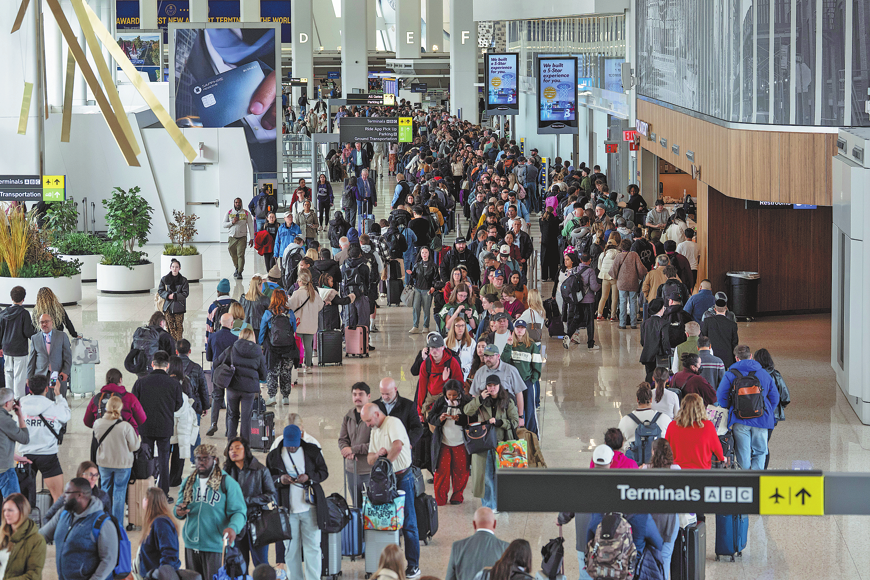
    In a significant policy reversal, the Trump administration announced Sunday that the Transportation Security Administration’s PreCheck program would continue operations despite the ongoing partial shutdown of the Department of Homeland Security. The decision came just hours after officials had declared the expedited screening program would be temporarily suspended.

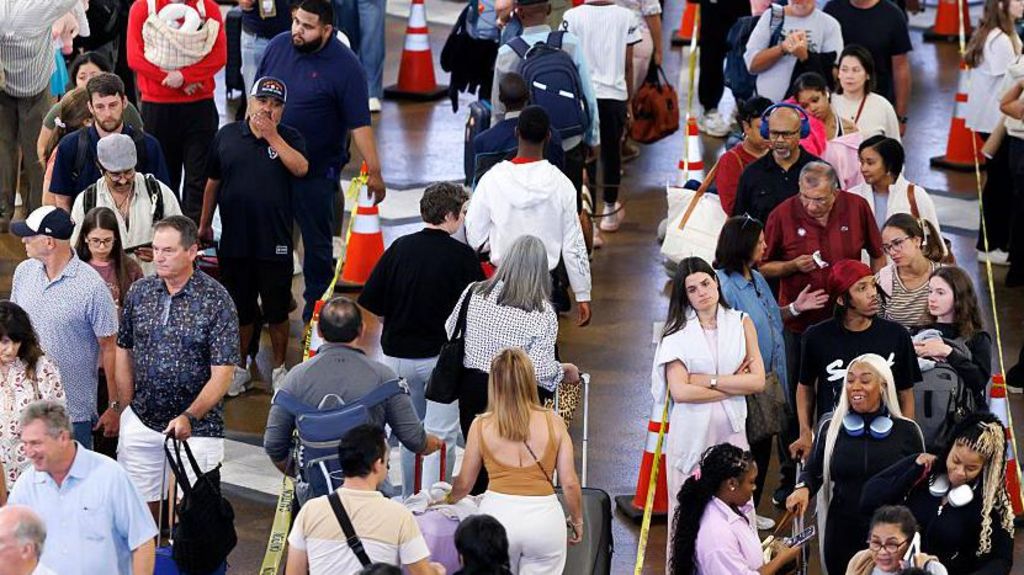
    The initial announcement from Homeland Security Department officials indicated PreCheck would halt operations at 6:00 AM EST, triggering widespread concern among travel industry stakeholders and airlines. This timing coincided with the beginning of the busy spring break travel season, during which more than 20 million actively enrolled PreCheck members rely on expedited security processing at U.S. airports.

    According to the department’s earlier statement, the suspension would have been prompted by the current government shutdown, marking a departure from last year’s approach when DHS maintained PreCheck operations during a 43-day funding lapse. The current partial shutdown began earlier this month following failed negotiations between Republicans and Democrats on immigration enforcement reforms.

    By mid-morning Sunday, TSA officials clarified that the program “remains operational with no change for the traveling public,” adding that the agency would evaluate staffing constraints on a case-by-case basis and adjust operations accordingly. However, the agency did confirm the suspension of courtesy escorts, including those typically provided to members of Congress.

    The initial suspension announcement drew sharp criticism from industry leaders. Airlines for America CEO Chris Sununu expressed deep concern about the potential suspension of both PreCheck and Global Entry programs, noting the “extremely short notice to travelers” created particular difficulties during a period of record air travel volume.

    The status of Global Entry, which expedites customs and immigration clearance for pre-approved international travelers, remains uncertain following the administration’s reversal on PreCheck. The shutdown has already affected other DHS operations, including the Federal Emergency Management Agency’s deployment of aid workers to disaster-affected areas, which was suspended Thursday due to funding constraints.

  • US Secret Service agents kill man trying to trespass Trump’s Mar-a-Lago resort

    US Secret Service agents kill man trying to trespass Trump’s Mar-a-Lago resort

    In a pre-dawn security incident on Sunday, United States Secret Service agents fatally shot an armed individual attempting to breach the secured perimeter of former President Donald Trump’s Mar-a-Lago resort in West Palm Beach, Florida. The confrontation occurred at approximately 1:30 AM EST at the property’s north gate.

    The deceased, identified as a male in his twenties, was reportedly carrying equipment that included an apparent shotgun and a fuel container. Despite the immediate lethal response from federal protective agents, the precise motivations and intended objectives of the assailant remain under investigation by authorities. At the time of the incident, former President Trump was confirmed to be in Washington, D.C., not present at the Florida estate.

    This security breach occurs against a backdrop of escalating political violence across the nation. The event echoes previous attempts on Trump’s life, including two separate assassination endeavors in 2024, one of which also transpired at a West Palm Beach location. This pattern of violence has extended beyond Trump, encompassing the tragic June 2025 shooting of Minnesota Democratic state lawmaker Melissa Hortman and her husband, followed months later by the assassination of conservative commentator Charlie Kirk.

    The White House has not yet issued an official statement regarding the Mar-a-Lago incident. The Secret Service continues its investigation into the matter, emphasizing its protocol to neutralize imminent threats to protected persons and their properties.

  • Powerful winter storm targets US northeast as NYC issues travel ban

    Powerful winter storm targets US northeast as NYC issues travel ban

    A monumental winter storm of historic proportions is unleashing its fury across the northeastern United States, compelling unprecedented emergency responses from state and local governments. Meteorological experts are characterizing this nor’easter as the most potent to strike the region in nearly a decade, with its impacts stretching from the Central Appalachians to coastal Maine.

    The tempest has triggered blizzard warnings for approximately 35 million residents while subjecting an additional 19 million people to winter storm alerts. The National Weather Service indicates the storm’s low-pressure center intensified dramatically throughout Sunday afternoon and evening, generating formidable winds, substantial snowfall accumulations, and significant coastal flooding threats.

    New York City, the nation’s most populous metropolitan area, implemented a comprehensive travel prohibition effective Sunday evening through Monday afternoon—marking the first instance of such stringent measures in nine years. Mayor Zohran Mamdani projected snowfall totals reaching 18-28 inches in various districts, accompanied by dangerously plummeting temperatures. The city’s emergency declaration follows a January cold snap that resulted in 19 fatalities, amplifying concerns about public safety during this extreme weather event.

    Regional coordination has intensified as multiple governors enacted states of emergency across Connecticut, Delaware, New Jersey, Rhode Island, Massachusetts, and Pennsylvania. New York Governor Kathy Hochul mobilized approximately 100 National Guard personnel, emphasizing that Long Island, New York City, and the lower Hudson Valley reside ‘in the direct eye of the storm.’ Concurrently, transportation networks face massive disruptions with over 3,500 flight cancellations recorded Sunday alone, according to FlightAware data.

    New Jersey Governor Mikie Sherrill suspended all state transit operations, including bus, light rail, and Access Link services, while cautioning residents this potentially represents the most severe storm since 1996. Connecticut Governor Ned Lamont instituted commercial vehicle restrictions on statewide highways, and Massachusetts officials preemptively closed educational institutions.

    The storm’s repercussions extend beyond the United States, with Canada’s Nova Scotia province anticipating severe impacts through early Tuesday. Meteorological authorities warn of coastal wind gusts reaching 65-70 mph, creating hazardous conditions including downed power lines, tree damage, and probable electricity outages affecting thousands of households.