标签: North America

北美洲

  • Why and how is US blockading Iranian ports in Strait of Hormuz?

    Why and how is US blockading Iranian ports in Strait of Hormuz?

    Tensions in the Persian Gulf region have escalated sharply after the Trump administration launched a full naval blockade of maritime traffic entering and exiting Iranian ports earlier this month, an operation that has already resulted in the interception and seizure of an Iranian-flagged cargo vessel.

    In a public statement over the weekend, former President Trump confirmed that U.S. naval forces intercepted the cargo ship Touska in the Gulf of Oman, marking the first publicly disclosed seizure under the new blockade policy. U.S. Central Command (Centcom) later released footage showing U.S. Marine Corps rappelling from a military helicopter onto the deck of the intercepted vessel, confirming the boarding operation. This account contradicted an earlier social media post from Trump that claimed U.S. forces had disabled the ship by blowing a hole in its engine room.

    The blockade was implemented just weeks after bilateral negotiations between U.S. and Iranian representatives failed to reach a permanent peace agreement to end the conflict that began on February 28. A temporary two-week ceasefire is currently in effect, but the new naval move has thrown that truce into serious question. Washington’s stated goal for the blockade is to cut off two key sources of Iranian revenue: the transit fees Tehran was charging ships to pass through the Strait of Hormuz after it closed the waterway in response to U.S.-Israeli strikes, and Iran’s critical oil export revenue. Trump framed the policy as an effort to force open the strategically vital strait, telling Fox News that the U.S. would not allow Iran to control access based on political preference, and that the ultimate goal is to restore free, unregulated passage for all vessels through the channel.

    Under the terms of the current blockade, the U.S. Navy has said that only non-Iranian commercial traffic will be allowed to transit the Strait of Hormuz, and all ships carrying humanitarian aid including food and medical supplies will be permitted to pass after inspection. Centcom has confirmed that more than 12 warships and over 100 fighter and surveillance aircraft are assigned to the blockade operation. Satellite imagery analyzed by BBC Verify on April 11 placed the USS Abraham Lincoln aircraft carrier strike group at the eastern edge of the Gulf of Oman, approximately 200 kilometers off Iran’s southern coast – the closest the nuclear-powered carrier has been positioned to the Persian Gulf since the conflict began. Two guided-missile destroyers, part of the carrier’s escort group, were also spotted in the area. Military analysts note that U.S. forces are unlikely to position major warships close to Iran’s shore to avoid exposure to Iranian missile and drone attacks, so interceptions will mostly take place in international waters of the Gulf of Oman and northern Indian Ocean after ships leave Iranian ports.

    International reaction to the blockade has been deeply divided, and the legality of the operation remains a point of fierce debate among legal experts. Iran has immediately condemned the move as an act of “state-sponsored piracy” and threatened to retaliate against Persian Gulf Arab states that support the operation by targeting their coastal port infrastructure. The International Maritime Organization, the United Nations body governing global maritime affairs, has stated that no nation has a legal right to block shipping in an international strait, with Secretary-General Arsenio Dominguez telling the BBC that even amid active conflict, there is no basis in international law to restrict transit through a key international navigation lane. However, Donald Rothwell, a leading professor of international law at the Australian National University, argues that under existing laws of naval warfare, the U.S. as a belligerent party in the conflict has the legal right to impose a blockade on enemy ports.

    The blockade has already had tangible impacts on commercial shipping in the region. Centcom confirmed that as of mid-April, six merchant vessels linked to Iran have been ordered to turn around and return to Iranian ports, and ship tracking data analyzed by BBC Verify shows at least two Iran-linked vessels have altered course after transiting the Strait of Hormuz, consistent with U.S. orders. Many shipping companies have also begun using location spoofing to disguise the position of their vessels to avoid interception.

    The strategic context for the current standoff dates back to earlier this month, when Iran announced it would reopen the Strait of Hormuz following a U.S.-brokered 10-day ceasefire between Israel and Lebanon. But Trump quickly announced the U.S. blockade would remain in place until a final comprehensive peace deal is reached, prompting Iran to reverse course and close the strait once again. Prior to the U.S. blockade, Iran continued to export oil through the closed strait, cashing in on skyrocketing global oil prices driven by the closure of the waterway, which carries roughly 20% of the world’s daily energy shipments. March 2026 marked Iran’s fifth-largest month for oil exports in the past 18 months. Approximately 82% of all fossil fuel exports leaving the Strait of Hormuz are bound for Asian markets, with China purchasing an estimated 90% of Iran’s current oil exports. Beijing has already labeled the U.S. blockade “dangerous” and “irresponsible”, and analysts widely view the policy as an effort to pressure China to take a more active role in pushing Iran toward a peace deal.

    The potential consequences of a prolonged blockade are severe for both regional security and the global economy. Leading security analysts, including BBC security correspondent Frank Gardner, have highlighted two major risks: a further surge in already elevated global oil and gas prices, and the collapse of the current 14-day ceasefire, which would reignite full-scale conflict between the U.S. and Iran and put neighboring Gulf states including Dubai, Bahrain, Kuwait and Saudi Arabia at direct risk of escalation. The International Monetary Fund warned this week that a prolonged conflict and sustained high energy prices could push the global economy into recession, with the United Kingdom forecast to suffer the worst impact among all advanced economies. For Iranian civilians, the blockade also raises serious food security concerns, as Iran relies heavily on imported grain and wheat to feed its population.

    Commercial shipping data shows that prior to the conflict, roughly 3,000 vessels transited the strait each month; that number has dropped to just a handful per day during the current hostilities, triggering a major fuel crisis across energy-dependent Asia. Many Asian governments have already implemented emergency measures to conserve fuel, including ordering remote work, shortening the national work week, declaring public holidays and closing universities early. The UK government has confirmed that British forces will not participate in enforcing the blockade, though Royal Navy minesweepers and anti-drone assets will continue routine patrols in the region. Trump has said other nations will join the blockade effort but has not named any contributing countries, and claimed that NATO has offered assistance to clear mines the U.S. accuses Iran of laying in the strait, with the goal of reopening the waterway to full traffic in the near term.
  • The insider trading suspicions looming over Trump’s presidency

    The insider trading suspicions looming over Trump’s presidency

    A joint analysis conducted by the BBC has uncovered a striking, consistent pattern of abnormal, large-scale trading activity across multiple financial and prediction markets that consistently precedes major market-moving policy announcements from U.S. President Donald Trump during his second term, raising urgent alarms among analysts about potential illegal insider trading that could benefit connected insiders at the expense of ordinary investors.

    Market observers have tracked repeated instances of sudden, massive spikes in trading volume just minutes or hours before Trump’s public statements or posts are released, across everything from crude oil futures to broad stock index funds and blockchain-based prediction markets for geopolitical events. The BBC’s cross-referencing of trade timestamp data and public announcement schedules confirms that these sudden trading surges never fail to line up with the direction of market shifts that follow Trump’s revelations.

    One of the most high-profile examples occurred during the U.S.-Iran war. After nine days of conflict, Trump told CBS News that the war was “pretty much very complete,” a statement that sent global oil prices plummeting 25% within a minute of the news being made public via a reporter’s X post at 19:16 GMT. However, market data shows a massive wave of bets on falling oil prices entered the market a full 47 minutes earlier, at 18:29 GMT, netting the early traders millions in profit.

    A second oil market incident unfolded just two days after Trump threatened to “obliterate” Iran’s power infrastructure. When the president unexpectedly posted on Truth Social that Washington had held “VERY GOOD AND PRODUCTIVE CONVERSATIONS” with Tehran aimed at a full cessation of hostilities, U.S. benchmark oil prices dropped 11% immediately after the post. Again, abnormal volumes of bearish oil bets hit the market 14 minutes before Trump’s post went live, an activity one senior oil analyst described as “unquestionably abnormal.”

    Outside of Middle East energy markets, the same pattern emerged in U.S. stock trading following Trump’s 2025 tariff announcement. After enacting sweeping tariffs on nearly all U.S. trading partners that triggered a global market selloff, Trump announced a 90-day pause on the levies for all nations except China. The S&P 500 notched a 9.5% one-day gain, one of the largest in post-WWII history. Data shows that just after 18:00 BST, trading volumes for an S&P 500-tracking fund jumped from a steady hundreds of contracts per minute to more than 10,000, with one group of traders placing more than $2 million in bullish bets even after seven straight days of market losses. Those early trades generated an estimated $20 million in profit. The pattern prompted senior Senate Democrats to send a formal letter to the U.S. Securities and Exchange Commission (SEC) calling for a full investigation into whether administration insiders or allies were profiting at the expense of the general public. Both the SEC and White House declined to comment on the allegations when contacted by the BBC.

    The rise of unregulated blockchain-powered prediction markets, which allow users to bet on geopolitical and policy outcomes, has added a new layer of scrutiny. Notably, Donald Trump Jr. holds an investment stake in major prediction platform Polymarket, serves on its advisory board, and also acts as a strategic advisor to a second leading platform, Kalshi. The BBC has reached out to Trump Jr. for comment, with no response received as of publication.

    In one high-stakes prediction market case, an anonymous account named Burdensome-Mix registered on Polymarket in December 2025, and accumulated a total $32,500 bet that Venezuelan President Nicolás Maduro would be removed from office by the end of January 2026. Just one day after the final bet was placed, Maduro was seized by U.S. special forces and ousted, netting the anonymous account a $436,000 payout. Shortly after the win, the account changed its username and has not placed any additional trades. A separate incident in February 2026 saw six newly created Polymarket accounts collectively earn $1.2 million after correctly betting that a U.S. strike on Iran would occur by the end of that month, with five of the six accounts ceasing all activity immediately after cashing out. One remaining account later earned an additional $163,000 for correctly betting on an April 7 U.S.-Iran ceasefire, which was announced on exactly that date.

    In response to growing scrutiny, both Polymarket and Kalshi introduced new anti-insider trading rules in March 2026. Polymarket said in a statement to the BBC that it upholds the highest standards of market integrity and proactively collaborates with regulators and law enforcement. Prediction markets fall under the jurisdiction of the U.S. Commodity Futures Trading Commission (CFTC), which did not respond to requests for comment, though its chair recently reaffirmed the agency has “zero tolerance” for fraud and insider trading. The White House also confirmed it sent an internal email last month warning staff against using non-public information to place bets on prediction markets, while spokesperson Davis Ingle called any unproven claims of administration misconduct “baseless and irresponsible reporting.”

    While illegal insider trading has been on the books for most U.S. market participants since the 1933 Securities Act, and was extended to cover federal government officials in 2012, no official has ever been prosecuted under the 2012 expansion. Financial regulation expert Paul Oudin, a professor at ESSEC Business School, notes that enforcement of these rules remains extremely challenging in practice. “Financial regulators cannot bring a prosecution unless they can definitively identify the source of the leaked information,” Oudin explained. “You can have massive, obvious trading that proves someone had advance knowledge of what Donald Trump was going to announce, but there is still a very strong chance no one will ever face charges.” To date, no U.S. financial regulator has publicly acknowledged or opened formal proceedings around any of these alleged insider trading incidents.

  • Ontario Premier Doug Ford agrees to sell $21m private jet following outcry

    Ontario Premier Doug Ford agrees to sell $21m private jet following outcry

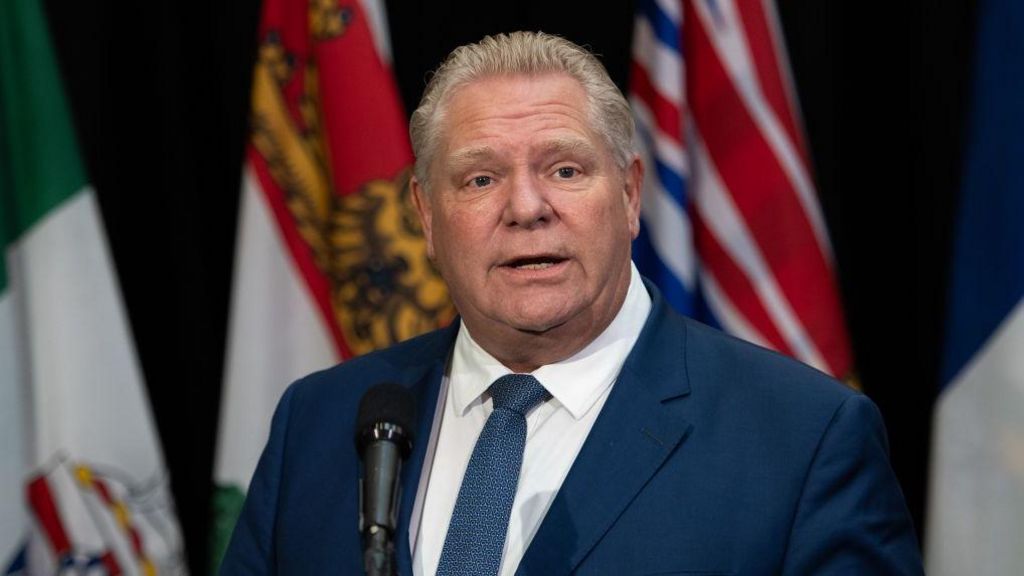
    Ontario, Canada’s most populous province, has launched a process to offload a pre-owned private jet purchased just days ago for Premier Doug Ford, a move that came after intense public and political criticism over the C$28.9 million ($21 million) government expenditure.

    When the acquisition of the 2016 Canadian-built Bombardier Challenger 650 executive jet was first confirmed last Friday, Ford’s administration framed the purchase as a practical investment for official travel. Specifically, officials noted the jet would be used for cross-border trips to Washington D.C. and other U.S. destinations to lobby against harmful tariffs imposed during the previous Trump administration, a core policy priority for the provincial government.

    But the disclosure immediately sparked widespread outrage across the political spectrum and among public advocacy groups. Political opponents swiftly labeled the aircraft a “gravy plane”, accusing Ford of being disconnected from the financial struggles of ordinary Ontario households at a time of ongoing economic pressure. By Sunday, just two days after the purchase was made public, Ford announced a reversal in a formal statement, confirming the jet would be sold “as quickly as possible” through partnerships with aircraft manufacturer Bombardier and other industry partners.

    “Despite the best of intentions, I have heard and agree that now is not the right time for the expense of a government plane,” Ford said in the statement. He added that his administration would continue its core work of building cross-border relationships with business and political leaders, pushing back against unfair tariffs, attracting new private investment and creating jobs for Ontario workers, regardless of the aircraft sale.

    Critics have rejected Ford’s framing of the reversal as a responsive move, arguing the U-turn only came after public anger grew unmanageable. Marit Stiles, leader of the official opposition Ontario New Democratic Party, argued Ford “only changed his mind after the heat got too hot”. In a scathing social media post, she said: “Doug Ford is turning the plane around mid-air for an emergency landing because he got caught living like a rockstar on your dime.”

    Interim leader of the Ontario Liberal Party John Fraser echoed the criticism, accusing Ford of seeking to “live like a billionaire” using public funds. “Trying to buy a private jet while families are struggling says everything you need to know about Doug Ford,” Fraser wrote on social media.

    The Canadian Taxpayers Federation, a prominent non-partisan advocacy group that advocates for fiscal restraint, also joined the chorus of critics, urging Ford to abandon the private jet plan entirely and stick to commercial air travel for official trips.

    The controversy comes at a weak moment politically for Ford, who won an unexpected third consecutive majority government in provincial elections last year. Polling data from Angus Reid released earlier this year puts Ford’s approval rating at around 31%, one of the lowest approval ratings for any sitting provincial premier in Canada.

  • Widespread damage as storm spreads through midwestern US

    Widespread damage as storm spreads through midwestern US

    A destructive storm system carrying intense, high-velocity winds has swept across a broad swathe of the American Midwest this week, leaving a trail of structural damage and transportation disruption in its wake. Meteorologists confirm that the fast-moving weather front brought gusts strong enough to tear full roof assemblies from multiple residential properties across several affected states, leaving homeowners facing costly, unexpected repairs and potential temporary displacement. Beyond damage to buildings, fallen tree branches, debris, and other storm-related obstacles have blocked countless local highways, arterial roads, and neighborhood streets, forcing temporary closures, slowing emergency response efforts, and complicating travel for residents in impacted communities. Local emergency management agencies have already deployed assessment teams to survey the full scope of damage, clear blocked routes, and provide support to residents who have lost their homes or suffered major property damage. As cleanup operations get underway, officials are urging residents to avoid travel through affected areas where possible to keep roads clear for first responders and cleanup crews.

  • Eight children killed in Louisiana shooting, police say

    Eight children killed in Louisiana shooting, police say

    A devastating act of gun violence has shaken the Louisiana city of Shreveport, where eight children between the ages of 1 and 14 are dead following what law enforcement describes as a domestic disturbance-related shooting. One adult gunman carried out the attack early Monday local time, leaving an entire community grappling with unfathomable grief.

    According to Shreveport Police Department officials, the first reports of trouble emerged just before 5 a.m. local time, when the gunman opened fire on 10 people across three separate residences: two family homes on the same city block and a third nearby dwelling. As the situation unfolded, one person injured in the initial shooting fled to a neighboring residence, while the gunman himself carjacked a civilian vehicle to escape the scene.

    Local law enforcement immediately launched a pursuit, which ended when officers fatally shot the suspect in a different Shreveport neighborhood. When responding officers secured the first targeted home shortly before 6 a.m., they made the horrific discovery that all eight fatal victims were minors. “All of the deceased in this case are juveniles,” confirmed Shreveport Police Corporal Chris Bordelon, noting that preliminary investigations have confirmed the attack stemmed from a domestic dispute.

    As of Tuesday, authorities have not released the identities of either the suspect or the victims, a decision made to allow time to notify all next of kin. Officials did confirm that many of the slain children were related to the dead gunman.

    Local and state leaders have described the attack as one of the darkest moments in Shreveport’s history. “This is a tragic situation – maybe the worst tragic situation we’ve ever had in Shreveport,” said Shreveport Mayor Tom Arceneaux. “We have hurting families, we have hurting police officers, coroners’ personnel. This affects the entire community, so we all mourn with these families.” The mayor called on people across the country to hold the impacted families and the city of Shreveport in their prayers.

    Shreveport Police Chief Wayne Smith echoed that sorrow, saying his department was struggling to process the scale of the violence. “I just cannot begin to imagine how such an event can occur,” Smith said. He confirmed that the ongoing investigation is being conducted in close partnership with Louisiana State Police, with additional support from multiple regional and federal law enforcement agencies. “We are going to be working diligently however long it takes to get some answers to what has taken place,” he added.

    State and federal officials have also offered their condolences and praise for first responders. Louisiana Governor Jeff Landry said he and his wife were “heartbroken over this horrific situation, and we’re praying for everyone affected.” He added, “We’re deeply grateful to the law enforcement officers and first responders working tirelessly on the scene.”

    House Speaker Mike Johnson, whose congressional district covers Shreveport, also released a statement calling the attack a “heartbreaking tragedy.” “We’re holding the victims, their families and loved ones, and our Shreveport community close in our thoughts and prayers during this incredibly difficult time,” Johnson said, noting his appreciation for local police’s rapid response to the violence.

  • 17 die in US immigration custody this year: report

    17 die in US immigration custody this year: report

    WASHINGTON D.C. – New official data from U.S. Immigration and Customs Enforcement (ICE) confirms that 17 people held in immigration detention facilities across the United States have died since the start of 2026, marking a continuation of a years-long upward trend in detainee mortality that has drawn widespread criticism from immigration advocacy and human rights groups.

    The most recent fatality, recorded by ICE this Thursday, involves a 27-year-old Cuban national who was found unresponsive in his cell at a Miami federal detention center on April 12. Emergency response teams carried out immediate resuscitation procedures, but the man was pronounced dead at the scene. Authorities have not yet released a confirmed cause of death, noting that the investigation into the circumstances of his passing remains ongoing.

    Historical data compiled by ICE and reported by NBC News places this year’s mortality figures in a troubling context. In 2025, ICE recorded 33 detainee deaths across its custody network – the highest annual total recorded in more than 20 years. That marked a sharp jump from 2024, when 11 deaths were reported among people held in immigration detention.

    As of early April 2026, ICE’s total detainee population sits at more than 60,000 people. While this overall population number has fallen modestly in recent months, it remains substantially higher than the detention levels recorded before the return of Donald Trump to the U.S. presidency, a period during which the administration has implemented sweeping and restrictive immigration policies that expanded detention capacity and increased overall detention numbers.

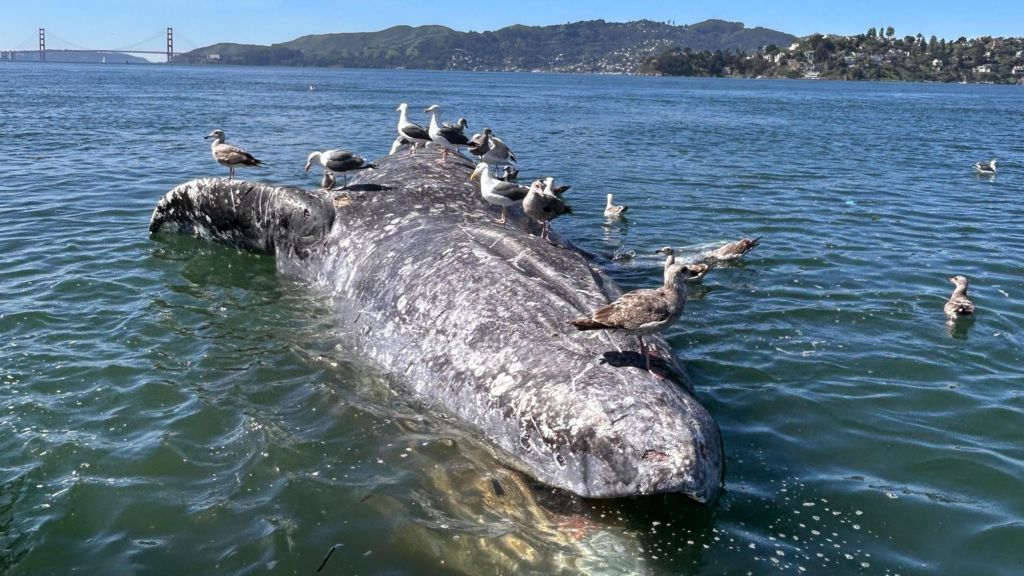
  • Why are gray whales dying in San Francisco’s waters? US scientists search for clues

    Why are gray whales dying in San Francisco’s waters? US scientists search for clues

    For decades, Eastern North Pacific gray whales have passed by the San Francisco Bay on their epic annual migration — one of the longest mammalian migrations on Earth, a 15,000 to 20,000 kilometer roundtrip between breeding grounds in Baja California and feeding waters in the Arctic. But a new study published this week in *Frontiers in Marine Science* documents a striking, recent shift in whale behavior: more of these iconic marine mammals are stopping in the bay permanently and seasonally, bringing both a rare research opportunity and a growing public and conservation crisis.

    Lead study author Josephine Slaathaug, a graduate researcher at Sonoma State University, notes that prior to 2018, there was no record of gray whales consistently stopping in the 4,140-square-kilometer estuary, the largest on the U.S. West Coast. Today, the bay has become a new habitat that the whales actively seek out, driven largely by steep, long-term declines in their traditional Arctic prey populations tied to climate change. Most of the whales that enter the bay, which are predominantly adult and juvenile males heading north to the Arctic, are noticeably underweight compared to historical norms for this stage of their migration.

    “They don’t have the energy reserves necessary to complete the entire migration back to the Arctic, so they may be driven into the bay by hunger,” Slaathaug explained in an interview with the BBC. Similar shifts in gray whale presence have been observed along the Pacific coast in Oregon and Washington state, leading researchers to believe the behavioral change is a regional response to broader ecosystem disruption.

    Hunger may drive the whales into the busy bay, but it is not the leading cause of death recorded in the study. Slaathaug and her team analyzed hundreds of photos of living whales and carcasses documented in the bay since 2018, and found that nearly one-fifth of all gray whales that enter San Francisco Bay die there, most frequently after being struck by large commercial vessels, ferries, and other boat traffic. The death toll has risen sharply in recent years, hitting a record high of 21 dead whales in the broader Bay Area in 2025. As of April 2026, seven dead whales have already been recorded.

    While the rising mortality rate is deeply alarming, researchers say the whales’ new habitat use also creates an unprecedented opportunity to study how climate change is reshaping marine species’ migratory routes and feeding patterns. Kathi George, a research collaborator from The Marine Mammal Center who has assisted with the study and multiple whale necropsies, acknowledges the emotional weight of working with stranded and dead whales, but emphasizes the critical knowledge gained from these events.

    “It’s sad to see a dead whale. It’s sadder to see a dead whale that you may have recognised from studying that particular whale. But there’s also a lot that we can learn,” George said. “Whales can be harbingers of bigger changes under the surface of the ocean.”

    This year, the arrival of whales and strandings began far earlier than usual, with two dead whales recorded in January — a month before the typical April peak. Researchers say this earlier onset is an indicator that the population is under greater stress than previously understood. The study also recorded dramatically low calf counts, pointing to a sustained low birth rate that suggests the gray whale population will not rebound on its own as it has after past declines. Once removed from endangered species protections after a successful 20th century recovery, the Eastern North Pacific gray whale population has plummeted from 27,000 individuals in 2016 to just 12,500 in 2025, a decline the U.S. National Oceanic and Atmospheric Administration has officially classified as an “unusual mortality event.”

    Study co-author Moe Flannery called the crisis immediate, saying the new research is just the first step toward building data-driven conservation strategies. “It’s an immediate crisis that needs to be addressed and this paper is just the first step in gathering the science that’s needed to help inform conservation and management of this species that’s in trouble,” Flannery said.

    Beyond conservation, the rising number of dead and living gray whales in busy shipping lanes creates immediate safety risks for maritime traffic and coastal communities. When a 40-ton dead whale floated into the bay earlier this year, the U.S. Army Corps of Engineers was forced to tow it to a remote beach for necropsy, and a second dead whale drifted back out of the bay when researchers had no capacity to process it. The bay’s enclosed waters, crowded with container ships, ferries, and recreational marinas, make vessel strikes far more likely for both living and dead whales.

    To address the risk, the U.S. Coast Guard, local ferry operators, and conservation groups have already implemented emergency safety measures, including training captains to slow down, give whales space, and report sightings immediately. Coast Guard director of vessel traffic Gary Reed, who leads the multi-stakeholder safety coalition, said the agency is exploring new monitoring tools, including a planned infrared camera system on Angel Island to track whales surfacing in high-traffic areas at night. “Anything we can throw against the wall and see what sticks, we’re willing to give it a try,” Reed said.

    Outside scientists not involved in the study say there remains room for cautious optimism, pointing to the gray whales’ historic track record of recovery after commercial whaling was banned and the 1972 Marine Mammal Protection Act was enacted. Michelle Barbieri Lino, a wildlife veterinarian with Washington state’s SeaDoc Society, noted that the whales’ decision to test the bay as a new feeding stopover demonstrates their adaptability to changing ocean conditions.

    “They are a species who can give us sense of awe of how these animals can recover from stressors and impact,” Lino said. “If they have the protections they need in San Francisco Bay, this could be a place where they can successfully create a new foraging stopover to help them complete their migration and come back again and thrive.”

  • Watch: Obama and Mamdani sing with children in New York

    Watch: Obama and Mamdani sing with children in New York

    In a warm, unscripted moment that drew smiles from onlookers at a Bronx early childhood care facility, former United States President Barack Obama and New York City Mayor Eric Adams came together for their first public meeting, putting policy aside to connect with the city’s youngest residents.

    The gathering, held at the community-focused child care center in the Bronx—a neighborhood long identified with disparities in access to affordable early childhood education—was designed to shine a spotlight on the importance of investing in child care infrastructure and youth development programs across New York City. After brief introductory remarks about the need for expanded support for working families and accessible early learning opportunities, the conversation shifted to a more lighthearted exchange: the two political leaders joined a group of young children in song, leaning in to sing along to a popular children’s tune the kids had been practicing.

    Cellphone footage captured from the event quickly circulated online, showing the pair leaning down to the children’s level, smiling, and matching the young group’s energy as they sang. The meeting marks the first in-person public encounter between the former two-term Democratic president and the current New York City mayor, who took office in 2022, and signals growing collaboration around local youth-focused policy initiatives. Community organizers at the center noted that the high-profile visit will help raise much-needed attention and funding for child care services in the Bronx, where nearly 40 percent of families report struggling to find affordable, licensed early care for their children.

    For attendees, the musical interlude offered a rare, approachable look at political leaders outside of formal press conferences and policy debates, highlighting their shared commitment to centering children’s needs in future policy planning.

  • Alec Baldwin to face civil trial over Rust film set shooting

    Alec Baldwin to face civil trial over Rust film set shooting

    Three years after a fatal on-set shooting rocked the production of the indie Western film *Rust*, Hollywood actor Alec Baldwin is set to face civil litigation over the incident, even after his criminal case was fully dismissed in early 2024. The latest development in this high-profile entertainment industry tragedy came when a Los Angeles judge ruled that a negligence lawsuit filed against Baldwin by the film’s former lighting technician Serge Svetnoy can proceed to trial.

    The incident that sparked the litigation dates back to October 2021, when the *Rust* crew was conducting a scene rehearsal at a New Mexico film set. A prop gun held by Baldwin discharged a live bullet, killing 42-year-old cinematographer Halyna Hutchins and leaving the film’s director Joel Souza with serious injuries. Svetnoy, who was on set during the incident, alleges that a bullet came dangerously close to striking him, and that both Baldwin and the film’s production team failed to follow mandatory and industry-standard gun safety protocols. He has brought claims of negligence and intentional infliction of emotional distress against the defendants.

    In a significant 2024 development that cleared Baldwin of criminal liability, a New Mexico judge dismissed the involuntary manslaughter charge against the actor with prejudice. This ruling came after defense attorneys uncovered that law enforcement and prosecution teams had withheld key evidence—a collection of unshared bullets potentially connected to the shooting—from Baldwin’s legal team. While prosecutors maintained the ammunition was unrelated to the incident and did not match the projectile recovered from the set, the judge ruled that the evidence must be shared with the defense regardless of prosecutors’ assessment, leading to the full dismissal of the criminal case. A dismissal with prejudice means the charge cannot be re-filed against Baldwin once all appeals of the ruling are finalized.

    Separately, the film’s on-set armourer Hannah Gutierrez-Reed was convicted of involuntary manslaughter for her role in the shooting in 2024, and was sentenced to 18 months of prison time. Baldwin has consistently maintained he never pulled the trigger of the prop gun, a claim that has remained at the center of his defense throughout all legal proceedings.

    When reviewing Svetnoy’s civil suit, Los Angeles Superior Court Judge Maurice Leiter allowed the core claims of negligence and emotional distress to move forward, but threw out the additional allegation of assault. Court documents released Friday confirmed the judge’s ruling, with a provisional trial date set for October 12 of this year if no out-of-court settlement is reached between the parties ahead of the hearing. The BBC has reached out to Baldwin’s legal team for comment on the latest ruling, and prior to this decision, Baldwin and *Rust*’s producers had reached a confidential settlement in a separate wrongful death lawsuit brought by Hutchins’ family.

  • Players, enthusiasts in New York mark 55th anniversary of Ping-Pong Diplomacy

    Players, enthusiasts in New York mark 55th anniversary of Ping-Pong Diplomacy

    On a crisp Friday in Manhattan, a diverse crowd of table tennis competitors, enthusiasts, and diplomatic figures filled SPIN New York Flatiron to commemorate a half-century of a people-to-people exchange that fundamentally altered the trajectory of China-US relations: the 55th anniversary of Ping-Pong Diplomacy.

    The event brought together a cross-section of global table tennis talent and community members, ranging from former United States national champions and a former Swedish national team competitor to amateur community players, college athletes, and legal and finance professionals who share a passion for the sport. All joined in honoring the small, accidental moment that opened a new chapter in bilateral ties five and a half decades ago.

    In her opening remarks at the celebration, Chen Li, China’s Consul General in New York, walked attendees through the unexpected origins of the historic diplomatic breakthrough. Fifty-five years earlier, an American table tennis player accidentally stepped onto the Chinese team’s bus during the 1971 World Table Tennis Championships in Nagoya, Japan. What began as a simple misstep quickly bloomed into an unplanned friendly exchange, sparking the series of interactions that became known as Ping-Pong Diplomacy and clearing the path for the first official visit by an American sports delegation to the People’s Republic of China.

    Chen recalled the enduring Chinese sports motto, “Friendship first, competition second,” noting that even in that first encounter, American athletes observed that Chinese spectators cheered for every outstanding shot, no matter which side scored the point. “They realized that rivals had become friends overnight. Few could have imagined that a friendly paddle volley would help turn the wheel of China-US relations,” Chen told the gathered crowd.

    Reaffirming the core role of ordinary people in shaping bilateral ties, Chen emphasized, “The foundation of our relations was built by the people, and its future rests with our youth. You are all ambassadors of friendship.”

    Across the club’s tables, players from every cultural background and skill level competed side by side, carrying on the spirit of exchange that defined the 1971 breakthrough. Among the attendees was Rory Hayden, who was just 20 years old when she served as a translator for the Chinese table tennis delegation during their historic first visit to the United States in 1972, bringing a direct personal link to the history the event honored.