标签: North America

北美洲

  • Foreign actors like Russia interfering in Alberta separatist debate, new report says

    Foreign actors like Russia interfering in Alberta separatist debate, new report says

    A new joint investigation by three leading democratic security organizations has uncovered coordinated efforts by foreign actors from Russia and the United States to inflame separatist sentiment in Canada’s western province of Alberta, posing a direct threat to the country’s democratic stability and national sovereignty. The findings come at a critical moment, as a grassroots separatist movement has confirmed it has collected enough signatures via a citizen petition to trigger a possible independence referendum as early as October 19 this year.

    The Alberta separatist movement grew out of long-standing frustrations labeled “western alienation,” a sentiment held by many local residents who argue their province’s priorities, particularly around its abundant natural resource reserves, are consistently sidelined by federal policymakers based in Ottawa. While support for full independence remains a minority position, recent polling puts backing for separation at roughly 25% of the province’s population, and the grassroots push for a public vote has gained measurable traction in recent months.

    Released Wednesday by the Global Centre for Democratic Resilience, the Centre for Artificial Intelligence, Data and Conflict, and DisinfoWatch, the report details how foreign actors are leveraging existing genuine regional grievances — including widespread beliefs that Alberta’s resource wealth is unfairly exploited by the federal government — to push division across Canada. Disinformation operations are being carried out through social media platforms, Russian-aligned information networks, and covert online accounts, the investigation found.

    Researchers emphasized that when outside powers amplify separatist rhetoric, normalize territorial break-up, erode public trust in Canadian democratic institutions, and encourage national division, the debate is no longer a purely domestic provincial political issue. “It becomes a direct threat to Canada’s democratic integrity, national security, and cognitive sovereignty,” the report’s authors wrote.

    Marcus Kolga, director of DisinfoWatch, told the BBC that protecting unmanipulated domestic debate is a core priority for Canadian security. The social media accounts analyzed in the investigation all had documented histories of spreading disinformation in previous conflicts and political campaigns. Their content, researchers confirmed, is deliberately crafted to stoke tension around the separatist debate and is targeted to reach like-minded Albertans already sympathetic to separatist ideas.

    The report characterizes Russia’s involvement in the movement as covert, doctrinally aligned, operationally active, and sustained over time. The end goal of these operations is to push foreign-backed narratives into local public discourse, creating what researchers call a “laundering effect” that blends local grievances with foreign strategic goals to amplify division. The investigation also uncovered the use of modern digital tools to spread disinformation: economic opportunists are leveraging generative artificial intelligence, paid voice actors, and professional video production to create content that mimics authentic Canadian political commentary, flooding public debate with false and misleading claims.

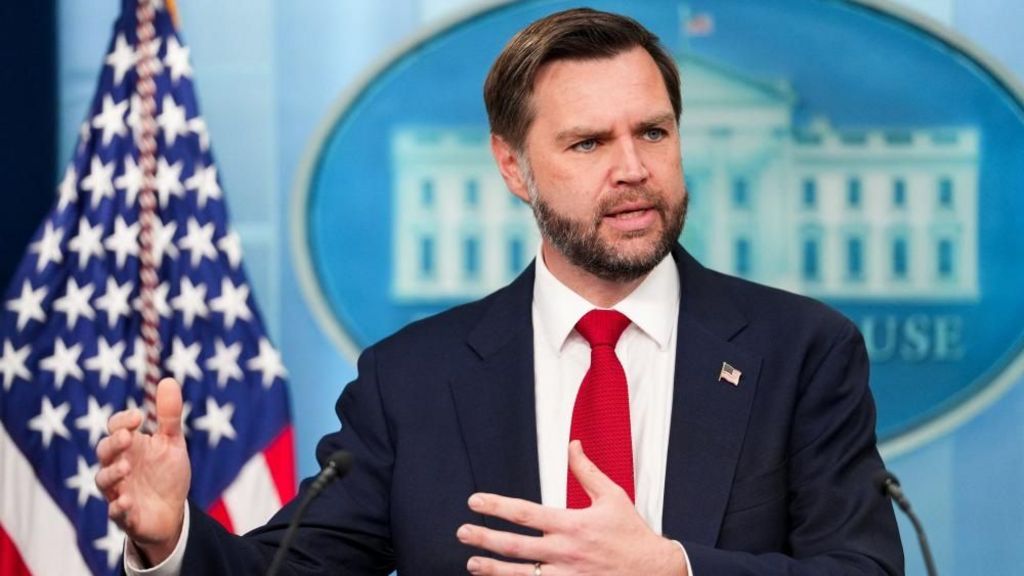
    Beyond Russian covert activity, the report notes that American influencers have also joined the campaign, pouring external fuel on the separatist fire to provoke political unrest. Kolga added that senior officials from former U.S. President Donald Trump’s administration held direct meetings with Alberta separatist leaders and made public statements endorsing their separatist cause. The revelation of these contacts earlier this year prompted Canadian Prime Minister Mark Carney and Alberta’s Premier to issue a joint statement calling on the United States to respect Canadian sovereignty.

    Even if the referendum moves forward in October, and even if a majority votes in favor of separation, the path to full independence would be long and fraught with uncertainty. Canadian federal law sets clear binding conditions for any provincial independence referendum, including requiring a clearly worded ballot question, independent oversight from the House of Commons, and a “clear majority” of voter support. If all legal conditions are met, Alberta would still need to enter into complex, potentially years-long negotiation with the federal government to finalize the terms of separation.

  • Former OpenAI board member says Elon Musk offered her sperm donations

    Former OpenAI board member says Elon Musk offered her sperm donations

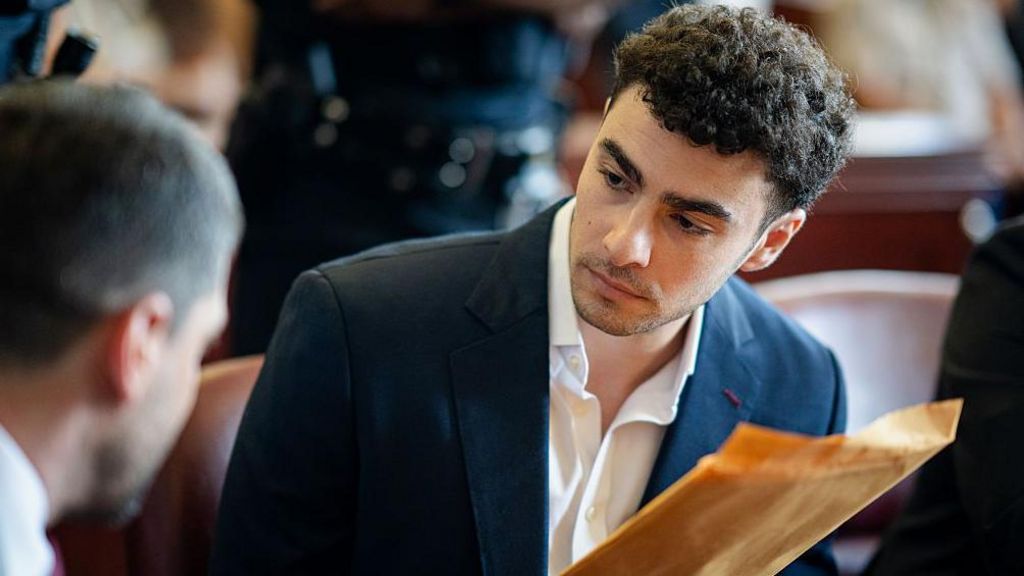
    OAKLAND, Calif. — In a high-stakes federal trial centered on Elon Musk’s legal challenge to OpenAI’s shift to a for-profit business model, former OpenAI board member Shivon Zilis has publicly opened up for the first time about how her longstanding professional connection with Musk evolved into a personal arrangement that resulted in her welcoming four of his children. Zilis spent hours testifying Wednesday in a California federal courtroom, where her testimony addressed two core threads of the case: her early involvement in OpenAI’s corporate structure discussions, and the personal details of her relationship with Musk that have sparked conflict-of-interest questions from OpenAI’s legal team.\n\nA seasoned Silicon Valley venture capitalist with more than 15 years of industry experience, Zilis has held senior leadership roles at two of Musk’s flagship ventures: electric automaker Tesla and neurotechnology startup Neuralink. She joined OpenAI as an advisor shortly after the research lab launched in 2016, a role that first brought her into regular working contact with Musk, one of OpenAI’s original co-founders. She would later go on to serve as a member of OpenAI’s board of directors from 2020 until 2023, making her one of the most critical witnesses in Musk’s current lawsuit seeking to overturn the company’s transition away from its original non-profit structure.\n\nDuring her testimony, Zilis laid out the origin of her parenting arrangement with Musk, explaining that longstanding health challenges had altered her original plan to build a family through a traditional romantic marriage. “I still really wanted to be a mum and Elon made the offer around that time and I accepted,” she told the court, noting that Musk extended the offer to donate sperm in 2020. At the time, Zilis said, Musk was openly encouraging people in his inner circle to have more children, and had noticed she had not yet started a family. She clarified that the pair only had a brief, one-off romantic connection roughly a decade earlier, and were not involved romantically when Musk made the paternity offer in 2020.\n\nZilis told the court that the original agreement between she and Musk called for his paternity to remain strictly confidential, with Musk not initially planned to take an active parenting role. Today, however, she said Musk is a fully engaged father to their four children, and the group spends several hours together as a family each week. This confidentiality agreement, Zilis explained, is why she did not disclose to OpenAI CEO Sam Altman that the twins she gave birth to in 2021 were fathered by Musk. She only informed Altman of the paternity a year later, when she learned a Business Insider report revealing the relationship was upcoming. Despite the undisclosed connection, Zilis testified that Altman and OpenAI President Greg Brockman asked her to remain on the company’s board, and the trio remained on friendly terms until 2023. Brockman confirmed this trust in Zilis earlier this week, telling reporters \”We trusted her to keep the Elon conflict under control.\”\n\nBeyond personal revelations, Zilis’s testimony also shed new light on the years of internal negotiations that led to OpenAI’s break with Musk and its eventual shift to for-profit status. Court documents presented during the trial show that as early as 2017, OpenAI’s leadership recognized the company would need to transition away from pure non-profit status to raise the billions of dollars in capital required to scale its cutting-edge AI research. Brockman and co-founder Ilya Sutskever pushed for the company to re-incorporate as a B Corp, a mission-driven for-profit structure that balances profit with public benefit commitments.\n\nEmails entered into evidence show Musk pushed for far greater control of OpenAI during these early negotiations, demanding additional board seats and even floating a proposal to absorb the entire AI startup into Tesla as a B Corp subsidiary. Zilis wrote in one 2017 exchange that a Tesla acquisition would immediately resolve OpenAI’s funding challenges. Ultimately, however, negotiations between Musk and OpenAI’s remaining leadership collapsed. Zilis’s emails confirm the core sticking point: Altman, Brockman and Sutskever were adamant that Musk would not be allowed to take full control of OpenAI’s research and development work.\n\nZilis stepped down from OpenAI’s board in March 2023, shortly after Musk launched his own competing AI venture, xAI, which now develops a chatbot positioned as a direct rival to OpenAI’s industry-leading ChatGPT. OpenAI’s legal team has alleged that Zilis passed confidential internal information about OpenAI’s work to Musk after he stepped down from the company’s board in 2018, a claim Zilis has pushed back on during her testimony. The trial, which has already drawn global attention for its mix of high-stakes AI industry conflict and personal celebrity revelations, is expected to continue in the coming weeks.

  • Trump’s hopes for an Iran peace deal come with caveats

    Trump’s hopes for an Iran peace deal come with caveats

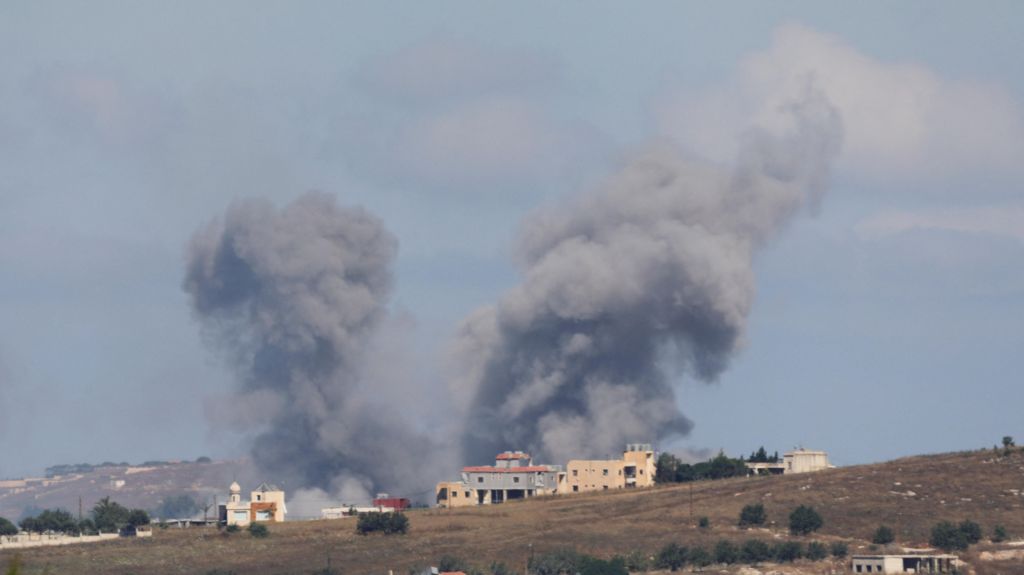
    In a sudden shift that sent ripples through global energy markets, former president Donald Trump announced a last-minute pause to his newly launched “Project Freedom” – an initiative designed to escort commercial vessels through the blockaded Strait of Hormuz – citing tentative progress toward a historic “Complete and Final Agreement” with Iran. The initial announcement eased fears of prolonged disruption to global oil supplies, which rely heavily on the strategic waterway for 20% of the world’s daily crude trade, and sparked fleeting hopes of a breakthrough ending months of open conflict in the Gulf.

    Yet that optimism was rapidly dampened by Trump himself just 24 hours later, in a series of contradictory statements that have left policymakers, markets, and regional observers scrambling to parse the state of negotiations. After his Tuesday evening Truth Social post announcing the suspension to test whether a deal could be finalized, Trump struck a far more combative tone Wednesday morning, warning that a final agreement was still a “big assumption” and threatening to resume bombing campaigns against Iran at “a much higher level and intensity than it was before” if no deal materialized.

    This backtracking came only hours after US Secretary of State Marco Rubio had publicly announced that Operation Epic Fury, the American-led military campaign against Iran, had concluded. By Wednesday afternoon, Trump again shifted, telling PBS in a brief phone interview that he remained optimistic about the prospects of a deal while acknowledging past breakthrough attempts with Iran had failed repeatedly. “I felt that way before with them,” he said. “So we’ll see what happens.” He also added that it was “unlikely” he would deploy US negotiators for a second round of peace talks in Islamabad, Pakistan, which has served as a key mediating power for the discussions.

    Multiple US outlets including Axios and Reuters have reported that negotiators from Washington and Tehran are edging closer to a short, 14-point one-page memorandum of understanding that would formally end Gulf hostilities. The broad framework, according to sources familiar with the draft, would first end active military clashes, then open the way for subsequent negotiations on unblocking the Strait of Hormuz, lifting crippling US sanctions on Iran, and implementing curbs on Iran’s nuclear program. A source close to Pakistani mediators even told Reuters Wednesday: “We will close this very soon. We are getting close.” But Tehran’s response has been far from supportive, with senior Iranian officials dismissing the reported draft as nothing more than an American wish list.

    Ebrahim Rezaei, spokesperson for Iran’s National Security and Foreign Policy Commission, wrote on X that the 14-point plan leaked to Axios amounted to nothing more than Washington’s “wish list”, adding that Iran “has its finger on the trigger and is ready” if the US fails to make “the necessary concessions”. Iran’s government already rejected an earlier, similar claim from Trump in April, when he told CBS that Tehran had “agreed to everything” including allowing US officials to remove Iran’s stockpiles of enriched uranium – a statement officials in Tehran denied outright.

    Even among US foreign policy circles, there is widespread skepticism that a final, binding deal is imminent. Speaking to the BBC, Grant Rumley, a former Middle East policy advisor for both the Biden and second Trump administrations and current fellow at the Washington Institute for Near East Policy, noted that the Trump administration’s sudden rollout and equally sudden pause of Project Freedom signals they believe a deal is within reach, but past experience shows negotiations are far from guaranteed. “Clearly, the administration thinks a deal is possible, given the way they publicly rolled out Project Freedom only to suddenly pause it hours later,” Rumley said. “But we have been here before, and we’ve seen negotiations collapse at the last minute for a variety of reasons.”

    Rumley added that even if the broadly worded one-page memorandum is agreed, it is highly unlikely to resolve the full scope of longstanding disputes between the two nations, particularly the technically complex details of any agreement governing Iran’s nuclear program. During the Obama administration, negotiating the full terms of the 2015 Iran Nuclear Deal took more than 20 months of intensive technical and diplomatic talks, a timeline that underscores how difficult it will be to finalize a comprehensive deal in the current climate.

    Shipping analysts have also noted that Project Freedom, which launched just on Sunday, achieved minimal results in its short operational window, with only a small handful of commercial vessels daring to transit the strait while the operation was active. Ali Vaez, Iran project director at the International Crisis Group think tank, told the BBC that Iran’s aggressive response to the operation – including shooting at commercial vessels and launching retaliatory strikes on targets in the United Arab Emirates – likely convinced Trump that the military initiative would not resolve the blockade. “There is no real policy process in this administration,” Vaez noted. “The president makes decisions based on impulse more than process, therefore there are inconsistencies that happen all the time.”

    Mick Mulroy, a former Pentagon assistant undersecretary for Middle East policy, added that the motivation behind Trump’s sudden pause of Project Freedom remains far from clear. “It’s unclear if the pause in Project Freedom was because of this one-page memorandum or because the 1,500 ships currently stuck behind the Strait of Hormuz wouldn’t transit even with the US security umbrella,” Mulroy said. “Iran is likely trying to determine that as well.” That uncertainty has left global oil markets on edge, as traders wait for clearer signals on whether the 4-week old ceasefire in the Gulf will hold or escalate into open conflict once again.

  • Hedge fund founder hits back at Mamdani’s ‘creepy’ wealth tax video

    Hedge fund founder hits back at Mamdani’s ‘creepy’ wealth tax video

    A high-profile public feud has broken out between New York Mayor Zohran Mamdani and billionaire hedge fund titan Ken Griffin over Mamdani’s signature policy initiative: a sweeping plan to raise taxes on the city’s wealthiest residents and ultra-luxury properties.

    Griffin, founder and CEO of Citadel, who holds the deed to the most expensive residential property ever purchased in the United States, slammed Mamdani’s proposal and the mayor’s public campaign for it during an appearance at Tuesday’s Milken Institute Global Conference in Beverly Hills, California. The billionaire called a video Mamdani filmed outside his $238 million Manhattan penthouse earlier this year “creepy and weird,” arguing that the stunt stokes dangerous political polarization that could lead to violence. He pointed to the fatal shooting of UnitedHealthcare CEO Brian Thompson near the property as evidence that public targeting of high-profile individuals creates unacceptable security risks.

    “Anything that creates, like an agitation, in the extremist on either side of the aisle is a frightening dynamic,” Griffin told attendees. In response to his criticism, Griffin confirmed he would accelerate his existing shift of business operations from Manhattan to Miami, saying Mamdani’s agenda sends a clear message that achievement is not welcome in New York City. “Mamdani was making it really clear: New York doesn’t welcome success,” Griffin said. “I will double down focusing on Miami to grow my business interests rather than Manhattan.”

    The contentious video in question was filmed in April to align with the U.S. annual tax filing deadline, as part of Mamdani’s push to introduce a new annual pied-à-terre tax. This levy would apply to non-resident-owned properties valued above $5 million, a policy explicitly designed to target wealthy individuals who park large sums of wealth in New York City real estate without maintaining primary residency or paying full local taxes. Standing directly outside the building that houses Griffin’s penthouse, Mamdani used the 2019 purchase of that unit – which still holds the record for the most expensive home ever bought in the U.S. – as a prominent example of the gap the new tax would close. Mamdani projects the pied-à-terre tax alone will generate at least $500 million in new annual revenue for the city, while broader tax increases on corporations and the wealthy could raise up to $9 billion to fund the mayor’s policy agenda. That broader package includes lifting the city’s corporate tax rate from 7.25% to 11.5%.

    In an official statement provided to the Wall Street Journal following Griffin’s comments, Mamdani’s press secretary Joe Calvello pushed back against the billionaire’s criticism while acknowledging his economic impact on New York. Calvello clarified that the mayor supports all successful New York-based entrepreneurs and business leaders, noting that Griffin himself is a major employer within city limits who contributes meaningfully to the local economy. However, Calvello reaffirmed the administration’s core position that the city’s current tax structure is fundamentally unfair and broken, requiring targeted reform to ask higher contributions from the wealthiest property owners.

    Mamdani’s push for progressive wealth taxation has deeply divided public and political opinion in New York, with critics echoing Griffin’s warning that steep tax hikes will push wealthy individuals and major employers to relocate to lower-tax jurisdictions like Florida, ultimately reducing the city’s total tax revenue and harming local economic growth. Requests for additional comment from the mayor’s office were not immediately answered.

  • CNN founder Ted Turner dies at 87

    CNN founder Ted Turner dies at 87

    Ted Turner, the pioneering American media mogul who revolutionized global journalism by creating the world’s first 24-hour rolling cable news network CNN, has passed away at the age of 87, CNN confirmed in an official announcement.

    Turner’s entry into the media industry came long before the launch of CNN. After his father’s death, he took over the family’s already successful billboard business at a young age, before expanding into broadcasting with the purchase of an Atlanta, Georgia radio station. Over 10 years, that single small station grew into the foundation of Turner Broadcasting System (TBS), establishing Turner as one of the most powerful media figures in the United States.

    In 1980, Turner made his most iconic mark on media history, launching CNN as the world’s first channel dedicated entirely to nonstop, up-to-date news coverage. The new network faced early financial and operational struggles, but it quickly proved the value of its 24-hour news model through high-stakes breaking coverage. It delivered fast, continuous updates on the 1981 assassination attempt on U.S. President Ronald Reagan and the 1986 Challenger space shuttle disaster, cementing its reputation as a go-to source for breaking news. CNN reached a new milestone during the 1990-1991 Gulf War, when it became the first outlet to provide live, on-the-ground rolling coverage from Iraq. Its reporting was so respected that even President George H.W. Bush once acknowledged he learned more about global events from CNN than from the Central Intelligence Agency.

    CNN’s trailblazing success reshaped the entire global media industry, inspiring a wave of competing 24-hour news channels, including Rupert Murdoch’s Fox News, which launched in 1996. Beyond CNN, Turner built a sprawling television empire that included basic cable channels TBS and TNT, the classic film-focused Turner Classic Movies, and children’s entertainment staple Cartoon Network. His business career included a number of high-profile moves as well: a 1985 $1.5 billion acquisition of MGM film studios that ultimately proved unsuccessful, followed by purchases of major production houses Castle Rock Entertainment and New Line Cinema in the 1990s, before TBS merged with media giant Time Warner.

    Outside of media, Turner led a diverse public life. A world-class competitive sailor, he took home sailing’s most prestigious prize, the America’s Cup, in 1977. He also owned three major Atlanta professional sports teams: the Atlanta Braves Major League Baseball team, the Atlanta Hawks NBA basketball team, and the Atlanta Thrashers NHL ice hockey team. From 1991 to 2001, he was married to renowned American actress Jane Fonda.

    In a statement following Turner’s death, CNN Chairman and CEO Mark Thompson paid tribute to the network’s founder, calling him an intensely dedicated, intrepid leader who was never afraid to trust his own instincts. “He was and always will be the presiding spirit of CNN,” Thompson said. “Ted is the giant on whose shoulders we stand, and we will all take a moment today to recognize him and his impact on our lives and the world.”

  • NFL player Stefon Diggs found not guilty of attacking personal chef

    NFL player Stefon Diggs found not guilty of attacking personal chef

    NFL wide receiver Stefon Diggs has been cleared of all criminal charges stemming from allegations of assault by his former personal live-in chef, Jamila Adams, after a jury in Massachusetts reached a not guilty verdict following two days of deliberations. The 32-year-old veteran player, who became a free agent after being released by the New England Patriots in March 2024, had consistently denied the accusations of felony strangulation and misdemeanor assault, which were alleged to have occurred during a December 2, 2024 altercation. Adams accused Diggs of slapping and choking her during an argument, while prosecutors told jurors the dispute grew out of a romantic relationship between the two that had turned sour. Adams’ legal counsel ultimately acknowledged to the jury that his client had not been a completely reliable witness, though he still urged the panel to consider her testimony as valid, reporting from the Associated Press confirmed. Diggs’ defense team pushed back aggressively against the claims, framing the allegations as rooted in a non-violent financial disagreement rather than any physical attack. In post-verdict comments to media outlets, Diggs’ lead attorney Mitch Schuster highlighted what his team has argued is a common unfair trend facing high-profile professional athletes: opportunistic targeting for financial gain. “We were eager for the facts to come to light through the legal process,” Schuster stated in an official statement. “Professional athletes have a target on their back. When someone sees a uniform and a contract, they see leverage; they see a settlement. This case represents exactly the kind of opportunistic targeting that players can face the moment they step off the field.” The verdict closes a months-long legal process that has hung over Diggs’ professional future since he parted ways with the Patriots. The wide receiver joined New England in 2024 on a one-year deal worth up to $69 million, with $51 million guaranteed, but was released ahead of the 2025 offseason as he battled the legal claims. Now that the case has concluded, all attention has shifted to which NFL franchise will sign the free agent wide receiver, who has long been one of the league’s most productive offensive playmakers. A spokesperson for the NFL, Brian McCarthy, told ESPN that the league will continue reviewing the case under its official personal conduct policy, confirming that the organization had monitored the court proceedings throughout. It remains unclear whether the league will pursue any internal disciplinary action against Diggs following the acquittal, as the review process is still ongoing.

  • Moment former FedEx driver sentenced to death for killing Athena Strand

    Moment former FedEx driver sentenced to death for killing Athena Strand

    A high-profile child murder case has come to a dramatic conclusion, as a former FedEx delivery driver has been formally sentenced to death for the fatal killing of 7-year-old Athena Strand. The sentencing hearing, held in a packed courtroom, saw grieving family members speak publicly about the irreversible damage the young girl’s death has left on their tight-knit community and every person who loved her. In raw, emotional testimony before the court, the victim’s uncle addressed the court directly, stating that Athena’s murder has taken an irreplaceable piece of the soul from every single member of her family and circle of loved ones. The case, which drew widespread public attention across the nation after Strand’s disappearance in 2022, sparked renewed conversations about personal safety for children in residential areas and background check protocols for delivery workers interacting with the public. Throughout the legal proceedings, prosecutors laid out overwhelming evidence linking the former driver to the abduction and killing of the young girl, leading a jury to return a guilty verdict that cleared the way for the capital punishment sentence handed down this week. While capital punishment remains a divisive issue in the United States, the brutality of the crime and the young age of the victim has led many local residents to express support for the sentence. Family members have stated they hope the final ruling will bring a small measure of closure after months of overwhelming grief, even as they acknowledge no sentence can bring their beloved Athena back.

  • Trump pauses Hormuz plan 50 hours after he announced it – what happened?

    Trump pauses Hormuz plan 50 hours after he announced it – what happened?

    In a stunning political reversal that has sent ripples across global energy and diplomatic circles, US President Donald Trump has announced a pause to his highly publicized ‘Project Freedom’ — a mission designed to escort stranded commercial ships through the blocked Strait of Hormuz — just 48 hours after formally launching the operation. The abrupt shift in policy comes amid a fragile backdrop of escalating regional conflict sparked by the US-Israel war with Iran, which has seen Tehran effectively close off one of the world’s most critical energy chokepoints. The strait, which carries roughly 20% of global oil and gas supplies, has been the center of growing tensions after Iran issued threats to transiting vessels, sending global crude prices soaring and stoking widespread fears of a catastrophic hit to the already fragile global economy.

    The chain of events unfolded rapidly over 48 hours, starting when Trump first announced the operation on his Truth Social platform at 21:35 BST on Sunday. In his initial post, the president framed the mission as a humanitarian gesture, writing: “For the good of Iran, the Middle East, and the United States, we have told these Countries that we will guide their Ships safely out of these restricted Waterways, so that they can freely and ably get on with their business.” He added that he had instructed US representatives to work to ensure the safety of all ships and crews trapped in the region, where the Baltic and International Maritime Council estimates roughly 1,000 vessels carrying 20,000 seafarers remain stranded. Trump announced the operation would kick off “Monday morning Middle East time,” noting that ongoing diplomatic talks with Iran were progressing positively and could lead to a breakthrough agreement for all parties.

    Shortly after midnight UK time on Monday, US Central Command (Centcom) confirmed the operation was underway, releasing details of the massive military deployment assembled for the mission: guided-missile destroyers, more than 100 land and sea-based aircraft, and 15,000 active-duty service members. UK maritime security agency UKMTO also confirmed that US officials were advising commercial vessels to transit through a secured corridor off the coast of Oman. By later that day, Centcom announced the first milestone of the mission: two US-flagged merchant ships had successfully completed transit through the strait and were continuing on their routes.

    Tensions flared quickly, however, as competing claims emerged over a reported strike on Iranian boats. Trump claimed that US forces had destroyed seven Iranian fast boats in the strait during the operation’s first day, but Iranian state media outlet Tasnim disputed the account. The outlet instead reported that US strikes had hit two small civilian cargo vessels, killing five civilian seafarers. The same day brought a wave of additional attacks across the region: an Adnoc-affiliated oil tanker owned by the United Arab Emirates was hit in the strait, a South Korean-flagged vessel anchored off the UAE coast suffered an explosion, and a fire broke out at the key Fujairah oil port following what the UAE called an Iranian strike — a claim Iran quickly denied.

    On Tuesday, top US defense officials doubled down on their commitment to the mission during a press briefing at the Pentagon. Defense Secretary Pete Hegseth told reporters that “hundreds more ships from nations around the world are lining up to transit,” and emphasized that “Project Freedom is under way, commerce will be flowing, and America is once again leading with strength, clarity and purpose for the benefit of the entire world. Our will is unshakable.” Chairman of the Joint Chiefs General Dan Caine added that the military expected more vessels to complete transits in the coming days, though neither official provided a clear timeline for how long the operation would continue. Secretary of State Marco Rubio echoed the administration’s confident tone at a separate White House briefing, framing the operation as a global public good, saying the US was acting as a “favour to the world” because it remained “the only country that can project power in that part of the world the way we’re doing now.”

    Just hours after these bold public statements, Trump upended the entire mission. At 18:52 Washington time, he posted another announcement on Truth Social: the entire operation would be paused “for a short period of time.” The president framed the pause as a mutual agreement reached with Iran, citing “great progress” in ongoing diplomatic talks aimed at finalizing a new deal. He wrote: “Project Freedom (The Movement of Ships through the Strait of Hormuz) will be paused for a short period of time to see whether or not the Agreement can be finalized and signed.”

    The sudden reversal came just hours after another attack: a French-owned CMA CGM container ship was hit in the strait, leaving multiple crew members injured and the vessel heavily damaged. Even before the pause, the global shipping industry had expressed deep skepticism of the mission. Shipping industry publication Lloyd’s List reported that ship owners and marine insurers said Project Freedom had failed to provide “sufficient clarity or credible protection to justify resuming transits” through the strait. As of the announcement, transit volumes through the strategic waterway continue to fall as security concerns escalate across the region.

  • Former FedEx driver sentenced to death for killing seven-year-old Texas girl

    Former FedEx driver sentenced to death for killing seven-year-old Texas girl

    More than two and a half years after 7-year-old Athena Strand was abducted and killed while her Christmas gift was being delivered to her North Texas home, her family has received a final legal ruling in the case that has shaken the nation. On Tuesday, a Texas jury handed down a death sentence to 25-year-old Tanner Horner, the former delivery driver who admitted to the brutal capital crime. The guilty plea from Horner came earlier this year, as his trial got underway, where he formally confessed to charges of capital murder and aggravated kidnapping. The weeks-long sentencing phase concluded with jurors selecting the harshest available punishment over the alternative of life imprisonment without the possibility of parole.

    The details of the crime that emerged during court proceedings have added to the collective horror surrounding the case. On November 30, 2022, Horner arrived at the Strand family’s property near Fort Worth to drop off the little girl’s holiday gift: a box of Barbie dolls. Instead of completing the delivery, he kidnapped Athena, and two days later, her body was discovered just a short distance from her home. During the sentencing trial, jurors were forced to listen to a disturbing audio recording capturing the young victim’s final moments inside Horner’s delivery van, a piece of evidence that underscored the brutality of the crime. When the death sentence was read aloud by the judge, court video footage captured Horner showing absolutely no visible reaction to the verdict. He is scheduled to be executed via lethal injection at a date yet to be confirmed, in the early morning hours before sunrise.

    In the moments after the verdict was announced, Athena’s uncle, Elijah Strand, addressed the perpetrator directly in court, laying bare the irreversible damage his actions caused the entire family. “There are no words that truly capture the devastation that Tanner Horner caused us and our family,” he told reporters outside the courthouse. Speaking directly to Horner during proceedings, he added: “You destroyed a family. You will feel the wrath of God.” He emphasized that the family will forever honor Athena’s memory while Horner will be forgotten, saying: “I want you to know that you are nothing. You are a footnote in Athena’s story. Her name will forever be remembered, her name will forever be celebrated, and everyone will forget you.”

    Beyond the criminal case, a separate civil lawsuit has been filed by the Strand family against Horner, global delivery giant FedEx, and Big TopSpin Inc., the independent logistics contractor that hired Horner to complete deliveries for FedEx. The suit alleges that both companies failed to complete a required background check on Horner before putting him behind the wheel for residential deliveries, a negligent act that the family argues allowed the crime to occur. In the immediate aftermath of the 2022 murder, a FedEx spokesperson told U.S. media outlets that the company was aware of the pending litigation and extended its sympathies to the grieving family, saying “Our thoughts remain with the family of Athena Strand in the wake of this tragedy.” The BBC has reached out to FedEx for an updated statement following Tuesday’s sentencing, while Big TopSpin Inc. has not responded to multiple requests for comment and has not issued any public statement on the case since the murder.

  • Massive Alaska megatsunami was second largest ever recorded

    Massive Alaska megatsunami was second largest ever recorded

    In August 2025, a catastrophic natural event unfolded in a remote Alaskan fjord that has now emerged as a stark warning about the growing dangers of climate change in glacial regions. A massive section of a mountainside near South Sawyer Glacier in Tracy Arm Fjord, southeast Alaska, collapsed into the water following a series of minor seismic events, triggering a near-500-meter-tall megatsunami – the second such event ever recorded in human history, and the second massive megatsunami to strike Alaskan waters after the 1958 Lituya Bay disaster that claimed the top spot.

    New analysis published in the peer-reviewed journal *Science* has laid bare the full scale of the collapse, which saw an estimated 64 million cubic meters of rock plunge into the fjord in less than 60 seconds. To put that volume in perspective, the mass of rock that fell is equal to 24 of Egypt’s iconic Great Pyramids of Giza. The sheer force of the impact sent the enormous wave surging through the narrow, cliff-lined fjord, leaving a trail of widespread destruction in its path. Uprooted trees were scattered across mountainsides and hurled into the ocean, while large swathes of the shoreline were stripped bare of all soil and vegetation, leaving exposed, scarred rock in their wake.

    Remarkably, what made this event even more extraordinary was how close it came to causing mass casualties among tourists. Tracy Arm Fjord is one of Alaska’s most popular cruise ship destinations, drawing thousands of visitors every summer who come to witness the region’s dramatic glacial landscapes and icy scenery. Crucially, the landslide and subsequent megatsunami struck in the early hours of the morning, when no cruise ships were transiting the fjord. Researchers describe the outcome as a catastrophic close call that could have ended very differently.

    “We know that there were people that were very nearly in the wrong place,” said Dr. Bretwood Higman, an Alaskan geologist who led on-site fieldwork after the event. “I’m quite terrified that we’re not going to be so lucky in the future.”

    Unlike the more widely known open-ocean tsunamis triggered by large underwater earthquakes – such as the 2011 Japan tsunami that traveled thousands of miles and devastated coastal communities – megatsunamis are triggered when large volumes of rock or debris slide into enclosed bodies of water like fjords. These events are typically localized and dissipate much more quickly than open-ocean tsunamis, but they can produce waves hundreds of meters high that cause immediate, devastating destruction in the affected area.

    Alaska is already uniquely vulnerable to these events thanks to its combination of steep mountain slopes, narrow glacial fjords, and frequent seismic activity. But the new research confirms what many earth scientists have long suspected: climate change-driven glacier melt is drastically increasing the risk of these catastrophic rock collapses and subsequent megatsunamis.

    By combining on-site field surveys, seismic monitoring data, and high-resolution satellite imagery, the research team was able to reconstruct the full chain of events that led to the 2025 disaster. Dr. Stephen Hicks, a researcher at University College London and co-author of the study, explained that retreating glaciers had long acted as a natural support structure for unstable cliff faces. “The glacier was previously helping to hold up this piece of rock, and so when the ice retreated, it exposed the bottom of the cliff face, allowing that rock material to suddenly collapse into the fjord,” he said.

    Hicks and his colleagues, who have studied Alaskan tsunami hazards for decades, warn that the risk of future events is growing alongside increasing human activity in these remote, dangerous landscapes. “More people are now going to remote areas – often these tourist cruises are going to see the natural beauty of the area to actually learn more about climate change – but they are also dangerous places to be,” he noted.

    Dr. Higman’s research confirms that the frequency of these events is rising far faster than many expected. “At this point, I’m pretty confident that these are increasing not just a little bit, but increasing a lot,” he said. “Maybe in the order of 10 times as frequent as they were just a few decades ago.”

    In response to the new findings and growing safety concerns, the scientific community is calling for expanded hazard monitoring systems across all high-risk regions of Alaska. Already, some major cruise companies have announced they will reroute ships away from Tracy Arm Fjord indefinitely, amid ongoing fears of another catastrophic event.