标签: North America

北美洲

  • UAE universities shift focus to make students job-ready under new federal law

    UAE universities shift focus to make students job-ready under new federal law

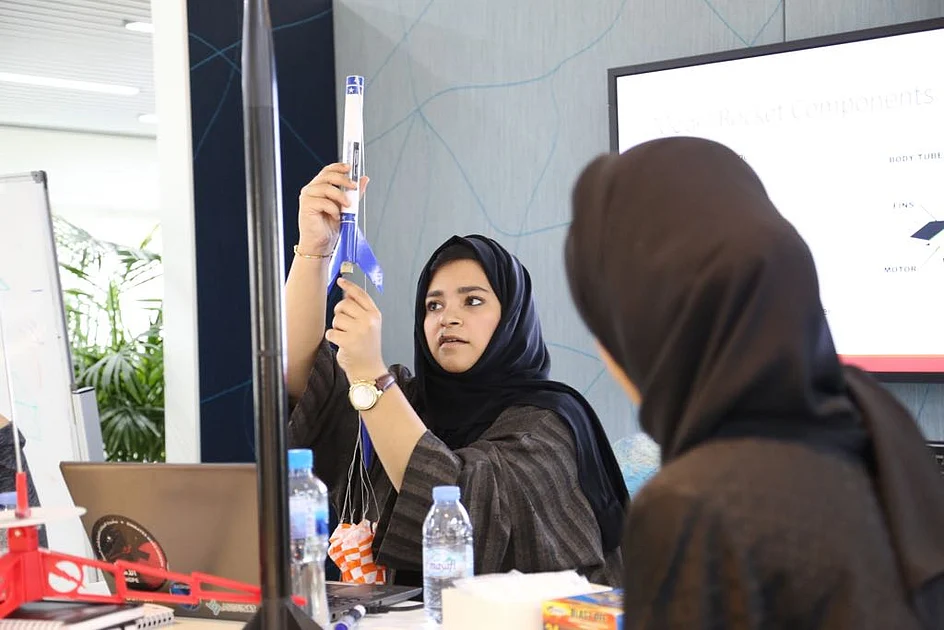
    In a significant overhaul of its higher education system, the United Arab Emirates has implemented transformative federal legislation designed to revolutionize academic preparation for the workforce. The groundbreaking law, enacted on December 30, 2025, establishes rigorous new standards for licensing and mandatory program accreditation across all institutions of higher learning.

    The comprehensive legislation represents a strategic shift toward aligning educational outcomes with the practical requirements of the UAE’s rapidly evolving knowledge economy. The new framework emphasizes enhanced governance structures, improved institutional management, and strengthened technical and vocational training programs. Central to these reforms is the integration of employability-focused components throughout the entire educational journey, from foundational courses to advanced professional studies.

    Academic leaders across the UAE have welcomed the reforms as a validation of existing quality standards while creating more consistent educational benchmarks. Professor A Somasundaram of BITS Pilani Dubai Campus noted that the legislation ‘creates a more level playing field across private, free-zone, and international campuses’ while providing ‘added layer of assurance regarding quality, governance, and outcomes.’

    The practical implementation of these reforms includes expanded internship requirements, with some institutions already mandating seven-and-a-half month professional placements. Universities are increasingly collaborating with industry partners to develop curriculum content that addresses emerging fields including artificial intelligence, data analytics, cybersecurity, digital business, sustainability, and fintech.

    Professor Cedwyn Fernandes of Middlesex University Dubai highlighted how ’employability is integrated throughout the student journey,’ with educational institutions incorporating industry-informed content, applied assessments, and extensive employer engagement opportunities. Early indicators suggest these reforms are already yielding positive results, with several institutions reporting record enrollment numbers particularly in future-focused academic programs.

    Dr. Anita Patankar of Symbiosis Dubai emphasized that job readiness is now ‘built into the learning journey from day one,’ with students gaining hands-on experience through real industry projects, professional networking opportunities, and practical skill development modules. The legislation also establishes stronger frameworks for lifelong learning opportunities, allowing professionals to continuously update their skills in response to evolving economic demands.
  • Venezuela: Rodriguez holds first cabinet meeting, creates commission for Maduro release

    Venezuela: Rodriguez holds first cabinet meeting, creates commission for Maduro release

    Venezuela’s political landscape remains in turmoil as Acting President Delcy Rodriguez convened her inaugural cabinet assembly on Sunday, marking the first such gathering since the dramatic ousting of former leader Nicolas Maduro by U.S. military forces approximately 48 hours prior. The meeting, broadcast nationally via state television network VTV, showcased Rodriguez positioned at the helm of the presidential table within Miraflores Palace, flanked by two pivotal Maduro loyalists: Defense Minister Vladimir Padrino and Interior Minister Diosdado Cabello.

    In a significant development, Rodriguez established a specialized commission dedicated to securing the liberation of Maduro and his spouse, Cilia Flores. The commission’s leadership will be jointly helmed by Jorge Rodriguez (the acting president’s brother and current National Assembly president) and Foreign Minister Yvan Gil. Information Minister Freddy Nanez will also serve as a key member of this delegation, as confirmed in his official announcement.

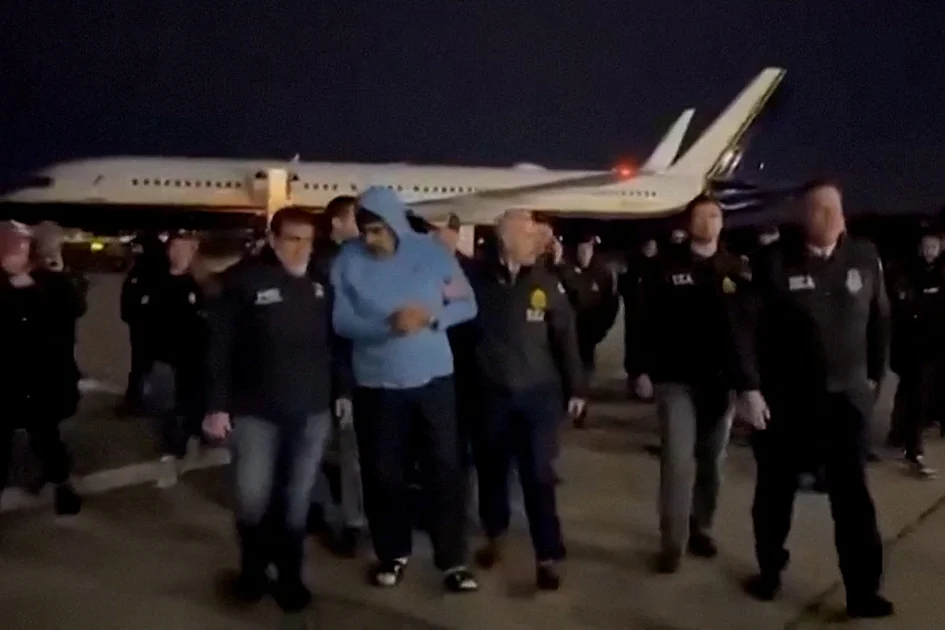
    The formation of this commission follows Maduro’s detention in a New York correctional facility on Saturday, where he faces serious charges including drug trafficking and terrorism allegations. The former president is scheduled for a court appearance on Monday, setting the stage for a complex international legal and diplomatic confrontation between Venezuela and the United States.

  • Trump threatens military operation against Colombia, says Cuba will fall on its own

    Trump threatens military operation against Colombia, says Cuba will fall on its own

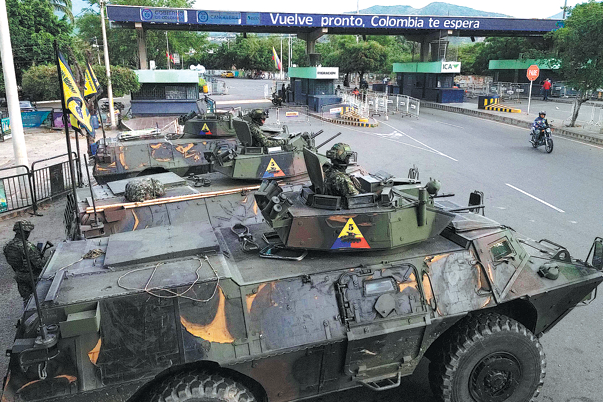
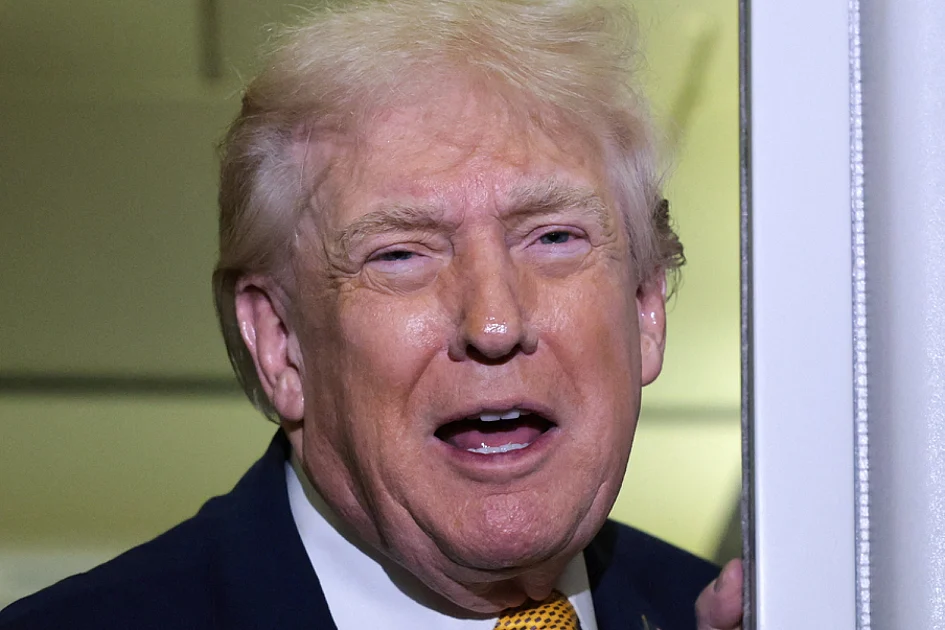
    Former US President Donald Trump has issued provocative statements regarding Latin American nations, suggesting potential military intervention in Colombia while predicting Cuba’s imminent collapse without American involvement. Speaking to reporters aboard Air Force One on Sunday, Trump characterized Colombia as “very sick” under its current leadership, accusing the country’s administration of facilitating cocaine production and distribution to the United States.

    When questioned directly about potential military operations against Colombia, Trump responded enthusiastically: “It sounds good to me.” He further asserted that Colombia’s current leadership “won’t be doing it very long,” implying forthcoming action against the South American nation.

    Regarding Cuba, Trump presented a contrasting perspective, suggesting that military intervention would be unnecessary as the communist nation appears poised to collapse independently. “Cuba’s about to be down for the count,” he stated, indicating his belief that the country’s demise would occur without American military engagement.

    Trump’s comments extended to Mexico as well, where he declared the need to “do something” with the neighboring nation, which he claimed “needs to get its act together.” These remarks come shortly after the controversial capture of Venezuelan President Nicolas Maduro by US forces, signaling continued aggressive foreign policy positioning toward Latin American countries.

  • 32 Cubans killed in US attack on Venezuela; 2 days of mourning declared

    32 Cubans killed in US attack on Venezuela; 2 days of mourning declared

    The Cuban government has confirmed the deaths of 32 military personnel during a United States military operation in Caracas that resulted in the capture of Venezuelan President Nicolás Maduro. In an official statement broadcast nationally on Sunday, Havana authorities characterized the incident as a ‘criminal attack’ by the U.S. government against Venezuela.

    According to Cuban officials, the deceased were members of either Cuba’s Revolutionary Armed Forces or the Ministry of the Interior who were conducting official missions ‘at the request of counterpart agencies’ in Venezuela. The statement emphasized that the soldiers ‘fulfilled their duty with dignity and heroism’ during what it described as ‘fierce resistance’ against American forces.

    The casualties occurred during direct combat engagements with U.S. troops or as a result of aerial bombardments conducted by American forces, the Cuban government reported. The operation, which took place on Saturday, resulted in Maduro and his wife Cilia Flores being extracted from Caracas to face drug trafficking and terrorism charges in a New York court.

    In response to the losses, Cuba has declared two days of national mourning beginning at dawn on Monday. The government has pledged to organize official tributes to honor the fallen personnel. Cuban President Miguel Diaz-Canel expressed national sentiment on social media, posting: ‘Honour and glory to the brave Cuban fighters who fell facing terrorists in imperial uniform.’

    The incident represents a significant escalation in tensions between Cuba and the United States, with Havana using strongly condemnatory language to describe the American military action that resulted in Cuban casualties.

  • Timothée’s shoutout for Kylie and other moments from Critics’ Choice Awards

    Timothée’s shoutout for Kylie and other moments from Critics’ Choice Awards

    The 2026 Critics’ Choice Awards ceremony witnessed emotional victories and fashion statements as Hollywood’s elite gathered at Barker Hangar in Santa Monica on Sunday. Hosted by comedian Chelsea Handler, the event celebrated exceptional achievements across film, television, and streaming content as determined by professional critics.

    Timothée Chalamet secured the Best Actor honor for his portrayal of an ambitious table-tennis player in ‘Marty Supreme,’ delivering a notably vulnerable acceptance speech. The 30-year-old actor expressed visible nervousness while acknowledging his collaborators before offering a heartfelt public declaration to partner Kylie Jenner: ‘Thank you to my partner of three years. Thank you for our foundation. I love you. I couldn’t do this without you.’ Cameras captured Jenner’s reciprocal ‘I love you’ response from the audience.

    Irish performer Jessie Buckley claimed Best Actress for her work in the historical drama ‘Hamnet,’ adapted from Maggie O’Farrell’s novel about William Shakespeare’s marriage. Buckley delivered an emotionally charged speech praising director Chloe Zhao and co-star Paul Mescal, whom she described as a ‘giant of the heart.’

    The evening’s major cinematic achievement belonged to Paul Thomas Anderson’s breathless action thriller ‘One Battle After Another,’ which secured both Best Picture and Best Director honors. The film now establishes itself as a formidable Oscars contender alongside other multiple-award winners including ‘Sinners,’ which collected four trophies including Best Casting and Best Ensemble.

    Television categories recognized outstanding limited series performances, with 16-year-old Owen Cooper winning Best Supporting Actor for Netflix’s psychological crime drama ‘Adolescence.’ Canadian actor Seth Rogen brought comedic relief while accepting Best Actor in a Comedy Series for ‘The Studio,’ joking that the award justified canceling his therapy appointments.

    The ceremony’s fashion elements showcased bold sartorial choices, from Chase Infiniti’s sleeveless yellow Louis Vuitton ensemble to Michael B. Jordan’s statement burgundy suit. Teyana Taylor opted for menswear-inspired Saint Laurent tailoring adorned with feathers, while Mia Goth selected a pristine white silk Dior gown for the occasion.

  • No major rent increases at renewal as Dubai’s Smart Rental Index guides hikes

    No major rent increases at renewal as Dubai’s Smart Rental Index guides hikes

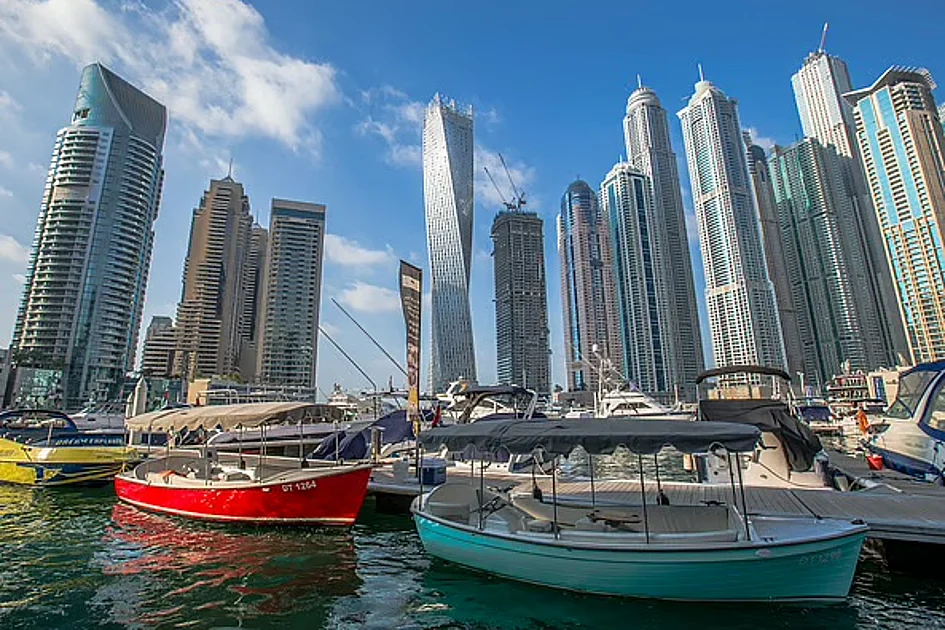
    Dubai’s residential rental market is undergoing a significant transformation as the government’s Smart Rental Index reshapes renewal negotiations between landlords and tenants. The digital tool, launched by the Dubai Land Department last year, provides building-specific data that is creating unprecedented transparency in the rental process.

    The system’s impact is demonstrated through cases like Jasim Mohammed, an Al Quoz resident who successfully challenged a proposed rent increase from Dh56,700 to Dh63,000. After consulting the official index, which showed his building was ineligible for any increase, his real estate office immediately retracted the hike, maintaining his current rate.

    Real estate experts confirm this represents a growing trend. Niral Jhaveri, Director of Property Management at Better Homes, observes that tenants are actively leveraging the index to ensure fair evaluations. ‘In many leasehold buildings, there have been no significant increases, or rents have remained the same for certain unit types,’ Jhaveri noted.

    The index employs an advanced classification methodology that evaluates properties based on technical characteristics, structural quality, finishing standards, maintenance levels, location value, and service provisions including cleanliness and parking management. Permissible increases are calculated according to the disparity between current rents and average market rates, ranging from 0% to a maximum of 20%.

    Karamfila Jaknouz, Head of Commercial at A1 Properties, emphasized the shift from speculative pricing to transaction-based valuations. ‘Pricing is no longer driven by asking rents or assumptions but by real, registered transactions,’ Jaknouz explained. This data-driven approach benefits both parties: tenants gain negotiation clarity while landlords achieve occupancy stability, with many opting to maintain existing rates rather than risk vacancies.

    Despite projections of continued rental growth in Dubai’s high-demand areas—estimated at 4-6% for select locations in 2026—the index is moderating renewal increases for existing tenants. Property managers report tenants increasingly responding to increase notices with official index screenshots, demonstrating heightened awareness of rental rights.

    The tool has also enhanced the role of real estate agents, who can now advise both parties using authoritative data, managing expectations more effectively and contributing to long-term market stability.

  • 1.6°C recorded in UAE: Temperatures to fall slightly, but it will feel colder

    1.6°C recorded in UAE: Temperatures to fall slightly, but it will feel colder

    Meteorological authorities in the United Arab Emirates are advising residents to prepare for a perceptible increase in cold conditions despite minimal actual temperature drops. According to the National Centre of Meteorology (NCM), while thermometers show only slight declines of 1-3 degrees Celsius, fresh north-westerly winds are creating significantly colder sensations across the region.

    Dr. Ahmed Habib, NCM meteorologist, explained that wind patterns originating from northern directions have become increasingly influential since Sunday, initially affecting coastal waters before moving inland. These atmospheric conditions are generating rough to very rough seas in the Arabian Gulf while amplifying the subjective experience of cold on land.

    The western regions, particularly Al Dhafra area, have already recorded temperatures plunging to 1-3°C, with elevated mountain zones like Jebel Hafeet and Jebel Jais experiencing even lower readings due to their altitudes exceeding 1,000 meters. Raknah, north of Al Ain, demonstrated the most pronounced cooling effects last Friday when light frost formed following cold winds, continuing its reputation as the UAE’s coldest hotspot.

    Weather patterns are expected to shift temporarily after Monday, with easterly and north-easterly winds potentially raising temperatures by 1-3 degrees on Tuesday and Wednesday. However, another temperature dip accompanied by fresh winds is forecast toward week’s end, maintaining the heightened cold perception.

    The NCM has additionally predicted possible light rainfall over islands and western Arabian Sea areas mid-week, along with fog formation probabilities, particularly in western UAE territories. These conditions represent typical winter patterns for the region, though wind effects are making this season feel particularly brisk.

  • Experts: Strike to have consequences for region, beyond

    Experts: Strike to have consequences for region, beyond

    The geopolitical landscape of the Western Hemisphere has been fundamentally altered following a unprecedented US military operation inside Venezuela, resulting in the capture of President Nicolas Maduro. South American experts are characterizing the weekend attack as a pivotal moment with profound implications for regional stability and international law.

    According to reports, US forces conducted airstrikes early Saturday before detaining President Maduro and his wife. The Venezuelan leader was subsequently transferred to a New York detention facility, awaiting trial under the US judicial system on drug trafficking allegations that had escalated tensions between the nations for months.

    Jorge Heine, Chile’s former ambassador to China and current nonresident fellow at the Washington-based Quincy Institute, dismissed the official US justification linking the operation to narcotics enforcement. “Venezuela is neither a major drug producer nor a key transit country,” Heine stated, instead identifying two primary motivations: “To get US hands on Venezuelan oil, and to appeal to the Cuban and Venezuelan exile vote in Florida.”

    The political analyst warned that Maduro’s removal fails to address Venezuela’s internal crisis while potentially exacerbating uncertainty. He specifically questioned the practicality of Washington’s post-intervention plans, noting President Trump’s announcement that the US would now govern Venezuela.

    The operation has generated unease among governments throughout South America, with Heine cautioning that the precedent could have extensive regional repercussions. “This intervention will cause great damage to US standing in the region,” he predicted, suggesting it would accelerate calls for greater strategic independence among Latin American nations.

    Beyond hemispheric concerns, Heine emphasized the attack represents a severe blow to global governance structures. “This is a flagrant violation of international law and of the United Nations Charter,” he declared. “It constitutes a significant blow to the international legal order and multilateralism.”

    Nicaraguan political analyst Xavier Diaz-Lacayo echoed these sentiments, strongly condemning the military action and urging international response. “It is time to say enough,” he told Cuban news agency Prensa Latina, calling for firm condemnation of the aggression and demanding restitution for what he termed an assault on the international legal order.

    Diaz-Lacayo emphasized the need for Washington to respect international norms regarding self-determination, advocating for Maduro’s restoration to power. “The world must demand that the US handle international affairs according to the principles of peace and dialogue,” he asserted, noting that Venezuela’s right to sovereign control over its strategic resources, particularly oil, is being unjustly denied through accusations divorced from international legality.

    The analyst framed the US position as rooted in “the doctrine of Manifest Destiny and the Monroe Doctrine, aimed at securing strategic, economic, political and military interests in the region,” warning that global condemnation contrasts sharply with persistent US unilateralism.

  • Citizens shocked, traumatized amid port bombing

    Citizens shocked, traumatized amid port bombing

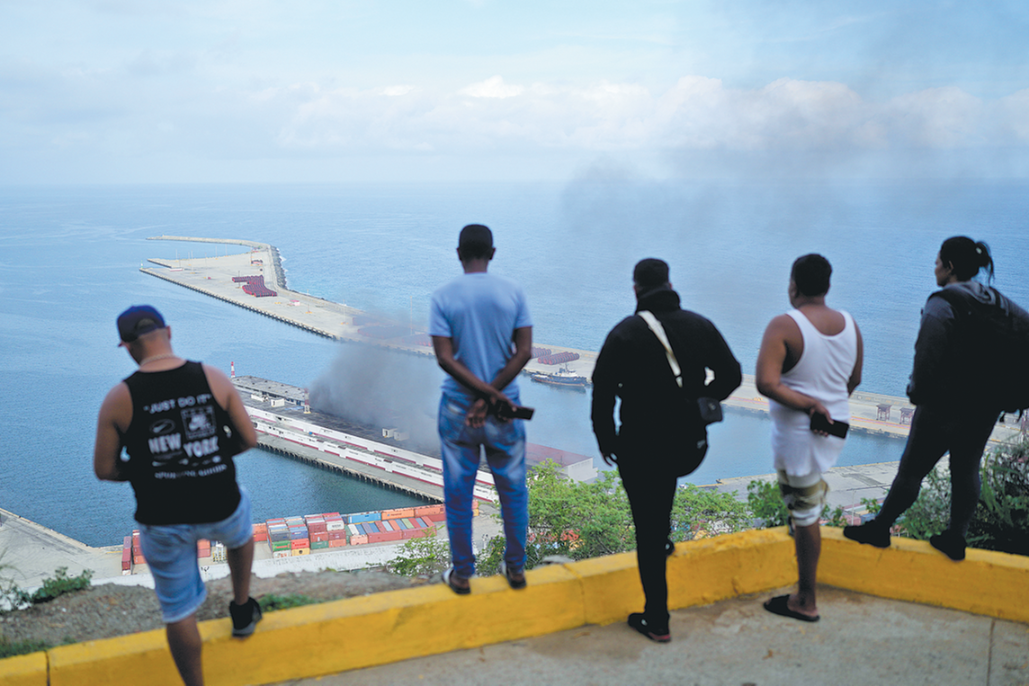
    The port city of La Guaira, Venezuela, remains shrouded in smoke and shock twelve hours after a United States military operation targeted the area. The pre-dawn strikes, part of a mission to capture and extract President Nicolas Maduro, left a landscape of devastation with deformed shipping containers, shattered public buildings, and roofless houses.

    Eyewitness accounts paint a picture of sudden terror and confusion. Alpidio Lovera, 47, described the immediate sequence of events: ‘First we saw the flash and then the explosion,’ he recounted, detailing how he fled with his pregnant wife to higher ground. The psychological impact was profound for many residents, with Linda Unamuno, 39, breaking into sobs as she recalled the nightmarish experience. ‘The blast smashed the entire roof of my house,’ she said. ‘I went out, that’s when I saw what was happening. I saw the fire from the airstrikes. It was traumatizing.’

    The operation, which US officials stated was designed to clear landing paths for helicopters, resulted in no reported casualties in La Guaira. Emergency crews worked throughout the day, with firefighters using excavators to clear debris of broken glass and gnarled metal while armed police patrolled on motorcycles to prevent looting.

    In the capital city of Caracas, the atmosphere was described as eerily quiet despite small gatherings of Maduro supporters demanding his freedom. The rapid removal of a president who had maintained power through years of international sanctions left many citizens incredulous at the day’s events. Maria Eugenia Escobar, 58, told Agence France-Presse: ‘I felt the explosions lift me out of bed. In that instant I thought: ‘My God, the day has come,’ and I cried.’

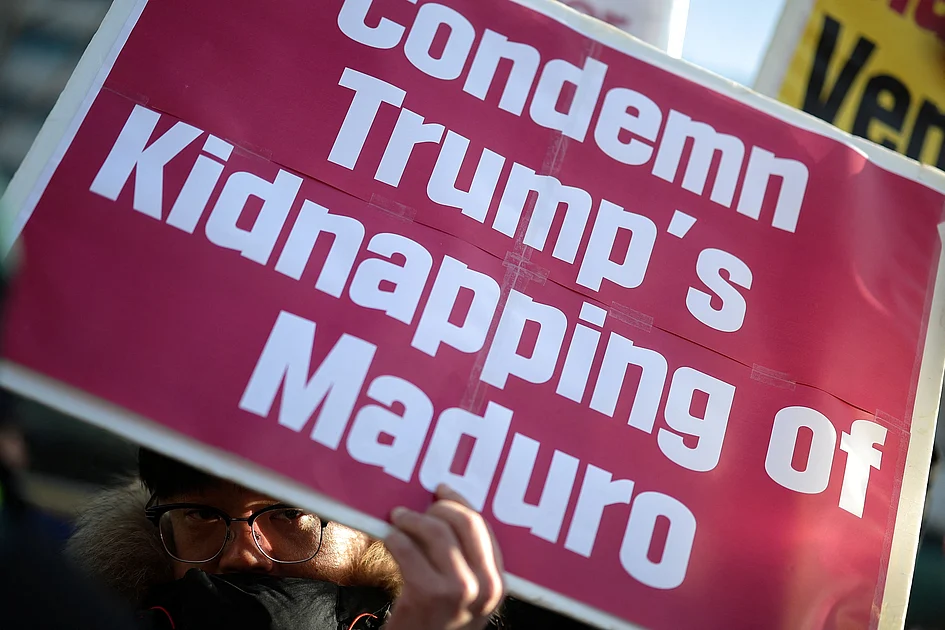
    The military action has sparked both international concern and domestic protest. Katia Briceno, a 54-year-old university professor, joined demonstrations against what she termed US ‘barbarism,’ questioning the legitimacy of a foreign government removing a country’s leader. The operation marks a dramatic escalation in the long-standing political conflict between the United States and Venezuela, with immediate physical and psychological consequences for its citizens.

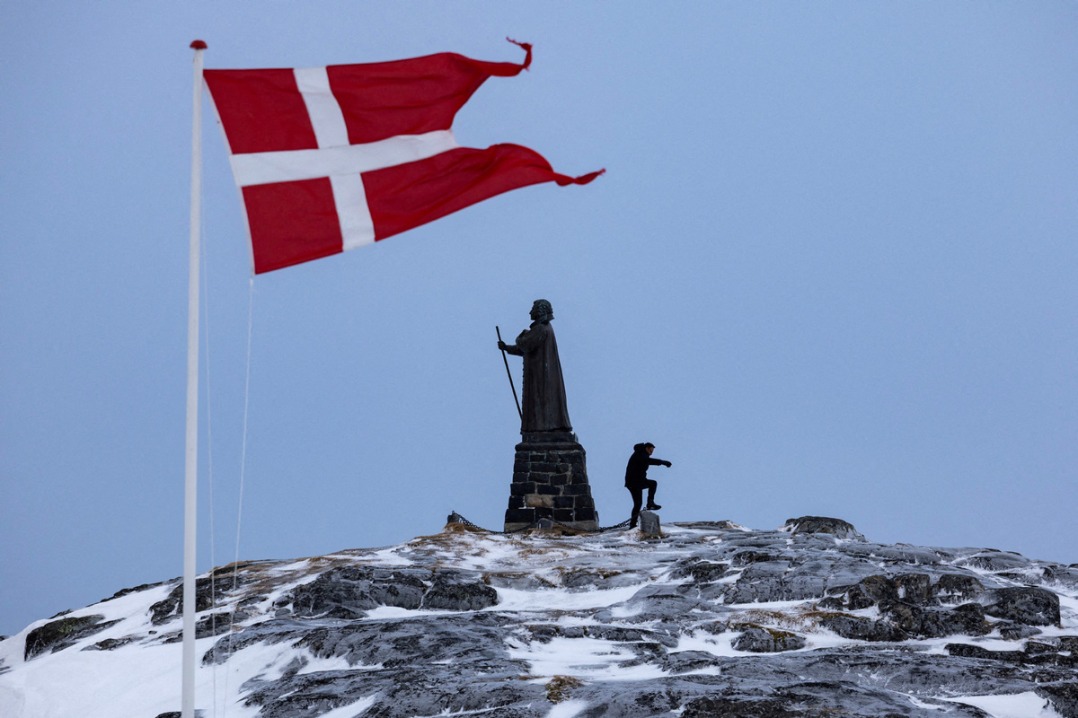
  • Trump says US needs Greenland ‘for defense’ following strikes on Venezuela

    Trump says US needs Greenland ‘for defense’ following strikes on Venezuela

    President Donald Trump has reignited controversy by asserting the United States’ strategic need for Greenland’s territory for national defense purposes. The declaration came during a telephone interview with The Atlantic magazine on Sunday, shortly after U.S. forces conducted a military operation in Venezuela that resulted in the capture of President Nicolás Maduro.

    “We do need Greenland, absolutely,” Trump stated, connecting the Arctic territory’s strategic importance to broader national security concerns. When questioned about potential implications of the Venezuela intervention on Greenland’s status, Trump responded: “It was up to others to decide what the large-scale US strike against Venezuela means to Greenland. They are going to have to view it themselves.”

    The remarks prompted an immediate and forceful response from Danish leadership. Prime Minister Mette Frederiksen issued a direct rebuke, declaring that “the United States has no right to annex” any part of the Danish Realm, which includes Denmark, Greenland, and the Faroe Islands.

    “I have to say it very directly to the United States,” Frederiksen stated, urging Washington to cease making threats against a close ally and the Greenlandic people. This diplomatic tension marks the latest chapter in a recurring pattern of territorial interest expressed by the Trump administration throughout the previous year.

    The White House has consistently justified its Greenland aspirations by citing national security imperatives, Arctic strategy considerations, and the territory’s potential wealth of critical minerals and natural resources. Meanwhile, the international community continues to express profound alarm over the Venezuela operation, with multiple nations condemning what they characterize as blatant use of force against a sovereign state.