标签: Europe

欧洲

  • Inter forward Bonny cleared for World Cup with Ivory Coast after switch from France

    Inter forward Bonny cleared for World Cup with Ivory Coast after switch from France

    ZURICH – In a formal decision announced Friday, global soccer governing body FIFA has greenlit a national team eligibility change that allows 22-year-old Inter Milan forward Ange-Yoan Bonny to represent 2023 Africa Cup of Nations champions Ivory Coast at the upcoming FIFA World Cup.

    Bonny, who previously featured for France’s Under-21 national team and grew up in the northern suburbs of Paris, qualified for the nationality switch under existing FIFA regulations thanks to verifiable family ties to Ivory Coast. The rule change, which allows players to shift their senior international allegiance between nations when they have ancestral or familial connection to the new country, required formal sign-off from both the French Football Federation and FIFA’s governing body, a step that was completed this week.

    The approval clears the way for Bonny to join the Ivory Coast squad for the World Cup, where the African side has been drawn into a competitive group alongside Germany, Ecuador and Curacao. Ivory Coast’s group stage matches will be split across two North American host cities: two encounters will take place in Philadelphia, Pennsylvania, while the third will be held in Toronto, Ontario.

    On the club side, Bonny has turned in a solid debut campaign with Italian Serie A powerhouse Inter Milan after making the move from Parma ahead of the current season. He has found the back of the net seven times in domestic and continental play during his first year with the Nerazzurri, and has featured in every one of Inter’s 10 UEFA Champions League matches this term – though he has only started two of those outings, contributing three assists without scoring in Europe’s top club competition.

  • What we don’t know about the hantavirus outbreak as the cruise ship nears Spanish territory

    What we don’t know about the hantavirus outbreak as the cruise ship nears Spanish territory

    In an unfolding global public health incident, a cruise ship carrying 140 passengers and crew members, already struck by a deadly hantavirus outbreak, is nearing its scheduled arrival at the Spanish island of Tenerife in the Canary Islands early Sunday, prompting coordinated international response preparations. As of current reports, at least three passengers have already succumbed to the virus, with multiple additional people confirmed infected, leaving public health agencies across multiple nations racing to address gaps in critical information about the incident.\n\nHantavirus, a pathogen most commonly transmitted to humans through inhalation of air contaminated with rodent droppings, typically presents symptoms between one and eight weeks after initial exposure. The World Health Organization has assessed that the overall risk of widespread community transmission from this outbreak remains low, but the specific Andes variant linked to the cruise ship cases carries a rare but documented potential for human-to-human spread, raising additional safety concerns.\n\nDespite incremental updates from local authorities and the vessel’s operator, Netherlands-based Oceanwide Expeditions, several core questions about the outbreak remain unanswered, slowing coordinated containment efforts.\n\nFirst, the origin of the outbreak has not been definitively confirmed. Argentine investigators have put forward a preliminary hypothesis that an infected Dutch couple may have contracted the virus during a bird-watching excursion prior to boarding the MV Hondius in Ushuaia, Argentina’s southernmost town, on April 1. Argentina’s Ministry of Health has centered its traceback investigation on Ushuaia, and announced plans to deploy investigative teams to the region in the coming days — though the statement provided to the Associated Press gave no explanation for the planned delay in the team’s arrival. No official body has yet verified where or how the index case acquired the virus.\n\nSecond, the full timeline for what happens next for the remaining passengers and crew on board remains unclear. Spanish emergency authorities are currently on standby to receive the vessel in Tenerife, and confirmed Friday that disembarkation will only proceed once repatriation flights for all people on board are fully arranged, with passengers evacuated via small boats to dedicated buses waiting to transport them directly to airports. The U.S. and U.K. governments have already confirmed they will send dedicated aircraft to retrieve their respective citizens from the Canary Islands, but most other nations have not publicly released their repatriation plans, leaving it unknown how long the remaining people on the ship will need to wait before they can leave. Virginia Barcones, head of Spain’s national emergency services, added that Spanish officials have requested medically equipped aircraft to transport symptomatic passengers, but it remains unconfirmed whether these specialized planes will be available in time.\n\nThird, the full scope of potential exposure remains unaccounted for, with conflicting data sowing confusion. According to Oceanwide Expeditions, the MV Hondius departed Ushuaia on April 1, made two intermediate stops before the outbreak was declared. Six additional passengers boarded at the remote South Atlantic island of Tristan da Cunha, after which the ship stopped at St. Helena, where 30 passengers disembarked — including a Dutch woman and the body of her husband, who had died from the virus on board. The operator says two of those 30 disembarked passengers are believed to be Chileans who boarded at Tristan da Cunha, but their nationalities have not been definitively confirmed. On Friday, a U.K. overseas territories government official confirmed that a Tristan da Cunha resident has been hospitalized with suspected hantavirus symptoms, but it remains unclear whether this person had any contact with the cruise ship. Initial passenger counts provided by the operator were inconsistent: the company first reported 114 passengers departed Argentina with an unlisted number of crew, before updating figures to confirm 61 crew from 12 countries on board, with no clarity on whether any crew changes occurred during the voyage. The operator was forced to correct passenger and nationality counts for those who disembarked at St. Helena after discovering errors in initial reporting, and the final total of people potentially exposed still differs from the estimate provided by the Dutch Foreign Ministry, with no explanation for the discrepancy.\n\nFourth, the full whereabouts of all disembarked passengers and the extent of their potential contacts remain unknown. Many of the passengers who got off at St. Helena continued onward travel to other countries. The Dutch woman whose husband died on board flew to Johannesburg, South Africa, before boarding a flight bound for Amsterdam; she was removed from the flight due to severe illness and later died. Public health officials in South Africa and the Netherlands are currently working to trace every individual who came into contact with the woman during her travels. One flight attendant who developed symptoms after interacting with the woman has already tested negative for hantavirus. Some national governments, including the U.K., have confirmed the locations of their citizens who disembarked early: British health officials say two are self-isolating at home, four remain on St. Helena, and one has been located outside of the U.K. Even so, officials have not disclosed how many additional people these citizens may have been in contact with since leaving the ship, leaving open the possibility of unmonitored exposure.

  • Real Madrid in crisis – inside the conflict and chaos at the Bernabeu

    Real Madrid in crisis – inside the conflict and chaos at the Bernabeu

    What was meant to be a week of unbroken focus on the decisive La Liga El Clasico clash with Barcelona has been completely derailed by explosive reports of internal conflict and institutional crisis unfolding in Real Madrid’s first-team dressing room. For Carlo Ancelotti’s (now Alvaro Arbeloa’s) side, Sunday’s match carries unprecedented stakes: a defeat would hand Barcelona, their bitter long-time rivals, a second consecutive La Liga crown. As Barcelona—who faced their own internal turmoil just months prior—continue to march toward silverware, Real Madrid have been thrown into disarray, reeling from fan fury, managerial uncertainty, and now shocking allegations of physical violence between two first-team midfielders. BBC Sport unpacks the chaotic events of the past week that have amplified already growing alarm over a season that has unraveled on and off the pitch.

  • Police called to a hostage situation at a bank in western Germany

    Police called to a hostage situation at a bank in western Germany

    BERLIN – A tense hostage situation unfolded Friday at a community bank branch in a small western German town, prompting local law enforcement to deploy a large response to the incident, official authorities confirmed this week.

    The drama began just after 9 a.m. local time, when regional police received an emergency call reporting the unfolding crisis at a local branch of Volksbank, located in Sinzig. This quiet town, home to roughly 17,000 residents, sits in the scenic Rhine Valley roughly 15 kilometers south of the larger city of Koblenz.

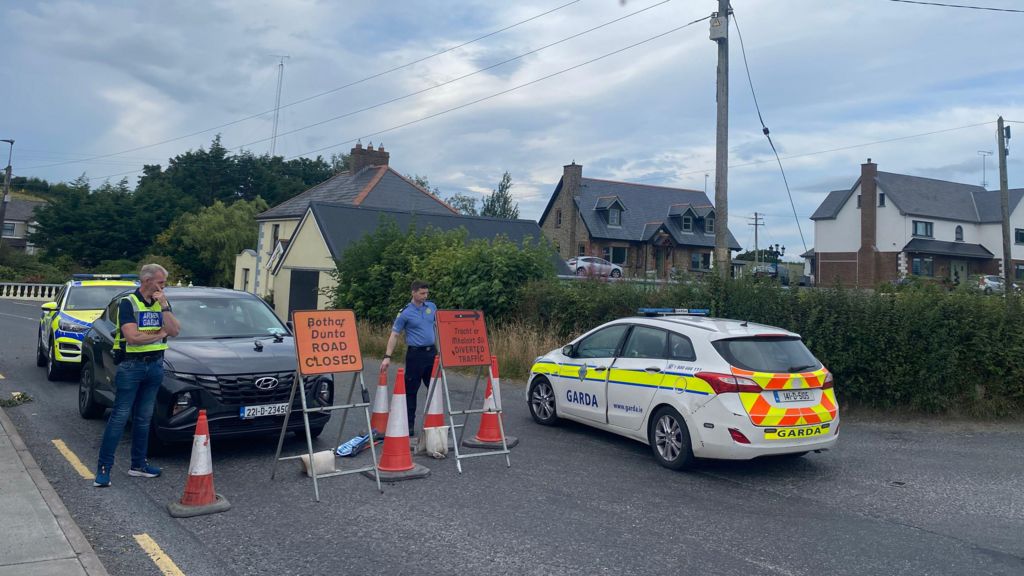
    By late Friday morning, law enforcement officials updated the public on the developing situation, confirming they believe multiple armed perpetrators are involved in the incident, and that multiple people are being held against their will inside the bank branch. Among those confirmed as captives is the driver of an armored cash transport van that was making a routine delivery to the financial institution when the incident began.

    In an official update posted to the department’s social media channels, police characterized the ongoing situation as “static,” meaning no significant changes to the standoff had occurred in the hours after the initial response. Authorities have since established a wide security cordon around the bank building to isolate the incident and prevent harm to bystanders. As of the latest official statement, police confirmed there is no detectable threat to members of the public staying outside of this secured perimeter.

  • Russia’s WWII victory celebrations are muted this year as Ukraine war weighs on Putin

    Russia’s WWII victory celebrations are muted this year as Ukraine war weighs on Putin

    As Russia prepares to mark its most consequential secular national holiday on Saturday, simmering security risks from the ongoing war in Ukraine and growing undercurrents of domestic discontent have cast a long shadow over the traditional commemorations held in Moscow’s iconic Red Square. This year’s Victory Day, which honors the Soviet Union’s 1945 defeat of Nazi Germany, has been fundamentally reshaped by the unresolved conflict that has stretched more than four years beyond Russia’s full-scale 2022 invasion of Ukraine. The day, once a showcase of national pride and military grandeur, is unfolding against a backdrop of failed ceasefire efforts, escalating cross-border attacks, and unprecedented cutbacks to the iconic military parade.

    The unilateral 48-hour ceasefire that Russia declared for Friday and Saturday fell apart within hours of taking effect, mirroring the rapid collapse of a separate unilateral ceasefire announced by Ukraine just days earlier. Almost immediately after the ceasefire went into effect at midnight Friday, both Moscow and Kyiv traded blame for continued hostilities, a public exchange that lays bare the profound, years-long lack of trust between the two warring parties that has derailed all U.S.-led diplomatic initiatives aimed at reaching a lasting peace settlement.

    Russia’s Defense Ministry claimed its forces strictly adhered to the ceasefire, holding their positions and halting all offensive operations, but accused Ukraine of launching sustained strikes on Russian military positions and civilian infrastructure across the border regions of Belgorod and Kursk. The ministry added that Russian air defense systems had intercepted and downed 390 Ukrainian drones and six Neptune long-range guided missiles launched at Russian territory since midnight. A separate statement from Russia’s Transport Ministry confirmed that a Ukrainian drone strike targeted the administrative headquarters of the Southern Russia Air Navigation branch in Rostov-on-Don, forcing a temporary suspension of operations at 13 airports across southern Russia.

    Ukrainian President Volodymyr Zelenskyy offered a sharply conflicting account of the ceasefire’s first day. Zelenskyy said Russian forces continued offensive attacks along the entire front line overnight, while Ukrainian air defenses intercepted and destroyed 56 Russian drones launched at Ukrainian targets. “All this clearly shows that there was not even a pretense of a ceasefire attempt from the Russian side,” Zelenskyy told reporters Friday. He also confirmed that Ukrainian forces carried out another long-range strike on a Russian oil facility in the Yaroslavl region, located more than 700 kilometers (400 miles) from the Ukrainian border, though he did not provide a specific timeline for the attack. In recent months, Ukraine’s advancements in drone and missile technology have allowed it to carry out increasingly frequent and accurate strikes deep inside Russian territory, with key energy infrastructure, particularly major oil production facilities, emerging as a primary target.

    Russian officials have issued stark warnings of severe retaliation – including the possibility of a large-scale missile strike on Kyiv – if any Ukrainian attack disrupts Saturday’s official Victory Day events. “We have strengthened our focus on the possibility of retaliatory measures,” presidential aide Yuri Ushakov told reporters Thursday. Russia’s Foreign Ministry has urged foreign embassies and international organizations based in Kyiv to evacuate their offices ahead of any potential strike, and the Defense Ministry has called on Ukrainian civilians to leave targeted areas.

    The guest list for this year’s commemorations has also drawn international attention, with Zelenskyy expressing surprise that several foreign leaders have traveled to Moscow for the events. Attendees include Malaysia’s King Sultan Ibrahim Iskandar, Laos President Thongloun Sisoulith, and Belarus’s authoritarian leader Alexander Lukashenko. Notably, Slovakia’s Prime Minister Robert Fico – the leader of an EU member state – is scheduled to hold a meeting with Putin and lay flowers at the Tomb of the Unknown Soldier outside the Kremlin walls, but will not attend the Red Square parade.

    For decades, Russian President Vladimir Putin, who has held power for more than 25 years, has leveraged the symbolic legacy of the World War II victory to rally domestic support for his administration and justify the war in Ukraine, while also projecting Russia’s influence on the global stage. That makes this year’s scaled-back parade all the more notable: for the first time in nearly 20 years, the iconic procession will not feature tanks, missiles, or other heavy military equipment, with only the traditional flyover of military aircraft remaining. Russian officials have only cited the “current operational situation” as justification for the change, offering no further details.

    Beyond security threats from Ukraine, the Kremlin also faces growing rumblings of domestic discontent over its wartime policies. Many Russians have expressed frustration over escalating internet censorship and state control of online activity, including recent restrictions on the widely used messaging app Telegram. To bolster security for Saturday’s events, Russia’s Ministry of Digital Development, Communications and Mass Media has announced sweeping restrictions on mobile internet access and text messaging services across Moscow. Only state-approved websites and services included on the government’s official “white list” will remain accessible to mobile users, though home internet and Wi-Fi connections will not be affected. The restrictions have been framed as a necessary measure to protect public safety, but they underscore the Kremlin’s growing anxiety about potential unrest or security breaches during the national holiday.

    The current state of the war has further compounded pressures on the Kremlin. Russia’s far larger and better-equipped military has been locked in a slow, costly grinding campaign in Ukraine, a far cry from the quick victory the Kremlin expected when it launched its full-scale invasion in February 2022. Ukraine’s steady campaign of long-range strikes deep into Russian territory has shaken the Kremlin, with attacks targeting critical oil infrastructure, military manufacturing plants, and weapons depots, eroding confidence in the government’s ability to secure the country’s rear areas as the war drags on.

  • Russia and Ukraine accuse each other of breaching Victory Day ceasefire

    Russia and Ukraine accuse each other of breaching Victory Day ceasefire

    As Russia prepared to mark its annual Victory Day holiday commemorating the Soviet Union’s defeat of Nazi Germany over the weekend, planned ceasefires on both sides of the Russia-Ukraine conflict unraveled within hours, with Kyiv and Moscow trading accusations of widespread violations that have pushed tensions to new highs.

    Russian President Vladimir Putin first announced a 48-hour unilateral ceasefire set to run from 8 to 9 May, timed to align with the country’s main Victory Day celebrations scheduled for Saturday. Ukraine had previously proposed its own indefinite truce starting 6 May, which Russian forces never acknowledged. By early Friday, just hours after Putin’s ceasefire entered into force at local midnight, both militaries were reporting hundreds of breaches across the front line and deep strikes into each other’s territory.

    The Russian Ministry of Defence released an update via Telegram Friday morning claiming it had documented 1,365 ceasefire violations across the conflict zone, including 153 separate artillery barrages and 887 drone incursions and strikes. The ministry added that Ukrainian forces continued targeting civilian infrastructure in Russia’s border regions of Kursk and Belgorod, which lie adjacent to the main front line, and that Russian troops had launched a proportional “mirror response” to the breaches.

    Moscow Mayor Sergey Sobyanin confirmed that roughly 20 drones had been intercepted and downed in areas surrounding the Russian capital within the first two hours of the ceasefire, marking one of the largest concentrated drone attempts on Moscow in recent weeks. Additional Ukrainian drone strikes were reported across a wide swath of Russian territory, hitting industrial sites in Perm and Yaroslavl regions, military-related infrastructure in Rostov region, and locations in Grozny, the capital of Russia’s Chechen Republic. Thirteen commercial airports across southern Russia were forced to temporarily suspend all flight operations following the wave of attacks, disrupting holiday travel for thousands of passengers.

    On the Ukrainian side, President Volodymyr Zelenskyy echoed the accusations in his own Telegram post, stating that Russian forces had carried out more than 140 separate attacks on Ukrainian positions and launched over 850 drone strikes in the opening hours of the truce. “All of this clearly indicates that there was not even a simulated attempt from the Russian side to cease fire at the front,” Zelenskyy wrote, adding that Ukraine would “act in kind” to Russian breaches, matching its offensive operations.

    A day earlier, on Thursday, Ukraine had already accused Russia of violating its own earlier unilateral ceasefire, pointing to a drone strike on a kindergarten in Sumy region that killed two civilians. No children were present at the facility at the time of the attack, Ukrainian officials confirmed.

    Amid widespread fears that Ukraine will attempt to disrupt the high-profile Victory Day parade on Moscow’s Red Square, Russian security officials have implemented unprecedented security measures across the capital. In a break from tradition that marks the first shift in nearly 20 years, no heavy military hardware will be displayed during the parade, only marching infantry units. Russian authorities have also issued direct threats in response to any potential attack on the parade: the defence ministry warned it would launch a “retaliatory, massive missile strike” against central Kyiv if Moscow is targeted, and urged foreign diplomatic staff to evacuate the Ukrainian capital before 9 May.

    Russian authorities have also issued formal warnings to residents of Moscow and St. Petersburg that mobile internet connectivity will be intentionally limited across large areas of both cities during the celebrations, a step officials say is necessary for security purposes. Many Russians have been advised to prepare for temporary full internet outages over the holiday period.

    Unlike pre-war Victory Day celebrations, which regularly drew thousands of foreign guests and high-level dignitaries to Moscow, this year’s event will have an extremely limited international attendance. Only the leaders of Belarus, Malaysia, Laos, and a small number of other low-level foreign dignitaries are scheduled to participate in this year’s events.

  • Pope celebrates first anniversary of election with visit to Pompeii to pray at shrine

    Pope celebrates first anniversary of election with visit to Pompeii to pray at shrine

    POMPEII, Italy – On the first anniversary of his historic election as the first American-born pope, Pope Leo XIV traveled to the ancient Roman city of Pompeii on Friday to mark the occasion with quiet prayer and commemoration of a beloved Marian feast day that aligned perfectly with the start of his pontificate.

    Flying by helicopter to the archaeological hub near Naples, the pontificate dedicated his full day visit to honoring the Feast of Our Lady of Pompeii, a date that also carries historic meaning for the global Catholic Church: it was on this same day in 1876 that the cornerstone was laid for the city’s iconic sanctuary dedicated to the Virgin Mary.

    Nestled steps away from the ongoing excavations of Pompeii, the Roman town that was entirely buried under volcanic ash and gas when Mount Vesuvius erupted in 79 AD, the sanctuary draws a different crowd than the ancient ruins that welcome millions of tourists annually. For decades, it has been a major pilgrimage site for Catholics, particularly those devoted to the rosary prayer tradition.

    Standing before crowds of gathered faithful ahead of celebrating Mass inside the sanctuary, Pope Leo shared his reflections on the meaningful occasion, saying, “What a beautiful day, how many blessings the Lord wanted to give to all of us. I feel I am the first blessed to be able to come here to the sanctuary of the Madonna on the day of her feast and on this anniversary.”

    This Pompeii pilgrimage marks the opening of a months-long series of day trips Pope Leo will take across the Italian peninsula over the coming weeks. The journey comes as the Bishop of Rome, who hails from the United States as former Cardinal Robert Prevost, deepens his connection to the Italian national church he serves as its symbolic head.

    The pope’s pontificate was literally launched with a prayer centered on this very feast day. On the night of his election, when he first stepped out onto the loggia of St. Peter’s Basilica to be introduced to the world, Pope Leo immediately referenced the Feast of Our Lady of Pompeii before leading crowds gathered in St. Peter’s Square in a public prayer for his new papacy. That night, he emphasized Mary’s constant presence for believers, saying, “Mary, the mother of Christ, always wants to walk at our side, to remain close to us, to help us with her intercession and her love.” He asked the crowd to join him in praying for grace for his new mission, for the global church, and for peace across the world.

    The Pompeii sanctuary is forever tied to St. Bartolo Longo, the founder who built the basilica and is widely venerated across Italy for his lifelong charitable outreach to orphans, prisoners, and other marginalized communities. In a full-circle moment for the site, the late Pope Francis approved the miracle required for Longo’s canonization from his hospital room just weeks before Francis’s death, and Pope Leo formally canonized Longo as a saint last October.

    Pope Leo opened his visit on Friday by meeting with sick and disabled people supported by a charitable center affiliated with the sanctuary, a site that was named a pontifical basilica in 1901 by Pope Leo XIII, the current pope’s namesake. In his opening remarks, he retraced Longo’s work in the region, recalling that when Longo first arrived in the Pompeii valley, “he found a land plagued by great poverty, inhabited by a few very poor farmers, and ravaged by malaria and bandits.”

    Yet despite the harsh conditions, Longo “was able to see, however, the face of Christ in everyone: in the great and the small, and especially in the orphans and the children of prisoners, to whom he made the beating of God’s heart felt through his tenderness,” the pope added.

    Thousands of cheering Italian faithful lined the pope’s route, with many reporting they had waited since the middle of the night to catch a glimpse of the new pontiff. Many attendees made clear they were paying close attention to the recent public disagreement between Pope Leo and U.S. President Donald Trump over the escalating conflict in Iran, and they expressed strong approval of the pope’s response.

    “He doesn’t let anyone intimidate him. Look at the recent issues with Trump,” said Rita Borriello, a resident of nearby Torre del Greco. After Trump publicly criticized the pope, Leo “simply answered, ‘I preach the Gospel’. I see him as a very humble pope, very close to us, a pope who entered in our hearts.”

    Reporter Nicole Winfield contributed reporting from Rome. This coverage of religion comes via the Associated Press’s collaboration with The Conversation US, with funding provided by Lilly Endowment Inc. The AP retains full editorial responsibility for all content.

  • Rubio set to meet Italy’s Meloni as both sides seek to ease frictions over Iran war

    Rubio set to meet Italy’s Meloni as both sides seek to ease frictions over Iran war

    ROME — U.S. Secretary of State Marco Rubio launched a high-stakes diplomatic push on Friday for his second day of damage-control talks, kicking off the day’s schedule with a meeting with Italian Prime Minister Giorgia Meloni. The negotiations center on defusing mounting tensions between the two longstanding NATO allies over the ongoing U.S.-led conflict with Iran, alongside simmering disagreements over trade policy.

  • Third British national has suspected hantavirus infection, government says

    Third British national has suspected hantavirus infection, government says

    A major public health investigation is underway following an emerging hantavirus outbreak on the Dutch-operated expedition cruise ship MV Hondius, with British health authorities confirming a third UK national is now suspected to have contracted the virus. The newest suspected case remains on the remote South Atlantic island of Tristan da Cunha, where the vessel made a scheduled port stop in mid-April.

    To date, five cases of hantavirus have been confirmed across passengers and crew on the ship, and one of those confirmed cases has resulted in death. Two British men have already received formal confirmed diagnoses: one, a retired 56-year-old British police officer and expedition guide named Martin Anstee, was medically evacuated to the Netherlands earlier this week alongside a Dutch crew member and a German passenger, and remains in stable condition. Speaking to the BBC after evacuation, Anstee reported that he is “fine”. The second confirmed British case, a 69-year-old man, was flown to South Africa for intensive care treatment at the end of April, and officials say his condition is improving.

    The MV Hondius is on track to dock in the Canary Islands this weekend, where British authorities have arranged a chartered evacuation flight to repatriate all remaining British passengers and crew back to the United Kingdom. While none of the remaining British travelers currently show signs of hantavirus infection, UK public health officials have confirmed that all returnees will be required to isolate for a 45-day period upon arrival in the UK, to prevent potential secondary spread.

    According to Oceanwide Expeditions, the operator of the MV Hondius, 30 passengers from 12 countries – including seven British citizens – disembarked the vessel at the South Atlantic island of St Helena on April 24, more than a week before the first confirmed case of hantavirus was reported on May 4. Two of the seven British travelers who disembarked at St Helena have already returned to the UK and are currently self-isolating voluntarily without exhibiting any symptoms. Four others remain on St Helena, where they are monitored regularly by local health authorities, with plans in place to send additional medical support to the remote island. As of Wednesday, UK Health Security Agency (UKHSA) officials confirmed the seventh British passenger who disembarked at St Helena has not yet been located for contact tracing.

    Contact tracing operations are currently active in more than half a dozen countries, tracking down dozens of passengers who left the cruise ship before the outbreak was formally identified, including contacts in Switzerland and the Netherlands. The origin of the outbreak remains unknown, and public health teams have not yet confirmed whether any people outside of the cruise ship’s passenger and crew cohort have been infected.

    World Health Organization Director-General Tedros Ghebreyesus noted in a recent press briefing that the first two confirmed cases had completed a bird-watching expedition through Argentina, Chile, and Uruguay before boarding the MV Hondiques, a trip that included visits to areas populated by rat species known to carry hantavirus. To date, three deaths have been linked to the outbreak: the one confirmed hantavirus death was a 69-year-old Dutch woman who disembarked at St Helena on April 24, traveled to South Africa, and died two days later. Two other people – the Dutch woman’s husband, who died on board the ship on April 11, and a German woman who also died while on the vessel – have not been confirmed to have died from hantavirus infection.

    Hantavirus is most commonly transmitted to humans through contact with infected rodents such as mice and rats, but public health experts working on this outbreak suspect limited human-to-human transmission may have occurred among people in close, prolonged contact on the ship. UKHSA officials emphasized that the virus does not spread through casual everyday contact in public spaces, and person-to-person spread only occurs in rare cases involving extended close exposure. Common symptoms of hantavirus infection include fever, severe fatigue, abdominal pain, vomiting, and shortness of breath, which typically develop between two and four weeks after initial exposure.

    In a statement, the World Health Organization categorized the outbreak as a “serious incident” but stressed that the overall risk to the general global public remains low, and the event is not comparable to the widespread, easily transmissible Covid-19 pandemic.

  • A year in, what’s on Pope Leo XIV’s to-do list? And what has he done so far?

    A year in, what’s on Pope Leo XIV’s to-do list? And what has he done so far?

    VATICAN CITY – When Pope Francis took the helm of the global Catholic Church, he launched his pontificate with an immediate flurry of institutional reforms, leadership reshuffles, and new governing structures that upended longstanding norms. In contrast, Pope Leo XIV has adopted a far more deliberate, methodical approach to his early tenure, prioritizing steady foundational work over rapid change as he charts a path for his papacy.

    As Leo settles into his role, he has already finalized several notable leadership and policy shifts, while a handful of high-stakes challenges loom on the horizon that will test his authority and vision for the church.

    ### Upcoming Key Appointments to Reshape Church Leadership
    A series of impending leadership vacancies in the United States and the Vatican will give Leo a unique opportunity to mold the church’s global hierarchy and central governance to align with his priorities.

    In Chicago, one of the most prominent U.S. archdioceses, Cardinal Blase Cupich turned 77 in March – two years past the standard mandatory retirement age for Catholic bishops, leaving the door open for Leo to appoint a new leader to his home country’s major see. By the end of December, Los Angeles Archbishop José Gomez will reach the standard retirement age of 75, giving Leo the chance to name a new head of the largest archdiocese in the United States. He has already filled one top U.S. vacancy, appointing Archbishop Ronald Hicks to succeed retiring Cardinal Timothy Dolan of New York. According to Michael Moreland, a professor of law and religion at Villanova University – Leo’s alma mater – that appointment did not carry a strong ideological lean in either direction, reflecting the pope’s overall cautious, non-partisan approach to personnel decisions.

    At the Vatican level, several senior leadership roles will soon open up. British Cardinal Arthur Roche, 76, leads the Vatican’s liturgy office, which oversaw Pope Francis’ highly controversial restrictions on the traditional Latin Mass. The selection of Roche’s eventual successor will be closely watched for clues about how Leo plans to address this deeply divisive issue within the church. American Cardinal Kevin Farrell, 78, who is well past retirement age, still heads the Vatican’s department for family and laity, and holds two other high-stakes posts: camerlengo, the official who oversaw the conclave that elected Leo, and chair of the Holy See’s most sensitive committees overseeing financial investments and the Vatican City State’s highest court of appeal. Canadian Cardinal Michael Czerny, head of the Vatican’s office for migrants, environment and development, will turn 80 in July. Once he turns 80, he will be ineligible to vote in future papal conclaves, dropping the total number of voting-age cardinals to 117 – below the traditional 120-person cap. That shift paves the way for Leo to announce his first slate of new cardinals within the next year, expanding the college of electors who will one day choose his successor.

    ### Policy Shifts: Rolling Back and Revising Francis-Era Initiatives
    From the start of his pontificate, Francis encouraged young Catholics to disrupt diocesan institutions and “make a mess” to drive renewal. Leo has moved quickly to unwind and reorganize a number of these initiatives, addressing what he and other leaders see as unworkable structures born of Francis’ agenda.

    In April, the Vatican canceled the World Day of Children, a signature Francis initiative that had drawn ongoing questions about its core mission and purpose. The cancellation followed Leo’s formal disbanding of the ad hoc pontifical commission Francis created to organize the event in 2024. In December, Leo dissolved a Holy See fundraising commission that had been established under questionable circumstances in 2025, during the final weeks of Francis’ life when he was hospitalized. The commission was composed entirely of Italian members with no professional fundraising experience, and its president was a senior official from the Secretariat of State – the same Vatican department Francis stripped of asset management authority after it lost tens of millions of euros in the infamous London property investment scandal. After disbanding the flawed commission, Leo launched a new, reorganized committee to develop transparent, effective fundraising strategies and structures.

    Ward Fitzgerald, president of The Papal Foundation, a U.S.-based group of wealthy donors that funds papal charity projects across the developing world, noted: “The Holy Father was clearly paying attention. He realized that it was not going to be highly functional.”

    Beyond organizational overhauls, Leo has also revised Francis-era financial policy: he revoked a 2022 law that concentrated all Holy See financial power in the Vatican bank, issuing a new regulation that allows the Holy See’s investment committee to work with external banks when it delivers better financial outcomes. Leo has also broken new ground on the long-running clergy sexual abuse crisis, meeting with activist survivor groups who advocate for institutional reform. Survivors say the pope promised ongoing dialogue as they push the Vatican to adopt a binding global zero-tolerance policy for abuse. While Francis met regularly with individual abuse survivors, he largely kept organized activist advocacy groups at arm’s length.

    ### Private Audiences Reveal Openness to Diverse Perspectives
    Pope Leo’s closed-door private meetings with a range of stakeholders have offered insight into his priorities, showing he is willing to engage with groups across ideological divides even as he keeps his own final positions closely held. In mid-March, he met with Gareth Gore, author of a controversial book alleging widespread abuses within the influential conservative Catholic movement Opus Dei. In February, he held a private audience with a delegation from Courage International, a church-affiliated organization that supports people with same-sex attraction seeking to live in accordance with Catholic teaching on chastity. While critics have labeled the group anti-gay and accused it of promoting conversion therapy, the organization denies those claims. Earlier in March, he met with the authors of a new book on traditional Latin Mass Catholics in the U.S., who presented findings from their large-scale survey of the community. Leo has made clear he is well aware of the deep divisions sparked by Francis’ Latin Mass restrictions, and has expressed a desire to hear directly from traditionalist Catholics to better understand their perspectives as he works to heal rifts over the traditional liturgy.

    ### Two Major Looming Challenges
    The ongoing dispute over the traditional Latin Mass is on track to reach a critical turning point on July 1, when four new traditionalist bishops are set to be consecrated without Pope Leo’s formal approval. The bishops belong to the Society of St. Pius X (SSPX), a breakaway traditionalist group, and an unsanctioned consecration would qualify as a schismatic act that automatically triggers excommunication for all involved. While the SSPX remains a fringe group within the broader traditionalist Catholic movement, traditionalists in full communion with the Holy See are closely watching how Leo responds to the provocation. On the opposite end of the ideological spectrum, the Vatican faces the threat of a major institutional split with the German Catholic Church over its years-long Synodal Path reform process. German leaders have proposed creating a permanent joint governing body made up of both bishops and lay Catholics to make collective decisions – a direct break from traditional Catholic ecclesiology, which reserves full governing authority for bishops. The Vatican has already publicly stated its opposition to this shared governance structure, and has also pushed back against German proposals to formalize public blessings for same-sex couples, a practice Francis only allowed on an informal, spontaneous basis. A direct confrontation is likely once the full German reform proposals are submitted to Rome for final approval.

    ### The Upcoming Landmark Encyclical on Artificial Intelligence
    While many outside observers frame the most pressing issue for Leo as his relationship with U.S. President Donald Trump and the prospect of a papal visit to the U.S. (currently, no visit is scheduled for 2025), the pope himself has signaled his top near-term priority is his first encyclical. The document, which is expected to be released in the coming weeks, focuses on artificial intelligence and broader questions of global peace and justice. Leo has already drawn a parallel between the AI revolution and the industrial upheaval of the late 19th century, which his namesake Pope Leo XIII addressed in his landmark 1891 encyclical *Rerum Novarum* on workers’ rights. “Like his namesake Leo XIII with the Industrial Revolution, Leo clearly sees the church as having something important to offer in an era of what may turn out to be epochal technological change,” said Dan Rober, associate professor of Catholic studies at Sacred Heart University.

    This reporting on religion was supported by a collaboration between the Associated Press and The Conversation US, with funding from Lilly Endowment Inc. The Associated Press holds sole editorial responsibility for this content.