标签: Europe

欧洲

  • Ten found guilty of cyber-bullying Brigitte Macron

    Ten found guilty of cyber-bullying Brigitte Macron

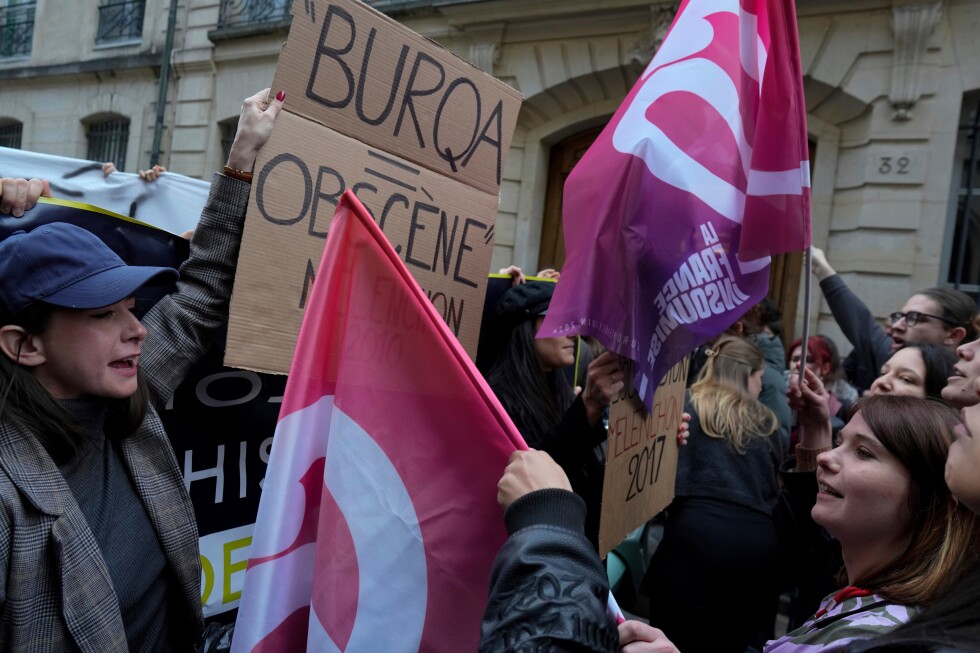
    A Parisian judicial court has delivered a landmark verdict, finding ten individuals guilty of orchestrating a coordinated online harassment campaign against Brigitte Macron, the First Lady of France. The defendants faced charges related to the malicious dissemination of fabricated claims questioning Mrs. Macron’s gender identity and sexuality, alongside perpetrating derogatory commentary concerning the 24-year age difference between her and President Emmanuel Macron.

    The court’s ruling, which awaits full publication, resulted in predominantly suspended prison sentences, with most convicts receiving terms of up to eight months. One defendant received an immediate custodial sentence due to failure to appear in court. This case highlights a persistent conspiracy theory, which has circulated online since President Macron’s initial election in 2017, falsely alleging the First Lady is transgender.

    This domestic legal action coincides with a separate, ongoing defamation lawsuit filed by the Macron family in the United States. The suit targets right-wing media personality Candace Owens, who has repeatedly platformed and endorsed the same baseless theories. The Macrons’ legal complaint asserts that Owens deliberately ignored overwhelming credible evidence refuting the claims, choosing instead to amplify known conspiracy theorists.

    In a bold declaration on her podcast and social media platforms in March 2024, Owens staked her “entire professional reputation” on the veracity of the false allegation. The personal history of the Macron couple is well-documented; they first met when Brigitte was a teacher at Emmanuel’s secondary school. They later married in 2007, when he was 29 and she was 54.

  • Holocaust survivor Eva Schloss, stepsister of Anne Frank, dies at 96

    Holocaust survivor Eva Schloss, stepsister of Anne Frank, dies at 96

    Eva Schloss, a prominent Auschwitz survivor who became the stepsister of diarist Anne Frank and dedicated her life to Holocaust education, has passed away at age 96. The Anne Frank Trust UK, where she served as honorary president, confirmed her death in London on Saturday.

    Born Eva Geiringer in Vienna in 1929, Schloss fled with her family to Amsterdam following Nazi Germany’s annexation of Austria. There she formed a friendship with Anne Frank, another Jewish girl whose diary would later become one of history’s most significant Holocaust documents.

    Like the Frank family, Schloss’s family spent two years in hiding after the Nazi occupation of the Netherlands before being betrayed, arrested, and transported to Auschwitz. While Schloss and her mother Fritzi survived until the camp’s liberation by Soviet forces in 1945, her father Erich and brother Heinz perished in the death camp.

    Following the war, Schloss relocated to Britain, marrying German Jewish refugee Zvi Schloss and establishing her life in London. In a poignant post-war connection, her mother married Otto Frank in 1953, making Eva the stepsister of the legendary diarist Anne Frank, who had died of typhus in Bergen-Belsen at age 15.

    For decades, Schloss remained silent about her traumatic experiences, describing herself as withdrawn and emotionally disconnected due to wartime trauma. Her transformation began in 1986 when she addressed an Anne Frank exhibition opening in London, sparking a lifelong mission to educate generations about Nazi atrocities.

    Schloss became an indefatigable advocate, speaking in schools, prisons, and international conferences while authoring several books including ‘Eva’s Story: A Survivor’s Tale by the Stepsister of Anne Frank.’ Her advocacy continued well into her nineties, including a 2019 meeting with California teenagers photographed making Nazi salutes and a 2020 campaign urging Facebook to remove Holocaust-denial content.

    King Charles III expressed profound admiration, stating he felt ‘privileged and proud’ to have known Schloss and praising her dedication to ‘overcoming hatred and prejudice through courage, understanding and resilience.’

    In her final public message earlier this year, Schloss emphasized: ‘We must never forget the terrible consequences of treating people as ‘other.’ We need to respect everybody’s races and religions and live together with our differences. The only way to achieve this is through education.’

    Her family remembered her as ‘a remarkable woman: an Auschwitz survivor, a devoted Holocaust educator, tireless in her work for remembrance, understanding and peace.’ Schloss is survived by three daughters, grandchildren, and great-grandchildren.

  • Arrest after man in his 60s dies in suspected assault

    Arrest after man in his 60s dies in suspected assault

    A homicide investigation is underway in County Donegal following the death of a man in his 60s during an apparent assault. The incident occurred in a residential property near Ardara in the early hours of Monday morning.

    Irish law enforcement, An Garda Síochána, responded to an emergency call at approximately 3:50 AM local time. Upon arrival at the scene, medical personnel pronounced the victim deceased. The location has been secured for forensic analysis by the Garda Technical Bureau, with the State Pathologist’s office notified to determine the exact cause of death.

    In a significant development, police have taken a man in his 30s into custody following his arrest at a separate location. The suspect is currently detained at a County Donegal Garda station for questioning regarding the fatal incident.

    Law enforcement authorities have established a dedicated incident room at Ballyshannon Garda Station to coordinate the investigation. A senior investigating officer has been appointed to lead the case, demonstrating the seriousness with which authorities are treating this matter.

    The human impact of this tragedy is being addressed through the assignment of a family liaison officer to support the deceased’s relatives during this difficult time. Investigators are appealing to the public for any information that might assist their inquiry into this devastating event.

  • Paris court to rule in case involving alleged cyberbullying of Brigitte Macron

    Paris court to rule in case involving alleged cyberbullying of Brigitte Macron

    A Parisian court is poised to deliver a pivotal verdict on Monday in a high-profile cyber harassment trial involving ten individuals accused of systematically targeting France’s First Lady, Brigitte Macron. The defendants, comprising eight men and two women ranging from 41 to 60 years old, face charges of orchestrating a malicious digital campaign filled with defamatory content regarding Madame Macron’s gender identity and personal life.

    The prosecution alleges these individuals disseminated extensively shared falsehoods claiming the President’s wife was assigned male at birth—a completely fabricated assertion—while simultaneously attempting to weaponize the 24-year age difference between the Macrons by making baseless associations with criminal behavior. This coordinated online harassment generated tens of thousands of engagements across social platforms.

    Although absent from the October proceedings, Brigitte Macron’s voice resonated through her daughter Tiphaine Auzière’s emotional testimony. Auzière detailed the profound psychological and physical toll the relentless cyberbullying inflicted on her mother, describing a noticeable deterioration in her wellbeing and emphasizing how the entire family unit, including young grandchildren, suffered collateral damage from the vicious rumors.

    Among the accused stands Delphine Jegousse, a 51-year-old known professionally as Amandine Roy, who prosecutors identify as a central figure in amplifying the conspiracy theory following her 2021 four-hour YouTube exposition. Another defendant, Aurélien Poirson-Atlan (operating online as Zoé Sagan), faced platform removal in 2024 after multiple judicial citations.

    The defendant pool includes surprising figures such as an elected official, an educator, and a technology professional. Several argued in court that their posts constituted satire or humor, expressing bewilderment at criminal prosecution. If convicted, they confront potential two-year prison sentences.

    This case represents the judicial culmination of years of persistent conspiracy theories falsely identifying Brigitte Macron as “Jean-Michel Trogneux”—actually her brother’s name. Simultaneously, the Macron family pursues international legal recourse through a defamation lawsuit in United States courts against conservative commentator Candace Owens.

    The Macrons’ relationship began conventionally at a French secondary school where Emmanuel was a student and Brigitte his teacher. Then Brigitte Auzière—a married mother of three—would eventually become France’s First Lady following their 2007 marriage, with Emmanuel assuming presidential duties a decade later.

  • Finland’s battle against fake news starts in preschool classrooms

    Finland’s battle against fake news starts in preschool classrooms

    In Finland’s educational institutions, a sophisticated defense against disinformation begins at the preschool level and continues throughout a student’s academic journey. This Nordic nation has systematically integrated media literacy into its national curriculum for decades, creating what experts describe as a robust societal immune system against propaganda and false narratives.

    The comprehensive program, which starts with children as young as three, has gained renewed significance following Russia’s intensified disinformation campaigns across Europe after its full-scale invasion of Ukraine. Finland’s strategic position sharing an 1,340-kilometer border with Russia and its recent NATO accession have made media literacy training a national security priority.

    At Tapanila Primary School north of Helsinki, educator Ville Vanhanen demonstrates the program’s evolution. His fourth-grade students now learn to identify AI-generated content alongside traditional media analysis. ‘We’ve been studying how to recognize if a picture or video is made by AI,’ explains Vanhanen, who serves as both teacher and vice principal. ‘AI literacy is quickly becoming a vital skill.’

    Finland’s approach extends beyond classroom walls. The country’s media organizations participate through initiatives like annual ‘Newspaper Week’ and the recent distribution of the ‘ABC Book of Media Literacy’ to every 15-year-old entering upper secondary school. Helsingin Sanomat managing editor Jussi Pullinen emphasizes: ‘It’s crucial to be seen as a source of verified, trustworthy information produced transparently by identifiable journalists.’

    The program’s effectiveness is reflected in Finland’s consistent top rankings on the European Media Literacy Index. Since the 1990s, media literacy has been woven into the educational fabric so thoroughly that it has become cultural competence for the nation’s 5.6 million citizens.

    Education Minister Anders Adlercreutz acknowledges the unanticipated challenges: ‘We didn’t envision being bombarded with disinformation that challenges our institutions and democracy itself.’

    As AI technology advances rapidly, Finnish educators and hybrid threat experts are racing to develop new detection methodologies. Martha Turnbull of the European Centre of Excellence for Countering Hybrid Threats warns: ‘As we move toward agentic AI, distinguishing reality from fabrication will become significantly more difficult. Our educational systems must evolve faster than the threats they combat.’

  • Trump says that Ukraine didn’t target Putin residence in a drone strike as Kremlin claims

    Trump says that Ukraine didn’t target Putin residence in a drone strike as Kremlin claims

    Aboard Air Force One — President Donald Trump revealed on Sunday that United States intelligence agencies have concluded Ukraine was not responsible for targeting Russian President Vladimir Putin’s official residence in a recent alleged drone strike. This assessment directly contradicts assertions made by the Kremlin, which Trump had initially treated with serious concern.

    The controversy emerged after Russian Foreign Minister Sergey Lavrov asserted last week that Ukrainian forces launched multiple drones toward Putin’s Novgorod region compound, claiming Russian defense systems successfully neutralized the attack. Lavrov further criticized Kyiv for timing this alleged offensive during sensitive negotiations aimed at resolving the ongoing conflict.

    Trump provided clarification to journalists while returning to Washington after a two-week stay at his Florida residence. ‘Our analysis indicates something occurred in the vicinity, but we have verified that President Putin’s residence was not the intended target,’ the President stated. ‘Based on our comprehensive review, we do not believe this strike transpired as described.’

    This development occurred shortly after Ukrainian President Volodymyr Zelenskyy’s diplomatic visit to Florida, where he engaged in substantive discussions with Trump regarding a proposed 20-point peace plan to end hostilities. Zelenskyy immediately denied Russia’s allegations when they surfaced.

    European officials had previously characterized Moscow’s claims as a deliberate attempt to sabotage peace efforts. Initially, however, Trump appeared to credit the Russian narrative, expressing anger during a Monday conversation with Putin regarding the alleged incident. By Wednesday, the President’s position evolved as he shared skeptical commentary from media sources questioning the Kremlin’s account.

    The administration continues to pursue its commitment to broker a resolution to the Ukraine conflict, despite facing challenges in reconciling the divergent demands of both nations. While Trump and Zelenskyy reported constructive dialogue during their Mar-a-Lago meeting, Putin maintains Russia will not engage in peace talks until achieving its strategic objectives, including full control of the Donbas region and significant restrictions on Ukraine’s military capabilities.

  • Steve Coogan on his Roy Keane film – and his part in Posh and Becks’ first meeting

    Steve Coogan on his Roy Keane film – and his part in Posh and Becks’ first meeting

    British comedian Steve Coogan, despite openly admitting his lifelong indifference toward football, takes center stage in the upcoming cinematic portrayal of Ireland’s most infamous sporting rift. In ‘Saipan,’ Coogan embodies Mick McCarthy, the former Republic of Ireland manager whose clash with captain Roy Keane fractured the nation ahead of the 2002 World Cup.

    The film’s title references the Pacific island where Ireland’s training camp descended into chaos, culminating in Keane’s dramatic departure. Coogan, who grew up in a Manchester United-supporting household, reveals his childhood engagement with football was limited to defacing Manchester City players in coloring books—an act he now recognizes carried unintended cultural implications.

    Coogan prepared for his role by personally contacting McCarthy, seeking balance in a narrative he felt initially favored Keane’s perspective. ‘I wanted to be in Mick’s corner,’ explains the 60-year-old actor, who studied McCarthy’s mannerisms and even adopted his trademark shorts look despite being significantly older than the manager was during the 2002 incident.

    Éanna Hardwicke, portraying the formidable Keane, approached the role differently—avoiding direct contact with the football legend and instead relying on extensive archival material. Hardwicke recalls how the Saipan incident divided Irish families, with adults coaching children on which side to support in what media dubbed ‘Civil War Two.’

    In a surprising tangential revelation, Coogan discloses his accidental presence at one of football’s iconic cultural moments: the night David Beckham met Victoria Adams in 1997. While denying his role as ‘wingman,’ Coogan confirms his attendance at the charity event afterparty where the global power couple first connected, complete with observations about Beckham’s sockless fashion choices.

    The film promises to explore not just the sporting conflict but the deeper cultural and generational divisions it represented, drawing parallels to Ireland’s historical struggles with identity and authority. ‘Saipan’ premieres in cinemas on January 23rd, offering a fresh perspective on a dispute that continues to resonate in Irish sports history.

  • The French university where spies go for training

    The French university where spies go for training

    At the Sciences Po Saint-Germain campus on the outskirts of Paris, an unconventional academic program operates behind intimidating metal gates and dour 20th-century buildings. Here, Professor Xavier Crettiez conducts classes where many students use pseudonyms—because they are active French intelligence agents undergoing training alongside traditional university students.

    The unique Diploma of Intelligence and Global Threats (Diplôme sur le Renseignement et les Menaces Globales) represents a collaborative effort between the prestigious university and France’s intelligence training arm, Académie du Renseignement. Established a decade ago following a government request that gained urgency after the 2015 Paris terrorist attacks, the program serves dual purposes: training potential new spies while providing continuous professional development for current agents.

    The four-month intensive course comprises 120 hours of instruction covering critical topics including organized crime economics, Islamic jihadism, business intelligence gathering, and political violence. With tuition set at approximately €5,000 for external participants, the program attracts both government agents typically aged 35-50 and conventional students in their early 20s.

    Professor Crettiez notes the significant expansion of French intelligence services, now numbering approximately 20,000 agents across major agencies including the DGSE (overseas intelligence, equivalent to MI6/CIA) and DGSI (domestic security, equivalent to MI5/FBI). Beyond counterterrorism, the curriculum addresses growing concerns about financial crimes, with Tracfin—France’s money laundering intelligence agency—playing an increasingly important role against surging mafia activity in southern France.

    The program’s practical relevance has attracted substantial corporate interest. Major French companies including mobile operator Orange, defense giant Thales, and luxury conglomerate LVMH actively recruit graduates to combat escalating cybersecurity threats, corporate espionage, and sabotage attempts. Even energy titan EDF contributes instructional expertise.

    Current enrollment stands at 28 students, including six intelligence professionals who maintain noticeable discretion during breaks. These agents describe the program as a potential fast-track to promotion from office work to field operations. Meanwhile, younger students like 21-year-old Alexandre Hubert seek understanding of economic tensions between Europe and China, while Valentine Guillot draws inspiration from French spy television dramas.

    Notably, nearly half the students are women—a significant shift according to technology-in-espionage specialist Sebastien-Yves Laurent. “Women’s interest in intelligence gathering is new,” he observes, noting their motivation to “provide for a better world” and a renewed patriotism among young applicants.

    Despite this openness, security remains paramount. French citizenship is essentially required (though some dual citizens are accepted), and applications from suspiciously qualified Russian or Israeli candidates are immediately rejected. The program’s discreet nature was evident in a recent class photo where several students—presumably active agents—chose to stand with their backs to the camera.

    Professor Crettiez emphasizes that despite the athletic appearance of many participants, most intelligence careers remain desk-bound, contradicting popular James Bond fantasies. The reality of modern espionage involves meticulous risk analysis rather than cinematic adventure, preparing graduates for the complex security challenges of the contemporary world.

  • After Maduro, who’s next? Trump’s comments spur anxieties about his plans for Greenland and Cuba

    After Maduro, who’s next? Trump’s comments spur anxieties about his plans for Greenland and Cuba

    WASHINGTON — In a striking demonstration of renewed hemispheric ambition, the Trump administration has simultaneously escalated tensions with multiple Western Hemisphere nations through both rhetorical assertions and military action. The recent U.S. military operation in Venezuela that ousted Nicolás Maduro has served as a catalyst for broader regional claims, including President Trump’s renewed push for American acquisition of Greenland and heightened warnings toward Cuba.

    President Trump explicitly reaffirmed his administration’s interest in acquiring the Danish territory of Greenland, describing the strategically positioned Arctic island as essential to U.S. security interests. “We do need Greenland, absolutely,” Trump stated in an interview with The Atlantic, noting the territory’s significance amid increasing Russian and Chinese naval presence in Arctic waters. When questioned about potential parallels between the Venezuela operation and future actions regarding Greenland, Trump offered an ambiguous response: “They are going to have to view it themselves. I really don’t know.”

    The administration’s position draws historical precedent from the 19th century Monroe Doctrine and Roosevelt Corollary, which Trump has referenced to justify an assertive approach toward American neighbors. This philosophical framework, which Trump has jokingly rebranded the “Don-roe Doctrine,” emphasizes American preeminence throughout the Western Hemisphere.

    Denmark responded with firm opposition to Trump’s territorial aspirations. Danish Prime Minister Mette Frederiksen issued a statement asserting that the United States has “no right to annex” Greenland and reminded the administration of existing security agreements that already provide U.S. access through NATO frameworks. Frederiksen strongly urged the U.S. to “stop threatening a historically close ally and another country and people who have made it very clear that they are not for sale.”

    The situation intensified when a former Trump administration official turned podcaster, Katie Miller, posted an illustrated map of Greenland adorned with American flag colors captioned “SOON,” further provoking Danish officials. Denmark’s ambassador to Washington, Jesper Møller Sørensen, emphasized the need for “full respect for the territorial integrity of the Kingdom of Denmark.”

    Concurrently, Secretary of State Marco Rubio issued stern warnings to Cuba, Venezuela’s primary ally, declaring the communist government “in a lot of trouble.” Rubio alleged that Cuban personnel provided security and intelligence services for Maduro’s government, claiming “It was Cubans that guarded Maduro. He was not guarded by Venezuelan bodyguards. He had Cuban bodyguards.”

    President Trump characterized Cuba as “very similar” to Venezuela and suggested the nation might become a future focus of administration attention, noting “Cuba is going to be something we’ll end up talking about, because Cuba is a failing nation right now.”

    Cuban authorities responded by convening rallies supporting Venezuela’s government and issuing statements warning that “the threat hangs over all of us” in the region. Cuban citizens expressed concern about potential U.S. actions against sovereign states, with biochemical laboratory worker Bárbara Rodríguez noting, “It can happen in any country, it can happen right here. We have always been in the crosshairs.”

    The administration’s multifaceted approach signals a comprehensive strategy to reassert American influence throughout the Western Hemisphere, employing both military action and diplomatic pressure to reshape regional dynamics according to U.S. security and strategic interests.

  • What’s behind PM’s notable shift on closer ties to Europe?

    What’s behind PM’s notable shift on closer ties to Europe?

    In a significant policy recalibration, the British government has initiated a substantive repositioning regarding the United Kingdom’s relationship with the European Union following its departure from the bloc. This strategic maneuver, unveiled over the weekend, constitutes a multifaceted communication directed at commercial enterprises, European leadership in Brussels and other capitals, as well as governing party legislators.

    The revised approach envisions closer economic cooperation between the UK and EU being systematically evaluated through annual bilateral discussions, moving beyond the limited scope of this year’s formal assessment of the existing trade agreement. This development represents Downing Street’s substantive response to mounting political demands for a more ambitious Brexit recalibration, including proposals to rejoin the EU customs union.

    Opposition Leader Sir Keir Starmer has articulated a distinct vision, emphasizing prioritization of enhanced single market alignment rather than customs union reintegration. This stance emerges from his administration’s successful negotiation of premium trade agreements with the United States and India, with additional Middle Eastern agreements forthcoming. Starmer’s proposed ‘Brexit reset’ specifically targets regulatory harmonization in three critical domains: agricultural exports, energy infrastructure, and emissions trading mechanisms.

    Commercial organizations have amplified calls for reduced administrative barriers, with the British Chambers of Commerce reporting that majority of surveyed members find current arrangements inadequate for sales expansion. Manufacturing sectors including automotive and chemicals present viable opportunities for regulatory alignment that could diminish post-Brexit trade impediments.

    European stakeholders have previously expressed disappointment regarding the ambition level of British proposals, particularly the rejection of facilitated goods readmission to single market mechanisms. Current negotiations encounter complications including stalled defense fund participation due to membership fee disputes, though educational cooperation through Erasmus program reinstatement demonstrates tangible progress.

    Geopolitical considerations further complicate this evolving relationship, as reflected in recent US national security documentation emphasizing European political dynamics. Domestically, the governing party faces mounting pressure from multiple political factions including Liberal Democrats and Greens, particularly in upcoming local elections.

    This comprehensive reevaluation of UK-EU relations coincides with the approaching decennial anniversary of the Brexit referendum, representing a complex intersection of economic necessities, domestic politics, and evolving global strategic considerations.