标签: Europe

欧洲

  • Battle of the Sexes ‘brought eyes on tennis’

    Battle of the Sexes ‘brought eyes on tennis’

    In a commanding start to her 2026 season, reigning world number one Aryna Sabalenka delivered a stunning 6-0, 6-1 victory over Spain’s Cristina Bucsa at the Brisbane International. The match, which concluded in just 47 minutes, showcased the Belarusian’s formidable form as she begins her title defense campaign.

    The four-time major champion addressed recent controversy surrounding her December exhibition match against Australian Nick Kyrgios, dubbed the ‘Battle of the Sexes.’ Despite falling 6-3, 6-3 to Kyrgios in the much-publicized Dubai event, Sabalenka emphasized its training benefits. “When you play against a guy, the intensity is completely different,” she explained. “Especially with Nick, who drop-shots every other shot, you move tremendously. It provided excellent fitness preparation.”

    The exhibition faced significant criticism from within the tennis community, including Wimbledon champion Iga Swiatek, who questioned its social significance compared to the historic 1973 Billie Jean King vs. Bobby Riggs matchup. Sabalenka countered these critiques, stating: “It brought so many eyes on tennis. It wasn’t about proving something, but demonstrating that tennis can be truly spectacular. The exhibition was fun and presented a great challenge.”

    In other tournament developments, British number four Katie Boulter commenced her season with a 6-3, 6-3 victory over Ukraine’s Yuliia Starodubtseva at Auckland’s ASB Classic. Playing her first match since October under new coach Michael Joyce, the wildcard recipient now faces top seed Elina Svitolina. Boulter, having fallen outside the top 100, remains the third alternate for the Australian Open and may require qualification matches if insufficient withdrawals occur.

    Compatriot Sonay Kartal also advanced in Auckland with a hard-fought 6-1, 6-7 (4-7), 6-3 victory against Indonesia’s Janice Tjen. The world number 68, who reached Wimbledon’s last 16 in 2025, will meet Germany’s Ella Seidel in the second round.

    Sabalenka progresses to the Brisbane International third round where she will face Romania’s Sorana Cirstea, building momentum toward the Australian Open commencing January 18.

  • Skiers create heart-shaped tribute for Switzerland fire victims

    Skiers create heart-shaped tribute for Switzerland fire victims

    In a poignant display of collective mourning, hundreds of skiers meticulously arranged themselves into a massive heart formation on the pristine slopes of Crans-Montana, Switzerland. This powerful visual tribute came just days after a devastating fire claimed the lives of 40 individuals in the popular Alpine resort town.

    The organized memorial, captured by aerial photography, transformed the mountainside into a symbol of solidarity and remembrance. Participants wearing contrasting ski gear created striking visual definition against the snow, forming what has become an internationally recognized gesture of sympathy for the victims and their families.

    Local authorities and tourism officials supported the grassroots initiative, recognizing its significance for community healing. The event demonstrates how winter sports communities worldwide have been impacted by the tragedy, with many international visitors joining Swiss residents in this spontaneous memorial.

    This heart-shaped gathering represents one of several tributes occurring throughout the Valais region, where the resort community continues to process the profound loss. Psychological support services remain available to those affected by what authorities describe as one of Switzerland’s deadliest fires in recent decades.

  • Progress for Ukraine talks in Paris uncertain with US focus shifting to Venezuela

    Progress for Ukraine talks in Paris uncertain with US focus shifting to Venezuela

    PARIS — A critical gathering of Ukrainian allies convened in Paris on Tuesday to deliberate post-ceasefire security arrangements, though the proceedings encountered unexpected complications due to shifting American geopolitical priorities. The summit, orchestrated by French President Emmanuel Macron, assembled an unprecedented delegation of 35 participants including 27 heads of state and government, all dedicated to formulating concrete security guarantees for Ukraine against potential future Russian aggression.

    The original American delegation, initially slated to be led by Secretary of State Marco Rubio, underwent last-minute restructuring following Washington’s heightened engagement with Venezuelan affairs. The United States instead dispatched envoys Steve Witkoff and Jared Kushner to represent President Trump’s administration. This diplomatic rearrangement occurred despite prior indications of substantive progress in multilateral discussions regarding Ukrainian security frameworks.

    Central to the negotiations were five pivotal security priorities: ceasefire monitoring mechanisms, sustained support for Ukraine’s armed forces, potential deployment of multinational forces across various domains, contingency plans for renewed Russian aggression, and long-term defense cooperation agreements. European leadership, particularly France and Britain, have championed a comprehensive approach that would strengthen Ukraine’s military capabilities through advanced weaponry, specialized training, and intelligence sharing.

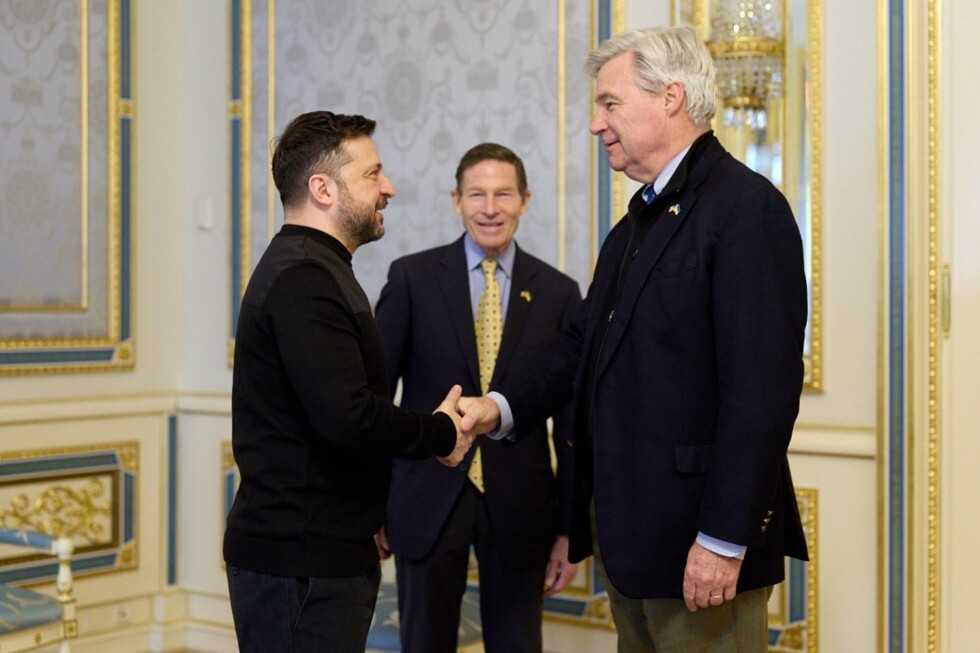
    President Volodymyr Zelenskyy expressed cautious optimism while acknowledging implementation challenges, noting that parliamentary approvals across multiple nations might complicate military commitments. The Ukrainian leader emphasized that meaningful participation from nuclear-capable European powers would be essential for the coalition’s credibility, suggesting that alternative support mechanisms including sanctions and financial assistance could supplement defense arrangements.

    The Paris meeting represents the culmination of months of diplomatic efforts by the so-called ‘coalition of the willing,’ though the ultimate effectiveness of these security guarantees remains contingent on sustained international engagement and resolution of critical operational details.

  • Danish prime minister says a US takeover of Greenland would mark the end of NATO

    Danish prime minister says a US takeover of Greenland would mark the end of NATO

    COPENHAGEN, Denmark — Danish Prime Minister Mette Frederiksen issued a stark warning Monday that any U.S. military action to acquire Greenland would effectively terminate the NATO alliance. This statement came in direct response to President Donald Trump’s renewed assertions about bringing the mineral-rich Arctic territory under American control, following the controversial military operation in Venezuela over the weekend.

    The dramatic nighttime raid in Caracas targeting Venezuelan leader Nicolás Maduro and his wife has intensified anxieties in Denmark and its semiautonomous territory Greenland, both NATO members. Frederiksen, alongside Greenlandic counterpart Jens Frederik Nielsen, strongly condemned Trump’s remarks and cautioned about potentially catastrophic repercussions. Multiple European leaders have expressed solidarity with their position.

    “Military aggression by the United States against another NATO nation would immediately dissolve the alliance,” Frederiksen stated during an interview with Danish broadcaster TV2. “This would mean the end of NATO and consequently the collapse of the security framework maintained since World War II.”

    Trump’s persistent interest in acquiring Greenland—first expressed during his presidential transition and reiterated recently—has created mounting concerns. His Sunday comment to reporters suggesting “let’s talk about Greenland in 20 days” has been interpreted as hinting at potential near-term intervention. The president has previously refused to rule out military action to secure control of the strategically vital island.

    Frederiksen emphasized that Trump’s statements “should be taken seriously,” adding that Denmark “will not accept a situation where we and Greenland are threatened in this way.” Nielsen separately affirmed that Greenland’s situation differs fundamentally from Venezuela’s, urging citizens to remain calm and united while maintaining that “the United States cannot simply conquer Greenland.”

    TV2 political journalist Ask Rostrup observed that while Frederiksen would have previously dismissed the possibility of an American takeover, the escalating rhetoric has forced her to acknowledge it as a genuine concern.

    Trump further heightened tensions by mocking Denmark’s security enhancements in Greenland, sarcastically referring to the addition of “one more dog sled” to the territory’s defenses. He asserted that Greenland is “covered with Russian and Chinese ships” and crucial for U.S. national security, claiming Denmark lacks capability to protect it.

    However, Ulrik Pram Gad, a global security expert at the Danish Institute for International Studies, challenged this assessment in a recent report, noting that while Russian and Chinese vessels operate in the Arctic, “these vessels are too far away to see from Greenland with or without binoculars.”

    The situation was further inflamed when Katie Miller, a former Trump administration official married to influential deputy chief of staff Stephen Miller, posted an illustrated map of Greenland in American colors captioned “SOON” on social media following the Venezuela raid. Denmark’s ambassador to Washington, Jesper Møller Sørensen, responded by demanding “full respect for the territorial integrity of the Kingdom of Denmark.”

    The United States already maintains significant military presence in Greenland through the remote Pituffik Space Base in the northwest, established under a 1951 defense agreement with Denmark. The facility supports missile warning, defense, and space surveillance operations for both the U.S. and NATO.

    Denmark’s relationship with the United States extends beyond Greenland, with the Scandinavian nation purchasing American F-35 fighter jets and recently approving legislation allowing U.S. military bases on Danish soil—a move critics argue compromises Danish sovereignty.

  • All 116 injured in Swiss ski resort fire identified

    All 116 injured in Swiss ski resort fire identified

    Authorities in Switzerland have confirmed the completion of a painstaking identification process for all 116 individuals injured in the devastating New Year’s Eve bar fire at the Crans-Montana ski resort. This development comes alongside emerging details about the probable cause of the tragedy that claimed 40 lives.

    While the deceased victims, ranging from 14 to 39 years old, had been previously identified, forensic teams worked extensively to establish the identities of the injured, many of whom sustained severe burns that complicated the process. Swiss police confirmed that 83 survivors remain hospitalized, with some in critical condition. The injured represent a diverse international community, comprising at least 12 different nationalities.

    A criminal investigation has been initiated focusing on the French couple who managed the Le Constellation bar, a venue particularly popular with younger patrons in the resort town where the legal drinking age is 16. Preliminary findings indicate that sparklers on bottles, carried too close to the ceiling, likely ignited the blaze. Investigators are examining whether acoustic foam installed on the ceiling contributed to the rapid spread of flames and if this material complied with safety regulations.

    Heartbreaking personal accounts have emerged from families mourning their loved ones. Among the confirmed victims was 15-year-old Charlotte Niddam, a student with connections to UK schools, whose family announced her passing with “great sadness.” Sixteen-year-old Arthur Brodard was also confirmed among the deceased, with his mother expressing relief that the family could “start mourning, knowing that he is in peace.” Italian media identified junior golfer Emanuele Galeppini, 16, as another victim, with the Italian Golf Federation paying tribute to the “young athlete who carried with him passion and authentic values.”

  • Zelenskyy replaces Ukraine’s security chief ahead of Paris talks

    Zelenskyy replaces Ukraine’s security chief ahead of Paris talks

    In a significant administrative restructuring, Ukrainian President Volodymyr Zelenskyy has appointed Ievhen Khmara as acting head of the Security Service of Ukraine (SBU), replacing Lt. Gen. Vasyl Maliuk who announced his resignation. This leadership change occurs just days before Zelenskyy’s pivotal diplomatic mission to Paris, where approximately 30 allied nations—dubbed the ‘Coalition of the Willing’—will convene to negotiate security guarantees for Ukraine’s future sovereignty.

    The Paris summit aims to establish concrete measures preventing renewed Russian aggression, potentially including international troop deployments near Ukrainian territory—a proposition Moscow has vehemently rejected regarding NATO forces. These discussions unfold against the backdrop of Zelenskyy’s comprehensive government reorganization, which recently saw Lt. Gen. Kyrylo Budanov, head of military intelligence, appointed as presidential chief of staff.

    Despite ongoing peace negotiations that Zelenskyy claims are ‘90% complete,’ military confrontations persist relentlessly. Recent hostilities include fatal Russian drone strikes on Kyiv medical facilities and energy infrastructure, exacerbating civilian hardships during winter. Concurrently, Ukrainian drones targeted several Russian regions, temporarily disrupting airport operations and igniting industrial fires, though causing no casualties according to Russian authorities.

    The SBU’s outgoing leader Maliuk oversaw several successful operations against Russian forces, most notably ‘Operation Spiderweb’ which reportedly damaged or destroyed 41 Russian military aircraft. This strategic reshuffling reflects Ukraine’s dual focus on advancing diplomatic solutions while strengthening defensive capabilities ahead of the war’s fourth anniversary.

  • Swiss police identify all 116 people injured in deadly New Year’s bar fire

    Swiss police identify all 116 people injured in deadly New Year’s bar fire

    Swiss police have now conclusively identified all individuals injured in the devastating New Year’s Eve fire that engulfed the Le Constellation bar in Crans-Montana, confirming a total of 116 injured victims—significantly revising their initial assessment. This figure represents a downward adjustment from the previously reported 119 injured, as authorities determined three individuals admitted to hospitals on the night of the tragedy were erroneously linked to the incident.

    The injured comprise a diverse international group, including 68 Swiss nationals, 21 French citizens, 10 Italians, four Serbs, two Poles, and single representatives from Australia, Belgium, Bosnia-Herzegovina, the Czech Republic, Luxembourg, Portugal, and the Republic of Congo. Additionally, four dual nationals—holding citizenship from France-Finland, France-Italy, Switzerland-Belgium, and Italy-Philippines—were among those affected.

    Of the 116 injured, 83 remain hospitalized with varying degrees of severity, though police have not disclosed specific medical details or age demographics. The identification process proved particularly challenging due to the severity of burns sustained by victims, necessitating DNA sampling from families to establish positive identities.

    Meanwhile, authorities confirmed completion of identifying all 40 fatalities from the blaze, with the youngest victim being just 14 years old. In a solemn repatriation ceremony on Monday, Italian authorities received the bodies of five victims at Sion airport, where Swiss police pallbearers transferred coffins through an honor guard of firefighters and soldiers to an Italian Air Force C-130 transport aircraft.

    Investigative findings indicate the fire likely originated from festive sparkling candles atop Champagne bottles that ignited the ceiling decor. Swiss prosecutors have launched a criminal investigation targeting the bar’s management, with two managers facing suspicions of involuntary homicide, involuntary bodily harm, and negligently causing a fire, according to the Valais region’s chief prosecutor.

  • Vatican claims a Holy Year success with 33 million pilgrims

    Vatican claims a Holy Year success with 33 million pilgrims

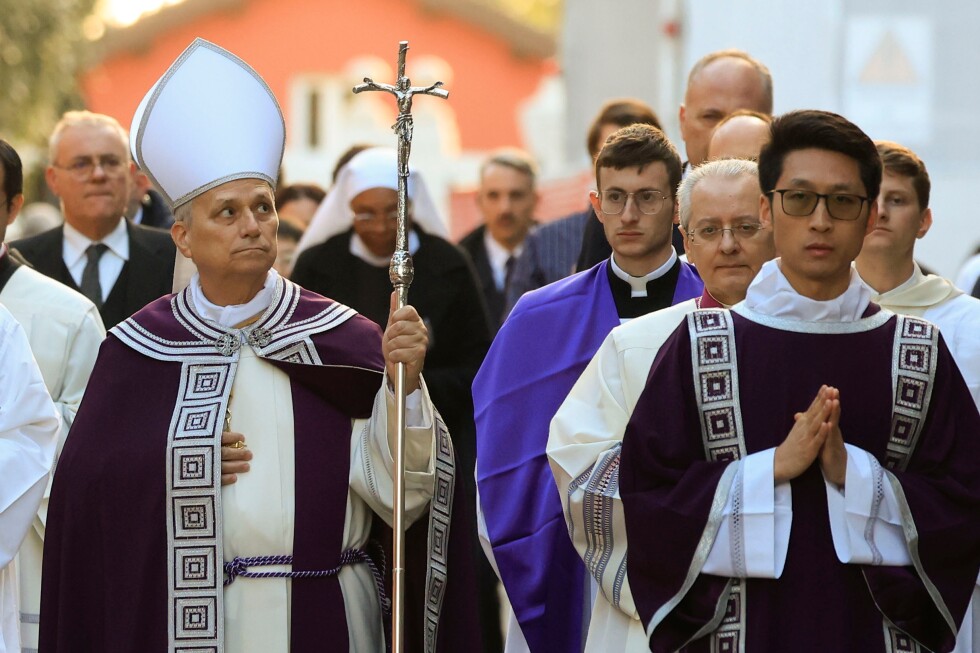
    The Vatican has officially concluded its 2025 Holy Year celebrations, reporting unprecedented participation from over 33 million pilgrims while revealing a lighthearted architectural disagreement with Roman authorities as the only notable contention. Pope Leo XIV ceremonially sealed the Holy Door of St. Peter’s Basilica on Tuesday, marking the end of a rare Jubilee that commenced under his predecessor Pope Francis and concluded under his leadership—a historical occurrence last witnessed in 1700.

    The Holy Year, a centuries-old tradition occurring every quarter-century, invites the faithful to pilgrimage to Rome for spiritual renewal and indulgences. For the Eternal City, the event triggered an infrastructural transformation with approximately €4 billion in public funding allocated to modernize urban facilities and address long-standing neglect.

    Archbishop Rino Fisichella, the Vatican’s Jubilee coordinator, acknowledged the participation figure of 33,475,369 represented an estimate potentially including duplicate counts. The calculation methodology combined official event registrations, volunteer tallies at basilicas, and CCTV data from St. Peter’s, which recorded 25,000-30,000 daily crossings at the Holy Door. This exceeded Roma Tre University’s initial projection of 31.7 million pilgrims.

    A notable surge in attendance followed the papal transition in April, when Pope Francis passed away and Pope Leo XIV assumed leadership. This unique circumstance made the 2025 Jubilee only the second in history to span two pontificates, echoing the 1700 Jubilee that began under Innocent XII and concluded under Clement XI.

    Despite overall harmonious collaboration, a stylistic disagreement emerged regarding the contemporary stone fountains installed at the newly pedestrianized Piazza Pia—the Jubilee’s flagship urban project at Via della Conciliazione’s terminus. While Rome Mayor Roberto Gualtieri championed the design, Archbishop Fisichella expressed reservations about their compatibility with the Baroque magnificence of St. Peter’s and the fascist-era architecture lining the boulevard. The archbishop humorously noted having to ‘back down’ on the aesthetic disagreement since the piazza resides on Italian territory, though he admitted the fountains had grown on him despite initially comparing them to ‘foot baths.’

    The tradition of Jubilee-inspired urban renewal dates to 1300, with historical projects including the Sistine Chapel (1475) and the Vatican garage (2000). Of the 117 planned infrastructure initiatives, 110 reached completion, substantially modernizing Rome’s public spaces and transportation networks.

  • Syrian and Israeli officials set to resume US-mediated talks in Paris

    Syrian and Israeli officials set to resume US-mediated talks in Paris

    PARIS — In a significant diplomatic development, Syrian and Israeli officials are preparing to restart high-stakes security negotiations in Paris this week, with United States diplomats serving as mediators. The talks represent the first serious attempt in over a year to de-escalate mounting tensions along the two nations’ shared border.

    According to Syrian officials speaking on condition of anonymity, Damascus’s delegation will be led by Foreign Minister Asaad al-Shibani and General Intelligence Directorate head Hussein Salameh. The Syrian delegation’s primary objective centers on reactivating the 1974 Disengagement Agreement, which originally established a United Nations-monitored buffer zone in the Golan Heights region.

    The diplomatic initiative comes sixteen months after Israel seized control of the demilitarized zone following the ouster of longtime Syrian leader Bashar Assad. The political transition in December 2024 saw interim President Ahmad al-Sharaa assume power through a rapid insurgent offensive. While al-Sharaa has publicly expressed no desire for conflict with Israel, the new Islamist-led government has faced suspicion from Israeli security establishments.

    Israeli forces have maintained their presence in the buffer zone, citing security concerns regarding pro-Assad loyalists and militant elements. The occupation has been accompanied by hundreds of airstrikes on Syrian military installations and periodic ground incursions that have occasionally triggered violent clashes with local residents.

    French diplomatic sources confirmed the talks would commence Tuesday, with France’s foreign minister conducting separate discussions with his Syrian counterpart Monday evening. The negotiations mark a revival of previously stalled dialogue between the two technically warring nations.

    Damascus has outlined its negotiating position clearly: securing complete Israeli withdrawal to pre-December 2024 positions through a reciprocal security arrangement that respects Syrian sovereignty and prevents external interference in domestic affairs. Israeli officials have yet to publicly comment on the renewed diplomatic initiative, while U.S. envoy representatives have declined to discuss the mediation efforts.

  • Greece says a radio failure that grounded flights is unlikely to be a cyberattack

    Greece says a radio failure that grounded flights is unlikely to be a cyberattack

    Greek authorities have determined that a catastrophic radio communications failure, which forced the complete shutdown of the nation’s airspace for several hours on Sunday, was unlikely to be the result of a cyberattack. The incident, described by Transport and Infrastructure Minister Christos Dimas as “a very serious incident,” grounded all flights, caused massive diversions, and left thousands of passengers stranded across the region.

    The crisis began when severe, disruptive noise was detected across all primary and backup communication channels used by air traffic control. This critical safety failure necessitated an immediate halt to all air traffic within Greek airspace to prevent any potential risk to aircraft. Minister Dimas, speaking to public broadcaster ERT, provided initial reassurance by stating, “It does not appear to be a cyberattack,” while also emphasizing that passenger safety was never compromised during the outage.

    The operational impact was severe. Incoming international flights were diverted to airports in neighboring countries, creating a significant backlog that took hours to clear even after communications were gradually restored. The disruption highlighted systemic vulnerabilities within the nation’s aviation infrastructure.

    The Air Traffic Controllers’ Association seized on the event to amplify its long-standing demands for a comprehensive modernization program, citing the incident as a direct consequence of relying on outdated and obsolete equipment. In response to the severity of the failure, a formal judicial inquiry alongside an internal investigation was launched on Monday to definitively ascertain the technical root cause of the widespread communications breakdown.