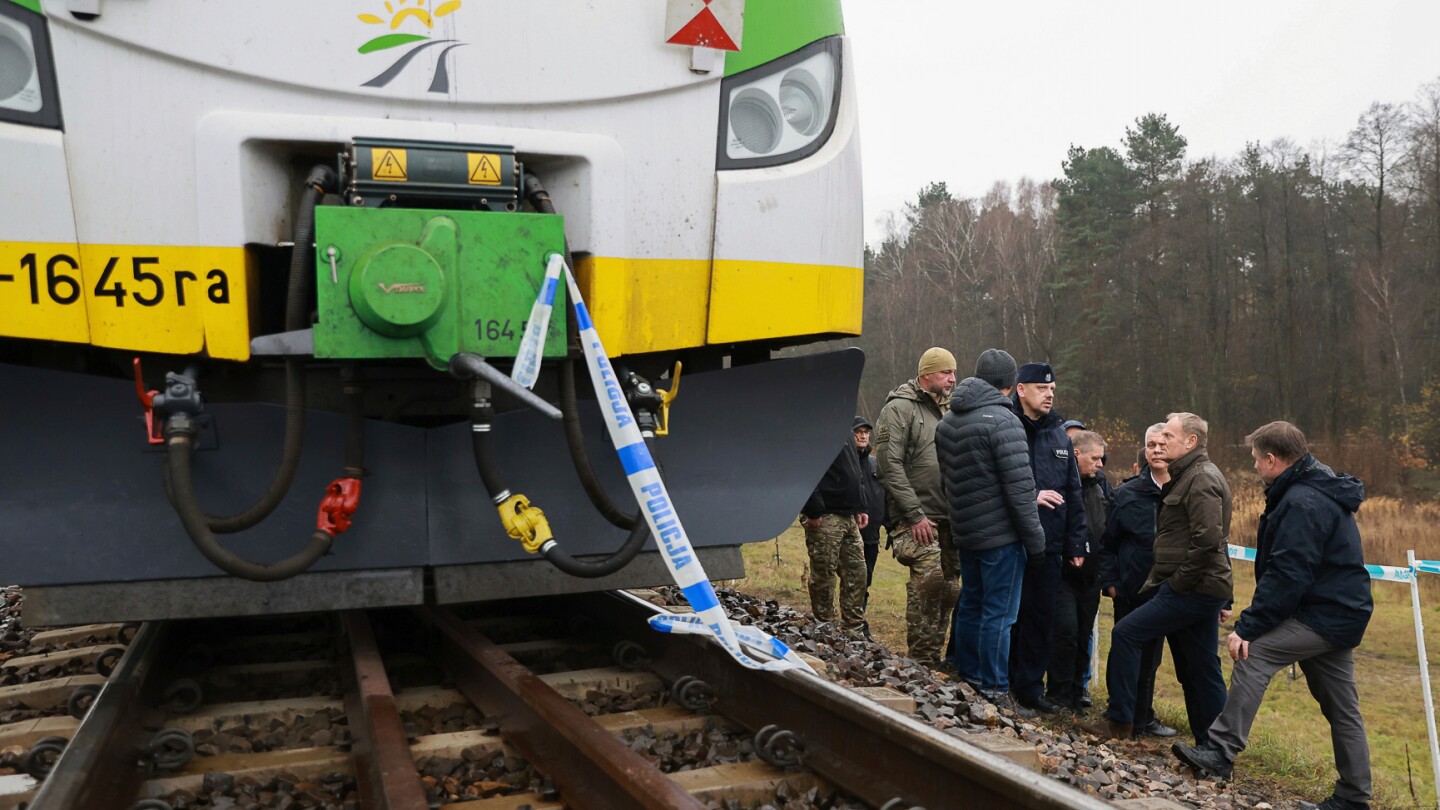
WARSAW, Poland — A critical railway line connecting Warsaw to southeastern Poland was severely damaged by an explosion on Sunday, which authorities have labeled as an act of sabotage. Prime Minister Donald Tusk confirmed the incident on Monday, stating that the explosion occurred on the Warsaw-Lublin route near the village of Mika, approximately 100 kilometers (62 miles) southeast of the capital. The blast destroyed a section of the railway track, disrupting train services. Fortunately, no injuries were reported among the two passengers and several staff members aboard the train at the time. The incident was first detected by a train driver who reported irregularities on the track around 7:40 a.m. Sunday. Subsequent investigations revealed damage at multiple locations along the route. Tusk vowed to apprehend the perpetrators, calling the act ‘unprecedented’ and emphasizing that justice would be served ‘regardless of who is behind them.’ This incident adds to a series of suspected sabotage and espionage cases in Poland since Russia’s invasion of Ukraine in February 2022, with dozens of individuals detained in connection with these activities.
标签: Europe
欧洲
-

‘To think we’re going to school today and she won’t be there’
A devastating road accident near Dundalk, County Louth, has resulted in the loss of five young lives, leaving communities in shock and mourning. The incident occurred on Saturday evening at approximately 21:00 local time on the Ardee Road at Gibstown. The victims, all in their early 20s, were traveling in a Volkswagen Golf that collided with a Toyota Land Cruiser. The deceased have been identified as Chloe McGee, 23, and Shay Duffy, 21, both from Carrickmacross, County Monaghan; Alan McCluskey, 23, from Drumconrath, County Meath; Dylan Commins, 23, from Ardee, County Louth; and Chloe Hipson, 21, from Lanarkshire, Scotland. Three other individuals sustained non-life-threatening injuries and are currently receiving medical treatment. Chloe McGee, a teacher at O’Fiaich College in Dundalk, was remembered by her principal, Padraig McGovern, as a vibrant and dedicated educator. McGovern expressed the profound difficulty of conveying this tragic news to the students, emphasizing the emotional toll on the school community. North Motherwell Football Club also paid tribute to Chloe Hipson, the younger sister of one of their players, describing the Hipson family as an integral part of their football family. The club announced a minute of silence in her memory. Irish President Catherine Connolly and Taoiseach Micheál Martin both expressed their deep sorrow and extended their condolences to the families of the victims. Gardaí are investigating the circumstances of the crash and have appealed to witnesses to come forward.
-
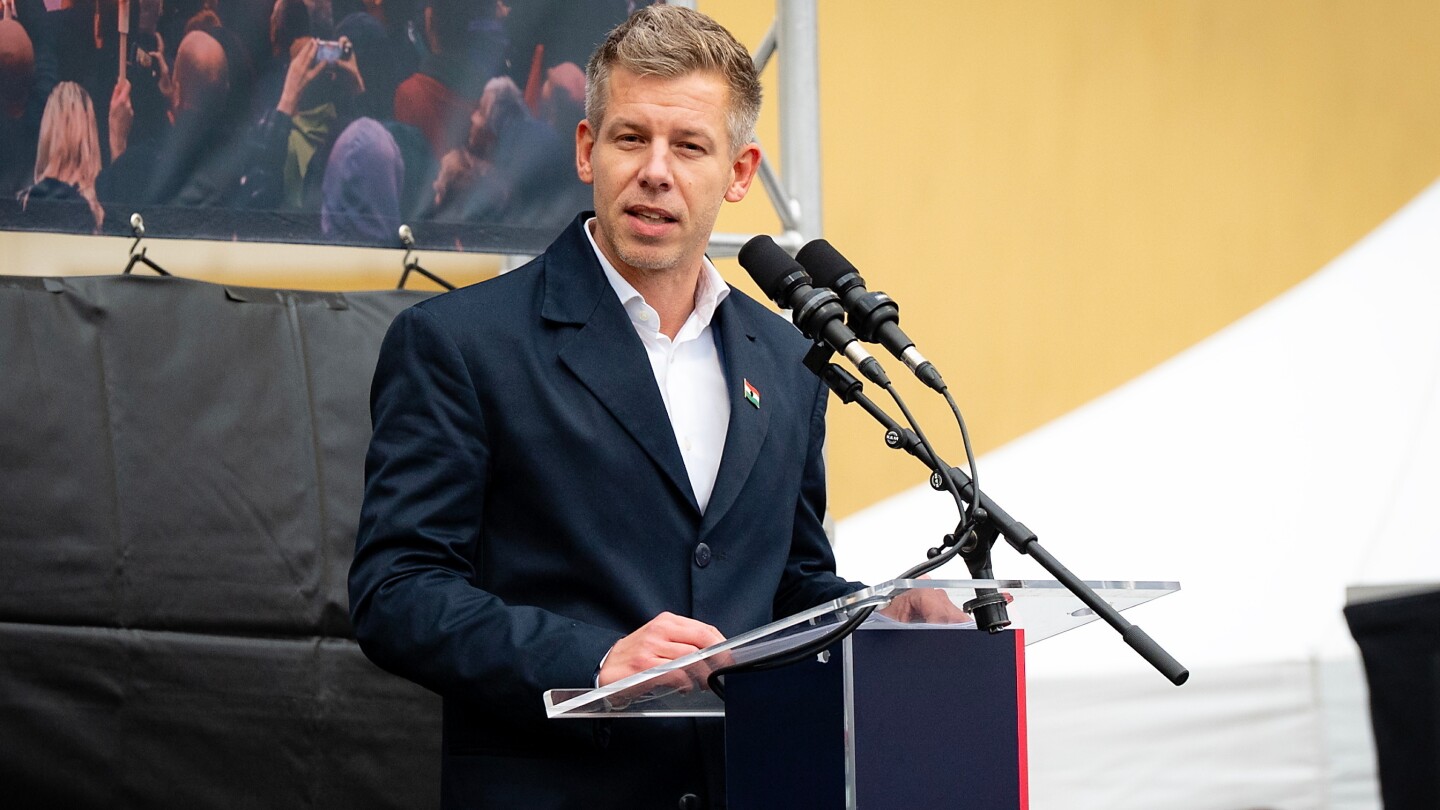
Election campaign in Hungary heats up as Orbán challenger Péter Magyar gains rural support
As Hungary gears up for its parliamentary elections in five months, the political landscape is ablaze with a fierce contest between Prime Minister Viktor Orbán and his rising challenger, Péter Magyar. Orbán, who has dominated Hungarian politics for over two decades, is now confronting what many consider the most significant challenge of his career. Despite his enduring popularity among supporters, Orbán’s government has been marred by allegations of corruption and authoritarianism, with critics accusing his far-right Fidesz party of consolidating unchecked power. However, declining economic performance, chronic inflation, and widespread dissatisfaction have eroded his once-unassailable position. Magyar, a former Fidesz insider, has emerged as a formidable opponent, promising to dismantle Orbán’s system and steer Hungary toward a more prosperous and democratic future. Magyar’s grassroots campaign, focusing on pressing issues like the cost of living and poor public services, has resonated deeply in rural areas traditionally loyal to Orbán. Recent polls show Magyar’s Tisza party leading Fidesz, a rare feat in Hungary’s political history. Orbán, meanwhile, has sought to portray Magyar as an existential threat, accusing him of aligning with foreign interests and endangering Hungary’s sovereignty. The prime minister has also criticized the European Union, comparing it to the Soviet Union, and warned that supporting Magyar equates to supporting war. Despite Orbán’s efforts, Magyar’s momentum continues to grow, fueled by public discontent and a desire for systemic change. With the election approaching, Hungary stands at a crossroads, with the outcome poised to reshape its political trajectory.
-

Mysterious drones have been spotted at night at airports across Europe. How worried should we be?
The escalating use of drones in modern warfare has prompted Europe to consider a groundbreaking defense mechanism: the ‘drone wall.’ This initiative comes in response to increasing incursions by Russian drones, which have not only targeted Ukraine but also ventured into NATO airspace, including Poland, Belgium, and Denmark. The drone wall, envisioned as a multi-layered defense system, aims to protect critical infrastructure and airspace across Europe from the Baltic states to the Black Sea. The system will integrate radar, sensors, jamming technologies, and weaponry to detect, track, and neutralize incoming drones. However, the project faces significant challenges, including technological limitations, financial constraints, and the rapid evolution of drone threats. Experts argue that while the drone wall is a necessary step, it is not a foolproof solution. The debate also extends to whether Europe should focus on defensive measures or target the sources of drone launches. As tensions between Europe and Russia continue to rise, the drone wall represents a critical but complex response to the growing threat of aerial warfare.
-

How my on-air ‘brain fog’ moment sparked a big debate
Zoe Kleinman, BBC’s technology editor, recently made headlines not for her tech coverage but for her candid revelation about experiencing ‘brain fog’ during a live TV report. In a LinkedIn post that went viral, Kleinman shared her decision to hold notes during a broadcast, a move she initially viewed as a professional failure. However, the overwhelming response from women across the globe highlighted a shared struggle often tied to perimenopause and hormonal changes. ‘Brain fog,’ though not a medical term, describes moments of cognitive disarray—forgetting words, losing train of thought, or feeling mentally clouded. For women in their 40s, this symptom often coincides with perimenopause, a transitional phase marked by fluctuating hormone levels. The impact is profound, especially for those in public-facing roles. Janet Edgecombe, an internal communications expert, echoed Kleinman’s experience, recounting moments of forgetting basic words mid-conversation. Research underscores the severity of the issue: 10% of women leave their jobs due to menopause symptoms, while half consider quitting. Kleinman’s decision to hold notes, initially seen as a compromise, sparked a movement. The hashtag #HoldTheNotes emerged, encouraging women to embrace practical solutions without shame. Medical experts like Dr. Louise Newson emphasize the role of testosterone in brain function, advocating for its inclusion in Hormone Replacement Therapy (HRT). Meanwhile, innovative solutions like Niraxx’s red-light therapy headband offer hope for improving focus. Kleinman’s story has opened a crucial dialogue, urging society to take ‘brain fog’ seriously and support women navigating this challenging phase of life.
-

Mike Pompeo becomes adviser to scrutinized Ukraine defense company that’s looking to boost missiles
Former U.S. Secretary of State Mike Pompeo has been appointed to the advisory board of Fire Point, a leading Ukrainian defense company known for its advanced long-range drones capable of targeting deep within Russian territory. This move comes as the company faces an ongoing corruption investigation. Fire Point is actively enhancing its global presence by establishing a new factory in Denmark and expanding its production capabilities to include battle-tested cruise missiles, aiming to more than double its current output. Despite the scrutiny, company executives maintain transparency, having commissioned an independent audit to address concerns. Critics, however, highlight the firm’s opaque origins, its monopoly on Defense Ministry contracts, and alleged ties to Tymur Mindich, a controversial associate of President Volodymyr Zelenskyy implicated in a major corruption scandal. Fire Point’s Chief Technology Officer, Iryna Terekh, expressed support for the investigation, emphasizing the company’s commitment to adhering to high corporate standards. The firm has also gained international recognition, with U.S. Special Envoy to Ukraine Keith Kellogg visiting its facilities. Fire Point’s success is partly attributed to the Danish model, a financing mechanism where foreign governments directly fund Ukrainian defense companies. However, the company’s rapid rise is shadowed by ongoing investigations into potential price inflation and questionable contracts. Despite these challenges, Fire Point continues to innovate, with its Flamingo cruise missile proving effective in recent strikes against Russian targets. The company’s crowdfunding initiatives, such as a campaign by the Czech organization Weapons to Ukraine, further underscore its growing influence. As Fire Point navigates both expansion and scrutiny, its role in Ukraine’s defense industry remains pivotal.
-

Formula 1 tech used to rev-up train wi-fi speeds in new pilot
In a groundbreaking initiative, Great Western Railway (GWR) is set to revolutionize train Wi-Fi by implementing a hybrid system that combines signals from ground-based mobile phone masts and low earth orbit (LEO) satellites. This UK-first pilot scheme, developed by British tech company Motion Applied in collaboration with Peninsula Transport, aims to deliver faster and more reliable internet connectivity for passengers. The technology, originally designed for Formula 1 cars, will be tested for 60 days on GWR’s Intercity Express Train in the South West region, starting mid-November. The project is part of a broader effort to modernize transport infrastructure across Cornwall, Devon, Plymouth, Somerset, and Torbay. According to a recent study by Ookla, the UK ranks 16th out of 18 major European and Asian countries for train Wi-Fi speed, with average download speeds at just 1.09 megabits per second. Nick Fry, chairman of Motion Applied, highlighted the parallels between high-speed internet connectivity in trains and motorsport, emphasizing the potential of LEO satellites to ensure seamless connections. The Department of Transport has allocated £41 million in the 2025 spending review to introduce LEO satellite connectivity on all mainline trains by 2030. Councillor Dan Rogerson from Peninsula Transport described the pilot as a ‘major milestone’ in enhancing digital infrastructure, while Bruce Williamson of Railfuture welcomed the initiative as a positive step towards meeting the growing demand for reliable Wi-Fi among travelers.
-
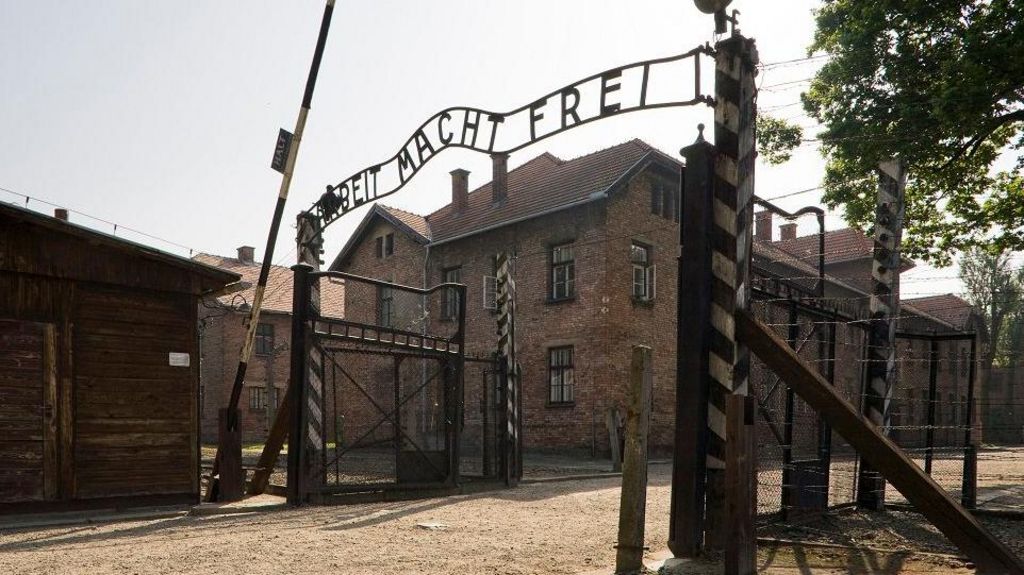
German auction of Nazi concentration camp items cancelled, Polish minister says
A controversial auction in Germany, which included artefacts from Nazi concentration camps such as Buchenwald and Auschwitz, has been cancelled following widespread public condemnation. The decision was announced by Poland’s Deputy Prime Minister, Radoslaw Sikorski, who expressed gratitude to his German counterpart, Johann Wadephul, for ensuring that ‘such a scandal must be prevented.’ The auction, organized by German auction house Felzmann in Neuss, was set to feature over 600 items, including a letter from an Auschwitz prisoner and medical records detailing the forced sterilisation of a Dachau prisoner. The sale faced immediate backlash from Holocaust survivors’ groups and politicians, who argued that such items should not be commodified. Sikorski emphasized on social media that ‘respect for victims requires the dignity of silence, not the din of commerce.’ By Sunday afternoon, the auction listing had been removed from Felzmann’s website. German State Minister for Culture Wolfram Weimer stated that documents and expert reports by Nazi perpetrators should not be part of private collections and called for measures to prevent similar auctions in the future. Christoph Heubner of the International Auschwitz Committee condemned the auction as ‘cynical and shameless,’ urging that these artefacts belong to the families of the victims and should be displayed in museums or memorial exhibitions. Poland’s Culture Minister, Marta Cienkowska, announced an investigation into the provenance of the artefacts to determine if any should be repatriated to Poland. Auschwitz, a central site in the Nazi campaign to exterminate Europe’s Jewish population, saw nearly one million Jewish deaths, alongside Poles, Roma, and Russian prisoners of war.
-
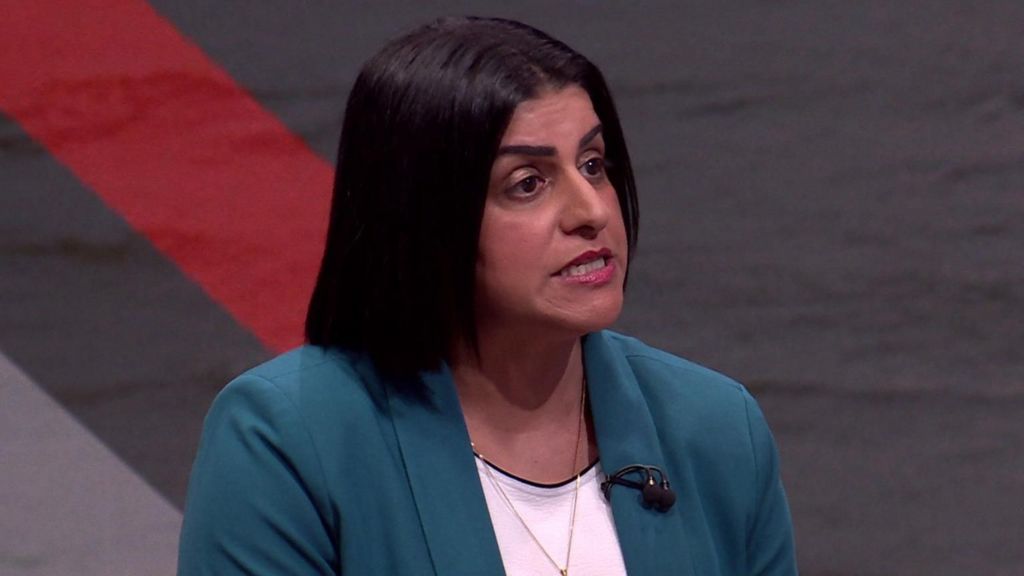
Illegal migration tearing UK apart, Mahmood says
In a bold move to address the growing crisis of illegal migration, UK Home Secretary Shabana Mahmood has announced a comprehensive overhaul of the country’s asylum system. The reforms, set to be unveiled on Monday, include extending the waiting period for permanent settlement from five to 20 years for those granted asylum. Additionally, refugee status will be subject to regular reviews, and individuals from countries deemed safe will be required to return home. Mahmood described her initiative as a ‘moral mission,’ emphasizing the need to restore public trust in the asylum system. The measures aim to deter illegal migration by making the UK a less attractive destination, particularly targeting small boat crossings and asylum claims. As part of the strategy, the UK will also suspend visa issuance to citizens of Angola, Namibia, and the Democratic Republic of Congo unless their governments improve cooperation on removals. Critics, including Shadow Home Secretary Chris Philp and Liberal Democrat leader Sir Ed Davey, have questioned the effectiveness of the reforms, with Philp advocating for immediate deportation of illegal migrants and Davey calling for the right to work for asylum seekers. Mahmood defended her approach, citing the need to address ‘unfair’ conditions that she claims favor asylum seekers over UK citizens. The reforms draw inspiration from Denmark’s stringent asylum policies, which have been praised for their effectiveness in curbing illegal migration. However, the proposals have faced backlash from some Labour MPs and refugee advocacy groups, who argue that the extended waiting period will leave asylum seekers in prolonged uncertainty. Despite the controversy, Mahmood remains steadfast in her commitment to tackling illegal migration, which she believes is ‘tearing the country apart.’
-
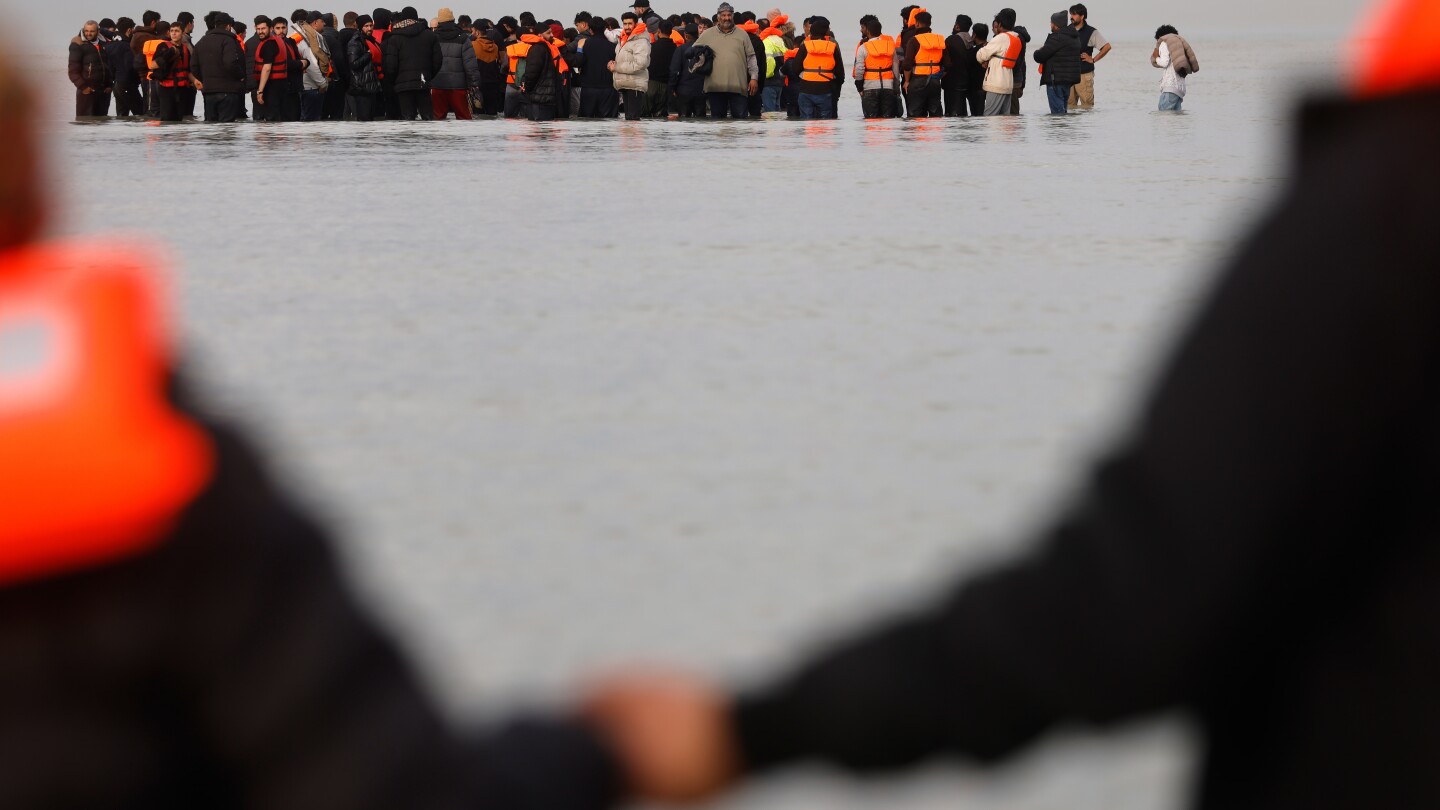
UK government poised to overhaul its asylum system as a political storm brews over migration
The British government is set to introduce a series of stringent asylum reforms, inspired by Denmark’s model, aimed at reducing illegal immigration and addressing the political controversy surrounding unauthorized Channel crossings. Home Secretary Shabana Mahmood will unveil the policy changes in the House of Commons on Monday, marking the latest effort to deter asylum seekers and streamline the removal of those deemed ineligible for refuge. Mahmood described the initiative as a moral imperative to secure borders and heal a nation divided over immigration, a contentious issue that has bolstered the hard-right Reform UK Party. Despite her migrant heritage, Mahmood denied that the Labour Party is adopting far-right rhetoric, emphasizing the need to address systemic flaws and prevent abuse of the asylum system. The reforms include revoking the UK’s legal obligation, established under EU law in 2005, to support asylum seekers, potentially stripping them of housing and financial allowances. Benefits may also be withheld from individuals who fail to work legally or violate laws. Additionally, refugee status will undergo regular reviews to assess the possibility of safe repatriation. The government plans to establish safer pathways for asylum claims, reducing the reliance on perilous Channel crossings. Critics, including Conservative MP Chris Philp, argue that the reforms are insufficient and lack the impact of the previously abandoned Rwanda policy. Philp dismissed the measures as superficial, likening them to ‘rearranging deck chairs on the Titanic.’ The Home Office, however, highlighted Denmark’s success in reducing asylum applications and removing 95% of ineligible applicants as a model for the UK’s new approach. Denmark, once a refuge for migrants, has faced international criticism for its restrictive policies amid Europe’s broader struggle with mass migration driven by conflict, famine, and poverty.