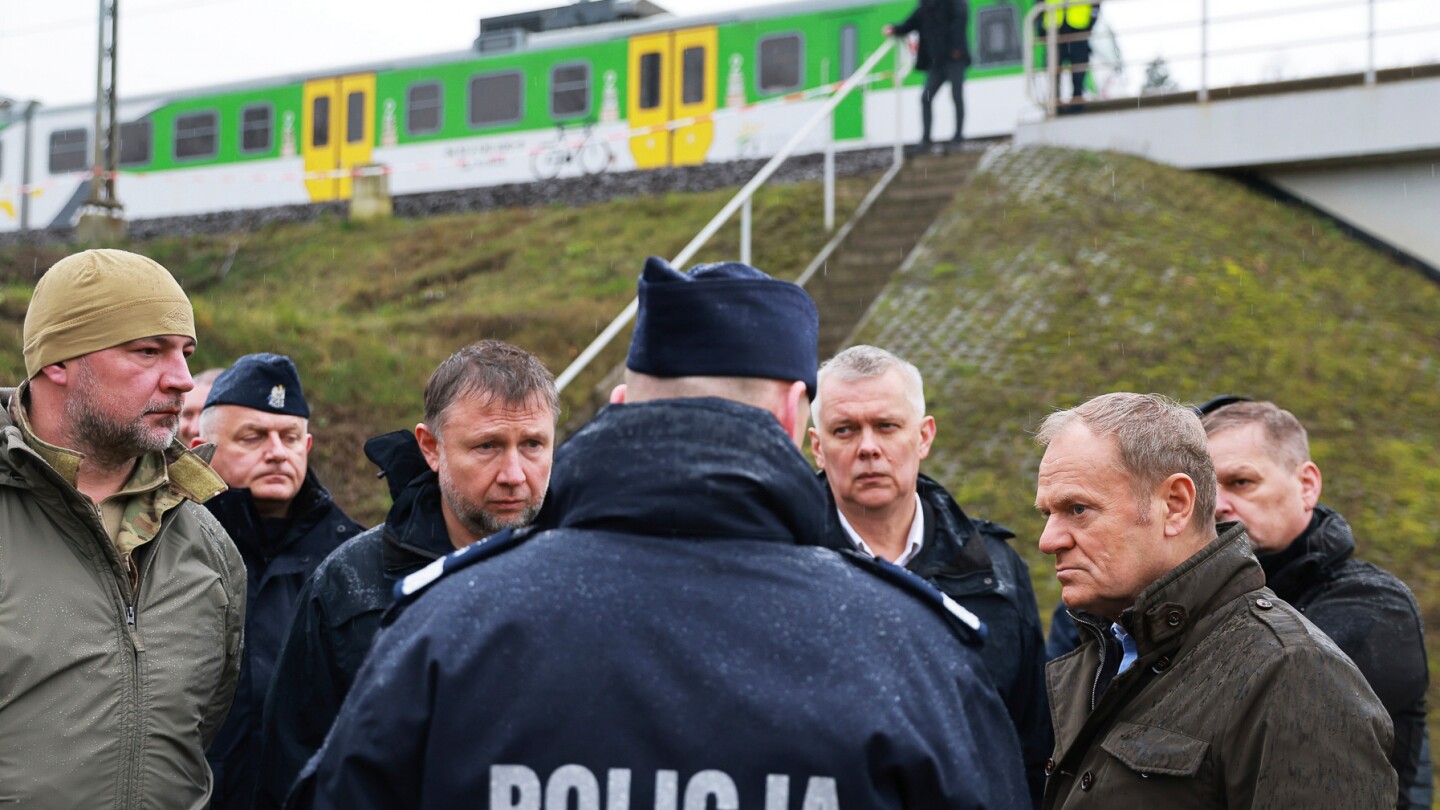
WARSAW, Poland — Polish Prime Minister Donald Tusk revealed on Tuesday that two Ukrainian citizens, allegedly working for Russia, are suspected of orchestrating a railway explosion in Poland over the weekend. Addressing the Sejm, Poland’s lower house of parliament, Tusk described the incident as an “unprecedented act of sabotage” targeting a rail line connecting Warsaw to the Ukrainian border. The suspects, whose identities remain undisclosed due to ongoing investigations, reportedly fled Poland via the Terespol border crossing into Belarus. Tusk emphasized their long-standing collaboration with Russian intelligence services. In a separate but related incident, power lines along the same railway further south were also damaged, which Polish officials have confirmed as sabotage. Russian presidential spokesperson Dmitry Peskov dismissed the accusations, labeling them as part of a broader trend of “Russophobia” in Europe. Western officials have accused Russia of staging numerous attacks across Europe since its invasion of Ukraine, aiming to destabilize support for Kyiv and sow division. In response, Poland’s National Security Committee convened with military and intelligence leaders to address the threat. Army patrols have been deployed to secure critical infrastructure in eastern Poland. Prosecutors have launched an investigation into the sabotage, which they described as “acts of terrorism” endangering public safety. The damaged railway sections have since been repaired, and no injuries were reported.
标签: Europe
欧洲
-
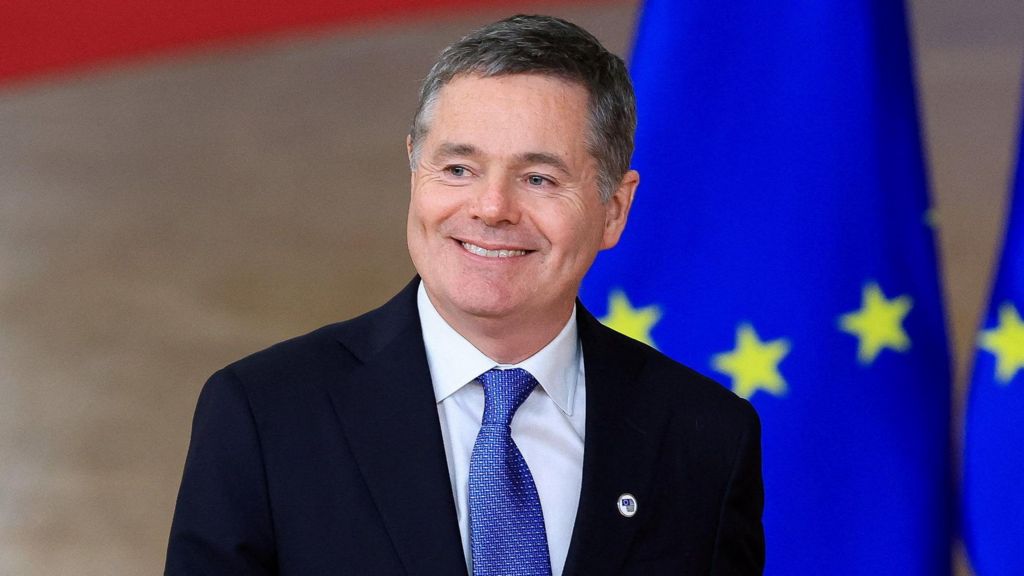
Irish finance minister to step down to take major banking role
Paschal Donohoe, Ireland’s Finance Minister, has announced his resignation from government to assume a prestigious position at the World Bank in Washington, D.C. According to reports from Irish broadcaster RTÉ, Donohoe will take on the roles of Managing Director and Chief Knowledge Officer at the World Bank, the globe’s foremost development institution. His departure from the Irish government is expected to occur later on Tuesday, followed by his resignation as a TD (member of parliament) for Dublin Central later this week. Donohoe, a seasoned politician with a distinguished career, previously served as Ireland’s Finance Minister from 2017 to 2022 and was reappointed to the role in January 2025. The 51-year-old will also relinquish his position as Chairman of the Eurogroup of finance ministers, triggering a by-election in his constituency. A graduate of Trinity College Dublin, Donohoe began his political journey on Dublin City Council before ascending to Seanad Éireann (the Irish Senate) and later Dáil Éireann (the lower house of parliament) in 2011. Over the years, he has held numerous ministerial portfolios, including Minister of State for European Affairs and Minister for Transport, Tourism, and Sport. His tenure as Finance Minister was marked by significant budgetary measures, including increased funding for social welfare and healthcare. Donohoe’s move to the World Bank underscores his expertise in economic and financial governance on the global stage.
-
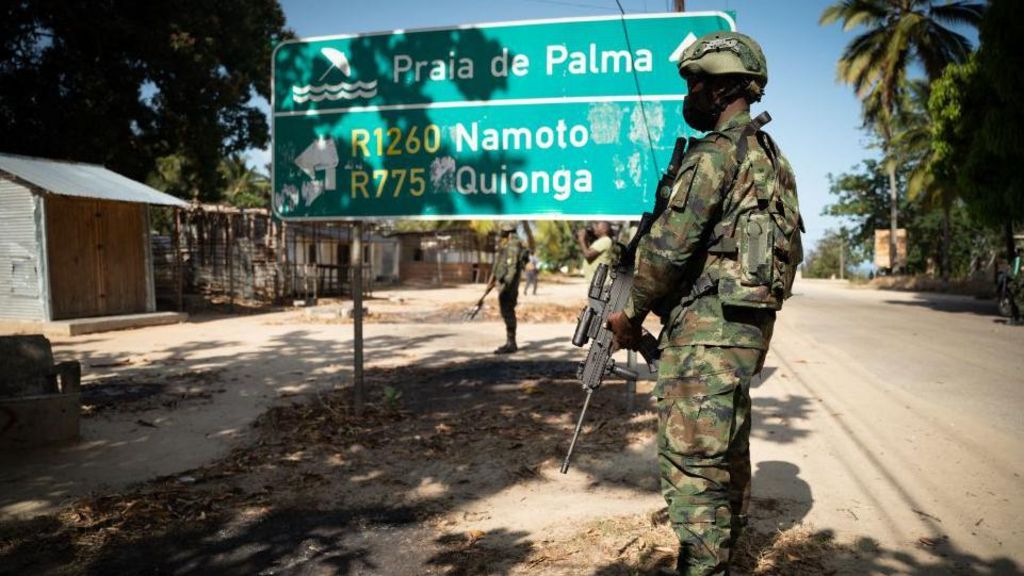
Total faces war crimes allegations over Mozambique massacre
French energy giant TotalEnergies is embroiled in a legal and ethical controversy following allegations of complicity in war crimes during a 2021 massacre near its multi-billion-dollar gas project in northern Mozambique. The European Center for Constitutional and Human Rights (ECCHR) has filed a complaint with French prosecutors, accusing the company of enabling the torture and execution of dozens of civilians by local security forces at its facility. The incident occurred in the resource-rich Cabo Delgado province, where government troops were combating Islamist militants linked to the Islamic State group. TotalEnergies has consistently denied responsibility for the actions of the security forces involved in guarding its Afungi peninsula gas refinery development, which was Africa’s largest foreign investment project at the time. The massacre followed a brutal Islamist attack on the town of Palma, where 1,563 civilians were killed or kidnapped near TotalEnergies’ gas plant. Investigative journalist Alex Perry, who first documented the tragedy, described it as the ‘bloodiest disaster in oil and gas history.’ The complaint highlights the ethical dilemmas faced by corporations operating in conflict zones and calls for accountability. Environmental campaigners are urging the UK and Dutch governments to withdraw financial support for TotalEnergies’ liquefied natural gas project in Mozambique, citing the severity of the allegations. Critics draw parallels between TotalEnergies’ actions and those of Lafarge, another French company currently on trial for allegedly funding jihadist groups in Syria. Despite the controversy, supporters argue that the project could bring significant economic benefits to a neglected region of Africa.
-
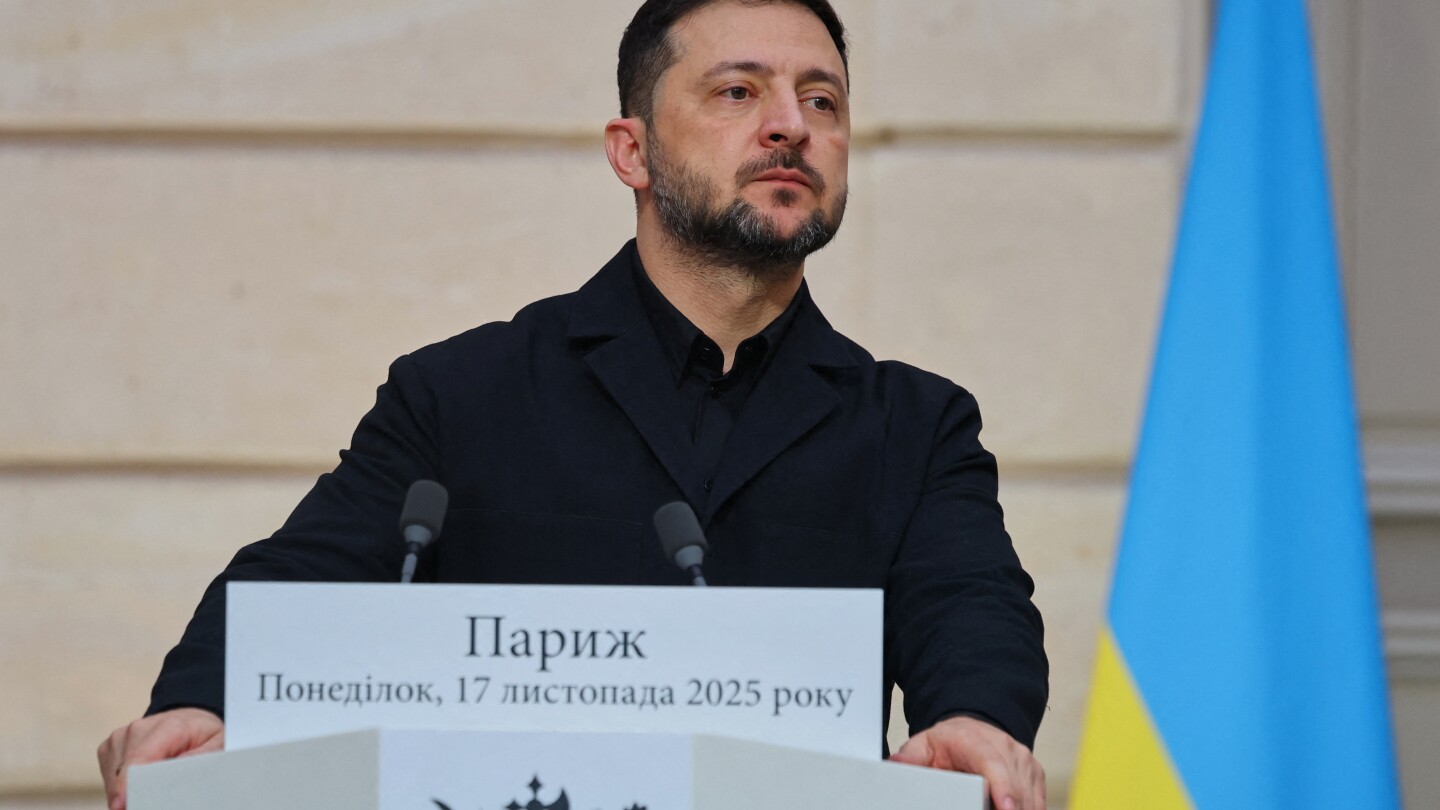
Zelenskyy will visit Turkey in a new bid to end the Russia-Ukraine war
Ukrainian President Volodymyr Zelenskyy announced on Tuesday his upcoming visit to Turkey, aiming to reignite negotiations to end Russia’s nearly four-year-long invasion of Ukraine. This diplomatic effort follows earlier low-level talks between Ukraine and Russia in Istanbul, which primarily focused on prisoner exchanges but failed to achieve broader progress. International peace initiatives, led by the U.S., have also yet to yield significant breakthroughs. Zelenskyy’s visit to Turkey on Wednesday comes after his stop in Spain, where he sought additional support for Ukraine’s defense efforts. In a social media post, Zelenskyy emphasized Ukraine’s commitment to accelerating the end of the war, stating, ‘We are preparing to reinvigorate negotiations and have developed solutions to propose to our partners.’ However, Kremlin spokesman Dmitry Peskov clarified that no Russian representatives would attend the talks in Turkey, though Moscow remains open to dialogue. The U.S. has intensified pressure on Russia, with heavy sanctions targeting its oil industry set to take effect on Friday. These measures aim to cripple Russia’s war economy by targeting major oil companies like Rosneft and Lukoil, while also threatening secondary penalties for violators, including major importers like China and India. Amid these developments, Zelenskyy continues to bolster Ukraine’s military capabilities, signing agreements to acquire advanced weaponry from France, including Rafale warplanes and drones. On the ground, Ukrainian forces launched a surprise attack on energy infrastructure in the occupied Donetsk region, causing significant damage and power outages. Meanwhile, Russian strikes in Ukraine’s Kharkiv and Dnipro regions resulted in civilian casualties and infrastructure destruction. Both sides continue to exchange drone and missile attacks, underscoring the ongoing intensity of the conflict.
-

Woman dead and man seriously injured in stabbing
A tragic incident in Cork city has resulted in the death of a woman and left a man seriously injured following a violent attack. The incident occurred at a residence in Shrewsbury Downs, Ballinlough, prompting a swift response from Gardaí (Irish police) and emergency services at approximately 21:00 local time on Monday. According to reports from Irish broadcaster RTÉ, the victims, a couple in their 50s and 60s, were both stabbed multiple times during the assault. A man in his 20s, who is reportedly known to the couple, has been arrested in connection with the incident. The injured man was rushed to Cork University Hospital, where the woman was pronounced dead. The suspect is currently being held at a Garda station in Cork city, and authorities are urging anyone with information to come forward to assist with the ongoing investigation.
-
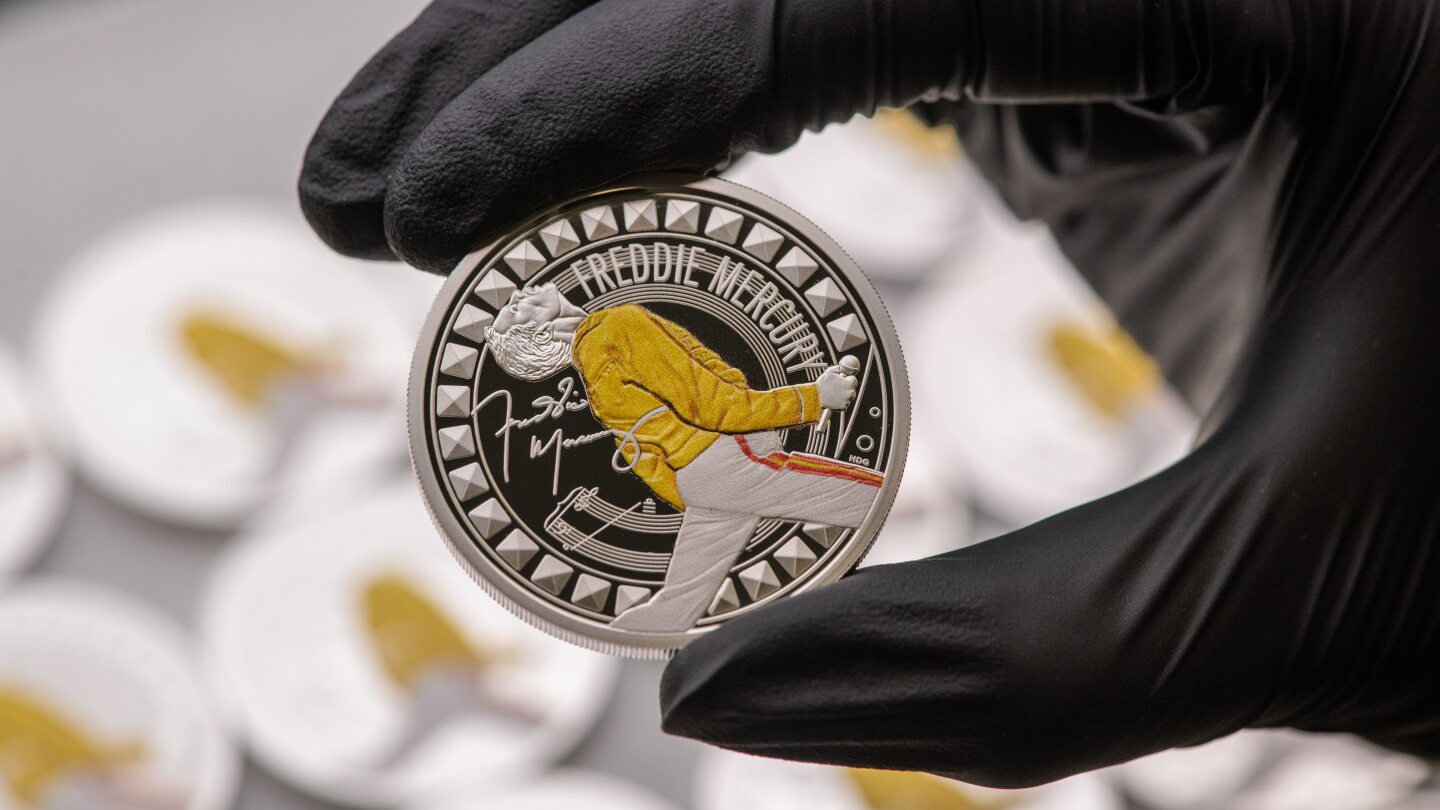
New coin honors Freddie Mercury and his 4-octave range
The Royal Mint of Britain has unveiled a special commemorative coin honoring the legendary Queen frontman Freddie Mercury, celebrating the 40th anniversary of his iconic Live Aid performance in 1985. The coin, designed with meticulous detail, features Mercury in his signature pose—head thrown back, gripping the microphone stand—capturing the essence of his electrifying stage presence. A musical stave encircling the coin symbolizes his extraordinary four-octave vocal range, a testament to his unparalleled talent. The first coin was ceremoniously struck by Mercury’s sister, Kashmira Bulsara, at the Royal Mint in Wales. Bulsara expressed her delight, stating, ‘This coin is a fitting tribute to Freddie’s legacy and the joy he brought to millions through his music.’ Rebecca Morgan, the Royal Mint’s director of commemorative coins, emphasized the perfect timing of the release, noting that fans had long awaited such a tribute. The coin’s launch coincides with the 40th anniversary of Mercury’s solo album, ‘Mr Bad Guy,’ and follows the Mint’s tradition of honoring music legends like David Bowie and Paul McCartney. Available for purchase on the Royal Mint’s website, the coins range from 18.50 pounds for an uncirculated version to 9,350 pounds for a 2 oz. gold proof edition. Additionally, a special gold edition will be donated to the Mercury Phoenix Trust, a charity established in Mercury’s memory to support those affected by HIV and AIDS.
-

Lost Bach pieces performed for first time in 320 years
Two previously unknown organ compositions by Johann Sebastian Bach have been unveiled and performed in Germany for the first time in over three centuries. The pieces, identified as the Chaconne in D minor BWV 1178 and Chaconne in G minor BWV 1179, were discovered by Peter Wollny, a renowned Bach scholar, while cataloging manuscripts at the Royal Library of Belgium in Brussels in 1992. After three decades of meticulous research, Wollny confirmed their authenticity, attributing them to Bach’s early career when he served as an organ teacher in Arnstadt, Thuringia. The compositions were performed at Leipzig’s St. Thomas Church, where Bach is buried and where he worked as a cantor for 27 years. Dutch organist Ton Koopman, who premiered the works, praised their high quality and suitability for smaller organs. Wollny, now director of the Leipzig Bach Archive, highlighted stylistic elements unique to Bach’s early period, further solidifying their attribution. The pieces, believed to have been transcribed by Bach’s pupil Salomon Günther John in 1705, have been added to the official catalogue of Bach’s works. Germany’s Culture Minister Wolfram Weimer hailed the discovery as a monumental moment for the global music community.
-
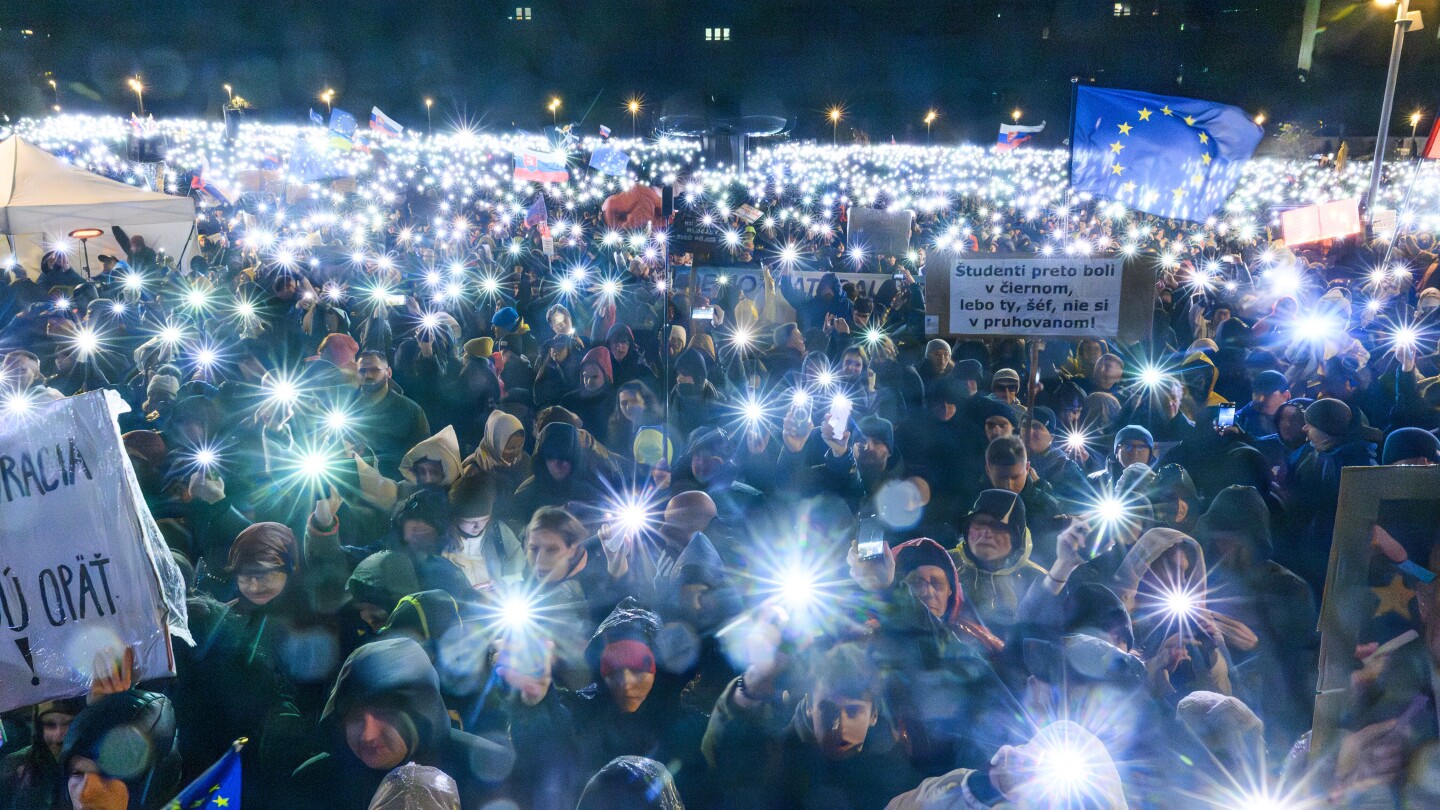
Slovaks protest populist leader Fico on anniversary of Velvet Revolution
In a significant display of public dissent, tens of thousands of Slovaks took to the streets on Monday to protest against Prime Minister Robert Fico and his pro-Russian policies. The demonstrations coincided with the anniversary of the 1989 Velvet Revolution, which marked the end of communist rule in the former Czechoslovakia. Rallies and marches were held across dozens of communities, with the largest gathering in Bratislava’s Freedom Square, where protesters chanted slogans such as “We have enough of Fico,” “We want a change,” and “Resign.”
One poignant banner featured a quote from the late Czechoslovak and Czech President Václav Havel, a key figure in the Velvet Revolution: “Truth and love must prevail over lies and hatred.” Fico, a polarizing figure in Slovak politics, has faced repeated protests over his policies. His government recently canceled the national holiday commemorating the Velvet Revolution, citing austerity measures. However, opposition leaders, including Michal Šimečka of the Progressive Slovakia party, dismissed this explanation, asserting that the move was an attempt to undermine the value of freedom.
Fico’s pro-Russian stance has further fueled public outrage. He has met with Russian President Vladimir Putin three times since Russia’s full-scale invasion of Ukraine in 2022 and has halted Slovakia’s military support for Ukraine. His recent remarks urging students to fight for Ukraine if they oppose his views have also drawn widespread criticism. Fico’s alignment with Russia and his challenges to European Union policies on Ukraine have deepened divisions within the country and raised concerns about Slovakia’s geopolitical direction.
-

France investigating Vinted over alleged links to pornographic content
French authorities have launched an investigation into the second-hand clothing platform Vinted following allegations that some user accounts were redirecting visitors to pornographic content. The issue was first reported by French media, prompting France’s Children’s Rights Commissioner, Sarah El-Haïry, to request an examination by the regulatory watchdog Arcom. Vinted, which boasts 23 million users in France, lacks an age-verification process, potentially exposing minors to explicit material. The Lithuania-based company has stated it enforces a ‘zero-tolerance policy’ against unsolicited sexual communications or the promotion of sexual services, and it removes inappropriate content while blocking offending users. The controversy emerged after sellers of swimwear or lingerie were found to be directing buyers to adult platforms like OnlyFans. El-Haïry condemned the misuse of ordinary clothing sales to funnel users to pornographic sites. This case is part of a broader crackdown on e-commerce platforms in France, including Shein, AliExpress, Temu, and Wish, which are under scrutiny for allegedly allowing the sale of illicit or harmful content accessible to minors. Shein has already banned the sale of sex dolls globally and blocked associated seller accounts. The French consumer watchdog has described some of these products as having a ‘child-pornography nature.’
-
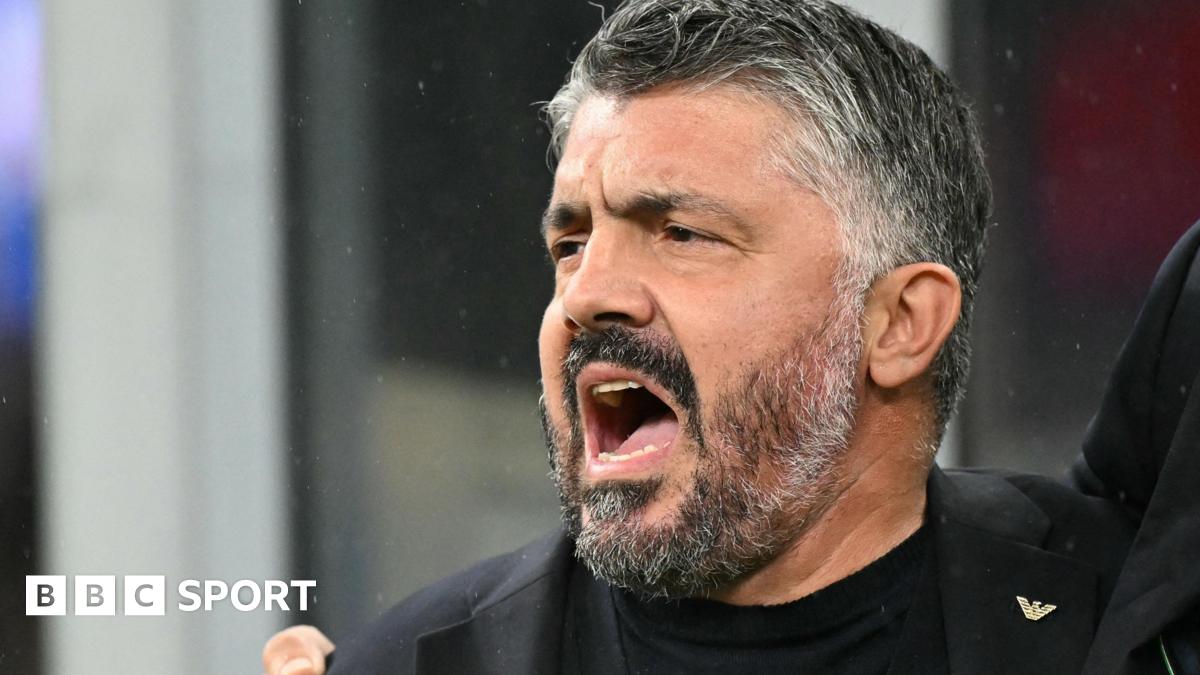
Was Gattuso right – is World Cup qualifying unfair on Europe?
Italy’s national football team is facing the possibility of missing the World Cup for the third consecutive time after a crushing 4-1 defeat to Norway on Sunday. This loss has forced Italy into the play-offs for the 2026 World Cup, which will be hosted across Canada, Mexico, and the United States. Head coach Gennaro Gattuso has voiced his frustration with FIFA’s qualification process, arguing that it unfairly disadvantages European teams like Italy. Despite winning six of their eight qualifying matches, Italy finished second in their group, leaving them to navigate a challenging play-off route. Gattuso highlighted the disparity in direct qualification slots, noting that South America and Africa receive more automatic berths relative to their number of participating nations. He also pointed out that the current system, which includes smaller qualifying groups, increases the intensity of the competition. However, some of Gattuso’s claims contain inaccuracies, such as his assertion about African teams in the 1990s. Critics argue that Italy’s struggles are more a reflection of their performance than the system itself. The debate raises broader questions about the fairness of FIFA’s allocation of World Cup slots across different confederations. With 54 UEFA nations competing for just 16 spots, Europe’s share has decreased significantly over the years, despite its strong representation in global rankings. As Italy prepares for the play-offs, Gattuso’s call for reform may spark further discussion about the future of World Cup qualification.