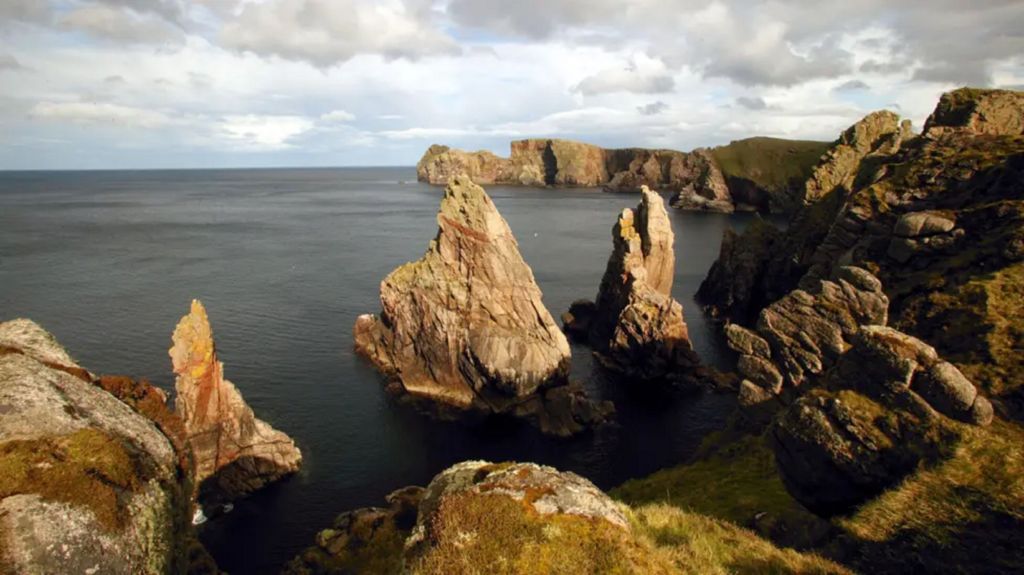
The extensive search for a missing Royal Navy crew member off the north-west coast of the Republic of Ireland has been called off, with the individual remaining unlocated, the Ministry of Defence (MoD) confirmed. The crew member, part of the Royal Fleet Auxiliary (RFA) Tidesurge, was last seen around 22:30 local time on Friday. The search operation, which spanned the waters between Tory Island in County Donegal and Eagle Island in County Mayo, involved multiple agencies and resources. Defence Secretary John Healey expressed his profound sorrow over the outcome, stating, ‘After an extensive search, it is with deep sadness that we confirm the missing crew member of RFA Tidesurge has not been found. My thoughts are with their family during this tragic time, as well as their fellow crew members.’ He also extended his gratitude to the Irish authorities, the RNLI, Royal Air Force, and Royal Navy for their swift and relentless efforts in the search. The Irish Coast Guard received a distress call from a Royal Navy support vessel before 09:00 on Saturday, prompting an immediate search and rescue operation. The search involved aerial support from the Coast Guard’s fixed-wing plane Rescue 120F, based in Shannon airport; Coast Guard helicopter Rescue 118, based in Sligo; and the Irish Air Corps plane, CASA 284. At sea, the search was coordinated by the UK naval support vessel and three RNLI all-weather lifeboats based at Ballyglass, Arranmore Island, and Lough Swilly. The family of the missing crew member has been informed, and an investigation into the incident is now underway. No other individuals were reported harmed or missing during the operation.
标签: Europe
欧洲
-

Holocaust survivors group urges German auction house to halt sale of artifacts
A prominent Holocaust survivors’ organization has issued a strong appeal to a German auction house to halt the sale of hundreds of artifacts tied to the Holocaust. The International Auschwitz Committee, based in Berlin, described the planned auction as “cynical and shameless,” urging its immediate cancellation. The event, titled “The System of Terror,” was scheduled for Monday by the Felzmann auction house in Neuss, near Düsseldorf. The collection, comprising over 600 items, included deeply personal artifacts such as letters penned by concentration camp prisoners to their families, Gestapo index cards, and other documents that explicitly identify individuals by name. Christoph Heubner, executive vice president of the committee, condemned the auction, stating that it exploits the suffering of Holocaust victims for profit. He emphasized that such artifacts should be preserved in museums or memorials rather than being commodified. The committee called on the auction house to demonstrate basic decency by canceling the sale. By Sunday afternoon, the auction listing had been removed from the Felzmann website, though the house had not yet responded to inquiries.
-
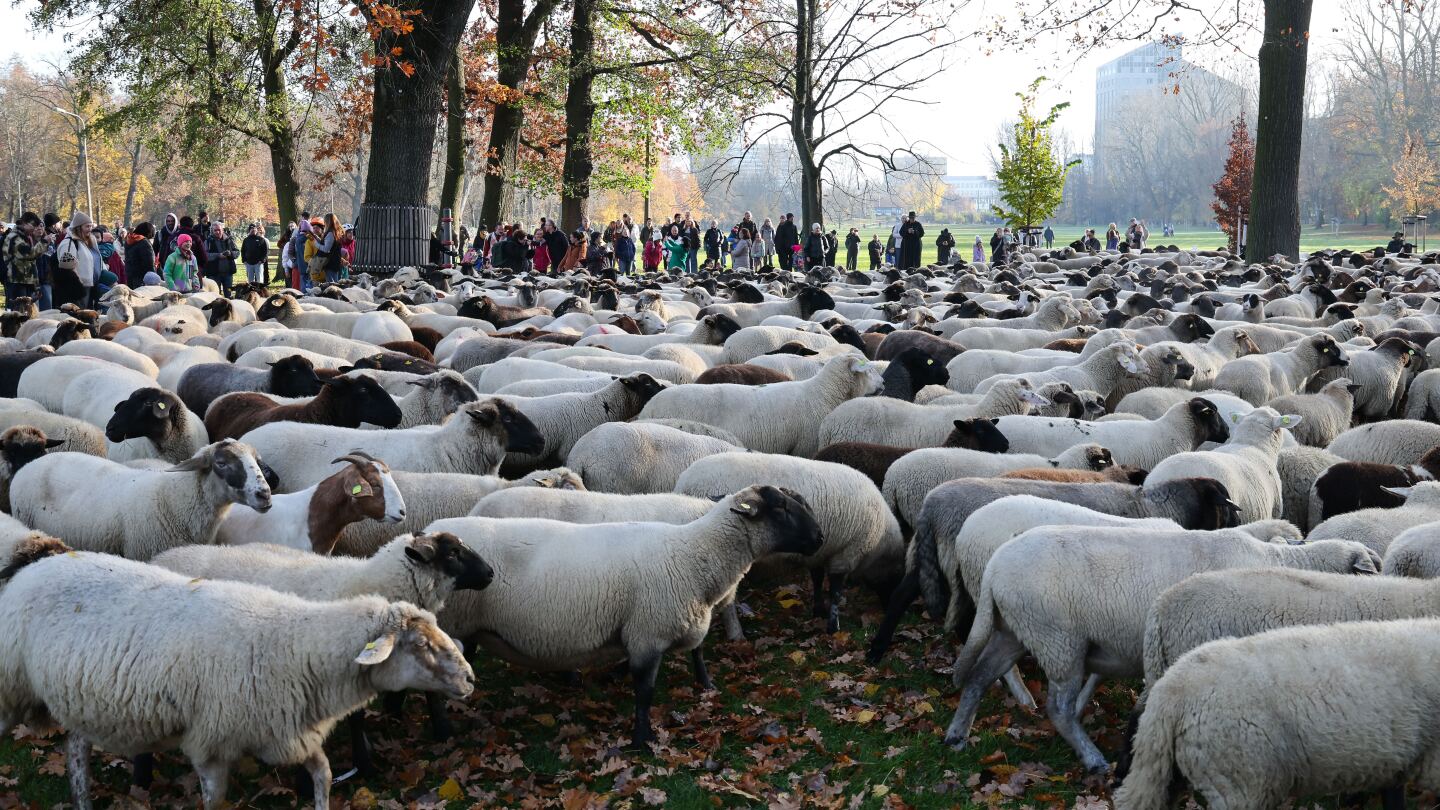
Make way for the flock! Hundreds of sheep head through German city to their winter pastures
In a charming annual tradition, the streets of Nuremberg, Germany, were transformed into a pastoral scene on Sunday as hundreds of sheep paraded through the city center. The flock, led by shepherd Thomas Gackstatter, comprised approximately 600 sheep, drawing curious onlookers who eagerly captured the spectacle on their cellphones. The event marks the sheep’s journey from their summer grazing grounds in Nuremberg’s meadows to their winter pastures located west of the city. The 10-kilometer (6-mile) route took the flock through the iconic Hauptmarkt, the central market square, making Nuremberg the only known German city where sheep traverse such a prominent urban space. City authorities ensured a smooth passage by urging residents to keep the route clear and keep dogs away. Drones were also prohibited during the event. This practice of using sheep as natural lawnmowers is not unique to Nuremberg; cities like Berlin, Potsdam, and Augsburg also employ sheep for eco-friendly grass maintenance. The slow grazing process supports biodiversity by creating insect-friendly environments and reduces municipal mowing costs. For shepherds like Gackstatter, this arrangement provides a valuable solution to the scarcity of open grazing spaces.
-
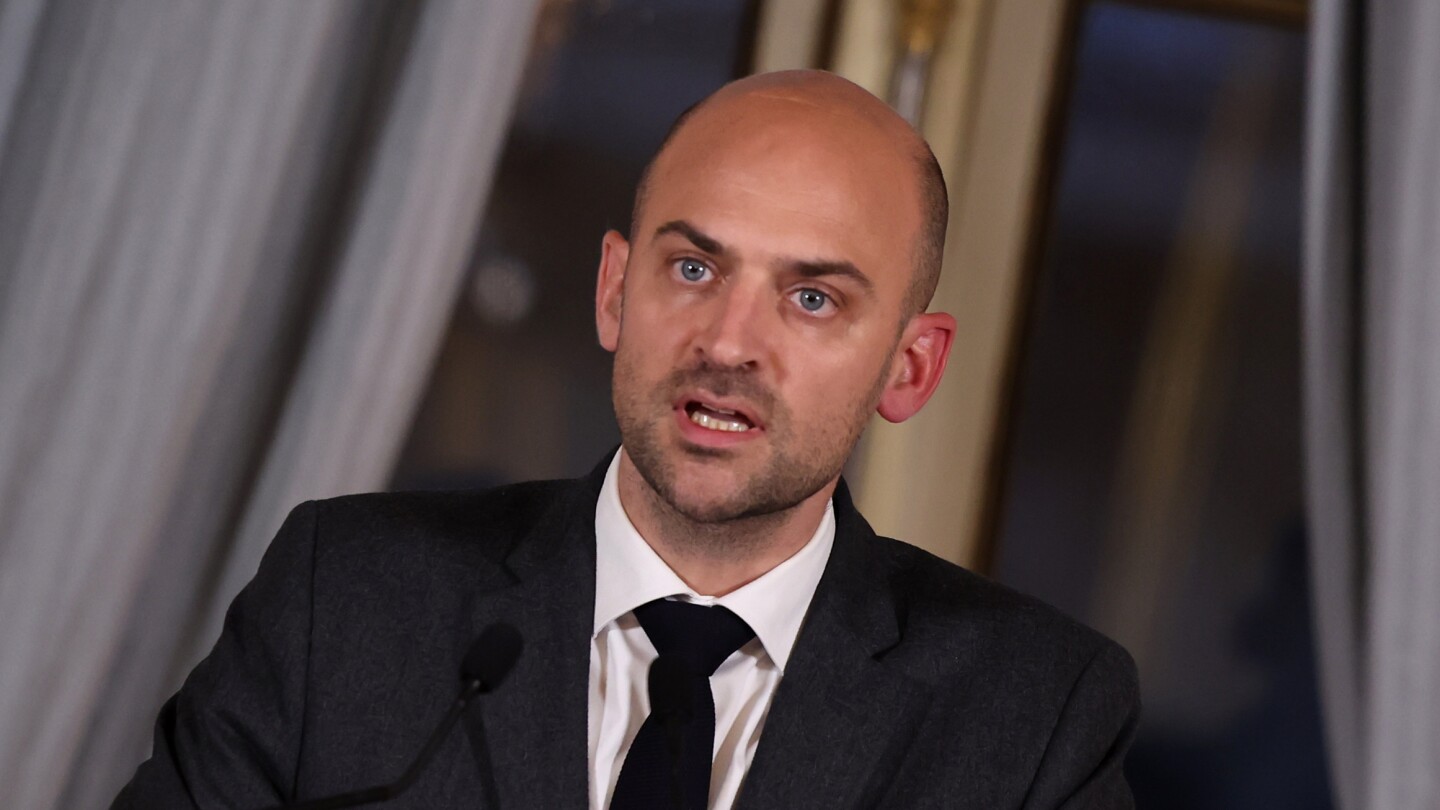
France secures release of French-Chilean national held in Venezuela
In a significant diplomatic achievement, France announced on Sunday the release of Camilo Castro, a French-Chilean national who had been detained in Venezuela for four months. French Foreign Minister Jean-Noël Barrot confirmed the news via a post on X (formerly Twitter), stating that Castro was en route to France. Barrot attributed the successful resolution to the persistent efforts of French diplomacy. French President Emmanuel Macron also expressed his relief in a separate post, emphasizing France’s steadfast commitment to protecting its citizens. ‘France sometimes advances quietly, but always with determination and composure: That is how we protect our own,’ Macron wrote. Castro, a 41-year-old yoga teacher residing in Colombia, had reportedly crossed into Venezuela in June to extend his Colombian visa. According to Amnesty International, his disappearance sparked international concern, culminating in his eventual release.
-
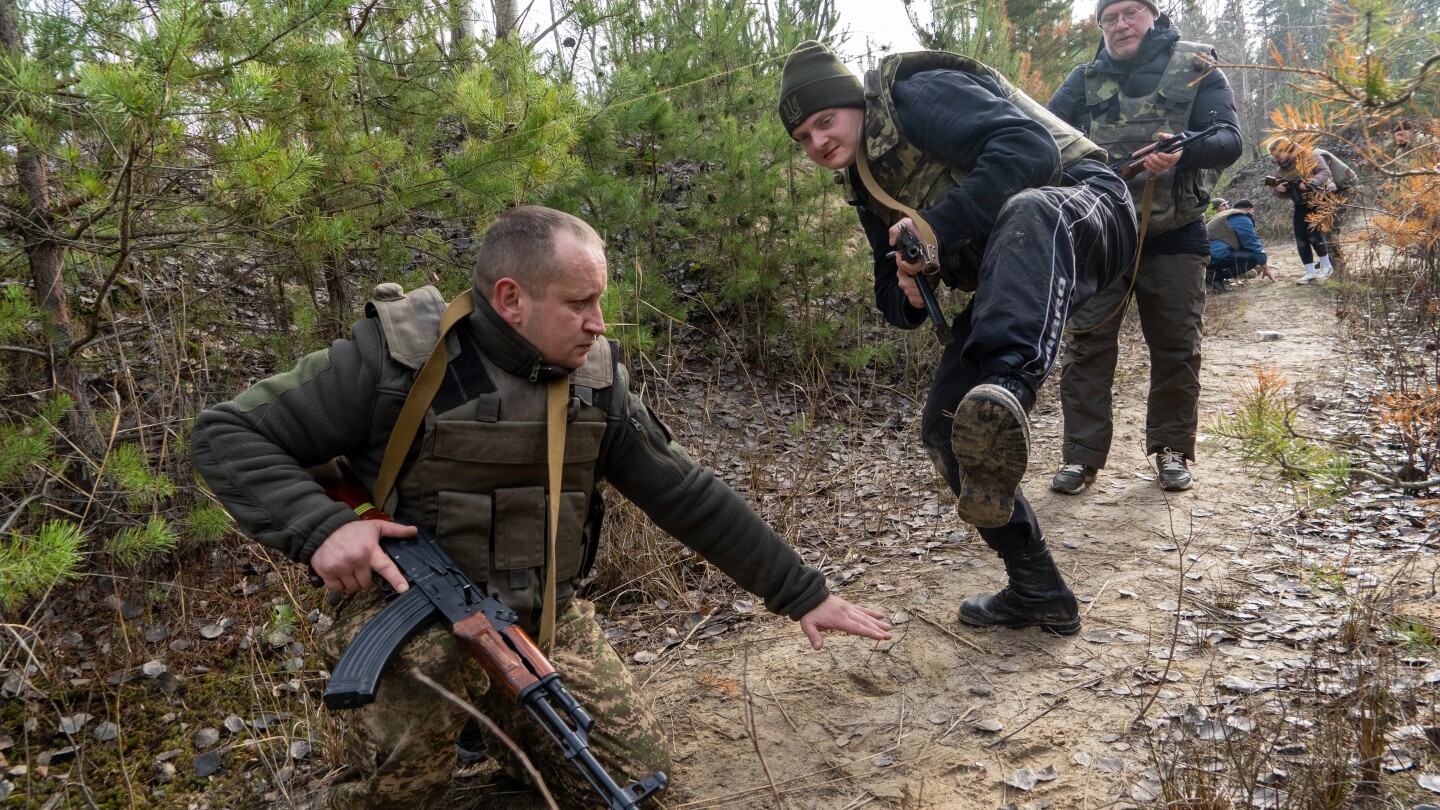
Zelenskyy says Ukraine is working on prisoner exchange with Russia
Ukraine is intensifying efforts to resume prisoner exchanges with Russia, aiming to secure the release of 1,200 Ukrainian prisoners, President Volodymyr Zelenskyy announced on Sunday. This development follows progress in negotiations mediated by Turkey and the United Arab Emirates, as revealed by Rustem Umerov, Secretary of Ukraine’s National Security and Defense Council, on Saturday. Zelenskyy expressed optimism on X, stating, ‘We are counting on the resumption of POW exchanges. Many meetings, negotiations, and calls are currently taking place to ensure this.’ The Istanbul agreements, established in 2022 with Turkish mediation, serve as the framework for these exchanges, which have previously facilitated the release of thousands of prisoners despite being sporadic. Umerov emphasized that technical consultations are imminent to finalize procedural details, expressing hope that the freed Ukrainians could ‘celebrate the New Year and Christmas holidays at home — at the family table and next to their relatives.’ Meanwhile, the conflict continues unabated, with Russian drone strikes damaging energy infrastructure in Ukraine’s Odesa region overnight, including a solar power plant. Ukraine’s air force reported intercepting 139 of 176 drones launched by Russia, while Russia’s defense ministry claimed to have shot down 57 Ukrainian drones. These attacks exacerbate Ukraine’s struggle to maintain its power grid amid relentless Russian aerial assaults, which have caused rolling blackouts as winter approaches.
-

Unconfirmed number of deaths following two-car crash
A tragic road traffic accident in County Louth, Republic of Ireland, has resulted in multiple fatalities, with an unconfirmed number of deaths reported. The incident occurred on Saturday evening shortly after 21:00 local time on the L3168 Ardee Road in the townland of Gibstown, Dundalk. According to Gardaí (Irish police), the collision involved two vehicles, and the scene remains active with both vehicles and the bodies of the deceased still present. Emergency services transported several injured individuals to Our Lady of Lourdes Hospital in Drogheda for treatment. The road between the N52 and R171 remains closed as Garda Forensic Collision Investigators conduct a technical examination. Local traffic diversions have been implemented to manage the situation. Authorities are urging anyone who may have witnessed the collision to come forward and assist with the investigation.
-
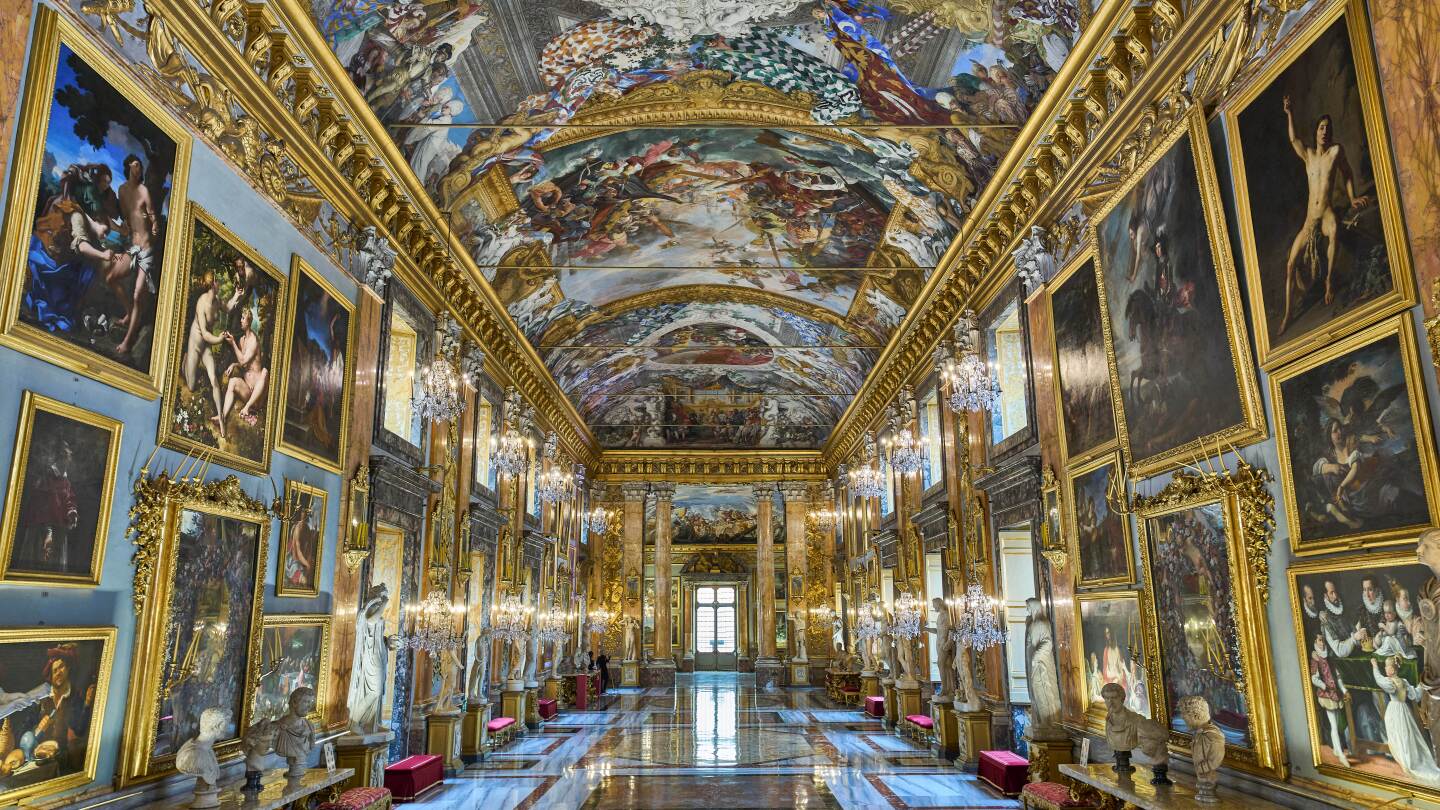
A peek inside the Colonna Palace, Rome’s most exclusive tourist site
Nestled in the heart of Rome, the Colonna Palace remains one of the city’s best-kept secrets, a private home-museum that stands in stark contrast to the bustling tourist hubs of the Colosseum and the Sistine Chapel. Spread across four wings and occupying an entire city block, this baroque masterpiece houses an extraordinary collection of paintings, sculptures, busts, and tapestries, including the awe-inspiring 76-meter Great Hall. Yet, its doors open only sparingly, welcoming small groups of 10 visitors on Friday and Saturday mornings, guided by art historians. ‘Mass tourism is not our wish,’ explains Elisabetta Cecchini, a restorer at the palace, emphasizing that the limited access ensures the preservation of its artistic integrity. ‘Art dies without public appreciation, but this is not a museum meant for commodification.’
The palace remains the residence of Don Prospero Colonna, the family’s sitting prince, who has occasionally permitted high-profile events, such as the 2005 release of Pope John Paul II’s book and the 2018 Metropolitan Museum of Art exhibition on Catholic fashion, attended by luminaries like designer Donatella Versace and Vogue’s Anna Wintour. These rare occasions have allowed journalists fleeting glimpses into this exclusive world. Claudio Strinati, a former superintendent of Rome’s museums, lauds the palace’s seclusion, calling it ‘one of humanity’s greatest artistic heritages’ and a legacy the Colonna family is duty-bound to protect. ‘These spaces were not conceived as tourist attractions,’ he notes. ‘They are for those who truly understand history.’
The Colonna family’s ties to the palace date back to the 12th century, when they became part of the ‘black nobility,’ Roman families loyal to the Pope during Italy’s unification in 1870. Their black banners symbolized mourning for the Papal State, while their walls safeguarded priceless masterpieces. Over the centuries, the family has maintained a trust ensuring the palace’s treasures remain intact. Princess Isabella Colonna played a pivotal role in preserving these artifacts during World War II, ordering them to be hidden in a sealed wing as the Nazis invaded. Today, the palace’s opulent interiors reflect its storied past, from the Throne Room’s portrait of Pope Martin V to the Great Hall’s frescoed ceiling depicting the naval victories of Commander Marcantonio Colonna. ‘The Colonna family and Rome are inseparable,’ says Patrizia Piergiovanni, the palace’s gallery director. ‘Their contributions have shaped the city’s history.’
Adding to its allure, the Great Hall served as the setting for the final scene of the 1952 classic ‘Roman Holiday,’ where Audrey Hepburn, portraying a princess, declared her love for the Eternal City. ‘Rome,’ she said with conviction. ‘By all means, Rome.’ The Colonna Palace, with its blend of art, history, and exclusivity, continues to embody the timeless elegance of Rome itself.
-

Finland’s president urges Europe to hold its nerve as he warns no ceasefire likely soon in Ukraine
In a recent interview with The Associated Press, Finnish President Alexander Stubb emphasized that a ceasefire in Ukraine is unlikely before spring, urging European allies to maintain their support despite a corruption scandal in Kyiv. Stubb highlighted the need for ‘sisu’—a Finnish term embodying endurance, resilience, and grit—to navigate the winter months as Russia continues its hybrid attacks and information warfare across Europe. As a key mediator between U.S. President Donald Trump and Ukrainian President Volodymyr Zelenskyy, Stubb leverages his unique position to advocate for Ukraine. Finland, which shares a 1,340-kilometer border with Russia, reversed its long-standing military neutrality after Russia’s full-scale invasion of Ukraine, joining NATO in response. Stubb stressed the importance of addressing Ukraine’s security guarantees, economic recovery, and territorial claims to achieve peace. He also praised Trump’s sanctions on Russian energy companies but called for further military support to Ukraine. Stubb warned that Russia’s destabilizing tactics in Europe, including drone incursions and sabotage campaigns, require a calm and resilient response. He underscored the necessity of international pressure on Russian President Vladimir Putin to alter his strategic objectives, which continue to threaten Ukraine’s sovereignty.
-
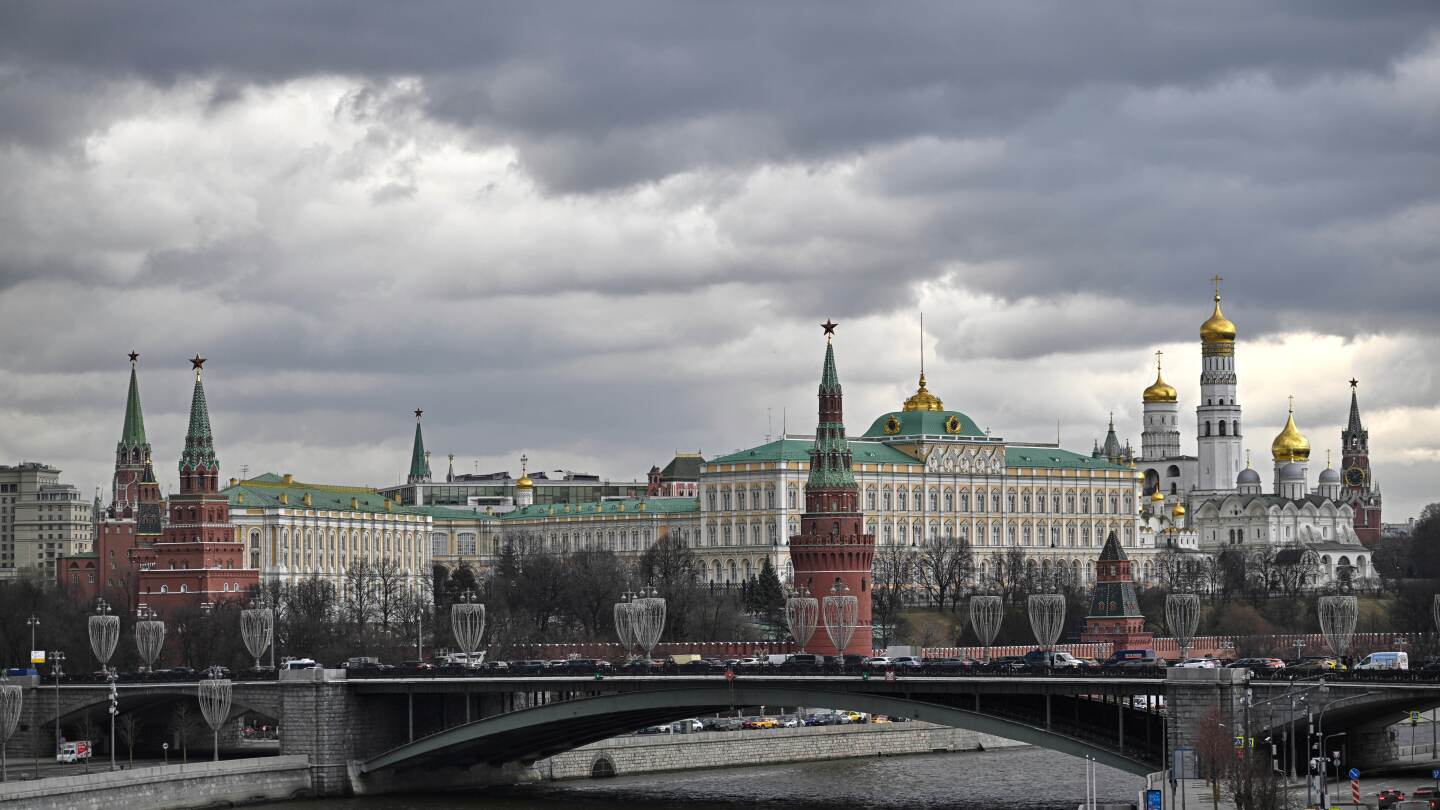
A slowing wartime economy pushes the Kremlin to tap consumers for revenue
Russia’s economy, which experienced robust growth over the past two years driven by military spending on the war in Ukraine, is now showing signs of deceleration. Declining oil revenues, a widening budget deficit, and stabilized defense expenditures have forced the Kremlin to seek new revenue streams. President Vladimir Putin’s administration is turning to ordinary citizens and small businesses to bridge the financial gap. A proposed increase in the value-added tax (VAT) from 20% to 22%, expected to generate up to 1 trillion rubles ($12.3 billion), is already progressing through Russia’s parliament and is set to take effect from January 1, 2025. This move is part of a broader fiscal strategy that includes lowering the VAT collection threshold for businesses and introducing new taxes on alcohol, tobacco, and digital equipment. The economic slowdown, exacerbated by high central bank interest rates and Western sanctions, has pushed the budget deficit to 2.6% of GDP, up from 1.7% last year. Finance Minister Anton Siluanov emphasized that raising revenue through taxes is preferable to increasing borrowing, which could accelerate inflation. While the Kremlin has sufficient funds to sustain its current war efforts for the next 12 to 14 months, experts warn that Putin will soon face tough choices between military spending and consumer welfare.
-
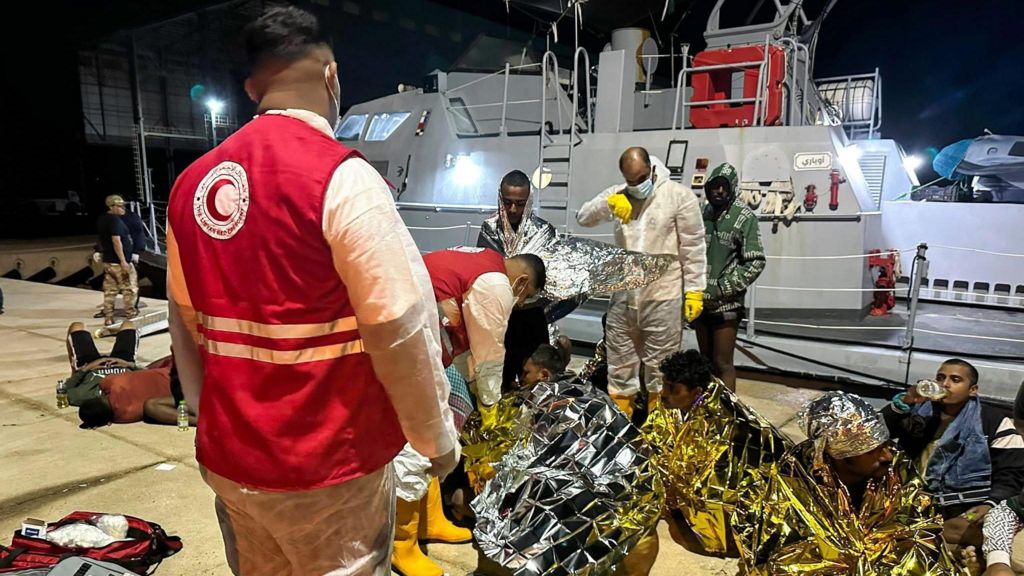
At least four dead after migrant boats sink in Mediterranean
In a devastating incident off the coast of Libya, at least four individuals lost their lives after two overcrowded migrant boats capsized on Saturday. The Libyan Red Crescent confirmed that the deceased were among 26 Bangladeshi nationals aboard one of the vessels. The fate of passengers on the second boat, which carried approximately 70 mostly Sudanese migrants, remains unclear as rescue efforts continue. The boats were traversing the central Mediterranean route, a perilous path between North Africa and Italy, which the UN International Organization for Migration (IOM) has labeled as the ‘deadliest known migration route in the world.’ The vessels had departed from Al Khums, a port city in northwestern Libya. Disturbing images shared by the Libyan Red Crescent show rescue workers providing aid to survivors and black body bags lined up on the shore. This tragedy underscores the ongoing migrant crisis in the Mediterranean, where hundreds perish annually in unsafe and overcrowded boats. According to IOM data, more than 1,500 people have died or gone missing in the Mediterranean in 2025 alone, with a significant portion of these incidents occurring off Libya’s coast. Libya remains a primary departure point for migrants attempting to reach Europe, with nearly 59,000 individuals arriving via this route this year, as reported by Frontex, the EU’s border security agency. Earlier this week, another boat carrying migrants from Libya capsized, leaving dozens missing and presumed dead. Seven survivors from Sudan, Somalia, Cameroon, and Nigeria were rescued after enduring nearly a week adrift at sea.