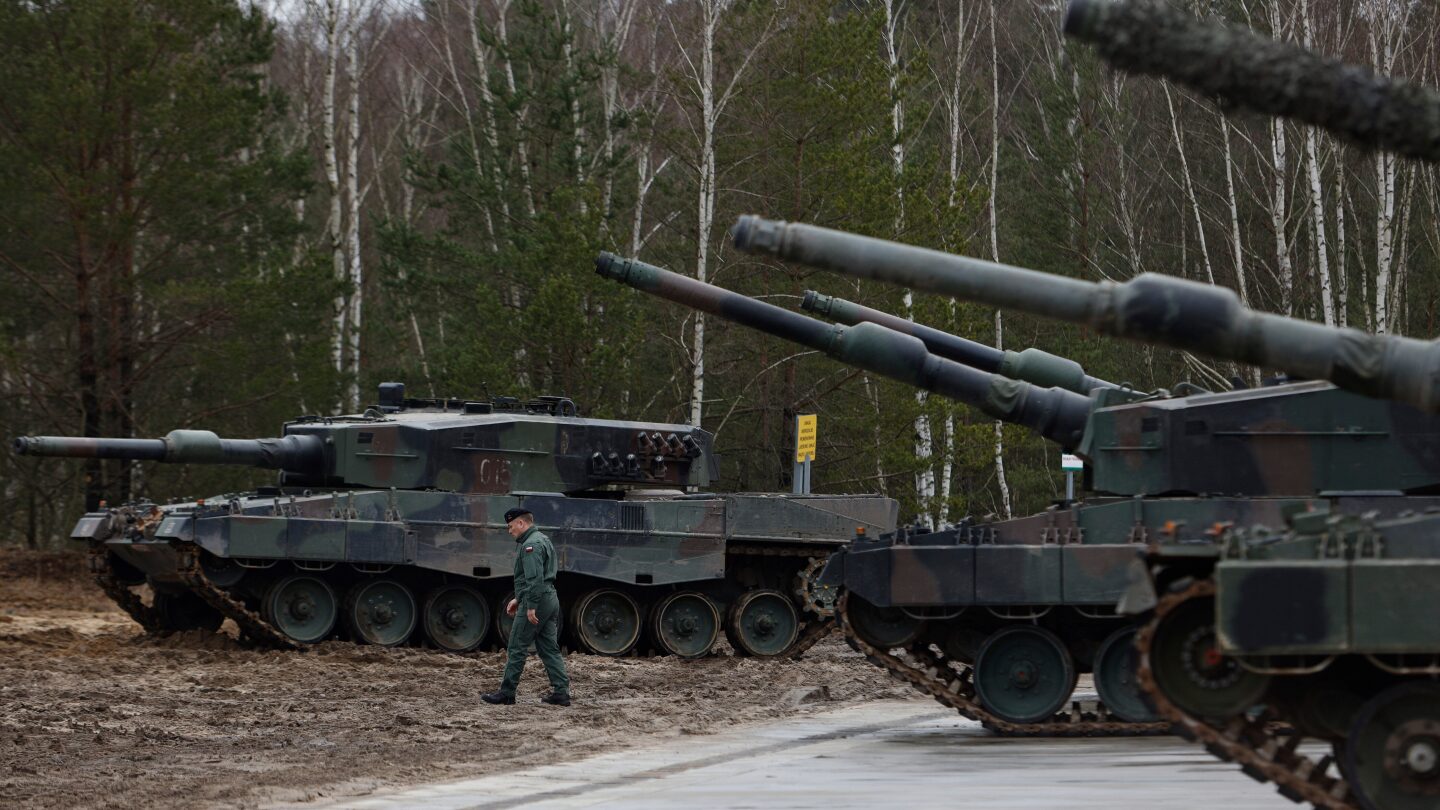
In a significant move to bolster its defense capabilities, the European Union (EU) announced a comprehensive military mobility package on Wednesday. The initiative, spearheaded by the European Commission, aims to enhance the rapid deployment of troops and equipment across the 27-nation bloc. With mounting concerns over Russia’s potential aggression, the package allocates €17.65 billion ($20.4 billion) to upgrade 500 critical infrastructure points, including bridges, ports, and tunnels, which currently hinder the movement of heavy military vehicles. Additionally, armed forces will be granted priority access to airports, roads, and railways during emergencies, while regulations on transporting hazardous materials will be relaxed for military and defense contractors. EU Foreign Policy Chief Kaja Kallas emphasized the importance of increased defense spending, stating, ‘Weakness invites them to make their move. If we are strong, Russia will not attack.’ The announcement comes amid reports of Russian drone incursions and intelligence warnings of a potential attack on the EU within the next three to four years. The EU’s Defense Industry Transformation Roadmap, also unveiled, seeks to streamline regulations and boost domestic production of military equipment, with a projected defense spending of €3.4 trillion ($4 trillion) over the next decade. The initiative underscores the bloc’s shift towards greater self-reliance in defense, particularly as the U.S. signals a focus on its own security priorities.
标签: Europe
欧洲
-

Irish government approves plans to ban disposable vapes
The Irish government has taken a decisive step to curb nicotine addiction among young people by approving a comprehensive ban on disposable vapes and introducing stringent regulations on other nicotine products. This move follows Northern Ireland’s earlier prohibition on the sale and supply of single-use vapes in April 2025. Under the new legislation, retailers in the Republic of Ireland found selling disposable e-cigarettes could face severe penalties, including up to two years in prison and fines of up to £5,000. Health Minister Jennifer Carroll MacNeill emphasized that the Public Health (Single Use Vapes) Bill 2025 aims to shield children from the allure of nicotine products. The government also plans to restrict the sale of nicotine pouches to individuals under 18 and ban advertising for such products in retail outlets. These measures will be integrated into the Public Health (Tobacco Products and Nicotine Inhaling Products) (Amendment) Bill, which will regulate packaging, flavors, and product displays. Both Carroll MacNeill and Minister of State Jennifer Murnane O’Connor pledged to expedite the implementation of these laws, highlighting their commitment to safeguarding the health of future generations.
-

Lithuania to reopen border crossings with Russia-allied Belarus after tensions over balloons
In a significant diplomatic move, the Lithuanian government announced on Wednesday the reopening of its two border crossings with Belarus, weeks after their closure due to disruptions caused by cigarette-smuggling balloons. The crossings at Medininkai and Šalčininkai will resume operations on Thursday, marking a potential thaw in the strained relations between the neighboring countries. The decision follows a month-long closure initiated in late October, which Lithuanian officials attributed to deliberate provocations by Belarus, a close ally of Russia. The reopening is expected to alleviate the plight of Lithuanian trucks stranded in Belarus, as Minsk had refused to create an exclusive evacuation corridor without a full border reopening. Technical negotiations between customs officials from both nations took place on Tuesday, paving the way for this resolution. Belarusian President Alexander Lukashenko had previously threatened to seize over 1,200 stranded vehicles if Lithuania did not reopen the border, labeling the closure as part of a ‘hybrid war’ against his country. Lithuania, a NATO and EU member on the alliance’s eastern flank, has cautioned that the border could be shut again if airspace violations involving balloons or drones recur. Prime Minister Inga Ruginienė emphasized that the decision was made after several weeks of relative calm, but the government retains the right to close the borders if the situation deteriorates.
-

Belgian farmer sues French energy giant for damage caused by climate change
In a landmark legal battle, a Belgian farmer, Hugues Falys, is confronting French oil giant TotalEnergies in court, demanding accountability for climate change-induced damages. Supported by Greenpeace, Falys seeks financial compensation and urges the company to reduce its oil and gas production to mitigate greenhouse gas emissions. The lawsuit, filed in Tournai, Belgium, represents a growing trend of environmental activists holding major energy corporations responsible for their role in global warming. Falys, addressing a crowd of 50 supporters in the rain, emphasized his goal to compel TotalEnergies to adopt more sustainable practices, particularly for agriculture and society at large. TotalEnergies has not publicly commented on the case but has previously stated its commitment to reducing emissions and investing in renewable energy. This case is part of a broader wave of nearly 100 lawsuits worldwide targeting oil giants like BP, Exxon Mobil, and Shell over the past two decades. A 2023 UN report highlighted a significant increase in such litigation, though none have yet resulted in companies paying for climate-related damages. The hearing is expected to continue until mid-December. Globally, activists have achieved more success in suing governments than corporations. Notable rulings include the Dutch Supreme Court’s 2019 decision affirming climate protection as a human right and a 2021 Paris court ruling that held the French government accountable for climate inaction. Internationally, the UN’s top court recently issued an advisory opinion stating that nations failing to address climate change could face legal consequences. These cases, while still unfolding, are shaping the legal landscape for future climate-related litigation.
-

Mountain of illegally dumped trash near Oxford river causes outcry in England
A colossal illegal waste dump near the River Cherwell outside Oxford, visible from space, has ignited widespread concern over environmental degradation and criminal activity. Concealed behind a dense tree line along the busy A34 highway, the trash pile spans the length of three Olympic-sized swimming pools and reaches the height of a two-story house. Despite its enormity, the dump went unnoticed for months, raising questions about oversight and enforcement. The Environment Agency identified the site as high-risk in July and issued a cease-and-desist order, but illegal dumping persisted, prompting a criminal investigation. Satellite imagery revealed the transformation of verdant fields into a sprawling garbage site between April and July 2024. The discovery has drawn attention to England’s struggle against organized crime groups responsible for illegal waste disposal, which costs the economy £1 billion annually. With winter rains approaching, fears mount that the waste could flood into the River Cherwell, threatening local ecosystems and waterways. The cleanup cost could exceed £26 million, surpassing the budget of the Cherwell District Council. Environmental advocates and lawmakers have criticized the government’s slow response, urging stricter enforcement and accountability. This incident highlights the growing problem of “fly-tipping” across the UK, with over 1.1 million incidents reported in 2023-24, a 6% increase from the previous year. The government has pledged increased funding for waste enforcement, but the scale of the crisis underscores the need for urgent action.
-

Louvre to set up new cameras and anti-intrusion systems after stunning crown jewels heist
The Louvre Museum in Paris is set to implement a series of advanced security measures following last month’s audacious crown jewels heist. Museum director Laurence des Cars announced on Wednesday that approximately 100 new surveillance cameras will be operational by the end of next year, with anti-intrusion systems being installed within the next two weeks. These measures aim to prevent unauthorized access to the museum’s premises and ensure comprehensive protection of its surroundings. Des Cars emphasized that these upgrades are part of over 20 emergency actions being taken in response to the October 19 robbery, which saw thieves steal an €88 million ($102 million) treasure trove in less than eight minutes. The breach occurred when intruders used disc cutters, typically meant for concrete, to penetrate the Apollo Gallery’s display cases. Des Cars revealed that the cases, designed in 2019 to withstand internal attacks, held up remarkably well during the heist, making the thieves’ task more challenging. The security enhancements align with the Louvre’s decade-long ‘New Renaissance’ plan, launched earlier this year with an estimated budget of €800 million ($933 million). This initiative aims to modernize the museum’s infrastructure, reduce overcrowding, and create a dedicated gallery for the Mona Lisa by 2031. Des Cars also highlighted the museum’s struggle with mass tourism, noting that visitor numbers have surged to over 8 million this year, far exceeding the 4 million capacity envisioned when the iconic glass pyramid was inaugurated in 1989. In a related development, the Louvre temporarily closed some employee offices and a public gallery due to structural fragility.
-
UK defense secretary warns Russia it is ready to deal with any incursions after spy ship spotted
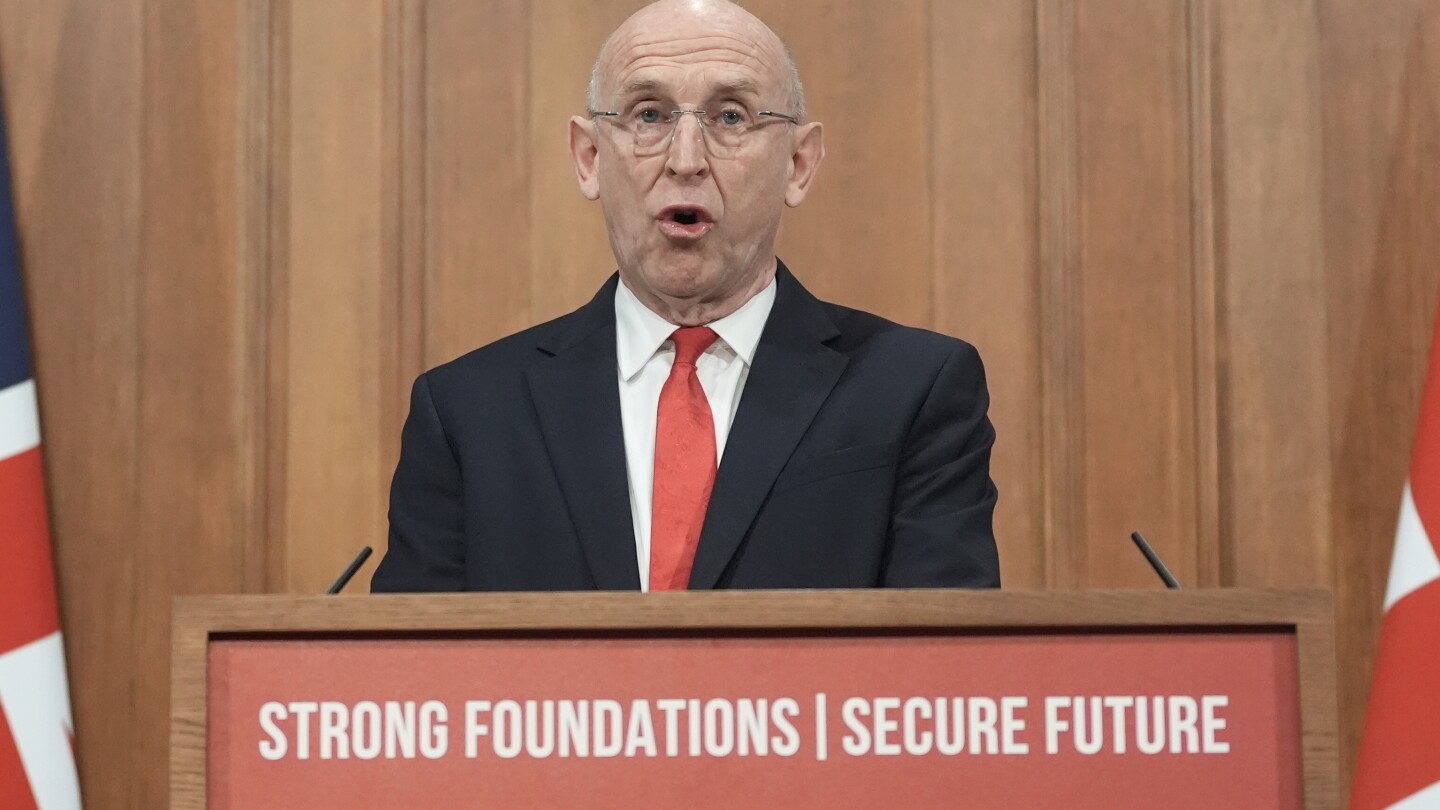
The United Kingdom has issued a stern warning to Russia following the detection of the Russian spy ship Yantar near British waters north of Scotland. Defense Secretary John Healey emphasized that the vessel had directed lasers at surveillance aircraft monitoring its activities. “We see you. We know what you’re doing. And if the Yantar travels south this week, we are ready,” Healey declared during a speech in London. This warning comes as the UK government prepares to unveil its new budget, with Prime Minister Keir Starmer advocating for significant increases in military spending to counter threats from Russia, China, and Iran. However, the government faces financial challenges, including potential tax hikes and spending cuts to address a multi-billion-pound deficit. Healey also announced plans to construct at least six new munitions factories across the UK, a move expected to create 1,000 jobs and bolster the military’s supply of explosives and propellants. The Yantar, part of the Russian navy, is known for its surveillance capabilities and potential for sabotage, prompting the UK and its allies to closely monitor its movements. Healey highlighted the need for a robust defense strategy in response to global threats, including conflicts in the Middle East, tensions between India and Pakistan, and espionage activities by China. The UK has pledged to increase defense spending to 5% of GDP by 2035, aligning with NATO standards, to ensure national security in an era of heightened geopolitical risks.
-

Russian spy ship on edge of UK waters, defence secretary says
A Russian spy ship, the Yantar, has been detected operating near UK waters north of Scotland, according to UK Defence Secretary John Healey. The vessel, known for its intelligence-gathering capabilities, has reportedly used lasers to distract pilots of surveillance aircraft monitoring its movements. Speaking at a press conference in Downing Street, Healey emphasized that this marks the second instance in a year that the Yantar has entered UK waters. The ship is specifically designed to map undersea cables and gather intelligence, posing a potential threat to the UK’s undersea infrastructure and that of its allies. Healey issued a stern warning to Russia, stating, ‘We see you. We know what you’re doing. And if the Yantar travels south this week, we are ready.’ The Yantar is part of a Russian fleet associated with the Main Directorate of Deep-Sea Research (GUGI), a program aimed at conducting surveillance during peacetime and sabotage in conflict scenarios. Healey highlighted the UK’s determination to track and deter such activities, working in coordination with allies to ensure readiness and capability. This incident follows a similar warning issued by the Defence Secretary in January when the Yantar was previously spotted in UK waters.
-

Klimt painting second most expensive artwork sold at auction
A masterpiece by Austrian artist Gustav Klimt, the Portrait of Elisabeth Lederer, was auctioned for a staggering $236.4 million in New York on Tuesday, securing its place as the second most expensive artwork ever sold at auction. The intense 20-minute bidding war involved six participants, though the buyer’s identity remains undisclosed by Sotheby’s, the auction house overseeing the sale. Painted between 1914 and 1916, the portrait has a tumultuous history, having been looted by the Nazis during World War II and nearly destroyed in a fire. It was rescued in 1948 and returned to Erich Lederer, the brother of the subject and a friend of Klimt’s contemporary, Egon Schiele. The painting remained in the Lederer family until its sale in 1983. The artwork depicts Elisabeth Lederer, an heiress and daughter of one of Klimt’s patrons, adorned in a white robe against a backdrop of a blue tapestry adorned with Asian motifs. The Nazis, who annexed Austria in 1938, plundered the Lederer art collection but spared the family portraits. In 1985, Leonard A. Lauder, heir to the Estée Lauder fortune, acquired the painting, displaying it in his Fifth Avenue residence. The sale far exceeded pre-auction estimates of $150 million, surpassing the previous record for a Klimt artwork, Lady with a Fan, which sold for $108.8 million in 2023. The event also featured other Klimt works from Lauder’s collection, including Flowering Meadow and Forest Slope at Unterach am Attersee, each fetching between $60 million and $80 million. The most expensive artwork ever auctioned remains Leonardo da Vinci’s Salvator Mundi, which sold for $450.3 million in 2017. In a curious twist, a fully functional gold toilet sculpture by Maurizio Cattelan was sold for $12.1 million just an hour after the Klimt sale, with the buyer identified as a prominent American brand.
-
Russian barrage kills 10 in Ukraine as Zelenskyy heads for talks with Turkish leader
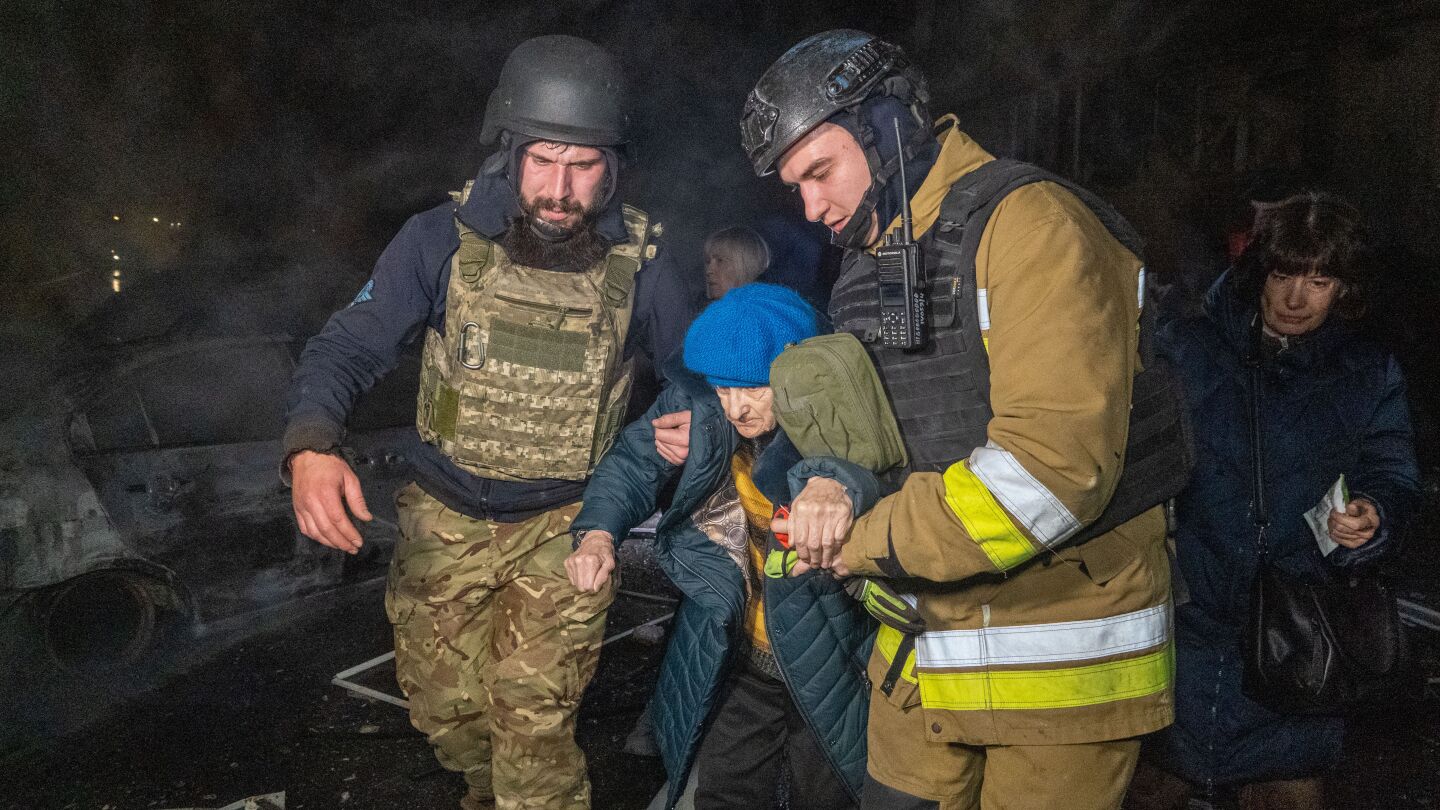
In a devastating overnight assault, Russia launched a massive drone and missile barrage across Ukraine, resulting in the deaths of 10 individuals and injuring dozens more. The attack targeted two nine-story apartment buildings in Ternopil, a city in western Ukraine, leaving emergency crews to search for survivors amidst the rubble. Ukrainian officials reported at least 37 injuries, including 12 children. According to Ukraine’s air force, Russia deployed 476 strike and decoy drones alongside 48 missiles of various types in the assault. Ukrainian President Volodymyr Zelenskyy condemned the attack, stating on Telegram that such brazen acts highlight the insufficient international pressure on Russia to cease its aggression. Zelenskyy is scheduled to meet with Turkey’s President Recep Tayyip Erdogan in a bid to strengthen diplomatic efforts to isolate Russian President Vladimir Putin and increase global pressure to end the conflict. The Ukrainian leader emphasized the importance of achieving a ‘just peace’ and hinted at potential support from the United States, which is set to impose new sanctions on Russia’s oil industry. Meanwhile, the strikes extended beyond Ternopil, with nearly 50 injuries reported in three other Ukrainian regions. NATO member Romania scrambled fighter jets after a drone entered its airspace during the attacks, while Poland temporarily closed two airports to prioritize military aviation. In Kharkiv, Ukraine’s second-largest city, drone strikes injured 46 people, including two girls, and damaged civilian infrastructure. Russia’s Defense Ministry claimed to have intercepted four U.S.-supplied ATACMS missiles fired by Ukraine, with debris damaging an orphanage and a gerontology center, though no casualties were reported.