标签: Europe

欧洲

  • Georgia marks a year of protests since EU talks stalled and crackdown intensified

    Georgia marks a year of protests since EU talks stalled and crackdown intensified

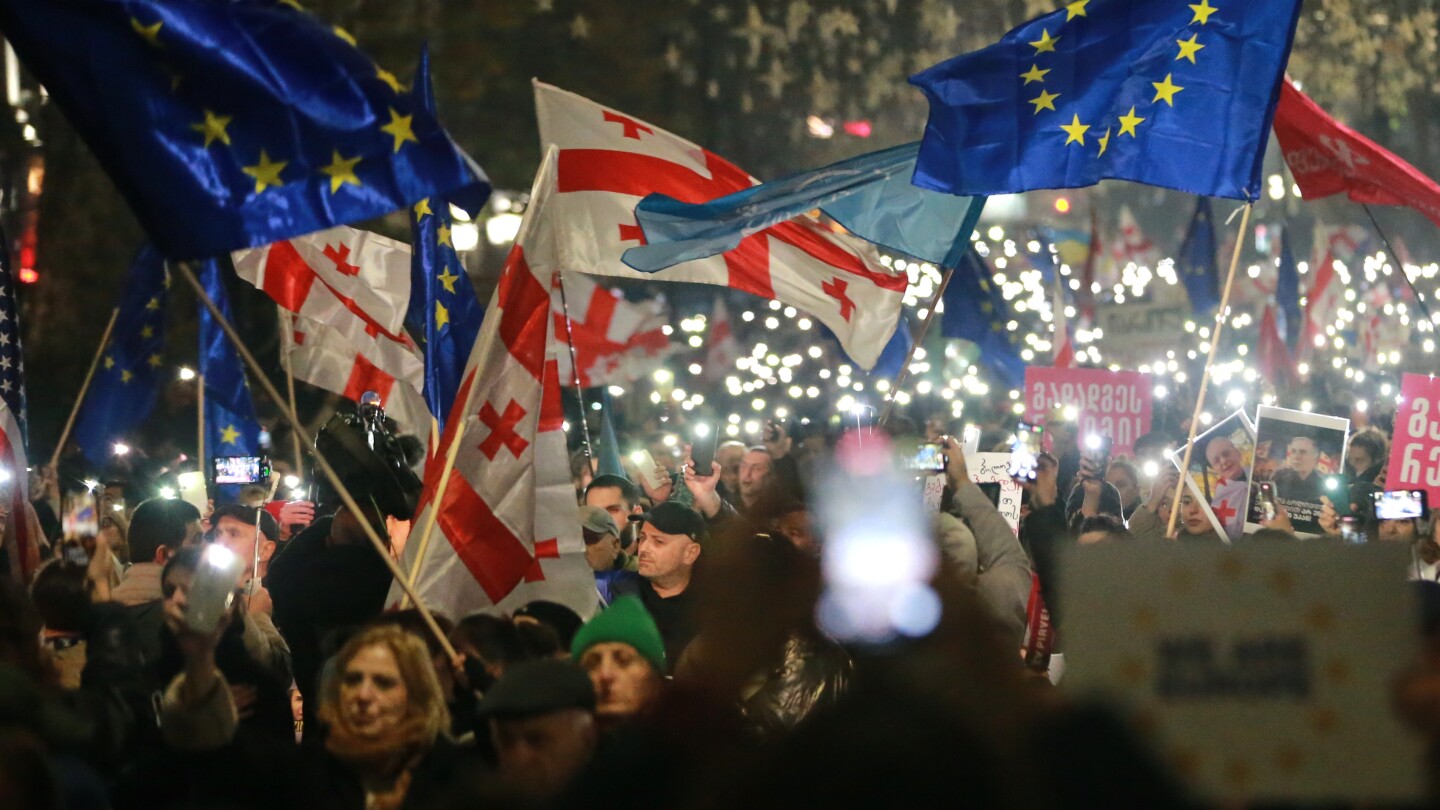
    TBILISI, Georgia — For 365 consecutive days, the streets of Georgia’s capital have echoed with dissent as thousands of citizens maintain unwavering demonstrations against their government’s controversial suspension of European Union accession negotiations. The sustained civic movement reached its one-year milestone on Friday with massive gatherings along Tbilisi’s central Rustaveli Avenue, where protesters brandished national flags, placards, and symbolic whistles while chanting pro-European slogans.

    The protest movement ignited immediately after Prime Minister Irakli Kobakhidze’s November 28, 2024 announcement halting EU membership talks. Despite diminished crowd sizes over time, daily demonstrations have persisted both outside parliament and across other urban centers, representing what participants describe as a fundamental struggle for Georgia’s democratic future.

    In response to the enduring protests, the ruling Georgian Dream party has implemented increasingly stringent measures against dissent. New legislation has dramatically escalated penalties for protest activities, with administrative detention periods extending to 15 days for participants and 20 days for organizers. Financial penalties have skyrocketed from 500 lari ($185) to 5,000 lari ($1,850) for initial violations, with criminal charges following subsequent offenses.

    Critics argue these measures mirror Russian-style suppression tactics, noting similarities to legislation used by Vladimir Putin’s administration to stifle opposition. The government has simultaneously intensified pressure on opposition parties, petitioning the Constitutional Court to ban the country’s three primary opposition groups—the United National Movement, Akhali/Coalition for Change, and Lelo.

    Among hundreds detained under the new framework is Rusiko Kobakhidze, a researcher and mother of nine, who received multiple jail sentences for blocking streets during demonstrations. “I don’t want a country where my children cannot speak openly,” she told Associated Press, capturing the movement’s central ethos.

    Despite the suspended accession process, ruling party officials maintain their commitment to European integration. Lawmaker Mariam Lashkhi asserted that “EU integration and NATO integration remain unchanged,” while simultaneously rejecting international influence on domestic policy. This position contrasts sharply with the EU’s November 4 enlargement report, which cited “democratic backsliding” and described government actions as “fundamentally incompatible with EU values.”
  • Zelensky’s chief of staff resigns after Ukrainian anti-corruption raid on his home

    Zelensky’s chief of staff resigns after Ukrainian anti-corruption raid on his home

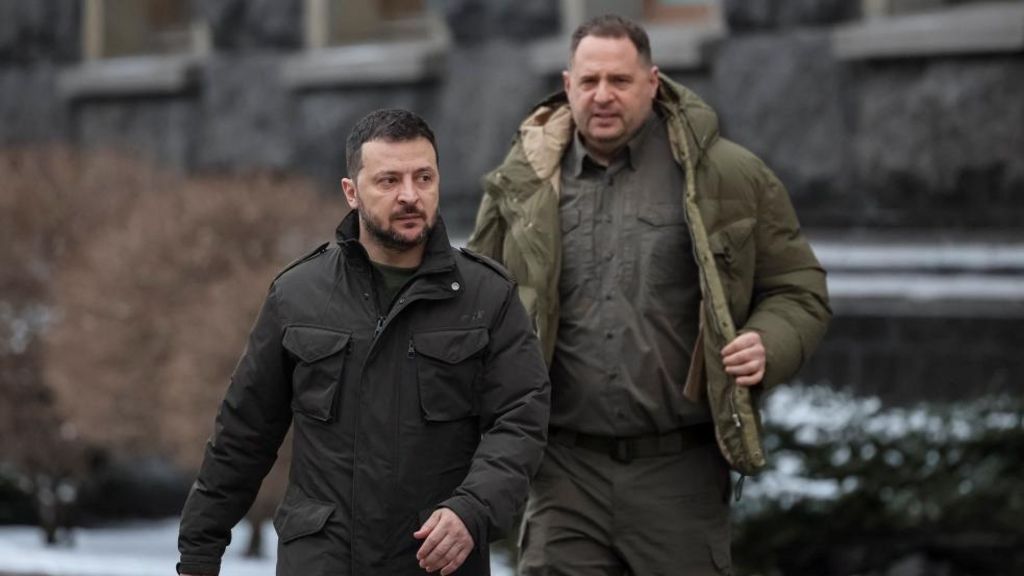
    Ukrainian President Volodymyr Zelensky announced the resignation of his chief of staff Andriy Yermak following an anti-corruption operation targeting Yermak’s Kyiv residence. The development comes at a critically sensitive moment for Ukraine’s leadership as the country navigates both intensified diplomatic efforts to end the war with Russia and mounting domestic pressure over corruption allegations.

    Yermak, 54, who has served as Zelensky’s closest advisor throughout Russia’s full-scale invasion, maintained his cooperation with investigators while not facing formal accusations. The president expressed gratitude for Yermak’s “patriotic position” in negotiations during a Friday video address from Kyiv, while simultaneously announcing consultations for his replacement.

    The resignation strikes at the core of Ukraine’s leadership structure precisely as U.S. Army Secretary Dan Driscoll prepares to visit Kyiv to advance President Donald Trump’s renewed peace initiative. American officials are scheduled to travel to Moscow the following week, highlighting the delicate timing of this political upheaval.

    In a solemn national address delivered outside his presidential office, Zelensky issued a stark warning about internal divisions: “We risk losing everything: ourselves, Ukraine, our future.” He emphasized that Russia anticipates Ukrainian missteps, vowing: “There won’t be any mistakes from our side. Our work continues, our fight continues.”

    Yermak had recently been appointed to lead crucial negotiations with Russia and maintained significant influence until his departure. Just hours before the raid, he explicitly stated Ukraine’s position against territorial concessions in an interview with The Atlantic: “As long as Zelensky is president, no-one should count on us giving up territory.”

    The corruption scandal that precipitated this political crisis involves alleged embezzlement of approximately $100 million from Ukraine’s energy sector. Investigators from Ukraine’s National Anti-Corruption Bureau (NABU) and Specialized Anti-Corruption Prosecutor’s Office (SAP) have uncovered an extensive scheme involving kickbacks and influence over state-owned companies, including nuclear energy firm Enerhoatom.

    The widening investigation has already resulted in the dismissal of two ministers and several detentions. Notably, Timur Mindich, a former business associate of Zelensky from his entertainment career and co-owner of the Kvartal 95 studio that launched the president’s acting career, has fled the country amid the scandal.

  • Talks over UK joining EU defence fund break down

    Talks over UK joining EU defence fund break down

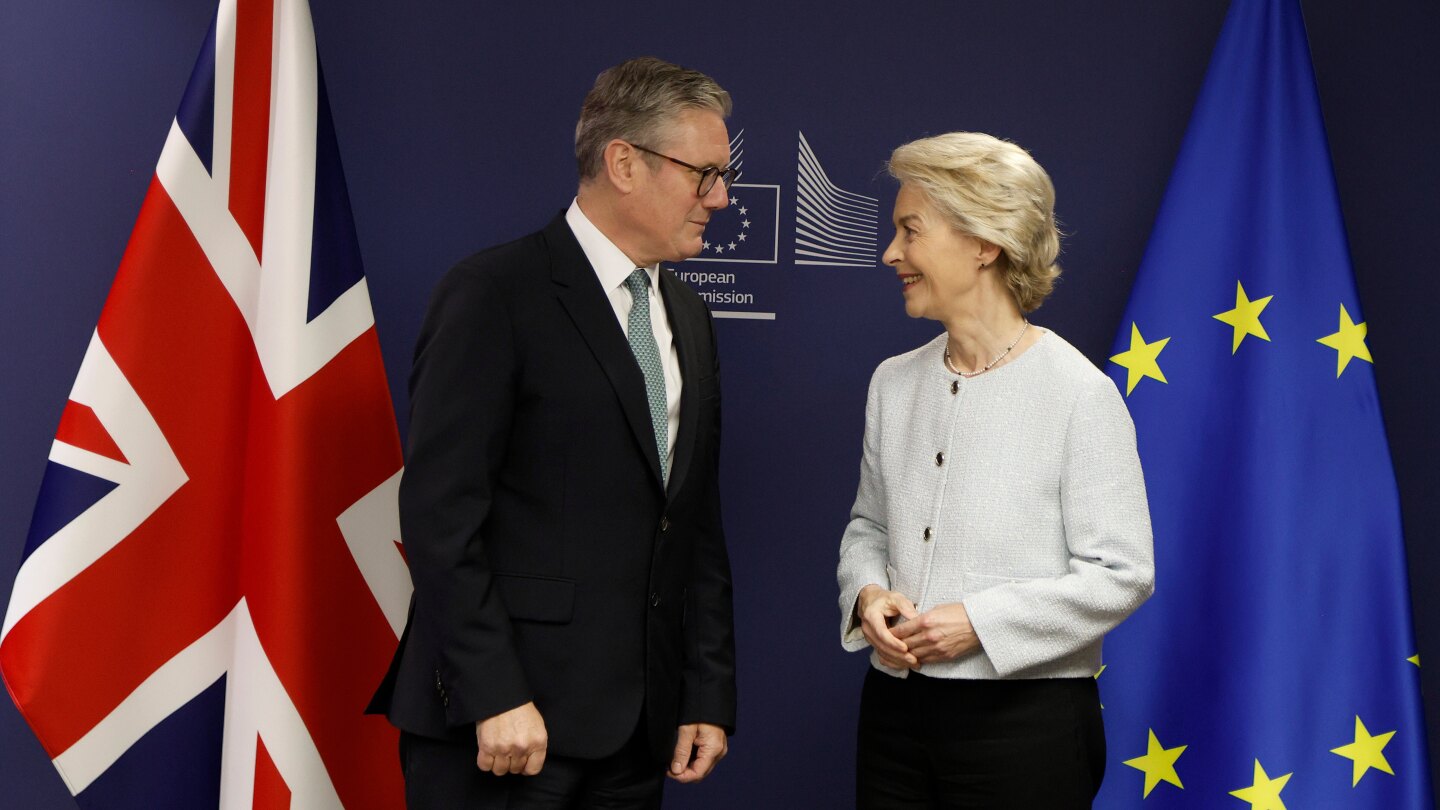
    Negotiations between the United Kingdom and European Union regarding British defense companies’ participation in the €150 billion (£130bn) SAFE loan program have reached an impasse due to unresolved financial disagreements. The breakdown occurred just before Sunday’s deadline for EU member states to submit initial funding applications for the massive rearmament initiative.

    The core disagreement centered on the substantial entry fee demanded by the European Commission for UK defense firms to access an enhanced share of the loans. While Britain acknowledged the necessity of contributing financially, officials maintained they would not accept an agreement at any cost. This stalemate effectively limits UK-based companies to providing no more than 35% of the total value of any finished defense products funded through the scheme.

    Nick Thomas-Symonds, Minister for EU Relations, expressed disappointment that discussions couldn’t be concluded before the first bidding round. ‘Our negotiators engaged in good faith throughout,’ he stated, ‘but our position remained clear: we will only sign agreements serving national interests and delivering value for money.’

    The European Commission indicated potential for future negotiations, with a spokesperson noting that while no agreement could be reached ‘at this time,’ constructive dialogue had occurred. Meanwhile, nineteen EU nations have already applied for funding from the program, with Poland securing the largest allocation at €43.7 billion.

    Industry representatives from ADS, Britain’s defense trade organization, characterized the development as a ‘frustrating setback’ for UK defense contractors. Chief Executive Kevin Craven maintained optimism that arrangements might be salvaged in the coming year.

    This negotiation failure occurs against the broader backdrop of ongoing UK-EU discussions aimed at resetting post-Brexit relations, including potential agreements on reducing border checks for food products and linking carbon trading systems. Separate talks with Canada regarding its participation in the SAFE program were also underway, with Brussels hoping to finalize an agreement before the weekend deadline.

  • Paris prosecutor says arrested man is thought to be 4th member of Louvre heist gang

    Paris prosecutor says arrested man is thought to be 4th member of Louvre heist gang

    French authorities have captured the alleged fourth and final member of an organized criminal group responsible for the breathtaking theft of France’s crown jewels from the Louvre Museum. The Paris prosecutor’s office confirmed Friday that the 39-year-old suspect, who has an extensive criminal history with six prior convictions, was taken into custody earlier this week.

    The suspect now faces preliminary charges of robbery by an organized gang—carrying a potential 15-year prison sentence—and criminal conspiracy, which could add another decade to his imprisonment if convicted. The brazen October 19 daylight heist, executed with angle grinders, a freight lift, and careful subterfuge, resulted in the loss of precious historical artifacts valued at approximately €88 million ($102 million), not accounting for their immense cultural significance to French heritage.

    According to investigative details, the operation involved a four-person team with two individuals penetrating the museum’s Apollo Gallery while two accomplices waited outside on motorbikes for a swift escape. The thieves completed their mission in under eight minutes, utilizing worker disguises with bright vests to avoid detection. Security footage revealed they used grinders to breach jewelry display cases.

    While the imperial crown of Empress Eugénie—containing over 1,300 diamonds—was recovered outside the museum, the majority of the stolen collection remains missing. This includes Napoleon’s diamond-and-emerald necklace gifted to Empress Marie-Louise, jewels associated with 19th-century Queens Marie-Amélie and Hortense, and Empress Eugénie’s pearl-and-diamond tiara.

    The sophisticated robbery has prompted serious scrutiny of security protocols at the Louvre, which welcomes more visitors annually than any other museum worldwide. The prosecutor’s statement did not specify the exact role the newly apprehended suspect played in the meticulously planned operation.

  • Hungary’s Orban defies EU partners and meets Putin again in Moscow

    Hungary’s Orban defies EU partners and meets Putin again in Moscow

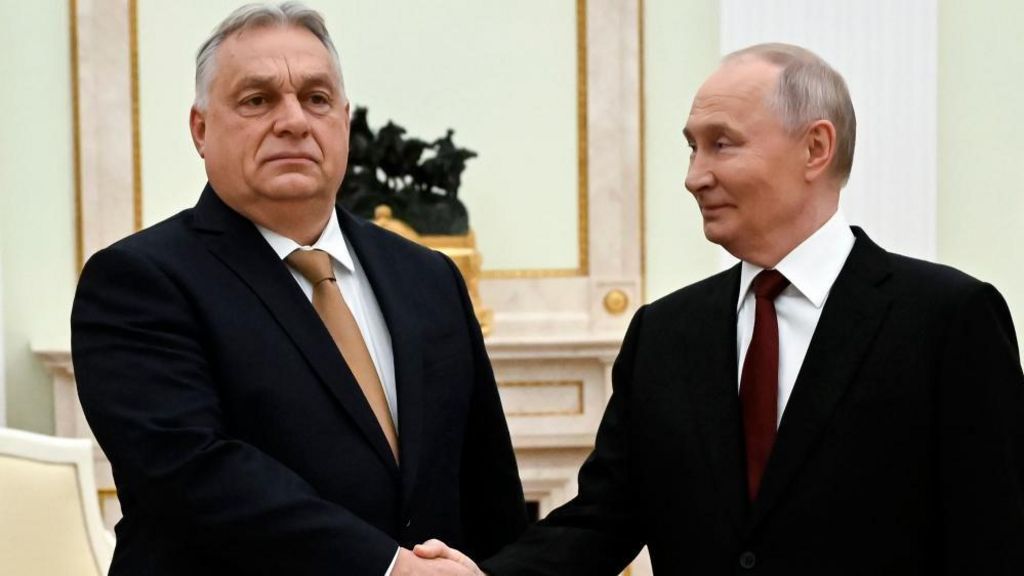
    Hungarian Prime Minister Viktor Orban has conducted a high-stakes diplomatic visit to Moscow, engaging in talks with Russian President Vladimir Putin just days before crucial negotiations regarding the Ukraine conflict. This meeting marks Orban’s continued alignment with Moscow despite Hungary’s membership in both NATO and the European Union.

    During their discussions, which were broadcast on Russian state television, Putin acknowledged Orban’s “balanced position on the situation in Ukraine” and expressed gratitude for Hungary’s proposal to host a potential Russia-US summit involving President Donald Trump. This Budapest “peace summit” initiative, however, was ultimately abandoned last month due to Russia’s unwillingness to compromise on its maximalist demands for ending the conflict.

    The timing of Orban’s Moscow visit carries significant political implications as his Fidesz party faces potential defeat in upcoming April parliamentary elections, which would mark the first change in Hungary’s leadership in 15 years according to current polling data.

    Energy security emerged as the central focus of the talks, with Orban framing the visit as part of a strategic effort to secure Russian energy supplies for Hungary, Slovakia, and Serbia during the winter months. This Moscow engagement follows Orban’s recent success in Washington, where he secured exemptions from US sanctions on Russian fuel—contingent on his continued leadership.

    Orban has consistently positioned himself as a peace advocate since Russia’s 2022 invasion of Ukraine, recently claiming on Hungarian state radio that “Europe has decided to go to war in Ukraine.” He has vigorously supported Trump’s 28-point peace plan while accusing EU leaders of “war-mongering” for attempting to adapt the proposal to address Ukraine’s concerns.

    In a recent communication with European Commission President Ursula von der Leyen, the Hungarian leader advocated for immediate, unconditional peace talks and direct EU negotiations with the Kremlin. He simultaneously expressed opposition to additional EU funding for Ukraine and rejected using frozen Russian assets to support Ukrainian defense efforts.

    Despite Hungary’s continued energy dependence on Russia—receiving over 80% of its oil and gas and 100% of its nuclear fuel from Moscow—Orban’s recent agreements with the United States to purchase liquefied natural gas and nuclear fuel may potentially strain his relationship with Russian leadership. The Prime Minister argues that without agreements with both superpowers, Hungarian heating prices would triple next month.

    Hungary faces mounting pressure from the EU to completely phase out Russian energy imports by 2027, making any Moscow agreements particularly contentious within the European bloc. The country’s trade relationship contributes approximately $5 billion annually to the Russian budget.

    Political analysts suggest that both Putin and Trump have expressed clear interest in Orban’s electoral success next April, making any diplomatic achievement valuable for all parties involved. Putin previously praised Orban at September’s Valdai Forum in Sochi, celebrating the rise of “nationally-oriented political forces” across Europe and suggesting that their growth could lead to Europe’s “rebirth.”

  • Talks on UK access to an EU defense fund have broken down

    Talks on UK access to an EU defense fund have broken down

    LONDON — Critical negotiations regarding Britain’s participation in the European Union’s landmark defense initiative have concluded without resolution, marking a significant setback in post-Brexit relationship rebuilding efforts. The British government confirmed the stalemate on Friday, revealing that financial considerations ultimately prevented agreement on UK accession to the Security Action for Europe (SAFE) program.

    The SAFE initiative, established with a substantial €150 billion (approximately $170 billion) war chest, represents the EU’s strategic response to enhance continental security and support Ukrainian defense capabilities. The proposed arrangement would have enabled British defense contractors to access favorable EU-backed financing for military procurement projects.

    Prime Minister Keir Starmer’s administration, which had prioritized mending strained relations with the European bloc following Britain’s contentious 2020 departure, now faces diplomatic challenges. Just months earlier in May, both parties had celebrated several bilateral agreements covering trade, mobility, and defense cooperation as evidence of a revitalized partnership.

    British EU Relations Minister Nick Thomas-Symonds characterized the negotiations as conducted ‘in good faith’ while emphasizing Britain’s unwavering commitment to securing arrangements that serve national interests and demonstrate fiscal responsibility. ‘While disappointing that we have not been able to conclude discussions on UK participation in the first round of SAFE,’ Thomas-Symonds stated, ‘the UK defense industry will still be able to participate in projects through SAFE on third country terms.’

    Under existing framework parameters, non-member states can contribute up to 35% of contract values within SAFE projects. British negotiators had sought to elevate this threshold through specialized arrangements.

    Despite this setback, both governments indicated continued progress in other dimensions of their May agreement. Collaborative efforts in energy security and food and beverage trade regulations proceed positively according to officials.

    EU spokesperson Thomas Regnier reaffirmed the bloc’s dedication to fostering robust UK-EU security cooperation, noting that ‘SAFE remains open by design’ and that Britain retains participation rights under standard third-country provisions.

    This development underscores the ongoing complexities in redefining UK-EU relations following Brexit, particularly in areas requiring financial contributions and regulatory alignment.

  • Police appeal after stag beheaded

    Police appeal after stag beheaded

    Local authorities in the Republic of Ireland have launched a public appeal for information regarding a disturbing wildlife crime that has shocked the community. The incident involved the deliberate decapitation of a stag in what officials are describing as a particularly callous act of animal cruelty.

    The investigation, spearheaded by local council representatives, aims to identify those responsible for the gruesome killing. The decapitation appears to have been performed with deliberate intent rather than as part of legitimate hunting activities, raising concerns about possible wildlife crime violations.

    Environmental and animal welfare organizations have expressed outrage at the incident, highlighting the protected status of deer species in Ireland and the severe penalties that can accompany such offenses. The case has drawn attention to broader issues of wildlife protection and the enforcement of animal welfare laws across rural areas.

    Authorities are urging anyone with relevant information, including potential witnesses or those who may have noticed suspicious activity in the area, to come forward to assist with the ongoing investigation. The appeal emphasizes that even minor details could prove crucial in identifying the perpetrators of this brutal act.

  • Sweden promises action against illegal sex doll sales

    Sweden promises action against illegal sex doll sales

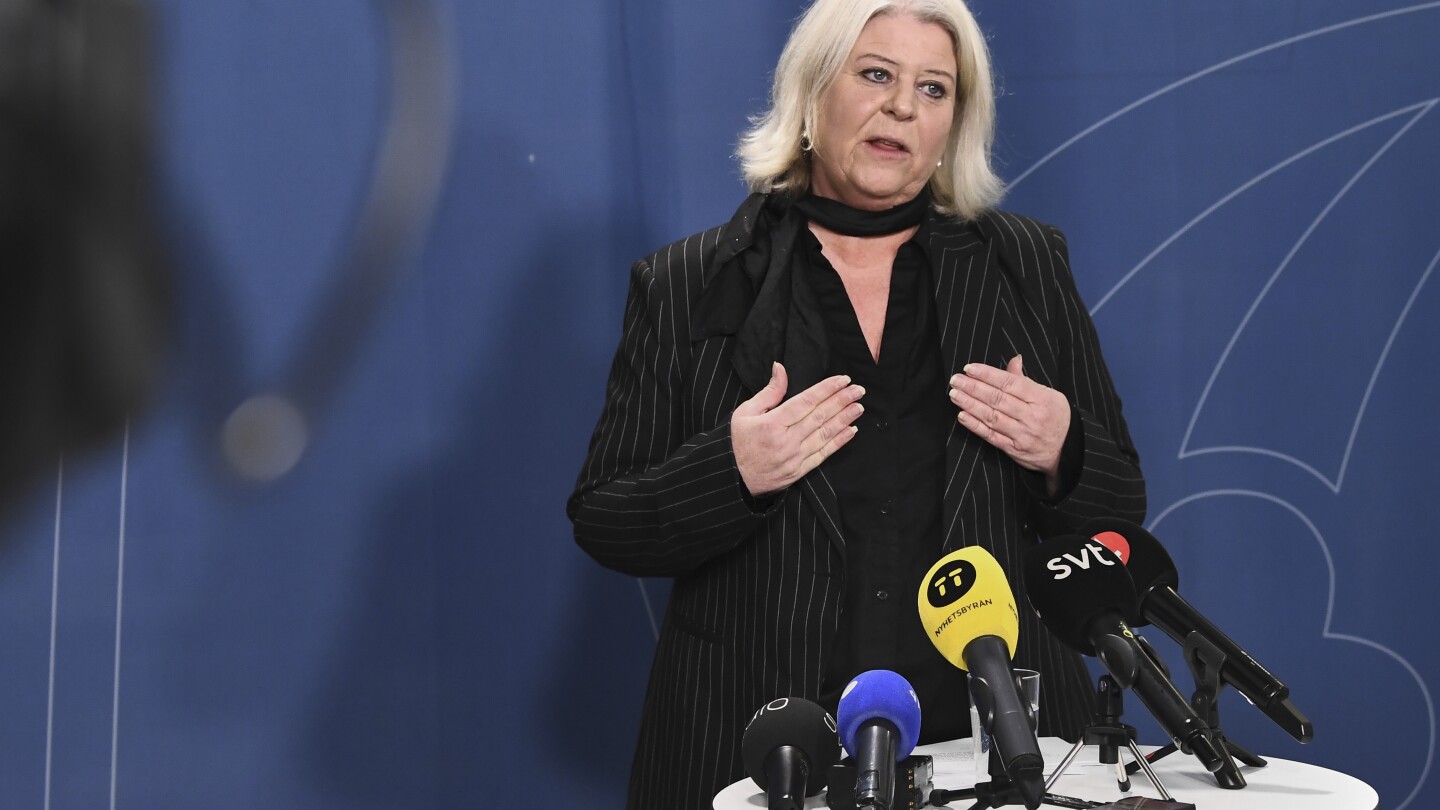
    The Swedish government has declared an aggressive stance against the online commerce of childlike sex dolls, pledging to implement stricter measures following concerning reports of such products being marketed within the country. Social Services Minister Camilla Waltersson Grönvall expressed profound distress, stating, “As a mother, your heart really breaks watching these images and pictures of these dolls,” emphasizing the government’s determination to eradicate the sale and purchase of these items entirely.

    The ministerial commitment emerged from a high-level meeting convened on Friday, gathering child protection advocates, digital commerce representatives, and government agencies. This assembly was specifically organized in response to multiple documented instances of e-commerce platforms facilitating the trade of anatomically childlike dolls. During the discussions, online marketplaces outlined their existing protocols for identifying and removing such prohibited content.

    Minister Waltersson Grönvall maintained a firm position, indicating that governmental oversight would be relentless. She explicitly warned that further legislative action remains a viable option if current industry measures prove insufficient. This initiative is part of a broader, forthcoming national strategy designed to shield children from violence, incorporating enhanced protections against sexual and online exploitation.

    Public awareness of this issue escalated when the advocacy organization ChildX filed an official police report against Amazon and other retailers earlier this month. The complaint targeted the sale of explicitly child-proportioned sex dolls, often attired in school uniforms and marketed within a sexual context. ChildX argued that these products, typically measuring about one meter in height, violate Swedish laws against material that sexualizes children and may constitute criminal child exploitation.

    Ida Östensson, Secretary General of ChildX, confirmed that their activism resulted in the removal of certain product listings. She condemned the normalization of child sexual abuse through such commodities, asserting that children must never be treated as sexual objects. In response, Amazon referenced its attendance at the government meeting and its policy of removing flagged items, reiterating its strict prohibition of child pornography. This development in Sweden mirrors similar regulatory movements in Europe, notably in France, where authorities recently pressured retailers like Shein over comparable compliance failures.

  • Ukrainian man suspected of Nord Stream pipeline explosions placed in custody in Germany

    Ukrainian man suspected of Nord Stream pipeline explosions placed in custody in Germany

    German authorities have taken into custody a Ukrainian national allegedly responsible for coordinating the September 2022 explosions that severely damaged the Nord Stream gas pipelines. Serhii Kuznietsov, 49, was ordered detained by a Federal Court of Justice judge in Karlsruhe on Friday following an arrest warrant issued by federal prosecutors.

    The sophisticated operation, which targeted critical energy infrastructure beneath the Baltic Sea, involved the use of a yacht chartered from a German company using falsified identification documents. According to investigative findings, Kuznietsov allegedly masterminded the placement of explosives on the pipelines that were designed to transport Russian natural gas to Germany.

    Kuznietsov’s extradition from Italy culminated on Thursday after the Italian Supreme Court approved his transfer on November 19. His initial detention occurred on August 21 at an Adriatic coastal campground where he was vacationing with family members. The suspect has consistently denied involvement, claiming he was serving as an army captain in Ukraine during the time of the explosions.

    This development contrasts sharply with a recent Polish judicial decision that blocked the extradition of another Ukrainian suspect in the same case. A Polish judge had characterized the pipeline attack as legitimate military action in the context of the Ukraine conflict, thereby exempting individuals from criminal liability—a legal interpretation explicitly rejected by Italian authorities in Kuznietsov’s case.

    The 2022 pipeline explosions significantly escalated geopolitical tensions as European nations sought to reduce dependence on Russian energy resources following Moscow’s full-scale invasion of Ukraine. The incident remains one of the most consequential acts of energy infrastructure sabotage in recent European history.

  • Runaway nuns can stay in Alpine convent if they leave social media

    Runaway nuns can stay in Alpine convent if they leave social media

    Three elderly Austrian nuns in their eighties have secured a temporary victory in their extraordinary standoff with Church authorities, winning permission to remain in their beloved convent despite previously being relocated to a care home against their will.

    Sisters Bernadette (88), Regina (86), and Rita (82) – the last remaining residents of Kloster Goldenstein convent near Salzburg – have been granted conditional residence following weeks of tension. The breakthrough came after Church representatives offered a compromise: the nuns may stay indefinitely provided they cease all social media activities that have garnered international attention.

    Their controversial return to the historic convent in September 2023, facilitated by former students and a locksmith after eight months in Church-mandated care, sparked both global support and institutional disapproval. The nuns’ social media presence, managed by supporters, has attracted nearly 100,000 Instagram followers through candid glimpses of their daily routines – from prayer sessions to Sister Rita’s recently viral boxing workouts.

    Harald Schiffl, spokesman for Provost Markus Grasl of Reichersberg Abbey, confirmed to Austrian Press Agency that the Church’s conditions include maintaining the convent’s enclosed areas as restricted spaces and accepting regular medical and spiritual oversight. In exchange, the nuns would receive official permission to remain with necessary support services.

    The trio’s deep roots at Schloss Goldenstein span decades: Sister Bernadette arrived as a student in 1948 (sharing classrooms with actress Romy Schneider), followed by Sister Regina in 1958 and Sister Rita in 1962. All taught at the convent’s school, with Sister Regina serving as headmistress before declining numbers led to the community’s dissolution in early 2024.

    The nuns have yet to respond to the Church’s conditions, leaving their future uncertain despite the temporary reprieve.