标签: Europe

欧洲

  • Britain says first migrant returned to France under ‘one in, one out’ deal

    Britain says first migrant returned to France under ‘one in, one out’ deal

    In a significant move to address illegal migration, the United Kingdom has deported its first migrant to France under the newly implemented ‘one in, one out’ agreement. The pilot scheme, agreed upon by British Prime Minister Keir Starmer and French President Emmanuel Macron in July 2025, aims to remove undocumented individuals arriving in small boats to France while accepting an equal number of legitimate asylum seekers with British family ties. The UK’s Home Office confirmed that a man who arrived by small boat in August was removed on a commercial flight, with additional flights scheduled in the coming weeks. Home Secretary Shabana Mahmood emphasized the importance of this step in securing the UK’s borders and deterring illegal crossings. The policy, however, has faced legal challenges, with London’s High Court temporarily halting the removal of one asylum seeker pending a full legal review. Despite these hurdles, the government remains committed to the scheme, reviewing modern slavery legislation to prevent its misuse. Critics, including campaign group Freedom from Torture, argue that the policy lacks compassion and access to legal support, urging a more humane approach to asylum seekers.

  • EU floats plan to use frozen Russian assets for Ukraine loan, bypassing a Hungary veto

    EU floats plan to use frozen Russian assets for Ukraine loan, bypassing a Hungary veto

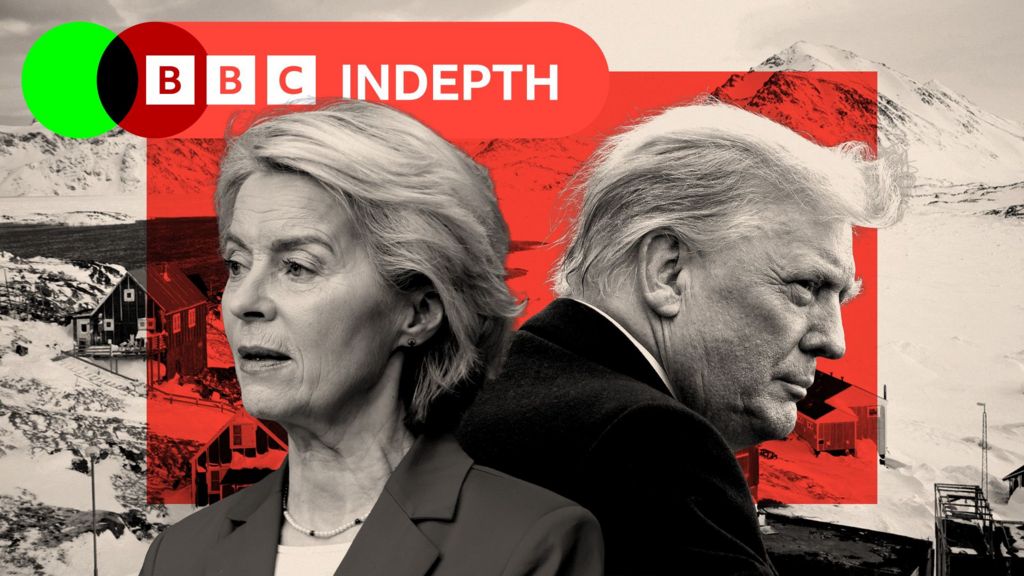
    The European Union is actively considering innovative financial strategies to support Ukraine amidst its ongoing conflict with Russia. One such proposal involves leveraging frozen Russian assets to underpin a ‘reparation loan’ aimed at bolstering Ukraine’s wartime finances. This approach seeks to circumvent potential vetoes from Hungary, a member state known for its pro-Moscow stance. European Commission President Ursula von der Leyen recently introduced the concept, emphasizing that the loan would be structured around cash balances linked to Russian central bank assets frozen in the West following Moscow’s invasion of Ukraine. Crucially, the plan avoids seizing these assets, a move that has been a red line for some EU members. The proposed mechanism would involve replacing the frozen Russian assets with zero-coupon bonds issued by the European Commission, guaranteed by either all EU countries or a coalition of willing participants. This strategy aims to ensure that Ukraine would only repay the loan once it receives compensation from Russia for war-related damages. The initiative is still in its preliminary stages, with many details, including the exact amounts, yet to be finalized. However, officials believe that this approach could provide Ukraine with much-needed financial support while minimizing political risks associated with Hungary’s potential veto. The EU has already been using interest from the frozen assets to repay a $50 billion loan extended to Ukraine by G7 countries. Moving forward, the proposed scheme could offer greater investment flexibility and higher returns, further aiding Ukraine’s recovery efforts.

  • Albania’s Rama starts fourth term as PM, targets EU membership

    Albania’s Rama starts fourth term as PM, targets EU membership

    Albania’s Prime Minister Edi Rama has been confirmed for a historic fourth consecutive term by the country’s parliament, solidifying his leadership in the Balkan nation. The Socialist Party leader, who ran unopposed, secured 82 votes in the 140-seat assembly, marking another majority victory following May’s elections. During his address to lawmakers, Rama emphasized his commitment to steering Albania toward European Union membership by 2030, declaring it the cornerstone of his new mandate. ‘European Albania is the guiding compass for every aspect of our program and the metronome for the rhythm of every reform we will undertake,’ he stated. However, Albania’s path to EU integration faces significant hurdles, including widespread corruption and its reputation as a hub for money laundering linked to drug and weapons trafficking. In a bold and controversial move, Rama recently appointed an AI-powered bot named Diella to oversee public tenders, aiming to curb corruption. Diella, introduced via a video address, asserted its role as a facilitator rather than a replacement for human oversight. The opposition has vehemently criticized the appointment, labeling it unconstitutional and potentially exacerbating corruption. Sali Berisha, leader of the Democratic Party, accused Rama’s mandate of being ‘based on crime, corruption, drugs, and the violation of the Constitution.’ The lack of parliamentary debate on the new government further fueled opposition discontent. Despite these challenges, Rama remains steadfast in his vision for Albania’s future within the EU.

  • Nestle’s new chairman Isla brings Zara magic to Nescafe maker’s turnaround

    Nestle’s new chairman Isla brings Zara magic to Nescafe maker’s turnaround

    Nestle, the Swiss multinational food and beverage giant, has appointed Pablo Isla as its new chairman, effective October 1, 2023. Isla, renowned for his transformative leadership at Inditex, the parent company of Zara, brings a wealth of expertise in logistics, e-commerce, and consumer trends to Nestle. His appointment comes at a critical juncture for the company, which has seen its shares underperform, losing 33% of their value over the past three years, while competitors like Unilever and Danone have thrived. Isla’s track record of driving rapid global expansion and integrating digital and physical retail channels at Inditex positions him as a catalyst for Nestle’s much-needed revitalization. Nestle’s recent struggles include declining sales and profits, compounded by the abrupt dismissal of former CEO Laurent Freixe. Investors are optimistic that Isla, alongside newly appointed CEO Philipp Navratil, will spearhead a digital transformation, leveraging artificial intelligence to optimize supply chains and enhance sales. Isla’s leadership style, described as hands-on and collaborative, is expected to foster innovation and rapid change within the company. His experience in mentoring and guiding executives will also be invaluable in supporting Navratil’s transition into the CEO role. With Nestle’s e-commerce sales already accounting for 20.2% of total revenue, Isla’s appointment signals a renewed focus on digital growth and operational efficiency, aiming to reclaim the company’s competitive edge in the global market.

  • Starmer, Trump to discuss foreign affairs, investment after pomp-filled royal welcome

    Starmer, Trump to discuss foreign affairs, investment after pomp-filled royal welcome

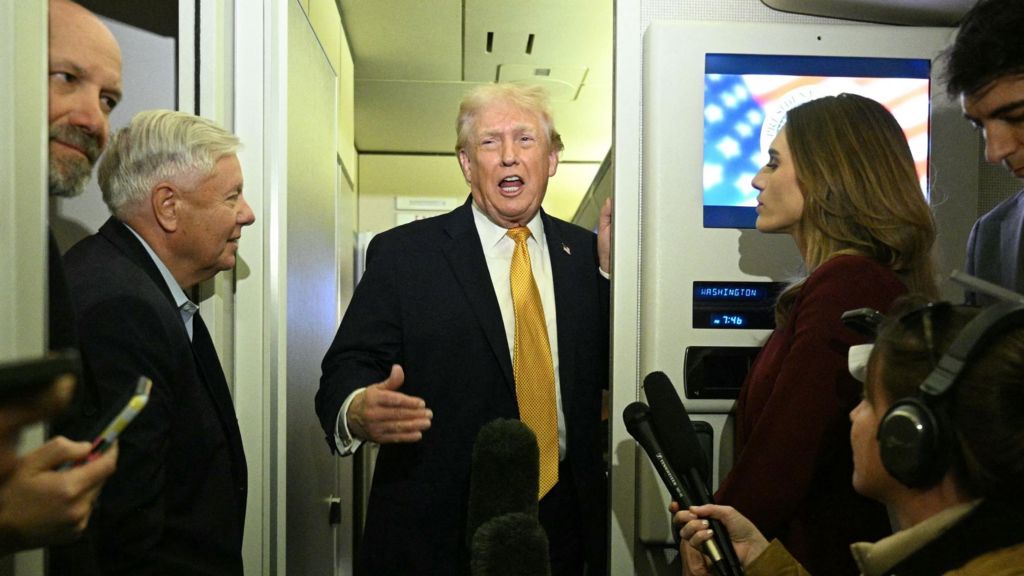
    U.S. President Donald Trump and British Prime Minister Keir Starmer convened at Chequers, the Prime Minister’s country residence, on September 18, 2025, to solidify a landmark £150 billion ($205 billion) U.S. investment package in the UK. The deal, spanning technology, energy, and life sciences, aims to rejuvenate the historic ‘special relationship’ between the two nations. This meeting, part of Trump’s second state visit to the UK, shifted focus from domestic political challenges to global affairs, following a day of ceremonial events with King Charles III. Despite the celebratory tone, underlying tensions over Ukraine, Israel, and sensitive domestic issues loomed. Starmer, facing domestic pressures, sought to leverage the visit to bolster his international standing. Trump, meanwhile, emphasized the value of U.S.-UK ties, praising Britain’s historical contributions to global values. The leaders also addressed contentious topics, including Russia’s invasion of Ukraine and Israel’s actions in Gaza, which could strain discussions. While Starmer secured significant U.S. investments, hopes for reduced steel and aluminium tariffs were dashed. The visit underscored both cooperation and friction in the U.S.-UK alliance.

  • EU set to miss UN climate deadline amid internal divisions

    EU set to miss UN climate deadline amid internal divisions

    In a significant development, European Union climate ministers are poised to confirm on Thursday that the bloc will fail to meet a global deadline for setting new emissions reduction targets. This delay stems from internal disagreements among EU governments, casting a shadow over the EU’s leadership in global climate action. The missed deadline could undermine the bloc’s credibility as it prepares to join other major powers at the United Nations General Assembly next week, where updated climate plans are expected to be presented ahead of the COP30 climate talks in November. While major emitters like China are anticipated to meet the deadline, and Australia has already announced its target, the EU’s internal discord highlights the challenges of aligning ambitious climate goals with economic and geopolitical realities. EU Climate Commissioner Wopke Hoekstra defended the bloc’s efforts, stating, “If you zoom out, you can find that we continue to be amongst the absolutely most ambitious on the global stage.” However, the EU’s inability to agree on new targets for 2035 and 2040 has sparked criticism. Germany, France, and Poland have called for further discussions on the 2040 goal at an October summit, delaying progress on both targets. As a temporary measure, EU ministers will attempt to draft a “statement of intent” outlining their climate ambitions. A draft of this statement, previously reported by Reuters, suggests the EU aims to reduce emissions by 66.3% to 72.5% by 2035. Despite the setback, the bloc remains committed to finalizing its 2035 target before COP30. Finnish Climate Minister Sari Multala emphasized, “It is hard for us to require the others, our international partners, to do the same if we don’t deliver ourselves.” The EU’s traditional role as a climate leader is under strain due to rising concerns over the costs of climate measures and competing priorities such as defense and industrial spending. Divisions among member states are further exacerbated by differing views on the European Commission’s proposal to cut net greenhouse gas emissions by 90% by 2040. While countries like Spain and Denmark advocate for stronger climate action, citing extreme weather events and energy security, others like the Czech Republic and Italy oppose the ambitious targets, citing potential harm to industries. This internal conflict underscores the complexities of balancing environmental goals with economic and political pressures in a rapidly changing world.

  • Exclusive: Turkey’s surprise Air Europa deal came down to one key thing: control

    Exclusive: Turkey’s surprise Air Europa deal came down to one key thing: control

    In a surprising move, Turkish Airlines has successfully acquired a significant stake in Spanish carrier Air Europa, outmaneuvering European rivals Lufthansa and Air France-KLM. The deal, valued at 300 million euros for a 25-27% stake, was finalized due to Turkish Airlines’ willingness to share control with Air Europa’s Hidalgo family owners, according to sources familiar with the negotiations. This marks a rare instance of a non-European airline investing in a European carrier, particularly given EU regulations that restrict majority ownership by non-EU entities. The agreement underscores Turkish Airlines’ strategic focus on expanding its presence in Iberia and Latin America, leveraging Air Europa’s established routes. While Lufthansa and Air France-KLM sought a path to majority control, their demands were incompatible with the Hidalgo family’s preference for maintaining influence. Analysts note that the deal is less about financial gain and more about geopolitical and connectivity advantages, positioning Turkish Airlines to strengthen its hub-and-spoke network. The Turkish government’s support further bolsters the airline’s strategic ambitions, with Transport Minister Abdulkadir Uraloglu highlighting the alignment with Turkey’s broader global connectivity strategy. Despite the complexities of minority stakes, Turkish Airlines’ financial stability and political backing mitigate potential risks, ensuring the deal’s viability.

  • French unions strike against austerity, pressuring Macron

    French unions strike against austerity, pressuring Macron

    France witnessed widespread protests on Thursday as teachers, train drivers, pharmacists, and hospital staff joined forces in a nationwide strike against impending budget cuts and unpopular pension reforms. The demonstrations, organized by major labor unions including CGT and Sud Rail, saw thousands gather in Paris and other cities, with high school students blocking school entrances and workers rallying against austerity measures. The protests were part of a broader ‘day of expression of railway anger,’ following months of strikes and a failed attempt to halt pension reforms earlier in the year. In Paris, metro services were severely disrupted, and regional trains faced significant delays, while high-speed TGV lines remained operational. The Interior Ministry estimated that up to 800,000 people participated in the strikes and protests, with unions condemning the government’s ‘brutal’ and ‘unfair’ fiscal plans. President Emmanuel Macron and Prime Minister Sebastien Lecornu are under mounting pressure to address France’s budget deficit, which exceeded the EU’s 3% ceiling last year. Lecornu, who relies on cross-party support to pass legislation, faces challenges in garnering parliamentary backing for the 2026 budget. The protests also impacted nuclear production, with workers at EDF reducing power output at the Flamanville 1 reactor. Pharmacists, angered by recent business changes, joined the strike, with 98% of pharmacies potentially closing for the day, according to the USPO union. Interior Minister Bruno Retailleau warned of potential clashes, deploying 80,000 police officers, riot units, drones, and armored vehicles to maintain order. The strike even delayed plans to move the historic Bayeux Tapestry, a 70-meter-long masterpiece depicting the Norman invasion of England in 1066, which is set to be loaned to Britain. The protests underscore growing discontent with Macron’s administration and its handling of public finances, as workers demand increased investment in public services and higher taxes on the wealthy.

  • Roche to acquire liver drug developer 89bio for up to $3.5 billion

    Roche to acquire liver drug developer 89bio for up to $3.5 billion

    In a strategic move to bolster its presence in the liver disease treatment market, Swiss pharmaceutical giant Roche has announced its acquisition of U.S.-based biotech firm 89bio for up to $3.5 billion. The deal, which includes $14.50 per share in cash and potential milestone payments of up to $6.00 per share, underscores Roche’s commitment to addressing metabolic and cardiovascular diseases, particularly those linked to obesity. 89bio’s flagship drug, pegozafermin, an FGF21 analogue, is in advanced stages of development for treating metabolic dysfunction-associated steatohepatitis (MASH), a severe form of fatty liver disease. Roche’s acquisition aligns with its broader strategy to complement its growing weight-loss drug portfolio, which includes recent deals with Zealand Pharma and Carmot Therapeutics. Teresa Graham, head of Roche’s pharmaceutical division, highlighted the potential of pegozafermin to achieve ‘best-in-disease efficacy’ and its suitability for combination therapies with weight-loss drugs. The move also positions Roche to compete with industry leaders like Novo Nordisk and Eli Lilly, who are exploring the use of GLP-1 treatments for liver disease. This acquisition reflects the intensifying race among pharmaceutical companies to innovate in the rapidly expanding fields of obesity and metabolic health.

  • Weekly quiz: Why were these nuns on the run?

    Weekly quiz: Why were these nuns on the run?

    This week, London became the epicenter of heightened tensions as a rally in the city sparked widespread attention. Meanwhile, the boxing community came together to honor the legendary Ricky Hatton, celebrating his remarkable contributions to the sport. On the entertainment front, the cult favorite series *The Summer I Turned Pretty* reached its dramatic conclusion, leaving fans eagerly anticipating future developments. Amidst these events, it’s worth reflecting on the broader global happenings over the past seven days. For those keen on testing their knowledge, Ben Fell has curated a quiz to challenge your memory of recent events. Whether you’re revisiting last week’s quiz or exploring the archives, there’s no shortage of engaging content to delve into. In Europe, Austria has been making headlines, particularly in discussions surrounding religion and its societal impact.