标签: Europe

欧洲

  • Inside Kyiv’s ‘invincibility train’ for residents left without power

    Inside Kyiv’s ‘invincibility train’ for residents left without power

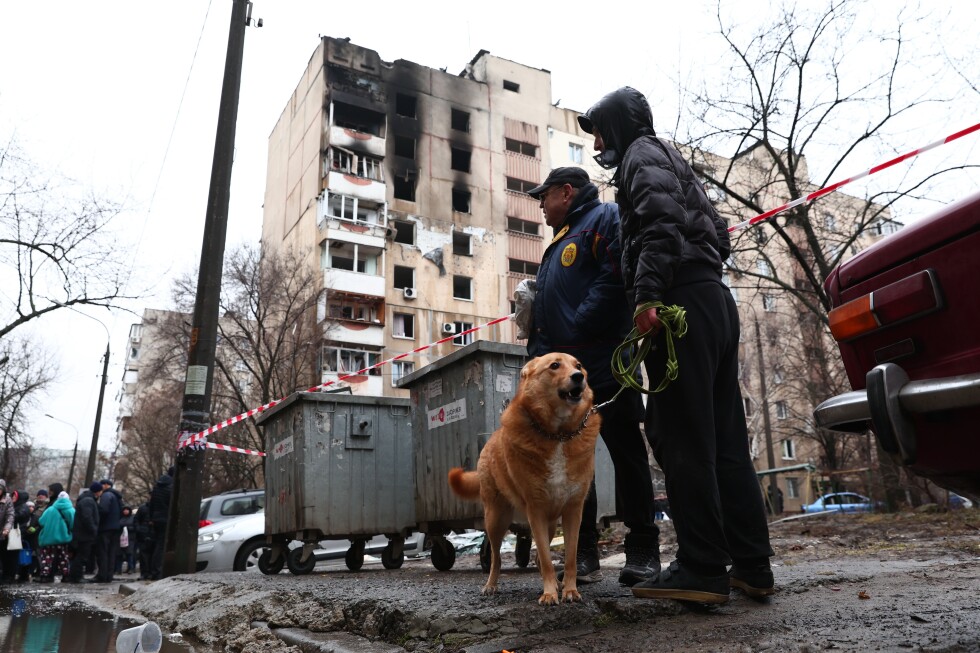
    As winter’s bitter cold intensifies across Ukraine, a remarkable humanitarian initiative is rolling through the capital city of Kyiv. Specially equipped ‘invincibility trains’ have been deployed to provide critical services and comfort to residents left without power due to Russia’s systematic targeting of energy infrastructure.

    These mobile sanctuaries represent both a practical response to humanitarian needs and a powerful symbol of Ukrainian resilience. Each train carriage has been transformed into a multi-functional support center, offering heated spaces, charging stations for electronic devices, warm meals, and psychological support services. The program operates as part of Ukraine’s broader ‘invincibility’ concept – a national network of shelters and assistance points established to help civilians withstand infrastructure attacks.

    The timing proves particularly crucial as meteorological conditions deteriorate alongside escalating military assaults on power facilities. Ukrainian Railways, operating these special services, has coordinated with municipal authorities to ensure routes serve the most affected districts. Beyond immediate physical comforts, the initiative provides a psychological boost to citizens demonstrating extraordinary fortitude amid adversity.

    Transportation officials note that these railway services complement stationary invincibility points established in schools, administrative buildings, and other public spaces. The mobility factor allows assistance to reach different neighborhoods as damage patterns shift with changing attack strategies. Volunteers and railway staff work extended hours to maintain services despite frequent power interruptions and logistical challenges posed by the conflict situation.

    This innovative approach to civilian support underscores how Ukraine’s infrastructure systems have adapted to wartime conditions, leveraging existing transportation networks to deliver essential services where they’re most needed. The program continues to evolve as winter progresses, with authorities monitoring effectiveness and expanding services where possible.

  • UK government urges police official to quit over ban of Maccabi Tel Aviv soccer fans

    UK government urges police official to quit over ban of Maccabi Tel Aviv soccer fans

    LONDON — Britain’s Home Secretary Shabana Mahmood has publicly called for the resignation of West Midlands Police Chief Constable Craig Guildford following a scathing independent report on the controversial banning of Maccabi Tel Aviv supporters from a November 2023 match against Aston Villa in Birmingham.

    The damning assessment by Chief Inspector of Constabulary Andy Cooke revealed what Mahmood described as “devastating” failures in the police force’s handling of the high-profile international soccer event. The report found that West Midlands Police significantly overstated security threats posed by Israeli fans while simultaneously underestimating risks to their safety during travel to the match.

    Speaking before Parliament on Wednesday, Mahmood declared: “The ultimate responsibility for the force’s failure to discharge its duties on a matter of such national importance rests with the chief constable. It is for that reason that I must declare today that the chief constable of West Midlands Police no longer has my confidence.”

    The controversial ban, implemented during a period of heightened tensions following both a deadly attack on a Manchester synagogue and the Israel-Hamas conflict in Gaza, drew widespread criticism including from Prime Minister Keir Starmer. Police had initially justified the decision citing “current intelligence and previous incidents,” referencing violence during Maccabi’s previous match against Ajax in Amsterdam.

    However, the inspector’s report uncovered critical procedural failures, noting that authorities conducted “little engagement with the Jewish community and none with the Jewish community in Birmingham” before implementing the ban. The investigation characterized the police approach as exhibiting “confirmation bias,” indicating that rather than following evidence, “the force sought only the evidence to support their desired position to ban the fans.” The report explicitly cleared the force of antisemitism allegations.

    Mahmood revealed that due to a 2011 policy change by the previous Conservative government, she lacks direct authority to dismiss Guildford for this “failure of leadership” but is actively seeking to reinstate that power to future home secretaries. Currently, only locally elected police and crime commissioners hold dismissal authority.

    Chief Constable Guildford has not yet issued any public statement regarding the report or the home secretary’s demand for his resignation.

  • France bans 10 British ‘far-right activists’ over anti-migrant activity

    France bans 10 British ‘far-right activists’ over anti-migrant activity

    France has officially banned ten British far-right activists from entering its territory following their involvement in operations targeting migrant vessels along the northern coastline. The French Interior Ministry announced the measure on Wednesday, identifying the individuals as members of the group ‘Raise the Colours’.

    According to official statements, these activists engaged in systematic searches and destruction of small boats intended for Channel crossings, alongside conducting propaganda activities. The ministry became aware of these operations in December 2025, determining they posed significant risks to public order and security.

    The banned individuals participated in efforts specifically designed to appeal to British citizens, encouraging them to join a movement aimed at stopping migratory patterns across the Channel. French Interior Minister Laurent Nuñez emphasized on social media platform X that France’s commitment to rule of law remains absolute, stating that violent actions or hate incitement have no place within French territory.

    Raise the Colours issued a response maintaining that their activities have always been peaceful and lawful, denying support for violence or illegal actions. The group claimed they had not received formal notification of the ban but understood it targeted specific individuals rather than the organization collectively. They describe themselves as a grassroots movement promoting unity and patriotism, primarily known for UK flag-raising campaigns and documenting illegal Channel crossing activities.

    Recent Home Office statistics reveal that 41,472 migrants crossed the Channel in 2025, marking a 13% increase from 2024 and the highest number since 2022 when nearly 46,000 made the journey. Small boat crossings have become the predominant method of illegal entry into the UK since 2020, prompting increased bilateral cooperation. In November 2025, after months of diplomatic pressure from British authorities, France agreed to begin intercepting small boats in the Channel.

  • As global warming melts glaciers, a novel sanctuary in Antarctica is opening to preserve ice samples

    As global warming melts glaciers, a novel sanctuary in Antarctica is opening to preserve ice samples

    ROME (AP) — In a landmark initiative to combat the irreversible loss of glacial archives, scientists have established the world’s first international repository for mountain ice cores within Antarctica’s frozen depths. This pioneering preservation effort aims to safeguard invaluable atmospheric history for future generations as climate change accelerates glacial melt worldwide.

    Ice cores function as natural time capsules, encapsulating millennia of Earth’s atmospheric composition within their frozen layers. With glaciers vanishing at unprecedented rates, researchers have initiated an urgent global mission to extract and preserve these climatic records before they permanently disappear.

    The inaugural shipment, containing 1.7 tons of meticulously preserved ice cores from Mont Blanc in France and Grand Combin in Switzerland, recently completed a 50-day refrigerated voyage aboard an icebreaker from Trieste, Italy. These foundational samples now reside in a specialized snow cave at Antarctica’s Concordia research station, maintained at a constant -52°C (-61°F) to ensure perpetual preservation.

    The Ice Memory Foundation—a consortium of European research institutions including France’s National Centre for Scientific Research, Italy’s National Research Council, and Switzerland’s Paul Scherrer Institute—officially inaugurated the frozen archive on Wednesday. Since its 2015 launch, the project has identified ten critical glacier sites worldwide for core extraction and future transportation to the Antarctic sanctuary.

    Professor Carlo Barbante, vice chair of the Ice Memory Foundation and professor at Ca’ Foscari University in Venice, emphasized the project’s significance: “By preserving physical samples of atmospheric gases, aerosols, pollutants and dust trapped in ice strata, we ensure future researchers can study past climate conditions using technologies not yet developed.”

    Scientific data reveals the alarming scale of glacial loss: since 2000, glaciers have diminished between 2% and 39% regionally, with approximately 5% of global glacial ice already vanished. This degradation threatens to erase irreplaceable atmospheric records crucial for understanding climate dynamics.

    Celeste Saulo, Secretary-General of the U.N. World Meteorological Organisation, characterized the preserved cores as “critical reference points rather than mere relics” that will enable scientists across generations to comprehend the pace, scale, and mechanisms of environmental transformation.

    The foundation’s decade-long vision includes establishing an international convention to guarantee permanent protection and accessibility of these frozen archives for future scientific inquiry, creating an enduring legacy of Earth’s climatic history amidst rapid environmental change.

  • EU targets Ukraine’s military needs with massive new loan program plus billions in budget support

    EU targets Ukraine’s military needs with massive new loan program plus billions in budget support

    BRUSSELS — European Commission President Ursula von der Leyen announced Wednesday a comprehensive €90 billion ($105 billion) assistance program for Ukraine, with two-thirds allocated to military requirements and the remainder designated for economic stabilization. The substantial financial package represents the European Union’s strategic commitment to strengthening Ukraine’s defense capabilities while addressing its severe economic challenges.

    The landmark loan arrangement, approved by EU leaders last month, features unprecedented repayment terms: Kyiv will only commence repayment after Russia concludes its military aggression and provides compensation for war-related damages. This condition acknowledges Ukraine’s current financial precarity, with the International Monetary Fund estimating the nation requires €137 billion ($160 billion) through 2027 to maintain basic government functions.

    Von der Leyen emphasized the strategic rationale behind the allocation, stating, “We all want peace for Ukraine, and for that Ukraine must be in a position of strength.” The military component, totaling €60 billion ($70 billion), will primarily procure defense equipment from Ukrainian, EU, and European Economic Area manufacturers, though provisions allow for external acquisitions when necessary for operational effectiveness.

    The remaining €30 billion ($35 billion) will provide direct budget support to prevent governmental collapse, with initial disbursements targeted for April 2024 pending approval by EU member states and the European Parliament. The Commission simultaneously confirmed that portions of military funding could be channeled through NATO procurement mechanisms involving United States defense contractors.

    Critical to the agreement are stringent governance conditions requiring Ukraine to implement comprehensive anti-corruption measures and rule-of-law reforms. “These conditions are non-negotiable for any financial support,” von der Leyen asserted, referencing Ukraine’s historical challenges with institutional corruption. This stipulation follows recent high-profile investigations within President Zelenskyy’s administration, including the resignation of chief negotiator Andrii Yermak amid corruption probes.

    The EU anticipates additional financial contributions from international partners including Britain, Canada, Japan, and Norway to bridge Ukraine’s funding gap, with the IMF preparing complementary loan programs for consideration next month.

  • Spanish prosecutors studying allegations of sexual assault by singer Julio Iglesias

    Spanish prosecutors studying allegations of sexual assault by singer Julio Iglesias

    Spanish judicial authorities have initiated a formal review of serious misconduct allegations targeting international music legend Julio Iglesias. The prosecutor’s office confirmed Wednesday it is examining claims that the 82-year-old singer sexually assaulted two former employees at his Caribbean properties in the Dominican Republic and Bahamas during 2021.

    The case originated from a collaborative investigative report published by Spanish digital newspaper elDiario.es and Univision Noticias, which detailed alleged incidents occurring between January and October 2021. According to the National Court prosecutor’s office, an unnamed party filed formal allegations against Iglesias on January 5th, triggering the current judicial review process.

    Spain’s National Court, based in Madrid, holds jurisdiction over crimes allegedly committed by Spanish citizens abroad, creating a potential legal pathway for prosecution. The court’s press office indicated Iglesias could potentially face proceedings before this judicial body if evidence warrants formal charges.

    The iconic singer, who has sold over 300 million records across multiple languages throughout his decades-long career, has maintained complete silence regarding the allegations. His Miami-based entertainment attorney, Russell L. King, who lists Iglesias as a client on his professional website, did not respond to Associated Press requests for commentary.

    Iglesias achieved global stardom after beginning his career in Spain, particularly gaining massive popularity throughout the United States and international markets during the 1970s and 1980s. He remains the father of contemporary pop superstar Enrique Iglesias, continuing his musical legacy through his son’s successful career.

  • Russian doctors arrested after 9 babies die in maternity hospital

    Russian doctors arrested after 9 babies die in maternity hospital

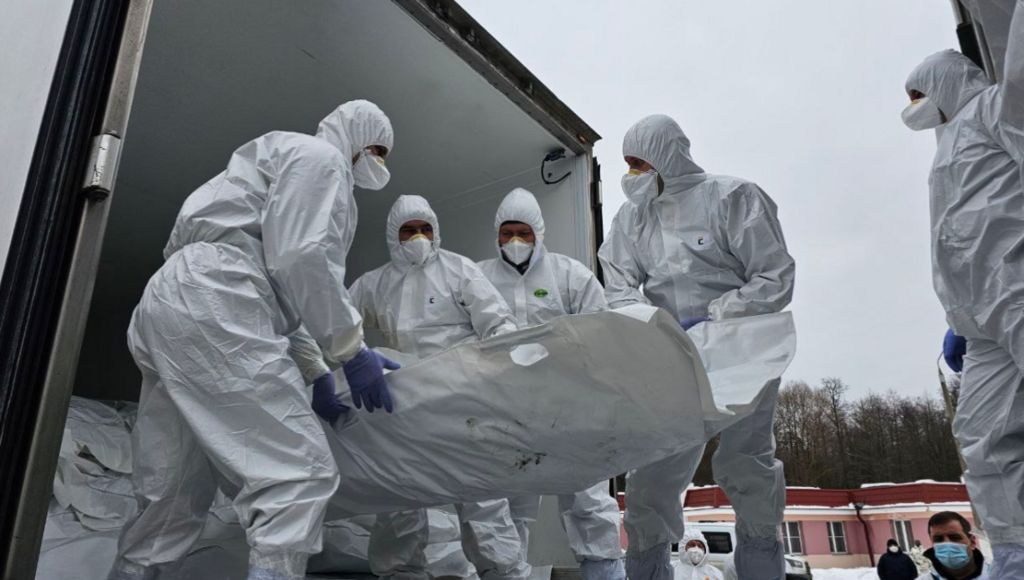
    Russian law enforcement authorities have taken two senior medical professionals into custody amid a devastating neonatal tragedy at a maternity facility in Siberia. The Investigative Committee of Russia confirmed the arrests following the deaths of nine infants at Novokutznetsk Maternity Hospital No. 1 during the extended New Year holiday period.

    The investigation, led by the nation’s primary federal investigative authority, centers on allegations of professional negligence and failure to provide adequate medical care. Committee spokeswoman Svetlana Petrenko disclosed that the fatalities occurred between January 1-12, with the initial death recorded on January 4.

    Those detained include the hospital’s chief physician and the head of the intensive care unit. Official statements indicate both medical professionals are cooperating fully with investigators as authorities determine appropriate charges and pre-trial detention measures.

    Evidence collection efforts have intensified, with investigators conducting multiple witness interviews, securing relevant documentation, and performing nine post-mortem examinations. The committee released surveillance footage showing one suspect being escorted by authorities and another signing official documents under supervision.

    Contradictory information has emerged regarding potential causes. While the official investigation has not released definitive conclusions, regional health authorities from the Kemerovo Region Ministry suggested through Interfax news agency that the infants might have suffered from severe intra-uterine infections.

    The hospital has temporarily suspended new admissions citing unusually high rates of respiratory infections within the facility. This tragic incident has generated significant public outrage across Russia, raising serious concerns about healthcare quality and medical oversight in regional facilities.

  • About 15,000 crabs recovered after lorry crash

    About 15,000 crabs recovered after lorry crash

    In a remarkable recovery effort, approximately 15,000 live crabs were successfully salvaged following a commercial truck accident that scattered the valuable cargo across a roadway. The crustaceans, with an estimated market value of €60,000 (approximately £52,000), were originally en route to supply various retail seafood markets and restaurants throughout Portugal when the incident occurred.

    Emergency responders and transportation officials coordinated a rapid containment operation to gather the displaced marine creatures, utilizing specialized equipment and techniques to preserve their viability. The logistical challenge required meticulous handling to ensure the specimens remained suitable for commercial distribution despite the unexpected delay.

    Authorities confirmed that the majority of the crustaceans survived the incident intact, preventing what could have been a significant economic loss for the distributors and retailers involved. The successful recovery operation demonstrates improved protocols for handling perishable goods during transportation emergencies, highlighting both environmental consciousness and economic practicality in contemporary food supply chain management.

    The incident has sparked conversations within the transportation industry regarding enhanced safety measures for shipping live commodities, with particular attention to container integrity and emergency response planning for specialized agricultural products.

  • France bans British far-right activists targeting migrant boats

    France bans British far-right activists targeting migrant boats

    French authorities have imposed entry bans on ten British nationals affiliated with the far-right organization ‘Raise the Colours,’ prohibiting them from entering or remaining on French territory. The French Interior Ministry announced the measure on Wednesday, citing the group’s systematic campaign to locate and destroy small vessels utilized by migrants attempting to cross the English Channel.

    The ban, formally enacted on Tuesday, targets identified militants within the movement who have conducted operations on French soil. According to official statements, these activists have not only engaged in the physical destruction of migrant boats but have also conducted propaganda activities along the northern French coastline. These efforts specifically targeted British citizens, encouraging them to join the movement’s ranks with the explicit goal of halting migration flows.

    The ministry’s announcement did not disclose the identities of the banned individuals but emphasized they were recognized as active participants in the group’s operations. This development occurs against the backdrop of increasingly strained Franco-British relations regarding cross-Channel migration, which has emerged as a particularly contentious political issue in the United Kingdom.

    Recent statistics from the UK Home Office reveal that over 41,000 individuals undertook the perilous Channel crossing in small boats last year. While this figure represents a decrease from the 2022 record of more than 45,000 migrants, it indicates an increase compared to 2024 numbers, maintaining pressure on both nations to address this complex humanitarian and political challenge.

  • The UK is watering down plans for mandatory digital ID cards after a backlash

    The UK is watering down plans for mandatory digital ID cards after a backlash

    LONDON — In a significant policy reversal, Britain’s Labour government has abandoned its controversial plan to mandate digital identification cards for employment purposes. The proposed scheme, initially championed by Prime Minister Keir Starmer as a mechanism to combat unauthorized immigration, has been substantially diluted following substantial political opposition and public skepticism.

    Transport Secretary Heidi Alexander confirmed the policy shift on Wednesday, clarifying that digital ID cards would now represent merely one option among several documentation methods for employment verification. Biometric passports will remain equally valid for proving work eligibility, fundamentally altering the compulsory nature of the original proposal.

    This development marks the latest in a series of policy reversals for Starmer’s administration, which faces mounting criticism from both opposition parties and within its own parliamentary ranks. The Prime Minister had previously asserted in September that “you will not be able to work in the United Kingdom if you do not have digital ID,” positioning the initiative as a cornerstone of immigration control and public service accessibility.

    The concept of mandatory identification documents has historically proven contentious in British politics. The nation hasn’t required compulsory ID cards for ordinary citizens since the post-World War II era, with civil liberties advocates consistently warning about potential infringements on personal freedom and data security risks.

    The government now plans to initiate a comprehensive public consultation before formulating detailed proposals for the voluntary digital identification system. This approach contrasts sharply with previous Labour administrations’ attempts to introduce similar measures, notably former Prime Minister Tony Blair’s unsuccessful effort to implement biometric ID cards two decades ago amid substantial public and parliamentary resistance.