标签: Europe

欧洲

  • Son of Norway’s Crown Princess gives evidence as rape trial continues

    Son of Norway’s Crown Princess gives evidence as rape trial continues

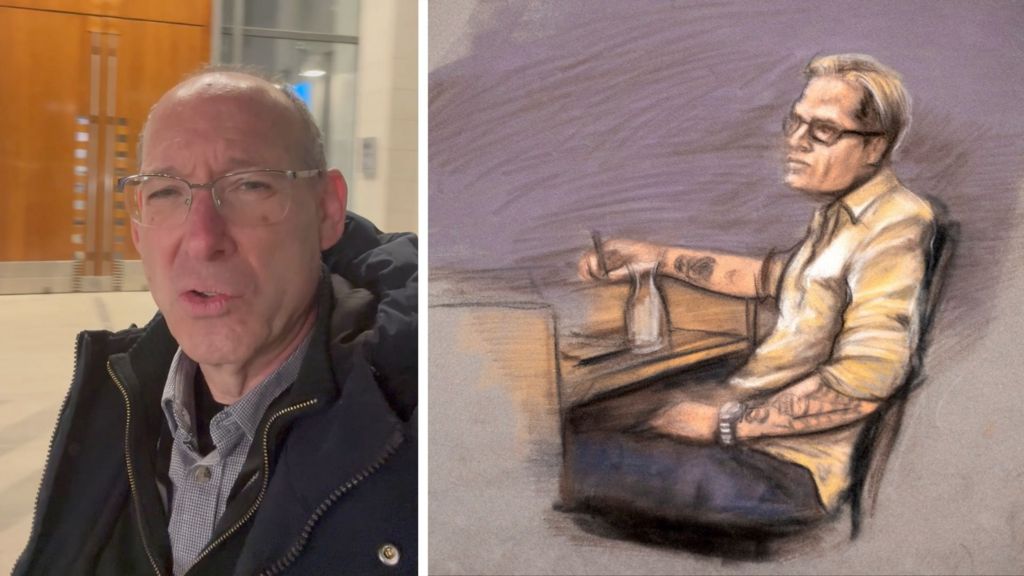
    A Norwegian court witnessed unprecedented royal participation as Marius Borg Høiby, son of Crown Princess Mette-Marit, testified in an ongoing criminal trial where he faces multiple serious charges including rape. The proceedings at Oslo District Court have drawn significant international attention due to the defendant’s unique position within Norway’s royal lineage.

    Høiby, 27, has entered a plea of not guilty to all allegations, maintaining his innocence throughout the judicial process. The case represents one of the most sensitive legal matters involving a member of the Norwegian royal family in recent history, testing the nation’s constitutional monarchy framework which typically maintains distance from judicial matters.

    International media, including BBC correspondent Paul Kirby reporting from outside the courthouse, have closely monitored developments in the trial that began earlier this week. The case has sparked broader conversations about legal accountability, privilege, and the evolving role of modern European monarchies when their members become entangled in criminal proceedings.

    Norwegian legal experts note that the case proceeds under standard judicial protocols despite the royal connections, with the court maintaining strict impartiality. The prosecution’s evidence presentation continues alongside witness testimonies, with the trial expected to extend through several more court sessions before reaching a verdict.

  • Fearing Russia will seize her town, war widow moves husband’s grave to Kyiv

    Fearing Russia will seize her town, war widow moves husband’s grave to Kyiv

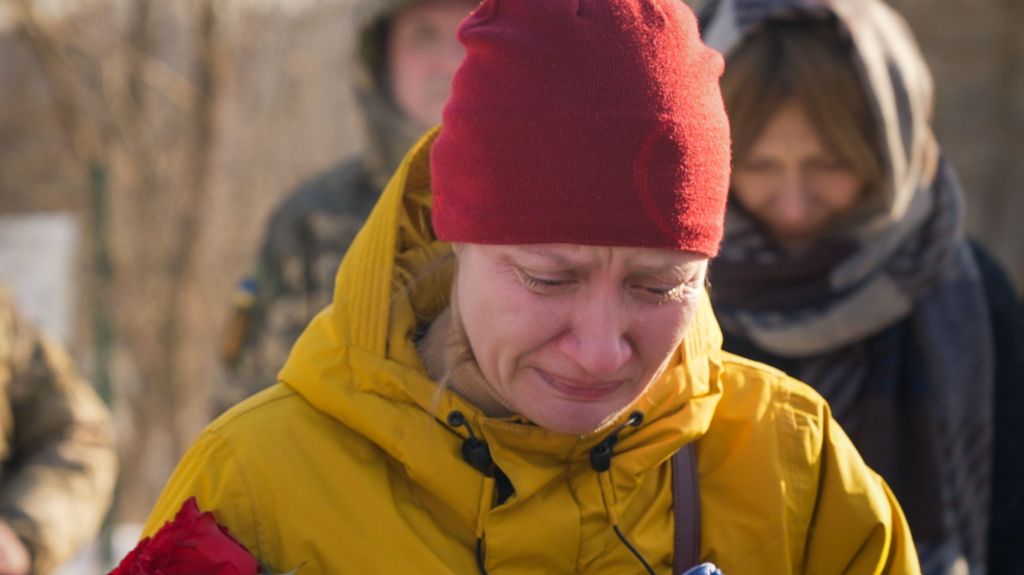
    The crisp silence of a Kyiv military cemetery fractures under the solemn sound of a trumpet salute, followed by the sharp report of rifle fire. Soldiers stand at attention, a Ukrainian flag draped over a polished wooden coffin as snow blankets the ground in silent tribute. A woman’s anguished cry pierces the ceremony—Natalia is burying her husband Vitaly for the second time.

    Killed in 2022 during intense fighting in eastern Donbas, Vitaly was initially laid to rest in his hometown of Slovyansk. However, with Russian forces advancing and the region becoming increasingly vulnerable to occupation, Natalia made the painful decision to exhume her husband’s remains and relocate them hundreds of miles to the relative safety of Ukraine’s capital.

    ‘When we first buried him in Slovyansk, Ukrainian forces were liberating territory and we believed the war would conclude quickly,’ Natalia explains through tears. ‘Now the frontline shifts ever closer, and I feared Vitaly might end up under Russian occupation.’

    Vitaly, a ceramics artist by profession, had volunteered to defend his country during the initial days of Russia’s full-scale invasion. ‘He didn’t want to go, but felt compelled—he was a true patriot,’ Natalia recalls. Tragically, he never met their daughter, as Natalia was pregnant when he was killed.

    This deeply personal story unfolds against the backdrop of complex geopolitical negotiations. As the United States attempts to broker a peace agreement between Moscow and Kyiv, Russia continues its relentless assault on Ukrainian energy infrastructure and frontline positions. The most significant pressure for compromise currently rests on Ukraine’s shoulders.

    The impending talks are expected to address the most sensitive issue: the status of the eastern Donbas region where countless soldiers like Vitaly have perished. While Ukraine maintains control of approximately one-fifth of the territory, including Slovyansk, Russian forces continue their push to capture more ground.

    Kyiv’s position favors a frozen conflict without additional territorial concessions, while Moscow demands control over the entire region—a proposition reportedly receiving consideration from American mediators. This potential compromise, though far from Vladimir Putin’s original ambition to capture all of Ukraine, would nonetheless allow the Russian leader to claim a form of victory.

    Meanwhile, the reality on ground remains brutally dangerous. Natalia describes Slovyansk’s current conditions: ‘Drones strike minibuses in the streets, glide bombs crater the city center. Attacks occurred weekly months ago; now they happen every few days.’

    North of Slovyansk, around Kharkiv, defensive measures intensify as the danger zone expands. Workers install protective netting over roads to shield against Russian drones, while Ukrainian soldiers innovate in clandestine workshops to counter Russia’s numerical and resource advantages.

    In one such underground facility, soldiers of the Typhoon unit repair battle-damaged drones and develop new technologies. Their commander, 29-year-old Roman, avoids discussions about territorial concessions: ‘People quarrel over this, but we need unity against the Russians instead.’ Having lost numerous comrades during two years of infantry service in Donbas, Roman believes ceding territory to Putin would only invite future aggression.

    Another soldier, Maksym, offers a redefined perspective on victory: ‘Our triumph lies in preserving statehood. Even with minimal territory, maintaining our constitution and institutions means Ukraine endures.’ He acknowledges Russia’s overwhelming size advantage but insists surrender cannot be an option.

    Back in Kyiv, as gravediggers complete their solemn task, Natalia finds comfort in having her husband securely relocated where she and their daughter Vitalina can visit safely. The child, who knows her father only through videos and photographs, ‘loves him deeply despite never meeting him,’ Natalia shares with a bittersweet smile.

    In a testament to hope amid tragedy, Natalia reveals the couple had preserved sperm at a clinic days before Vitaly’s death. She hopes to soon tell him she’s pregnant again—a practice increasingly common among Ukrainian soldiers deploying to the front.

    The devastating human cost of four years of full-scale war weighs heavily. Natalia acknowledges that many quietly accept ceding Russian-controlled territory, but she cannot bear the thought of surrendering additional land, including the town where she and Vitaly built their life together.

    With unwavering conviction, she states: ‘I have no doubt Vitaly would want the army to continue fighting rather than concede. Russia might pause for a year, then achieve another breakthrough toward Kharkiv. I simply don’t believe they will stop.’

    The story of Vitaly’s reburial encapsulates Ukraine’s painful dilemma—honoring immense sacrifice while facing impossible choices between territorial integrity and potential peace.
  • Church fresco resembling Italian PM has face scrubbed out

    Church fresco resembling Italian PM has face scrubbed out

    An artistic restoration project at Rome’s Basilica of St Lawrence in Lucina has ignited controversy and prompted Vatican intervention after a restored angelic fresco bore striking resemblance to Italian Prime Minister Giorgia Meloni. The incident began when visitors noticed the freshly repainted cherub’s facial features unmistakably mirrored those of the right-wing leader, sparking widespread attention and debate.

    Eighty-three-year-old artist Bruno Valentinetti, who originally created the fresco in 2000 and was commissioned to restore it following water damage, initially denied intentional similarity but later acknowledged the likeness. Valentinetti claimed he received direct instructions from Vatican authorities to obscure the controversial face, which he subsequently executed through crude overpainting that left the angel featureless.

    Cardinal Baldassare Reina of Rome issued a strongly worded statement expressing profound disappointment, emphasizing that ‘images of sacred art and Christian tradition cannot be misused or exploited.’ The Diocese of Rome has announced plans to properly restore the artwork to its original iconography following consultation with cultural preservation authorities.

    The basilica, located merely five minutes from Meloni’s government office, experienced unusual visitor traffic as curious onlookers sought to photograph the controversial artwork. Reverend Daniele Micheletti, the church’s priest, noted that many visitors came specifically to take selfies rather than for prayer, fundamentally altering the sacred atmosphere of the historic site.

    Prime Minister Meloni responded to the controversy with humor on Instagram, posting that she was ‘definitely not like an angel’ accompanied by laughing emojis. Meanwhile, Italy’s cultural heritage protection agency has mandated that any future restoration work must receive official authorization and submit preliminary sketches for approval.

    The Baroque-era Basilica of San Lorenzo in Lucina, housing works by masters including Bernini and Reni, now finds its contemporary artwork subject to unprecedented bureaucratic oversight despite the 2000 fresco not holding protected heritage status.

  • The new Czech government of populist prime minister Babiš survives parliamentary no-confidence vote

    The new Czech government of populist prime minister Babiš survives parliamentary no-confidence vote

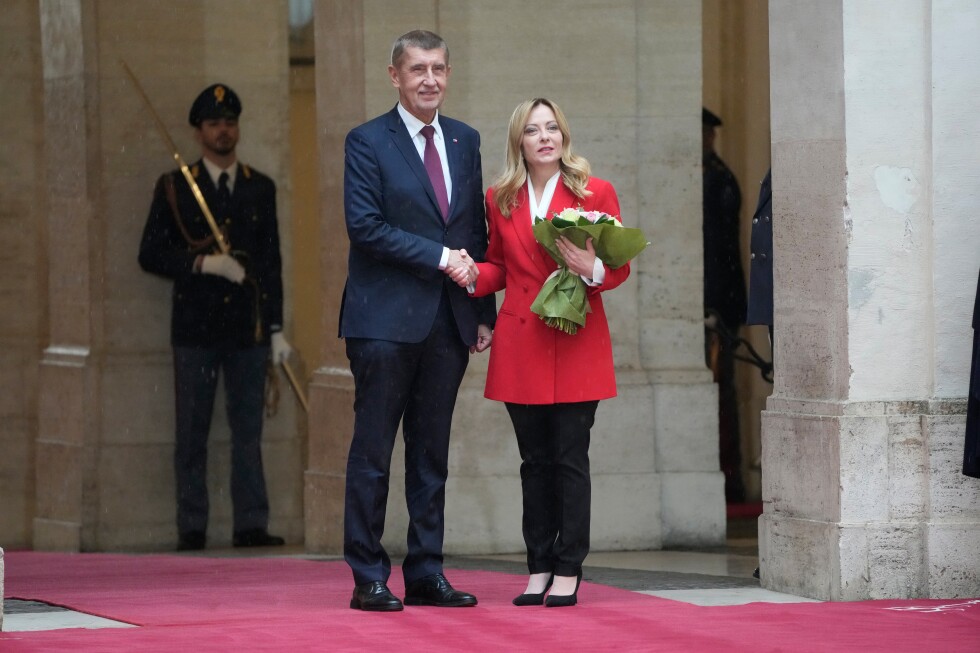
    PRAGUE — The Czech Republic’s populist-led government has successfully weathered a parliamentary no-confidence motion initiated by opposition parties concerning a constitutional dispute involving the country’s president. The vote concluded on Wednesday after two days of intense debate, with only 84 of the required 101 lawmakers in the 200-seat lower house supporting the motion to dismiss Prime Minister Andrej Babiš’s three-party coalition government.

    The political crisis emerged from President Petr Pavel’s refusal to appoint Filip Turek, a nominee from the right-wing Motorists for Themselves party, as environment minister. The decision came after a domestic newspaper uncovered controversial social media posts on Turek’s Facebook account containing openly racist, homophobic, and sexist content. While Turek apologized for some posts, he denied authorship of others.

    In response, Foreign Minister Petr Macinka, who leads the Motorists party, accused President Pavel of constitutional violations and threatened political consequences, including preventing the president from representing the Czech Republic at upcoming NATO summits. Pavel characterized these threats as attempted blackmail.

    Prime Minister Babiš has supported his coalition partner, rejecting opposition demands to dismiss Macinka. The Motorists party, which formed a coalition with Babiš’s ANO movement following their substantial victory in October’s election, has maintained its position without apology.

    The controversy has sparked significant public response, with tens of thousands of Czechs rallying in Prague and other cities on Sunday to express support for President Pavel. Despite a meeting between Pavel and Babiš on Wednesday, both leaders maintained their positions, with the president declaring his decision final and the prime minister considering the matter closed.

    The ongoing tension highlights deeper ideological divisions within Czech politics. The current coalition government, which includes the anti-migrant Freedom and Direct Democracy party alongside the Motorists, has advocated for reducing support to Ukraine and resisting certain European Union policies. This stands in contrast to President Pavel, a retired army general, and opposition parties who remain strong supporters of Ukraine’s defense against Russian aggression.

  • Italy averted Russian-linked cyberattacks targeting Winter Olympics websites, foreign minister says

    Italy averted Russian-linked cyberattacks targeting Winter Olympics websites, foreign minister says

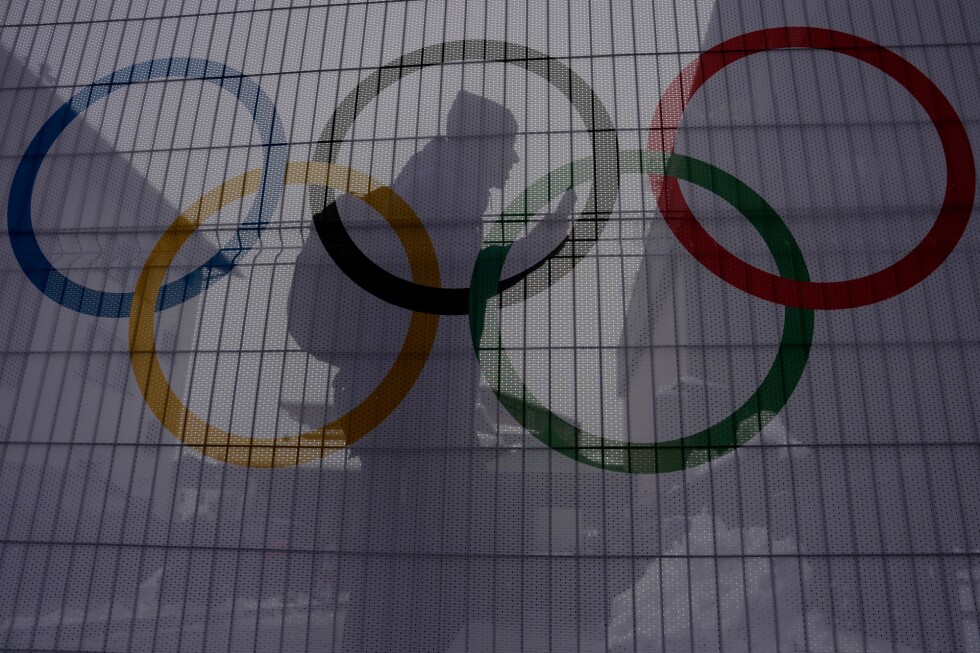
    Italian authorities have successfully intercepted and neutralized a sophisticated cyber offensive originating from Russia, targeting critical national infrastructure. Foreign Minister Antonio Tajani, speaking from Washington D.C., confirmed the attacks were directed at multiple foreign ministry offices internationally, with the embassy in Washington specifically identified, alongside digital systems supporting the ongoing Winter Olympics in Cortina d’Ampezzo.

    The attempted breaches, disclosed just two days before the Milano Cortina 2026 Winter Olympics opening ceremony, also aimed at Olympic-related websites and hotel networks in the host mountain resort. Minister Tajani attributed the attacks to Russian sources but declined to elaborate on specific technical details or potential motives behind the operation.

    Concurrently, Interior Minister Matteo Piantedosi addressed the Italian Parliament, outlining extensive security measures for the Games. A force of 6,000 security personnel, comprising bomb disposal specialists, counter-terrorism units, and snipers, is being deployed across venues spanning from Milan to the Dolomites. This robust security deployment is designed to safeguard both physical and digital domains throughout the international event, which commenced with initial curling matches in Cortina.

  • How plans for Trump International hotel in Belgrade unravelled

    How plans for Trump International hotel in Belgrade unravelled

    BELGRADE – A controversial plan to construct a Trump International Hotel on the site of Belgrade’s bomb-damaged defense ministry has unraveled amid criminal proceedings against government officials and widespread public opposition, marking a significant setback for Serbia’s attempts to redefine its relationship with the United States.

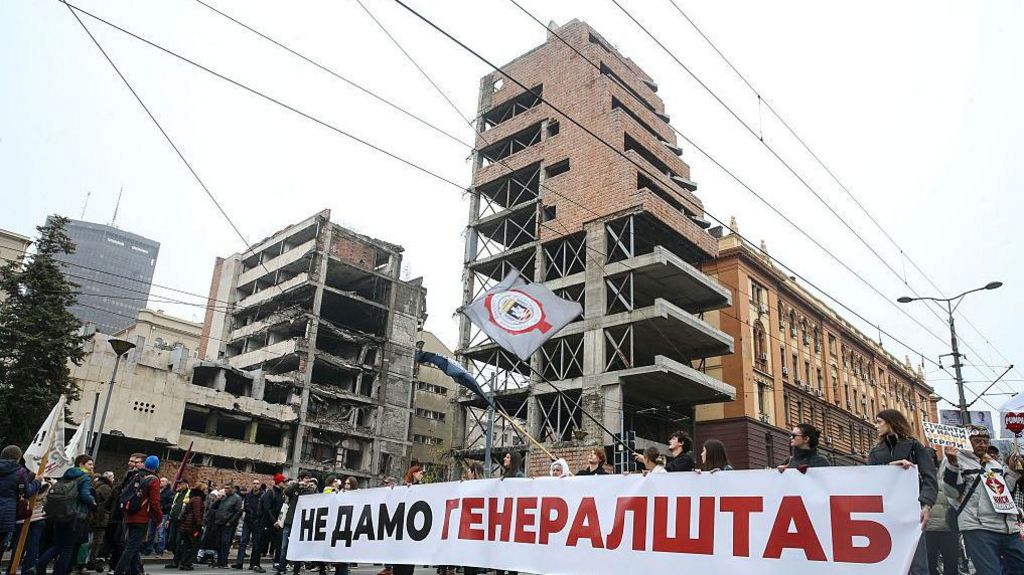
    The project, championed by President Aleksandar Vucic and negotiated with Jared Kushner’s Affinity Global company, faced immediate obstacles due to the site’s protected cultural heritage status. The Generalstab complex, partially destroyed in NATO’s 1999 bombing campaign, represents both architectural significance as the only completed work in Serbia by renowned Yugoslav architect Nikola Dobrovic and a poignant memorial for victims of the air strikes.

    Culture Minister Nikola Selakovic now faces trial for abuse of office, accused of manipulating documentation to revoke the building’s protected status. Prosecutors have demanded a three-year prison sentence, though President Vucic has pledged to pardon the minister if convicted. The case has triggered constitutional concerns after the governing party pushed through judicial reforms that EU Enlargement Commissioner Marta Kos described as a ‘serious step backwards’ for judicial independence.

    The proposed development sparked unusual alliances in opposition, uniting architects, military veterans, and student-led anti-corruption protesters. Critics highlighted the lack of transparent tender processes and the symbolic implications of replacing a site of national trauma with a luxury hotel branded by a former US president whose administration maintained strong support for Kosovo’s independence.

    Kushner’s company ultimately withdrew from the project, stating they wished to ‘unite rather than divide’ the Serbian people. The retreat represents a diplomatic embarrassment for Vucic, who had framed the development as part of efforts to ‘overcome the burden from 1999’ and build stronger US relations.

    Meanwhile, Kushner has shifted focus to Albania, where Prime Minister Edi Rama has expressed enthusiasm for a planned luxury resort on Sazan Island. The contrast in reception highlights the complex geopolitical landscape of the Balkans, where historical grievances continue to shape economic and diplomatic engagements.

  • German activist jailed in Hungary for attacks at Nazi rally

    German activist jailed in Hungary for attacks at Nazi rally

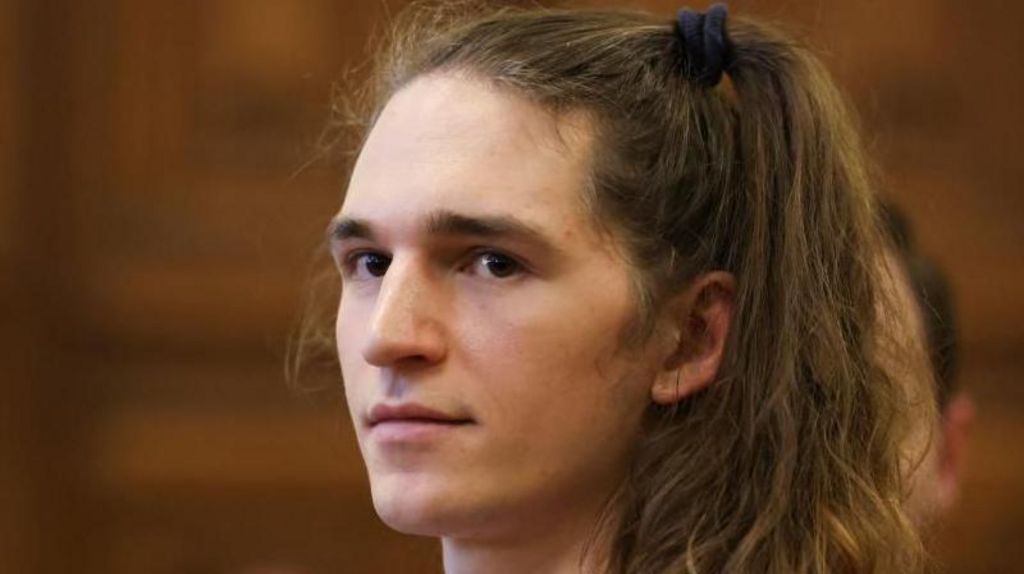
    A German court has sentenced 25-year-old left-wing activist Maja T. to eight years imprisonment in Hungary for their involvement in assaults on right-wing extremists and membership in the militant far-left organization Antifa Ost. The conviction stems from violent incidents that occurred in Budapest during February 2023, coinciding with an annual commemoration of Nazi soldiers and Hungarian collaborators from World War II.

    Hungarian prosecutors successfully argued that Maja T. participated in two separate attacks and was an active member of a criminal organization. The assaults, which involved approximately 20 alleged left-wing extremists armed with batons, rubber hammers, and pepper spray, resulted in nine injuries including four serious cases. Officials stated the attackers targeted individuals they believed had participated in the far-right commemorative events.

    The case has generated significant international attention due to concerns about judicial fairness. Germany’s Constitutional Court previously expressed apprehension that Maja T., who identifies as non-binary, might face discriminatory treatment in Hungary’s legal system, which only recognizes binary gender classifications and has banned Pride marches. However, this ruling came after German authorities had already extradited Maja T. to Hungary via helicopter in a 2024 overnight operation.

    German Member of Parliament Martin Schirdewan from the socialist Die Linke party characterized the proceedings as a ‘political show trial,’ accusing Hungarian Prime Minister Viktor Orbán of exploiting the case for electoral purposes. ‘Eight years in prison for Maja T. is disproportionate,’ Schirdewan stated. ‘This is not about justice, but about setting a political example.’

    The controversial ‘Day of Honour’ commemoration that triggered the violence marks the 1945 attempt by German Wehrmacht, Waffen-SS, and Hungarian collaborators to break through Soviet forces besieging Budapest. While tolerated by Hungarian authorities, the event annually attracts far-right groups from across Europe.

    Parallel trials against other Antifa Ost members are currently underway in German courts in Düsseldorf and Dresden, examining both the Budapest violence and related incidents in Germany. Hungary classifies Antifa Ost as a terrorist organization, a designation shared by the United States since November 2023 under the Trump administration’s crackdown on Antifa activists. Germany’s far-right Alternative for Germany (AfD) party has similarly advocated for domestic prohibition of the organization.

    Maja T. maintained silence regarding the allegations throughout the trial proceedings. The verdict remains subject to appeal through the Hungarian judicial system.

  • Former senior French minister defends ties to Epstein

    Former senior French minister defends ties to Epstein

    Jack Lang, the 86-year-old former French Culture Minister, has publicly defended his past association with convicted sex offender Jeffrey Epstein following mounting pressure for his resignation from the Arab World Institute presidency. The controversy emerged from recently disclosed court documents in the United States that revealed Lang’s connections to the disgraced financier.

    In an interview with French broadcaster BFMTV, Lang asserted he was entirely unaware of Epstein’s criminal background when they first met approximately fifteen years ago through mutual acquaintance Woody Allen. Lang characterized Epstein as ‘passionate about art, culture and cinema’ rather than a personal friend, though he acknowledged requesting occasional favors including transportation via Epstein’s private car and aircraft for himself and family members.

    The former minister, who served under President François Mitterrand between 1981-1993 and later as Education Minister until 2002, emphasized that had he known about Epstein’s criminal convictions—including his 2008 Florida conviction for soliciting a minor—he would have severed contact immediately. ‘I am not in the habit of spitting on those I knew at a particular time and who went on to be accused of crimes,’ Lang stated during the televised appearance.

    The scandal has extended to Lang’s family, prompting his daughter Caroline Lang to resign from her position as head of France’s Independent Production Union. The former actress and current film producer disclosed to Mediapart that she met Epstein in 2012 through Woody Allen and his wife, believing his expressed interest in supporting young French and international artists. Although Epstein’s lawyers established Prytanee LLC for this purpose, Caroline maintains she neither invested in nor received funds from the venture, acknowledging she had been ‘incredibly naive’ in her associations.

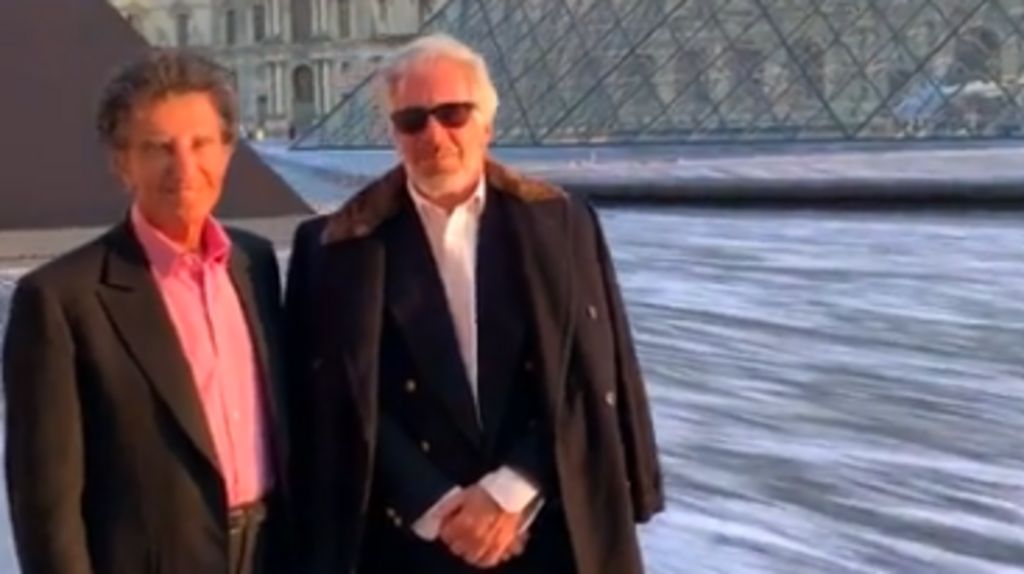
    Visual evidence from US Department of Justice files confirms Lang and Epstein meeting outside Paris’ Louvre Museum, though Lang faces no allegations of personal wrongdoing. The controversy highlights ongoing reverberations from the Epstein case within international cultural and political circles.

  • Boy, 14, stabbed art teacher because he had ‘too much hatred’, he tells police

    Boy, 14, stabbed art teacher because he had ‘too much hatred’, he tells police

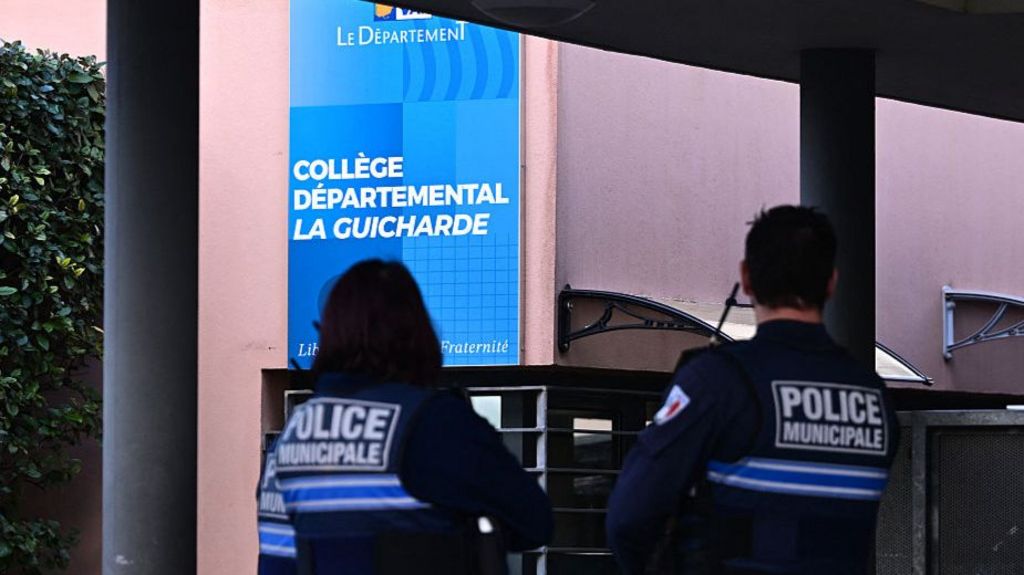
    A 14-year-old student in southeastern France has confessed to stabbing his art teacher in a premeditated classroom attack, citing an overwhelming sense of hatred as motivation. The incident occurred Tuesday at La Guicharde school in Sanary-sur-Mer, where the teenager allegedly stabbed the 60-year-old educator three to four times in the chest before 22 horrified students.

    According to Toulon prosecutor Raphaël Balland, the boy deliberately took a knife from his family’s kitchen with the specific intention of attacking his teacher. The victim, who has taught at the school for 28 years according to AFP reports, underwent emergency surgery at Sainte-Anne Military Hospital in Toulon and remains in serious condition despite being stabilized.

    The investigation revealed no religious or political motivations behind the assault. Instead, the student allegedly acted out of resentment after the teacher reported several disciplinary incidents against him, which he perceived as unfair treatment. Despite expressing deep regret to authorities and claiming to feel more hatred toward himself than his victim, the teenager faces serious consequences as prosecutors consider pre-trial detention.

    This attack represents the latest in a disturbing trend of school violence across France. In June 2023, another 14-year-old was charged with murdering a teaching assistant in a stabbing incident. Another separate knife attack in Nantes during April resulted in one student’s death and multiple injuries. The 2020 beheading of teacher Samuel Paty by a religious extremist outside Paris remains the most horrific incident in recent memory.

    Education Minister Édouard Geffray, who visited the school following the attack, revealed that authorities have confiscated 525 bladed weapons from French schools since March 2023 alone. Describing the incident as ‘unacceptable,’ Geffray emphasized that schools cannot single-handedly combat rising societal violence. ‘The real challenge lies here: fundamental work to de-escalate tensions,’ he wrote on social media platform X. ‘This involves families, teaching staff, elected officials, and every citizen. This is a fight we must wage together.’

  • Flyhalf Jalibert gets chance to relaunch France career against Ireland in 6 Nations

    Flyhalf Jalibert gets chance to relaunch France career against Ireland in 6 Nations

    PARIS — French rugby stands at a pivotal moment as flyhalf Matthieu Jalibert prepares for a career-defining test against Ireland in Thursday’s Six Nations curtain-raiser at Stade de France. With first-choice playmaker Romain Ntamack sidelined with kidney injury concerns, Jalibert emerges from club season brilliance to reclaim his international stature after a year-long absence from Les Bleus.

    This season has witnessed Jalibert’s transcendent form for Bordeaux-Bègles, where he has dominated the French Top 14 league with breathtaking performances. His recent masterpiece against Stade Français showcased extraordinary versatility: collecting midfield possession, evading multiple defenders with seamless agility, executing a precision kick ahead, and regathering to score. The statistical dominance—nine defenders beaten, 17 successful kicks, and 17 completed passes—merely quantifies his on-field genius.

    Teammate Jefferson Poirot, a former France international prop, observed: “His seasonal emergence has been undeniable. We anticipate his brilliance will elevate the national squad.”

    Jalibert’s technical repertoire reached its zenith during last May’s Champions Cup final against Northampton. In that decisive moment, he received possession before the posts, initiated leftward movement, then abruptly shifted right with devastating sidesteps that dismantled the defense before delivering a perfectly floated pass to Adam Coleman for a corner try.

    At 27, Jalibert enters his athletic prime following a challenging period. His February exclusion from the squad—alongside winger Damian Penaud—after England’s Six Nations victory represented a professional nadir. While Penaud returned to become France’s record try scorer, Jalibert remained in international exile, compounding earlier tensions when he had previously withdrawn from selection protests against New Zealand.

    Despite a modest international record of three tries in 35 appearances, Jalibert’s creative passing and elusive running abilities far exceed these statistics. Thursday’s performance could catalyze a permanent partnership with star scrumhalf Antoine Dupont, potentially reshaping France’s tactical identity throughout the Six Nations and beyond.