标签: Europe

欧洲

  • ‘Weird couple of years’ for Stranger Things star

    ‘Weird couple of years’ for Stranger Things star

    Irish actress Amybeth McNulty has described her rapid ascent in the entertainment industry as a “weird couple of years” since joining the global phenomenon Stranger Things. The County Donegal native, who entered the Netflix series in its fourth season as Vickie, Hawkins High School student and Robin Buckley’s girlfriend, shared her profound journey on RTÉ’s The Late Late Show with host Patrick Kielty.

    McNulty characterized her experience on the massively popular sci-fi horror series as feeling like “a little cog in this very massive machine,” emphasizing the surreal nature of her transition from fan to cast member. Her deep familiarity with Stranger Things proved instrumental during the audition process, providing her with unique insight into the show’s distinctive pacing and narrative style.

    The 24-year-old actress recounted the emotional moment she received news of her casting, describing how she was “screaming, crying down the phone” with excitement. This professional milestone carried additional emotional weight as it marked the final audition her parents knew about before their passing. “They said they had a good feeling about it and they were right,” McNulty reflected with poignant remembrance.

    Her artistic journey began in Letterkenny where she was raised by her Irish father and Canadian mother. McNulty’s childhood involved rigorous ballet training and performances in local productions at An Grianán Theatre, experiences she credits to the supportive community that fostered her early development. “There is a real sense of family there. It was everything,” she affirmed.

    McNulty’s breakthrough came at age 14 when she relocated to Canada to star as the lead in CBC/Netflix’s Anne with an E, a move made possible by her retired parents’ complete dedication. “They moved with me to Canada… I was very, very lucky they were able to do that for me,” she expressed with enduring gratitude. “They said they would do anything for me and they did. I will always appreciate it.”

    The actress also addressed the significance of her LGBTQ+ representation on Stranger Things, drawing from her personal experience as someone who came out as bisexual at 16/17 while growing up in Donegal. McNulty recalled encountering prejudice in her hometown, where some community members approached her parents to express sympathy about her sexuality.

    “I’m going ‘right okay, nothing to apologise for’, so it gives me more of an invigoration when I do roles like this,” she stated, emphasizing her commitment to authentic representation. McNulty strives to “do it justice and do it right for kids like me growing up,” viewing the normalization of queer storylines within broader narratives as particularly valuable. “It doesn’t have to be about that. It is just a part of it. I think that is ideal.”

  • Brazil’s Lula hails historic EU-Mercosur deal ahead of no-show at its signing

    Brazil’s Lula hails historic EU-Mercosur deal ahead of no-show at its signing

    After a quarter-century of complex negotiations, the European Union and the Mercosur bloc have reached a landmark free trade agreement, creating one of the world’s largest trading zones encompassing approximately 720 million people with a combined GDP exceeding $22 trillion. The historic pact was formally signed in Asunción, Paraguay, on Saturday, marking a significant geopolitical shift in global trade dynamics.

    The agreement between the EU and Mercosur (comprising Brazil, Argentina, Paraguay, and Uruguay) represents Mercosur’s first major international trade deal. Bolivia, the newest Mercosur member, was not involved in initial negotiations but retains the option to join the agreement in subsequent years.

    Despite Brazilian President Luiz Inácio Lula da Silva’s vigorous advocacy for the pact since returning to office in 2023, he notably abstained from attending the signing ceremony. Instead, Brazil was represented by Foreign Minister Mauro Vieira. This absence has been interpreted by political analysts as a strategic signal of Brazil’s dissatisfaction with the delayed signing, which was originally anticipated during Brazil’s rotating Mercosur presidency in December.

    European Commission President Ursula von der Leyen praised Lula’s “political leadership and personal commitment” during the final negotiation phase, acknowledging his crucial role in advancing the agreement. The European Council similarly recognized Brazil’s recent Mercosur presidency as instrumental in finalizing the decades-long negotiation process.

    The comprehensive trade accord grants South American nations preferential access to European markets for agricultural products, with Brazil’s government investment agency Apex projecting approximately $7 billion in additional exports of commodities including instant coffee, poultry, and orange juice. However, President Lula emphasized that Mercosur nations seek to transcend their traditional role as commodity exporters, stating their intention to “produce and sell industrial goods with higher added value.”

    Experts view the agreement as a strategic counterbalance to both United States and Chinese influence in the resource-rich South American region. The pact emerges amid former President Donald Trump’s protectionist trade policies and China’s expanding economic influence through trade and loans throughout Latin America.

    International relations scholars note that while the agreement demonstrates economic advantages for the EU, it carries significant political benefits for both blocs. For Europe, it represents a commitment to multilateral partnership diversification, while for Mercosur, it validates the bloc’s continued relevance in global trade architecture despite previous criticisms regarding its effectiveness and longevity.

  • Ralph Lauren front row draws celebrities to Milan show

    Ralph Lauren front row draws celebrities to Milan show

    MILAN — The Ralph Lauren showcase became the epicenter of celebrity attention during Milan Fashion Week’s opening day, drawing A-list attendees for a presentation that blended classic American aesthetics with Olympic aspirations. The event marked the commencement of a Milan-focused fashion season while simultaneously highlighting the brand’s role as official outfitter for Team USA at the upcoming Winter Games.

    Front row attendees represented a cross-section of entertainment excellence, including recent Golden Globe attendee Colman Domingo, actor Liam Hemsworth (who interrupted an Alpine skiing excursion), and Noah Schnapp, fresh from completing the final season of Stranger Things. Hemsworth arrived accompanied by partner Gabriella Brooks, having temporarily abandoned mountain slopes for fashion’s equivalent.

    The collection itself presented a sophisticated interpretation of American heritage, featuring layered outerwear, precisely tailored Texan suits, and intricate intarsia knitwear. Outside the historic Milan palazzo, hundreds of enthusiastic fans created a fervent atmosphere awaiting K-pop sensation Mark Lee, who responded to admirers with generous heart gestures upon arrival.

    Lee, the Canadian-born K-pop artist, expressed continued astonishment at the genre’s global reach. ‘The massive appeal still surprises me daily,’ he reflected from his prime seating. ‘Having been born in North America when K-pop wasn’t this significant, I feel both honored and responsible to share its positive influences worldwide.’

    The prestigious gathering included singer Nick Jonas and actor Tom Hiddleston positioned alongside David Lauren, the fashion house’s branding and innovation director who will return to Milan for final fittings of Team USA’s opening and closing ceremony attire before the February 6th Games commencement.

    Noah Schnapp, sporting a sharp double-breasted navy jacket with distinctive brass buttons, discussed his post-Stranger Things career trajectory. ‘I take immense pride in our accomplishments but believe it’s time to explore new creative dimensions,’ the 21-year-old University of Pennsylvania senior revealed, confirming plans to return for Olympic ice hockey events with his Canadian parents who ensured his ‘education in hockey culture.’

    Colman Domingo, fashion industry darling and Emmy winner for Euphoria, made a striking impression with Boucheron stud earrings complementing his tweed three-piece suit and casually draped matching overcoat. He praised the collection’s modern sensibility, noting: ‘We witnessed Texas tuxedos, cowboy accessories, Navajo prints, and mountaineer boots blended with effortless luxury. Ralph Lauren embodies that perfect duality where you can scale Aspen slopes then immediately attend an elegant cocktail gathering—this represents the most beautiful expression of aspirational American values through clothing.’

  • Zelensky says Ukraine’s air defence supplies ‘insufficient’

    Zelensky says Ukraine’s air defence supplies ‘insufficient’

    Ukrainian President Volodymyr Zelensky has issued an urgent appeal to Western allies for accelerated deliveries of air defense missiles, revealing that several critical defense systems had been completely depleted until a recent shipment arrived on Friday. Speaking against a backdrop of relentless Russian bombardment targeting energy infrastructure, Zelensky characterized current Western supplies as “insufficient” despite the day’s “substantial package” of missiles.

    The president’s stark warning comes as Ukraine endures one of its most severe humanitarian crises since the invasion began. With temperatures plunging to -19°C (-2°F), thousands of civilians across multiple regions face life-threatening conditions without heating or electricity. Kyiv’s mayor announced extended school closures through February while implementing emergency measures to address what he described as the capital’s first complete heating collapse and “huge electricity shortage” of the war.

    Zelensky emphasized that missile deliveries don’t guarantee immediate relief: “It doesn’t mean that winter will end for us tomorrow. And it doesn’t mean that tomorrow the enemy will stop bombing us.” He criticized nations stockpiling ammunition while Ukraine fights for survival, stating pointedly: “If we are at war, we really need it. And in some countries, there is no war.”

    The energy crisis has prompted drastic government actions, including a declared state of emergency in the energy sector and the appointment of former Prime Minister Denys Shmyhal as energy minister. Officials accuse Moscow of deliberately exploiting extreme winter conditions as a weapon, with Shmyhal telling parliament Russia was “betting it can break us through energy terror.”

    Amid the devastation, thousands of energy workers race against time to repair bombarded plants and substations. Kyiv has eased curfews to allow residents access to emergency heating hubs, while officials previously suggested civilians consider temporarily relocating to conserve resources.

    In a parallel development, Zelensky revealed Ukrainian negotiators were en route to the United States for ceasefire discussions, potentially culminating in agreements during next week’s World Economic Forum in Davos if American counterparts agree to finalized terms.

    Meanwhile, Russian strikes continued through Friday, killing two people in the central city of Nikopol as intelligence warnings indicated preparations for larger-scale attacks loom.

  • Trump says he may punish countries with tariffs if they don’t back the US controlling Greenland

    Trump says he may punish countries with tariffs if they don’t back the US controlling Greenland

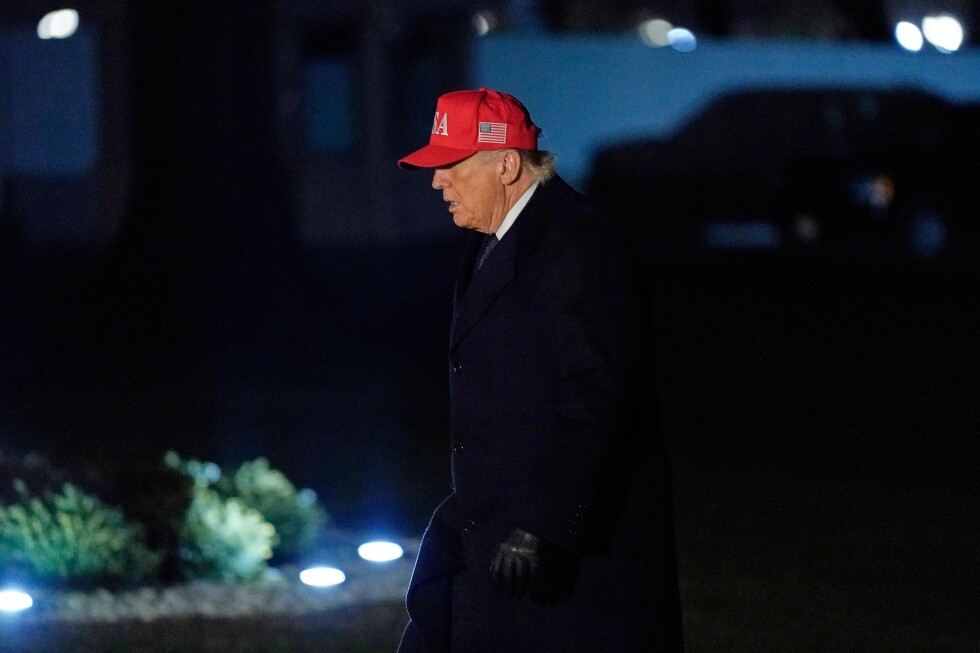
    COPENHAGEN, Denmark — U.S. President Donald Trump has escalated tensions with NATO ally Denmark by suggesting potential tariff impositions on countries that oppose American control over Greenland. The declaration came during a White House event on rural healthcare, marking the first time the president explicitly linked trade policy to his territorial ambitions for the Arctic island.

    Trump asserted that Greenland represents a critical national security priority, justifying his consideration of economic measures against reluctant nations. “I may put a tariff on countries if they don’t go along with Greenland, because we need Greenland for national security,” the president stated, drawing parallels to previous threats against European pharmaceutical exports.

    This hardline stance contrasts sharply with efforts by a bipartisan Congressional delegation visiting Copenhagen to repair diplomatic relations. Led by Senator Chris Coons (D-Delaware), the group emphasized America’s 225-year alliance with Denmark during meetings with Danish Prime Minister Mette Frederiksen and Greenlandic representatives.

    Senator Lisa Murkowski (R-Alaska) articulated the delegation’s contrasting approach, emphasizing that “Greenland needs to be viewed as our ally, not as an asset.” The senator revealed that approximately 75% of Americans oppose acquiring Greenland, reflecting legislation she co-sponsored with Senator Jeanne Shaheen (D-New Hampshire) that would block funding for any annexation of NATO territory without consent.

    The White House’s persistent claims of Chinese and Russian interests in Greenland’s mineral resources have been met with skepticism. Aaja Chemnitz, a Greenlandic politician in the Danish parliament, dismissed these assertions as “lies and exaggeration,” noting that the actual threat originates from American expansionism.

    Greenland’s Prime Minister Jens-Frederik Nielsen has unequivocally stated the territory’s preference for maintaining its current relationship with Denmark and NATO. The Inuit Circumpolar Council chair Sara Olsvig condemned the administration’s rhetoric as reflective of colonial attitudes toward Indigenous peoples, emphasizing that Greenland’s population has no desire to experience recolonization by a global power.

  • Tears and anger in Europe as exiled Iranians protest government crackdown

    Tears and anger in Europe as exiled Iranians protest government crackdown

    Across European capitals, exiled Iranians are mobilizing in sustained protests against Tehran’s theocratic regime, channeling collective fury over its violent suppression of domestic demonstrations. The movement has taken particular root in Berlin, home to one of Europe’s largest Iranian expatriate communities, where daily rallies amplify demands for regime change.

    At the forefront are women like Anahita Safarnejad, 34, who seven years ago fled Iran for academic pursuits but now divides her time between bartending and activism. From atop a moving truck during a recent Berlin march, she galvanized hundreds with chants of ‘No more dictatorship in Iran, the mullahs must go!’—a sentiment reverberating through Iranian diasporas from London to Paris.

    The protests erupt against a grim backdrop: Iran’s regime has imposed near-total internet blackouts and communication restrictions, severing exiles from relatives amid reports of thousands killed in crackdowns. This information vacuum fuels agonizing uncertainty, with participants like Safarnejad scouring social media for glimpses of missing family members among casualty footage.

    Beyond street demonstrations, cultural hubs like Berlin’s Hedayat Cafe have evolved into informal sanctuaries for processing trauma. Proprietor Mehregan Maroufi, daughter of late Iranian author Abbas Maroufi, observes that many patrons are too overwhelmed for conversation yet find solace in shared presence. Her establishment serves as both refuge and incubator for political visions of post-theocratic Iran.

    Those visions remain fractious. While protesters universally demand an end to clerical rule, proposed alternatives range from constitutional monarchy under Reza Pahlavi (son of the deposed shah) to decentralized parliamentary models. This ideological diversity reflects deeper debates about avoiding personality cults and ensuring inclusive representation in any future government.

    Despite diverging on endpoints, protesters unite in immediate demands: restoring communication channels, ending state violence, and establishing democratic governance. Their sustained mobilization—fueled equally by hope and horror—signals a pivotal moment in four decades of opposition from abroad.

  • Germany returns stolen fragments of Bayeux Tapestry to France

    Germany returns stolen fragments of Bayeux Tapestry to France

    In a significant act of historical restitution, Germany has formally repatriated two small fragments of the renowned Bayeux Tapestry to France. The pieces of unembroidered linen fabric, each measuring just a few centimeters, were stolen during the Nazi occupation of France in 1941.

    The fragments were discovered unexpectedly in 2023 by historians conducting an inventory at the state archives in Schleswig-Holstein, northern Germany. They were found among the collection of the late German textile specialist Karl Schlabow, preserved on a glass plate with identifying documentation. Schlabow, who died in 1984, had been sent to Bayeux as part of a Nazi SS research team studying Germany’s so-called ‘ancestral heritage’—a project steeped in racist and antisemitic ideology.

    Rainer Hering, head of the Schleswig-Holstein archive, presented the fragments to the mayor of Bayeux on Thursday, stating it was ‘obvious’ that these culturally significant artifacts, taken by the Nazis 85 years earlier, must be returned to France. The fragments are believed to have been removed from the underside of the tapestry.

    The Bayeux Tapestry itself is a massive 70-meter (230-foot) embroidery that vividly depicts the Norman conquest of England in 1066, including William the Conqueror’s seizure of the English throne from Harold Godwinson at the Battle of Hastings. The work features 58 scenes spanning two decades of history, with 626 characters and 202 horses.

    This restitution comes as the complete tapestry prepares for a controversial loan to the British Museum in London scheduled for September. The move has faced substantial opposition, with over 77,000 people signing a petition citing the artwork’s fragility. Prominent UK artist David Hockney has called the transportation plan ‘madness,’ asserting that ‘some things are too precious to take a risk with.’

    In response, the British Museum has vowed to implement stringent protective measures, backed by an unprecedented £800 million insurance policy from the UK government. Recognized for its immense historical value to both British and French heritage, the Bayeux Tapestry was inscribed on UNESCO’s ‘Memory of the World’ register in 2007.

  • Russian court considers central bank’s $232B lawsuit against Euroclear over seized assets

    Russian court considers central bank’s $232B lawsuit against Euroclear over seized assets

    MOSCOW – In a significant escalation of financial tensions, Moscow’s Arbitration Court commenced proceedings on Friday in a landmark lawsuit filed by Russia’s Central Bank against Brussels-based clearinghouse Euroclear. The legal action demands compensation totaling 18.2 trillion rubles ($232 billion) for damages allegedly incurred when Russia lost control over its frozen funds and securities held by the financial institution.

    The litigation unfolds against the backdrop of sweeping EU sanctions that immobilized approximately 210 billion euros ($244 billion) in Russian state assets following Moscow’s military intervention in Ukraine in February 2022. Euroclear, a key financial intermediary, holds the substantial majority of these frozen assets—approximately 193 billion euros.

    Notably, the Russian legal challenge proceeds despite recent developments in EU policy. Last month, the European bloc abandoned its initial proposal to directly utilize frozen Russian assets for Ukrainian assistance after failing to secure Belgian assurances regarding protection from Russian countermeasures. Instead, the EU opted for an alternative financing mechanism: borrowing 90 billion euros on capital markets to provide Ukraine with an interest-free loan addressing its military and economic requirements for the coming two years.

    The Russian Central Bank has consistently condemned any potential use of its immobilized assets as fundamentally “illegal and contrary to international law,” maintaining that such actions violate established principles of sovereign immunity protecting state assets from foreign seizure or manipulation. The court proceedings are being conducted behind closed doors, reflecting the sensitive nature of this unprecedented financial dispute.

  • Ukraine’s battered power grid faces unprecedented challenge, energy minister says

    Ukraine’s battered power grid faces unprecedented challenge, energy minister says

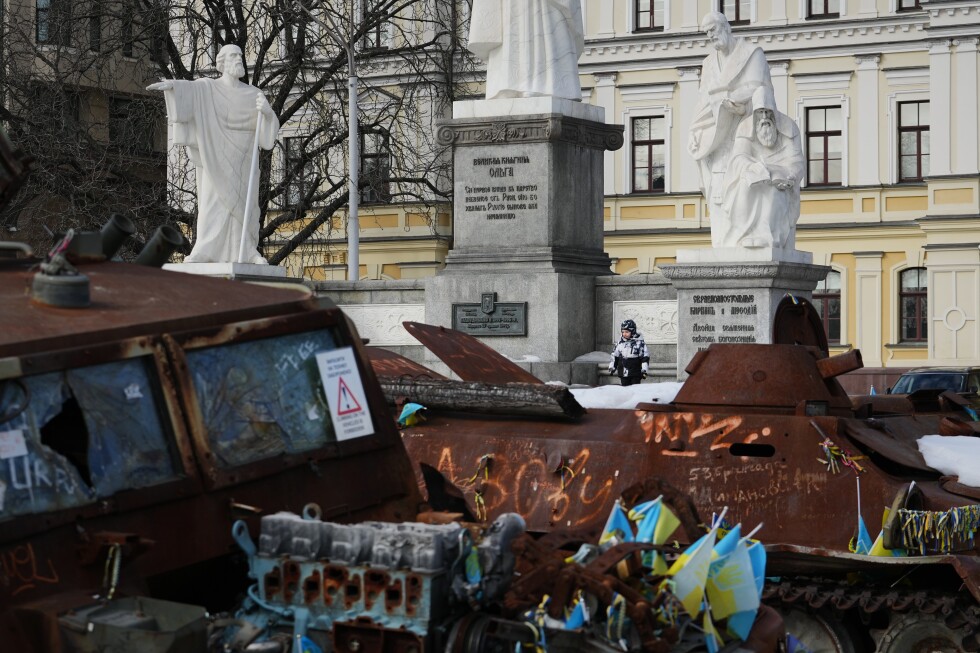
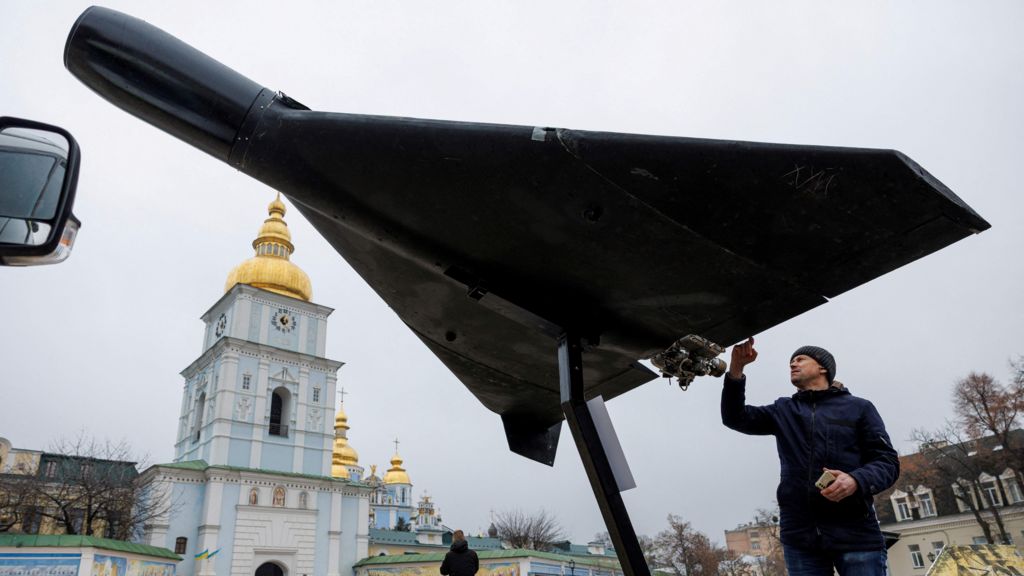
    KYIV, Ukraine — Ukraine’s energy infrastructure has sustained devastating damage from systematic Russian attacks, with not a single power plant remaining unscathed since the full-scale invasion began, Energy Minister Denys Shmyhal revealed Friday. The intensification of aerial bombardments during extreme winter conditions has plunged hundreds of thousands into darkness and cold amid temperatures dropping to -18°C (-0.4°F).

    Addressing Parliament, Shmyhal characterized the situation as historically unprecedented, detailing that Russian forces executed 612 targeted strikes against energy facilities throughout the past year. This strategic targeting of critical infrastructure represents what Ukrainian officials describe as Moscow’s deliberate ‘weaponization of winter’ to break national resistance.

    President Volodymyr Zelenskyy concurrently highlighted the critical challenges in securing air defense missiles, disclosing that some systems had been completely depleted until a fresh shipment arrived Friday morning. The acquisition process remains fraught with diplomatic complexities due to allied nations’ stockpile limitations and legal restrictions.

    ‘Amid warfare, what significance do these regulations hold when we desperately require these missiles?’ Zelenskyy questioned during a Kyiv news conference with Czech President Petr Pavel.

    The humanitarian impact has reached crisis proportions. Jaime Wah of the International Federation of Red Cross and Red Crescent Societies described this as ‘the hardest winter since the conflict’s escalation,’ with millions enduring extreme cold without heating or electricity atop years of violence and economic hardship.

    Emergency measures now include relaxed curfews to facilitate access to public heating centers, while businesses face requests to extinguish decorative lighting to conserve scarce power. ‘Prioritize providing energy to the people—this constitutes today’s utmost importance,’ Shmyhal urged.

    Diplomatic movements coincide with the crisis, as a Ukrainian delegation travels to Washington to finalize security guarantees and economic recovery documents. Potential signing could occur at the upcoming World Economic Forum in Davos, where U.S. President Donald Trump is scheduled to appear.

    International support continues with Britain announcing an additional £20 million ($27 million) for energy infrastructure repairs during Deputy Prime Minister David Lammy’s Kyiv visit marking the UK-Ukraine ‘100-year partnership’ anniversary.

    Despite Russia’s military superiority, the conflict remains stalemated along the 1,000-kilometer front line, with Moscow controlling under 20% of Ukrainian territory since 2014.

  • Sharks are famous for fearsome teeth, but ocean acidification could make them weaker

    Sharks are famous for fearsome teeth, but ocean acidification could make them weaker

    PORTLAND, Maine (AP) — The formidable dental arsenal that has secured sharks’ position as apex ocean predators for millions of years faces an unexpected threat from changing marine chemistry. A groundbreaking study conducted by German marine researchers reveals that ocean acidification—directly linked to human fossil fuel consumption—is progressively weakening shark tooth structure, potentially compromising their hunting efficiency and ecological dominance.

    The research team from Heinrich Heine University Düsseldorf, led by marine biologist Maximilian Baum, discovered that increasingly acidic ocean conditions cause significant corrosion damage to shark teeth, including structural cracks, root deterioration, and surface pitting. Their findings, published in Frontiers in Marine Science, demonstrate that teeth exposed to water with acidity levels projected for year 2300 (nearly ten times current acidity) showed substantially more damage compared to those in present-day conditions.

    This dental degradation represents an additional environmental pressure for sharks already confronting overfishing, habitat pollution, and climate change impacts. While sharks won’t become toothless overnight, the cumulative effect could gradually diminish their predatory effectiveness. Baum emphasized that ‘their whole ecological success in the ocean as rulers of other populations could be in danger’ if tooth integrity continues to decline.

    The study examined over 600 discarded teeth from blacktip reef sharks (Carcharhinus melanopterus), a species inhabiting Pacific and Indian Ocean regions. Scientists note that shark teeth—highly specialized tools evolved for slicing flesh rather than resisting chemical corrosion—undergo constant replacement throughout a shark’s lifetime.

    Independent experts including Nick Whitney of New England Aquarium’s Anderson Cabot Center acknowledge the study’s scientific validity while noting sharks’ evolutionary resilience. ‘They’ve been around for 400 million years and have adapted to changing conditions,’ Whitney observed, suggesting that protective mouth tissue might temporarily shield developing teeth from acidification effects.

    However, Gavin Naylor of the Florida Program for Shark Research cautions that ocean acidification’s impacts extend beyond sharks, particularly affecting shell-forming organisms and fish scale integrity. While overfishing remains the most immediate threat to shark populations, acidification introduces complex ecological changes that could ultimately reshape marine food webs and predator-prey relationships across ocean ecosystems.