标签: Europe

欧洲

  • Four dead and several injured after massive Russian strikes across Ukraine

    Four dead and several injured after massive Russian strikes across Ukraine

    A wave of large-scale Russian overnight missile attacks across multiple major Ukrainian cities has left at least four civilians dead and more than a dozen others injured, just days after a separate strike hit an apartment complex in the eastern city of Dnipro, local administrative officials confirmed early Tuesday.

    The fatalities were all recorded in Dnipro, where the attack claimed the life of a 73-year-old woman among the four dead, and left five additional people wounded. In the northeastern hub of Kharkiv, eight people sustained injuries from the strikes, while the capital city of Kyiv reported four people hurt in the assault.

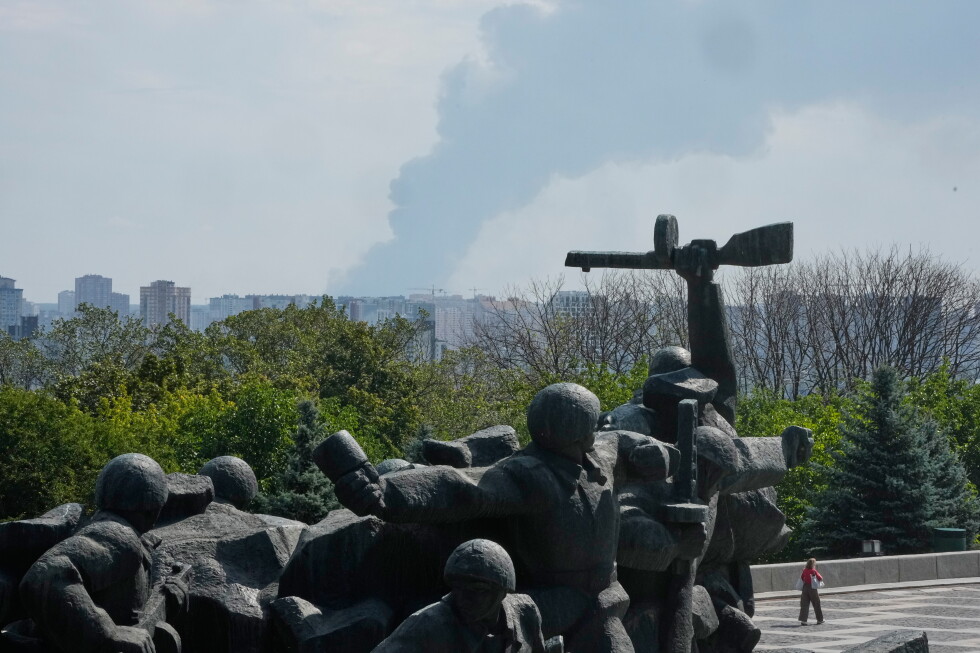
    In Kyiv, where ballistic missiles targeted locations across the city, thousands of residents rushed to underground shelters as thick plumes of dark smoke billowed from areas in the city center. Kyiv Mayor Vitali Klitschko issued an urgent alert via social media early Tuesday, writing, “Explosions in the city. Air defence forces are working! Stay in shelters!”

    Tymur Tkachenko, head of Kyiv’s City Military Administration, confirmed that the attacking forces were using ballistic missiles for the assault. Klitschko later added that two separate high-rise apartment buildings had sustained direct hits in the strikes, and rescue teams are currently working to clear rubble amid fears that multiple people remain trapped beneath destroyed structures.

    The coordinated overnight attacks come less than 24 hours after Ukrainian President Volodymyr Zelenskyy publicly reiterated intelligence warnings of an impending massive Russian strike, urging all Ukrainian residents to take air raid alerts seriously and prepare for potential assaults. In his nightly Monday video address, Zelenskyy stressed that threat assessments remained active, noting, “Intelligence warnings regarding Russian strikes remain in effect. A massive strike is possible, they have prepared one.”

  • Will Sabalenka and Osaka open door for women’s night sessions?

    Will Sabalenka and Osaka open door for women’s night sessions?

    For years, the French Open at Roland Garros had stuck to an unbroken tradition: every primetime night match on its iconic Court Philippe Chatrier went to the men’s draw. That 33-match men’s streak finally came to an end this year, when tournament organizers bowed to the inevitability of one of the most anticipated women’s fourth-round clashes: top-seeded Aryna Sabalenka against four-time Grand Slam champion Naomi Osaka. It was the first time a women’s match had claimed the coveted primetime slot at the clay-court major since 2023, closing a three-year drought of women’s matches under the Parisian lights.

    Organizers had long cited a range of justifications for keeping women’s matches out of the spotlight, most notably tournament director Amelie Mauresmo’s past argument that the potential for shorter women’s matches made them a less ideal fit for scheduled primetime broadcast windows. But when men’s world No. 1 Jannik Sinner exited the tournament early, leaving Monday’s men’s draw lacking any high-profile matchups worthy of primetime, there was no longer any reasonable way to overlook the blockbuster between the two Grand Slam-winning superstars. As Mauresmo acknowledged ahead of the match: “It was obvious that it should be a night match tonight.”

    When the two 28-year-old stars stepped onto Chatrier in front of a near-capacity crowd of nearly 15,000 fans, any doubts about whether a women’s match could deliver the same level of excitement and star power as a men’s primetime clash were quickly put to rest. Both players brought high-octane, first-strike baseline tennis from the opening serve, delivering a fast-paced, absorbing contest that kept the crowd on its edge of their seats for one hour and 27 minutes.

    For a set and a half, the match remained deadlocked, with little to separate the reigning world No. 1 Sabalenka and 16th-seeded Osaka. It was only in the late stages that Sabalenka’s refined combination of raw power and expanded shot variety allowed her to seize control, closing out a 7-5, 6-3 victory as Osaka faded late. Beyond the on-court action, the match delivered all the star power and entertainment that a primetime slot demands. Osaka made her entrance in a showstopping, Eiffel Tower-inspired sparkly haute couture gown that could have held its own on the Paris Fashion Week runway, while Sabalenka delighted the crowd with an unexpected moonwalk during her post-match victory speech.

    Nearly every fan in attendance left satisfied, with few complaining the match did not deliver value for money. The result has reignited calls for the French Open to add more women’s matches to primetime slots going forward, a push both Sabalenka and Osaka backed in their post-match comments.

    “I hope this is the beginning and we open the door to more women’s night sessions,” Sabalenka told reporters after the win. “I think the atmosphere and attention this match brought is going to show organisers that they should consider putting at least some women’s matches at night.” Osaka echoed that sentiment, saying: “I’m honoured the tournament chose us to play in this slot and I hope going forward they continue to do so. Shout out to the tournament for trusting us – I hope it was entertaining for people.”

    The historic match marked only the fifth women’s contest to be allocated a night session slot since night matches were introduced to Roland Garros in 2021, out of a total of 61 overall night sessions. For critics of the tournament’s longstanding bias toward men’s matches in primetime, the match proved exactly what female tennis stars can deliver when given the opportunity to shine on the sport’s biggest stages, with many arguing it should mark a turning point for future scheduling at the clay-court major.

  • Iraqi national pleads not guilty in 18 attacks in Europe, calling himself a ‘prisoner of war’

    Iraqi national pleads not guilty in 18 attacks in Europe, calling himself a ‘prisoner of war’

    MANHATTAN, N.Y. — An Iraqi man accused of orchestrating a sprawling plot of terror attacks targeting Western and Israeli interests across Europe and North America entered a not guilty plea during his initial federal court appearance Monday, where he publicly declared himself a prisoner of war and decried civilian casualties in regional conflict involving the United States, Israel and Iran.

    Mohammad Baqer Saad Dawood Al-Saadi, 45, faces federal charges of conspiracy to provide material support to two U.S.-designated foreign terrorist organizations: Kata’ib Hizballah, an Iran-aligned Iraqi Shia militant group, and the Islamic Revolutionary Guard Corps (IRGC) of Iran. Prosecutors further allege he acted as a commanding figure within Kata’ib Hizballah while planning at least 18 coordinated attacks in retaliation for ongoing military conflict between the U.S.-Israel bloc and Iran.

    The proceeding took an unscripted turn when Al-Saadi refused to take his seat after entering his plea, prompting U.S. District Judge Colleen McMahon to order marshals to escort him to his chair. Two court officers approached the defendant, with one resting a hand on his shoulder to guide him into position. Court observers noted Al-Saadi did not act aggressively or intentionally disrupt the hearing; his out-of-process comments stemmed from his response to the charges against him. Through an Arabic interpreter, Al-Saadi told the court, “I’m not guilty in a war situation. I’m a prisoner of war. I’m not a threat. Children and women are being killed by your rockets.”

    Defense counsel Andrew Dalack pushed back on the prosecution’s narrative, telling the judge his client was a legitimate employee of the Iraqi government, though he declined to share details of Al-Saadi’s official role. Dalack also outlined the harsh conditions his client has endured in custody: he was held in an underground Turkish prison for two weeks before being transferred to U.S. Federal Bureau of Investigation custody, and has been kept in solitary confinement at a high-security federal lockup in Brooklyn following his extradition to the U.S. Dalack added that Al-Saadi is seeking to establish contact with Iraqi diplomatic officials and his immediate family, but expects U.S. authorities will impose strict restrictions on all communications.

    When the charges against Al-Saadi were first announced publicly last month, Dalack told reporters his client maintains he is being politically persecuted for his personal ties to Qasem Soleimani, the longtime head of the IRGC Quds Force who was killed in a U.S. drone strike in Baghdad in 2020.

    The allegations against Al-Saadi outline a multi-year cross-continental terror campaign. Beyond the 18 planned attacks across Europe, he faces direct charges for two completed attacks: a 2023 firebombing of a bank in Amsterdam, and a stabbing targeting Jewish men in London. Court documents filed by federal prosecutors also reveal that Al-Saadi plotted to attack a synagogue in New York City as recently as last month, and shared detailed photos and site maps of Jewish community centers in Los Angeles, California and Scottsdale, Arizona to an undercover law enforcement operative he believed was a co-conspirator.

    He is also linked to two high-profile attacks in Canada from earlier this year: a breach of a synagogue and a March shooting at the U.S. Consulate in Toronto. Prosecutors confirm Al-Saadi directed and coerced other actors to carry out attacks against all U.S. and Israeli-affiliated targets, explicitly calling for the killing of American and Jewish civilians. According to court filings, Al-Saadi documented the attacks and coordinated planning through social platforms including Snapchat and Telegram, and discussed operational details in phone calls that were recorded by an FBI confidential informant he had recruited to help carry out domestic attacks in the U.S.

  • British woman dies after Pyrenees peak fall

    British woman dies after Pyrenees peak fall

    A 42-year-old British woman who resided in Finland has lost her life after a devastating 500-meter fall from Balaitús Peak while hiking in the Pyrenees mountain range along the Spain-France border, according to updates from Spanish local authorities and law enforcement.

    The incident unfolded on Saturday as the woman and her hiking companion, a 53-year-old uninjured man, were descending the mountain via the Gran Diagonal route. Local emergency responders received the distress alert at approximately 19:30 CEST (18:30 BST). Teams from the Mountain Rescue and Intervention Group (GREIM) and the Huesca Air Unit were quickly dispatched to the remote accident site, where the hiker was pronounced dead on arrival.

    Following the recovery operation, the woman’s body was transferred to the Forensic Medicine Institute in Zaragoza to undergo a mandatory post-mortem examination, which will help formalize details of the accident for judicial procedures.

    The UK Foreign Office confirmed it has been notified of the death and maintains ongoing communication with Spanish authorities to support next steps. A spokesperson for the Spanish Civil Guard told media outlets that the death is officially classified as a tragic hiking accident, and an official investigation remains active. Once the post-mortem results are finalized, a full case report will be submitted to the local investigating court for review.

    This fatal accident comes in the wake of a string of mountain emergencies in the Pyrenees over the preceding week. Between May 26 and May 30 alone, GREIM teams responded to nine separate mountain rescue calls across the region. In the aftermath of this latest fatality, the Spanish Civil Guard renewed its public appeal for hikers to prioritize safety before undertaking mountain expeditions. Key precautions highlighted by the force include packing sufficient drinking water, carrying fully charged mobile devices with location services activated, wearing adequate sun protection, and thoroughly reviewing planned routes and up-to-date weather forecasts before setting out.

  • Italians bemused by Milan bull mosaic restoration

    Italians bemused by Milan bull mosaic restoration

    A decades-old tourist tradition targeting a beloved 19th-century mosaic in one of Milan’s most famous historic landmarks has sparked unexpected social media uproar, as locals and travelers alike question the fate of the artwork’s most iconic—if irreverent—feature. The piece in question is a blue and beige mosaic depicting a prancing bull, set into the floor of Milan’s Galleria Vittorio Emanuele II, the iconic glass-vaulted shopping arcade at the heart of the city. Designed to represent Turin, Italy’s first national capital, the mosaic has over generations become a bucket-list stop for visitors thanks to a folksy good luck legend. The tradition holds that spinning one’s heel three times clockwise on the bull’s genital region will bring good fortune and guarantee a return trip to Milan. For years, thousands of tourists have followed the ritual, and the constant friction gradually wore away the stone tiles, leaving a noticeable small crater on the mosaic’s surface. Last week, municipal authorities launched long-planned restoration work to repair the damaged section of the artwork, with master artisan Gianluca Galli carrying out the handcrafted repairs to the 100-plus-year-old floor. Over the weekend, Milan local councillor Marco Granelli announced that the mosaic had been “completely restored,” sharing the update on his social media channels. But what was meant as a routine cultural heritage update quickly went viral, as hundreds of social media users pointed out an apparent change to the famous feature: the bull’s iconic “lucky charm” testicles seemed to have vanished entirely. Comments flooded Granelli’s post, with users joking that the bull had been “castrated,” and many questioning why the landmark’s most famous feature was removed. “What happened to the testicles?” one user asked, while another simply noted, “Something is missing.” The widespread online bemusement and criticism quickly prompted a response from Milan’s city council, which moved quickly to clarify that the restoration project is not actually complete. Officials explained that the restored section remains partially covered to allow the new stone tiles’ color to set properly, and the feature was never intentionally removed. The council added that restorers chose light pink marble for the repaired area, a material selected to match the original 19th-century color palette more closely than the darker marble used for the mosaic’s previous repair in 2017. Master restorer Galli confirmed the timeline in an interview with Italian daily newspaper Corriere della Sera, noting that his work is still in progress, and he has not received any formal objections to the work, which is being carried out under direct municipal supervision. For now, tourists and locals alike will have to wait a little longer to see the fully restored iconic bull—and confirm that its famous good luck charm remains intact for future generations of visitors.

  • Chris Mason: Decision to appoint Mandelson continues to inflict damage

    Chris Mason: Decision to appoint Mandelson continues to inflict damage

    The ongoing release of thousands of pages of private communications between senior UK Labour politicians has offered a rare, unfiltered look into the day-to-day inner workings of modern government, as ministers increasingly rely on instant messaging platforms like WhatsApp and email to conduct informal, off-the-record conversations. These uncensored exchanges capture the unvarnished, contemporaneous thoughts, gut instincts and private perspectives of officials that rarely make it into the public sphere, unlike polished, pre-approved official statements.

    At the time of this reporting, political journalists are still working through roughly 1,500 pages of leaked documents, with new details expected to emerge as the review continues. One of the first major controversies to come out of the release centers on Pat McFadden, the current Work and Pensions Secretary, whose private remarks have been seized on by the opposition Conservative Party. In a blunt message to Lord Peter Mandelson, McFadden privately criticized the attitudes of fellow Labour lawmakers toward welfare reform and public spending, writing, “Every meeting I have is ‘who can we tax in order to pay benefits to others,” adding, “They’re asking the wrong questions.” McFadden also noted that many Labour MPs appeared reluctant to cut welfare benefits, a comment that has already opened the party up to opposition attack. Analysts expect this line of criticism to feature heavily in Conservative messaging in the coming weeks.

    While the leak has already yielded political fodder for the opposition, it has failed to shed new light on one of the most pressing recent political stories: the vetting process that led to Lord Mandelson’s appointment as UK ambassador to the United States. No documents related to the vetting procedure were included in the released materials, leaving key questions about the appointment still unanswered.

    Two key contextual factors shape the current political fallout from this leak, compared to earlier revelations in the ongoing Mandelson controversy. First, public fatigue appears to be setting in: after weeks of repeated headlines about the Mandelson appointment saga, voter appetite for new shocking revelations has waned, leading to what political analysts describe as diminishing returns for the controversy. Second, the ongoing damage to Prime Minister Keir Starmer’s political standing comes at a moment when his authority is already weakened. Poor local election results last month have already eroded his position within the party, with an unofficial leadership contest already unfolding beneath the surface of public politics.

    There is no question that this latest wave of controversy has made for a difficult week for the prime minister and his government. The ongoing fallout from the Mandelson appointment has acted as a recurring political boomerang, hitting the government repeatedly and creating constant, low-grade political headaches for Starmer’s administration. Political analysts widely agree that when Starmer reflects on his tenure as prime minister – regardless of how long that tenure ends up being – his decision to appoint Mandelson to the Washington post will stand as one of the most heavily criticized major decisions of his leadership, and a key example of a high-stakes call that went wrong.

  • Top EU official tells Western Balkan countries that bloc’s enlargement is real

    Top EU official tells Western Balkan countries that bloc’s enlargement is real

    SARAJEVO, Bosnia-Herzegovina – Ahead of a landmark EU-Western Balkans summit this week, European Council President António Costa has reaffirmed that the European Union’s enlargement push for the region is not empty rhetoric, but a tangible and priority goal for the bloc. Making the first stop of his pre-summit tour through the Western Balkans in Sarajevo on Monday, Costa framed EU expansion as a critical geostrategic investment at a moment of rising global uncertainty.

    Against a backdrop of shifting global power dynamics and widespread economic volatility across the globe, Costa emphasized that enlargement delivers long-term dividends for the entire European continent. “Enlargement is an investment in the peace, stability and security of our continent,” he stated, adding that his regional tour itself serves as concrete proof that the EU’s commitment to Western Balkan aspirants is as genuine as the membership opportunity on offer.

    This Friday, Costa will co-chair the high-stakes summit in the Adriatic coastal resort of Tivat, Montenegro. The gathering will bring together heads of government and senior officials from all 27 EU member states, alongside leadership from six Western Balkan candidate countries: Albania, Bosnia-Herzegovina, North Macedonia, Kosovo, Serbia, and host nation Montenegro. Each of the six nations is progressing through the accession process at different speeds, with Montenegro and Albania currently leading the pack in meeting the bloc’s requirements.

    In recent years, the EU has ramped up its outreach and encouragement for reform across candidate nations, driven in large part by concerns over growing geopolitical influence from Russia and China in the Western Balkans. Ukraine and Moldova are also part of a wider group of roughly 10 countries that hold aspiring member status, expanding the bloc’s ongoing enlargement agenda beyond the Western Balkans.

    Accession to the EU requires candidate states to align their entire legal and regulatory frameworks with 35 distinct policy areas, known as “chapters”, that cover everything from judicial standards and human rights protections to agricultural policy and fishing regulations. Every chapter requires unanimous approval from all 27 current EU members both to open negotiations and to finalize its completion, making the process deliberately rigorous and slow.

    Costa made clear that Friday’s summit is designed to build on existing momentum, reinforcing cooperation and accelerating progress toward membership. “The event will be a clear demonstration of our determination to bring forward our cooperation and build on the momentum of the European Union’s enlargement,” he said.

    Among the six candidates, Bosnia-Herzegovina lags furthest behind, still grappling with deep ethnic divisions decades after the 1992-1995 Bosnian War that left over 100,000 people dead and displaced millions. The country’s pro-Russia Bosnian Serb separatist leadership has continued to push for greater autonomy, a dynamic that originally fueled ethnic conflict following the collapse of the former Yugoslav federation and continues to undermine post-war reconciliation today.

    Costa’s visit coincides with a key leadership transition for the international peace architecture governing Bosnia. The Peace Implementation Council, the international body established by the 1995 U.S.-brokered Dayton Peace Accords to oversee the country’s post-war stability, is set to appoint a new High Representative this week following the resignation of German diplomat Christian Schmidt.

    The High Representative holds broad authority to revise legislation and remove public officials who threaten the country’s post-war reconciliation process. Local Bosnian media reports have indicated that PIC member states remain deeply divided over the choice of Schmidt’s successor. Speaking on the appointment, Costa stressed that the incoming representative must align with Bosnia’s stated European integration goal. “If the future of the country is in the European Union it’s important that the new high representative … embodies Bosnia and Herzegovina choice to pursue European Union accession,” he said.

    Costa also urged Bosnian officials to set aside internal divisions and prioritize the accession process, calling for immediate action to speed up required reforms. “Now is the time to focus on your goal and accelerate the pace of reforms,” he told local leaders.

  • Hungarian PM threatens to oust Orbán-era president

    Hungarian PM threatens to oust Orbán-era president

    A sharp constitutional confrontation is unfolding in Hungary just months after a seismic political upheaval ousted long-serving prime minister Viktor Orbán, as newly installed Prime Minister Péter Magyar has confirmed his government will push through a constitutional amendment to oust sitting President Tamás Sulyok, who has repeatedly rejected calls to resign from his post.

    Magyar’s Tisza Party secured a historic landslide victory and a two-thirds supermajority in the National Assembly during April’s general election, a result that ended 16 years of uninterrupted rule by Orbán’s right-wing Fidesz party. Since taking power, the new prime minister has made dismantling remaining Orbán-era institutional holdovers a top policy priority, and has targeted Sulyok — a figure appointed to the presidency by Fidesz in February 2024 without a direct public vote — as a primary example of old regime influence.

    Magyar has repeatedly publicly called for Sulyok’s resignation, most recently setting a firm 31 May deadline for the president to step aside. In a social media post on X published over the weekend, Magyar doubled down on his criticism, arguing that Sulyok has never advocated for vulnerable Hungarian communities, defended citizens under political attack, or upheld the principles of the rule of law. He has repeatedly characterized the sitting president as unfit to represent the unity of the Hungarian nation, claiming Sulyok remains loyal to Orbán’s political interests rather than serving the public good.

    Sulyok, for his part, has refused to step down, stating he intends to complete the full five-year term he was appointed to serve. Following a face-to-face meeting with Magyar on Monday, the president reaffirmed his position, warning that the forced removal effort triggered by the new government has already created a constitutional crisis that deepens existing social rifts within Hungary and undermines international confidence in the country’s democratic credentials. He has also raised a warning that the ongoing standoff could put at risk the long-frozen €16.4 billion in EU development funds earmarked for Hungary, a large portion of which has been withheld by Brussels for years due to documented democratic backsliding during Orbán’s tenure. Last week, EU officials signaled that reform efforts under Magyar’s new government could clear the way for the funds to be released imminently, a development Sulyok argues is now threatened by the political clash.

    Fidesz, Orbán’s former ruling party, has already labeled Magyar’s demand for Sulyok’s resignation an “unlawful ultimatum”, rejecting the new government’s push to remove the sitting president. While the Hungarian presidency is largely a ceremonial role under the country’s governing framework, it holds key practical powers that can disrupt the new government’s legislative agenda: it can refer passed laws back to parliament for re-examination, challenge legislation before the Constitutional Court, and oversee all public sector appointments. Just on Monday, Sulyok demonstrated these active powers by announcing a slate of new military appointments via his official Facebook page, a move seen as a show of defiance amid the standoff.

    The presidency itself became vacant in early 2024 when then-president Katalin Novák resigned in the wake of public outrage over the Fidesz government’s botched response to a high-profile child sex abuse scandal, clearing the way for Sulyok’s appointment by the outgoing Fidesz-controlled legislature. Orbán himself stepped down from his seat in parliament after his party’s election defeat in April, closing out 16 years as Hungary’s prime minister. Even as it moves to oust Sulyok, Magyar’s government has already advanced additional constitutional reforms to lock in the post-Orbán political shift, including a new amendment that would cap any future prime minister at eight years total in office, closing off any potential path for Orbán to return to power.

    Magyar confirmed to reporters this week that the constitutional amendment process to remove Sulyok will take approximately four weeks to complete, a timeline that keeps the country in a state of political uncertainty as the new government works to roll out its ambitious agenda of institutional and democratic reform.

  • Online commentators Hasan Piker and Cenk Uygur barred from entering the UK for public events

    Online commentators Hasan Piker and Cenk Uygur barred from entering the UK for public events

    LONDON – In a decision that has reignited fierce debate over free expression, immigration policy and the politics of the Gaza conflict, UK authorities confirmed Monday that two high-profile American progressive political commentators have been barred from entering the country ahead of scheduled public appearances. Turkish-American streamer Hasan Piker, who boasts 2.8 million followers on the Twitch streaming platform and is known for sharp criticism of former U.S. President Donald Trump, Israeli government policy, and the ongoing military campaign in Gaza, was among those denied entry. He was joined by his uncle Cenk Uygur, founder and host of the popular online political talk show *The Young Turks*.

    The UK Home Office confirmed that both men’s Electronic Travel Authorizations (ETAs) – the entry clearance required for visa-free visitors to the country – have been revoked on the official basis that their presence in the UK would not be “conducive to the public good.” In a statement following the announcement, the department clarified that decisions to refuse or cancel travel authorization on these grounds are rooted in a formal assessment of the potential risk an individual poses to British society.

    The two commentators had been scheduled to speak at SXSW London, a major festival focused on culture, technology and creative industries, scheduled for this month. Uygur had also been invited to deliver an address at the Oxford Union, the centuries-old prestigious student debating society that has hosted speakers from across the global political spectrum for decades.

    The ban drew immediate reaction from the two commentators, who both say they are being targeted for their public criticism of Israeli policy amid the war in Gaza. Piker, responding to the decision on his YouTube channel, argued that the move reflected the outsized influence of pro-Israel interests on UK immigration policy. “A sad state of affairs where obviously the interests of Israel take the highest priority,” he said. Uygur echoed that sentiment in a post on X, writing: “I got banned for criticizing Israel. Are we free any more?”

    British officials have justified the ban by pointing to past comments by Piker that expressed support for Hamas, the militant group that governs the Gaza Strip and is designated as a proscribed terrorist organization by both the UK and U.S. The October 7, 2023 cross-border attack by Hamas that killed approximately 1,200 people and took 251 hostages triggered the ongoing Israeli military campaign in Gaza that has killed more than 34,000 Palestinians to date, according to Gaza health authorities. David Taylor, a UK Labour Party lawmaker who publicly called for Piker to be barred from the country, said there was no justification for allowing commentators who promote hate or endorse terrorism to enter the UK. “There is no reason we should open our doors to those who seek to spread hate and division, especially someone who’s supported a proscribed terror group,” Taylor said.

    Critics of the decision, however, argue that the ban is part of a broader pattern of the UK government silencing legitimate criticism of Israeli policy. Zack Polanski, leader of the UK Green Party, said the government was “doing everything possible to silence criticism of the Israeli government.”

    The entry ban is the latest high-profile case of the UK barring controversial public figures from entering the country. In April, the government barred American rapper Ye, formerly known as Kanye West, from entering the UK to headline the Wireless Festival in London, following widespread backlash over years of antisemitic statements. At that time, Prime Minister Keir Starmer said his administration “stands firmly with the Jewish community, and we will not stop in our fight to confront and defeat the poison of antisemitism.”

  • Son of Brazil coach Carlo Ancelotti hired to lead Lille in return to Champions League

    Son of Brazil coach Carlo Ancelotti hired to lead Lille in return to Champions League

    LILLE, France – In a high-profile coaching announcement made Monday, Ligue 1 side Lille OSC confirmed the appointment of Davide Ancelotti, son of Brazil men’s national team head coach Carlo Ancelotti, as their new first-team manager for the 2025-26 season. The 36-year-old tactician has put pen to paper on a two-year contract that will see him steer the club through its return to the UEFA Champions League, the top club football competition in European soccer.

    Ancelotti steps into the role vacated by Bruno Génésio, who did not receive a contract extension after delivering a third-place Ligue 1 finish that secured Lille’s automatic Champions League qualification for the upcoming campaign. While Génésio led the club to solid domestic results, Lille’s ownership opted for a fresh face to guide the team through their European challenge.

    Davide Ancelotti brings nearly 15 years of top-tier coaching experience across Europe and South America, much of it earned alongside his legendary father. He served as an assistant coach at five different elite clubs – Bayern Munich, Napoli, Everton, and Real Madrid – before joining Carlo Ancelotti’s staff with the Brazil national team during 2026 FIFA World Cup qualifying. After cutting his teeth as an assistant at the highest level of the sport, Ancelotti struck out on his own last year, taking his first full-time head coaching role at Brazilian Serie A club Botafogo. His tenure in Rio de Janeiro ended prematurely, however, with Ancelotti relieved of his duties just five months after taking the job.

    This return to France marks Ancelotti’s first senior coaching role in the country in more than a decade. Over 13 years ago, he worked as a fitness coach at Paris Saint-Germain during Carlo Ancelotti’s 18-month spell in charge of the Parisian giants, giving him early familiarity with French top-flight soccer.

    For Lille, the upcoming Champions League campaign marks a return to the competition after the club’s 2024-25 run saw them reach the round of 16, where they were eliminated by Germany’s Borussia Dortmund. Last season, after dropping into the UEFA Europa League, Génésio’s side once again reached the round of 16, falling to eventual tournament winners Aston Villa. With Ancelotti at the helm, the club will look to build on recent consistent European runs and compete for both domestic and continental honors in the coming seasons.