标签: Europe

欧洲

  • Farmers block roads in Brussels to protest South American free-trade deal

    Farmers block roads in Brussels to protest South American free-trade deal

    Brussels witnessed intense demonstrations on Wednesday as thousands of farmers mobilized tractors to blockade key roadways and ignite fireworks near the European Union headquarters. The protests coincided with an EU leadership summit addressing the contentious free-trade agreement with Mercosur nations. Law enforcement deployed tear gas and water cannons to disperse crowds expressing vehement opposition to the proposed pact with South American economies.

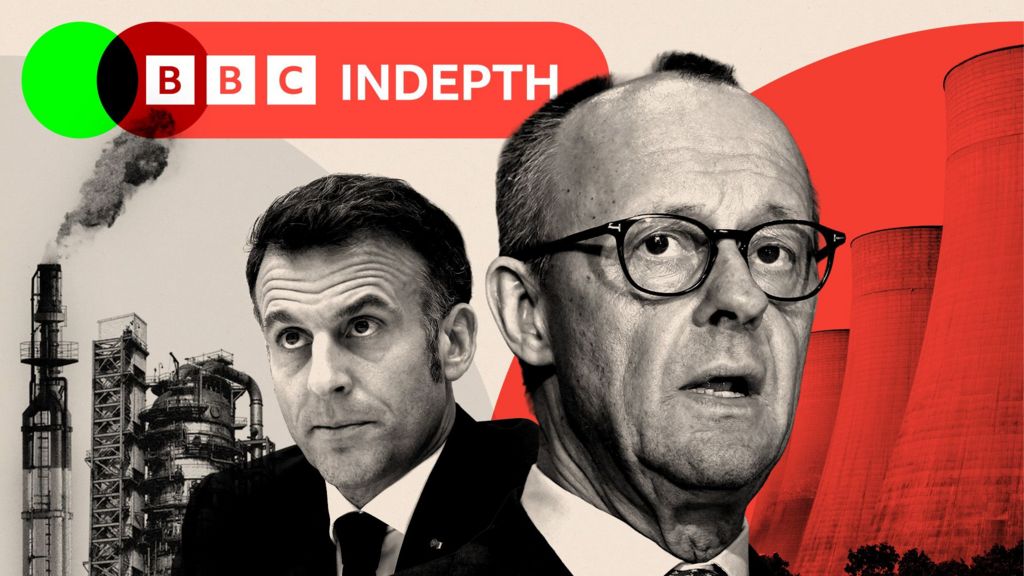
    The agricultural sector’s primary concern centers on potential market destabilization through imported goods produced under less stringent regulatory frameworks. This economic apprehension has triggered broader political ramifications, with several EU members expressing reservations about the agreement’s current terms. France has emerged as the leading opposition force, demanding enhanced safeguards against market disruption, stricter pesticide regulations, and reinforced import inspection protocols.

    Italy recently joined the dissenting coalition, with Premier Giorgia Meloni declaring any immediate signing “premature” without adequate protections for European agricultural interests. This development significantly strengthens the opposition bloc, potentially providing France sufficient votes to veto European Commission President Ursula von der Leyen’s push for ratification.

    Despite twenty-five years of negotiations covering a prospective market of 780 million people, the agreement faces unprecedented political headwinds. Supporters argue the pact would establish crucial economic counterweights to Chinese export controls and American tariff policies, while critics warn of environmental standard erosion and agricultural sector devastation.

    South American leaders remain cautiously optimistic about finalizing the agreement. Brazilian President Lula da Silva has positioned the deal as a cornerstone of his diplomatic agenda, warning that failure to secure ratification now might permanently suspend negotiations during his administration. The agreement has found unusual consensus among ideologically divergent South American leaders, including Argentina’s Javier Milei and Uruguay’s government, all recognizing the potential benefits for their agricultural exports.

    The ongoing stalemate reflects deeper tensions between economic globalization priorities and domestic agricultural protectionism within EU politics, with far-right political movements leveraging the controversy to gain traction among disaffected rural communities.

  • Belgium demands ironclad guarantees of protection as EU leaders weigh a massive loan for Ukraine

    Belgium demands ironclad guarantees of protection as EU leaders weigh a massive loan for Ukraine

    BRUSSELS — A critical European Union summit faced significant hurdles on Thursday as Belgium demanded unequivocal guarantees of protection against potential Russian retaliation before endorsing a monumental loan package for Ukraine. The high-stakes negotiations centered on a proposal to utilize billions in frozen Russian sovereign assets to underwrite Ukraine’s military and financial requirements for the coming two years.\n\nWith approximately €193 billion ($227 billion) in immobilized Russian central bank funds held predominantly within the Brussels-based Euroclear clearinghouse, Belgium finds itself on the front lines of economic and legal vulnerability. This position was underscored recently when Russia’s Central Bank initiated legal proceedings against Euroclear, intensifying pressure on Belgian authorities.\n\nBelgian political leader Bart De Wever articulated the nation’s position using a vivid metaphor: \”Give me a parachute and we’ll all jump together. If we have confidence in the parachute that shouldn’t be a problem.\” Belgium advocates for broader European burden-sharing, suggesting frozen Russian assets across multiple European jurisdictions should be pooled to mitigate risk. Additionally, Brussels seeks concrete commitments that Euroclear would receive necessary financial backing should it face further legal challenges from Moscow.\n\nThe proposed financial mechanism, termed the \”reparations loan,\” would channel approximately €90 billion ($106 billion) to Ukraine, with non-EU nations including the United Kingdom, Canada, and Norway potentially covering any funding shortfalls. While Russia’s legal claim to these assets would technically remain intact, the funds would remain inaccessible until Moscow concludes its military aggression and compensates for war damages.\n\nDespite European Commission assurances regarding protective safeguards for Belgium, De Wever maintained his reservations, stating, \”I have not yet seen a text that could satisfactorily address Belgium’s concerns.\” He simultaneously reaffirmed Belgium’s commitment as \”a faithful ally\” to Ukraine.\n\nThe urgency of the situation was emphasized by European Commission President Ursula von der Leyen, who declared, \”We have to find a solution today. We will not leave the European Council without a solution for the funding of Ukraine for the next two years.\” This sentiment was echoed by Polish Prime Minister Donald Tusk’s stark warning: \”Now we have a simple choice. Either money today or blood tomorrow.\”\n\nThe negotiations revealed deepening divisions within the bloc. While Germany’s Chancellor Friedrich Merz supported utilizing Russian assets, Hungary and Slovakia openly opposed the loan plan. Hungarian Prime Minister Viktor Orbán, maintaining his position as Vladimir Putin’s closest European ally, criticized the proposal as \”a dead end\” and \”a stupid one,\\” asserting that \”to give money means war.\”\n\nWith Bulgaria, Italy, and Malta also expressing reservations, EU envoys worked intensively to bridge differences among member states. The absence of a viable alternative funding mechanism added further complexity to the deliberations, as no majority support existed for international market borrowing options.

  • EU leaders face crunch decision on loaning Russia’s frozen cash to Ukraine

    EU leaders face crunch decision on loaning Russia’s frozen cash to Ukraine

    European Union leaders convened in Brussels for a pivotal two-day summit facing one of their most consequential financial decisions since Russia’s invasion of Ukraine: whether to loan approximately €90 billion from frozen Russian assets to support Ukraine’s military and economic survival.

    The proposed package, representing nearly two-thirds of Ukraine’s estimated €137 billion requirement for 2026-2027, would mark a dramatic escalation in EU support. Currently, Belgium-based financial institution Euroclear holds the majority of Russia’s €210 billion in frozen EU assets, generating interest that has already been directed to Kyiv.

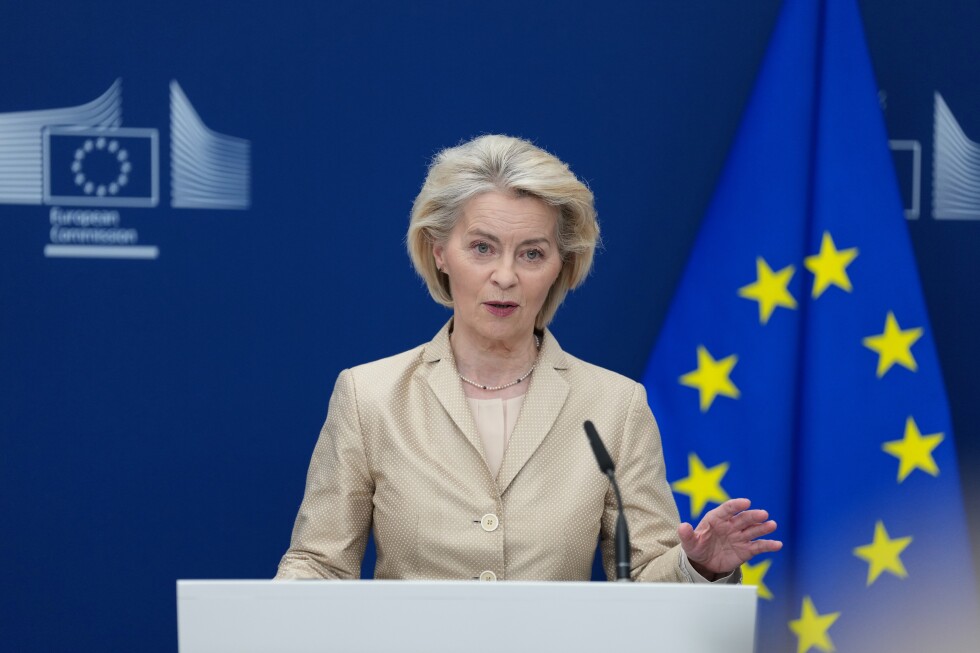
    European Commission President Ursula von der Leyen emphasized the proposal’s dual purpose: providing immediate financial stability for Ukraine while significantly increasing Moscow’s cost of continued aggression. “We know the urgency. It is acute. We all feel it. We all see it,” von der Leyen told the European Parliament ahead of the summit.

    Despite mounting pressure, Belgian Prime Minister Bart De Wever remains unconvinced, with his Defense Minister Theo Francken warning that loaning the Euroclear funds would constitute a “big mistake.” Their concerns echo broader legal and financial apprehensions, particularly regarding potential court orders requiring Belgium to return the assets to Russia.

    Hungary’s Viktor Orbán represents the most staunch opposition, having previously blocked EU financial aid packages for Ukraine. Slovakia’s Robert Fico has also expressed reservations, particularly if funds would prioritize military procurement over reconstruction efforts.

    German Chancellor Friedrich Merz emerged as a leading advocate, telling the Bundestag that utilizing frozen assets would send a “clear signal” to Moscow about the futility of prolonged conflict. Supporters argue the move would strengthen Ukraine’s negotiating position amid emerging peace talks that U.S. President Donald Trump described as “closer now than we have been ever.”

    The proposal requires approval from approximately two-thirds of member states. European Council President António Costa pledged not to override Belgian concerns, committing to “work very intensively with the Belgian government” to address risk mitigation. Several nations have offered financial guarantees against potential legal losses, though specific figures remain undisclosed.

    Commission officials maintain confidence in their legal standing, suggesting Russia could only reclaim assets by paying Ukrainian reparations—which would then be used to repay the EU loan. This complex financial arrangement represents the EU’s most ambitious attempt to balance immediate Ukrainian needs against long-term legal and economic considerations.

  • In this secret missile factory, Ukraine is ramping up its domestic arms industry

    In this secret missile factory, Ukraine is ramping up its domestic arms industry

    In a clandestine facility somewhere in Ukraine, a military transformation is underway under extraordinary secrecy. BBC correspondents, blindfolded during transport to protect the location, witnessed the production of Ukraine’s formidable Flamingo cruise missile – a domestically developed weapon system with an estimated 3,000km range capability.

    The extreme security measures reflect Ukraine’s adaptation to wartime realities: production facilities for these critical weapons must remain hidden from Russian targeting. Two factories belonging to manufacturer Fire Point have already been struck, forcing the company to disperse and conceal its operations. Within the assembly area, workers’ identities are protected and architectural features cannot be filmed, all part of maintaining operational security while continuing production.

    This represents a remarkable evolution in Ukraine’s defense capabilities. President Volodymyr Zelensky reveals that over 50% of weapons deployed on front lines are now domestically produced, with nearly all long-range systems originating from Ukrainian industry. This marks a dramatic shift from early dependence on Soviet-era stockpiles and Western military aid.

    At the heart of this effort is Iryna Terekh, Fire Point’s 33-year-old chief technical officer. The former architecture student now oversees production of the black-painted Flamingo missile which she describes as designed to ‘eat Russian oil.’ The massive weapon, resembling a World War Two V1 rocket with a jet engine mounted on a tube the length of a London bus, provides Ukraine with deep-strike capabilities that Western nations have been reluctant to supply.

    The strategic significance is substantial. With front lines stretching over 1,000 kilometers, Ukraine is increasingly targeting Russia’s war economy to slow advances. General Oleksandr Syrskyi, head of Ukraine’s Armed Forces, estimates long-range strikes have cost the Russian economy over $21.5 billion this year alone.

    Ruslan, an officer in Ukraine’s Special Operations Forces, explains the strategy: ‘To reduce the enemy’s military capabilities and their economic potential.’ His forces have conducted hundreds of strikes deep inside Russian territory targeting oil refineries, weapons factories, and ammunition depots.

    Despite impressive progress, disparities remain. Russia launches approximately 200 Shahed drones daily, while Ukraine’s response reaches about half that number. Fire Point, which didn’t exist before the full-scale invasion, now produces 200 drones daily at approximately $50,000 each – significantly cheaper than Russian equivalents.

    The company deliberately avoids components from China and the United States, with Terekh explaining the emotional ‘roller coaster’ with American support. This self-sufficiency strategy emerges amid uncertain Western backing, particularly after the Trump administration halted nearly $70 billion in military support previously provided under President Biden.

    Denys Shtilerman, Fire Point’s chief designer, acknowledges there is no ‘wonder weapon’ but emphasizes that ‘the game changer is our will to win.’ Terekh views domestic weapons production as Ukraine’s true security guarantee, dismissing current peace negotiations as ‘capitulation talks.’

    She hopes Ukraine’s example will shock Europe into preparedness: ‘We are a bloody example in terms of being prepared for war,’ noting that most other nations would have ‘already been conquered’ facing similar onslaught.

  • Thiago Silva and Fluminense terminate contract, defender eyes move to Europe

    Thiago Silva and Fluminense terminate contract, defender eyes move to Europe

    In a significant development for international football, seasoned defender Thiago Silva has prematurely terminated his contract with Brazilian club Fluminense, sparking speculation about a potential return to European competition. The Rio de Janeiro-based team officially confirmed the mutual separation on Wednesday, cutting short the 41-year-old’s tenure by six months.

    The accomplished center-back, whose distinguished career includes celebrated spells with European powerhouses AC Milan, Paris Saint-Germain, and Chelsea, originally rejoined his former club in May of last year. Fluminense’s official communiqué praised Silva’s contribution, highlighting his ‘legacy of dedication and profound affection’ for the institution where he previously played between 2006 and 2008.

    This unexpected departure follows intriguing comments from Chelsea legend John Terry, who publicly expressed his desire to see Silva return to Stamford Bridge. In a TikTok video broadcast earlier this week, Terry emphasized the defender’s strong London connections, noting that Silva’s two children are currently enrolled in Chelsea’s youth academy and suggesting the family would likely spend Christmas in the English capital.

    The timing of this move appears strategically motivated by Silva’s aspirations to represent Brazil in the upcoming World Cup. Despite his age, the defender remained instrumental for Fluminense throughout the season, helping the team reach the Club World Cup semifinals in July and maintaining his starting position for most of their campaign.

    With an impressive international pedigree that includes participation in four consecutive World Cups and victories in both the 2013 Confederations Cup and 2019 Copa América, Silva’s potential return to European football could significantly impact both club dynamics and Brazil’s defensive preparations for global competition.

  • Spain to open network of climate shelters

    Spain to open network of climate shelters

    In response to unprecedented summer temperatures, Spanish Prime Minister Pedro Sanchez has unveiled plans for a nationwide network of climate shelters in public buildings to provide citizens refuge from extreme heat before next summer. The announcement came during a climate conference in Madrid where Sanchez emphasized that devastating droughts and heatwaves have become ‘the new normal’ in Spain.

    The initiative will establish cooled public spaces across areas most severely affected by extreme temperatures, with particular focus on vulnerable populations including the elderly, infants, and those with health conditions or limited resources. These shelters will be equipped with air conditioning, seating, and free water, following the successful model already implemented in regions including Catalonia, where approximately 400 such facilities currently operate in libraries, museums, sports centers, and shopping malls.

    This national effort comes after Spain endured its hottest summer on record in 2025, featuring three distinct heatwaves including a 16-day extreme heat event in August with temperatures exceeding 45°C (113°F). Official estimates from the Ministry of Health indicate more than 3,800 heat-related deaths occurred during the summer months—an 88% increase from 2024—alongside a devastating wildfire season that burned over 400,000 hectares.

    Complementing the shelter network, the government has allocated €20 million for flood and fire prevention plans in small municipalities as part of a broader state pact addressing climate change impacts. Sanchez has invited cross-party collaboration on the initiative, characterizing it not as ‘an electoral weapon’ but as ‘a shield for Spain’ against increasingly frequent climate extremes. The proposals will now proceed to Spain’s Congress of Deputies for legislative consideration.

  • Italy may not support EU-Mercosur free trade deal without changes

    Italy may not support EU-Mercosur free trade deal without changes

    BRUSSELS — A landmark trade agreement between the European Union and South America’s Mercosur bloc faces significant uncertainty as Italy joined France in demanding last-minute concessions, casting doubt on a deal twenty-five years in the making. The development comes as EU leaders convene in Brussels for a summit dominated by Ukraine funding, while angry farmers prepare to descend upon the capital in protest.

    Italian Premier Giorgia Meloni delivered a decisive statement to parliament on Wednesday, declaring that signing the pact in its current form would be “premature.” While stopping short of outright opposition, Meloni insisted that Italy would only support the agreement once it includes “adequate reciprocal guarantees” to protect Italian agricultural interests from unfair competition.

    The Mercosur-EU agreement, which would create one of the world’s largest free trade zones covering 780 million people and a quarter of global GDP, requires approval from at least two-thirds of EU member states. Italy’s hesitation strengthens France’s position, which has already demanded stringent safeguards including enhanced import inspections, stricter pesticide regulations in Mercosur nations, and mechanisms to prevent market disruption.

    The political resistance reflects growing far-right influence across Europe that has capitalized on agricultural concerns. Farmers from Greece to Poland have organized protests in Brussels, with some arriving on tractors, fearing the pact will undermine their livelihoods through cheaper imports.

    Despite the mounting opposition, European Commission President Ursula von der Leyen and European Council President António Costa remain committed to signing the agreement during their scheduled visit to Brazil on Saturday. German Chancellor Friedrich Merz criticized the resistance in Berlin, arguing that those “moaning about details” fail to understand Europe’s strategic priorities in global trade.

    The Brussels summit will primarily address Ukraine financing, but the trade deal represents a critical test of EU unity and its ability to conclude complex international agreements amid rising protectionist sentiments.

  • Nato spending pledge is Trump’s biggest foreign policy success, Rutte tells BBC

    Nato spending pledge is Trump’s biggest foreign policy success, Rutte tells BBC

    NATO Secretary General Mark Rutte has characterized the alliance’s commitment to allocate 5% of economic output to defense as former President Donald Trump’s most significant foreign policy achievement. In an exclusive BBC Radio 4 interview, Rutte asserted that Trump’s persistent criticism of European allies’ inadequate military spending has ultimately strengthened the alliance, describing it as “stronger than it ever was.”

    The declaration follows intense pressure from Trump, who threatened to withdraw U.S. protection unless member nations increased defense contributions. This pressure culminated in the June summit in The Hague, where NATO members committed to reaching the 5% spending target by 2035, citing Russia’s enduring threat and global terrorism concerns.

    Meanwhile, Russian President Vladimir Putin dismissed NATO’s warnings about potential Russian aggression against member states within five years as “hysteria” and “pure nonsense.” Speaking to defense officials in Moscow, Putin reiterated his objectives in Ukraine, stating his preference for diplomatic solutions but vowing to achieve “the liberation of its historical lands by military means” if negotiations fail.

    Rutte condemned Putin’s pursuit of historical territorial claims, describing the human cost as “insane” with approximately 1.1 million Russian casualties. The NATO chief simultaneously praised Trump’s diplomatic efforts to end the conflict, despite concerns that initial drafts of Trump’s peace plan appeared favorable to Moscow.

    The proposed settlement includes ceding eastern Ukrainian territories to Russia and providing security guarantees for Kyiv to prevent future aggression. U.S. officials indicate readiness to offer Ukraine protections modeled on NATO’s Article 5 mutual defense clause, while European allies discuss forming a “multinational force Ukraine” to assist with military regeneration and security.

    As Russia maintains its war economy, producing 150 tanks monthly alongside substantial drone and artillery output, Western nations struggle to match this production capacity. France and Germany have recently moved to revive voluntary military service for young adults amid growing recognition of the conventional warfare capabilities gap.

  • France probes ‘foreign interference’ after remote control malware found on passenger ferry

    France probes ‘foreign interference’ after remote control malware found on passenger ferry

    French authorities have launched a major counterespionage investigation into an alleged cyberattack targeting an international passenger ferry, with one crew member currently detained on suspicion of acting for an unidentified foreign power. The case emerged after Italian intelligence services alerted France’s General Directorate of Internal Security about potential malware infiltration in the computer systems of a vessel docked at the Mediterranean port of Sète.

    According to the Paris prosecutor’s office, investigators discovered remote access trojan (RAT) software capable of seizing control of the ferry’s operational computers. Interior Minister Laurent Nunez characterized the incident as ‘a very serious affair’ during an interview with France Info, confirming that individuals attempted to breach the ship’s data-processing systems. While the specific intent remains undetermined, Nunez acknowledged investigators are pursuing leads related to ‘foreign interference.’

    The investigation led to the arrest of two crew members—one Latvian and one Bulgarian—last Friday. The Bulgarian national was subsequently released after questioning, while the Latvian citizen remains in custody facing preliminary charges of criminal conspiracy and hacking offenses allegedly committed to benefit a foreign power. Search operations were also conducted in Latvia as part of the ongoing probe.

    The incident occurs amid growing concerns among European nations about Russia’s alleged ‘hybrid warfare’ tactics, which include cyber operations, disinformation campaigns, and other hostile activities that maintain plausible deniability. Although French officials have not explicitly named Russia, Minister Nunez pointedly remarked that ‘foreign interference very often comes from same country.’

    The affected ferry has resumed normal operations following comprehensive security evaluations of its computer infrastructure. The case represents the latest in a series of suspected state-sponsored cyber operations targeting European infrastructure.

  • UK gives Abramovich last chance to give Chelsea sale proceeds to victims of Russia’s war in Ukraine

    UK gives Abramovich last chance to give Chelsea sale proceeds to victims of Russia’s war in Ukraine

    The British government has delivered a definitive ultimatum to sanctioned Russian billionaire Roman Abramovich, demanding he finally transfer the £2.5 billion ($3.25 billion) pledged from the sale of Chelsea Football Club to aid victims of Russia’s war in Ukraine. Prime Minister Keir Starmer’s administration declared on Wednesday that it is prepared to initiate legal proceedings to enforce the commitment, which has remained unfulfilled for over two years.

    The saga stems from the 2022 forced sale of the Premier League club after the UK government imposed sanctions on Abramovich due to his established connections with Russian President Vladimir Putin following the full-scale invasion of Ukraine. As a condition of the sale approval, Abramovich publicly vowed to establish a charitable foundation dedicated to supporting those affected by the conflict. Despite the transaction’s completion—which saw ownership transfer to a consortium led by American Todd Boehly and Clearlake Capital—the promised funds remain frozen in a UK bank account, legally still belonging to the oligarch but inaccessible without government approval.

    Prime Minister Starmer emphasized the urgency of the situation, stating, “The clock is ticking on Roman Abramovich to honor the commitment he made when Chelsea FC was sold. This government is prepared to enforce it through the courts, so that every penny reaches those whose lives have been torn apart by Putin’s illegal war.” The government’s statement noted that extensive negotiations to secure a voluntary release of the funds have ultimately failed, leaving litigation as the only remaining option. Abramovich, who acquired Chelsea in 2003 and presided over an era that included two Champions League and five Premier League titles, could not be reached for immediate comment.