标签: Europe

欧洲

  • Orbán to press Trump for Hungary’s exemption from new US sanctions on Russian oil

    Orbán to press Trump for Hungary’s exemption from new US sanctions on Russian oil

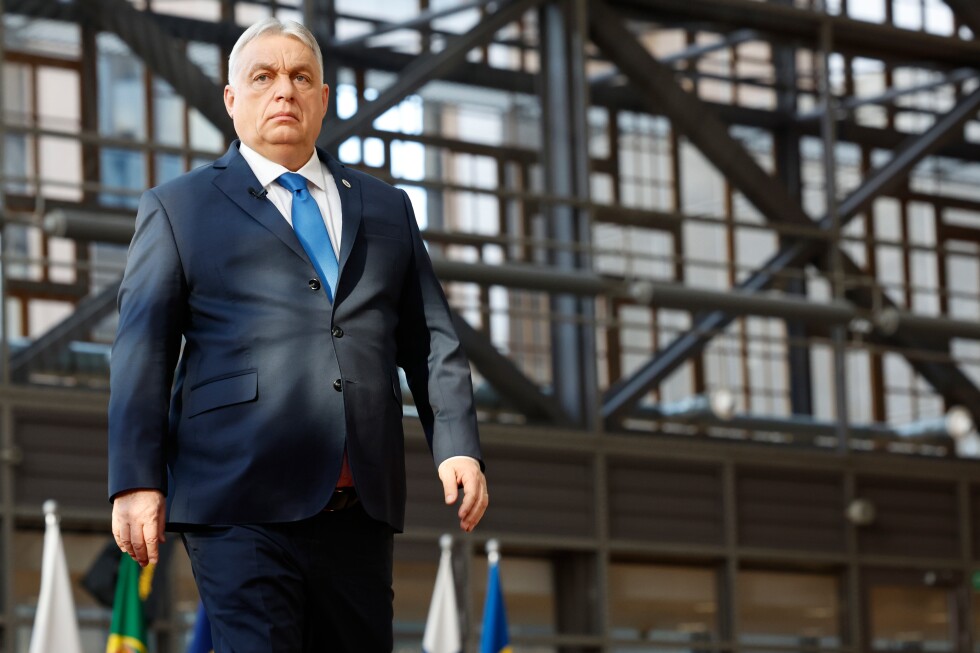
    Hungarian Prime Minister Viktor Orbán announced on Friday his intention to lobby U.S. President Donald Trump for exemptions from Washington’s newly imposed sanctions targeting Russian oil during their upcoming meeting next week. The Trump administration recently introduced sanctions against major Russian state-affiliated oil companies, Rosneft and Lukoil, potentially affecting foreign buyers, including those in India, China, and Central Europe, with secondary sanctions. While most European Union nations have significantly reduced or ceased imports of Russian fossil fuels following Moscow’s full-scale invasion of Ukraine in February 2022, Hungary and Slovakia have continued pipeline deliveries, with Hungary even increasing its reliance on Russian oil. Orbán, a staunch Trump ally, is set to visit Washington for his first bilateral meeting with the president since Trump’s return to office in January. The Hungarian leader has consistently argued that landlocked Hungary lacks viable alternatives to Russian crude and that replacing these supplies could precipitate an economic collapse, a claim contested by critics. Orbán emphasized the need for the U.S. to understand Hungary’s unique situation to secure exemptions from the sanctions. Widely regarded as Russian President Vladimir Putin’s closest ally in the EU, Orbán has maintained warm relations with the Kremlin despite the ongoing conflict and has adopted a confrontational stance toward Ukraine, portraying it as a significant threat to Hungary’s security and economy. Orbán also stated that both the U.S. administration and Moscow are seeking an end to the war, but Ukraine and the EU remain the primary obstacles to peace. A planned meeting between Trump and Putin in Budapest was recently canceled after Russian officials opposed an immediate ceasefire. Orbán will be accompanied by a large delegation of ministers, economic officials, and security advisers to Washington, aiming for a comprehensive review of U.S.-Hungarian relations and the finalization of an economic cooperation package, including new American investments in Hungary. However, Orbán stressed that any deal hinges on securing Hungary’s continued access to Russian energy.

  • Russia’s new nuclear weapons – real threat or Putin bluster?

    Russia’s new nuclear weapons – real threat or Putin bluster?

    Russian President Vladimir Putin made headlines this week by unveiling two advanced nuclear weapons during a meeting with Ukraine war veterans. The Poseidon, a nuclear-powered underwater drone, and the Burevestnik, an ‘unlimited-range’ nuclear-powered cruise missile, were both described by Putin as unparalleled in the world. The Poseidon, first revealed in 2018, is said to travel at speeds of 200 km/h with an unpredictable route, making it nearly impossible to intercept. The Burevestnik, meanwhile, is so new that its classification remains unclear, according to Putin. These announcements come amidst a backdrop of stalled diplomatic efforts between the US and Russia. President Donald Trump, who had previously attempted to broker peace between Russia and Ukraine, recently canceled a summit with Putin and imposed sanctions on Russian oil producers. Analysts suggest that Putin’s weapon showcases are less about military utility and more about projecting strength and capturing Trump’s attention. Mark Galeotti, a Russia expert, noted that these ‘Armageddon weapons’ are too destructive for practical use and are likely intended to reinforce Russia’s image as a formidable power. The timing of these announcements coincides with Russia’s struggles in the Ukraine conflict, where its conventional forces have faced significant challenges. David Heathcote of McKenzie Intelligence Services argued that the weapon tests reflect Russia’s conventional military weaknesses. Meanwhile, Trump’s decision to resume US nuclear testing after a 33-year hiatus appears to be a direct response to Russia’s actions. The Kremlin, however, dismissed the notion that its tests were provocative, with Putin’s spokesman Dmitry Peskov stating they were not nuclear tests. As tensions simmer, the global community watches closely, wary of the implications of this renewed nuclear posturing.

  • Drones, oil and escalation: Ukraine’s deep strikes impact Russia, altering war calculations

    Drones, oil and escalation: Ukraine’s deep strikes impact Russia, altering war calculations

    In a covert operation in rural Ukraine, attack drones are assembled under the cover of night to strike strategic targets deep within Russia, including oil refineries, fuel depots, and military logistics hubs. Since the summer, Ukraine’s long-range drone campaign has intensified, significantly impacting Russia’s energy infrastructure and stretching Moscow’s air defenses thin. These drones, constructed from parts produced in a decentralized network of workshops, now boast extended ranges, enabling them to reach targets far beyond previous capabilities. The strikes have led to gasoline shortages in Russia, prompting rationing in some regions and highlighting vulnerabilities in the country’s infrastructure. Western analysts note that while the attacks have had a serious impact, they have not been crippling. According to the Carnegie Endowment, Ukrainian drones have hit 16 major Russian refineries, representing about 38% of the country’s nominal refining capacity. However, most plants have resumed operations within weeks, cushioned by idle capacity and existing fuel surpluses. Despite this, the strikes have given Kyiv the initiative at a critical juncture, as the U.S. and Europe ramp up sanctions on Russia’s oil industry. Ukrainian President Volodymyr Zelenskyy claims that these strikes have caused Russia to lose up to 20% of its gasoline supply, forcing the Kremlin to import fuel and curb exports. The commander overseeing the drone operations, identified by his call sign ‘Fidel,’ emphasized the evolution of drone technology, with some models now capable of flying 1,000 kilometers. The Liutyi, a homegrown drone, has become a symbol of national pride, reflecting Ukraine’s no-frills war production philosophy. The increased range of these drones marks a shift in the conflict’s geography, with attacks now reaching targets within a 1,000-kilometer radius of the border. This has forced Russia to reroute supplies and commit air defenses to a wider area, degrading its capacity to sustain large-scale operations. The Paris-based International Energy Agency reports that repeated drone strikes have cut Russia’s refining capacity by about 500,000 barrels a day, triggering domestic fuel shortages and curbing exports. Ukraine’s independent drone launch capability allows it to bypass Western approval required for imported long-range weapons, providing a strategic advantage. Each mission is meticulously planned, with fewer than 30% of drones reaching their target area. Fidel reflected on the human cost of the war, stating that the current generation is fighting for a free democratic future for their children.

  • Louvre heist highlights thorny issue for museums: How to secure art without becoming fortresses

    Louvre heist highlights thorny issue for museums: How to secure art without becoming fortresses

    In the wake of a high-profile jewelry heist at the Louvre in Paris, museums worldwide are reassessing their security protocols. The incident has sparked urgent discussions among institutions, including Washington’s National Museum of Women in the Arts, the Smithsonian, and the National Gallery of Art. Doug Beaver, a security specialist, revealed that detailed reviews and strategic plans were swiftly implemented following the theft. Similar dialogues are unfolding globally as museums grapple with the dual challenge of safeguarding art while maintaining an open and welcoming environment for visitors. The Louvre’s director, Laurence des Cars, acknowledged significant security lapses, prompting French police and legislators to address vulnerabilities. A letter of support from 57 international museums, published in Le Monde, emphasized the importance of museums as accessible spaces of wonder, not fortresses. However, many museums, particularly those housed in historic buildings like the Louvre, face unique challenges in modernizing security without compromising their architectural integrity. Experts like François Chatillon, France’s chief architect of historical monuments, caution against hasty, invasive measures. Meanwhile, security professionals are focusing on balancing risk management with visitor experience. Doug Beaver highlighted the need for intelligent risk management, citing measures such as enhanced weapons detection and restricted visitor items. The incident has also reignited discussions about international cooperation and investment in advanced security technologies. Despite these efforts, the broader challenge remains: preserving the magic of museums while ensuring their safety.

  • Royal prerogative: King Charles III banishes Andrew to buttress the House of Windsor’s foundations

    Royal prerogative: King Charles III banishes Andrew to buttress the House of Windsor’s foundations

    In a decisive move to protect the British monarchy from ongoing scandals, King Charles III has stripped his brother, Prince Andrew, of all royal titles and honors. The announcement, made by Buckingham Palace on Thursday, marks a significant step in distancing the royal family from the controversies surrounding Andrew, who will now be known simply as Andrew Mountbatten Windsor. This decision follows revelations about Andrew’s association with convicted sex offender Jeffrey Epstein and mounting pressure from Parliament regarding his rent-free residence at the Royal Lodge near Windsor Castle. The king’s action underscores the monarchy’s commitment to accountability and public trust, particularly as Charles works to stabilize the institution ahead of Prince William’s eventual succession. While the move aims to shield the monarchy from further damage, it does not resolve Andrew’s legal and ethical challenges, which continue to cast a shadow over his legacy. The decision also reflects a broader transition in the monarchy, as it evolves into a more scrutinized and accountable public institution under Charles’s reign.

  • Barcelona’s Sagrada Família becomes world’s tallest church

    Barcelona’s Sagrada Família becomes world’s tallest church

    In a historic moment for architecture and religious heritage, Barcelona’s iconic Sagrada Familia has officially been crowned the tallest church in the world. Workers recently placed the first section of a cross atop its central tower, bringing the structure’s height to 162.91 meters. This achievement surpasses the Ulm Minster in Germany, which had held the record since 1890. Designed by the legendary architect Antoni Gaudí, the basilica has been under construction for over a century, with its main building slated for completion next year. The central Tower of Jesus Christ will eventually reach 172 meters once the cross is fully installed in the coming months.

    The Sagrada Familia’s journey began in 1882, with Gaudí taking over the project a year later. His visionary designs transformed the original plans into a grand architectural masterpiece, initially funded by donations from devout worshippers. However, the project faced numerous challenges, including Gaudí’s untimely death in 1926, when only one of the planned 18 towers had been built. The Spanish Civil War further disrupted progress, as Catalan anarchists destroyed Gaudí’s models and plans. More recently, the Covid-19 pandemic halted construction due to a sharp decline in tourism and funding.

    Despite these setbacks, the Sagrada Familia Foundation has persevered, relying on contributions from visitors and private donors. General Director Xavier Martínez announced that the Tower of Jesus Christ will be completed by 2026, marking the centenary of Gaudí’s death. The foundation plans to host commemorative events to honor the architect, who is buried in the church’s crypt. Over the next decade, work will continue on decorative elements, sculptures, and a grand stairway leading to the main entrance, ensuring the basilica remains a symbol of resilience and artistic brilliance.

  • How teenager gave a street concert and was caught up in Russia’s repressive past

    How teenager gave a street concert and was caught up in Russia’s repressive past

    In the quiet woods on the outskirts of St. Petersburg, a solemn ceremony unfolds as names of victims from Joseph Stalin’s Great Terror are read aloud. The Levashovo Wasteland, believed to hold the remains of 20,000 to 45,000 individuals, serves as a grim reminder of the dictator’s brutal purges in the 1930s. Portraits of the executed are nailed to pine trees, evoking the haunting ghosts of Russia’s past. Yet, the present tells a story of continued repression under the current regime. While Russian authorities downplay Stalin’s crimes, they enforce stringent laws to suppress dissent and silence criticism, particularly regarding the war in Ukraine. Critics are increasingly labeled as ‘foreign agents,’ a modern twist on Stalin’s ‘enemies of the people.’ This narrative of control extends to the arts, where young musicians like Diana Loginova face severe consequences for their public performances. Diana, an 18-year-old music student and lead singer of the band Stoptime, has been detained multiple times for organizing street concerts that authorities claim disrupted public order. Her performances, which include songs by exiled Russian artists critical of the Kremlin, have drawn significant crowds but also the ire of the state. Despite the crackdown, supporters of Diana and other dissidents continue to voice their solidarity, albeit at great personal risk. The story of Ludmila Vasilyeva, an 84-year-old survivor of the Nazi siege of Leningrad, further underscores the ongoing struggle. Ludmila, who has publicly protested against the war in Ukraine, was fined for ‘discrediting the Russian armed forces.’ Her defiance, however, remains unshaken, as she continues to speak out against the growing authoritarianism in Russia. The parallels between Stalin’s era and the present day are stark, highlighting a nation grappling with its past while navigating the challenges of modern repression.

  • Latvian Parliament votes to withdraw from domestic violence treaty

    Latvian Parliament votes to withdraw from domestic violence treaty

    In a contentious decision, the Latvian Parliament voted on Thursday to withdraw from the Istanbul Convention, a landmark treaty designed to protect women from violence, including domestic abuse. The vote followed a grueling 13-hour debate, marking a significant shift in Latvia’s stance on gender-based violence. The treaty, which came into force in Latvia in 2024, aimed to standardize support for victims of violence across Europe. However, it has faced fierce opposition from ultra-conservative groups and political factions, who argue that it promotes ‘gender ideology,’ encourages sexual experimentation, and harms children. The push to withdraw began in September, spearheaded by opposition lawmakers and supported by the Union of Greens and Farmers, a member of the tripartite governing coalition. Prime Minister Evika Siliņa, whose government initially pledged to ratify the convention, condemned the move, calling it ‘cruel’ and a betrayal of victims seeking help. The decision has exposed fractures within the governing coalition ahead of the 2026 parliamentary elections. Critics, including international women’s rights organization Equality Now, warn that the withdrawal endangers women in Latvia and emboldens anti-human rights movements across Europe and Central Asia. Public reaction has been polarized, with around 5,000 people protesting against the withdrawal in Riga, while a smaller group rallied in support. The law now awaits review by President Edgars Rinkēvičs, who may return it to Parliament or, in rare cases, call for a referendum.

  • Russian activity increasing around key Ukrainian town, army chief says

    Russian activity increasing around key Ukrainian town, army chief says

    The commander-in-chief of Ukraine’s armed forces, General Oleksandr Syrskyi, has issued a stark warning about escalating Russian military activity around the strategic town of Pokrovsk in the Donetsk region. Describing the situation as ‘difficult,’ Syrskyi confirmed that Russian infantry is massing in the area, though he dismissed claims of a Ukrainian blockade as ‘untrue’ propaganda. Pokrovsk, a critical transport and supply hub, has become a focal point in Russia’s efforts to advance further into eastern Ukraine, potentially paving the way for the capture of key cities like Kramatorsk and Sloviansk. General Syrskyi emphasized the importance of identifying and neutralizing Russian forces while maintaining a balance between military objectives and capabilities. He stressed that preserving the lives of Ukrainian soldiers remains the top priority. Ukrainian President Volodymyr Zelensky echoed these concerns, stating that Russian forces outnumber Ukrainians in Pokrovsk by eight to one and that Moscow aims to use the town as a propaganda tool to convince the United States of Ukraine’s retreat. Defense intelligence firm Sybelline and Ukrainian monitoring group Deepstate both reported that the battle for Pokrovsk has intensified, with Russian forces making significant advances and disrupting Ukrainian supply routes. Deepstate warned that the situation is nearing a crisis point, with little time left to reverse the deterioration. The conflict in Pokrovsk underscores the broader struggle for control in eastern Ukraine, as Russia continues its full-scale invasion launched in February 2022.

  • William and Kate win privacy case against French magazine over family holiday photos

    William and Kate win privacy case against French magazine over family holiday photos

    The Prince and Princess of Wales have successfully won a legal battle against the French magazine Paris Match, which published intrusive photographs of the royal family during a private skiing holiday. The images, captured in April, depicted William, Kate, and their children—Prince George, Princess Charlotte, and Prince Louis—enjoying a break in the French Alps. The photos showed the family on the slopes and relaxing on a chalet balcony, prompting the royals to take legal action. The Nanterre Judicial Court ruled that the publication of these images and an accompanying article violated the family’s right to privacy and their control over their personal images. Kensington Palace, the couple’s office, condemned the magazine’s actions, describing the article and long-lens paparazzi photos as a gross intrusion into their private family time. In a statement, the palace emphasized the couple’s commitment to safeguarding their children’s upbringing from undue public scrutiny and interference, vowing to take necessary steps to enforce these boundaries. This case echoes a previous legal victory in 2012, when William and Kate sued the French magazine Closer for publishing topless photos of Kate during a private holiday. The British media has largely respected an informal agreement to protect the privacy of the royal children, but international outlets have occasionally disregarded such norms.