标签: Europe

欧洲

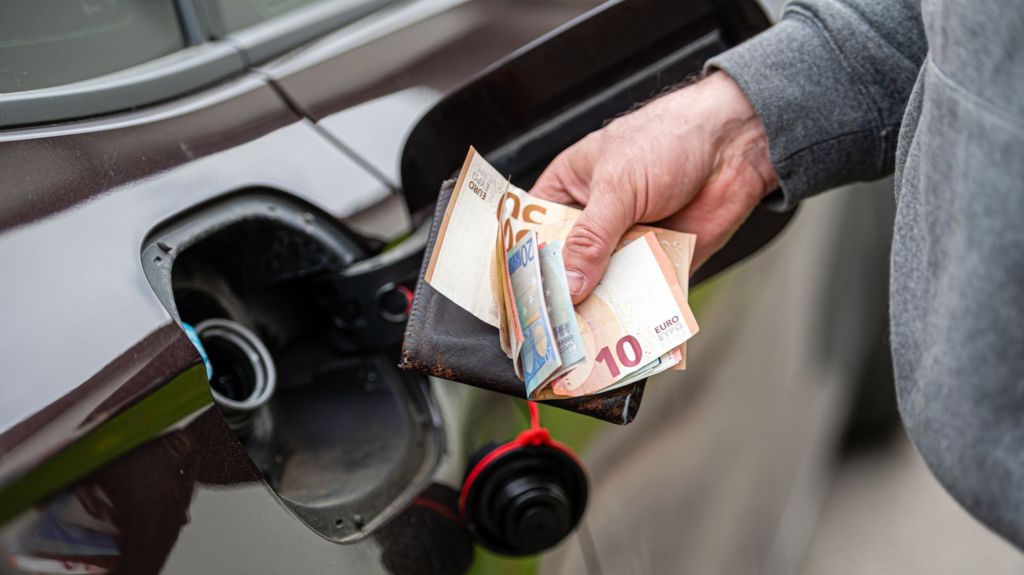
  • Bulgaria to become the 21st country to join the euro, deepening EU ties despite fears

    Bulgaria to become the 21st country to join the euro, deepening EU ties despite fears

    SOFIA, Bulgaria (AP) — Bulgaria marked a significant milestone in its European integration journey by joining the eurozone on January 1, becoming the 21st member of the single currency union. This strategic move represents the country’s most substantial economic advancement since transitioning from a Soviet-style economy to democracy and free markets in 1989.

    Despite this historic achievement, the adoption occurs against a backdrop of political instability and widespread public apprehension. Recent nationwide anti-corruption protests precipitated the government’s resignation after less than a year in office, leaving the country without an approved budget for the upcoming year and hindering crucial structural reforms.

    Public opinion remains sharply divided. EU Eurobarometer surveys conducted throughout 2023 consistently revealed approximately half of Bulgarians oppose euro adoption, with only 42-45% supporting the move. This skepticism stems from concerns about potential price increases exacerbating existing inflation, which recently rebounded to 3.7%. Many citizens fear businesses might exploit the currency transition to implement hidden price hikes.

    The political landscape further complicates matters. Pro-Russian political factions, particularly the Vazrazhdane party, have actively disseminated disinformation suggesting euro adoption could lead to bank account confiscations and loss of national sovereignty. These groups have organized anti-euro rallies, capitalizing on economic anxieties among older demographics.

    Economists note that the practical economic impact may be limited since the Bulgarian lev has been pegged to the euro at a fixed rate since 1999. However, analysts emphasize the strategic importance of this move in strengthening Bulgaria’s Western orientation and reducing Russian influence in the region.

    As Bulgaria navigates this currency transition alongside its eighth election in five years expected next spring, the country faces the dual challenge of implementing the euro while addressing deep-rooted issues of political fragmentation and public trust.

  • Eurostar delays enter second day as passengers stuck onboard overnight

    Eurostar delays enter second day as passengers stuck onboard overnight

    Thousands of Eurostar passengers faced severe travel disruptions on New Year’s Eve following a major power outage in the Channel Tunnel that crippled cross-channel transportation services. The incident, occurring on Tuesday, resulted in extensive cancellations and delays that continued into Wednesday, leaving travelers stranded during one of the busiest travel periods of the year.

    The crisis began when overhead power supply issues combined with a broken-down LeShuttle train, effectively blocking all routes through the tunnel. Eurostar services between the UK, France, Belgium, and Netherlands were severely impacted, with at least a dozen trains cancelled by midday Tuesday. Social media platforms were flooded with images of massive crowds stranded at London’s St Pancras International station as the transportation network ground to a halt.

    Passengers endured harrowing experiences aboard immobilized trains, with some reporting being stuck for over six hours without power or clear communication. Dennis van der Steen, a Dutch passenger attempting to return home for New Year’s celebrations, described spending six hours trapped onboard before movement resumed around 03:00 GMT. ‘We’re stuck,’ he told the BBC, noting that while some passengers slept, others were ‘very worried.’

    Another traveler aboard the 19:01 service to Paris remained stationary at the tunnel entrance until the early hours, with staff informing him of a ‘50% chance we go to Paris, 50% chance we go back to London.’ The Parisian passenger lamented, ‘I guess my new year plan is in the hands of the tunnel operators now.’

    Getlink, the operator of the Channel Tunnel, worked through the night to address the power issues, eventually restoring partial service with only one of the tunnel’s two rail lines operational. By Wednesday morning, Eurostar announced plans to run all services but warned of ongoing ‘knock-on impacts’ including possible last-minute cancellations and delays.

    The disruption extended beyond rail passengers, with cars backed up for hours near the LeShuttle Terminal in Folkestone. Tim Brown, returning to the UK after Christmas in Germany, reported being stuck in his car on a LeShuttle train for over three hours with ‘no access to food or water.’

    Eurostar has offered affected passengers free rebooking options, refunds, or e-vouchers, while urging travelers to avoid stations if their trains had been cancelled. The company continues to advise customers to check live updates regarding their specific travel arrangements as the situation evolves.

  • The ‘thorny’ issues that threaten to derail a Russia-Ukraine peace deal

    The ‘thorny’ issues that threaten to derail a Russia-Ukraine peace deal

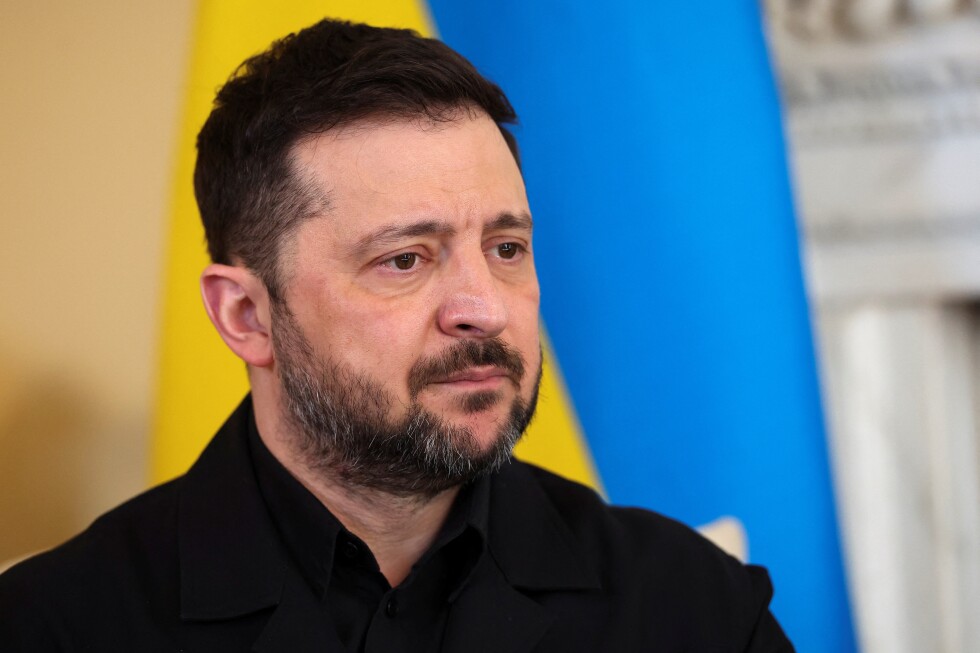
    As diplomatic efforts intensify to end nearly four years of full-scale conflict, Ukrainian President Volodymyr Zelensky has expressed profound skepticism regarding Russia’s commitment to genuine peace negotiations. Despite assertions from both Washington and Moscow that negotiations are approaching their final phase, fundamental disagreements over territorial control and nuclear facility management continue to impede progress.

    The central sticking points revolve around the disputed Donbas region and the occupied Zaporizhzhia Nuclear Power Plant. President Vladimir Putin maintains maximalist demands for complete control of Ukraine’s industrial east, including the strategic cities of Sloviansk and Kramatorsk. Zelensky has countered with a compromise proposal: establishing a demilitarized zone with mutual troop withdrawals, to be monitored by international forces. ‘We cannot simply withdraw—it violates our laws and abandons 300,000 Ukrainian citizens,’ Zelensky emphasized.

    Simultaneously, the fate of Europe’s largest nuclear facility remains contentious. The Zaporizhzhia plant, under Russian occupation since March 2022, requires substantial reactivation investment and demilitarization. While the United States has proposed trilateral management, Ukraine advocates for bilateral control with the U.S., implicitly allowing energy distribution to Russia. Moscow, however, insists through Rosatom chief Alexei Likachev that only Russian administration can guarantee operational safety.

    The trust deficit between nations remains profound. Zelensky openly declared, ‘I don’t trust Russians and I don’t trust Putin,’ directly contradicting former President Trump’s characterization of Putin’s intentions. Additional complications include security guarantees for Ukraine, potential Russian reparations from frozen European assets, and constitutional barriers regarding NATO membership.

    Zelensky insists any agreement must undergo a national referendum preceded by a 60-day ceasefire—a condition the Kremlin rejects as potentially prolonging hostilities. With analysts estimating a Russian conquest of Donetsk could take until 2027 at current rates, the urgency for resolution contrasts sharply with the complexity of outstanding issues.

  • Thieves use drill to steal €30m in German bank heist

    Thieves use drill to steal €30m in German bank heist

    In a meticulously orchestrated criminal operation reminiscent of a Hollywood screenplay, thieves have executed one of Germany’s most audacious bank heists, making off with an estimated €30 million (£26 million) in cash and valuables from a Sparkasse savings bank branch in Gelsenkirchen.

    Authorities confirmed that the perpetrators exploited the quiet Christmas holiday period to breach the bank’s high-security vault, gaining clandestine access through an adjacent parking garage structure. Utilizing industrial-grade drilling equipment, the criminals successfully compromised over 3,000 individual safe deposit boxes containing precious metals, jewelry, and currency.

    The sophisticated operation came to light only when a triggered fire alarm alerted emergency services in the early hours of Monday morning. Subsequent investigation revealed a carefully drilled entry point into the underground vault chamber, demonstrating what police spokespersons described as ‘extraordinary technical precision and professional execution.’

    Gelsenkirchen Police Department released details suggesting multiple suspects were involved, with witness accounts describing several individuals transporting large bags through the parking garage stairwell between Saturday and Sunday. Surveillance footage captured a black Audi RS 6 luxury vehicle departing the De-La-Chevallerie-Strasse garage vicinity early Monday, currently under intensive investigation.

    With no arrests made and perpetrators remaining at large, Sparkasse management has established a dedicated customer hotline while keeping the Buer district branch closed indefinitely. The institution confirmed approximately 95% of safety deposit boxes were forcibly accessed, advising clients to review their insurance coverage options beyond the standard €10,300 compartment coverage.

    The criminal investigation continues with forensic experts examining the elaborate breach method, while affected customers gathered outside the secured bank premises seeking information about their potentially stolen assets.

  • Thieves drill into a German bank vault and steal tens of millions of euros worth of property

    Thieves drill into a German bank vault and steal tens of millions of euros worth of property

    In a meticulously executed operation during the holiday quiet period, criminal perpetrators breached a high-security bank vault in Gelsenkirchen, Germany, making off with property valued potentially up to €90 million ($105.7 million). The targeted Sparkasse bank branch has confirmed that approximately 2,700 customers have been impacted by this sophisticated theft, which authorities are investigating as potentially one of the largest bank heists in German history.

    Law enforcement officials revealed that the burglary was discovered when emergency responders answered a fire alarm activation at approximately 4 a.m. on Monday. Upon arrival, police and firefighters encountered a carefully drilled entry point through the vault’s basement wall and found the security boxes systematically ransacked. Investigators have determined that industrial-grade drilling equipment was employed to penetrate the reinforced structure.

    Critical evidence has emerged from witness accounts and surveillance footage obtained from an adjacent parking facility. Multiple witnesses reported observing several individuals transporting substantial bags throughout the weekend. Corresponding video evidence captured masked figures operating what has been identified as a stolen vehicle in the early hours of Monday.

    The bank premises remained sealed throughout Tuesday as forensic experts conducted their investigation, while approximately 200 distressed customers gathered outside seeking access to their security deposits. The Sparkasse bank has initiated crisis response protocols and is coordinating with affected clients.

    Gelsenkirchen, situated approximately 192 kilometers northwest of Frankfurt, now stands at the center of an intensive criminal investigation involving multiple law enforcement agencies. The deliberate timing during holiday closures and the technical precision demonstrated suggest the work of highly organized criminal professionals with advanced knowledge of security systems and structural engineering.

  • Italy’s Parliament approves 2026 budget with deficit-cutting measures

    Italy’s Parliament approves 2026 budget with deficit-cutting measures

    ROME — The Italian Parliament formally endorsed the government’s 2026 budget legislation on Tuesday, implementing deficit-reduction measures aligned with European Union fiscal requirements. The €22 billion ($25.9 billion) economic package successfully cleared its final legislative hurdle in the lower house with a 216-126 vote, securing approval from Premier Giorgia Meloni’s conservative coalition government.

    The budgetary framework aims to compress Italy’s deficit to 2.8% of GDP in 2026, representing a reduction from the previously projected 3% threshold. This adjustment responds directly to EU mandates for strengthened fiscal discipline among member states. In a post-vote statement on social media platform X, Premier Meloni characterized the budget as “serious and responsible,” emphasizing its design to channel constrained resources toward supporting families, workforce development, business enterprises, and healthcare infrastructure amid challenging economic conditions.

    Nevertheless, the legislation has provoked substantial opposition criticism. Center-left political factions, particularly the Democratic Party led by Elly Schlein, condemned the measures as excessively austere and inadequate for addressing Italy’s deepening wage stagnation and elevated tax burdens. Schlein asserted the government’s approach fails to deliver meaningful relief for low-income households and workers grappling with persistent inflation.

    Notably, approximately one-quarter of the budget’s financing derives from increased taxation targeting financial institutions, including banks and insurance companies. This revenue strategy has drawn cautionary remarks from the European Central Bank, warning that additional banking levies might further constrict credit availability to Italian families and businesses already experiencing limited access to financing.

  • Eurostar cancels all trains out of London as power outage hits Channel Tunnel

    Eurostar cancels all trains out of London as power outage hits Channel Tunnel

    A major power supply failure within the Channel Tunnel has triggered a complete suspension of all Eurostar train services departing from London, causing widespread travel chaos for passengers bound for Paris, Amsterdam, and Brussels. The indefinite cancellation, announced on Tuesday, has left crowds of travelers stranded at London’s St Pancras International station, with authorities advising all customers to postpone their journeys and rebook for a later date.

    The disruption extends beyond passenger rail services. Eurotunnel’s Le Shuttle, which transports vehicles between Folkestone, UK, and Calais, France, has also been suspended indefinitely due to the same ‘power supply issue,’ resulting in massive delays. Passengers on this service are experiencing hold-ups exceeding three and a half hours on the UK side and approximately three hours in France.

    National Rail has confirmed that the severe disruption is anticipated to persist until the end of the day. In response to the crisis, Eurostar has implemented a flexible rebooking policy, allowing affected travelers to rearrange their trips without charge or cancel their bookings for a full refund or e-voucher. The company has urgently requested that passengers refrain from coming to the station unless they possess a valid ticket for travel on that specific day, directing them instead to check live service updates online.

    The human impact of the outage is significant. Passengers like Steph Roberts from Kent reported being stuck at the Calais terminal for hours with limited communication and no provisions. Having visited family in France for Christmas, she described a frustrating wait with no updates or offers of food and water, passing the time on social media and walking her dog. Eurotunnel has stated that technical teams are actively working to diagnose and resolve the power supply problems, though no estimated time for a full restoration of service has been provided.

  • Channel Tunnel disruption affects Eurostar and vehicle shuttle services between France and England

    Channel Tunnel disruption affects Eurostar and vehicle shuttle services between France and England

    Cross-Channel travel descended into chaos on Tuesday as a critical overhead power supply failure forced Eurostar to suspend services between London and continental Europe during the peak New Year’s travel period. The rail operator issued an urgent advisory requesting passengers to postpone journeys indefinitely amid escalating disruptions.

    The infrastructure failure, compounded by a separate incident involving a disabled Le Shuttle train carrying vehicles between Folkestone and Calais, triggered widespread cancellations across the network. Eurostar’s official status portal indicated four complete cancellations on the London-Paris route with three additional services experiencing significant delays.

    ‘We strongly recommend all customers reschedule their travel plans to alternative dates,’ Eurostar stated in an official communication. ‘Please refrain from arriving at stations unless you possess a validated ticket for immediate travel.’

    The dual operational crises—affecting both passenger and vehicle transport services—prompted simultaneous suspensions at terminal facilities on both sides of the English Channel. Le Shuttle authorities confirmed: ‘Services are temporarily suspended at both terminals due to a power supply complication. Our engineering teams are actively working toward resolution. We sincerely apologize for any inconvenience caused.’

    The timing proves particularly disruptive for holiday travelers, with thousands attempting to return from Christmas celebrations or commence New Year’s travel. The incident highlights the vulnerability of cross-border rail infrastructure during peak operational periods, raising questions about contingency planning for critical systems failures.

  • German prosecutors will drop investigation of Russian magnate Usmanov upon payment of $12M fine

    German prosecutors will drop investigation of Russian magnate Usmanov upon payment of $12M fine

    German authorities have reached a settlement with Russian billionaire Alisher Usmanov, a prominent ally of President Vladimir Putin, concluding a high-profile investigation into alleged sanctions violations and money laundering. The Munich prosecutor’s office announced Tuesday that the case will be formally discontinued upon receipt of a €10 million (approximately $11.8 million) payment from the sanctioned oligarch.

    The investigation, which prompted extensive police raids across dozens of German properties connected to Usmanov three years ago, centered on allegations that the metals magnate circumvented EU sanctions imposed following Russia’s 2022 invasion of Ukraine. Prosecutors alleged that Usmanov orchestrated approximately €1.5 million in transactions through foreign-based companies to maintain two luxury properties in the Bavarian lakeside town of Rottach-Egern, located south of Munich.

    Additional accusations included failure to properly declare valuable assets to German authorities, including jewelry, fine art collections, and premium wines. Usmanov’s legal representatives had contested both the factual basis of these allegations and the jurisdictional applicability of EU regulations in this matter.

    The resolution follows the framework of German criminal procedure law, which permits termination of investigations through alternative settlements in certain circumstances. This development occurs against the backdrop of continued EU sanctions that have frozen substantial assets and funds connected to the Russian billionaire.

    Usmanov, who maintains presidency of the International Fencing Federation despite sanctions, continues to navigate the complex landscape of international restrictions targeting Putin’s inner circle. The case exemplifies the challenges Western nations face in enforcing sanctions against powerful Russian figures with global business interests.

  • French right pushes for national tribute to film star Brigitte Bardot

    French right pushes for national tribute to film star Brigitte Bardot

    France finds itself embroiled in a heated political debate regarding appropriate honors for cinematic icon Brigitte Bardot, who passed away Sunday at age 91. The controversy has exposed deep ideological divisions within French society regarding how the nation should commemorate complex cultural figures.

    Éric Ciotti, leader of the right-wing UDR party, has initiated a petition demanding a national tribute for Bardot, collecting over 23,000 signatures with support from far-right allies. Ciotti argues France owes recognition to the woman who became the face of Marianne, the national symbol of liberty, in the 1960s. He emphasizes Bardot’s contribution to France’s international prestige and her advocacy for women’s liberation and abortion rights.

    Opposition emerges from left-wing politicians who question whether Bardot’s legacy aligns with republican values. Socialist leader Olivier Faure noted that national homages typically honor “exceptional services to the nation,” while pointing to Bardot’s five convictions for inciting racial hatred. Green MP Sandrine Rousseau highlighted the paradox between Bardot’s animal welfare activism and her controversial remarks about Muslims and migrants.

    The discussion reflects broader tensions in how France memorializes public figures. Previous national honors include the solemn ceremony for death penalty abolitionist Robert Badinter and the massive public farewell for rock star Johnny Hallyday. Nice Mayor Christian Estrosi has already announced plans to name an “iconic site” in Bardot’s honor.

    Meanwhile, Bardot’s personal wishes suggest she would have preferred simplicity. Close friend Wendy Bouchard revealed the reclusive star lived “a life of simplicity and deprivation” and likely wouldn’t have wanted national ceremonies. Despite Bardot’s request for burial at her Saint-Tropez home, La Madrague, local authorities have arranged a private ceremony in the marine cemetery overlooking the Mediterranean. The Brigitte Bardot Foundation announced her funeral will occur January 7th at Notre-Dame de l’Assomption church, with proceedings broadcast across town.